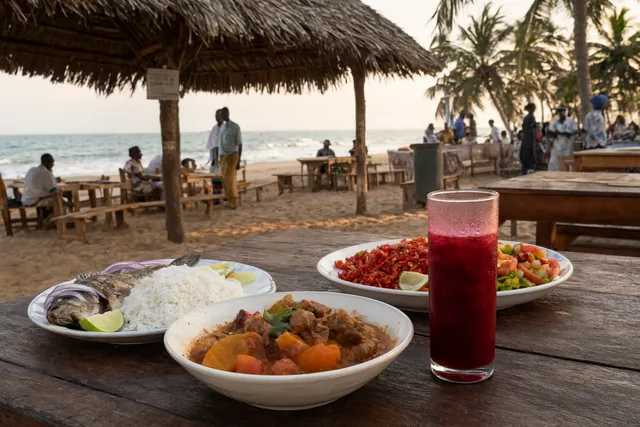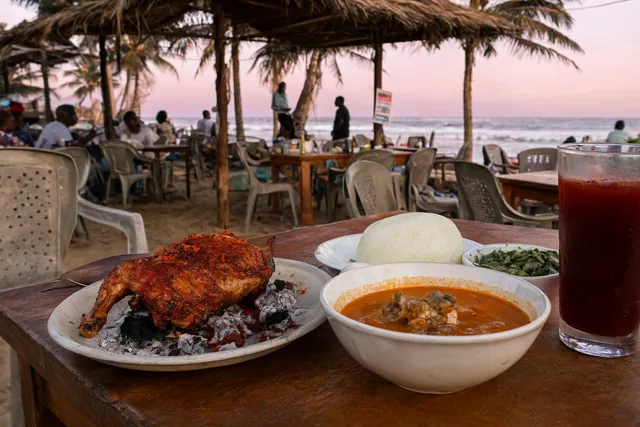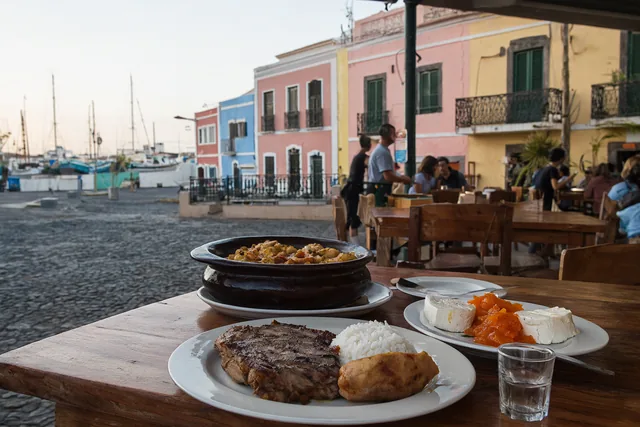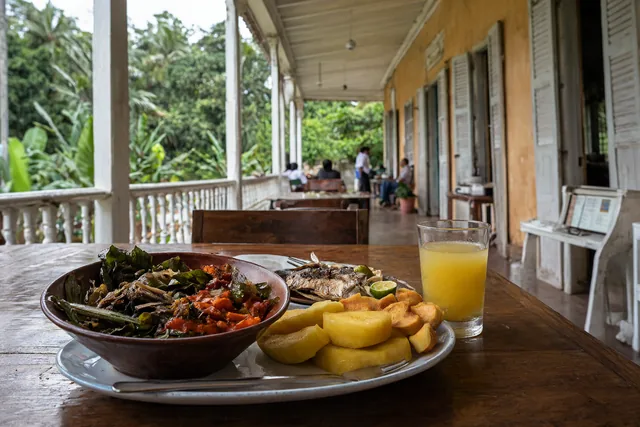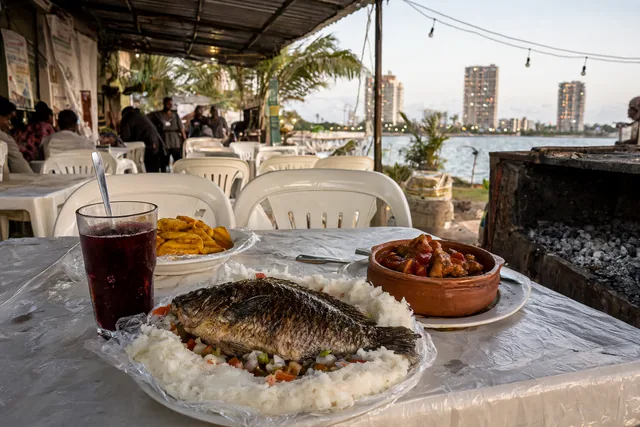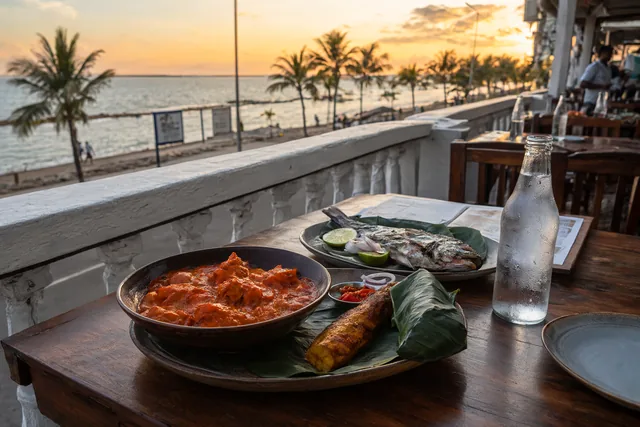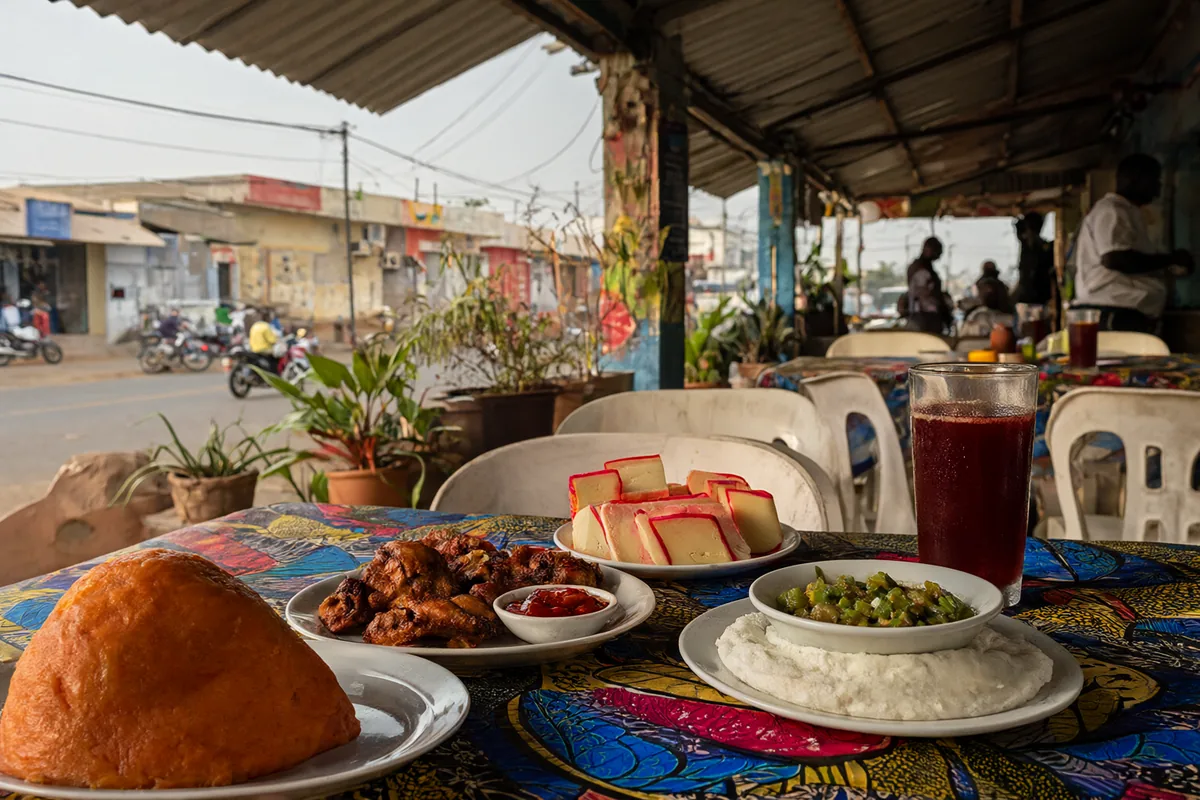
Beninese food is built on maize: smooth white pâte eaten with okra or leaf sauces, red amiwo cooked in tomato and chicken stock, and fermented corn in every form, alongside grilled fish from the lagoons and a soft Fulani cheese called wagashi from the north. This Benin food guide covers the dishes to order, the French and Fon words you will meet at a maquis or a market stall, how tipping and paying in CFA francs works, and then goes town by town through where to eat in Cotonou, Porto-Novo, Ouidah, Grand-Popo, Ganvié, Abomey and Parakou. French is the official language and the language of menus, while Fon, Yoruba and Bariba are spoken at home and at the market.
What to eat in Benin: 12 dishes to know
These are the dishes worth seeking out, with the region they are most closely tied to. Most meals pair a starch (maize, yam or cassava) with a sauce of okra, leaves, peanut or tomato, and meat or fish.
- Pâte (everywhere, called wɔ in Fon): a firm, smooth dough of maize flour cooked in water, shaped into rounds and eaten with your hand, dipped in sauce. Pâte blanche is the everyday version.
- Amiwo (the south): "red pâte", maize flour cooked in a tomato, onion and chicken stock base, usually served with grilled or fried chicken and a hot sauce. A celebration dish.
- Sauce gombo (everywhere): okra sauce, slippery and rich, with fish, meat or crab, the classic partner for pâte.
- Sauce feuilles (everywhere): leaf sauce made with greens such as gboma (African aubergine leaves) or amanvivè (bitterleaf), cooked with palm oil, smoked fish and meat.
- Sauce arachide (everywhere): peanut sauce with chicken or beef, eaten with rice or pâte.
- Wagashi (the north, now everywhere): a soft cow's milk cheese made by Fulani herders, often coloured red on the outside with sorghum leaves, fried and eaten in sauce or on its own.
- Igname pilée (the north and centre): pounded yam, soft and stretchy, served with a peanut or leaf sauce and meat. A speciality of Parakou and the north.
- Akassa (the south): a soft, slightly sour fermented maize dough wrapped in leaves, eaten with fried fish and hot sauce.
- Télibo (the centre and north): a dark, smooth dough of dried yam flour, eaten with okra or leaf sauce, similar to Nigerian amala.
- Poisson braisé and poisson frit (the coast and lagoons): whole fish, often tilapia or mullet, grilled over charcoal or fried, with tomato and onion sauce and akassa or pâte.
- Agouti (the south): grasscutter, a large rodent raised for meat, grilled or stewed in sauce, one of the most prized dishes in Benin.
- Atassi (the south): rice and beans cooked together, eaten with a fried sauce, fried plantain or gari (toasted cassava), a cheap and filling breakfast or lunch.
Street snacks include yovo doko (soft fried doughnuts, literally "foreigner's doughnut" in Fon), klui-klui (crunchy sticks of peanut paste), ata (black-eyed bean fritters), massa (small rice or millet pancakes) and roasted maize. To drink, try bissap (chilled hibiscus), fresh ginger juice, tchoukoutou (a sour sorghum beer from the north) and sodabi, a strong spirit distilled from palm wine, sold in bottles at markets and roadside stalls and often infused with roots and spices.
How to read a Beninese menu in French and Fon
Menus in Benin are in French, and local dishes are written in French or in Fon, sometimes in French spelling. A maquis is an open-air local restaurant, and a buvette is a small bar that may serve grilled meat. Small local eateries, sometimes called cafétérias, serve bread, omelettes, spaghetti, coffee and tea, and women selling pâte and sauce at lunchtime often have no menu at all. These are the words worth knowing.
| French or Fon | Meaning |
|---|---|
| Pâte blanche / wɔ | White maize dough |
| Pâte rouge / amiwo | Red maize dough cooked in tomato and stock |
| Sauce gombo | Okra sauce |
| Sauce feuilles | Leaf sauce |
| Sauce arachide | Peanut sauce |
| Fromage peulh / wagashi | Fulani cheese, often fried |
| Igname pilée | Pounded yam |
| Poisson braisé / frit | Grilled / fried fish |
| Poulet bicyclette | "Bicycle chicken", free-range village chicken, tougher and more flavoursome |
| Agouti | Grasscutter (cane rat) |
| Piment | Chilli; "pimenté" means spicy |
| Plat du jour | Dish of the day |
| Maquis / buvette | Local open-air restaurant / small bar |
| Sodabi | Palm wine spirit |
At a lunchtime pâte stall, you pay for the pâte and sauce, and each piece of meat, fish or cheese is extra. Point at what you want and ask the price before it is served. swap.menu reads French menus and handwritten boards, explains Fon dish names and converts CFA franc prices to your home currency.
Tipping, tax and paying the bill in Benin
Tipping is not obligatory in Benin, but it is appreciated. In restaurants used to visitors, leaving around 5 to 10 percent for good service is normal, while at maquis and street stalls rounding up or leaving small change is enough. Value added tax (TVA) is included in menu prices in most places, although hotels and some upmarket restaurants show it separately or add a service charge. Our guide to tax and service charges on menus explains how these lines work.
The currency is the West African CFA franc (XOF), written FCFA or simply CFA on menus. Cash is used for almost everything, and small notes and coins are often short, so break large notes at supermarkets and petrol stations. Mobile money is widely used by locals. Cards are accepted in larger hotels, supermarkets and some restaurants in Cotonou, but rarely elsewhere. When a card machine offers to charge you in your home currency, choose CFA francs: our guide to paying in local currency explains why.
Lunch is eaten from about noon to 2pm, and many pâte and sauce sellers are busiest then. Dinner is from about 7pm, and maquis and grilled meat stalls are busy into the night. Pâte, akassa and igname pilée are eaten with the right hand, and a bowl of water is brought for washing. Benin has a mixed Christian, Muslim and Vodun population, and alcohol is widely available, though less so in parts of the north.
Where to eat in Benin, town by town
Benin is a long, narrow country, and the food changes from the lagoons and fish of the coast to the yam, cheese and grilled meat of the north. Jump to a destination:
Where to eat in Cotonou
Cotonou is Benin's largest city and economic centre, and the best place in the country to try everything. The place to start is the Dantokpa market, one of the largest markets in West Africa, sprawling along the lagoon with stalls of maize, yams, smoked fish, chillies, spices and Vodun goods, and women cooking pâte, akassa and fried fish for traders. In the evening, the city's maquis fill up with people eating amiwo with chicken, grilled fish, agouti and wagashi with a cold beer.
The district of Haie Vive, near the airport, is Cotonou's best-known restaurant area, with Beninese, French, Lebanese and other international restaurants and bars. Fidjrossè, along the beach west of the centre, has beach bars and grilled fish spots popular at weekends. Ganhi and Jonquet in the centre have busy streets of maquis and snack sellers. Zemidjans (motorbike taxis) are the quickest way around Cotonou, and the best food is often where the zemidjan drivers stop to eat.
Where to eat in Porto-Novo
Porto-Novo is Benin's official capital, a quiet lagoon town near the Nigerian border with a strong Yoruba influence and fine Afro-Brazilian architecture, built by returning freed slaves from Brazil in the 19th century. The food reflects both: alongside pâte and sauce gombo, you will find Yoruba dishes such as amala and pounded yam, and Brazilian-influenced dishes and pastries in some family kitchens. The Ouando market is the town's big food market, busy with produce, smoked fish and cooked food.
Porto-Novo has a small restaurant scene, built around maquis and a few restaurants in the centre near the Grand Mosque, an Afro-Brazilian building modelled on a church. The Songhaï Centre, a well-known agricultural training centre on the edge of town, runs a restaurant and shop selling produce, juices and yoghurt from its own farms. Porto-Novo is an easy day trip from Cotonou, about 45 minutes away.
Where to eat in Ouidah
Ouidah, west of Cotonou on the coast, was a major port of the Atlantic slave trade and is today a centre of Vodun religion, with the Python Temple, the Sacred Forest and the Route des Esclaves, which leads to the Door of No Return on the beach. The town's food is simple coastal cooking: grilled and fried fish, pâte with sauce, akassa and amiwo in the maquis of the town centre, and grilled fish and drinks at the beach bars by the Door of No Return.
Ouidah is busiest on 10 January, the national Vodun Day festival, when the town and beach fill with ceremonies, music and food stalls, and hotels book out. The rest of the year, Ouidah is quiet and its restaurants are small. The beach between Ouidah and Grand-Popo, along the Route des Pêches, has lodges and beach restaurants serving fish caught that day.
Where to eat in Grand-Popo
Grand-Popo, near the border with Togo, is Benin's favourite beach town, between the Atlantic and the Mono River lagoon. Grand-Popo is all about fish and seafood: grilled fish, prawns, crab, and lagoon fish cooked in a tomato sauce, served at beach lodges and simple restaurants along the sand. Boat trips on the lagoon and the Mono River mouth (the Bouche du Roy) often include a stop for fresh fish or coconuts.
Grand-Popo is quiet and relaxed, and most eating happens at the lodges along the beach, which have set menus or a short list of dishes. The village of Grand-Popo itself has a small market and maquis serving pâte and fish to locals at local prices. The sea here has strong currents, so many visitors swim in lodge pools or the lagoon. Bring cash, as cards are rarely accepted outside the larger lodges.
Where to eat in Ganvié
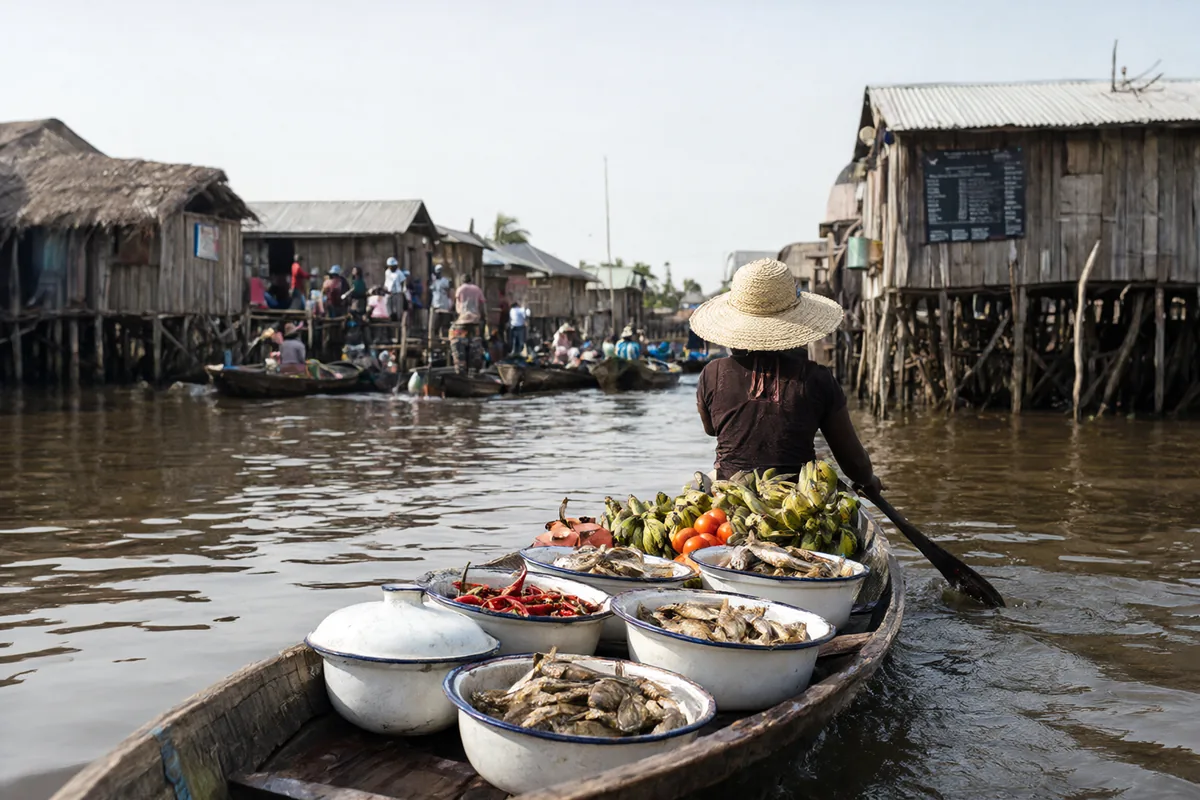
Ganvié, on Lake Nokoué north of Cotonou, is a village of houses built on stilts over the water, home to the Tofinu people, and often called the Venice of Africa. Everything in Ganvié is done by boat, including shopping: women paddle pirogues loaded with fish, fruit, vegetables and cooked food to sell from house to house, and the floating market gathers boats laden with produce. Fish farming in the lake, using enclosures of branches called acadjas, is the main livelihood.
Ganvié has a handful of simple restaurants on stilts, aimed at visitors, serving grilled or fried lake fish with pâte or rice, and drinks. Food options are limited, so most visitors come on a half-day boat trip from the jetty at Abomey-Calavi and eat back on the mainland. Agree the boat price in advance at the official jetty, and ask before photographing people.
Where to eat in Abomey
Abomey, about two hours north of Cotonou, was the capital of the Kingdom of Dahomey, and its royal palaces are a UNESCO World Heritage Site. The food here is the everyday cooking of the Fon heartland: pâte with sauce gombo or leaf sauce, télibo, igname pilée, grilled chicken and agouti in the maquis around the market. Abomey's market is a good place to see the produce of the region, including yams, maize, beans, palm oil and peppers.
Abomey has a small number of hotels and restaurants, mostly simple, and the town is often visited on a day trip or overnight from Cotonou. Neighbouring Bohicon, a busy market and transport town, has more choice of maquis and street food. Lunch in Abomey usually means pâte and sauce at a local eatery, and the best are the busy ones near the market at midday.
Where to eat in Parakou
Parakou is the main city of the north, a busy crossroads and market town on the road to Niger, with a large Bariba and Fulani population. The food is different from the south: igname pilée (pounded yam) is the king of northern dishes, eaten with peanut or leaf sauce, and wagashi, the Fulani cheese, is fresh and plentiful here. Grilled meat (viande braisée), mutton and beef skewers, and tchoukoutou sorghum beer are part of the evening scene.
Parakou's market and the streets around it are the best places to eat, with women pounding yam in big wooden mortars and grills selling meat by the skewer. Parakou is mostly visited on the way to the national parks of the north, and it has a handful of hotels and restaurants. Parts of the far north of Benin near the borders have travel warnings, so check current advice before travelling beyond Parakou.
Vegetarian, vegan and allergy tips
Vegetarians need to ask questions in Benin. Most sauces are cooked with meat, smoked fish, dried shrimp or crab, and stock cubes are in almost everything. The easiest vegetarian dishes are wagashi (fried cheese) with pâte, atassi with fried plantain, ata bean fritters, yovo doko, fried yam, roasted maize and fresh fruit. Vegans should avoid wagashi and check whether sauces contain fish. The word for vegetarian is végétarien (végétarienne for a woman), and "sans viande, sans poisson" means no meat, no fish.
Peanuts are in sauce arachide, klui-klui, grilled meat spice and many snacks, so people with peanut allergies need to ask about every dish. Palm oil and chilli are in most sauces, and dried fish and shrimp are common hidden ingredients. Pâte, akassa, télibo and igname pilée are naturally gluten-free, but bread, yovo doko and pastries are not. Our guide to eating abroad with food allergies explains how to communicate a serious allergy clearly.
Useful French and Fon phrases for ordering
Bonjour / Bonsoir "Good morning / Good evening" in French; always greet before ordering
A fɔn ganji à? "Good morning, did you wake well?" in Fon
Je voudrais ça, s'il vous plaît "I would like this, please" (pointing)
C'est combien? "How much is it?"
Pas trop pimenté, s'il vous plaît "Not too spicy, please"
L'addition, s'il vous plaît "The bill, please"
Ahwanu / Awanou "Thank you" in Fon
How swap.menu helps you eat in Benin
Beninese menus are in French, but the dishes come from Fon, Yoruba and Fulani kitchens, and the board at a maquis might list only amiwo, télibo, wagashi and poulet bicyclette. Photograph it with swap.menu and every dish appears in your language with its original name beside it and a short explanation, so you know that amiwo is red maize dough, that télibo is made from dried yam flour and that poulet bicyclette is a free-range village chicken. Prices are converted from CFA francs to your home currency, and any tax or service line is flagged.
Tap the dishes you want, add a note such as "no peanuts" or "pas trop pimenté", typed or spoken, and swap.menu translates your order into French. Show the waiter your phone, or let them scan the QR code and read your order on their own screen. Try it on a sample menu with the free demo, or see travel pass prices.
Off to Benin? Your first 3 menu scans are free, and a travel pass starts from $4.99 with nothing that renews.
Start free with 3 scansBenin food FAQ
Do you tip in restaurants in Benin?
Tipping is not required in Benin, but around 5 to 10 percent is appreciated in restaurants used to visitors. At maquis and street stalls, rounding up or leaving small change is enough.
What is the national dish of Benin?
Benin has no single official national dish, but pâte, a maize dough eaten with okra or leaf sauce, is the everyday staple. Amiwo, red maize dough with chicken, is the dish most often served at celebrations.
What food is Benin famous for?
Benin is famous for pâte and amiwo, sauce gombo, wagashi cheese, igname pilée in the north, grilled fish from the lagoons and agouti. Sodabi, a palm wine spirit, is the best-known local drink.
Is it expensive to eat out in Benin?
Local food at maquis and street stalls is cheap. Restaurants in Cotonou's Haie Vive district and hotel restaurants cost much more, especially for imported food and wine.
Is tap water safe to drink in Benin?
Visitors should drink bottled water in Benin. Bottled water is sold everywhere, and it is wise to be careful with ice, raw salads and street drinks made with tap water.
How can I read a Beninese menu if I do not speak French?
Learn a few words such as pâte, poisson, poulet, sauce and plat du jour, or photograph the menu with swap.menu. It translates French menus, explains Fon dish names, converts CFA franc prices to your currency and translates your order back into French.
Travelling further in West Africa? Read our food guides for neighbouring countries:
Or browse every travel food guide.