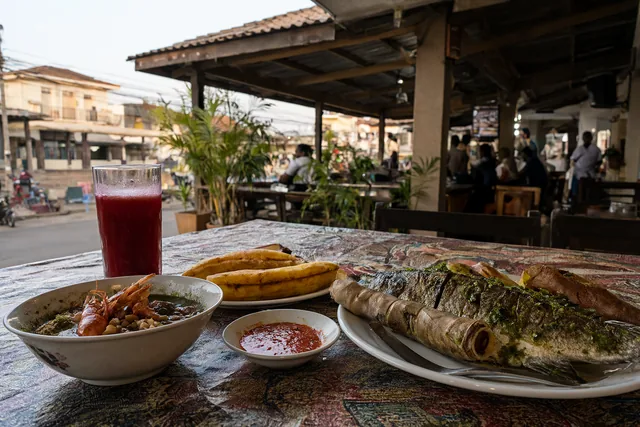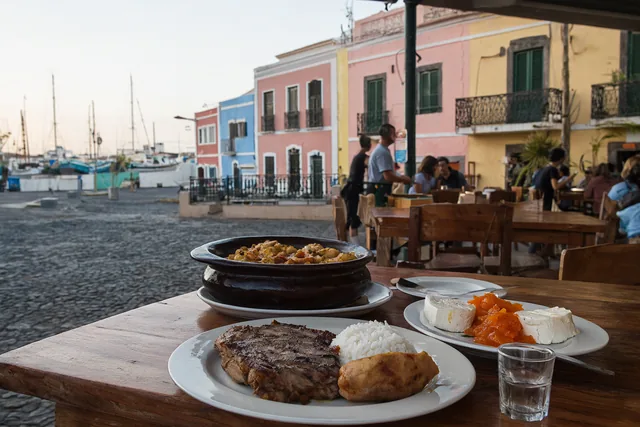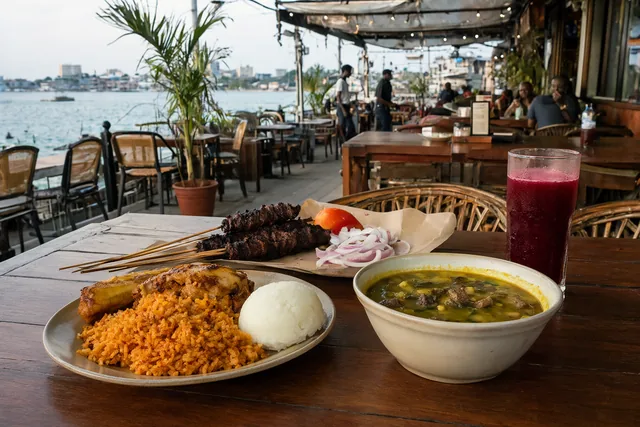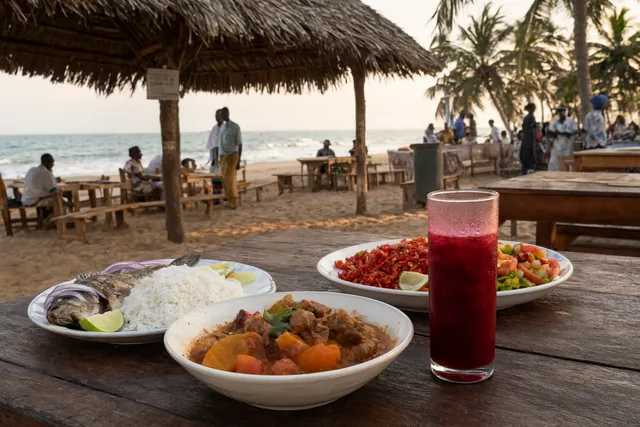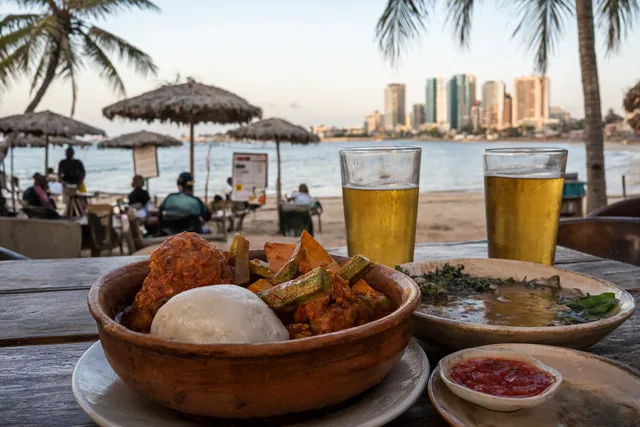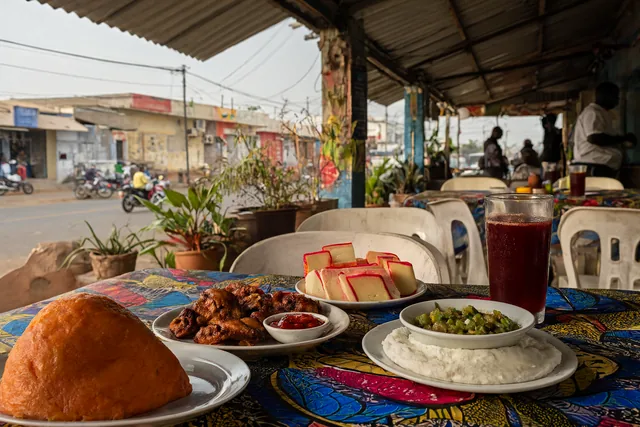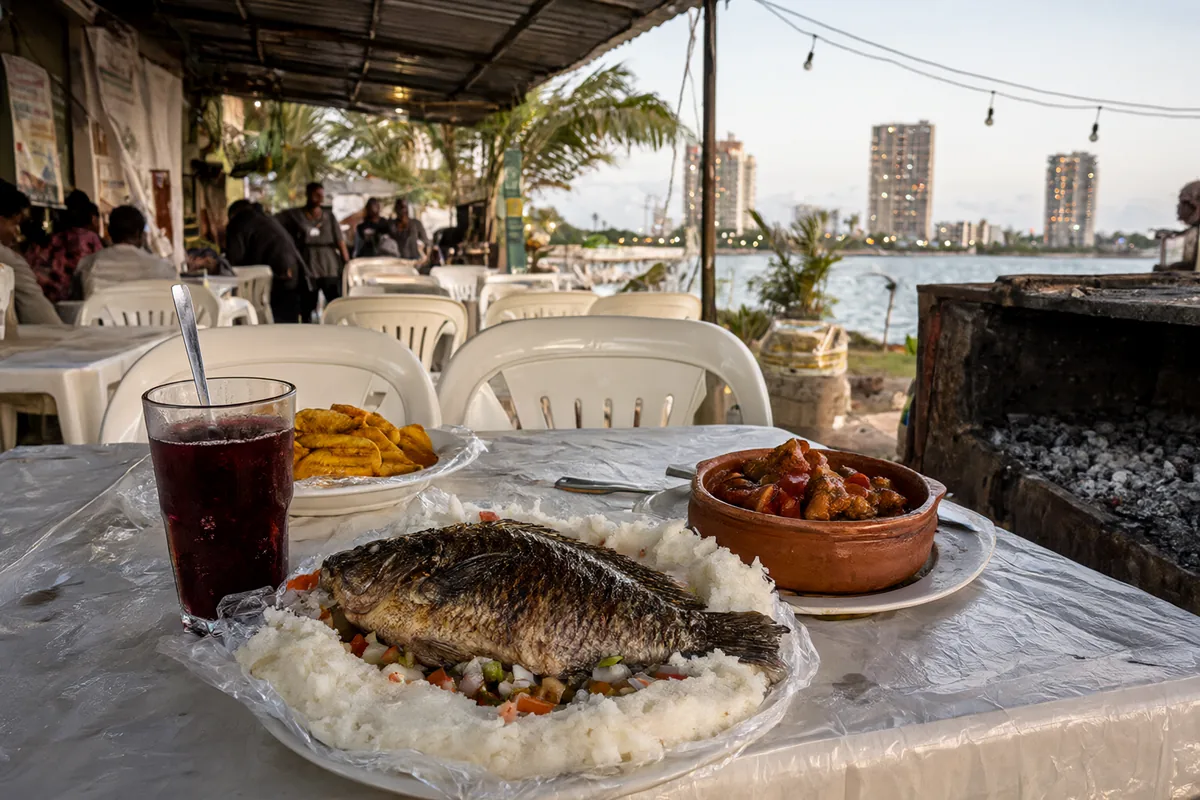
Ivorian food is the food of the maquis, the open-air restaurant with plastic chairs, a charcoal grill and loud music, where a whole grilled fish arrives on a mound of attiéké with chopped tomato, onion and chilli, and a plate of fried plantain called alloco is never far away. This Ivory Coast food guide covers the dishes to order, the French and Nouchi words on maquis menus, how tipping and paying in CFA francs works, and then goes city by city through where to eat in Abidjan, Grand-Bassam, Assinie, Yamoussoukro, Bouaké, San-Pédro and Man. The country's official name is Côte d'Ivoire, French is the language of every menu, and more than 60 local languages give the dishes their names.
What to eat in Ivory Coast: 12 dishes to know
These are the dishes worth seeking out, with the region they come from where it matters. Ivorian cooking is built on cassava, plantain, yam and rice, with sauces of palm nut, peanut, okra and leaves, and plenty of grilled fish and chicken.
- Attiéké (the south and Abidjan): fermented cassava grated and steamed into fluffy, slightly sour grains, like a cassava couscous. It is the Ivorian staple, eaten with grilled fish and a salad of tomato, onion and chilli.
- Garba (Abidjan street food): attiéké topped with chunks of deep-fried tuna, raw onion, tomato, fresh chilli and a splash of oil. Cheap, filling and a student favourite.
- Alloco (everywhere): ripe plantain cut into chunks and fried in palm oil, served with grilled fish, chicken or a hard-boiled egg and a hot onion and chilli sauce.
- Kedjenou (the Baoulé centre): chicken or guinea fowl slow-cooked with tomato, onion, aubergine and chilli in a sealed clay pot (a canari), shaken rather than stirred, so the meat cooks in its own juices.
- Foutou (the centre and east): boiled plantain, yam or cassava pounded into a smooth, sticky dough, eaten with a sauce such as sauce graine or sauce arachide.
- Sauce graine (everywhere): a deep red palm nut sauce cooked with meat, smoked fish or crab, one of the most common sauces on Ivorian menus.
- Sauce arachide (everywhere): peanut sauce with beef, chicken or fish, eaten with rice or foutou.
- Sauce gombo and sauce kopé (everywhere): okra sauces, the first with fresh okra, the second (more common in the centre) with dried okra, often eaten with placali, a soft fermented cassava dough.
- Poisson braisé and poulet braisé (everywhere): whole fish (often carpe, tilapia, or capitaine, Nile perch) or chicken grilled over charcoal, the backbone of every maquis menu.
- Choukouya (from the north, now everywhere): grilled mutton or beef, chopped and tossed with onion, chilli and spices, sold in the evening.
- Sauce claire (everywhere): a light, peppery broth with fish or meat, similar to pepper soup elsewhere in West Africa.
- Riz gras and tchep (everywhere): rice cooked in a tomato and meat sauce, the Ivorian take on jollof, and tchep, the local name for Senegalese fish and rice.
To drink, order bissap (chilled hibiscus), gnamankoudji (fiery fresh ginger juice), bangui (palm wine) and, in the north, tchapalo, a sour sorghum beer. For dessert or a snack, try dêguê (millet grains in sweetened yoghurt), claclo (small fried plantain fritters) and fresh pineapple, mango and papaya, which Ivory Coast grows in abundance. The country is the world's largest cocoa producer, and Abidjan has a growing number of chocolate makers.
How to read an Ivorian menu in French
Menus in Ivory Coast are in French, with local dish names written in French spelling. A maquis is the classic Ivorian restaurant, usually open-air, serving grilled fish and chicken, attiéké, alloco and the sauces of the day, often with music and cold beer. A garbadrome is a stall selling garba, and an allocodrome is a place where many alloco and grill stalls gather in one spot. Abidjan's street slang, Nouchi, mixes French with local languages, and you will hear it at every maquis. These are the words worth knowing.
| French or local | Meaning |
|---|---|
| Maquis | Open-air local restaurant with grilled food and sauces |
| Plat du jour | Dish of the day |
| Poisson braisé / poulet braisé | Charcoal-grilled whole fish / chicken |
| Carpe / capitaine / mâchoiron | Tilapia / Nile perch / catfish |
| Attiéké | Steamed fermented cassava grains |
| Alloco | Fried ripe plantain |
| Foutou banane / foutou igname | Pounded plantain / pounded yam |
| Sauce graine / arachide / gombo | Palm nut / peanut / okra sauce |
| Placali | Soft fermented cassava dough |
| Agouti | Grasscutter (cane rat), a prized bush meat |
| Piment | Chilli; "pimenté" means spicy |
| Tantie | "Auntie", the woman who runs the stall or kitchen |
| Bissap / gnamankoudji | Hibiscus juice / ginger juice |
At a maquis, grilled fish and chicken are often priced by size or by the piece, and attiéké or alloco is ordered separately. Agree the price of the fish before it goes on the grill. swap.menu reads French menus and handwritten boards, explains Ivorian dish names and converts CFA franc prices to your home currency.
Tipping, tax and paying the bill in Ivory Coast
Tipping is not obligatory in Ivory Coast, but it is appreciated. In restaurants used to visitors, leaving around 5 to 10 percent for good service is normal, while at maquis and street stalls rounding up or leaving small change is enough. Value added tax (TVA) is included in menu prices in most places, although hotels and some upmarket restaurants show it separately or add a service charge. Our guide to tax and service charges on menus explains how these lines work.
The currency is the West African CFA franc (XOF), written FCFA or simply CFA on menus. Mobile money is used for many everyday payments, and cards are accepted at hotels, supermarkets and many restaurants in Abidjan, especially in Plateau, Cocody and Marcory Zone 4. Outside Abidjan, and at every maquis, garbadrome and market, cash is king, and small notes and coins are often short, so break large notes at supermarkets when you can. When a card machine offers to charge you in your home currency, choose CFA francs: our guide to paying in local currency explains why.
Lunch runs from about noon to 2pm, and many people eat garba or attiéké with fish from a stall near work. Dinner is from about 7:30pm, and maquis are busiest late in the evening and at weekends, when they turn into places to drink and dance. Foutou, placali and sauces are traditionally eaten with the right hand, and a bowl of water is brought to wash your hand. Alcohol is widely available, though the north is mostly Muslim and more conservative.
Where to eat in Ivory Coast, city by city
Abidjan dominates the Ivorian food scene, but the coast, the Baoulé centre and the mountains of the west each have their own dishes and habits. Jump to a destination:
Where to eat in Abidjan
Abidjan is the economic capital and one of the liveliest food cities in West Africa, spread around the Ébrié Lagoon. The essential Abidjan meals are attiéké with poisson braisé at a maquis, garba from a garbadrome, and alloco with grilled fish in the evening. The allocodrome in Cocody is the best-known place for alloco and grills, with many stalls side by side, while the working-class districts of Yopougon, Treichville and Adjamé are full of maquis, garba stalls and late-night grills where most Abidjanais eat.
Plateau, the business district of towers by the lagoon, has lunchtime restaurants and French-style cafés, and Cocody and the Riviera districts have upmarket maquis and international restaurants. Marcory Zone 4 is known for its Lebanese, French and Asian restaurants and its bars. For markets, the Treichville market and the huge Adjamé market show the produce, smoked fish and spices behind Ivorian cooking. Abidjan traffic is heavy, so plan an evening around one district, and expect Abidjan maquis to get louder as the night goes on.
Where to eat in Grand-Bassam
Grand-Bassam, about an hour east of Abidjan, was the colonial capital, and its old quarter of crumbling French colonial buildings is a UNESCO World Heritage Site. Today Grand-Bassam is a weekend escape for Abidjanais, and the food is all about the beach: maquis and beach restaurants along the seafront serve poisson braisé, grilled prawns, crab, attiéké and alloco, with tables set on the sand. Fish here is often caught that morning by the fishermen working the beach.
Weekends in Grand-Bassam are busy and lively, and weekdays are much quieter, with some places only fully open on Saturdays and Sundays. The town's main street through the old quarter has a few cafés and artisan shops, and the lagoon side has simple maquis. Swimming here is dangerous because of strong currents, so treat Grand-Bassam as a place to eat and relax rather than swim. Ask the price of seafood before ordering, as it varies with the catch.
Where to eat in Assinie
Assinie is a long strip of sand between the lagoon and the Atlantic, east of Grand-Bassam near the Ghana border, and the favourite weekend getaway of Abidjan's well-off. Assinie is mostly resorts, beach clubs and holiday homes, and the food reflects that: grilled lobster and prawns, fish of the day, attiéké, and French-influenced resort menus. Outside the resorts, the villages along the lagoon have small maquis serving grilled fish and alloco at local prices.
Assinie is quiet during the week and busy at weekends and holidays, especially from December to Easter. Boat trips on the lagoon often include lunch on a sandbank or at a lagoon-side restaurant. Prices are higher than in Abidjan, and most resort restaurants take cards, while village maquis and fishermen selling their catch want cash.
Where to eat in Yamoussoukro
Yamoussoukro is the official capital, built up as the home town of the first president, Félix Houphouët-Boigny, and known for its wide boulevards and the Basilica of Our Lady of Peace, one of the largest churches in the world. It sits in the Baoulé heartland, so this is a good place to eat kedjenou, foutou with sauce graine, and sauce kopé. The city's food scene is small for its size, built around maquis, a few hotel restaurants and the central market.
Yamoussoukro's best eating is in the maquis around the market and the residential areas, where grilled chicken, kedjenou and attiéké with fish are on most boards. The sacred crocodiles in the lake by the presidential palace are a famous sight. Yamoussoukro is spread out and quiet in the evenings compared with Abidjan, so ask locally which maquis are busy that night.
Where to eat in Bouaké
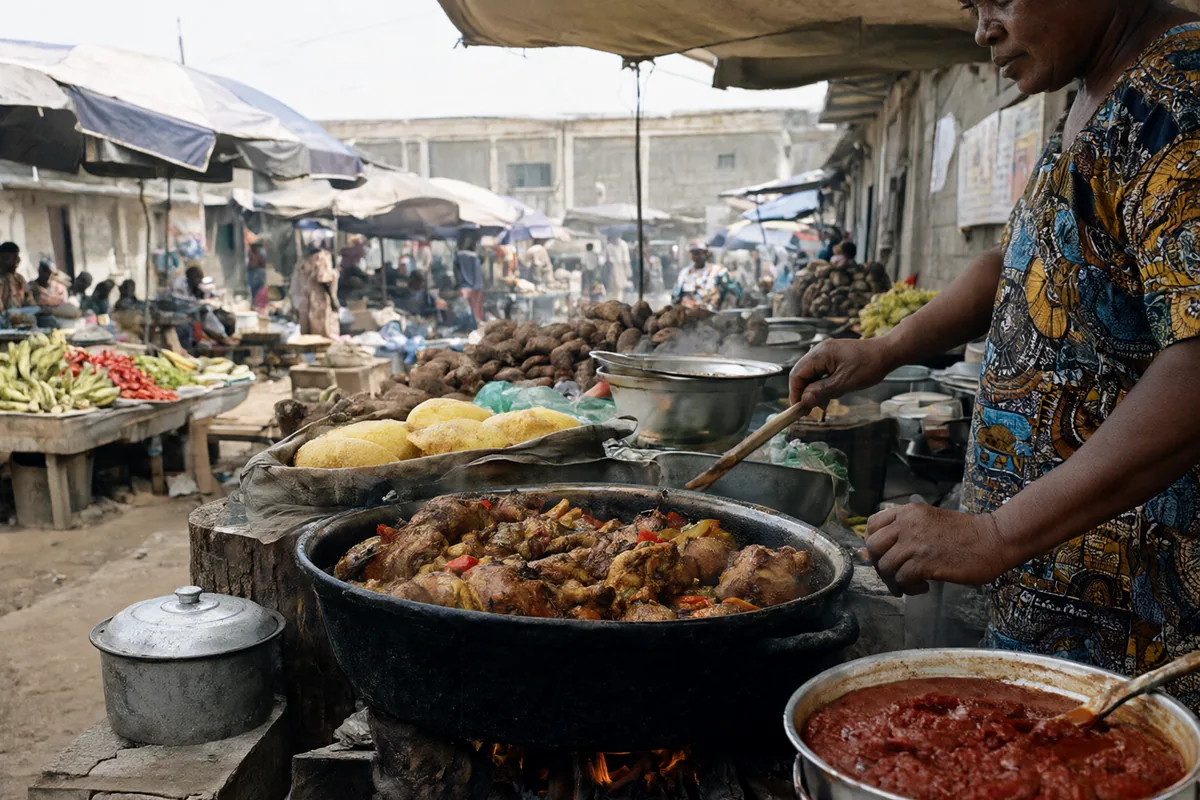
Bouaké is Ivory Coast's second city, in the centre of the country, and the commercial hub of the Baoulé region. Bouaké is famous across the country for its big market, one of the largest in West Africa, and its food is hearty home cooking: foutou pounded fresh in big wooden mortars, kedjenou, sauce graine, sauce arachide and the dried okra sauce kopé. Grilled meat and choukouya are popular in the evening, reflecting Bouaké's position on the road between the north and the south.
The market and the streets around it are the best places to eat, with women cooking sauces over wood fires and selling them with foutou or rice by the plate. Bouaké maquis are cheaper than those in Abidjan, and portions are bigger. Bouaké is also known for its carnival, held in March. Few places take cards, so bring cash.
Where to eat in San-Pédro
San-Pédro is a port city in the southwest, one of the world's largest cocoa export ports, and the gateway to beaches such as Monogaga and Grand-Béréby. The food is coastal: grilled fish and prawns, attiéké, alloco and seafood sauces. In San-Pédro itself, the maquis around the port and the centre serve grilled fish and chicken, and the town has a mix of Ivorian and international restaurants for workers in the port and cocoa trade.
The beaches near San-Pédro have a few simple beach restaurants and lodges where fish caught that day is grilled to order, and lunch by the sea is the main event. Facilities are limited compared with the east coast, and most places are cash only. Grand-Béréby, further west, is quieter still, with small beach lodges and village fish grills.
Where to eat in Man
Man, in the green mountains of the west, is a base for waterfalls, forest walks and the famous liana bridges, and home to the Dan (Yacouba) people, known for their masks and stilt dancers. The west is rice country, and the food here relies on rice with sauces of leaves, palm nut and peanut, along with plantain, cassava and smoked fish. Fruit and vegetables from the hills are cheap and plentiful in the market.
Man's food scene is simple: maquis around the market and the main streets serve rice and sauce, grilled chicken, attiéké and alloco, and there are a few hotel restaurants. Go to the market in the morning for fruit, bread and coffee, which is grown in the region. Bring cash, and expect menus to be short and based on what is cooking that day.
Vegetarian, vegan and allergy tips
Vegetarians need to ask questions in Ivory Coast. Almost every sauce is cooked with meat, smoked fish, dried shrimp or crab, and stock cubes go into nearly everything, even when the sauce looks like vegetables. The easiest vegetarian dishes are alloco with chilli sauce or an egg, attiéké with the tomato and onion salad, claclo, fried yam, avocado salad and fruit. The word for vegetarian is végétarien (végétarienne for a woman), and it helps to add "sans viande, sans poisson" (no meat, no fish).
Peanuts are in sauce arachide, grilled meat spice and snacks, so people with peanut allergies must ask about every dish. Palm oil and chilli are in most sauces, and dried fish and shrimp are common hidden ingredients for shellfish allergies. Attiéké, foutou and placali are made from cassava, plantain and yam and are naturally gluten-free, but bread and fritters are not. Our guide to eating abroad with food allergies explains how to communicate a serious allergy clearly.
Useful French and Nouchi phrases for ordering
Bonjour / Bonsoir "Good morning / Good evening"; always greet before ordering
Je voudrais un poisson braisé avec attiéké "I would like a grilled fish with attiéké"
C'est combien? "How much is it?"
Pas trop pimenté, s'il vous plaît "Not too spicy, please"
L'addition, s'il vous plaît "The bill, please"
C'est doux! "It is sweet", Ivorian French for "this is delicious"
On est ensemble "We are together", a friendly Ivorian sign-off you will hear everywhere
Merci, tantie "Thank you, auntie", a warm way to thank the woman who cooked
How swap.menu helps you eat in Ivory Coast
Ivorian menus are in French, but many dish names come from local languages, and the board at a maquis may list nothing more than kedjenou, sauce kopé, placali and garba. Photograph it with swap.menu and every dish appears in your language with its original name beside it and a short explanation, so you know that placali is a soft fermented cassava dough, that sauce kopé is made with dried okra and that agouti is bush rat. Prices are converted from CFA francs to your home currency, and any tax or service line is flagged.
Tap the dishes you want, add a note such as "no peanuts" or "pas trop pimenté", typed or spoken, and swap.menu translates your order into French. Show the waiter your phone, or let them scan the QR code and read your order on their own screen. Try it on a sample menu with the free demo, or see travel pass prices.
Off to Ivory Coast? Your first 3 menu scans are free, and a travel pass starts from $4.99 with nothing that renews.
Start free with 3 scansIvory Coast food FAQ
Do you tip in restaurants in Ivory Coast?
Tipping is not required in Ivory Coast, but around 5 to 10 percent is appreciated in restaurants used to visitors. At maquis and street stalls, rounding up the bill or leaving small change is enough.
What is the national dish of Ivory Coast?
Attiéké with grilled fish is the dish most Ivorians would name, closely followed by kedjenou, a slow-cooked chicken stew from the Baoulé centre. Alloco, fried plantain, is the most popular side and snack.
What food is Ivory Coast famous for?
Ivory Coast is famous for attiéké, alloco, garba, kedjenou, foutou with sauce graine and grilled fish and chicken from the maquis. It is also the world's largest producer of cocoa.
Is it expensive to eat out in Ivory Coast?
Garba, alloco and maquis meals are cheap. Restaurants in Abidjan's Cocody and Marcory Zone 4, hotel restaurants and the resorts of Assinie cost much more, especially for seafood.
Is tap water safe to drink in Ivory Coast?
Visitors should drink bottled water in Ivory Coast. Bottled water is cheap and sold everywhere, and it is wise to be careful with ice and raw salads at simple places.
How can I read an Ivorian menu if I do not speak French?
Learn a few words such as poisson, poulet, attiéké, alloco and plat du jour, or photograph the menu with swap.menu. It translates French menus, explains local dish names, converts CFA franc prices to your currency and translates your order back into French.
Travelling further in West Africa? Read our food guides for neighbouring countries:
Or browse every travel food guide.