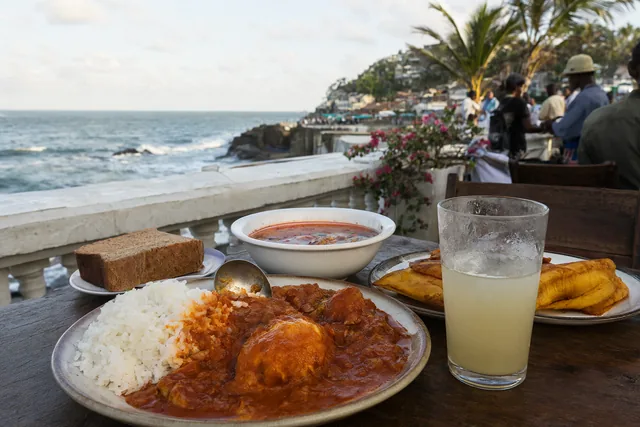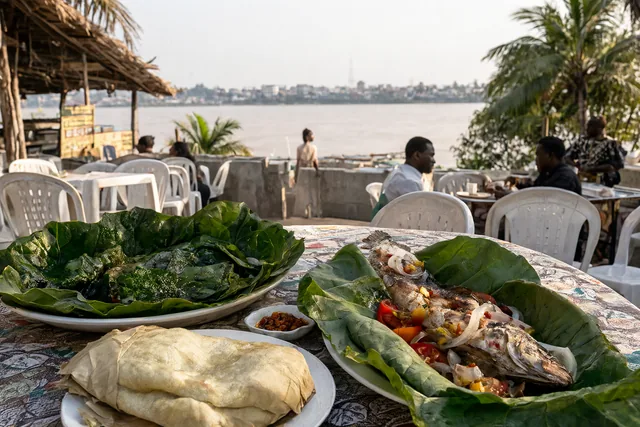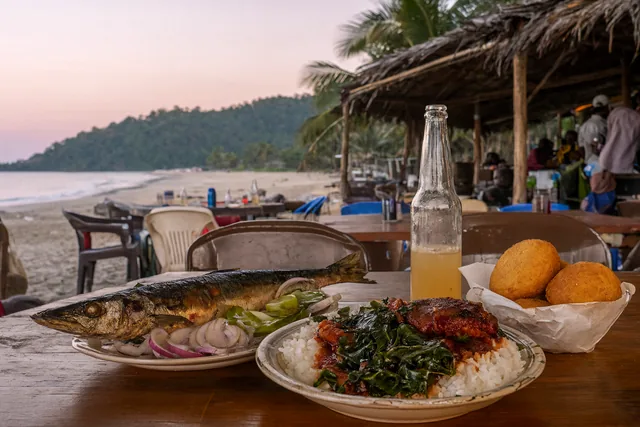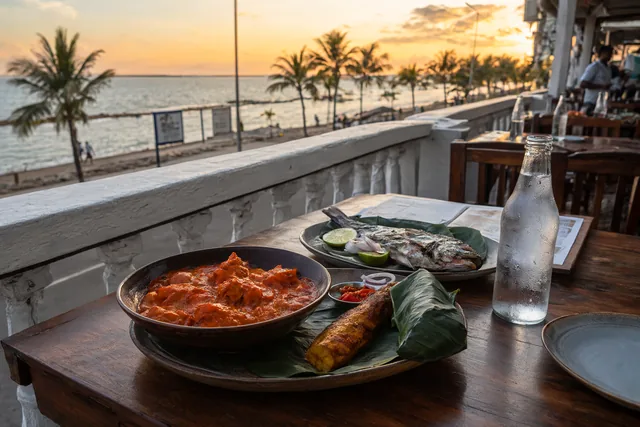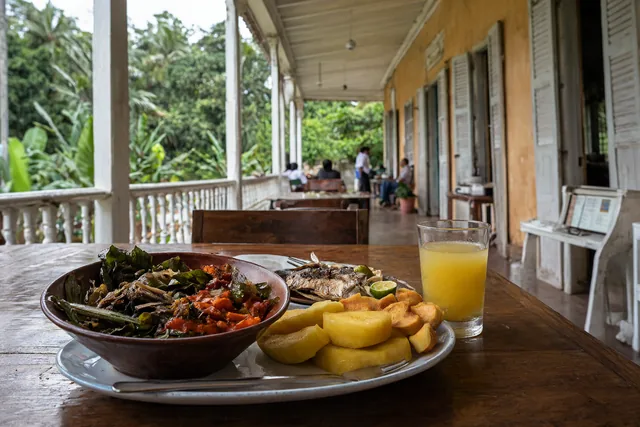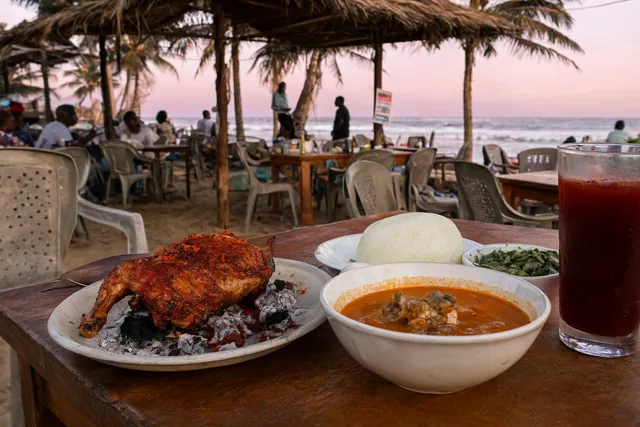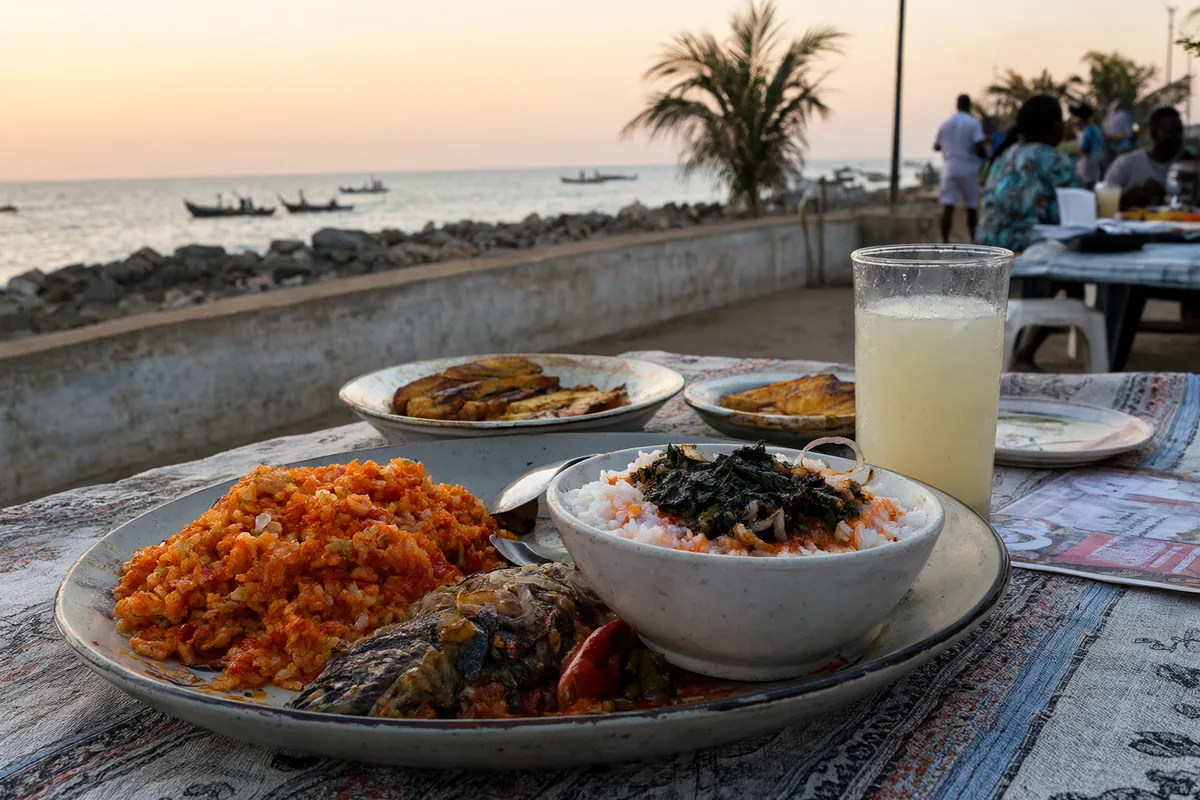
In Guinea, a meal without rice hardly counts: rice comes with a cassava leaf sauce on the coast, a peanut sauce in the Fouta Djallon highlands, an okra sauce in the north and a palm oil stew in the southern forests. This Guinea food guide covers the dishes to order, the French and local words you will meet on menus and at market stalls, how tipping and paying in Guinean francs works, and then goes through where to eat in Conakry, the Îles de Los, Kindia, Dalaba, Labé, Kankan and Nzérékoré. French is the official language and the language of menus, while Pular (Fula), Malinké and Soussou are the main local languages. Guinea's four natural regions, the coast, the Fouta Djallon, Upper Guinea and the forest, each have their own way of cooking.
What to eat in Guinea: 12 dishes to know
These are the dishes worth seeking out. Most Guinean meals are "riz sauce", rice with a sauce of leaves, peanut, okra or tomato, cooked with meat or fish.
- Riz gras (everywhere): "fat rice", rice cooked in a rich tomato, onion and oil sauce with meat or fish and vegetables, the Guinean version of jollof. A dish for celebrations and Sundays.
- Sauce feuille (the coast and forest): cassava or sweet potato leaves pounded and cooked with palm oil, meat, smoked fish and chilli, served over rice. One of the most loved Guinean dishes.
- Sauce arachide (everywhere, especially the Fouta Djallon): a rich peanut sauce with beef, chicken or lamb, served over rice.
- Sauce gombo (everywhere): okra sauce with fish or meat and palm oil, slippery and rich.
- Fonio (the Fouta Djallon): a tiny, ancient grain native to West Africa, steamed like couscous and eaten with a sauce or with milk. Grown on the highland plateaus.
- Poulet yassa (everywhere): chicken marinated in lemon, mustard and onions, grilled and simmered in the onion sauce, shared with Senegal and the Gambia.
- Poisson braisé (the coast): whole fish grilled over charcoal with chilli and onions, eaten with rice, attiéké or fried plantain.
- Lait caillé (the Fouta Djallon): fresh curdled milk from Fula herds, eaten with fonio, rice, millet or sugar.
- Soumbara sauces (Upper Guinea): sauces flavoured with soumbara, fermented néré seeds with a strong, savoury taste, used across the north.
- Brochettes and viande grillée (everywhere): beef and mutton skewers grilled at roadside stalls in the evening, served with onions, chilli and bread.
- Fataya and accara (everywhere): fried pastries filled with fish or meat, and black-eyed bean fritters, popular street snacks.
- Tropical fruit (Kindia and the forest): mangoes, pineapples, bananas, oranges and avocados, cheap and plentiful in season.
To drink, try gnamakoudji (ginger juice, strong and sweet, made from Guinean ginger), jus de bissap (hibiscus), jus de tamarin (tamarind), jus de bouye (baobab) and kinkéliba, a herbal tea drunk at breakfast. Dégué, millet grains in sweetened yoghurt, is a popular snack and dessert. Guinea is mostly Muslim, so alcohol is less common than in neighbouring coastal countries, though it is available in hotels, bars and some restaurants in Conakry.
How to read a Guinean menu in French
Menus in Guinea are in French, but most local food is sold at small restaurants and street stalls with no menu at all: women cook one or two sauces each day and sell rice and sauce by the plate. Restaurants in Conakry print menus with Guinean dishes alongside French, Lebanese and international food. A gargote is a small, simple eatery, and a maquis is an open-air restaurant or bar. These are the words worth knowing.
| French or local | Meaning |
|---|---|
| Riz sauce | Rice with a sauce, the everyday meal |
| Riz gras | Rice cooked in tomato sauce with meat or fish |
| Sauce feuille | Cassava or sweet potato leaf sauce |
| Sauce arachide / gombo | Peanut sauce / okra sauce |
| Fonio | Tiny native grain, steamed like couscous |
| Soumbara | Fermented néré seed seasoning |
| Poisson braisé / frit / fumé | Grilled / fried / smoked fish |
| Poulet / boeuf / mouton | Chicken / beef / mutton |
| Lait caillé | Curdled fresh milk |
| Piment | Chilli; "pimenté" means spicy |
| Plat du jour | Dish of the day |
| Gargote | Small, simple local eatery |
| Gnamakoudji | Fresh ginger juice |
Prices in Guinea run into the thousands and tens of thousands of francs, and it is easy to misread a zero. Count the zeros before you pay, and ask for the price in writing if needed. swap.menu reads French menus and handwritten boards, explains Guinean dish names and converts Guinean franc prices to your home currency.
Tipping, tax and paying the bill in Guinea
Tipping is not obligatory in Guinea, but it is appreciated. In restaurants used to visitors, leaving around 5 to 10 percent for good service is normal, and at gargotes and street stalls rounding up is enough. Value added tax (TVA) is included in menu prices in most places, though hotels and upmarket restaurants may show it separately or add a service charge. Our guide to tax and service charges on menus explains how these lines work.
The currency is the Guinean franc (GNF), written GNF or FG. Prices are in large numbers, and you will carry thick bundles of notes. Cash is essential almost everywhere: cards are accepted only in a few large hotels and restaurants in Conakry, and ATMs that accept foreign cards are limited, mostly in Conakry. Many visitors bring euros or US dollars to change at banks or official exchange offices. When a card machine offers to charge you in your home currency, choose Guinean francs: our guide to paying in local currency explains why.
Lunch is the main meal, eaten from about 1pm to 3pm, and many sauces are sold out by late afternoon. Dinner is lighter and later, from about 8pm. Rice and sauce are often eaten from a shared bowl with the right hand or a spoon. During Ramadan, many local eateries close during the day and open after sunset, and street food stalls sell snacks and drinks for breaking the fast.
Where to eat in Guinea, town by town
Guinea's food changes with its landscape, from the fish and leaf sauces of the coast to the milk and fonio of the highlands and the palm oil of the forest. Jump to a destination:
Where to eat in Conakry
Conakry, the capital, stretches along a narrow peninsula into the Atlantic, from the old centre of Kaloum at its tip to the suburbs inland. It has the widest choice of food in Guinea. The Marché Madina is the city's largest and most chaotic market, with produce, spices, smoked fish and cooked food, and the Marché Niger in Kaloum is smaller and easier to explore. At the fishing port of Boulbinet, pirogues land their catch, and fish is grilled and fried nearby.
The districts of Kipé, Taouyah and Camayenne have many of Conakry's restaurants, with Guinean, French, Lebanese and international food, and the Corniche, the road along the sea, has restaurants and bars with ocean views. For local food, look for gargotes serving riz sauce at lunchtime and evening grills selling brochettes and poisson braisé. Conakry traffic is heavy, so plan to eat near where you are staying.
Where to eat on the Îles de Los
The Îles de Los, a small group of islands off Conakry, are reached by boat from the port in under an hour, and they are the capital's favourite weekend escape. The main islands, Kassa and Room, have beaches, fishing villages and a few small hotels and beach restaurants. The food is simple and fresh: grilled fish, prawns, lobster and crab, with rice, fried plantain or chips and cold drinks.
Many beach restaurants open mainly at weekends and in the dry season, from about November to May, and the menu depends on what the fishermen have brought in. Lunch is the main event for day-trippers. Bring cash, check boat times before you leave, and agree the price of seafood before it is cooked.
Where to eat in Kindia
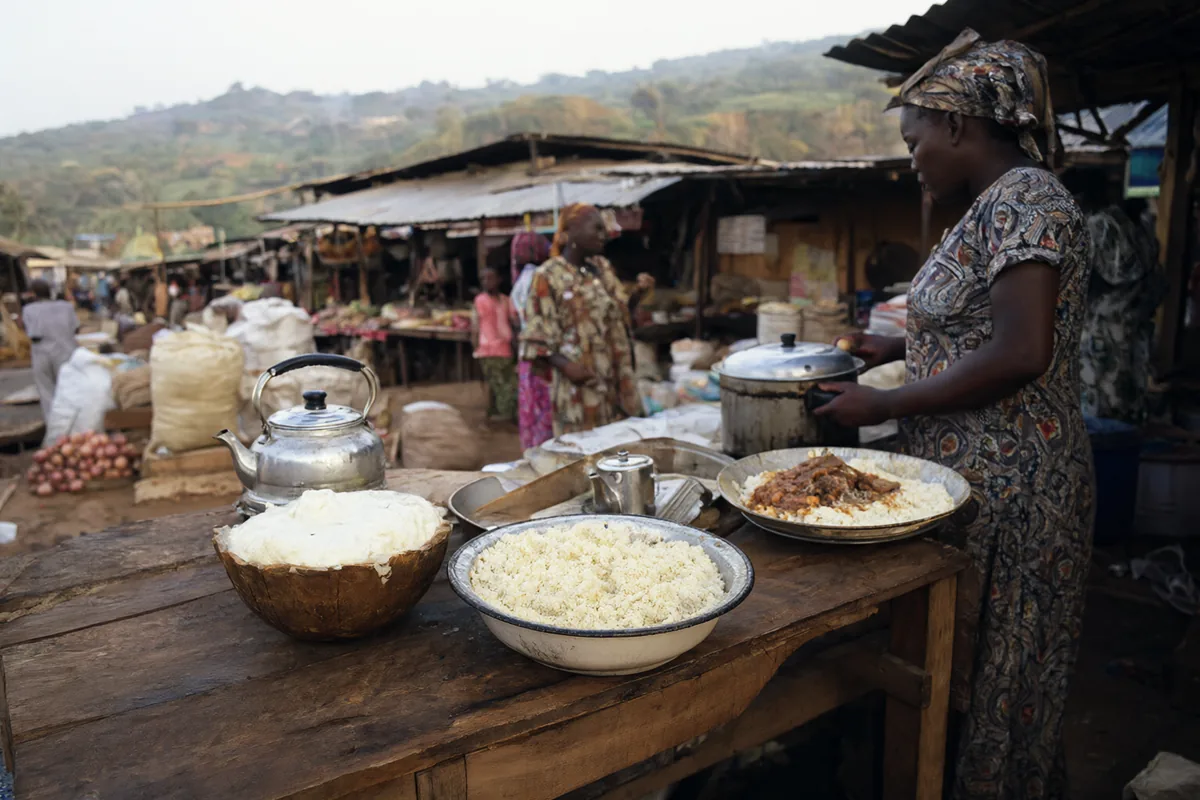
Kindia, about three hours inland from Conakry, is a market town at the foot of the hills and the gateway to the Fouta Djallon. The region is known for its fruit, especially bananas, pineapples and mangoes, and Kindia's market and roadside stalls sell them in huge piles. Kindia's food is simple Guinean cooking: rice with sauce feuille, sauce arachide or sauce gombo at local eateries, and grilled meat at roadside stalls.
Kindia is a stop on the road to the Fouta Djallon, and the nearby Voile de la Mariée (Bride's Veil) waterfall is a popular outing. Buy fruit from the roadside sellers on the way in or out of town, especially in mango season, from about March to June. Restaurants are few and simple, and cash is essential.
Where to eat in Dalaba
Dalaba, in the Fouta Djallon highlands, is a former colonial hill station at about 1,200 metres, with a cool climate, pine trees and old villas. The food here is Fula (Peul) highland cooking: rice with sauce arachide, fonio, lait caillé and vegetables grown in the cool climate, such as potatoes, cabbage and carrots. The town's market sells local produce and fruit.
Dalaba has a few hotels and guesthouses, and simple local eateries around the market. It is a base for hiking in the Fouta Djallon, and guides and guesthouses can arrange meals in villages. Evenings are cool, and the local food is hearty. Bring cash, as cards are not accepted.
Where to eat in Labé
Labé is the largest town of the Fouta Djallon and the heart of Fula culture in Guinea. The food here is the highland cooking at its most traditional: fonio, steamed and served with peanut sauce or milk, lait caillé, rice with sauce arachide, and grilled meat. Fula herders keep cattle across the plateau, so milk, butter and beef are central. Labé's market is large and busy, with produce, spices and cooked food.
Labé has a few hotels and restaurants and plenty of simple eateries, and it is the best base for hiking to the waterfalls, villages and plateaus of the Fouta Djallon, where guides and guesthouses arrange village meals. Labé is a conservative Muslim town, and alcohol is rare. During Ramadan, eat at your guesthouse or wait until sunset for street food.
Where to eat in Kankan
Kankan, on the Milo River in Upper Guinea, is the heart of Malinké culture and one of the country's main cities. The food of Upper Guinea uses more grains and soumbara: rice with peanut or okra sauce, millet and maize dishes, and sauces flavoured with fermented néré seeds. Grilled meat and fish from the river are popular, and Kankan is known for its mangoes, which line the streets in season.
Kankan's central market is busy and colourful, and the riverside and the streets around the market are the best places to eat. Kankan has a few hotels and restaurants and many simple gargotes. Kankan is hot and dry for much of the year, so cold juices such as ginger and bissap are welcome. Bring cash.
Where to eat in Nzérékoré
Nzérékoré, in the far southeast, is the main city of Forest Guinea, near the borders with Liberia and Ivory Coast. The forest region has the richest produce in Guinea: palm oil, cassava, plantain, rice, kola nuts, coffee and fruit. The food here is built on sauce feuille, palm oil stews, smoked fish and rice, and it is closer to the cooking of Liberia and Ivory Coast than to the rest of Guinea. Bush meat is sold in markets, but many species are protected and visitors are encouraged to avoid it.
Nzérékoré's market is large and lively, and simple restaurants around it serve rice with leaf sauces and palm oil stews. The city is a base for visiting Mount Nimba, a UNESCO World Heritage Site, and the forests of the region. Restaurants are few, so most visitors eat at local eateries or their hotel. Bring cash, as ATMs are limited.
Vegetarian, vegan and allergy tips
Vegetarians need to ask questions in Guinea. Most sauces are cooked with meat, smoked fish, dried fish or stock cubes, even sauce feuille. The easiest vegetarian options are fonio with milk, rice with a sauce made without meat or fish (ask in advance), fried plantain, accara, dégué, lait caillé and fresh fruit. Vegans should avoid lait caillé and dégué. The word for vegetarian is végétarien (végétarienne for a woman), and "sans viande, sans poisson" means no meat, no fish.
Peanuts are in sauce arachide and many snacks, so people with peanut allergies need to ask about every dish. Palm oil and chilli are in most sauces, and dried and smoked fish are common hidden ingredients. Rice and fonio are naturally gluten-free, but bread and fried pastries are not. Medical facilities are limited outside Conakry, so carry any allergy medication you need. Our guide to eating abroad with food allergies explains how to communicate a serious allergy clearly.
Useful French and local phrases for ordering
Bonjour / Bonsoir "Good morning / Good evening" in French; always greet before ordering
Salaam aleikum "Peace be with you", a common greeting (reply "Aleikum salaam")
Je voudrais du riz sauce, s'il vous plaît "I would like rice and sauce, please"
C'est combien? "How much is it?"
Pas trop pimenté, s'il vous plaît "Not too spicy, please"
L'addition, s'il vous plaît "The bill, please"
A jaraama "Thank you" in Pular, spoken in the Fouta Djallon
I ni ce "Thank you" or "well done" in Malinké, spoken in Upper Guinea
How swap.menu helps you eat in Guinea
Guinean menus are in French, but the dishes and ingredients have local names, and a board at a gargote might list only riz gras, sauce feuille, fonio and soumbara. Photograph it with swap.menu and every dish appears in your language with its original name beside it and a short explanation, so you know that sauce feuille is a cassava leaf sauce, that fonio is a native grain and that soumbara is a fermented seasoning. Prices are converted from Guinean francs to your home currency, which helps when the numbers run into tens of thousands, and any tax or service line is flagged.
Tap the dishes you want, add a note such as "no peanuts" or "pas trop pimenté", typed or spoken, and swap.menu translates your order into French. Show the waiter your phone, or let them scan the QR code and read your order on their own screen. Try it on a sample menu with the free demo, or see travel pass prices.
Off to Guinea? Your first 3 menu scans are free, and a travel pass starts from $4.99 with nothing that renews.
Start free with 3 scansGuinea food FAQ
Do you tip in restaurants in Guinea?
Tipping is not required in Guinea, but around 5 to 10 percent is appreciated in restaurants used to visitors. At gargotes and street stalls, rounding up is enough.
What is the national dish of Guinea?
Guinea has no single official national dish, but riz sauce, rice with a leaf, peanut or okra sauce, is the everyday meal. Riz gras and sauce feuille are the dishes most Guineans would name as favourites.
What food is Guinea famous for?
Guinea is famous for riz gras, sauce feuille, sauce arachide, fonio from the Fouta Djallon, lait caillé, grilled fish on the coast and tropical fruit. Ginger juice is the classic drink.
Is it expensive to eat out in Guinea?
Local food at gargotes and street stalls is cheap. Restaurants and hotels in Conakry aimed at visitors and expats cost much more, especially for imported food.
Is tap water safe to drink in Guinea?
No, visitors should drink bottled water in Guinea. Bottled water is sold in the towns, and it is wise to carry some when travelling and to avoid ice and raw salads at simple places.
How can I read a Guinean menu if I do not speak French?
Learn a few words such as riz, sauce, poisson, poulet and plat du jour, or photograph the menu with swap.menu. It translates French menus, explains local dish names, converts Guinean franc prices to your currency and translates your order back into French.
Travelling further in West Africa? Read our food guides for neighbouring countries:
- Senegal food guide
- Sierra Leone food guide
- Liberia food guide
- Ivory Coast food guide
- Gambia food guide
Or browse every travel food guide.