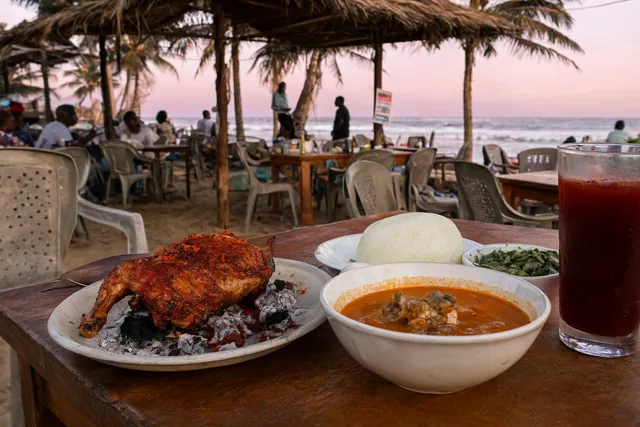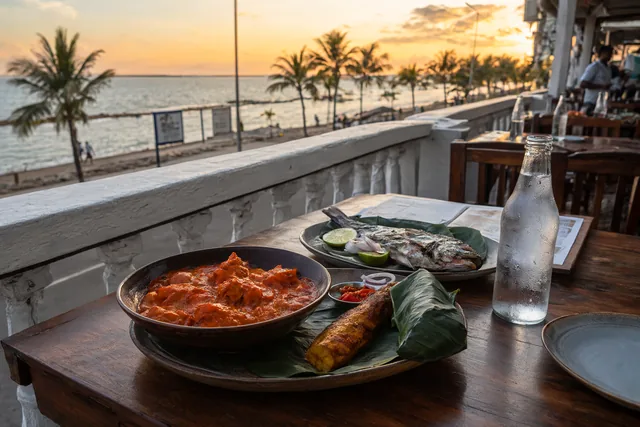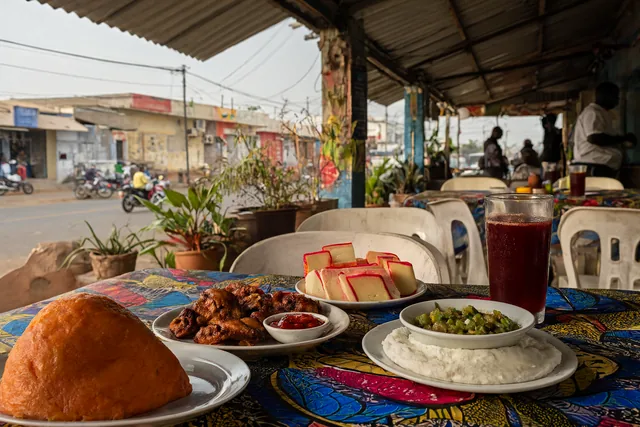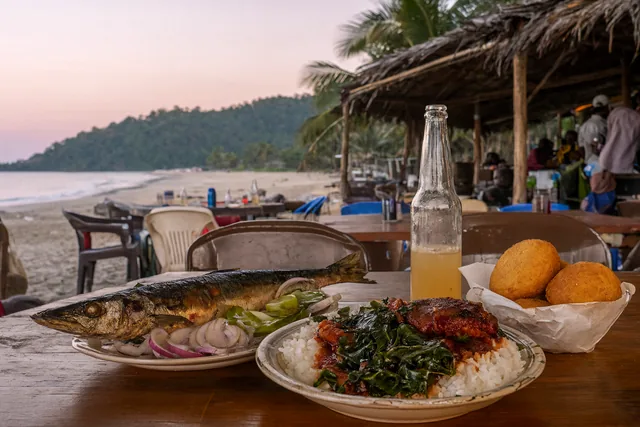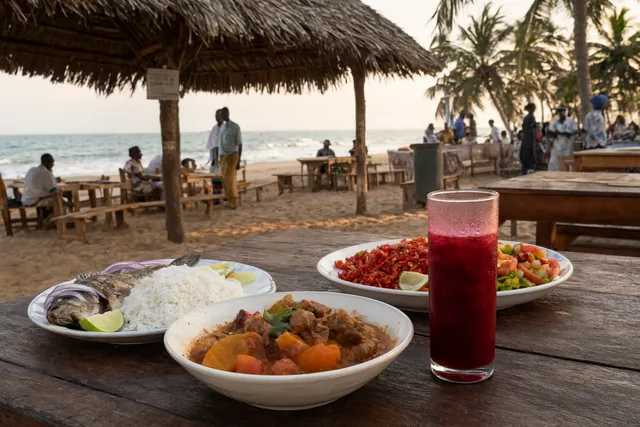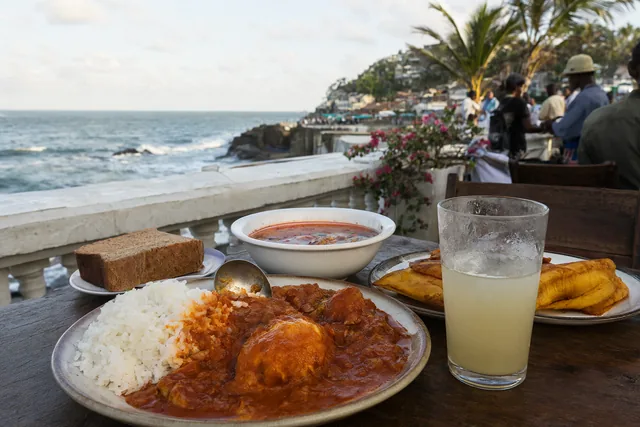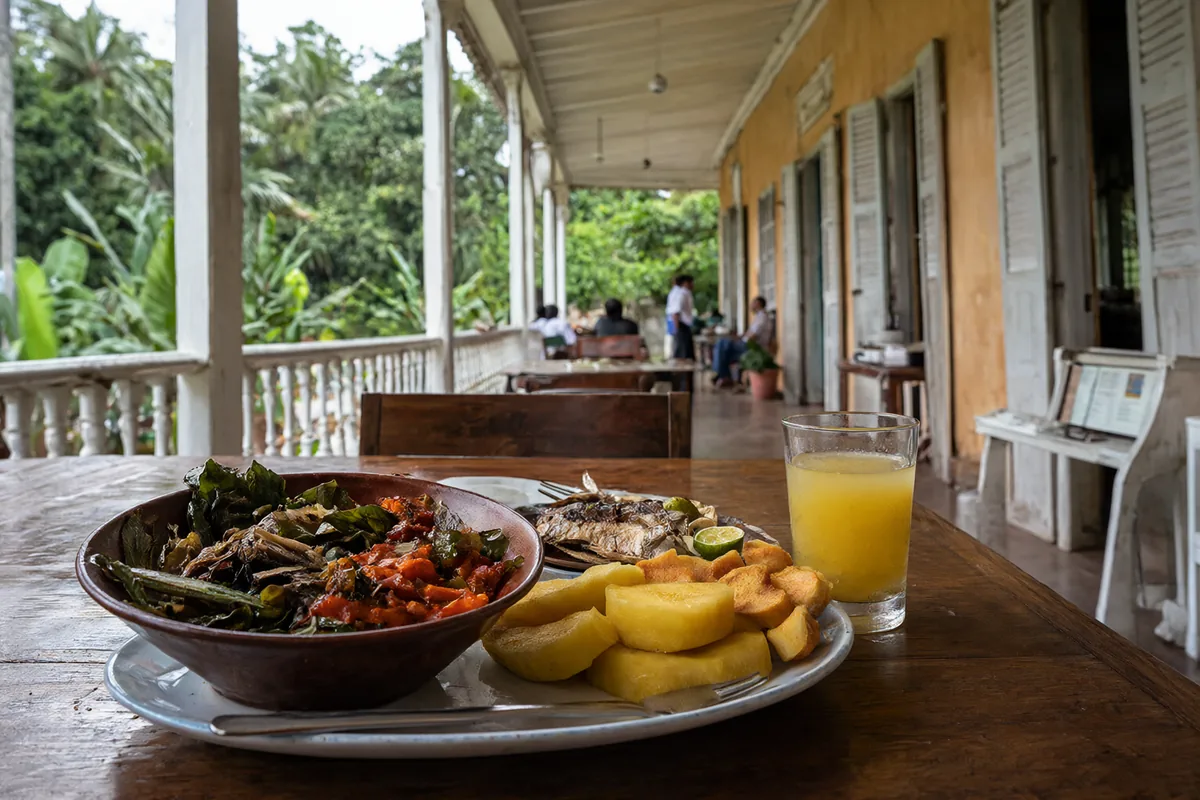
São Tomé and Príncipe, two small volcanic islands in the Gulf of Guinea on the equator, was once the world's leading cocoa producer, and its food still grows wild around the old plantation houses: breadfruit, plantain, jackfruit, cocoa, coffee and spices, with fish straight from the sea. This São Tomé and Príncipe food guide covers the dishes to order (calulu, molho no fogo and izaquente), the Portuguese and local words you will see on menus, how paying in dobras and euros works, and then goes through where to eat in São Tomé city, along the north coast, at the roças (plantations) of the interior, on the south coast and on Príncipe. Portuguese is the official language, and Forro, a Portuguese creole, is spoken across São Tomé island. The local motto is leve-leve, "easy, easy", and meals run at that pace.
What to eat in São Tomé and Príncipe: 11 dishes to know
These are the dishes worth seeking out. The islands' cooking mixes Portuguese technique with Angolan, Cape Verdean and West African roots, and it relies on what grows and swims locally.
- Calulu: the national dish, a slow-cooked stew of smoked or fresh fish (or chicken) with a large mix of local leaves and herbs, okra, aubergine, tomato and palm oil. It takes hours to make and is often cooked for Sundays and celebrations. Served with angu or rice.
- Angu: a smooth purée of cooked plantain or banana, the classic partner for calulu.
- Molho no fogo: "sauce on the fire", a rich stew of fish with palm oil, leaves and spices, close to calulu but simpler.
- Izaquente: a stew of the seeds of the African breadfruit tree, cooked slowly with palm oil and smoked fish, a traditional dish for special days.
- Peixe grelhado: grilled fish, often flying fish (peixe voador), barracuda, grouper or tuna, served with fried plantain, breadfruit or rice and a hot chilli sauce.
- Fruta-pão: breadfruit, boiled, roasted or sliced and fried into chips, served alongside fish.
- Banana-pão: cooking plantain, fried, boiled or roasted, eaten with almost everything.
- Matabala: taro root, boiled or fried, another everyday starch.
- Búzio: a large land snail from the forest, cooked in a spicy sauce, a local delicacy.
- Polvo: octopus, stewed or grilled, common at seaside restaurants.
- Feijoada: a stew of beans with pork and sausage, a Portuguese legacy, sometimes made with fish.
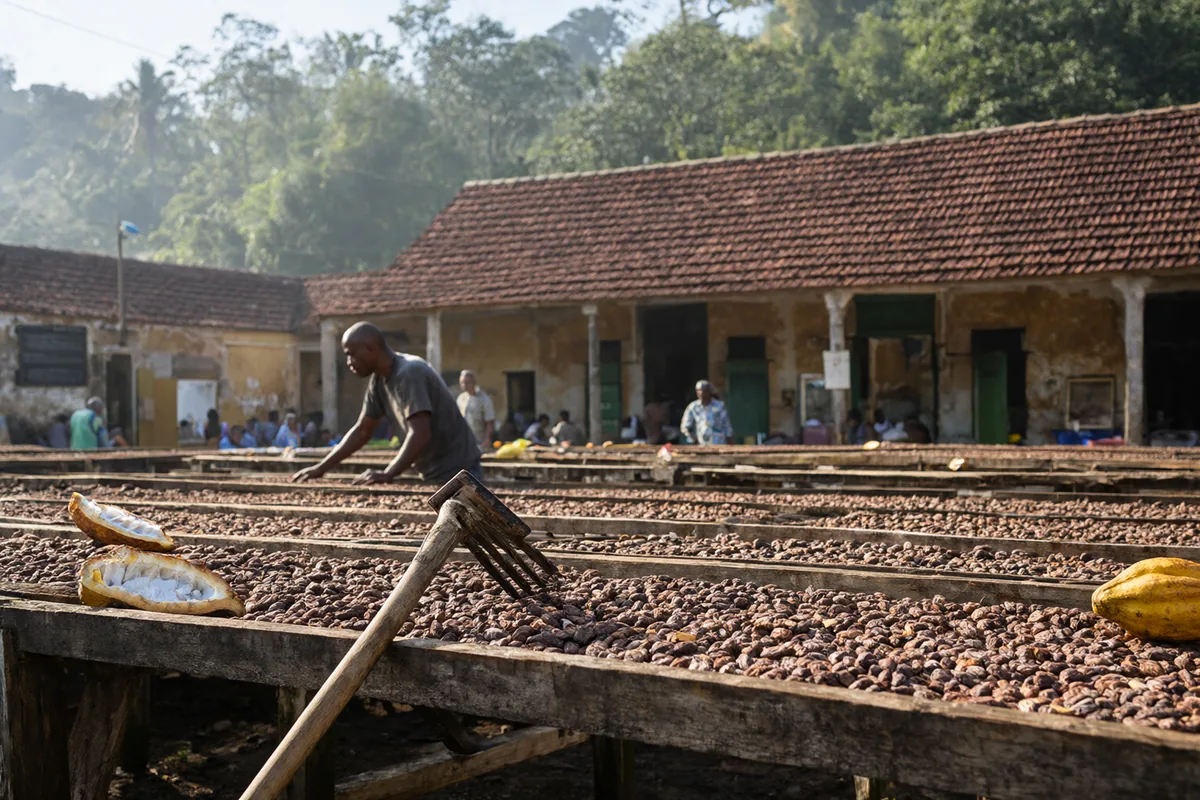
The islands are famous for cacao, and São Tomé chocolate, made from fine-flavour cocoa grown on the roças, is sold in the capital and at some plantations, where you can see how cocoa is fermented and dried. Coffee is grown on the slopes of the interior. To drink, try fresh tropical juices, vinho de palma (palm wine, tapped from oil palms and sold by the roadside in the morning) and cacharamba, a strong sugar cane spirit. Fruit is everywhere: jackfruit (jaca), soursop, papaya, mangoes and safú, a small, sour, purple local fruit.
How to read a menu in São Tomé and Príncipe
Menus in São Tomé and Príncipe are in Portuguese, and in tourist hotels and lodges sometimes in English and French. Local restaurants often have a short list of dishes, or none at all, and the cook will tell you what is available that day: usually grilled fish, chicken, and calulu or another stew on certain days. Calulu takes time to prepare, so some places need to be told in advance. These are the words worth knowing.
| Portuguese | Meaning |
|---|---|
| Prato do dia | Dish of the day |
| Peixe / peixe voador | Fish / flying fish |
| Peixe fumado / seco | Smoked / dried fish |
| Frango / porco / cabrito | Chicken / pork / goat |
| Marisco / polvo / lagosta | Seafood / octopus / lobster |
| Grelhado / frito / estufado | Grilled / fried / stewed |
| Fruta-pão / banana-pão / matabala | Breadfruit / plantain / taro |
| Calulu / angu | Fish and leaf stew / plantain purée |
| Óleo de palma | Palm oil |
| Malagueta / piripiri | Hot chilli |
| Arroz / feijão | Rice / beans |
| Sumo natural | Fresh juice |
| Vinho de palma | Palm wine |
| A conta | The bill |
Calulu is slow food: many restaurants and roças only cook it to order, or on certain days, so ask a day ahead if you want to try it. swap.menu reads Portuguese menus and handwritten boards, explains local dish names and converts dobra or euro prices to your home currency.
Tipping, tax and paying the bill in São Tomé and Príncipe
Tipping is not a strong tradition in São Tomé and Príncipe, but it is appreciated in restaurants used to visitors, where around 5 to 10 percent for good service is generous. In small local places, rounding up is enough. Hotels and lodges may add taxes or a service charge to the bill, which should be shown separately. Our guide to tax and service charges on menus explains how these lines work.
The currency is the dobra (STN), written Db, which is pegged to the euro. The dobra was redenominated in 2018, removing three zeros, so you may still hear older prices quoted in thousands. Euros are widely accepted in hotels, lodges, tour operators and many restaurants, often at a round rate, and many visitors pay for tourist services in euros. Cash is essential: card payments are accepted only in some hotels and a few businesses in the capital, and ATMs that accept foreign cards are limited, so bring enough euros in cash for your trip. When a card machine offers to charge you in your home currency, choose the local currency: our guide to paying in local currency explains why.
Lunch is eaten from about noon to 2pm and dinner from about 7pm. Restaurants outside the capital are few, so on day trips plan where you will eat, or arrange lunch at a roça or lodge in advance. The pace is slow, and a grilled fish lunch may take an hour to arrive because it is cooked from scratch.
Where to eat in São Tomé and Príncipe, island by island
The islands are small, and their food scene is small too, but what there is is fresh, local and often served in remarkable settings: colonial plantation houses, black sand beaches and rainforest. Jump to a destination:
Where to eat in São Tomé city
São Tomé city, the capital, is a small, easygoing town of faded Portuguese colonial buildings around a bay, and it has the widest choice of places to eat in the country. The Mercado Municipal (the central market) is the place to see the islands' produce: breadfruit, plantains, taro, piles of tropical fruit, smoked and fresh fish, palm oil, chillies and bundles of leaves for calulu. Around the market, simple eateries and street sellers serve grilled fish, fried plantain and snacks at local prices.
The seafront Avenida Marginal 12 de Julho, along the bay, has restaurants and cafés serving grilled fish, octopus and Portuguese-style dishes, and the area around the cathedral and the old fort has a few more restaurants and bars. São Tomé city is the best place on the islands to buy local chocolate and coffee, and some producers have shops in town. In the evening, grilled fish and chicken are sold at street stalls, and the town is quiet early. Most restaurants in São Tomé city accept euros as well as dobras.
Where to eat on the north coast
The north coast of São Tomé island, from the capital towards Guadalupe and Neves, has dry savannah, baobab trees and some of the best beaches and snorkelling on the island, at places such as Lagoa Azul. The fishing town of Neves is busy in the mornings when the boats come in, and it is the place to see fishermen's pirogues and buy fish straight from the beach.
Food on the north coast is simple: a few beach restaurants and lodges serve grilled fish, octopus and fried breadfruit, and roadside sellers offer palm wine, fruit and grilled fish in the villages. Many visitors take a picnic or arrange lunch with their guide. Beyond Neves, the road continues along the coast towards Santa Catarina, with small villages and very little else, so plan meals before you set off.
Where to eat at the roças of the interior
The roças, the old cocoa and coffee plantations of the colonial era, are the most distinctive places to eat in São Tomé and Príncipe. Some are now lodges, guesthouses and restaurants in restored plantation houses, while others are villages living among grand ruins. Monte Café, in the hills above the capital, has a coffee museum explaining how coffee was grown and processed, and the area is cool and green. Roça Agostinho Neto, north of the capital, is one of the largest, with its huge former hospital building.
Meals at roças that host visitors are usually set lunches or tasting menus built on local ingredients: calulu, grilled fish, breadfruit, plantain, local leaves, fruit and cocoa, often served on a veranda overlooking the forest. Lunch at a roça is the best way to try traditional São Tomé cooking, and some offer tours of the cocoa drying and fermentation sheds. Book ahead through your guide or hotel, as most cook only for the number of guests expected.
Where to eat on the south coast
The south of São Tomé island is wild and green, with rainforest, the dramatic volcanic spire of Pico Cão Grande, and fishing villages along the coast. The town of São João dos Angolares, home of the Angolar people, descendants of escaped slaves known for their fishing traditions, has a roça that serves long, creative tasting lunches of local ingredients, one of the best-known meals on the island. Further south, Porto Alegre is a fishing village at the end of the road, near the beaches of Praia Jalé, where turtles nest from about October to March.
From Porto Alegre, a short boat ride crosses to the Ilhéu das Rolas, a small island that sits on the equator, with a resort and a monument marking the line. Food in the south is limited to a few lodges, roças and village eateries serving grilled fish and plantain, so it is common to arrange meals with your accommodation. Fish here is often caught the same morning by Angolar fishermen in pirogues.
Where to eat on Príncipe
Príncipe, the smaller island, is a UNESCO Biosphere Reserve with rainforest, empty beaches and a population of only a few thousand. Its capital, Santo António, is a tiny riverside town with a handful of local eateries, a market and street sellers serving grilled fish, plantain and breadfruit. Much of the eating on Príncipe happens at its lodges and restored roças, where restaurants serve local fish, vegetables from their own gardens and island fruit.
Roça Sundy, now part of a lodge, is famous as the place where Arthur Eddington observed the solar eclipse of 1919 that confirmed Einstein's theory of general relativity. Several roças on Príncipe run tours of their cocoa operations and serve lunches built on local produce. Príncipe has very few restaurants outside the lodges and the capital, so arrange meals in advance. Flights from São Tomé are short but limited, and luggage weight is restricted, so cash in euros for the island is worth arranging before you go.
Vegetarian, vegan and allergy tips
Vegetarians can eat well on the islands' starches, fruit and vegetables, but traditional stews are built on fish. Calulu, molho no fogo and izaquente are cooked with smoked or fresh fish or meat, and palm oil is in most sauces. The easiest vegetarian options are fried breadfruit, plantain, taro, rice and beans (ask whether pork was used), salads, omelettes and fruit, and lodges will usually prepare vegetarian meals if asked in advance. The word for vegetarian is vegetariano (vegetariana for a woman), and "sem carne, sem peixe" means no meat, no fish.
Fish, shellfish, smoked fish and octopus are in many dishes, so people with seafood allergies need to ask about every dish, including stews of leaves. Breadfruit, plantain, taro and rice are naturally gluten-free. Medical facilities are limited on the islands, so carry any allergy medication you need. Our guide to eating abroad with food allergies explains how to communicate a serious allergy clearly.
Useful Portuguese phrases for ordering
Bom dia / Boa tarde / Boa noite "Good morning / Good afternoon / Good evening"; always greet before ordering
O que há hoje? "What is there today?", the best question in a small restaurant
Queria isto, por favor "I would like this, please" (pointing)
Quanto custa? "How much is it?"
Pode fazer calulu amanhã? "Can you make calulu tomorrow?"
Sem picante, por favor "Not spicy, please"
A conta, por favor "The bill, please"
Leve-leve "Easy, easy", the islands' motto, used for everything from greetings to waiting for lunch
How swap.menu helps you eat in São Tomé and Príncipe
Menus on the islands are in Portuguese, often handwritten, and the dishes have local names you will not find in a phrasebook: calulu, izaquente, molho no fogo, matabala. Photograph the menu with swap.menu and every dish appears in your language with its original name beside it and a short explanation, so you know that matabala is taro, that búzio is a land snail and that molho no fogo is a fish stew. Prices are converted from dobras or euros to your home currency, and any tax or service line is flagged.
Tap the dishes you want, add a note such as "no fish" or "sem picante", typed or spoken, and swap.menu translates your order into Portuguese. Show the waiter your phone, or let them scan the QR code and read your order on their own screen. Try it on a sample menu with the free demo, or see travel pass prices.
Off to São Tomé and Príncipe? Your first 3 menu scans are free, and a travel pass starts from $4.99 with nothing that renews.
Start free with 3 scansSão Tomé and Príncipe food FAQ
Do you tip in restaurants in São Tomé and Príncipe?
Tipping is not a strong tradition, but around 5 to 10 percent is appreciated in restaurants used to visitors. In small local eateries, rounding up the bill is enough.
What is the national dish of São Tomé and Príncipe?
Calulu is the national dish: a slow-cooked stew of smoked fish or chicken with many local leaves and herbs, okra, aubergine and palm oil. It is served with angu, a plantain purée, or rice.
What food is São Tomé and Príncipe famous for?
The islands are famous for cocoa and chocolate, coffee, calulu, grilled fish, breadfruit and plantain. Palm wine and tropical fruit such as jackfruit and safú are part of everyday life.
Is it expensive to eat out in São Tomé and Príncipe?
Local eateries and market food are cheap, but there are few of them outside the capital. Lodges, roça lunches and restaurants aimed at visitors cost much more, partly because many ingredients are imported.
Is tap water safe to drink in São Tomé and Príncipe?
No, visitors should drink bottled or filtered water. Most hotels and lodges provide safe drinking water, and bottled water is sold in shops in the capital.
How can I read a menu in São Tomé and Príncipe if I do not speak Portuguese?
Learn a few words such as peixe, frango, grelhado and prato do dia, or photograph the menu with swap.menu. It translates Portuguese menus, explains local dish names, converts dobra and euro prices to your currency and translates your order back into Portuguese.
Travelling further in Central and West Africa? Read our food guides for nearby countries:
Or browse every travel food guide.