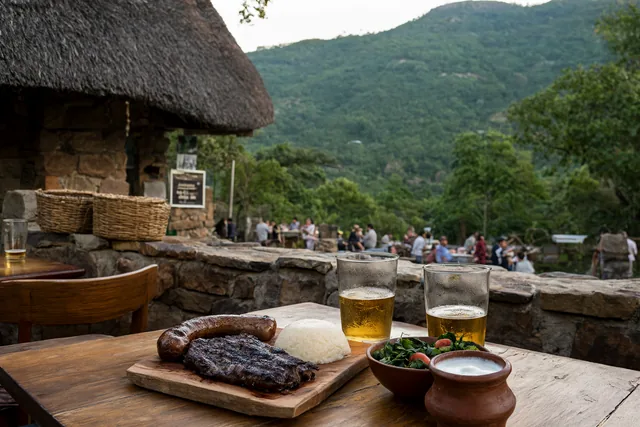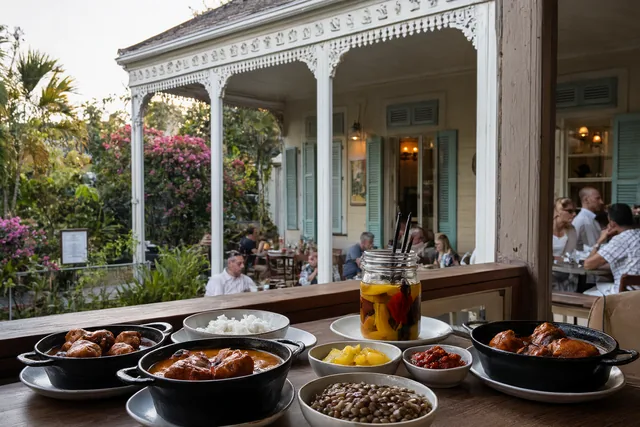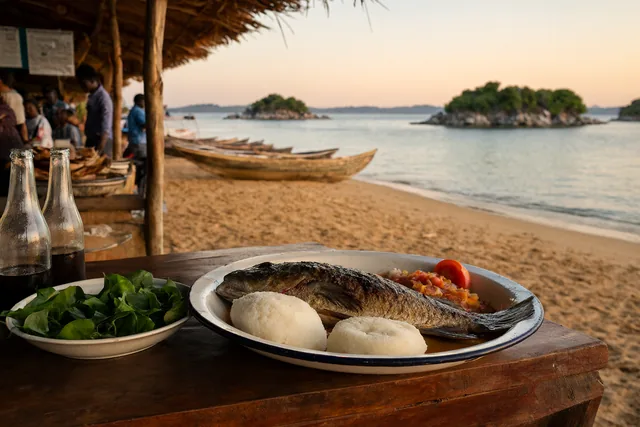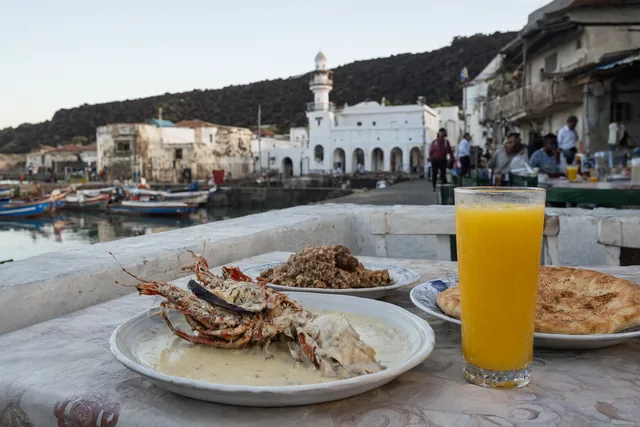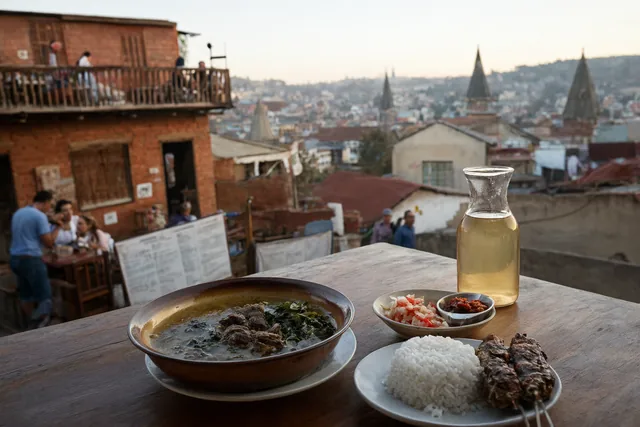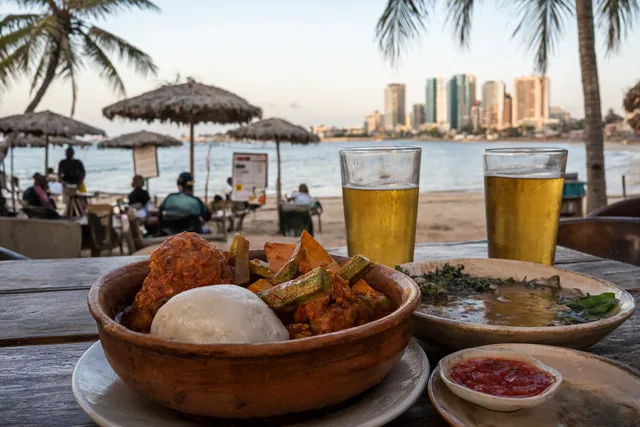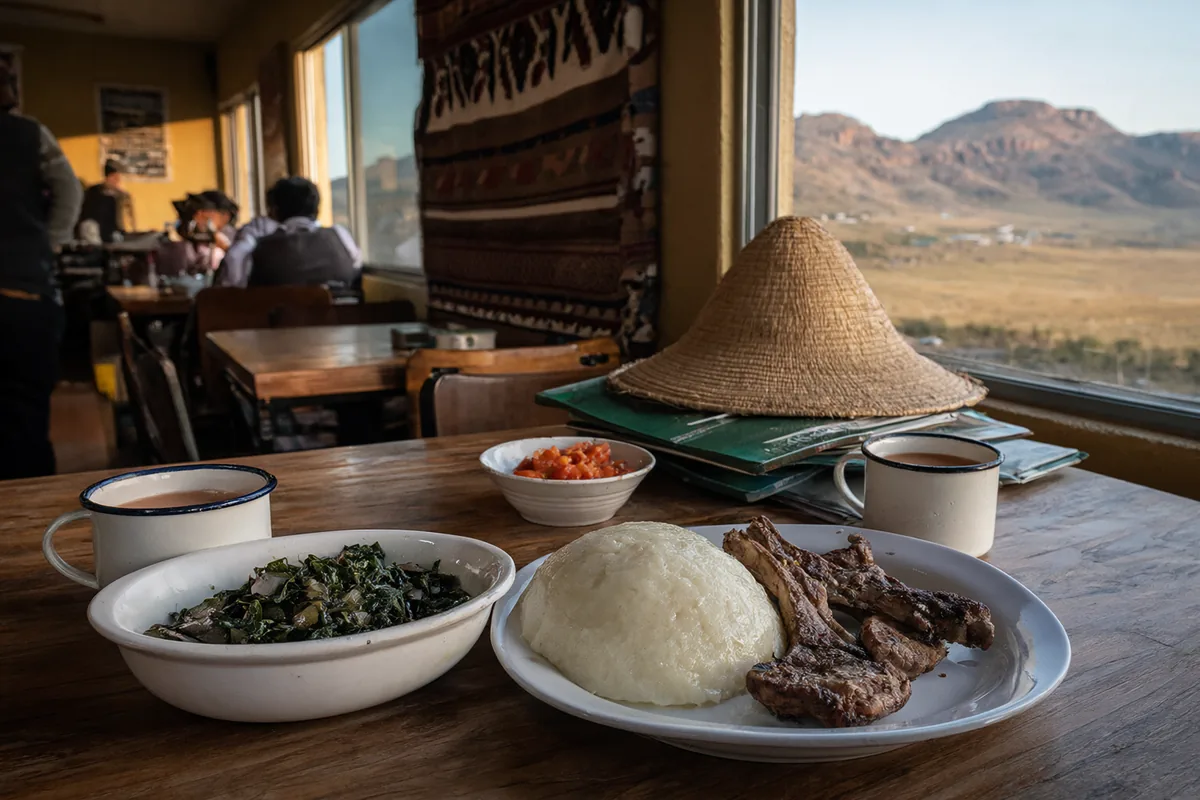
Lesotho is a kingdom in the sky: the whole country lies above 1,000 metres, much of it far higher, and it is ringed entirely by South Africa. Its food is mountain food, made for cold nights and long days with the herds: thick maize porridge called papa, greens called moroho, mutton and lamb from the highland flocks, sour milk, steamed bread, trout from the highland dams and home-brewed sorghum beer. This Lesotho food guide covers the dishes to know, the Sesotho words you will meet, tipping and paying in maloti, and where to eat in Maseru, Roma and Morija, Malealea, Semonkong, Katse and the central highlands, and Sani Pass and Mokhotlong.
What to eat in Lesotho: 11 dishes to know
Basotho food is simple and seasonal, shaped by altitude, cold winters and a pastoral way of life. Restaurants in Maseru serve South African-style grills and international dishes, while the traditional foods below are eaten at home, in villages, at lodges and at local eateries.
- Papa (everywhere): stiff maize porridge, the staple of almost every meal, the same as South African pap. It is eaten with the right hand or with a spoon, alongside meat and vegetables.
- Moroho (everywhere): cooked greens, from cabbage, spinach and rape to wild greens gathered in the fields, usually cooked with onion and served with papa. "Papa le moroho" is the everyday meal.
- Mutton and lamb (everywhere, especially the highlands): Lesotho is sheep and goat country, famous for wool and mohair, and mutton stews, grilled chops and roasts are the meat dishes visitors most often meet.
- Motoho (everywhere): a soft porridge of fermented sorghum, sour and filling, eaten at breakfast.
- Mafi (everywhere): thick soured milk, eaten with papa or on its own, and a staple in herding families.
- Likhobe (everywhere): a filling mix of boiled grains and legumes, such as maize and beans, cooked together.
- Leqebekoane (everywhere): steamed bread, a dense, soft loaf cooked in a pot, served with stew. Bohobe is the general word for bread.
- Makoenya (everywhere): fat cakes, deep-fried dough balls sold by street vendors and taxi ranks in the morning.
- Highland trout (Katse and the highlands): rainbow trout farmed in the cold reservoirs of the highland water project and caught in mountain rivers, served at lodges and exported abroad.
- Peaches (everywhere): peach trees grow beside homesteads all over Lesotho, flowering pink in spring, and the fruit is eaten fresh in summer and dried or preserved for winter.
- Joala (rural areas): home-brewed sorghum beer, cloudy and slightly sour, drunk at gatherings. In villages, a flag on a pole outside a house traditionally signals something for sale, and a white flag usually means joala.
How to read a menu in Lesotho
Sesotho and English are both official languages in Lesotho. Restaurant and lodge menus are in English, usually with South African terms such as braai, pap and boerewors, while village food and local eateries use Sesotho. Many lodges serve a set dinner rather than a menu, so it helps to know the names of what arrives. These are the words worth learning.
| Sesotho | Meaning |
|---|---|
| Papa | Stiff maize porridge |
| Moroho | Cooked greens |
| Nama | Meat |
| Nama ea nku | Mutton or lamb |
| Khoho | Chicken |
| Tlhapi | Fish, usually trout in the highlands |
| Lebese | Milk |
| Mafi | Soured milk |
| Motoho | Fermented sorghum porridge |
| Likhobe | Boiled grains and beans |
| Bohobe / leqebekoane | Bread / steamed bread |
| Makoenya | Fat cakes |
| Joala | Traditional sorghum beer |
| Metsi | Water |
At highland lodges, dinner is often a fixed menu at a set time, and kitchens close early. Ask in the afternoon what is being served, and say if you want to try papa, moroho and a mutton stew. swap.menu explains Sesotho and South African food terms on any menu and converts maloti prices to your home currency.
Tipping, tax and paying the bill in Lesotho
Tipping is customary in Lesotho's restaurants and hotels, much as in South Africa. Around 10 percent is normal for good table service when no service charge has been added. Pony trek guides, village guides and lodge staff are usually tipped at the end of a trip or stay, and petrol attendants appreciate a small tip. At local eateries and street stalls, tipping is not expected. VAT is included in menu prices. Our guide to tax and service charges on menus explains how these lines work around the world.
The currency is the loti (plural maloti, code LSL), written M on menus. It is pegged one to one to the South African rand, and rand are accepted everywhere in Lesotho, but maloti are not accepted in South Africa, so ask for change in rand before you leave. Cards are accepted at shopping malls, supermarkets, hotels and larger restaurants in Maseru and some lodges, but the highlands run on cash. ATMs are found in Maseru and the district towns, so withdraw enough before heading into the mountains. When a card machine offers to charge you in your home currency, decline: our guide to paying in local currency explains why.
Lesotho keeps early hours. Lunch is from about 12pm to 2pm and dinner from around 6pm or 6:30pm. In the highlands, lodges usually serve dinner at a fixed time and many village shops close before dark. Winters (June to August) are very cold, with snow in the mountains, and a hot stew and papa by the fire is part of the experience.
Where to eat in Lesotho, place by place
Lesotho's food scene outside Maseru is small and honest: lodges, village homestays, roadside stalls and trading stores. What makes it special is the setting. Jump to a destination:
Where to eat in Maseru
Maseru, the capital, sits on the Caledon River on the border with South Africa, and it is the only place in Lesotho with a real choice of restaurants. Along Kingsway, the main street, and in the shopping centres such as Pioneer Mall and Maseru Mall, you find grills, chicken shops, Chinese, Indian and Portuguese restaurants, coffee shops and supermarkets. Hotel restaurants serve buffets and steaks, and on weekends some offer a traditional Basotho lunch of papa, moroho, mutton and beef stew.
For local food in Maseru, head to the street vendors around the taxi ranks and markets in the centre, where women sell makoenya, roasted maize, grilled meat and plates of papa with stew at lunchtime. The Basotho Hat, the craft shop shaped like the traditional conical straw hat near the main roundabout, is a landmark worth a look. Half an hour east of Maseru, the mountain fortress of Thaba Bosiu, the founding place of the Basotho nation, has a cultural village with a restaurant serving Basotho food.
Where to eat in Roma and Morija
Roma, about an hour south east of Maseru, is a university town in a valley of sandstone cliffs, home to the National University of Lesotho and several missions. Its food is the food of students and villages: small eateries and shops serving papa with stew, fat cakes and grilled chicken, and a few guesthouses that cook dinner for guests. Roma is a pleasant base for walks to dinosaur footprints and rock art in the surrounding hills.
Morija, south of Maseru, is the site of the country's first mission, founded in the 1830s, and home to the Morija Museum and Archives, the best place to learn about Basotho history and culture. Guesthouses in Morija serve home-cooked meals, often including papa, moroho, mutton and peaches in season. Neither town has much in the way of restaurants, so eat where you stay and enjoy the quiet. The road south from Morija leads on towards Malealea.
Where to eat in Malealea
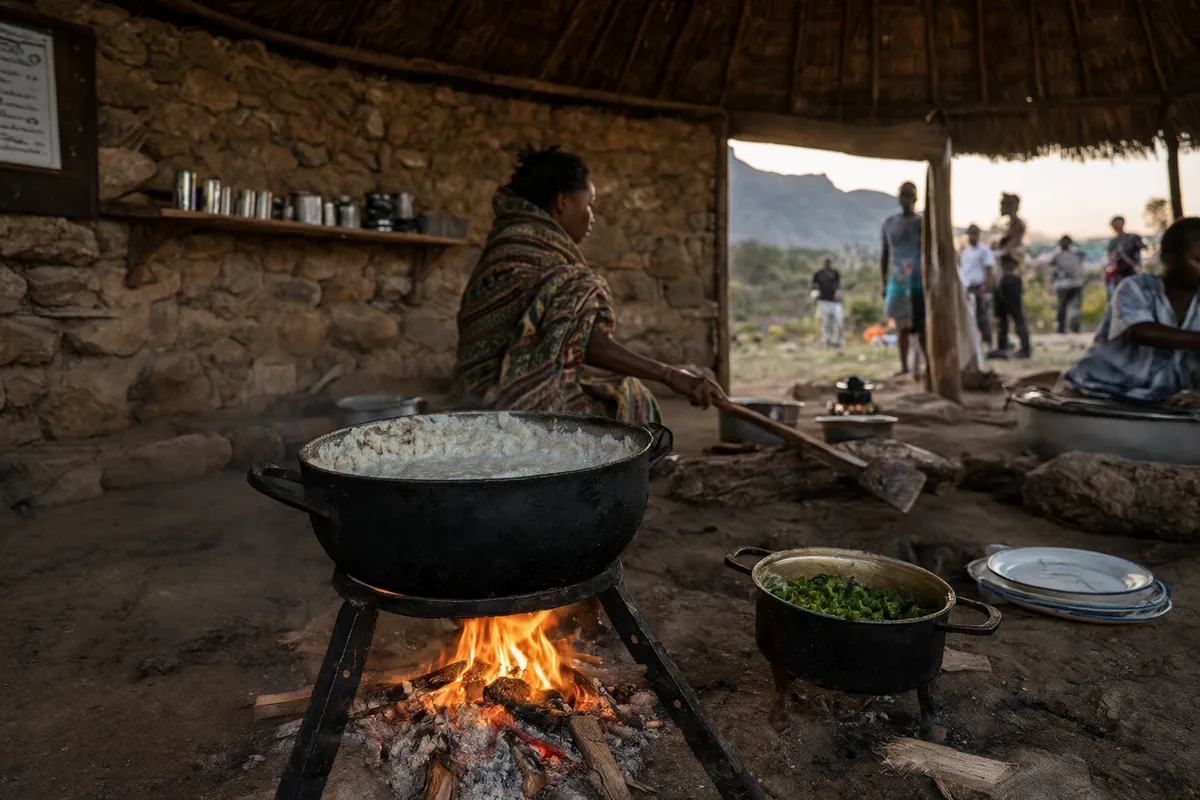
Malealea, a village at the end of a mountain road through the pass known as the Gate of Paradise, is one of Lesotho's best-known places to stay, famous for pony trekking, village walks and choirs that sing for visitors in the evening. Most visitors eat at the lodge in Malealea, where meals are hearty set dinners and braais, and many also book a village homestay or a meal with a local family, which is the best chance in Lesotho to eat papa, moroho, beans and mutton cooked over a fire in a stone rondavel.
On overnight pony treks from Malealea, you sleep in villages and eat what the host family cooks, so bring snacks and water purification tablets, and expect simple food. You may see the white flags of houses selling joala in the villages around Malealea, and buying a cup is a friendly way to meet people. Tip guides and hosts directly at the end of a trek.
Where to eat in Semonkong
Semonkong, "the place of smoke", is a small highland town named after the spray of the Maletsunyane Falls, one of the highest single-drop waterfalls in southern Africa. Herders in blankets ride ponies through town, and the food is highland food: mutton stew, papa, moroho and steamed bread at small eateries around the market, and set dinners and braais at the lodges, served by the fire on cold nights. A plate of papa with mutton after a day's trekking in Semonkong is hard to beat.
Semonkong is known for pony treks, hiking and one of the longest commercial abseils in the world beside the falls, and lodges arrange guides and packed lunches. The town's shops sell basic supplies only, so self-caterers should bring most food from Maseru. Roads are paved now, but the drive from Maseru still takes a couple of hours through high mountain passes.
Where to eat in Katse and the central highlands
The central highlands around Katse Dam, one of the great dams of the Lesotho Highlands Water Project, are wild and mountainous, with long roads over passes higher than 3,000 metres. The dam's cold water is used for trout farming, and trout from the reservoir appears on lodge menus around Katse, grilled, smoked or pan-fried. The lodge at the dam serves meals with views over the lake, and a botanical garden nearby grows mountain plants rescued from the flooded valleys.
The small town of Thaba-Tseka is the main centre of the region, with shops, a market and simple eateries. Food in the highlands is limited and seasonal, and many travellers rely on lodges for meals and carry snacks between them. The Mohale Dam, closer to Maseru, also has trout and a lodge serving meals, and makes a good lunch stop on the way into the highlands.
Where to eat at Sani Pass and Mokhotlong
Sani Pass, the dramatic switchback road that climbs from KwaZulu-Natal in South Africa onto the Lesotho plateau, is one of the most famous drives in Africa, and at the top, just inside Lesotho, a mountain lodge with a bar has long been billed as the highest pub in Africa. Lunch there, with soup, pies, steaks or a stew and a view down the pass, is the standard reward for the climb, and in winter there is often snow on the ground.
Beyond the pass, the road continues to Mokhotlong, a remote highland town of traders and herders, where small shops and eateries serve papa, mutton and fat cakes. The ski resort in the Maluti Mountains near Oxbow, between Mokhotlong and Butha-Buthe, has restaurants in season. Many visitors come up Sani Pass on day tours from South Africa, which usually include a village visit where you can try steamed bread, papa and sometimes joala at a homestead.
Vegetarian, vegan and allergy tips
Lesotho's restaurants are meat-focused, but papa le moroho, likhobe, beans and steamed bread make an easy vegetarian meal, and many vegetable dishes are vegan. Ask whether greens or beans have been cooked with meat or stock, which is common. The word "vegetarian" is understood at restaurants and lodges, and at village meals it helps to say "no meat" clearly. Lodges in remote areas need notice for special diets, so tell them when you book.
Dairy is the hidden ingredient in many traditional dishes: mafi (soured milk) and lebese (milk) are served with papa, and butter is used in some cooking. Wheat is in steamed bread and fat cakes. Our guide to eating abroad with food allergies has tips for explaining a serious allergy clearly when the cook speaks little English.
Useful Sesotho phrases and ordering terms
English is widely understood in Maseru and at lodges, but in the highlands Sesotho is the language of daily life, and a greeting makes a real difference.
Lumela ntate / Lumela 'me "Hello, sir / Hello, madam", the polite greeting
Khotso "Peace", a greeting and part of the national motto
O phela joang? / Ke phela hantle "How are you?" / "I am fine"
Ke kopa papa le moroho "Please may I have papa and greens"
Ke bokae? "How much is it?"
Ho monate "It is nice" or "it is delicious"
Kea leboha "Thank you"
How swap.menu helps you eat in Lesotho
Lesotho's menus are in English, but they mix in Sesotho and South African words that visitors rarely know: what is leqebekoane, is moroho a meat dish, and what does "pap and wors" mean? Photograph the menu with swap.menu and every dish gets a short explanation, so you know what a lodge's set dinner is before it arrives. Every maloti price is converted to your home currency, and the rand peg is no longer a mental maths exercise.
Visitors from non-English-speaking countries can read the whole menu in their own language, in any of 29 languages, and add notes such as "no dairy" or "no meat stock", typed or spoken, that appear on the waiter's screen in English. You can save menus from lodges and restaurants along your route. Try it on a sample menu with the free demo, or see travel pass prices.
Off to Lesotho? Your first 3 menu scans are free, and a travel pass starts from $4.99 with nothing that renews.
Start free with 3 scansLesotho food FAQ
Do you tip in restaurants in Lesotho?
Yes, around 10 percent is customary for good table service in restaurants and hotels when no service charge has been added. Pony trek guides, village guides and lodge staff are usually tipped at the end of a trip.
What is traditional food in Lesotho?
Traditional Basotho food is papa (stiff maize porridge) with moroho (cooked greens), mutton and lamb stews, motoho (fermented sorghum porridge), mafi (soured milk) and steamed bread. Trout from the highland dams and peaches from village trees are also local specialities.
Can I use South African rand in Lesotho?
Yes. The loti is pegged one to one to the rand, and rand are accepted everywhere in Lesotho. Maloti are not accepted in South Africa, so ask for change in rand before you cross back.
Is tap water safe to drink in Lesotho?
Most visitors drink bottled or treated water in Lesotho, especially in rural areas and on treks, where water comes from springs and rivers. Lodges can advise on their own supply.
What time do people eat dinner in Lesotho?
Dinner is early, often from about 6pm or 6:30pm, and highland lodges usually serve a set dinner at a fixed time. Restaurants in Maseru stay open later, but rarely past 10pm.
Can swap.menu help with Lesotho menus if they are in English?
Yes. It explains Sesotho and South African food words such as papa, moroho, motoho and boerewors, converts maloti prices to your home currency and saves the menus you scan. Visitors who do not read English can see the menu in their own language.
Travelling further in southern Africa? Read our food guides for nearby countries:
- South Africa food guide
- Eswatini food guide
- Botswana food guide
- Namibia food guide
- Mozambique food guide
Or browse every travel food guide.