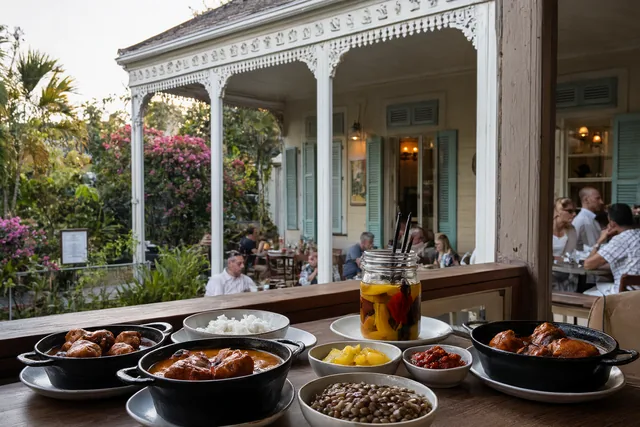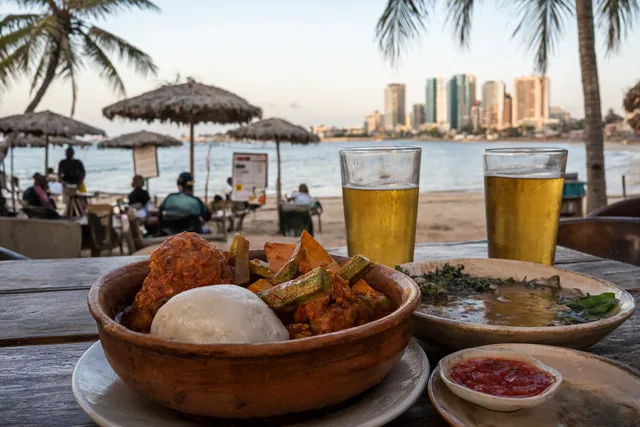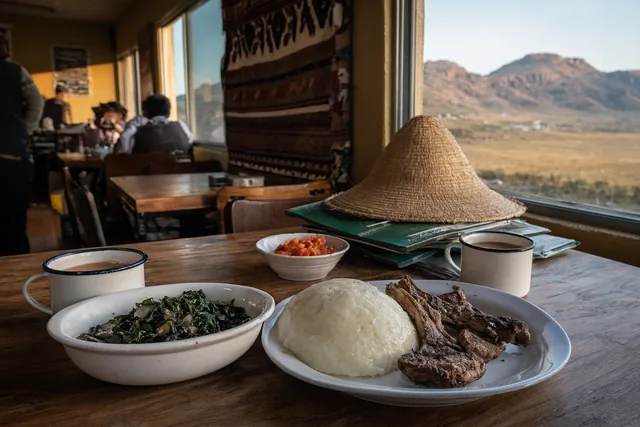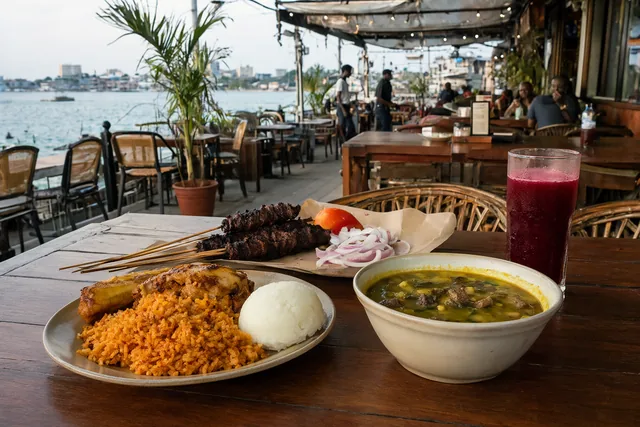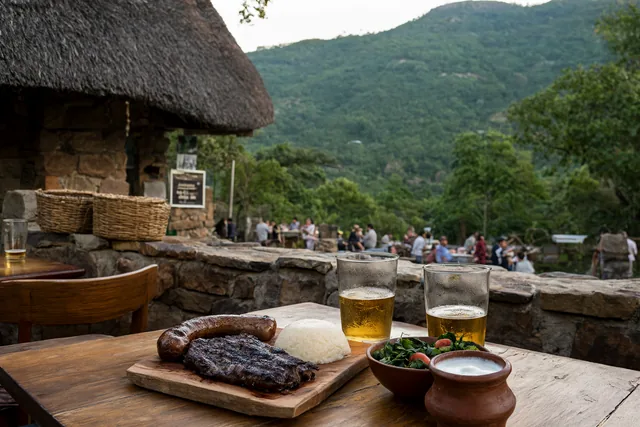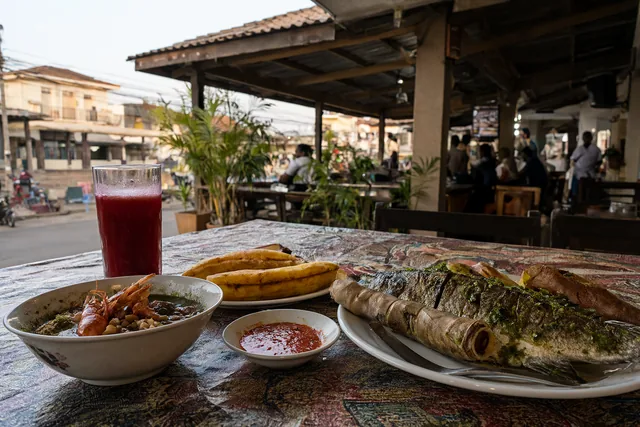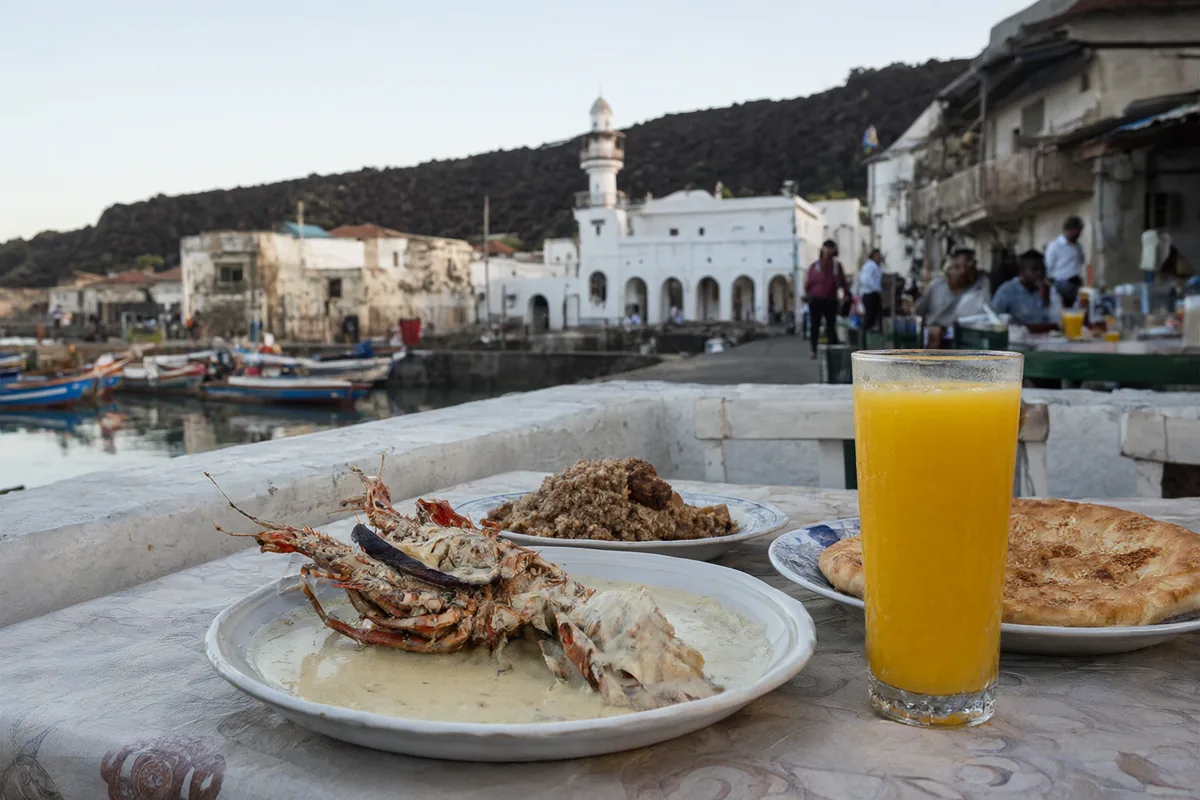
The Comoros, a chain of volcanic islands between Madagascar and the Mozambique coast, are among the least visited places in Africa, and their food is a quiet discovery. This is Swahili coast cooking with a Comorian twist: fish and octopus in coconut milk, cassava leaves pounded into mataba, spiced pilao rice for weddings, and lobster cooked in a sauce made with local vanilla, one of the islands' great exports alongside cloves and ylang-ylang. This Comoros food guide covers the dishes to know, how to read a menu in French, Comorian and Arabic, paying in Comorian francs, and where to eat in Moroni, Mitsamiouli and the north coast, Mutsamudu, Domoni and rural Anjouan, and Mohéli.
What to eat in the Comoros: 11 dishes to know
Comorian food is built on rice, cassava, plantain, breadfruit, coconut and the sea, with spices from the islands' own plantations and influences from East Africa, Arabia, Madagascar, India and France. These are the dishes to look out for.
- Langouste à la vanille (all islands): lobster cooked in a creamy sauce flavoured with Comorian vanilla, the islands' most famous dish and the one served to visitors and at celebrations.
- Mataba (all islands): young cassava leaves pounded and simmered for a long time in coconut milk, often with fish or crab. Served with rice, cassava or plantain, and the everyday taste of the Comoros.
- Pilao (all islands): rice cooked with meat, onion and spices such as cardamom, cinnamon, cloves and black pepper. A dish for weddings, religious holidays and the great feasts of the Comorian "grand mariage".
- Mkatra foutra (all islands): a soft, round flatbread made with coconut milk and sprinkled with sesame seeds, cooked in a pan and eaten at breakfast with tea or with a stew.
- Grilled fish (all islands): tuna, grouper, snapper and other reef and ocean fish, grilled over charcoal and served with rice, chips or plantain and a chilli sauce. Fish caught that morning is the norm.
- Octopus in coconut (the coasts): octopus caught on the reefs at low tide, cooked slowly in coconut milk with garlic and spices, or grilled.
- Mabawa (all islands): grilled chicken wings, a hugely popular street food, sold at night from charcoal grills with cassava, plantain or chips.
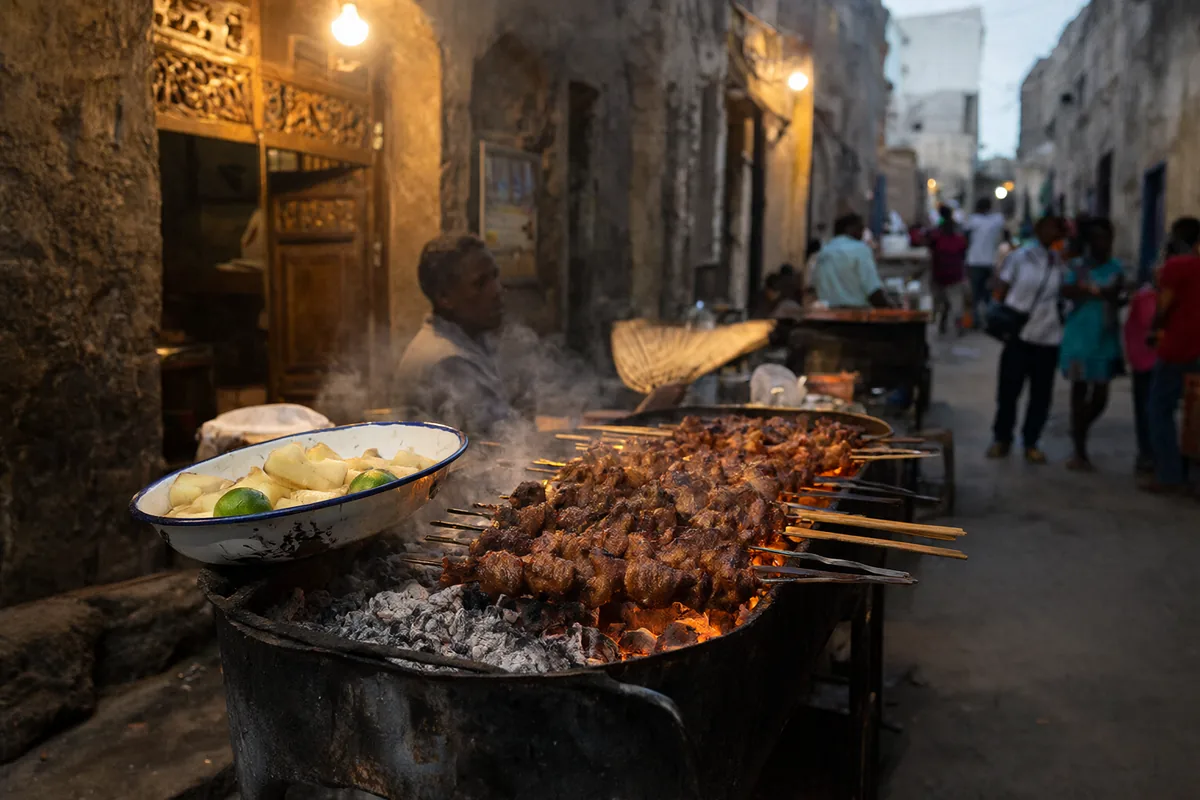
- Brochettes (all islands): skewers of grilled beef, goat or fish, sold at roadside grills in the evening with a squeeze of lime and chilli.
- Plantain, cassava and breadfruit in coconut (all islands): green bananas, cassava and breadfruit boiled or cooked in coconut milk, the starchy base of many meals, alongside rice.
- Ambrevades au coco (all islands): pigeon peas cooked in coconut milk, a common vegetable dish served with rice.
- Spiced tea and fresh juice (all islands): tea brewed with ginger, cardamom or lemongrass, and fresh juices of soursop, passion fruit, mango or guava. Coconut water is sold straight from the nut.
How to read a menu in the Comoros
The Comoros have three official languages: Comorian (Shikomori, closely related to Swahili, with a dialect on each island), French and Arabic. Printed menus in restaurants and hotels are in French, sometimes with Comorian dish names. Arabic is used mainly in religion and on signs, and most Comorians speak Comorian at home. Many small eateries have no menu at all: ask what is cooking. These are the words to know.
| Term | Language | Meaning |
|---|---|---|
| Mataba | Comorian | Pounded cassava leaves in coconut milk |
| Pilao | Comorian | Spiced rice with meat |
| Mkatra foutra | Comorian | Coconut flatbread with sesame |
| Mabawa | Comorian | Grilled chicken wings |
| Langouste à la vanille | French | Lobster in vanilla sauce |
| Poisson grillé | French | Grilled fish |
| Poulpe / calamar | French | Octopus / squid |
| Brochettes | French | Skewers of grilled meat or fish |
| Au coco | French | Cooked in coconut milk |
| Manioc / banane verte / fruit à pain | French | Cassava / plantain / breadfruit |
| Ambrevades | French (local) | Pigeon peas |
| Pilipili / piment | Comorian / French | Chilli, or chilli sauce |
| Jus frais | French | Fresh juice |
| Halal (حلال) | Arabic | Permitted under Islamic dietary law; almost all meat on the islands is halal |
Lobster is often listed without a price, or "selon arrivage" (depending on the catch), which means it depends on availability and size. Ask the price before you order. swap.menu reads French menus, explains Comorian dish names and converts Comorian franc prices to your home currency.
Tipping, money and paying the bill in the Comoros
Tipping is not a strong custom in the Comoros, and most local eateries do not expect it. In hotels and restaurants that serve visitors, leaving some change or around 5 to 10 percent for good service is appreciated, and guides and drivers are usually tipped at the end of a trip. Prices on menus are what you pay, and service charges are rare. Our guide to tax and service charges on menus explains how service and tax lines work around the world.
The currency is the Comorian franc (KMF), written FC on price tags, and it has a fixed exchange rate with the euro. The Comoros are a cash economy: cards are accepted at a few larger hotels in Moroni, and ATMs are few and do not always accept foreign cards, so bring enough cash, ideally in euros, which are easy to exchange and are sometimes accepted directly by hotels. Carry small notes for markets and taxis. If a card machine does offer to charge you in your home currency, decline: our guide to paying in local currency explains why.
The Comoros are a Muslim country, and this shapes when and how people eat. Lunch is from about 12pm to 2pm, and dinner from around 7pm, after evening prayers. On Fridays, many businesses close around midday prayers. During Ramadan, most eateries are closed in daytime, and eating, drinking or smoking in public before sunset is disrespectful; food comes out after dark. Alcohol is available in some hotels and restaurants that cater to foreigners, but not widely, and drinking in public is frowned upon. Dress modestly, especially away from beaches.
Where to eat in the Comoros, island by island
The three islands of the Comoros, Grande Comore (Ngazidja), Anjouan (Ndzuwani) and Mohéli (Mwali), are linked by short flights and boats, and each has its own character. Restaurants are few outside the main towns, so much of your eating will be at guesthouses, hotels and street grills. Jump to a destination:
Where to eat in Moroni
Moroni, the capital, on the west coast of Grande Comore, is a small, low-rise city of narrow lanes, with the white Old Friday Mosque rising over the old harbour and the volcano of Mount Karthala behind. The Volo Volo market, the largest in the country, is the place to see Comorian food: piles of cassava, plantain, breadfruit and coconuts, fresh fish laid out in the morning, bundles of cassava leaves for mataba, vanilla, cloves and spices. Small eateries around the market and the medina serve rice with fish, meat stews and mataba at lunchtime.
Moroni has a handful of restaurants serving visitors and the Comorian middle class, with menus of grilled fish, lobster in vanilla sauce, octopus, Comorian dishes and French classics, some on terraces by the sea. In the evening, charcoal grills appear along the seafront and main roads selling brochettes and mabawa. North of the city, Itsandra beach has hotels and restaurants with sea views. Restaurants in Moroni are quiet during Ramadan, and many close early on Friday, so plan around prayer times.
Where to eat in Mitsamiouli and the north coast
The north of Grande Comore, around the town of Mitsamiouli, has the island's best beaches: white sand coves set between black lava rocks, with clear water for snorkelling. Food here is simple: hotels, beach guesthouses and a few small restaurants serve grilled fish, octopus, lobster and rice, with chilli sauce and fresh juice. Fishermen land their catch on the beaches, and guesthouses often cook what they bring in that day.
Nearby sights include the Lac Salé, a crater lake near the sea, and the Trou du Prophète, a lava-ringed cove. On the east coast, the beach at Chomoni has simple bungalows and meals of fish and rice. Villages across the north are where you are most likely to see preparations for a grand mariage, the elaborate traditional wedding of Grande Comore, with feasts of pilao and meat for the whole community, usually in the summer holiday months.
Where to eat in Mutsamudu
Mutsamudu, the main town of Anjouan, climbs steeply from its harbour to a hilltop citadel, with an old medina of narrow alleys, carved wooden doors and mosques. Anjouan is the most mountainous and green of the islands, and the heart of ylang-ylang production: distilleries around the island turn the flowers into essential oil for perfume. Cloves and vanilla also grow here, and the markets in Mutsamudu sell them alongside fruit, fish and vegetables.
Restaurants in Mutsamudu are few and simple, serving rice with fish, chicken, octopus, mataba and pilao, plus grilled fish at a few places near the harbour. The evening street grills are the liveliest food in town, with mabawa, brochettes, grilled cassava and plantain cooked over charcoal. Guesthouses often cook dinner for guests on request, which is the easiest way to eat well in Mutsamudu. Ask a day ahead for lobster.
Where to eat in Domoni and rural Anjouan
Domoni, on the east coast of Anjouan, is one of the oldest towns in the Comoros, a former sultanate with stone houses, carved doors and old tombs, and it feels little changed. Food here, and in Anjouan's villages, is home cooking: mataba, rice, cassava, breadfruit and plantain in coconut, and fish from the boats on the beach. There are few restaurants, so meals come from guesthouses, small eateries and market stalls.
In the south of the island, the beach town of Moya has guesthouses serving grilled fish and seafood, and hikes in the interior lead to the crater lake of Dzialandzé and to waterfalls, with village stops where you may be offered fruit, coconut or tea. Anjouan's hills are covered with mango, jackfruit, banana and breadfruit trees, so fruit is plentiful in season. Carry cash and snacks for long days on rural roads.
Where to eat on Mohéli
Mohéli, the smallest and quietest of the islands, is the place for nature: the Mohéli Marine Park protects reefs, islets and beaches where green turtles nest, and humpback whales pass offshore in the southern winter. There are no real restaurants to speak of outside the main town, Fomboni, which has a market, a few eateries serving rice, fish and stews, and evening grills.
Most visitors stay at ecolodges or village guesthouses around Nioumachoua, in the marine park, and at Itsamia, a village known for its turtle nesting beach, where meals of grilled fish, octopus, rice, coconut dishes and fruit are included or cooked to order. The food on Mohéli is simple, fresh and entirely local. Bring enough cash for your whole stay, as there are almost no places to change money or use cards.
Vegetarian, vegan and allergy tips
The Comoros are manageable for vegetarians, as long as you eat what local families eat: rice, cassava, plantain, breadfruit and pigeon peas in coconut milk, mkatra foutra and plenty of fruit. Mataba is often cooked with fish or crab, so ask, and stews are usually made with meat or fish. Say je suis végétarien (or végétarienne) in French, and add sans viande, sans poisson (no meat, no fish). All meat is halal, and pork is not eaten.
Coconut is the hidden ingredient in almost every dish, which matters if you are allergic to it. Shellfish appear in mataba, sauces and lobster dishes, and sesame is sprinkled on mkatra foutra and some sweets. Our guide to eating abroad with food allergies explains how to make an allergy clear in French, which is understood across the islands.
Useful Comorian and French phrases for ordering
Salam aleykoum The Arabic greeting used by everyone on the islands; the reply is "wa aleykoum salam"
Bonjour, une table pour deux, s'il vous plaît "Hello, a table for two, please" in French
Qu'est-ce qu'il y a aujourd'hui ? "What is there today?", the best question at an eatery with no menu
C'est combien ? "How much is it?"
Pas trop de piment, s'il vous plaît "Not too much chilli, please"
Je suis allergique à... "I am allergic to..."
L'addition, s'il vous plaît "The bill, please"
Marahaba "Thank you" in Comorian
How swap.menu helps you eat in the Comoros
Menus in the Comoros are in French, often handwritten, with Comorian names for local dishes that no phrasebook covers. Photograph the menu with swap.menu and every dish appears in your language with the original name beside it and a short explanation, so you know that mataba is cassava leaves in coconut milk, that mabawa are grilled chicken wings, and what goes into a pilao. Every price is converted from Comorian francs to your home currency, which helps when you are budgeting cash for the whole trip.
Tap the dishes you want, add a note such as "no shellfish" or "chilli on the side", typed or spoken, and swap.menu translates your order into French. Show the waiter your phone, or let them scan the QR code and read your order on their own screen. Try it on a sample menu with the free demo, or see travel pass prices.
Off to the Comoros? Your first 3 menu scans are free, and a travel pass starts from $4.99 with nothing that renews.
Start free with 3 scansComoros food FAQ
Do you tip in restaurants in the Comoros?
Tipping is not expected in local eateries in the Comoros. In hotels and restaurants that serve visitors, leaving some change or around 5 to 10 percent for good service is appreciated.
What food are the Comoros famous for?
The Comoros are famous for lobster in vanilla sauce, mataba (cassava leaves in coconut milk), pilao (spiced rice) and grilled fish. The islands are also major producers of vanilla, cloves and ylang-ylang.
Can you drink alcohol in the Comoros?
The Comoros are a Muslim country, and alcohol is not widely available. Some hotels and restaurants that serve foreigners sell it, but drinking in public is frowned upon, and during Ramadan you should be especially discreet.
Is tap water safe to drink in the Comoros?
No, visitors should not drink tap water in the Comoros. Drink bottled or treated water, avoid ice in small eateries and be careful with raw salads.
What time do people eat dinner in the Comoros?
Dinner is usually from around 7pm, after evening prayers. During Ramadan, eateries open after sunset and stay busy into the night, while daytime meals are hard to find.
How can I read a menu in the Comoros if I do not speak French?
Learn a few words such as poisson (fish), poulet (chicken), riz (rice) and au coco (in coconut milk), or photograph the menu with swap.menu. It translates every dish, explains Comorian names, converts Comorian francs to your currency and translates your order into French.
Travelling further in the Indian Ocean? Read our food guides for nearby destinations:
- Madagascar food guide
- Tanzania food guide
- Mozambique food guide
- Reunion food guide
- Seychelles food guide
- Mauritius food guide
Or browse every travel food guide.