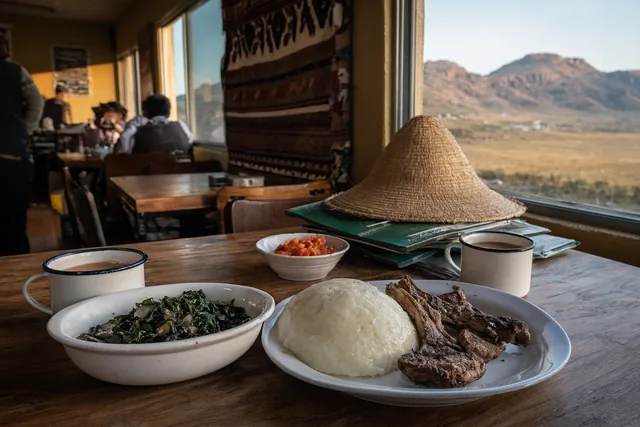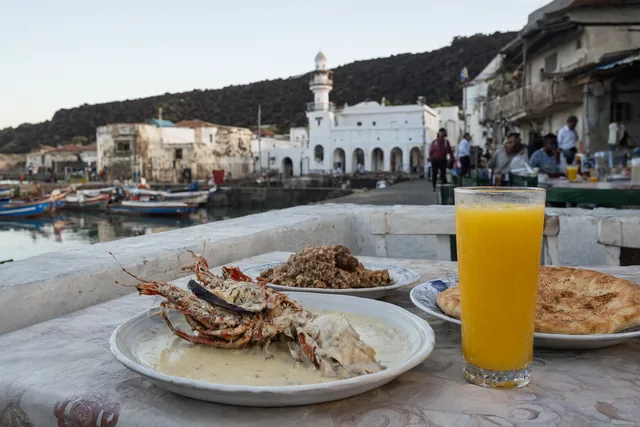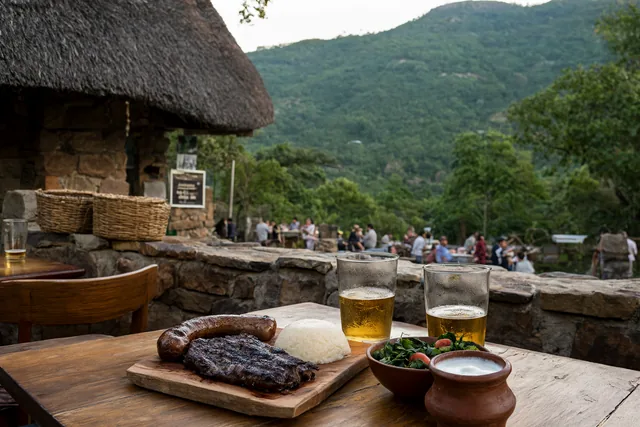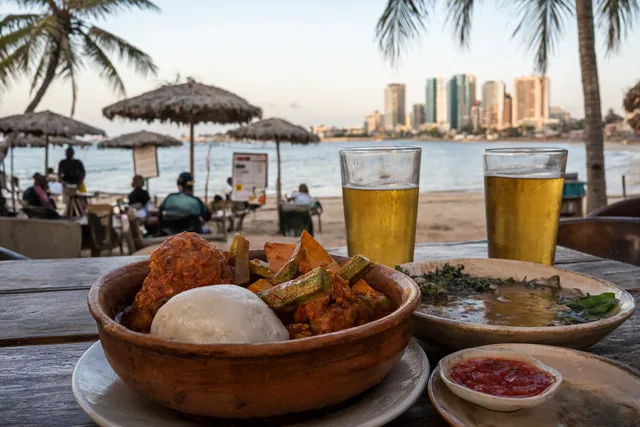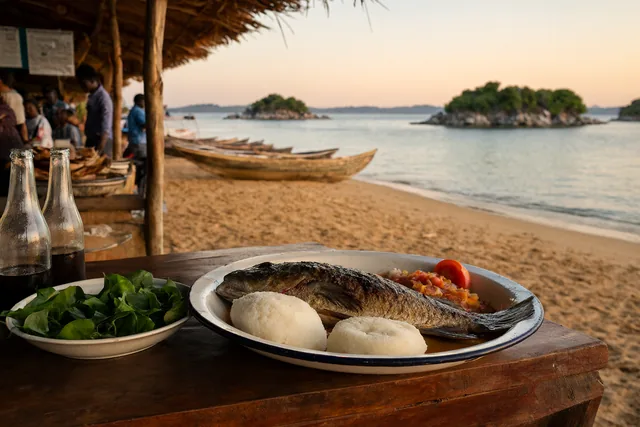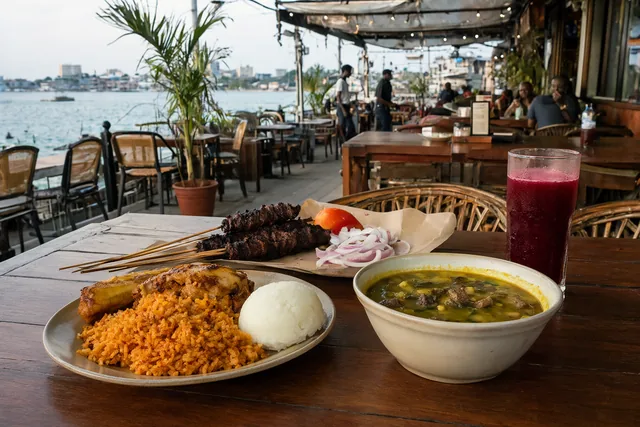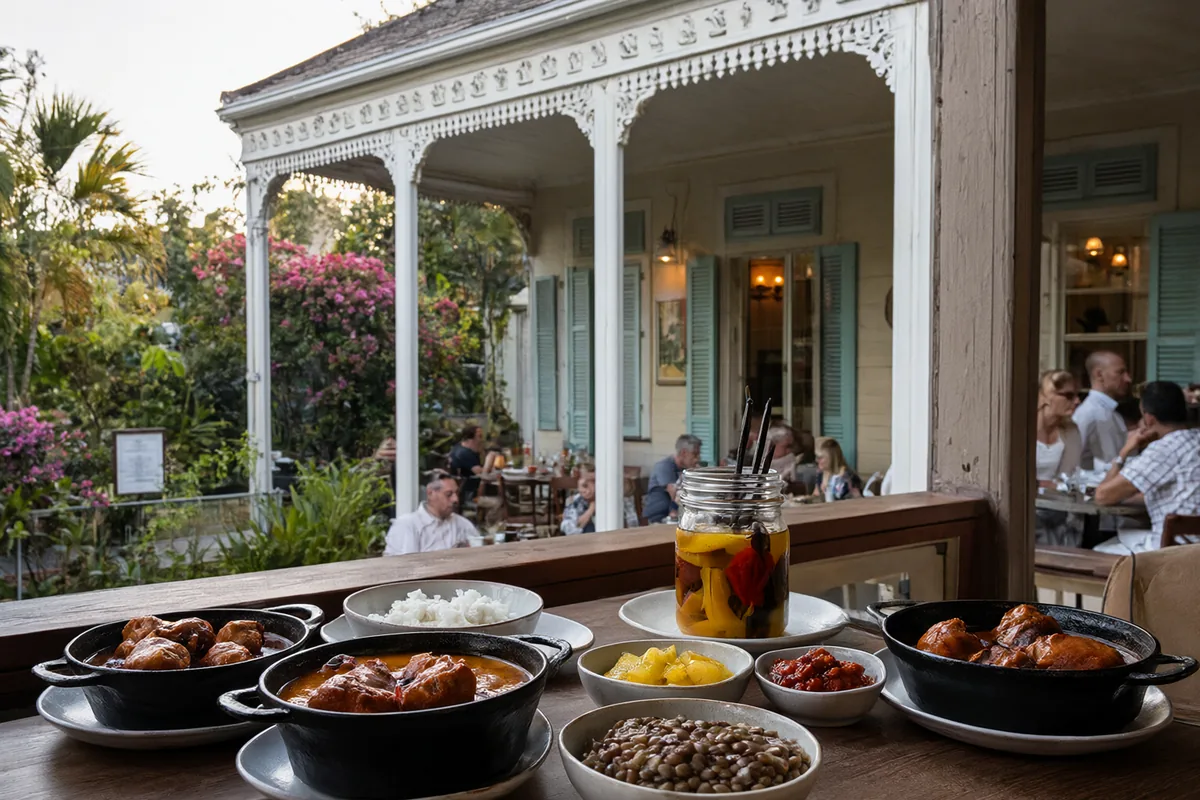
Réunion, the volcanic island east of Madagascar, has one of the most distinctive cuisines in the Indian Ocean. Its Creole cooking brings together French, Malagasy, East African, Tamil, Gujarati and Chinese traditions in one pot: the cari, a turmeric-scented stew served with rice, beans and a fiery rougail on the side. This Réunion food guide covers the dishes to know, how to read a menu in French and Réunion Creole, tipping and paying in euros, and where to eat in Saint-Denis, Saint-Pierre, Saint-Gilles and the west coast, Cilaos, Salazie and Hell-Bourg, and the east and the volcano.
What to eat in Réunion: 12 dishes to know
A Creole meal in Réunion is built in layers: white rice, a pot of grains (beans or lentils), a cari or rougail, and small dishes of chilli condiments. These are the dishes to look out for.
- Cari (everywhere): the island's signature dish, meat, fish or vegetables slowly cooked with onion, garlic, tomato, thyme and safran péi (local turmeric). Classics include cari poulet (chicken), cari porc, cari ti jacques (young jackfruit) and cari thon (tuna).
- Rougail saucisses (everywhere): smoked sausages cooked in a spicy tomato, onion and chilli sauce, perhaps the most popular dish on the island.
- Massalé cabri (everywhere): goat curry with massalé, a Tamil spice blend, darker and more aromatic than an ordinary cari. Often cooked for festivals and Tamil celebrations.
- Civet zourite (the coast): octopus stewed in a rich wine and tomato sauce, or cooked as a cari.
- Grains (everywhere): the beans that go with every meal, including lentilles de Cilaos (small, prized lentils from the mountain cirque), pois du Cap (butter beans) and red beans.
- Zembrocal (everywhere): rice cooked with turmeric and beans, a yellow, one-pot dish often served at family gatherings.
- Brèdes (everywhere): cooked leafy greens, such as brèdes chouchou (chayote shoots), brèdes mafane (paracress, which makes your mouth tingle) or watercress, served as a side.
- Rougails and achards (everywhere): the condiments on every table. Rougail tomate is chopped tomato with chilli and onion, rougail mangue is green mango with chilli, and achards are vegetables pickled with turmeric, ginger and vinegar.
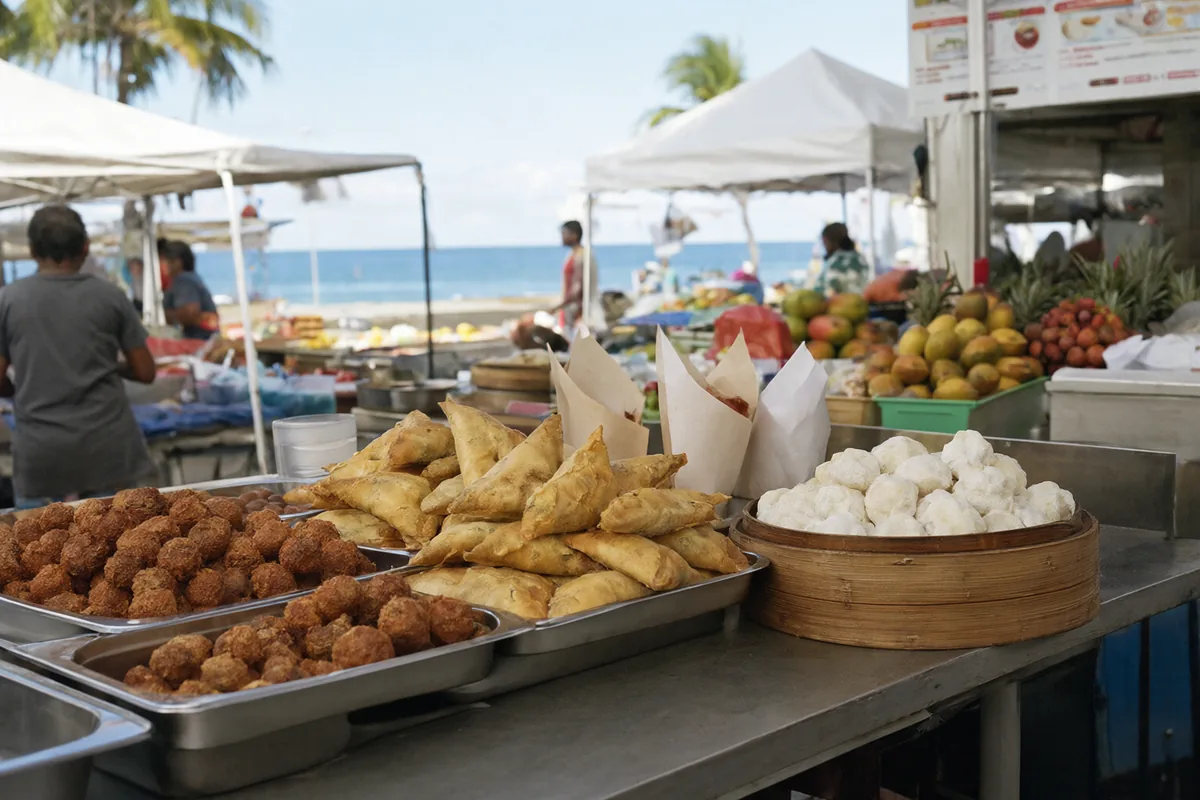
- Samoussas, bouchons and bonbons piment (everywhere): the island's snacks, sold by snack bars and food trucks. Samoussas are samosas, bouchons are small steamed pork dumplings of Chinese origin, and bonbons piment are chilli-spiked fritters of split peas.
- Sarcives and riz chauffé (everywhere): Chinese-Réunionnais classics, sarcives being caramelised, lacquered pork, and riz chauffé fried rice.
- Bichiques (the east, in season): tiny river fish fry caught at the mouths of the eastern rivers, cooked as a cari and called the island's caviar. Expensive and seasonal.
- Rhum arrangé and sweets (everywhere): rum infused with vanilla, fruit or spices, served after dinner, plus gâteau patate (sweet potato cake) and local fruit such as letchis (lychees) in December and January and small, sweet ananas Victoria pineapples.
How to read a menu in Réunion
Réunion is a French overseas department, and French is the official language and the language of every printed menu. In daily life, though, most people speak Réunion Creole (kréol rénioné), and Creole words are used on menus and chalkboards for local dishes. English is spoken in some hotels but not widely in restaurants. These are the words that matter.
| Creole | French | Meaning |
|---|---|---|
| Cari | Cari | Turmeric-based stew of meat, fish or vegetables |
| Rougail | Rougail | Spicy tomato dish, or a chilli condiment |
| Grains | Légumineuses | Beans or lentils served with rice |
| Brèdes | Brèdes | Cooked leafy greens |
| Zourite | Poulpe | Octopus |
| Cabri | Chèvre | Goat |
| Ti jacques | Jeune jacque | Young jackfruit |
| Pistache | Cacahuète | Peanut (not pistachio) |
| Pimen | Piment | Chilli |
| Safran péi | Curcuma | Local turmeric |
| Massalé | Massalé | Tamil spice blend, and the curry made with it |
| Péi | Local | Homegrown, from the island |
| Boucané | Porc fumé | Smoked pork, often cooked as a cari |
| Camion bar | Food truck | Roadside truck selling sandwiches, samoussas and bouchons |
From French menus you will also see plat du jour (dish of the day), formule (a set lunch, often main course plus starter or dessert), barquette (a takeaway container of cari, rice and grains) and sur place ou à emporter (eat in or take away).
The chilli in Réunion is usually served on the side as a rougail or piment paste, and it can be very strong. Try a tiny amount first. When a menu mixes French and Creole, swap.menu translates both into your language and explains each dish, so pistache is never mistaken for pistachio.
Tipping, tax and paying the bill in Réunion
Réunion follows French rules: menu prices include service (service compris) and tax, so the price on the menu is the price you pay. Tipping is not required. Locals may round up or leave a euro or two for good service at a restaurant, and nobody expects a percentage. The island has its own lower VAT (TVA) rate than mainland France, already included in prices. Our guide to tax and service charges on menus explains how service and tax lines work around the world.
The currency is the euro. Cards are accepted almost everywhere, including most restaurants, supermarkets and many snack bars, though some small places set a minimum amount for cards, and camions bars and market stalls often prefer cash. ATMs are common in towns but scarce in the cirques, so carry some cash for Mafate, Cilaos and rural gîtes. If you use a card from outside the eurozone and a machine offers to charge you in your home currency, decline and pay in euros: our guide to paying in local currency explains why.
Réunion eats early. Lunch is often from 11:30am to 1:30pm and is the main meal for many locals, and dinner is from about 7pm to 9pm. Many restaurants close one or two days a week, often Sunday evening and Monday, and some close between services, so check before you drive somewhere special. On Sundays, local families head to the beaches and forests for long picnics with pots of cari.
Where to eat in Réunion, place by place
Réunion is small but mountainous, and driving between the coast and the cirques takes time. Most visitors split their stay between the west coast and the mountains. Jump to a destination:
- Saint-Denis
- Saint-Pierre
- Saint-Gilles and the west coast
- Cilaos
- Salazie and Hell-Bourg
- The east and the volcano
Where to eat in Saint-Denis
Saint-Denis, the capital, on the north coast, is the best place to see the island's many communities side by side: a mosque, a Tamil temple, a Chinese temple and a cathedral are all within walking distance of each other, and the food follows. The Grand Marché, the covered market on Rue du Maréchal Leclerc, sells spices, vanilla, rhum arrangé and crafts, and the Petit Marché is the fresh produce market, with fruit, vegetables, achards and snacks. Snack bars around the centre sell samoussas, bouchons and barquettes of cari to office workers at lunchtime.
For a sit-down meal in Saint-Denis, the restored Creole mansions along Rue de Paris and the surrounding streets house restaurants serving cari, rougail and French dishes, often on verandas with carved wooden lambrequins along the eaves. In the evening, the seafront at the Barachois is where locals gather at camions bars for sandwiches, samoussas and grilled meat with a view of the sea. Saint-Denis also has the island's best choice of Chinese and Indian restaurants.
Where to eat in Saint-Pierre
Saint-Pierre, the main town of the south, is livelier and more relaxed than the capital, with a beach, a marina and a strong night-time scene. Its Saturday morning market on the seafront is one of the best on the island: stalls of fruit, vegetables, spices, vanilla and flowers sit beside sellers of samoussas, bouchons, bonbons piment and fresh juice, and many locals make a breakfast of it. Get there early, before the heat and the crowds.
The seafront boulevard and the streets behind it are lined with restaurants, bars and ice cream shops, serving cari, grilled fish, pizzas and French bistro dishes, and the harbour has seafood restaurants. Saint-Pierre's nightlife is the busiest in the south, with bars and clubs open late at weekends. The town is also the base for trips to the Plaine des Cafres and the volcano, and for the wild south coast, where roadside snack bars sell fresh fish and samoussas.
Where to eat in Saint-Gilles and the west coast
The west coast is Réunion's beach coast, with the island's only real lagoon and the most hotels. Saint-Gilles-les-Bains is its centre, with restaurants around the harbour serving fish, octopus and seafood, beach bars at Boucan Canot and L'Hermitage where a sunset rum punch is a ritual, and plenty of pizzerias, crêperies and snack bars. Weekend evenings in Saint-Gilles are busy, so book a table.
Just north, Saint-Paul has a famous seafront market, held on Fridays and Saturday mornings, with produce, spices, Creole snacks and crafts, and is a good place to buy a barquette of cari and grains for lunch. To the south, Saint-Leu is a paragliding and surfing town with relaxed seafront cafés. On Sundays, the casuarina-shaded beaches along this coast fill with local families cooking cari over wood fires, which shows just how central the dish is to life in Réunion.
Where to eat in Cilaos
Cilaos, a spa village in the middle of a huge volcanic cirque, is reached by a road famous for its hundreds of hairpin bends, and it has its own food traditions. The lentils of Cilaos, small and grown on terraces around the village, are the most prized on the island, and appear in nearly every restaurant here as a side to cari or as a dish in their own right. Cilaos also produces wine from small vineyards, a rarity in the tropics, and sweet and dry versions are sold in the village.
Restaurants and tables d'hôte (meals in a family home or guesthouse) in Cilaos serve cari cooked over wood fires, lentils, brèdes, smoked pork and rhum arrangé, ideal after a day's hiking. Many hikers continue on foot to the remote cirque of Mafate, which has no roads at all: food there is eaten at gîtes, where dinner is usually a set meal of cari, rice and grains that must be booked in advance along with your bed.
Where to eat in Salazie and Hell-Bourg
Salazie, the wettest and greenest of Réunion's three cirques, is a landscape of waterfalls, steep forested walls and vegetable gardens, and its signature ingredient is the chouchou (chayote), which grows on trellises everywhere. You will find it as gratin de chouchou, as brèdes, in cari, and even in sweets and jams. Roadside stalls in Salazie sell chouchou, other vegetables and fruit grown on the slopes.
At the top of the cirque, Hell-Bourg is a village of beautifully restored Creole houses with colourful gardens, once a spa town for the island's wealthy families. Its restaurants and tables d'hôte serve Creole cooking, with chouchou dishes, cari of smoked pork, trout from the local rivers and homemade desserts. Hell-Bourg is quiet in the evening, so plan dinner at your guesthouse or book ahead.
Where to eat in the east and around the volcano
The east of Réunion is the wet side, with sugar cane fields, rivers and the island's vanilla plantations. Around Bras-Panon and Sainte-Suzanne, vanilla cooperatives and family plantations show how the Bourbon vanilla of Réunion is grown and cured, and sell it alongside vanilla rum. Saint-André has a large Tamil community, with temples, Indian shops and massalé dishes, and Saint-Benoît is the centre of bichique fishing in season. Further south, the road crosses recent lava flows near Sainte-Rose, with snack bars and fish restaurants along the way.
Inland, the high plains of the Plaine des Palmistes and Plaine des Cafres are cool, green and dairy country, a contrast to the coast, and the route up to the Piton de la Fournaise, one of the world's most active volcanoes. Restaurants here serve hearty Creole food, and the plains are known for salade de palmiste, a salad of heart of palm. Bring warm clothes and a picnic for the volcano, as there is little to eat once you leave the last villages.
Vegetarian, vegan and allergy tips
Réunion is easier for vegetarians than its meat-heavy reputation suggests. Rice, grains (lentils and beans), brèdes, achards, rougail tomate, zembrocal and cari ti jacques (jackfruit) or cari of vegetables make a full vegetarian meal, and Tamil cooking adds more meat-free choices. Watch for smoked pork or boucané cooked into lentils and beans, and fish or meat stock in sauces. The French word is végétarien (or végétarienne), and végétalien or vegan for vegan.
Peanuts are the hidden allergen to know: in Réunion Creole, pistache means peanut, and peanuts appear in rougail pistache, sweets and snacks. Shellfish appear in some cari and civet dishes, and gluten is in bonbons piment, samoussa pastry and bread. Our guide to eating abroad with food allergies explains how to make an allergy clear in French.
Useful French and Creole phrases for ordering
Bonjour / Bonsoir "Good day / Good evening" in French, always said as you walk in
Komann i lé ? / Lé la "How are you?" / "I am fine" in Réunion Creole
Une table pour deux, s'il vous plaît "A table for two, please"
Qu'est-ce que vous me conseillez ? "What do you recommend?"
Pas trop pimenté, s'il vous plaît "Not too spicy, please"
Je suis allergique aux cacahuètes "I am allergic to peanuts"; add "pistache" so it is understood in Creole terms
L'addition, s'il vous plaît "The bill, please"
Lé bon ! Mersi "It is good! Thank you" in Réunion Creole
How swap.menu helps you eat in Réunion
Menus in Réunion are written in French with Creole dish names, and even French speakers from the mainland get caught out: what is cari boucané, what are bichiques, and is rougail mangue sweet or hot? Photograph the menu with swap.menu and every dish appears in your language with the original name beside it and a short explanation. Prices are shown in euros and converted to your home currency, and the app confirms that service is included, so there is no need to calculate a tip.
Tap the dishes you want, add a note such as "no peanuts" or "chilli on the side", typed or spoken, and swap.menu translates your order into French. Show the waiter your phone, or let them scan the QR code and read your order on their own screen. Try it on a sample menu with the free demo, or see travel pass prices.
Off to Réunion? Your first 3 menu scans are free, and a travel pass starts from $4.99 with nothing that renews.
Start free with 3 scansRéunion food FAQ
Do you tip in restaurants in Réunion?
Tipping is not required in Réunion, because service is included in menu prices, as in mainland France. Leaving a euro or two, or rounding up, is a kind gesture for good service.
What food is Réunion famous for?
Réunion is famous for cari, a turmeric-based stew of meat, fish or vegetables, and rougail saucisses, sausages in spicy tomato sauce, both served with rice and beans. Samoussas, bouchons, Cilaos lentils, Bourbon vanilla and rhum arrangé are also typical.
Is it expensive to eat out in Réunion?
Restaurants in Réunion cost about the same as in mainland France. Snack bars, camions bars and takeaway barquettes of cari are good value, and set lunch menus are cheaper than dinner.
Is tap water safe to drink in Réunion?
Tap water is treated to French standards and is generally safe in towns. After heavy rain or cyclones, local authorities sometimes advise boiling it, so follow local notices and use bottled water in the cirques if unsure.
What time do people eat dinner in Réunion?
Dinner is usually from about 7pm to 9pm, and lunch is early, often from 11:30am. Many restaurants close on Sunday evening and Monday, so check opening days in advance.
How can I read a menu in Réunion if I do not speak French?
Learn a few key words such as cari, rougail, grains and brèdes, or photograph the menu with swap.menu. It translates French and Creole dishes into your language, explains them, converts prices from euros and translates your order into French for the waiter.
Travelling further in the Indian Ocean? Read our food guides for nearby destinations:
- Mauritius food guide
- Madagascar food guide
- Seychelles food guide
- Comoros food guide
- France food guide
Or browse every travel food guide.