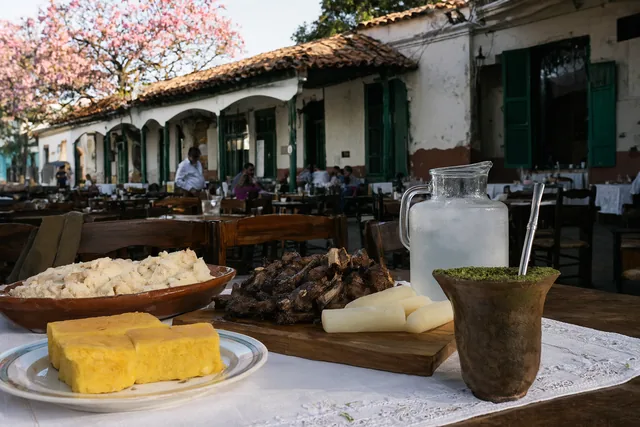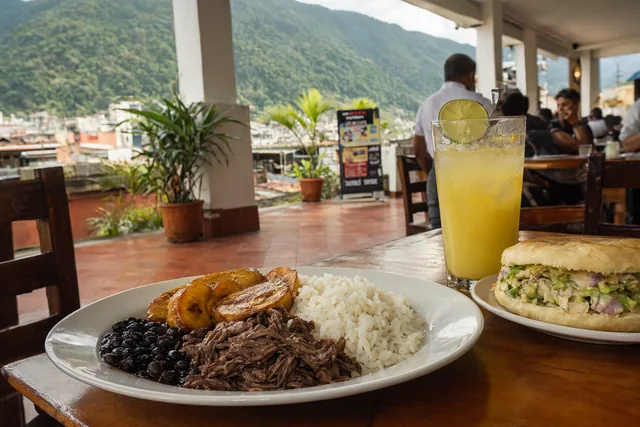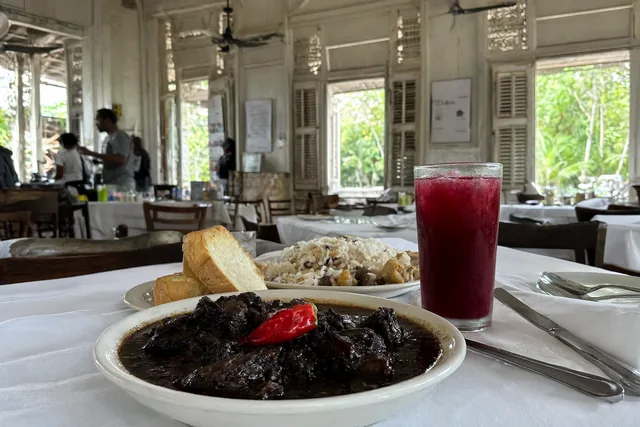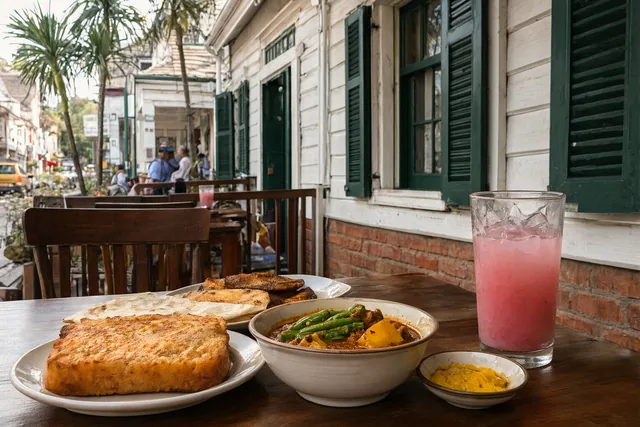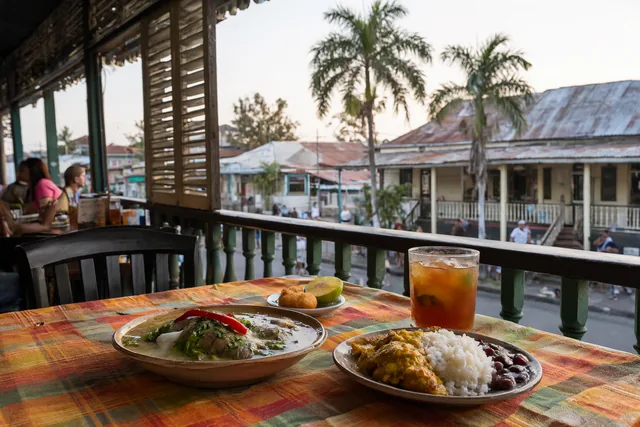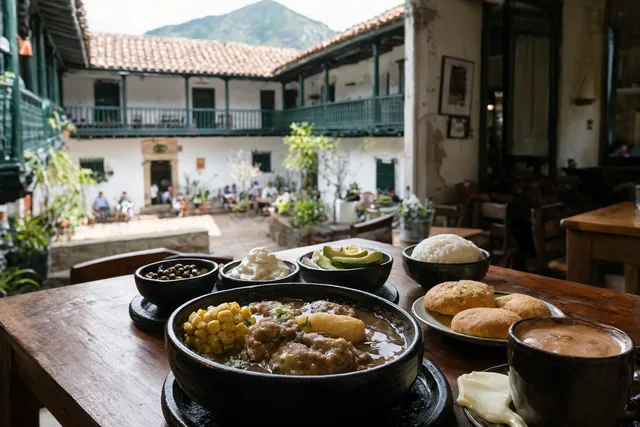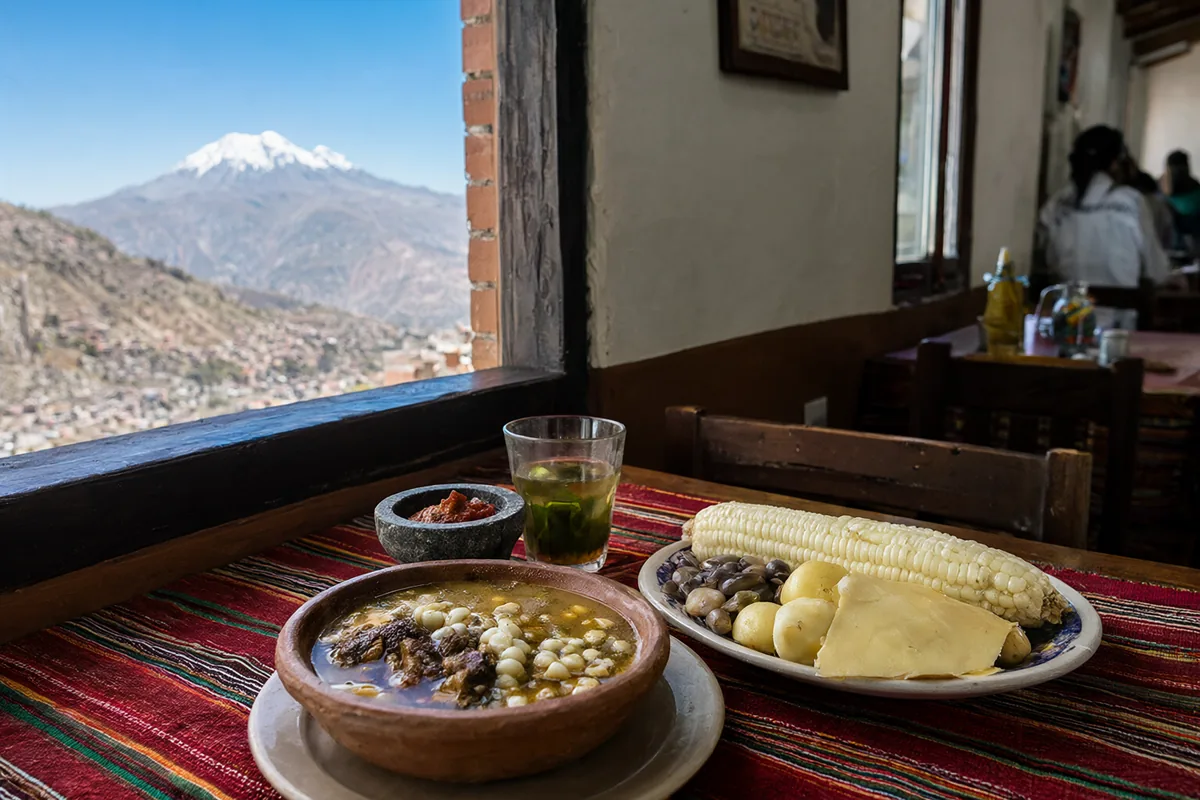
Bolivian food is high-altitude comfort cooking: big soups, potatoes in more forms than most visitors knew existed, chilli salsa on every table and a mid-morning pastry habit that the whole country takes seriously. This Bolivia food guide covers the dishes to know, how to read a Bolivian menu (with the Quechua and Aymara words that turn up on it), tipping and paying in bolivianos, and where to eat in La Paz, Cochabamba, Sucre, Santa Cruz, Potosí, Tarija and Copacabana on Lake Titicaca. The cold Altiplano, the temperate valleys and the tropical lowlands each eat differently.
What to eat in Bolivia: 12 dishes to know
These are the dishes you will see again and again, with the city or region they are most associated with. Many of them are lunch dishes, because lunch is the main meal of the day in Bolivia.
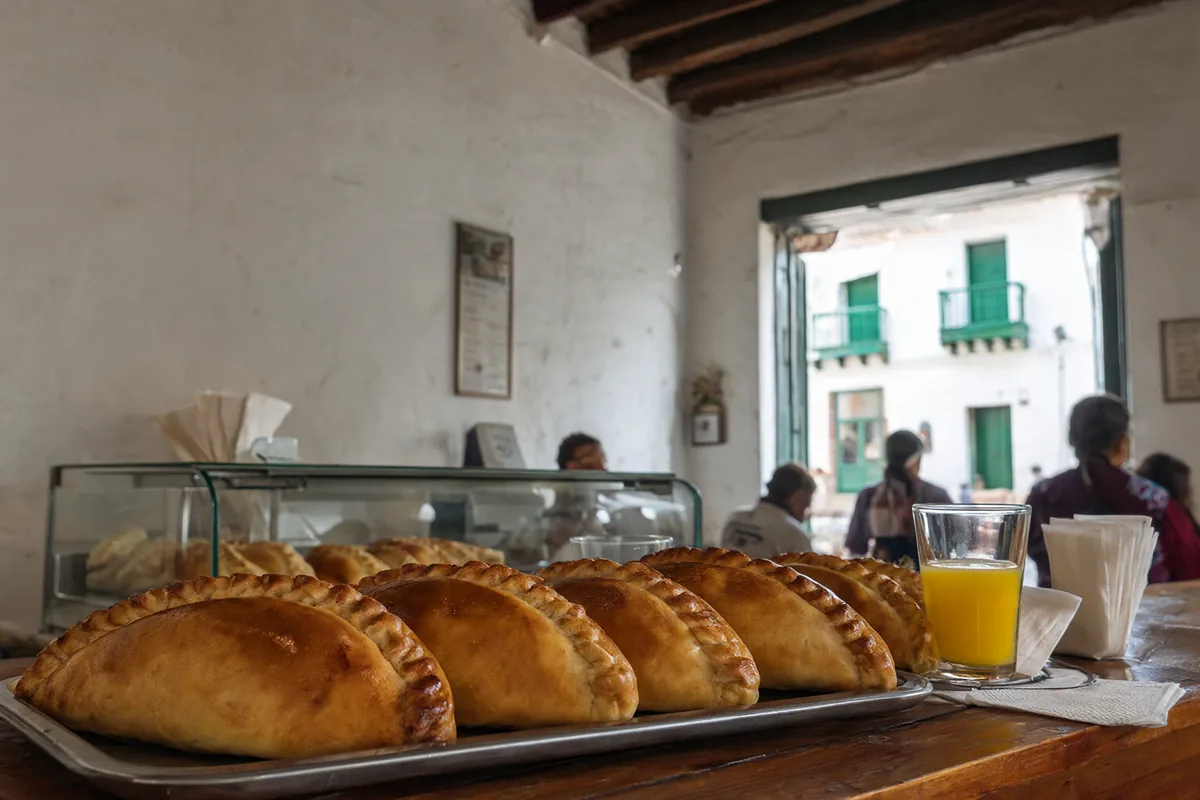
- Salteña (everywhere, La Paz and Sucre above all): a baked, slightly sweet pastry filled with a soupy stew of beef or chicken, potato, peas, olive, egg and a little chilli. Hold it upright and bite from the top so the juice stays inside.
- Tucumana (La Paz, Sucre): the fried cousin of the salteña, with a similar filling, served with a tray of sauces and pickles to spoon on as you eat.
- Silpancho (Cochabamba): a very thin, wide, breaded beef schnitzel laid over rice and fried potatoes, topped with a fried egg and a fresh salsa of tomato, onion and locoto chilli.
- Pique a lo macho (Cochabamba): a heaped platter of chopped beef and sausage over chips, with onion, tomato, boiled egg and hot locoto.
- Sopa de maní (Cochabamba, and all over): a creamy peanut soup with beef or chicken, pasta or rice, topped with crisp shoestring chips. It is the classic first course of a set lunch.
- Fricasé (La Paz): a peppery pork stew with yellow chilli, served with mote (big boiled corn kernels) and chuño.
- Plato paceño (La Paz): a plate of corn on the cob, broad beans, boiled potatoes and a thick slice of fried cheese, sometimes with a piece of beef.
- Chairo (La Paz and the Altiplano): a thick soup of chuño (freeze-dried potato), beef or lamb, wheat, vegetables and herbs. Chuño has an earthy, slightly sour taste that takes some getting used to.
- Anticucho (everywhere, at night): skewers of grilled beef heart with potatoes and a peanut and chilli sauce, sold from street grills after dark.
- Majadito (Santa Cruz): rice cooked with dried beef (charque), annatto and spices, served with a fried egg and fried ripe plantain.
- Cuñapé and sonso (Santa Cruz and the lowlands): cuñapé is a small cheese bread made with cassava starch, and sonso is mashed cassava and cheese grilled on a stick or baked in a dish.
- Api with pastel (everywhere, breakfast and evening): a hot, thick drink of purple corn spiced with cinnamon and clove, served with a large, puffy fried pastry filled with cheese and dusted with sugar.
Two more things belong on every table. Llajwa (from the Quechua word for the salsa) is a fresh, fiery sauce of tomato, locoto and the herb quilquiña, ground on a stone. And to drink, look for mocochinchi, a cold drink made from dried peaches, singani, the grape brandy from the Tarija valleys, and in Cochabamba, chicha, a fermented maize drink.
How to read a Bolivian menu
Menus in Bolivia are in Spanish, but many food words come from Quechua and Aymara, the two biggest Indigenous languages, and plenty of small places have no written menu at all, just a board with the day's soup and main. The key thing to understand is the almuerzo, the set lunch: a soup, a main course (segundo), sometimes a small dessert and a drink, all for a fixed price. It is the best-value meal in the country. Here are the words you will see most.
| Word | Origin | Meaning |
|---|---|---|
| Almuerzo (completo) | Spanish | Set lunch: soup, main, often dessert and a drink |
| Sopa / segundo | Spanish | Soup course / main course of the set lunch |
| Refresco | Spanish | A house soft drink, usually fruit or grain based, served with lunch |
| Plato extra | Spanish | An à la carte dish outside the set lunch |
| Picante de... | Spanish | Meat in a red chilli sauce (picante de pollo, picante de lengua) |
| Llajwa | Quechua | Fresh tomato and locoto chilli salsa |
| Chuño / tunta | Quechua and Aymara | Freeze-dried potato; tunta is the white, washed version |
| Charque | Quechua | Dried, salted meat, often llama or beef |
| Mote | Quechua | Large boiled corn kernels |
| Choclo | Quechua | Fresh corn on the cob, with big pale kernels |
| Wallake | Aymara | Fish soup from Lake Titicaca |
| Locoto | Spanish (Bolivian) | A hot, fleshy chilli, the base of most salsas |
| Res / cerdo / pollo / cordero | Spanish | Beef / pork / chicken / lamb |
| Trucha / pejerrey | Spanish | Trout / silverside, both from Lake Titicaca |
"Picante" on a Bolivian menu is the name of a dish, not a warning, though it usually is hot as well. swap.menu explains dishes like picante de lengua, chairo and fricasé when it reads the menu, so you know which one is beef tongue in chilli sauce before it arrives.
Tipping, tax and paying the bill
Tipping is not expected at markets, street stalls or simple lunch places, where the set lunch price is the price. In sit-down restaurants in La Paz, Santa Cruz and the tourist towns, leaving around 10 percent for good service is normal and appreciated. A few upmarket places add a service line to the bill, so read it before you add more. Our guide to tax and service charges on menus explains how these lines work around the world.
Bolivia has a value added tax (IVA) that is already included in menu prices. You may be asked "¿con factura?", which means "do you want a formal tax receipt?". Visitors can usually just say no, though some businesses charge a little more for a factura.
The currency is the boliviano, written Bs or BOB. Bolivia is still very much a cash country: markets, street food, taxis and most small restaurants want notes and coins, and small change is always useful because vendors often cannot break large notes. Locals increasingly pay by scanning QR codes with their banking apps, which visitors generally cannot use. Cards are accepted in hotels, upmarket restaurants and larger shops in the main cities, sometimes with a surcharge. If a card machine offers to charge you in your home currency, choose bolivianos instead: our guide to paying in local currency explains why.
Meal times follow a pattern. Salteñas are eaten from about 9am to 11:30am. Lunch, the main meal, runs from about 12pm to 2pm, and the set lunch is often finished by 2:30pm. Dinner is lighter and later, usually from 7:30pm, and many families just have tea, api or a sandwich in the evening. At altitude in La Paz, Potosí and around Lake Titicaca, eat lightly for the first day or two and try mate de coca, coca leaf tea, which is served everywhere.
Where to eat in Bolivia, city by city
Bolivia's cities sit at very different heights and in very different climates, and the food changes with them. Jump to a city:
Where to eat in La Paz
La Paz eats in its markets. The Mercado Lanza, just up from the San Francisco church, has floors of juice stalls and comedores (small counters) serving set lunches, sandwiches and soups, and the Mercado Rodríguez is the city's great produce market, at its fullest on weekend mornings. The Mercado Camacho is known for its juice and sandwich stalls, and around the city look for the sándwich de chola, roast pork in a roll with pickled onion and chilli. For the classics of La Paz, look for fricasé, chairo, plato paceño and sajta de pollo, chicken in a yellow chilli sauce with chuño. Salteñas in La Paz are a ritual: queue at a busy salteñería around 10am and order two.
The neighbourhoods matter too. Sopocachi has the café and restaurant streets where younger pacenos eat, and the Zona Sur (Calacoto and San Miguel), several hundred metres lower and a little warmer, is where the city's more expensive restaurants and modern Bolivian cooking have gathered. Take the cable car (Mi Teleférico) up to El Alto on a Thursday or Sunday for the 16 de Julio market, one of the biggest street markets in South America, where food stalls serve fried fish, anticuchos and api among everything from car parts to clothes.
Where to eat in Cochabamba
Ask any Bolivian which city eats best and most will say Cochabamba. The valley climate is mild, the produce is plentiful and portions are famously generous. This is the home of silpancho, pique a lo macho and some of the best sopa de maní in the country, and Sunday is the day for pato (duck) and big family lunches. Chicha, the fermented maize drink, is a local tradition: a white flag hung outside a house or a small bar has long meant chicha is for sale, and the town of Quillacollo just outside the city is known for it.
La Cancha, Cochabamba's enormous market district, is the place to graze on fruit, juices, set lunches and fried snacks. The Prado (Avenida Ballivián) and the streets around it have cafés and restaurants, and the north of the city around Avenida América has newer places. Silpancho in Cochabamba is a night-time dish as much as a lunch one, and there are whole streets of simple places that serve little else.
Where to eat in Sucre
Sucre, the white colonial city that is Bolivia's constitutional capital, is relaxed, lower than La Paz and very easy to eat in. It has a strong claim to the best salteñas in Bolivia, and the city's salteñerías fill up from mid-morning with students and office workers. Sucre is also Bolivia's chocolate city, with long-established chocolate makers selling bars and filled chocolates around the main square, the Plaza 25 de Mayo. Local dishes to try include chorizos chuquisaqueños, spiced pork sausages from the Chuquisaca region served with potatoes and salad, and mondongo, a pork dish in red chilli sauce with mote.
The Mercado Central is the place for breakfast and lunch in Sucre: the upstairs juice stalls make thick fruit blends with milk or water, and the comedores serve set lunches at local prices. Around the plaza and up towards the Recoleta viewpoint there are cafés with terraces and restaurants aimed at the many language students who stay in Sucre for weeks.
Where to eat in Santa Cruz
Santa Cruz de la Sierra is hot, flat, modern and the economic heart of the country, and its food is lowland food. Beef from the eastern plains is the centrepiece, and churrasquerías and grill houses serve it in large cuts. Look for majadito, locro (a rice and chicken soup), keperí (slow-cooked beef), and the afternoon snacks that cruceños are proud of: cuñapé, sonso, empanadas de arroz and tamales made with fresh corn. Fresh fruit juices are everywhere, and the coffee break with cheese bread is a daily habit.
Around the main square, Plaza 24 de Septiembre, there are cafés and older restaurants, while the Equipetrol district has the city's newer restaurants, bars and international cooking. For everyday eating, the Mercado Los Pozos is known for its fruit and juice stalls and its food counters.
Where to eat in Potosí
Potosí, the old silver city under the Cerro Rico, is one of the highest cities in the world at around 4,000 metres, and its food is warming and hearty. The dish to try is kalapurka, a thick spiced corn soup served bubbling because a stone heated in the fire is dropped into the bowl just before it reaches you. Potosí is also known for pork dishes, and the city makes tawa tawa, small fried pastries drizzled with syrup, which turn up at festivals.
The Mercado Central has simple lunch counters and is a good place to try soups at local prices, and the streets around the main square have cafés and restaurants with Bolivian and international menus for visitors heading on to Uyuni. Out on the Salar de Uyuni, meals are mostly cooked by tour operators, with llama meat and quinoa as the local specialities.
Where to eat in Tarija
Tarija, in the far south near Argentina, is Bolivia's wine country. The valleys around the city, especially the Valle de la Concepción, grow grapes at high altitude for wine and for singani, the national grape brandy, and many bodegas welcome visitors for tastings. Tarija's food is its own: saice is a spicy minced beef stew with peas and potatoes served over rice and chuño, ranga ranga is a tripe dish in yellow chilli sauce, and the city is known for its sweets and for grilled meats in the Argentine style.
The Mercado Central in Tarija is a good stop for breakfast and lunch, with stalls selling local cheeses, cured meats, sweets and bread alongside comedores. Order singani straight, or as a chuflay, the Bolivian highball of singani with ginger ale or lemon soda.
Where to eat in Copacabana
Copacabana is the small town on the shore of Lake Titicaca where most visitors stay before taking a boat to the Isla del Sol. Its food is about one thing: trucha, lake trout, served fried, grilled, a la plancha or a la diabla (in spicy sauce), with rice, chips and salad. You will also see pejerrey and small fried ispi, a tiny native lake fish eaten whole. Along the lakefront there is a long row of simple stalls and kiosks that all serve trout at similar prices.
On the Isla del Sol, the villages have small family restaurants and guesthouses that serve trout, quinoa soup and simple set meals, and some still prepare apthapi, the Aymara tradition of a communal meal of potatoes, broad beans, cheese and fish laid out on a cloth to share. In Copacabana, eat lunch at the lakefront when the sun is out, as evenings at nearly 3,800 metres get very cold.
Vegetarian, vegan and allergy tips
Bolivia is meat country, but vegetarians can eat well with some care. The word to use is vegetariano (or vegano), and La Paz, Sucre and Santa Cruz have dedicated vegetarian restaurants. Plato paceño without the meat, quinoa soup, salads, cheese pastries, api, cuñapé and fruit from the markets are safe choices. Watch for hidden meat: most soups, including vegetable-looking ones, are made with beef or chicken stock, and the soup in a set lunch almost always is. Ask "¿tiene carne o caldo de carne?" (does it have meat or meat stock?).
Peanuts are a serious hidden ingredient. Sopa de maní is built on them, and peanut sauces appear with anticuchos and some potato dishes. Cheese goes into breads, pastries and many lowland snacks, and cassava starch is the base of cuñapé, so people avoiding gluten have some good options. Our guide to eating abroad with food allergies explains how to explain an allergy clearly when you do not speak the language.
Useful Spanish phrases for ordering
Buenos días / Buenas tardes "Good morning / Good afternoon", said when you walk into a shop or sit down
¿Hay almuerzo? "Is there a set lunch?"
¿Qué es la sopa de hoy? "What is today's soup?"
Quiero esto, por favor "I would like this, please" (pointing)
Sin picante, por favor "Not spicy, please"
Soy alérgico / alérgica al maní "I am allergic to peanuts" (alérgico for a man, alérgica for a woman)
La cuenta, por favor "The bill, please"
Yuspagara / Sulpayki "Thank you" in Aymara and in Quechua, always appreciated at markets
How swap.menu helps you eat in Bolivia
Bolivian menus mix Spanish with Quechua and Aymara words, and many are handwritten boards listing nothing but the dish names. Photograph one with swap.menu and every dish appears in your language with the original name beside it and a short explanation, so you know that chairo is a chuño and lamb soup, ranga ranga is tripe and picante de lengua is beef tongue before you order. Every price is converted from bolivianos to your home currency, and if the bill carries a service line, we point it out.
Tap the dishes you want, add a note such as "no peanuts" or "not spicy, please", typed or spoken, and swap.menu translates your order into Spanish. Show the person at the counter your phone, or let them scan the QR code and read your order on their own screen. You can try it right now on a sample menu with the free demo, or see travel pass prices.
Off to Bolivia? Your first 3 menu scans are free, and a travel pass starts from $4.99 with nothing that renews.
Start free with 3 scansBolivia food FAQ
Do you tip in restaurants in Bolivia?
Tipping is not expected at markets, street stalls or set lunch places. In sit-down restaurants in the cities and tourist towns, around 10 percent is normal for good service. Check the bill first, as a few upmarket places add a service charge.
What food is Bolivia famous for?
Bolivia is best known for salteñas, the juicy baked pastries eaten mid-morning, along with silpancho and pique a lo macho from Cochabamba, sopa de maní, and Andean soups made with chuño. Lake trout from Titicaca, cheese breads from Santa Cruz and singani brandy from Tarija are also well known.
Is Bolivia expensive to eat out?
Bolivia is one of the cheapest countries in South America to eat in. A set lunch of soup, main and drink at a market or local restaurant costs very little, and street food is cheaper still. Upmarket restaurants in La Paz and Santa Cruz cost more but are still good value by international standards.
Which city in Bolivia is best for food?
Cochabamba is widely considered Bolivia's food capital, with generous portions and the home of silpancho and pique a lo macho. La Paz has the best markets and the most modern restaurants, Sucre is known for salteñas and chocolate, and Santa Cruz has the best lowland cooking and beef.
Is tap water safe to drink in Bolivia?
No, visitors should not drink tap water in Bolivia. Drink bottled or boiled water, and be careful with ice and raw salads at simple stalls. Hot soups, freshly cooked food and peeled fruit are the safest choices.
How can I read a Bolivian menu if I do not speak Spanish?
Learn a few words like almuerzo, sopa, segundo and refresco, or photograph the menu with swap.menu. It translates every dish into your language, explains Quechua and Aymara food words, converts prices from bolivianos to your currency and translates your order back into Spanish.
Travelling further in South America? Read our food guides for neighbouring countries:
- Peru food guide
- Chile food guide
- Argentina food guide
- Paraguay food guide
- Brazil food guide
- Ecuador food guide
Or browse every travel food guide.