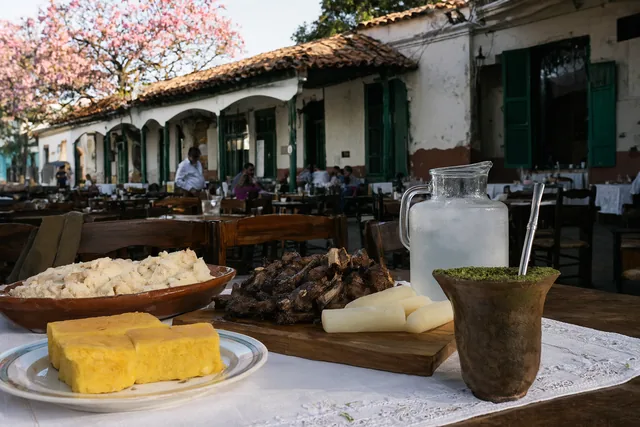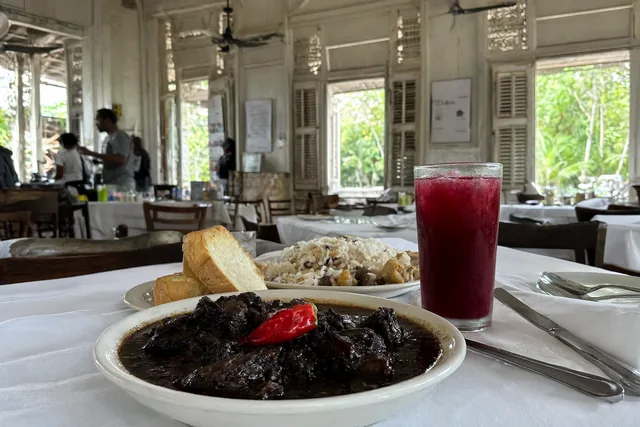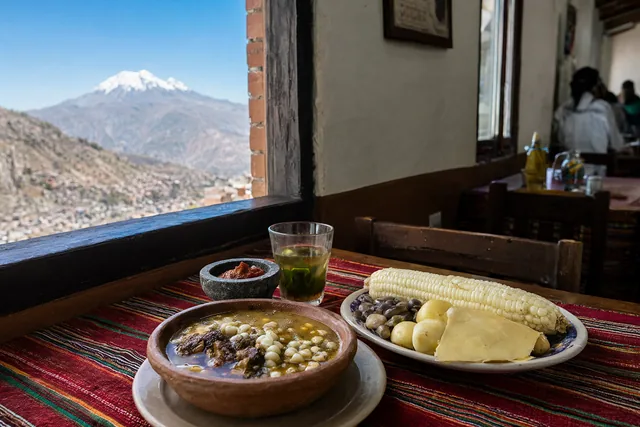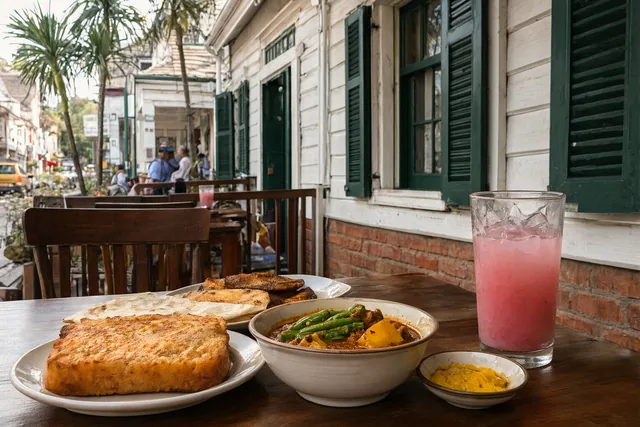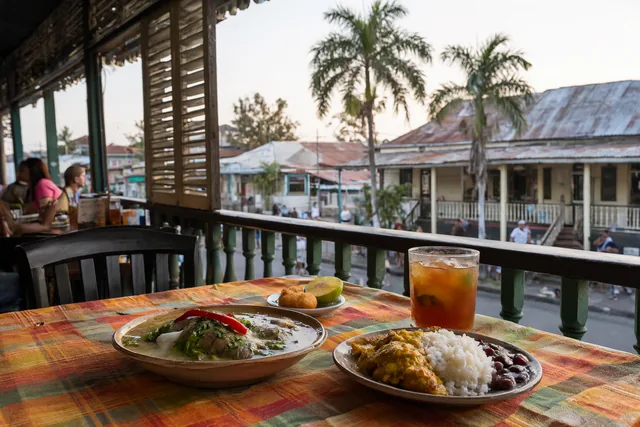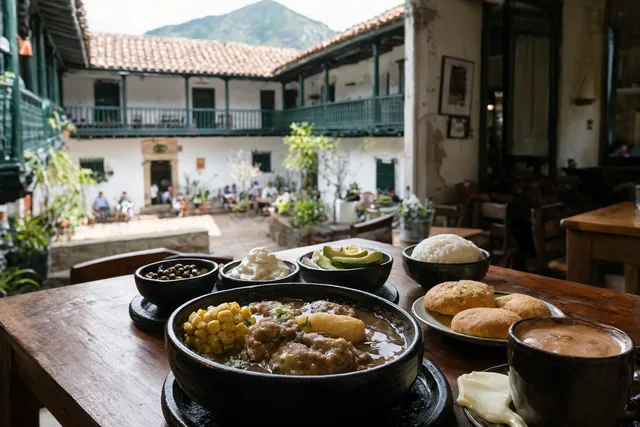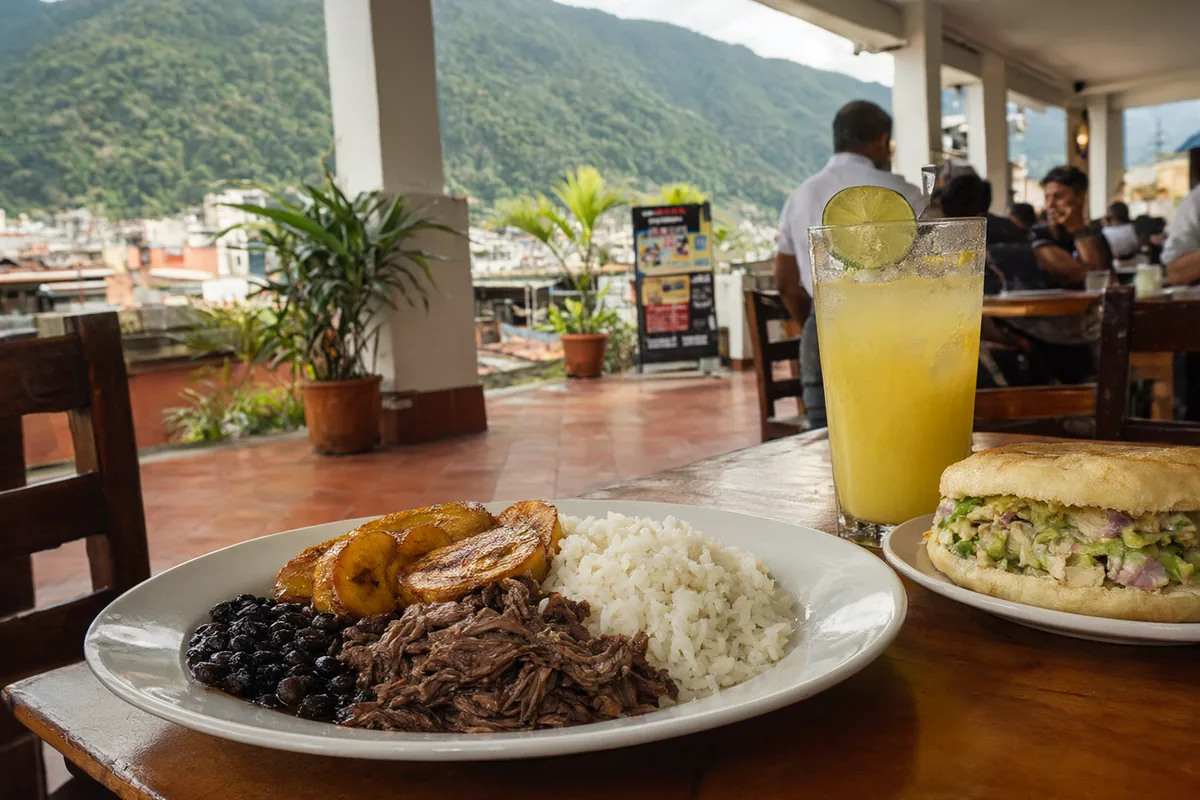
Venezuelan food is built on corn, and above all on the arepa, the round corn cake split open and stuffed with almost anything, which Venezuelans eat at breakfast, lunch and late at night. This Venezuela food guide covers the dishes to know, how to read a Venezuelan menu and order coffee the local way, tipping and paying, and where to eat in Caracas, Maracaibo, Mérida, Isla de Margarita, the coastal village of Choroní and the colonial town of Coro. The cooking mixes Indigenous, Spanish and African roots with strong Italian, Portuguese, Canarian and Middle Eastern influences from 20th century immigration, which is why a Caracas bakery sells croissant-like cachitos and a Maracaibo street stall sells fried plantain sandwiches. Each region has its own specialities, from Andean trout and wheat arepas in Mérida to shark empanadas on Margarita.
What to eat in Venezuela: 12 dishes to know
These are the dishes you will meet everywhere, plus the regional ones worth seeking out, with the city or region they belong to.
- Arepa (everywhere): a grilled or fried corn cake split and filled. The famous fillings have names: reina pepiada (chicken and avocado salad), dominó (black beans and white cheese), pelúa (shredded beef and yellow cheese) and catira (shredded chicken and yellow cheese).
- Pabellón criollo (everywhere): the national dish, a plate of shredded beef (carne mechada), black beans (caraotas negras), white rice and fried ripe plantain (tajadas). Ask for it a caballo and it comes with a fried egg on top.
- Cachapa (everywhere, best along the roads out of the cities): a thick, slightly sweet pancake of fresh ground corn, folded around soft white queso de mano (hand-stretched cheese) or pork.
- Tequeños (everywhere): sticks of white cheese wrapped in pastry and fried, served at every party and in every bar.
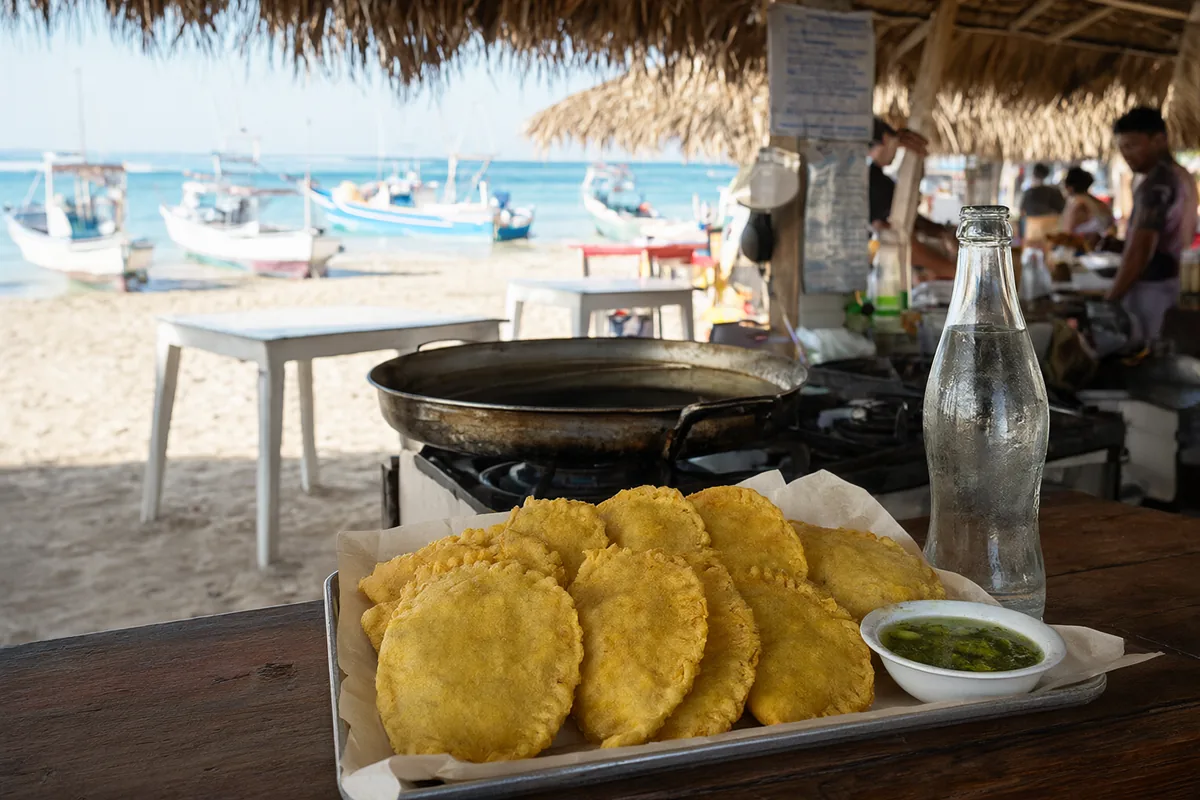
- Empanadas (everywhere): Venezuelan empanadas are made with corn dough and fried until crisp, filled with cheese, shredded beef, chicken or, on the coast and on Margarita, cazón (small shark).
- Hallaca (everywhere, at Christmas): corn dough filled with a stew of beef, pork and chicken with olives, raisins and capers, wrapped in plantain leaves and boiled. Families make them by the dozen in December.
- Asado negro (Caracas): eye of round beef cooked slowly in caramelised papelón (raw cane sugar) and spices until almost black, sliced and served with rice and plantain.
- Patacón (Maracaibo): a sandwich made with two flattened, fried green plantains instead of bread, stuffed with meat, cheese, salad and sauces.
- Pastelitos andinos (Mérida and the Andes): small fried wheat pastries filled with cheese, meat or trout, eaten for breakfast.
- Cachito (everywhere, from bakeries): a soft, croissant-shaped roll filled with ham, a breakfast staple in the bakeries run by Portuguese-Venezuelan families.
- Sancocho or hervido (everywhere, at weekends): a big soup of beef, chicken or fish with cassava, potatoes, corn and other root vegetables, a Sunday family dish.
- Quesillo (everywhere): Venezuela's version of crème caramel, denser and often with small holes from the way it is cooked.
To drink, look for papelón con limón, raw cane sugar dissolved in water with lime juice, chicha, a sweet, thick rice and milk drink sold from street carts, and malta, a dark, sweet non-alcoholic malt drink. Venezuelans drink beer very cold and rum from long-established local distilleries, and on any table you may find guasacaca, an avocado, herb and vinegar sauce, served with grilled meat.
How to read a Venezuelan menu
Menus are in Spanish, but Venezuelan Spanish has its own food vocabulary, and some words mean different things than in Spain or Mexico. Many places, especially at lunch, offer a menú ejecutivo, a set lunch with soup, main and drink. In an arepera, you choose your filling from a list or a display counter. Ordering coffee is a skill of its own, so the table includes the main coffee words too.
| Spanish | Meaning |
|---|---|
| Menú ejecutivo / almuerzo | Set lunch, usually soup, main and drink |
| Arepera | A restaurant or counter specialising in arepas |
| Relleno | Filling, as in "¿qué relleno quiere?" (which filling?) |
| Carne mechada | Shredded beef, cooked with onion, pepper and tomato |
| Caraotas | Beans, usually black beans (not "frijoles") |
| Tajadas / tostones | Fried ripe plantain slices / twice-fried green plantain |
| Queso de mano / queso guayanés / queso telita | Soft, fresh white cheeses, stretched by hand |
| Perico | Scrambled eggs with tomato and onion |
| Parrilla | Mixed grill, often for sharing |
| Cambur | Banana (not "plátano", which means plantain) |
| Guayoyo | Long, weak black coffee |
| Negrito / marrón / con leche | Short black / coffee with a little milk / milky coffee |
| Servicio (10%) | Service charge added to the bill |
"Plátano" in Venezuela means plantain, which is cooked, while a sweet eating banana is a "cambur". swap.menu explains words like caraotas, tajadas and queso de mano when it reads the menu, so a pabellón or an arepa filling list makes sense at a glance.
Tipping, service and paying the bill
Check your government's current travel advice before planning a trip. In restaurants, many bills already include a 10 percent service charge (servicio or 10% de servicio), and if it is there, extra tipping is optional, though leaving a little more for good service is common. If there is no service line, leave around 10 percent. At areperas, bakeries and street stalls, tipping is not expected. Bills also show IVA, the value added tax. Our guide to tax and service charges on menus explains how these lines work around the world.
The official currency is the bolívar, written Bs or VES, but in practice many prices in shops and restaurants are quoted in US dollars as well, and US dollars in cash are widely used. Locals mostly pay with Venezuelan debit cards and instant bank transfers (pago móvil), which visitors cannot use. Foreign-issued cards may not work at all, so bring enough cash in small, clean US dollar notes, as torn or marked notes are often refused and change can be scarce. Some bills show an extra tax line when you pay in foreign currency. Our guide to paying in local currency explains how to compare prices when two currencies are in play.
Venezuelans eat breakfast early, often an arepa or empanada with coffee. Lunch is the main meal, from about 12pm to 2pm, and dinner runs from about 7pm to 9pm, earlier than in much of South America. On weekends, family lunches are long and late, and sancocho is the Sunday dish.
Where to eat in Venezuela, city by city
From the Caribbean coast to the Andes, each part of Venezuela eats a little differently. Jump to a place:
Where to eat in Caracas
Caracas, the capital, sits in a long valley under the green wall of El Ávila mountain, and it has the widest choice of food in the country. The everyday institutions are the arepera, often open late, and the panadería, the bakery-café found on almost every block, many of them run by families of Portuguese descent. In a Caracas panadería you order a cachito, a pan de guayaba or a slice of golfeado (a sticky roll with papelón and cheese) with a marrón at the counter. In December, every bakery sells pan de jamón, a bread rolled around ham, olives and raisins.
For restaurants in Caracas, the east of the city is where most visitors go: Las Mercedes has the biggest concentration of restaurants and bars, while Altamira, Los Palos Grandes and La Castellana have cafés, bakeries and restaurants along walkable streets. La Candelaria, in the older centre, is known for its Spanish-style tascas serving tapas, seafood and tortilla, a legacy of Galician and Canarian immigrants. The Mercado de Chacao is a good covered market for fruit, cheese and a market lunch. On the edge of the city, the colonial village of El Hatillo has restaurants and craft shops, and up on the Ávila, the village of Galipán is known for strawberries with cream and roadside food stalls.
Where to eat in Maracaibo
Maracaibo, the hot city on the shores of Lake Maracaibo in the far west, has its own accent, its own music (gaita) and its own food, and Maracaiberos are fiercely proud of all three. The street food is the draw: the patacón is the Maracaibo sandwich, the tumbarrancho is an arepa stuffed with mortadella, cabbage and sauces, then battered and fried, and mandocas are rings of fried corn dough sweetened with papelón and served with salty white cheese for breakfast. The city's sweets include huevos chimbos, egg yolk dumplings in syrup.
The cooking of the Zulia region also brings chivo en coco, goat stewed in coconut milk, and plenty of lake and sea fish. In Maracaibo, food stalls and fast-food stands selling patacones and tumbarranchos cluster along the main commercial avenues and stay busy late into the evening, when the heat finally eases. The Vereda del Lago, the lakeside park, is a good place for an evening walk and a snack. Expect intense heat in the middle of the day, and drink plenty of water or fresh juice.
Where to eat in Mérida
Mérida sits high in the Andes, cool and green, and its food is unlike the rest of the country. Breakfast in Mérida is pisca andina, a light broth with potato, coriander, egg and cheese, served with arepas de trigo, made from wheat rather than corn. Pastelitos andinos come filled with cheese, meat or trout, and trucha (rainbow trout from the mountain streams) is the main dish on many menus, grilled, fried or in garlic sauce. Look for queso ahumado, a smoked white cheese, and the region's sweet, colourful milk candies called dulces abrillantados.
The Mercado Principal de Mérida is a three-storey market with produce and crafts and a food floor upstairs where you can try Andean dishes at local prices. To drink, try calentado, a hot drink of aniseed spirit and herbs, or miche, the Andean aniseed liqueur, and in the high villages along the road through the páramo, fresh strawberries with cream are sold everywhere. Mérida is a university city, so cafés and cheap places to eat are easy to find in the centre.
Where to eat on Isla de Margarita
Isla de Margarita, off the north-east coast, is Venezuela's holiday island, and its food is all about the sea. The morning ritual on Margarita is empanadas de cazón, crisp corn empanadas filled with stewed small shark, eaten at beach stalls and roadside kiosks with a cold drink. Other island specialities include pastel de chucho, a layered bake of stingray, plantain and cheese, consomé de chipi chipi, a broth of tiny clams, and fried whole fish with tostones and salad.
The main towns are Porlamar, the commercial centre, and Pampatar, with its old fort and seafront restaurants. Juan Griego on the north coast is the place to eat fish at sunset, and beaches such as Playa El Agua have lines of beach restaurants with plastic tables on the sand. The Mercado de Conejeros near Porlamar is a big local market with fish, fruit and simple food stalls. On Margarita, eat seafood where the fishing boats land, and ask for the catch of the day.
Where to eat in Choroní
Choroní is a colonial village on the Caribbean coast, reached by a winding mountain road through Henri Pittier National Park from Maracay. Its harbour village, Puerto Colombia, is where visitors stay and eat. The food in Choroní is simple and very good: fried whole fish, usually snapper or another local catch, with tostones, rice and salad, eaten at the beach shacks and small restaurants along the harbour and on Playa Grande.
This stretch of coast is cacao country, and the village of Chuao, reached by boat from Puerto Colombia, grows some of the most prized cacao in the world, dried on the square in front of its church. In Choroní you can buy local chocolate and cacao sweets, and on weekend evenings the harbour fills with the sound of African-Venezuelan drumming. Many small places only cook at lunchtime and at weekends, so eat when the boats come in.
Where to eat in Coro
Coro, in Falcón state, is one of the oldest colonial towns in South America, with a historic centre of painted adobe houses that is a UNESCO World Heritage Site, and next to it the sand dunes of the Médanos de Coro. The surrounding dry country and the Paraguaná peninsula are goat country, so the dishes to try are chivo (goat), stewed, fried or grilled, goat cheese, and sweets like dulce de leche de cabra, a soft goat milk fudge sold in the town's sweet shops.
In Coro, eat in the small family restaurants around the colonial centre, which serve goat, fish from the nearby coast and the full range of Venezuelan classics. On the Paraguaná peninsula, fishing villages such as Adícora have simple seafood restaurants by the beach, popular with kitesurfers. Coro is quiet in the evenings, so lunch is the main meal to plan around.
Vegetarian, vegan and allergy tips
Venezuela is a meat-heavy country, but the corn and cheese tradition makes vegetarian eating possible. The word is vegetariano (vegano for vegan). Arepas filled with cheese, avocado, black beans or eggs, cachapas with cheese, tequeños, empanadas de queso and plates of beans, rice and plantain are all meat-free, and the larger cities have some vegetarian restaurants. Vegans will find it harder, as cheese is in a great many dishes. Watch for hidden meat: black beans are sometimes cooked with pork or bacon, soups are made with meat or chicken stock, and some empanada doughs and fried snacks use lard.
The corn arepa is naturally gluten-free, which makes Venezuela easier than most countries for coeliacs, though check what else is fried in the same oil and whether wheat flour is used in Andean arepas de trigo and pastelitos. Seafood is common on the coast and on Margarita, including in empanadas that look like cheese ones. Our guide to eating abroad with food allergies explains how to explain an allergy clearly when you do not speak the language.
Useful Spanish phrases for ordering
Buenos días / Buenas noches "Good morning / Good evening", said as you walk in
Una arepa de dominó, por favor "A black bean and white cheese arepa, please"
¿Qué rellenos tiene? "What fillings do you have?"
Un marrón pequeño "A small coffee with a little milk"
¿Tiene carne o cerdo? "Does it have meat or pork in it?"
Soy alérgico / alérgica a... "I am allergic to..." (alérgico for a man, alérgica for a woman)
La cuenta, por favor "The bill, please"
¡Qué sabroso, gracias! "That was delicious, thank you!"
How swap.menu helps you eat in Venezuela
Venezuelan menus are full of words that even Spanish speakers from other countries do not know: caraotas, tajadas, pelúa, guayoyo. Photograph the menu or the arepera's filling list with swap.menu and every dish appears in your language with the Spanish name beside it and a short explanation, so you know that a tumbarrancho is a battered, fried stuffed arepa and pastel de chucho is a stingray bake. Prices are converted to your home currency, and when a menu lists both bolívares and US dollars, you can see what each line costs you. We also point out the 10 percent servicio so you do not tip twice.
Tap the dishes you want, add a note such as "no pork" or "no cheese, please", typed or spoken, and swap.menu translates your order into Spanish. Show the person at the counter your phone, or let them scan the QR code and read your order on their own screen. You can try it right now on a sample menu with the free demo, or see travel pass prices.
Off to Venezuela? Your first 3 menu scans are free, and a travel pass starts from $4.99 with nothing that renews.
Start free with 3 scansVenezuela food FAQ
Do you tip in restaurants in Venezuela?
Many Venezuelan restaurants add a 10 percent service charge to the bill, and if it is included, an extra tip is optional. If there is no service line, around 10 percent is normal. Tipping is not expected at areperas, bakeries or street stalls.
What food is Venezuela famous for?
Venezuela is most famous for the arepa, a corn cake split and stuffed with fillings such as reina pepiada or dominó. Pabellón criollo, cachapas, tequeños, hallacas at Christmas and corn empanadas are also national favourites.
Can I use my card in Venezuela?
Foreign-issued cards often do not work in Venezuela, as most locals pay with local debit cards and bank transfers. Bring enough cash, ideally US dollars in small, clean notes, and check prices in both bolívares and dollars where they are shown.
What is the difference between an arepa and a cachapa?
An arepa is made from precooked corn flour, shaped into a thick round cake, cooked and then split and filled. A cachapa is a softer, sweeter pancake made from fresh ground corn, folded around cheese or meat rather than split.
Is tap water safe to drink in Venezuela?
No, visitors should drink bottled or filtered water in Venezuela, including for brushing teeth if you have a sensitive stomach. Be careful with ice and raw salads at simple stalls, and stick to freshly cooked food.
How can I read a Venezuelan menu if I do not speak Spanish?
Learn the arepa filling names and a few words like caraotas, tajadas and servicio, or photograph the menu with swap.menu. It translates every dish into your language, explains Venezuelan food words, converts prices to your currency and translates your order back into Spanish.
Travelling further in the region? Read our food guides for neighbouring countries:
- Colombia food guide
- Brazil food guide
- Guyana food guide
- Trinidad and Tobago food guide
- Curaçao food guide
- Aruba food guide
Or browse every travel food guide.