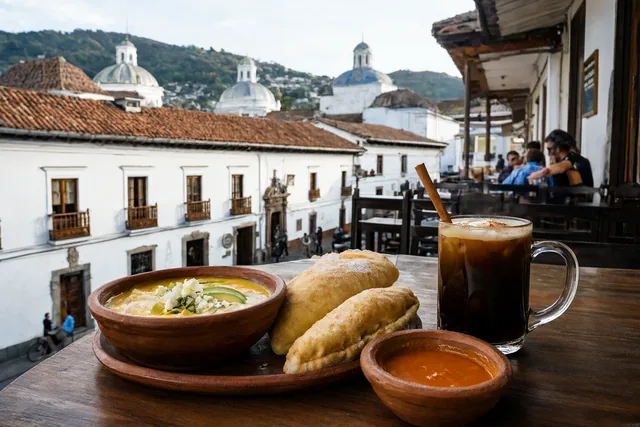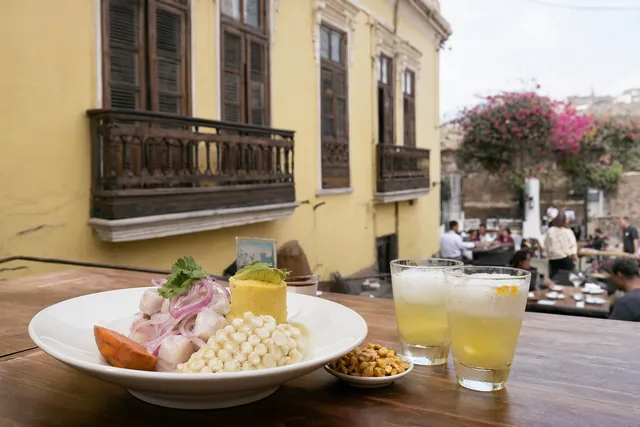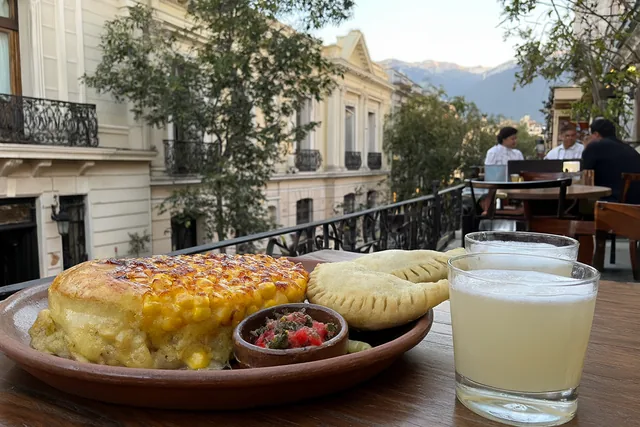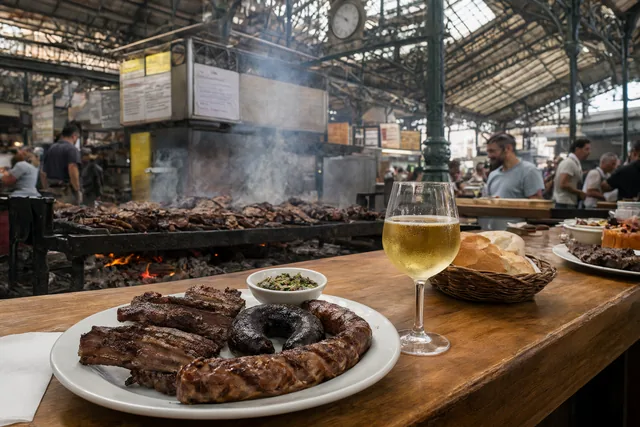
Colombia's food is generous, regional and much less known abroad than its coffee, which makes discovering it one of the pleasures of a trip. This Colombia food guide covers the dishes to know, how to read a Colombian menu and order the set lunch, how the voluntary tip works, and then where to eat in Bogotá, Medellín, Cartagena, Cali, the Coffee Region, Santa Marta and Popayán. The Andean cities eat hearty soups, corn and pork; the Caribbean coast eats fried fish, coconut rice and plantains; and everywhere there are arepas, fresh fruit juices and a small black coffee called a tinto.
What to eat in Colombia: 12 dishes to know
These are the dishes worth seeking out, with the city or region they come from. Colombians often travel within the country to eat a regional dish in its home town, and you can do the same.
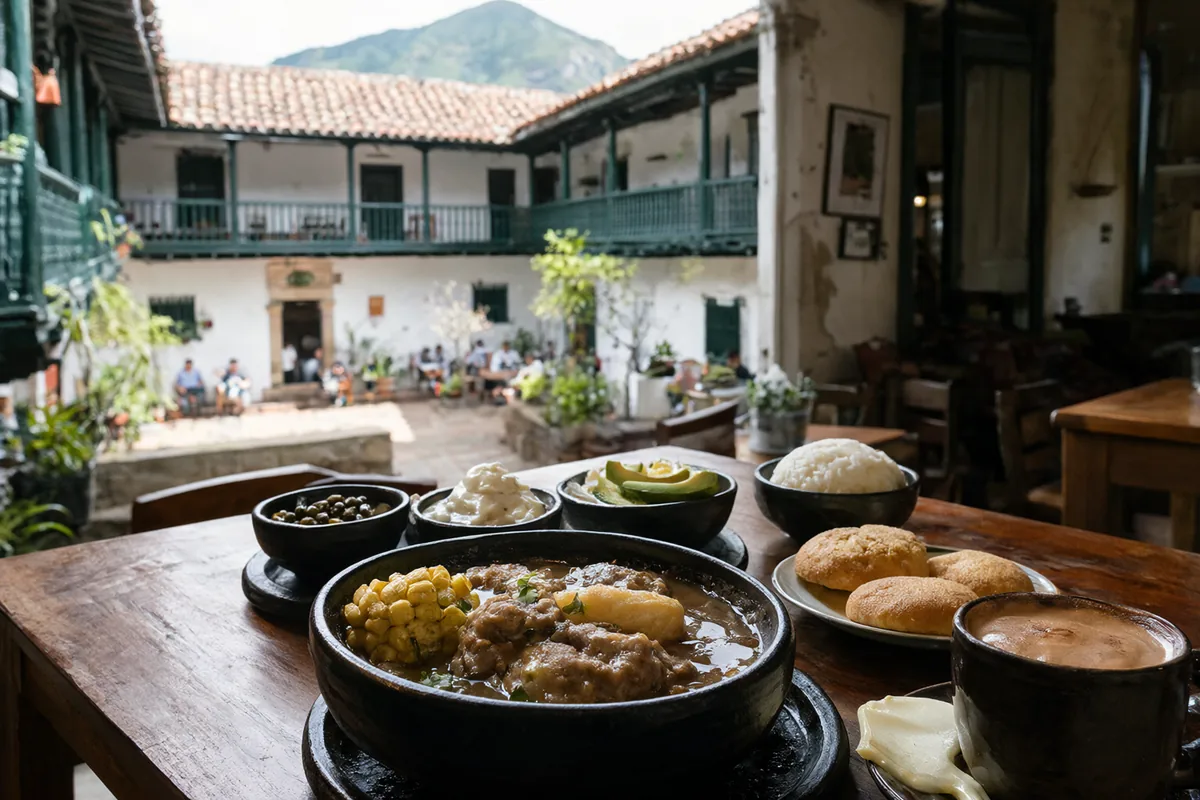
- Ajiaco santafereño (Bogotá): a thick chicken and potato soup made with three kinds of potato and an herb called guascas, with corn on the cob, served with cream, capers, avocado and rice on the side.
- Bandeja paisa (Medellín and Antioquia): a huge platter of red beans, rice, minced beef, pork crackling (chicharrón), chorizo, a fried egg, ripe plantain, an arepa and avocado.
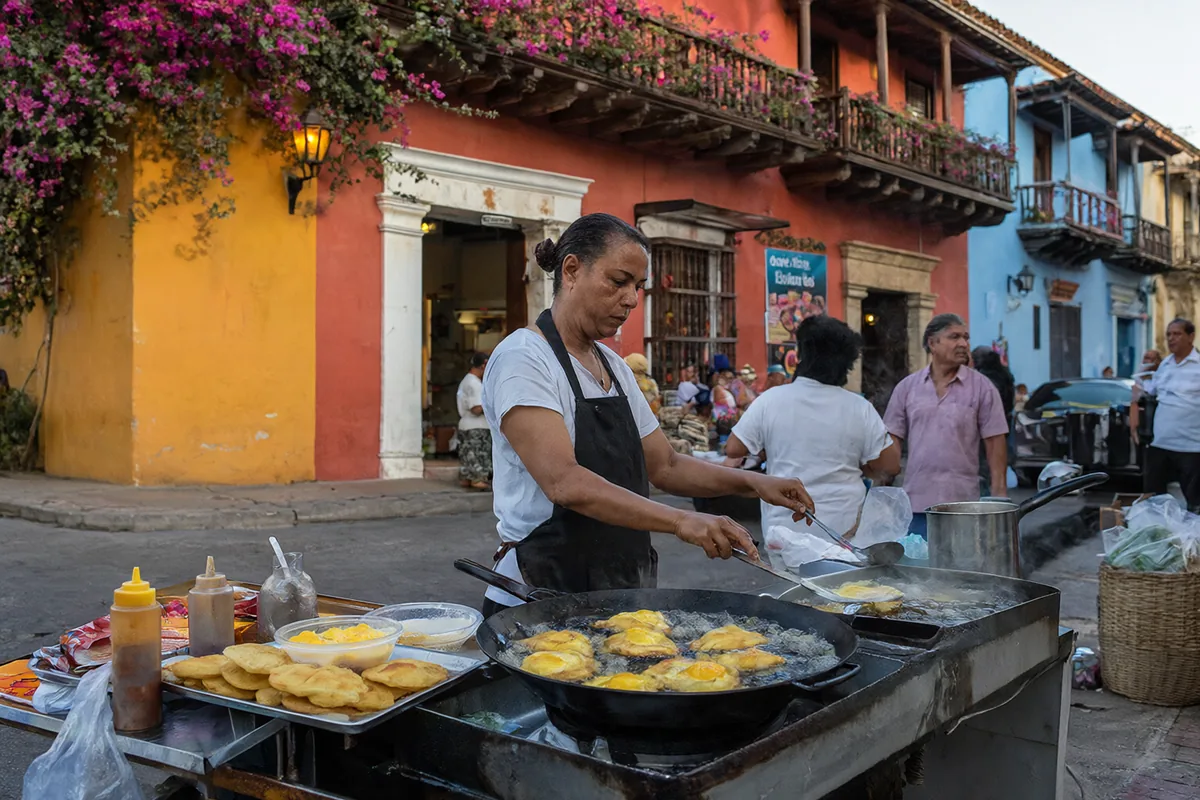
- Arepas (everywhere): grilled or fried corn cakes, with a different style in every region. Try the arepa de huevo on the Caribbean coast, fried with an egg inside, and the sweet arepa de choclo with cheese.
- Sancocho (everywhere): a hearty soup of chicken, beef or fish with plantain, cassava and corn, often a Sunday family meal.
- Empanadas (everywhere): crisp fried corn pastries filled with potato and meat, eaten with a squeeze of lime and spoonfuls of ají, a fresh chilli and coriander sauce.
- Lechona (Tolima and Bogotá): a whole pig stuffed with rice, peas and pork, roasted for hours and served in portions with its crackling and a corn cake.
- Tamal (Tolima and Bogotá): corn dough with pork, chicken, egg and vegetables, wrapped in plantain leaves and steamed. A weekend breakfast with hot chocolate.
- Pescado frito with arroz con coco (the Caribbean coast): a whole fried fish with coconut rice, patacones (fried green plantain) and salad.
- Posta negra cartagenera (Cartagena): beef braised slowly in a dark, sweet sauce made with panela (unrefined cane sugar).
- Pandebono, almojábanas and buñuelos (everywhere): small cheese breads and fried cheese dough balls, eaten warm at breakfast or with coffee. Buñuelos with natilla custard are a Christmas tradition.
- Chocolate con queso (Bogotá): a cup of hot chocolate with a slice of soft white cheese dropped into it to melt, eaten with a spoon.
- Tinto, aguapanela and aguardiente (everywhere): a tinto is a small black coffee, aguapanela is a hot or cold drink of panela dissolved in water, often with lime, and aguardiente is the anise-flavoured cane spirit drunk at every party.
How to read a Spanish menu in Colombia
Colombian menus are in Spanish, with plenty of local words and one famous trap: a tinto is coffee, not red wine. At lunchtime, look for the corrientazo or menú del día, a set meal that is often only written on a board. Here are the words you will see most often.
| Spanish | Meaning |
|---|---|
| Corrientazo / menú del día / almuerzo ejecutivo | Set lunch: soup, a main plate and a juice |
| Sopa / seco | Soup / the main plate of the set lunch |
| Principio | A side of beans, lentils or vegetables served with the main |
| Tinto | Small black coffee (red wine is "vino tinto") |
| Perico | Coffee with milk; "huevos pericos" are eggs scrambled with tomato and onion |
| Aromática | Herbal or fruit infusion |
| Jugo en agua / en leche | Fresh juice blended with water / with milk |
| Patacón | A fried, flattened disc of green plantain |
| Maduro / tajadas | Ripe sweet plantain / fried slices of it |
| Chicharrón | Thick, crisp fried pork belly |
| Sobrebarriga / costilla / carne de res | Flank steak / ribs / beef |
| Picada | A big sharing platter of grilled and fried meats, sausage, potatoes and plantain |
| Arequipe | Milk caramel, the Colombian name for dulce de leche |
| Propina voluntaria | Voluntary tip, shown on the bill |
Colombian menus often show prices in thousands, with a dot as the separator: $25.000 is twenty-five thousand pesos, and a menu may simply write "25". swap.menu reads both styles and converts every price to your home currency, so a long row of zeros never catches you out.
Tipping and paying the bill
In sit-down restaurants in Colombia the bill usually includes a suggested propina voluntaria, a voluntary tip of 10 percent, as a separate line. It is genuinely optional, and the waiter is supposed to ask whether you want it included ("¿desea incluir el servicio?"). Most people pay it for good service. In cafés, bakeries and set lunch places, tipping is not expected. Menu prices normally include tax. Our guide to tax and service charges on menus explains how these lines work around the world.
Prices are in Colombian pesos, written with a $ sign. Cards are widely accepted in restaurants in the cities, and when you pay by credit card the waiter will often ask "¿a cuántas cuotas?", how many monthly instalments you want; answer "una", one. Carry cash for markets, street food, small towns and taxis. If a card machine or cash machine offers to charge you in your home currency, choose pesos: our guide to paying in local currency explains why.
Lunch, from about noon to 2pm, is the main meal, and the set lunch is the best value of the day. Breakfast is substantial, often with arepas, eggs and hot chocolate. Dinner is usually 7 to 9pm, and later on weekends in Medellín, Cartagena and Cali.
Where to eat in Colombia, city by city
Colombia's regions are separated by mountains and jungle, so each city has kept its own cooking. Jump to a destination:
Where to eat in Bogotá
Bogotá sits at about 2,600 metres, and its cool climate explains its love of soups and hot drinks. In the old colonial district of La Candelaria, traditional restaurants serve ajiaco at lunchtime and cafés serve chocolate con queso with almojábanas in the afternoon. For the best traditional cooking in Bogotá, go to a market: the Plaza de Mercado de La Perseverancia is known for its cooks serving ajiaco, sancocho and tamales at shared tables, and Paloquemao is a huge produce and flower market where you can taste fruits you have never seen, such as lulo, curuba, pitahaya and uchuva.
For restaurants, the Zona G in Chapinero Alto and the area around the Zona T have Bogotá's most ambitious kitchens and international food, and Chapinero is the place for casual restaurants, cafés and bars. On Sundays, the old village of Usaquén has a flea market with food stalls. Bogotá also takes coffee seriously, and specialty cafés across the city serve Colombian beans that used to be exported almost entirely. Weekend breakfast of tamal and hot chocolate is a Bogotá ritual.
Where to eat in Medellín
Medellín is the capital of Antioquia, and paisa cooking is big, filling and built on beans, pork and corn. The bandeja paisa is the dish everyone orders once, and you will need to share or skip dinner. Paisas also eat mondongo (tripe soup), frijoles (red beans with pork), mazamorra (a drink of corn with milk and panela) and plain arepas with every meal.
El Poblado, especially the leafy streets of Provenza and around Parque Lleras, has the largest concentration of restaurants and bars in Medellín, aimed at visitors and well-off locals. Laureles, around Avenida 70 and La 33, is more local, with traditional restaurants, bakeries and bars. The Placita de Flórez is a traditional market with lunch counters and fruit stalls. On tours of Comuna 13, street vendors sell green mango with salt and lime and homemade ice lollies.
Where to eat in Cartagena
Cartagena, the walled colonial city on the Caribbean, is Colombia's most visited destination, and its food is coastal: fried fish, coconut rice, patacones, seafood cocktails and posta negra. Inside the walls, restaurants in restored colonial houses range from casual to very expensive, and prices are high by Colombian standards. Getsemaní, the neighbourhood just outside the walls, is livelier and cheaper, with street food in its squares in the evening, including arepas de huevo, carimañolas (cassava fritters filled with meat or cheese) and butifarras (small boiled sausages).
Near the clock tower, the Portal de los Dulces is an arcade of stalls selling traditional coconut sweets such as cocadas. Street carts all over Cartagena sell shrimp cocktails and fresh fruit, and the city's signature drink is limonada de coco, a frozen blend of lime and coconut cream. The Bazurto market is Cartagena's raw, chaotic main market, with fried fish lunches at its edges; go with a local or a guide. Boat trips to the Rosario Islands usually include a fried fish lunch on the beach.
Where to eat in Cali
Cali is the salsa capital of Colombia, and its food draws on the Valle del Cauca and the Afro-Colombian Pacific coast. The city's snacks are its glory: pandebono, warm cheese bread, aborrajados (fried ripe plantain stuffed with cheese), empanadas vallunas, and chontaduro, the orange peach palm fruit sold from carts with salt and honey. To drink, try lulada, crushed lulo fruit with lime and sugar, champús, a thick corn and fruit drink, and the cholado, shaved ice piled with fruit, syrup and condensed milk.
The Galería Alameda market is the best place in Cali to eat Pacific coast seafood, with lunch counters serving fish in coconut sauce and seafood soups. The hillside colonial neighbourhood of San Antonio has small restaurants and cafés, and Barrio Granada is Cali's restaurant district. Every August, the Petronio Álvarez festival of Pacific music brings huge numbers of food and drink stalls to the city.
Where to eat in the Coffee Region
The Coffee Region, or Eje Cafetero, covers the green hills around Manizales, Pereira and Armenia, and most visitors base themselves in the small towns of Salento and Filandia. The local dish is trucha, river trout grilled or in a garlic or coconut sauce, served on a giant patacón, and Salento's main street and square are lined with restaurants serving it. Traditional paisa food, such as bandeja paisa and sancocho, is also everywhere.
The real reason to visit is coffee. Many farms around Salento and Filandia offer tours that follow the bean from plant to cup, and end with a tasting. In town, cafés serve local beans, and the tinto at a roadside stall is often the freshest coffee of your trip. After a hike in the Cocora Valley among the tall wax palms, a plate of trout and a hot aguapanela with cheese is the traditional reward.
Where to eat in Santa Marta
Santa Marta, founded in 1525, is Colombia's oldest city and the base for Tayrona National Park, Minca and the Lost City trek. The food is Caribbean: fried fish with coconut rice and patacones, seafood soups, and cayeye, a local breakfast of mashed green banana with cheese and butter. The historic centre, especially the streets around the Parque de los Novios, has a good choice of restaurants and bars.
The fishing village of Taganga, just over the hill, has beachfront restaurants serving the day's catch. In the cool hills of Minca, coffee and cacao farms offer tours and tastings, and hostels serve simple home cooking. Bring water and snacks on Tayrona day trips, as food inside the park is limited and more expensive than in Santa Marta.
Where to eat in Popayán
Popayán, the white colonial city of southern Colombia, was named a UNESCO City of Gastronomy, and it is the place for traditional Cauca cooking. Its signature snack is the empanada de pipián, a small fried corn empanada filled with potato and peanut, served with a peanut chilli sauce. Look also for tamales de pipián, carantanta (crisp toasted corn), and salpicón payanés, a frozen drink of blackberry and lulo.
The historic centre has cafés and traditional restaurants in whitewashed colonial houses, and the city's markets have stalls selling empanadas and tamales. Popayán is famous for its Holy Week processions, and it also holds an annual national gastronomy congress in September, when chefs and cooks from across Colombia come to town. The city is an easy stop on the overland route between Cali and the south.
Vegetarian, vegan and allergy tips
Colombian food is meat-heavy, but vegetarians can rely on arepas, cheese breads, patacones, rice, beans (ask about pork), fresh fruit and juices, and Bogotá, Medellín and Cartagena have plenty of vegetarian and vegan restaurants. The set lunch soup is almost always made with meat or bone broth, and beans are often cooked with pork. The word for vegetarian is vegetariano (or vegetariana), and vegan is vegano. Ask "¿tiene carne?" (does it have meat?) or "¿el caldo es de carne?" (is the broth made with meat?).
Juices are often blended with milk unless you ask for them "en agua", which matters for lactose intolerance. Peanuts appear in Popayán's pipián dishes, and fresh cheese is in many breads and snacks. Our guide to eating abroad with food allergies explains how to explain an allergy clearly when you do not speak the language.
Useful Spanish phrases for ordering
Colombians are known for very polite Spanish. One local habit to copy: instead of "can I have", people say "¿me regala...?", literally "would you give me...?", even when paying.
Buenos días / Buenas tardes "Good morning / Good afternoon", always said before anything else
¿Me regala un tinto, por favor? "Could I have a black coffee, please?"
¿Qué tiene el almuerzo de hoy? "What is in today's set lunch?"
¿Qué me recomienda? "What do you recommend?"
Un jugo de lulo en agua "A lulo juice made with water" (not milk)
Soy alérgico / alérgica a... "I am allergic to..." (alérgico for a man, alérgica for a woman)
La cuenta, por favor "The bill, please"
Muy rico, muchas gracias "Very good, thank you very much"
How swap.menu helps you eat in Colombia
Colombian menus are full of words that do not appear in standard Spanish dictionaries, and even simple words like tinto mean something different here. Photograph the menu with swap.menu and every dish appears in your language with the Spanish name beside it and a short explanation, so you know that sobrebarriga is flank steak, that mondongo is tripe soup and that a picada is a platter for the whole table. Every price is converted from Colombian pesos to your home currency, whether the menu writes $25.000 or just 25, and we point out the voluntary tip line on the bill.
Tap the dishes you want, add a note such as "no pork" or "juice with water, not milk", typed or spoken, and swap.menu translates your order into Spanish. Show the waiter your phone, or let them scan the QR code and read your order on their own screen. You can try it right now on a sample menu with the free demo, or see travel pass prices.
Off to Colombia? Your first 3 menu scans are free, and a travel pass starts from $4.99 with nothing that renews.
Start free with 3 scansColombia food FAQ
Do you tip in restaurants in Colombia?
In sit-down restaurants the bill usually includes a voluntary tip of 10 percent as a separate line, and the waiter should ask whether you want to include it. Most people pay it for good service. Tipping is not expected at cafés, bakeries or set lunch places.
What food is Colombia famous for?
Colombia is known for ajiaco, bandeja paisa, arepas, empanadas, sancocho and lechona, as well as fried fish with coconut rice on the Caribbean coast. It is also famous for its coffee and an enormous variety of tropical fruit juices.
Is Colombia expensive to eat out?
Colombia is good value for food. The set lunch, street food, bakeries and markets cost little, while smart restaurants in Cartagena's walled city and Medellín's El Poblado charge prices closer to Europe or Australia.
Is tap water safe to drink in Colombia?
Tap water in Bogotá and Medellín is treated and generally considered safe to drink. In most other places, including Cartagena and rural areas, drink bottled or filtered water.
Which city in Colombia is best for food?
Bogotá has the widest range of restaurants and the best traditional markets, Medellín is the home of paisa cooking, Cartagena is best for Caribbean seafood and Cali for street snacks and Pacific cooking. Popayán is a UNESCO City of Gastronomy.
How can I read a Colombian menu if I do not speak Spanish?
Learn a few words such as corrientazo, tinto, principio and patacón, or photograph the menu with swap.menu. It translates every dish into your language, explains what it is, converts prices from pesos to your currency and translates your order back into Spanish for the waiter.
Travelling further in South America? Read our food guides for neighbouring countries:
Or browse every travel food guide.