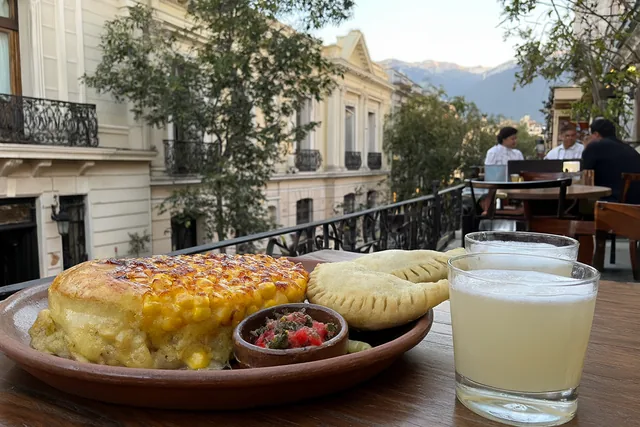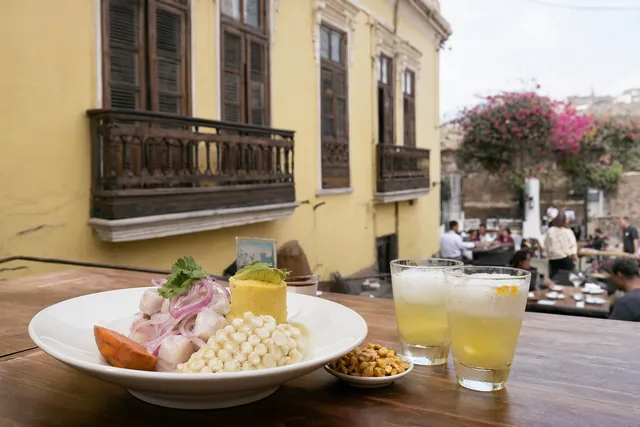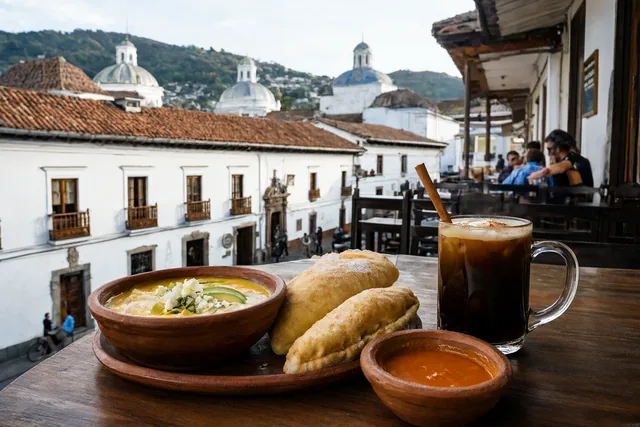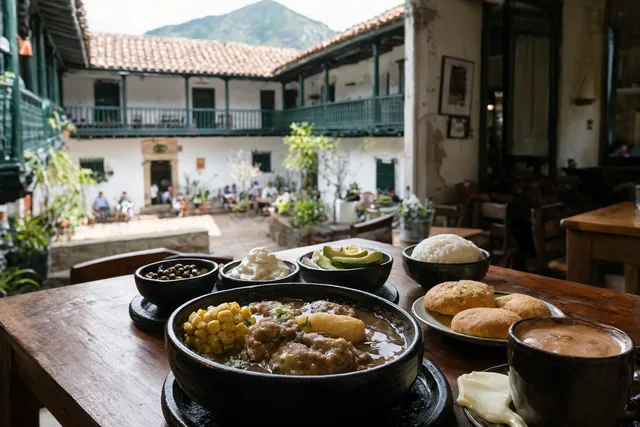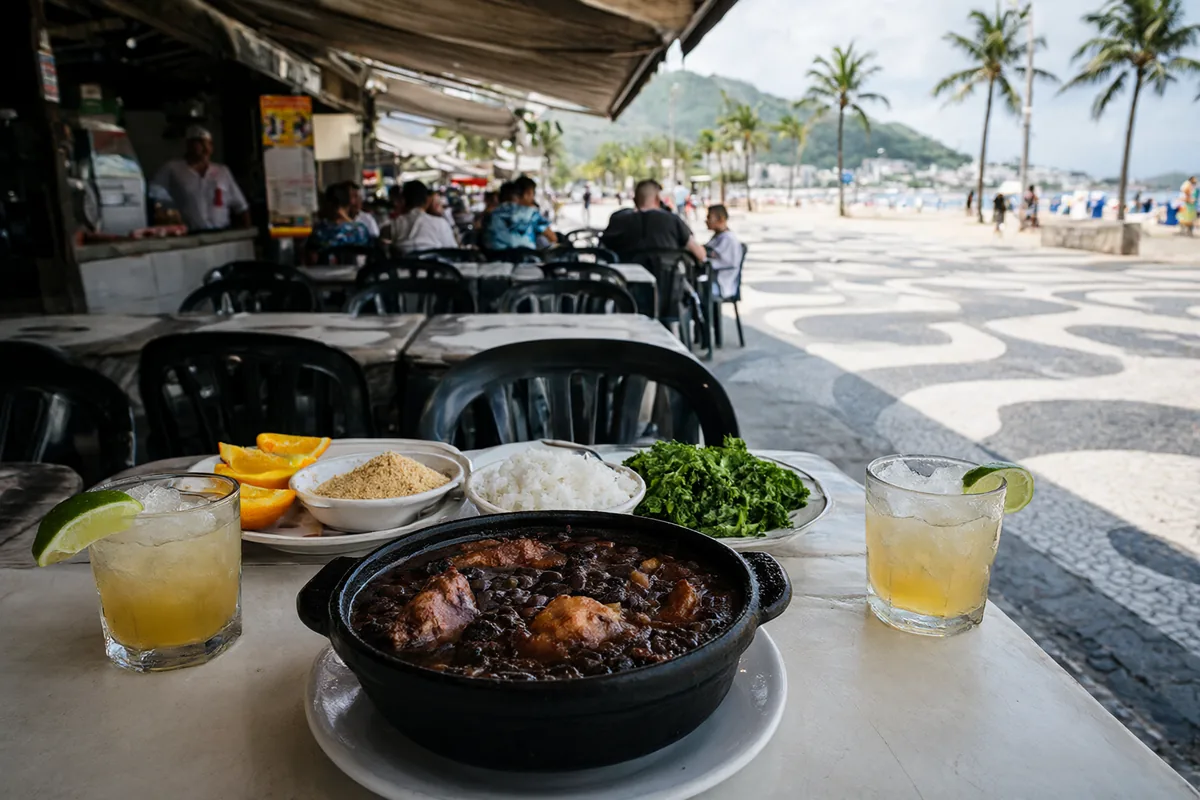
Brazil is the size of a continent and eats like one. This Brazil food guide covers the dishes worth knowing, how a Portuguese menu works, what the "couvert" and the 10 percent on your bill mean, and then goes city by city through where to eat in Rio de Janeiro, São Paulo, Salvador, Belo Horizonte, Recife, Belém, Florianópolis and Porto Alegre. The food changes completely as you travel, from palm oil and coconut in Bahia to Amazon fish in the north and fire-roasted beef in the gaúcho south.
What to eat in Brazil: 12 dishes to know
These are the dishes you will meet most often, with the region they come from.
- Feijoada (Rio de Janeiro and nationwide): a black bean stew with salted and smoked pork, served with white rice, shredded collard greens (couve), farofa and orange slices. Traditionally a Saturday lunch, and on Wednesdays in many Rio restaurants.
- Pão de queijo (Minas Gerais): small, chewy cheese breads made with cassava starch, so they are naturally gluten-free. Eaten at breakfast and with coffee all day.
- Moqueca (Bahia and Espírito Santo): fish or shrimp stewed in a clay pot. The Bahian version uses coconut milk and dendê (red palm oil); the capixaba version from Espírito Santo uses annatto and olive oil instead.
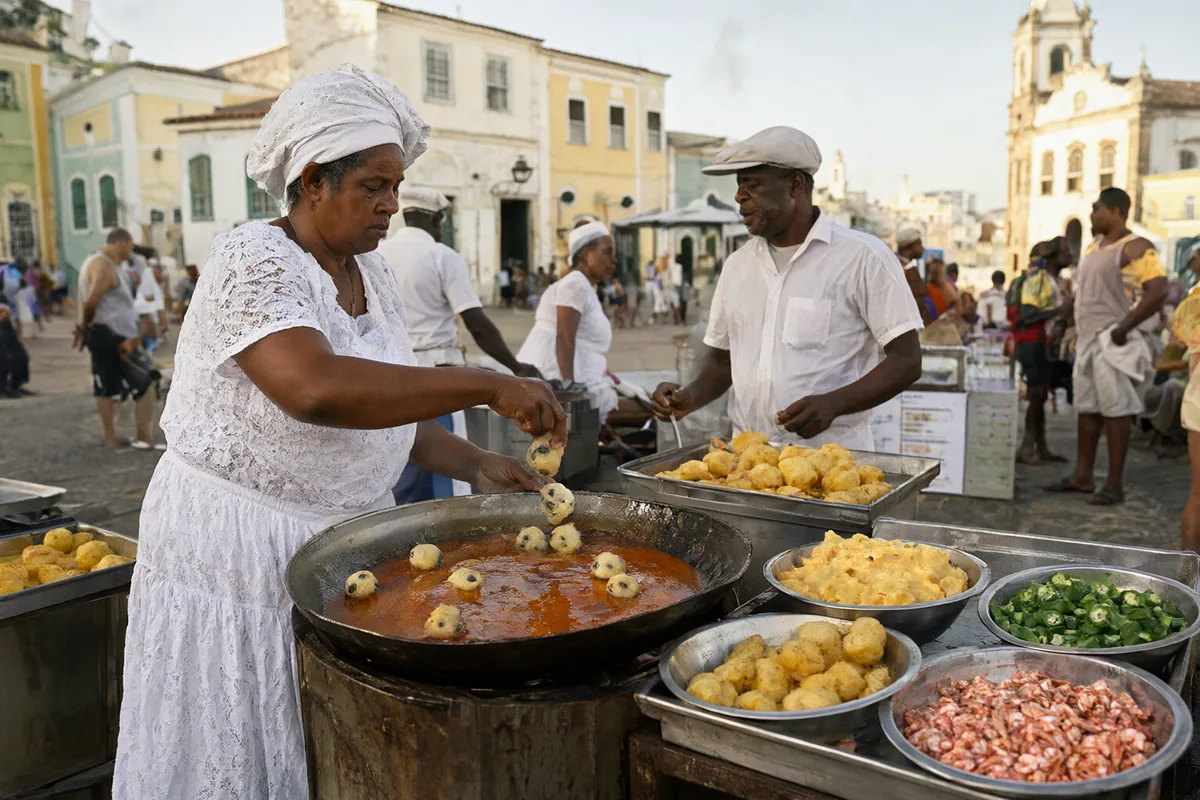
- Acarajé (Salvador): a black-eyed pea fritter fried in dendê, split and filled with vatapá (a creamy paste of bread, shrimp, peanuts and coconut), caruru (okra) and dried shrimp.
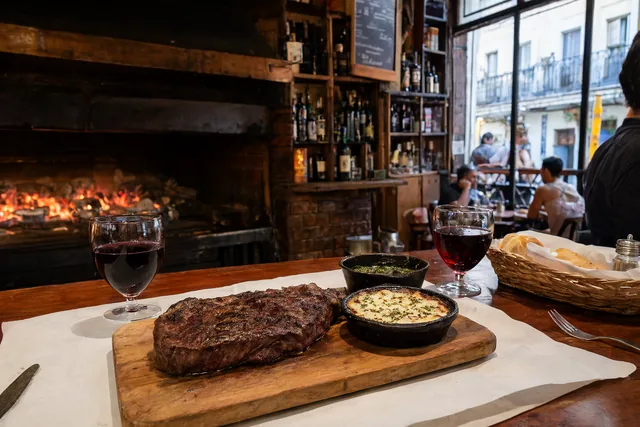
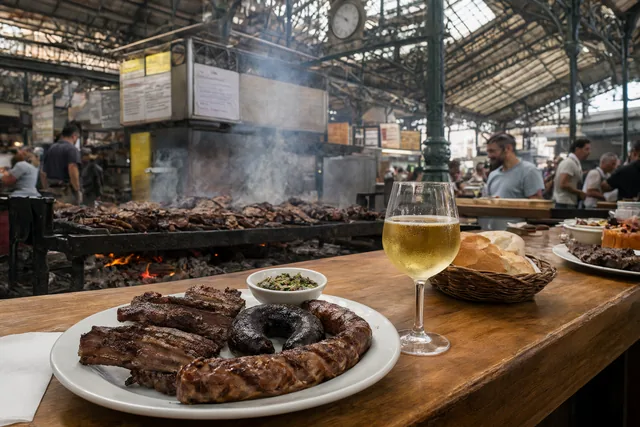
- Churrasco (Rio Grande do Sul and nationwide): grilled meat. The prized cut is picanha, the rump cap, salted and grilled with its fat on. In a rodízio waiters carry skewers to your table until you say stop.
- Coxinha (São Paulo and everywhere): a teardrop-shaped croquette of shredded chicken in dough, breaded and fried. The essential bar and bakery snack.
- Pastel (São Paulo street markets): a large, thin, crisp fried pastry filled with cheese, ground beef or heart of palm, usually washed down with fresh sugar cane juice (caldo de cana).
- Açaí (Pará): in the south it is a frozen sweet bowl with granola and banana; in Belém it is a thick, unsweetened purple purée eaten with fried fish and cassava flour.
- Tacacá (Belém and the Amazon): a hot broth of yellow tucupi (fermented cassava juice) with dried shrimp and jambu, a leaf that makes your mouth tingle and go numb.
- Feijão tropeiro (Minas Gerais): beans tossed with cassava flour, bacon, eggs, sausage and greens, originally food for mule drivers.
- Tapioca (the Northeast): a crêpe made by toasting cassava starch in a dry pan, filled with coconut, cheese, dried beef or sweet fillings.
- Brigadeiro (everywhere): a soft truffle of condensed milk, cocoa and butter rolled in chocolate sprinkles, at every birthday party in the country. Wash it all down with a caipirinha, made with cachaça (sugar cane spirit), lime and sugar.
How to read a Portuguese menu
Brazilian menus are written in Brazilian Portuguese, which is close to Spanish on paper but different enough to trip you up. Two things catch visitors out: portions are often meant for two people, and there are several styles of eating that have nothing to do with ordering à la carte. Here are the words you will see most often.
| Portuguese | Meaning |
|---|---|
| Entradas / petiscos | Starters / bar snacks for sharing |
| Prato feito (PF) | A cheap set plate: rice, beans, a meat, salad and often chips |
| Prato executivo | Weekday set lunch, usually with a drink or dessert |
| Comida a quilo / por quilo | Self-service buffet where your plate is weighed and you pay by the kilo |
| Rodízio | All you can eat, brought to the table: meat, pizza or sushi |
| Porção / meia porção | A sharing portion / half portion |
| Serve duas pessoas | Serves two people, very common on mains |
| Couvert | Bread, butter, olives or pâté brought before you order, charged if you eat it |
| Taxa de serviço (10%) | Service charge |
| Carne / frango / porco / peixe / camarão | Beef / chicken / pork / fish / shrimp |
| Grelhado / frito / assado / ensopado | Grilled / fried / roasted / stewed |
| Mal passado / ao ponto / bem passado | Rare / medium / well done |
| Suco / chope | Fresh juice / draught beer |
| Sobremesa | Dessert |
If a main course says "serve 2 pessoas", one order really is enough for two hungry adults, and ordering one each means a lot of leftovers. swap.menu points out sharing portions, the couvert and the service charge when it reads the menu, so you can order the right amount and know what the bill will look like.
Tipping, the couvert and paying the bill
Most sit-down restaurants and bars add a taxa de serviço of 10 percent to the bill. It is the tip, so you do not need to leave anything extra. The charge is customary rather than compulsory, and you can ask for it to be removed if the service was poor, though few people do. At a café counter, a juice bar or a street stall there is no service charge and no tipping is expected. Our guide to tax and service charges on menus explains how these lines work around the world.
The couvert is the plate of bread, butter, olives or small snacks that may arrive as soon as you sit down. It is not free. If you do not want it, say "não, obrigado" (or "obrigada" if you are a woman) and it goes back. A "couvert artístico" on the bill is a charge for live music, which should be announced on the menu or at the door.
Prices are in Brazilian reais, written R$. Menu prices include tax. Cards are accepted almost everywhere, including at many beach kiosks, and the waiter usually brings the card machine (the maquininha) to your table. Brazilians pay for almost everything with Pix, an instant bank transfer by QR code, which mostly needs a Brazilian bank account, so carry a card and a little cash for markets and street food. When a card machine offers to charge you in your home currency, choose reais instead: our guide to paying in local currency explains why.
Lunch is the main meal for many Brazilians, served from about noon to 2:30pm. Dinner starts around 8pm and runs late, especially in Rio and São Paulo, where tables fill at 9 or 10pm.
Where to eat in Brazil, city by city
Each Brazilian city has its own dishes, its own way of drinking beer and its own opinion about which is the best food city in the country. Jump to a city:
Where to eat in Rio de Janeiro
Rio de Janeiro eats and drinks in the boteco, the neighbourhood bar with plastic tables on the pavement, ice-cold chope served in small glasses so it never warms up, and a menu of petiscos: bolinhos de bacalhau (salt cod fritters), pastel, fried cassava, and carne seca (dried beef) with onions. Saturday is feijoada day, and many places serve it from lunchtime with live samba. Botafogo and its side streets have one of the best concentrations of bars and casual restaurants in Rio, Leblon and Ipanema are smarter and pricier, and hilltop Santa Teresa has relaxed restaurants in old mansions.
On the beach, vendors walk the sand selling grilled queijo coalho (squeaky cheese on a stick), sweetened iced mate tea and corn on the cob, and the beach kiosks sell coconut water straight from the shell. For a taste of the Northeast without leaving Rio de Janeiro, the Feira de São Cristóvão is a huge covered fair of northeastern food, music and dancing.
Where to eat in São Paulo
São Paulo is Brazil's biggest city and its most serious restaurant city, shaped by waves of Italian, Japanese, Lebanese and Portuguese immigrants. Liberdade has the largest Japanese community outside Japan, with ramen counters, grocery stores and a weekend street fair; our guide on how to read a Japanese menu is useful there. Bixiga (Bela Vista) is the old Italian quarter, and São Paulo eats so much pizza that Sunday night pizza is a citywide habit. Lebanese bakeries all over town sell esfiha (open meat pies) and kibe, both now everyday Brazilian snacks.
The Mercado Municipal (the "Mercadão") in the centre is famous for its towering mortadella sandwich and salt cod pastel, and for its fruit stalls. São Paulo's weekly street markets, the feiras livres, are where to find the best pastel and caldo de cana. For restaurants and bars, head to Pinheiros, Vila Madalena and Jardins. The classic local dish is virado à paulista, a plate of beans, pork chop, sausage, egg, cabbage and fried banana that many lunch spots serve on Mondays.
Where to eat in Salvador
Salvador, the capital of Bahia, was the main port of the Atlantic slave trade in Brazil, and its food is the most African in the Americas. The essential snack is acarajé, sold by baianas in white lace dresses from stalls on squares and beachfronts. They will ask "quente ou frio?", hot or cold, which means with or without chilli sauce; if you are unsure, ask for a little. Rio Vermelho, the bohemian seaside neighbourhood, has some of the best-known acarajé stalls in Salvador and lively bars in the evening, and it is the best area for dinner.
Sit-down Bahian cooking means moqueca brought bubbling to the table in a clay pot, bobó de camarão (shrimp in a cassava and coconut cream), vatapá and caruru. Dendê oil is rich and heavy, so share and pace yourself. The historic Pelourinho has restaurants in colonial buildings, and the Mercado Modelo by the port is good for a snack and a cold drink, though it is aimed at visitors.
Where to eat in Belo Horizonte
Belo Horizonte, the capital of Minas Gerais, calls itself the bar capital of Brazil, and comida mineira is the country's favourite comfort food. Expect pão de queijo, tutu de feijão (a thick bean purée), feijão tropeiro, frango com quiabo (chicken with okra), crunchy torresmo (pork crackling), and fresh queijo minas cheese with guava paste, a pairing called "Romeu e Julieta".
The Mercado Central is the place to start: stalls sell cheese, cachaça, doce de leite and spices, and its bars serve liver and onions with a cold beer. In the evening, go bar-hopping in Savassi or the old neighbourhood of Santa Tereza, where many bars have their own signature petisco.
Where to eat in Recife
Recife, on the northeastern coast, eats the food of the Brazilian sertão (the dry interior) alongside seafood. Look for carne de sol, lightly salted and dried beef served with macaxeira (the local word for cassava) and melted butter, baião de dois (rice and beans cooked together with cheese), charque (jerked beef) and crab and shrimp stews. Recife's signature desserts are bolo de rolo, a cake of paper-thin layers rolled with guava paste, and cartola, fried banana with melted cheese, sugar and cinnamon.
The beachfront of Boa Viagem is lined with kiosks selling coconut water, grilled cheese and caldinho, small cups of thick bean or fish soup. In the old centre, the iron-framed Mercado de São José sells regional ingredients and crafts. Just north of Recife, the colonial hill town of Olinda has tapioca stands at the Alto da Sé lookout, where you can watch the crêpes being made to order.
Where to eat in Belém
Belém sits at the mouth of the Amazon and has one of the most distinctive cuisines in Brazil, built on river fish, cassava and fruits you will not find anywhere else. The Ver-o-Peso market on the waterfront is the place to see it: fish stalls, herb sellers, mountains of açaí, and simple food counters serving fried fish with thick purple açaí and cassava flour, the way locals eat it. Order tacacá from a street vendor in the late afternoon; it is served in a gourd bowl, and the jambu leaves will make your lips buzz.
Other dishes to try in Belém are pato no tucupi (duck in tucupi broth with jambu), maniçoba (cassava leaves cooked for days with pork, sometimes called the Amazon feijoada) and river fish like filhote and tambaqui. Amazon fruits such as cupuaçu and bacuri turn up as juices and ice cream. The Estação das Docas, old riverside warehouses converted to restaurants and bars, is an easy, air-conditioned introduction with sunset views over the bay.
Where to eat in Florianópolis
Florianópolis, on Santa Catarina Island in the south, produces most of Brazil's farmed oysters, and eating them is the main reason food lovers visit. The old fishing villages of Santo Antônio de Lisboa and Ribeirão da Ilha, settled by immigrants from the Azores, have waterfront restaurants serving oysters raw, gratinated, steamed or in soup, with mussels and clams beside them.
The local feast is the sequência de camarão, a shrimp sequence of six or more courses: fried, steamed, in garlic, in a stew with rice, in pastéis and more, usually priced per person. In winter, roughly May to July, the mullet season brings grilled and stuffed tainha to the menus of Florianópolis. The Lagoa da Conceição area has the island's most relaxed bars and restaurants, and the Mercado Público in the centre is a classic spot for a beer and seafood snacks.
Where to eat in Porto Alegre
Porto Alegre is the capital of Rio Grande do Sul, the home of the gaúcho cowboy culture that gave Brazil its churrasco. Here the meat is the point: big cuts salted with coarse salt and cooked slowly over wood or charcoal, in a churrascaria with a rodízio service or at a family barbecue. You will see people everywhere carrying a gourd and a thermos for chimarrão, the bitter herbal mate tea shared in a circle, a habit the region shares with Uruguay and Argentina.
Porto Alegre also has a strong Italian and German immigrant heritage. Try galeto, spit-roasted young chicken served with polenta, pasta and salad, and the xis, a huge pressed burger sandwich. The historic Mercado Público has butchers, ice cream counters and old-fashioned restaurants. The Cidade Baixa neighbourhood is the place for bars, and the Serra Gaúcha hills to the north produce most of Brazil's wine.
Vegetarian, vegan and allergy tips
Brazil is easier for vegetarians than its meaty reputation suggests. Per-kilo buffets let you build a plate from salads, rice, vegetables and cheese dishes, juice bars are everywhere, and big cities have plenty of vegetarian and vegan restaurants. The catch is hidden meat. Beans are very often cooked with bacon, sausage or pork, farofa may be fried in bacon fat, and Bahian dishes like vatapá, caruru and acarajé contain dried shrimp. Ask "tem carne?" (does it have meat?). The word for vegetarian is vegetariano (or vegetariana for a woman), and vegan is vegano.
For allergies, peanuts and cashews appear in vatapá and some sweets, and shrimp is common on the coast. Coeliacs have it easier than in many places: pão de queijo, tapioca and many cassava dishes are naturally gluten-free, and packaged foods in Brazil must state whether they contain gluten ("contém glúten"). Our guide to eating abroad with food allergies explains how to explain an allergy clearly when you do not speak the language.
Useful Portuguese phrases for ordering
Bom dia / Boa tarde / Boa noite "Good morning / Good afternoon / Good evening", the polite way to greet staff
Uma mesa para dois, por favor "A table for two, please"
O que você recomenda? "What do you recommend?"
Eu vou querer este "I will have this one" (pointing)
Serve quantas pessoas? "How many people does it serve?"
Sou alérgico / alérgica a... "I am allergic to..." (alérgico for a man, alérgica for a woman)
A conta, por favor "The bill, please"
Estava uma delícia, obrigado / obrigada "It was delicious, thank you" (obrigado if you are a man, obrigada if you are a woman)
How swap.menu helps you eat in Brazil
Few menus outside the big hotels in Brazil have an English version, and even when they do, the translation rarely explains anything. Photograph the menu with swap.menu and every dish appears in your language with the Portuguese name beside it and a short explanation, so you know that a pastel is a fried pastry rather than a cake, that x-salada is a cheeseburger with salad (the "x" is pronounced like "cheese"), and that dobradinha is tripe. Every price is converted from reais to your home currency, and we point out the couvert, the 10 percent service and any "serve 2 pessoas" portions.
Tap the dishes you want, add a note such as "no shrimp" or "without meat, please", typed or spoken, and swap.menu translates your order into Portuguese. Show the waiter your phone, or let them scan the QR code and read your order on their own screen. You can try it right now on a sample menu with the free demo, or see travel pass prices.
Off to Brazil? Your first 3 menu scans are free, and a travel pass starts from $4.99 with nothing that renews.
Start free with 3 scansBrazil food FAQ
Do you tip in restaurants in Brazil?
Most restaurants and bars add a 10 percent service charge, called the taxa de serviço, which counts as the tip. You do not need to leave anything on top. It is customary rather than compulsory, and there is no service charge at counters, juice bars or street stalls.
What food is Brazil most famous for?
Feijoada, churrasco and picanha, pão de queijo, moqueca, acarajé, coxinha and açaí are the best-known dishes, along with the caipirinha. Brazilian food is very regional, so Salvador, Belo Horizonte, Belém and Porto Alegre each have completely different specialities.
Is Brazil expensive to eat out?
It depends on where you eat. Per-kilo buffets, set lunches called prato feito and street snacks are good value, while smart restaurants in Rio de Janeiro and São Paulo can cost as much as in Europe. Many main dishes serve two people, which brings the cost down.
Is tap water safe to drink in Brazil?
Most Brazilians do not drink tap water straight from the tap and use filtered or bottled water at home. Visitors should do the same. Ice and juices in established restaurants and juice bars are normally made with filtered water.
What time do Brazilians eat dinner?
Dinner usually starts around 8pm and often later, with restaurants in Rio de Janeiro and São Paulo busiest from 9 to 11pm. Lunch, usually between noon and 2:30pm, is the main meal of the day for many people.
How can I read a Brazilian menu if I do not speak Portuguese?
Learn a few words such as prato feito, porção, couvert and serve duas pessoas, or photograph the menu with swap.menu. It translates every dish into your language, explains what it is, converts prices from reais to your currency and translates your order back into Portuguese for the waiter.
Travelling further in South America? Read our food guides for neighbouring countries:
Or browse every travel food guide.