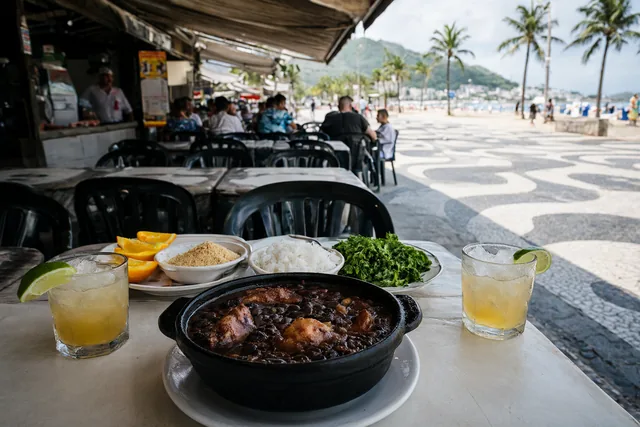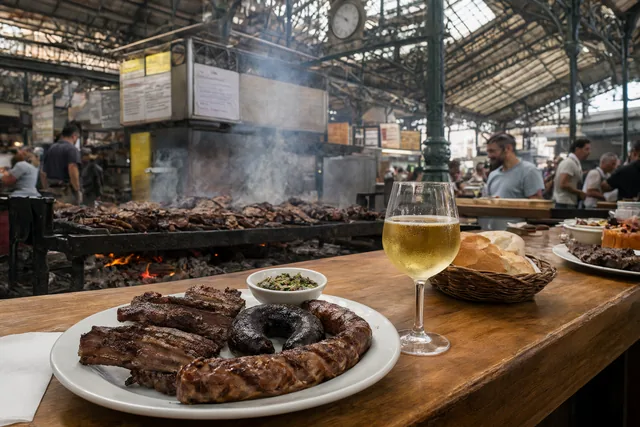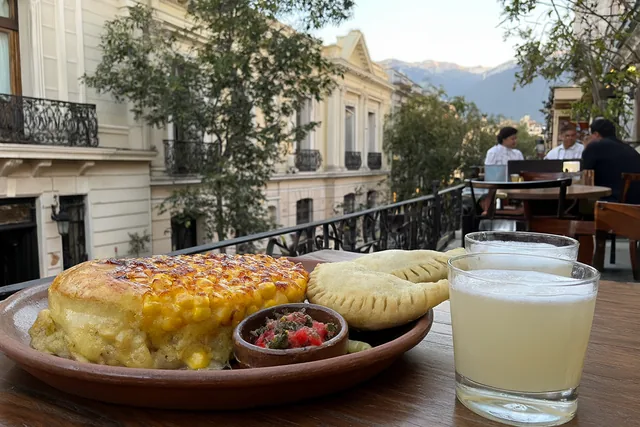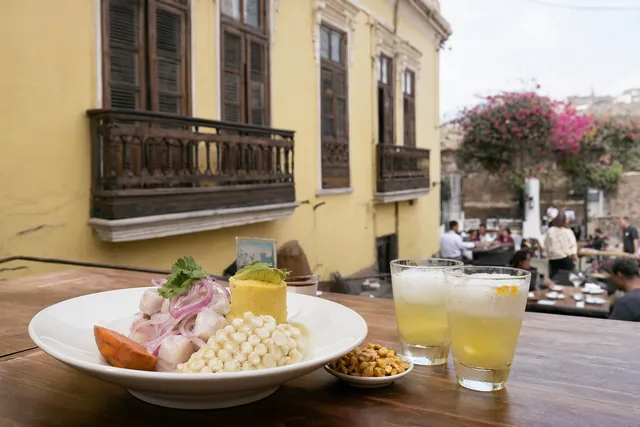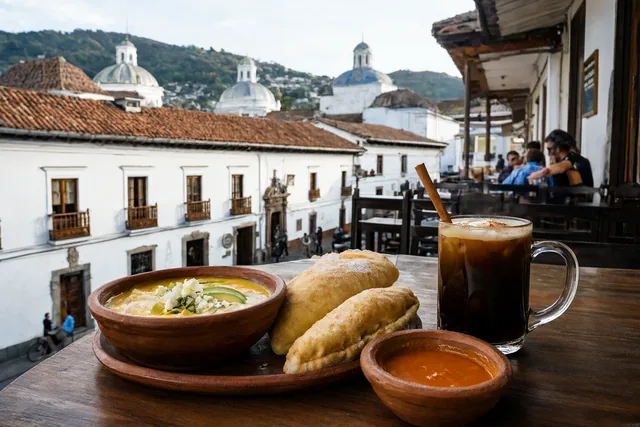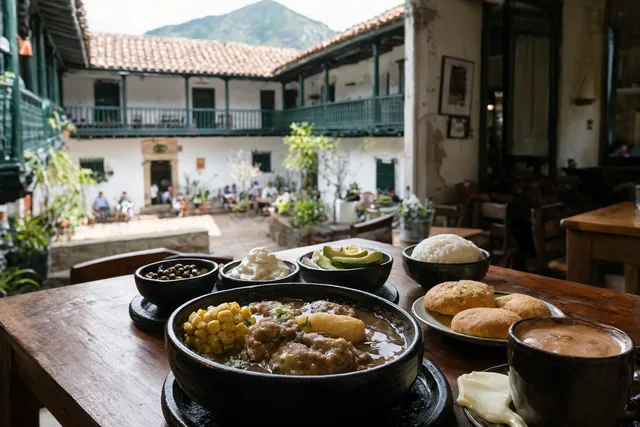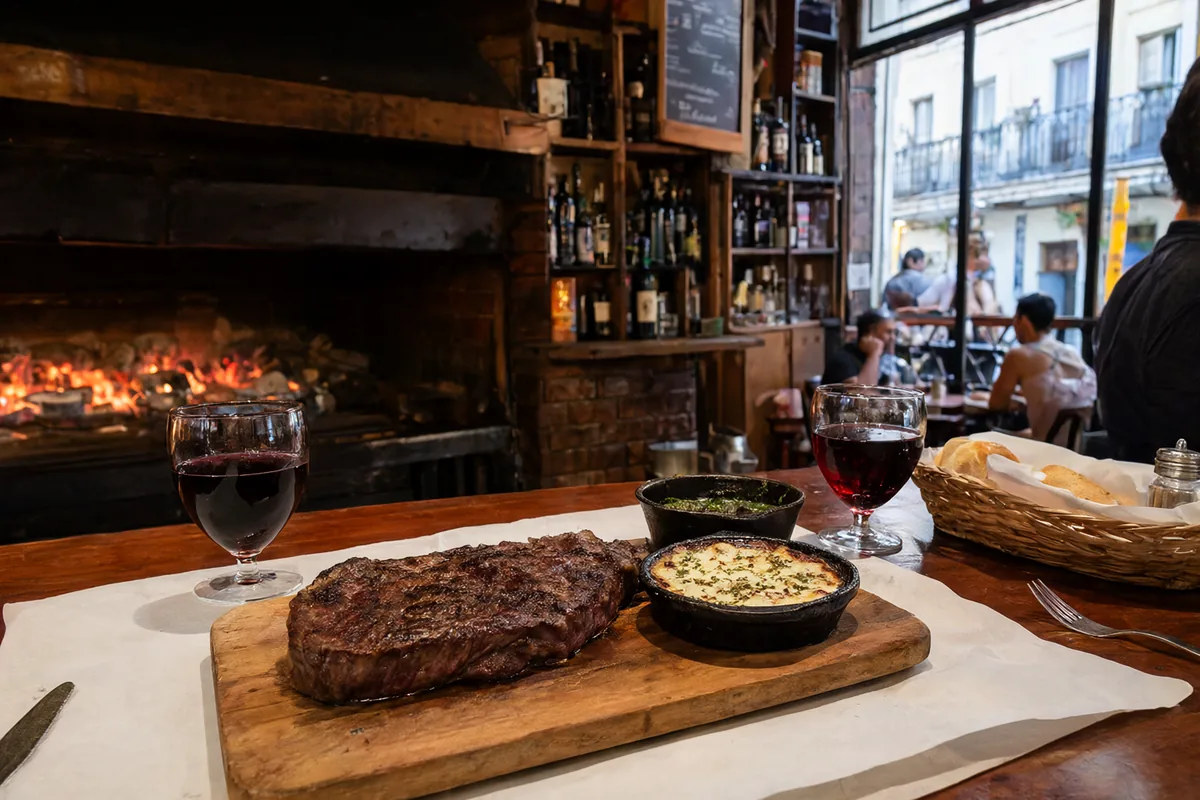
Argentina is famous for beef and wine, and both live up to the reputation, but there is a lot more on the table than steak. This Argentina food guide covers the dishes and cuts to know, how to read an Argentine menu and order your steak the way you like it, what the "cubierto" on the bill is, how much to tip, and then where to eat in Buenos Aires, Mendoza, Córdoba, Salta, Bariloche, Rosario and Ushuaia. Italian and Spanish immigrants shaped the everyday food, so pizza, pasta and ice cream are as Argentine as the asado, while the Andean northwest cooks corn, potatoes and llama like its neighbours in Bolivia and Peru.
What to eat in Argentina: 12 dishes to know
These are the dishes and drinks you will see everywhere, with the region they belong to where it matters.
- Asado (everywhere): the barbecue, cooked slowly over wood embers on a parrilla grill. A parrillada is a mixed grill of sausages, offal and several cuts, served on a tabletop brazier.
- Bife de chorizo (everywhere): a thick sirloin strip steak, the classic order in a steakhouse. Nothing to do with chorizo sausage.
- Choripán (everywhere): grilled chorizo sausage in a crusty roll with chimichurri, the parsley, garlic, oregano and vinegar sauce. The street food of football matches and roadside grills.
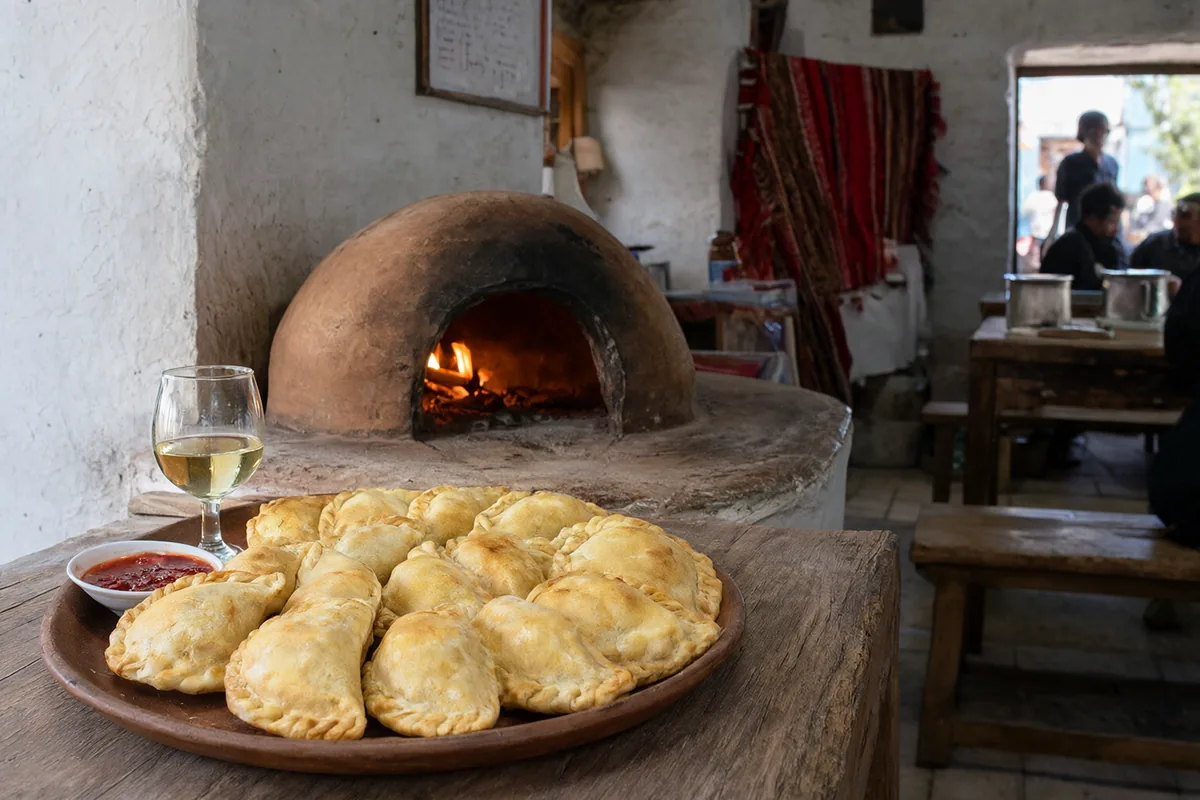
- Empanadas (Salta and Tucumán especially): baked or fried pastries filled with beef, chicken, ham and cheese or sweetcorn. Every province claims the best recipe.
- Provoleta (everywhere): a thick disc of provolone cheese grilled until crusty outside and molten inside, sprinkled with oregano and chilli.
- Milanesa (everywhere): a thin breaded beef or chicken cutlet. A milanesa a la napolitana is topped with ham, tomato sauce and melted cheese, and it is not from Naples.
- Locro (the northwest and national holidays): a thick stew of white corn, beans, pumpkin and pork, eaten on 25 May and 9 July.
- Humita (the northwest): fresh grated corn cooked with onion, peppers and cheese, often steamed in corn husks like a tamale.
- Fugazzeta (Buenos Aires): a deep pizza stuffed with mozzarella and piled with sweet onion. Order a slice of fainá, a chickpea flatbread, to put on top.
- Medialunas (everywhere): small croissants, either sweet and buttery (de manteca) or flatter and savoury (de grasa), eaten with coffee.
- Dulce de leche and alfajores (everywhere): milk caramel, spread on toast, inside crêpes, in ice cream and sandwiched between two biscuits in an alfajor.
- Mate and Malbec (everywhere): mate is a bitter herbal tea sipped through a metal straw from a shared gourd. Malbec is the red wine from Mendoza that made Argentine wine famous.
How to read a Spanish menu in Argentina
Argentine Spanish has its own food vocabulary, and a parrilla menu lists cuts that do not translate neatly into English. Side dishes are almost always ordered separately: a steak arrives alone on the plate. Here are the words you will see most often.
| Spanish | Meaning |
|---|---|
| Parrilla | The grill, and by extension a steakhouse |
| Bife de chorizo / ojo de bife | Sirloin strip / rib eye |
| Lomo / vacío / entraña | Tenderloin / flank / skirt steak |
| Tira de asado | Beef short ribs cut across the bone in a long strip |
| Achuras | Offal from the grill: mollejas (sweetbreads), chinchulines (intestines), morcilla (blood sausage) |
| Jugoso / a punto / cocido | Rare to medium-rare / medium / well done |
| Guarnición | Side dish, ordered separately: chips, salad, mash |
| Papas fritas / puré / ensalada mixta | Chips / mashed potato / lettuce, tomato and onion salad |
| Minutas | Quick dishes: milanesas, omelettes, chips |
| Menú del día / menú ejecutivo | Set lunch of two or three courses |
| Para compartir | For sharing |
| Picada | A board of cold meats, cheese and pickles with drinks |
| Cubierto | Per-person cover charge for bread and the table setting |
| Agua con gas / sin gas | Sparkling / still water |
Argentines tend to like their beef cooked more than visitors expect, and "a punto" can arrive closer to medium-well than medium. If you want it pink, ask for "jugoso", and for properly rare say "vuelta y vuelta". swap.menu explains each cut on a parrilla menu and translates your cooking preference into Spanish for the waiter.
Cubierto, tipping and paying the bill
Many restaurants charge a cubierto, a per-person cover charge for bread, sometimes a small dip, and the table setting. It should be shown on the menu, and it is not a tip. Service is rarely included, and the custom is to leave a propina of about 10 percent in sit-down restaurants, a little more for excellent service. Tips are often left in cash, because not every card terminal has an option to add one. At a café counter or a takeaway empanada shop, rounding up is enough. Our guide to tax and service charges on menus explains how these lines work around the world.
Prices are in Argentine pesos, written with a $ sign, which confuses visitors from dollar countries. Menu prices include IVA, the national sales tax. Argentina has a long history of high inflation and of separate official and informal exchange rates, so prices change often and the best way to pay has shifted over the years. Check current advice before you travel on whether card or cash gets you the better deal, and carry some cash for small places. If a card machine offers to charge you in your home currency, choose pesos: our guide to paying in local currency explains why.
Argentina eats late. Lunch runs from about 1 to 3pm, many restaurants do not open for dinner until 8pm, and locals sit down at 9:30 or 10pm, later on weekends. To bridge the gap there is the merienda around 5pm: coffee or mate with medialunas, toast or a slice of cake.
Where to eat in Argentina, city by city
From the cafés of Buenos Aires to the wineries of Mendoza and the clay ovens of Salta, every region has its own table. Jump to a city:
Where to eat in Buenos Aires
Buenos Aires has three institutions to try before anything else: the parrilla, the pizzería and the bodegón. Parrillas range from smart steakhouses to neighbourhood grills with paper tablecloths, and a shared parrillada with provoleta, a bottle of Malbec and a salad is the classic meal. The old pizzerias along Avenida Corrientes serve thick, cheesy pizza by the slice, often eaten standing at the counter with a glass of moscato. Bodegones are old-fashioned neighbourhood restaurants with huge portions of milanesas, pasta, tortillas and flan with dulce de leche.
For neighbourhoods, Palermo has the most restaurants and bars, San Telmo has the Mercado de San Telmo with its food stalls and the Sunday street fair along Defensa, and Recoleta and the city centre are full of grand historic cafés where you can linger over coffee and medialunas. The small Chinatown in Belgrano is good for a change of pace. Buenos Aires also takes ice cream seriously: the Italian-style heladerías stay open late, and a quarter kilo of dulce de leche ice cream after dinner is normal. Many locals also eat at closed-door restaurants (puertas cerradas), set menus served in private homes and booked ahead.
Where to eat in Mendoza
Mendoza sits at the foot of the Andes and produces most of Argentina's wine, and the best meals here happen at the wineries. Many bodegas in Luján de Cuyo, Maipú and the high-altitude Valle de Uco serve long, multi-course lunches paired with their wines, often with views of snow-capped mountains. These lunches book out, so reserve ahead in the harvest season of February to April, and arrange a driver or a tour rather than driving yourself.
In Mendoza city, the leafy streets around Avenida Arístides Villanueva are lined with bars and casual restaurants, and the Mercado Central is good for cheap empanadas, cheese and olives. Regional dishes include goat (chivito) cooked over the fire, tomatoes and stone fruit from the irrigated valleys, and excellent olive oil. Mendoza keeps a long afternoon siesta, so many shops close from about 1 to 5pm, and dinner is as late as in Buenos Aires.
Where to eat in Córdoba
Córdoba, Argentina's second city, is a university town with a relaxed, sociable food culture. Its signature drink is fernet con cola, a bitter herbal liqueur mixed with cola, which the city drinks in remarkable quantities. The classic meal is a lomito, a large steak sandwich with ham, cheese, egg, lettuce and tomato, and Córdoba has its own style of alfajor, filled with fruit jam and glazed with sugar.
The Mercado Norte is a traditional covered market with butchers, cheap lunch counters and stalls selling cured meats, including salami from the nearby Italian-founded town of Colonia Caroya. In the evening, head to Barrio Güemes, an old neighbourhood of craft markets, bars and restaurants. The hills outside the city, the Sierras de Córdoba, have German-founded towns such as Villa General Belgrano, known for beer, smoked meats and pastries.
Where to eat in Salta
Salta, in the far northwest, has Andean food that feels a world away from Buenos Aires. The empanadas salteñas are small, juicy and baked in clay ovens, filled with hand-cut beef, potato, egg and spring onion, and locals argue about them as seriously as Neapolitans argue about pizza. Try tamales and humitas wrapped in corn husks, locro, and dishes made with llama meat and quinoa. The Mercado San Miguel in the centre has cheap lunch counters serving all of them.
The best night out in Salta is a peña, a folk music venue where you eat empanadas and drink wine while guitarists and singers perform, and diners often join in. Many are on Calle Balcarce near the old railway station. South of Salta, the town of Cafayate grows Torrontés, a fragrant white wine, at high altitude, and its wineries make a good stop on the road through the red canyons of the Quebrada de las Conchas.
Where to eat in Bariloche
Bariloche, in the lakes of northern Patagonia, was settled partly by Swiss, German and Italian immigrants, and it shows. The main street, Calle Mitre, is lined with chocolate shops, and Bariloche is the chocolate capital of Argentina. Restaurants serve fondue, smoked trout, venison and wild boar, local cheeses, and berries from the nearby valley of El Bolsón in summer.
The Patagonian dish to try is cordero patagónico al asador, a whole lamb split and cooked for hours on an iron cross beside a wood fire. Bariloche also has a strong craft beer scene, with breweries along the lakeside road known as the Circuito Chico. In ski season and the January summer holidays the town is busy with Argentine families, so book dinner ahead.
Where to eat in Rosario
Rosario, on the Paraná River, is Argentina's third city and a good stop between Buenos Aires and Córdoba. River fish is the local speciality: surubí (a large catfish), boga and dorado, grilled whole or served as fish milanesa at restaurants along the riverfront costanera. Rosario's own snack is the carlito, a toasted sandwich of ham and cheese with a dash of ketchup.
The Pichincha district, an old neighbourhood of low brick buildings, is where Rosario goes out to eat and drink, with bars and small restaurants on every corner. The city is also known for its ice cream shops. On summer evenings, families walk the riverfront parks with mate and pastries, and the islands across the river have simple beach restaurants reached by boat.
Where to eat in Ushuaia
Ushuaia, on Tierra del Fuego, calls itself the southernmost city in the world, and its menus come from the cold waters of the Beagle Channel. The dish to order is centolla, southern king crab, served cold with sauces, baked in a creamy gratin or in a soup. Merluza negra (Patagonian toothfish) and local mussels are also common, alongside Fuegian lamb cooked on the asador.
Most restaurants in Ushuaia are along or just off Avenida San Martín and the waterfront, and many have windows facing the port and the mountains. King crab is priced high and sometimes by weight, so check before ordering. Ushuaia is the main departure port for Antarctic cruises, so summer evenings fill up quickly; book ahead from December to February.
Vegetarian, vegan and allergy tips
A country built on beef sounds difficult for vegetarians, but Argentina's Italian heritage helps: pizza, fresh pasta, gnocchi, provoleta, vegetable tarts (tartas) and cheese, corn or spinach empanadas are on most menus, and Buenos Aires has plenty of vegetarian and vegan restaurants. Many Argentines eat gnocchi on the 29th of each month, a custom said to bring prosperity. Watch for hidden animal fat: medialunas de grasa are made with beef fat, many empanada doughs use lard, and locro is cooked with pork. The word for vegetarian is vegetariano (or vegetariana), and vegan is vegano.
Coeliac disease is well recognised in Argentina, and gluten-free food is labelled sin TACC (TACC stands for wheat, oats, barley and rye in Spanish). Nuts appear in some alfajores and desserts. Our guide to eating abroad with food allergies explains how to explain an allergy clearly when you do not speak the language.
Useful Spanish phrases for ordering
Argentines use vos instead of tú, so some verbs sound different from the Spanish you may have learned. These phrases use the local forms.
Buenas noches "Good evening", the polite way to greet staff
Una mesa para dos, por favor "A table for two, please"
¿Qué me recomendás? "What do you recommend?"
Quiero un bife de chorizo, jugoso "I would like a sirloin steak, rare to medium-rare"
Soy alérgico / alérgica a... "I am allergic to..." (alérgico for a man, alérgica for a woman)
¿Me traés la cuenta, por favor? "Could you bring me the bill, please?"
Estaba riquísimo, gracias "It was delicious, thank you"
How swap.menu helps you eat in Argentina
A parrilla menu can list a dozen cuts of beef and half a dozen kinds of offal in Spanish, with no explanation. Photograph it with swap.menu and every dish appears in your language with the Spanish name beside it and a short explanation, so you know that mollejas are sweetbreads rather than a cut of steak, that chinchulines are grilled intestines and that matambre is a thin flank cut often rolled and stuffed. Every price is converted from Argentine pesos to your home currency, which matters in a country where prices change fast, and we point out the cubierto and the sides you have to order separately.
Tap the dishes you want, add a note such as "rare, please" or "no cheese", typed or spoken, and swap.menu translates your order into Spanish. Show the waiter your phone, or let them scan the QR code and read your order on their own screen. You can try it right now on a sample menu with the free demo, or see travel pass prices.
Off to Argentina? Your first 3 menu scans are free, and a travel pass starts from $4.99 with nothing that renews.
Start free with 3 scansArgentina food FAQ
Do you tip in restaurants in Argentina?
Yes. Service is rarely included, and around 10 percent is the custom in sit-down restaurants. The cubierto on the bill is a cover charge for bread and the table setting, not a tip. Tips are often left in cash.
What food is Argentina most famous for?
Beef from the asado and parrilla, empanadas, choripán, milanesas, provoleta, dulce de leche and alfajores, along with Malbec wine and mate tea. The northwest adds Andean dishes such as locro, humitas and tamales.
How do you order steak in Argentina?
Ask for "jugoso" if you want it pink, "a punto" for medium and "cocido" for well done. Argentines often cook beef more than visitors expect, so ask for one step rarer than usual if in doubt. Side dishes are ordered separately.
What time do Argentines eat dinner?
Late. Many restaurants open for dinner at 8pm and fill up from 9:30 or 10pm, later on weekends. Lunch is usually between 1 and 3pm, with a merienda of coffee and pastries around 5pm.
Is tap water safe to drink in Argentina?
Tap water is treated and generally safe to drink in Buenos Aires and the main cities. In remote areas, or if you have a sensitive stomach, bottled water is easy to find and inexpensive.
How can I read an Argentine menu if I do not speak Spanish?
Learn the main beef cuts, the cooking words jugoso, a punto and cocido, and the word guarnición for sides, or photograph the menu with swap.menu. It translates every dish into your language, explains what it is, converts prices from pesos to your currency and translates your order back into Spanish for the waiter.
Travelling further in South America? Read our food guides for neighbouring countries:
- Uruguay food guide
- Chile food guide
- Brazil food guide
- Peru food guide
- Spain food guide
- Italy food guide
Or browse every travel food guide.