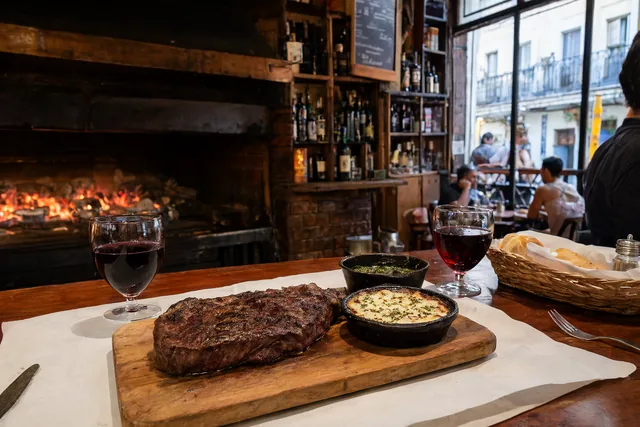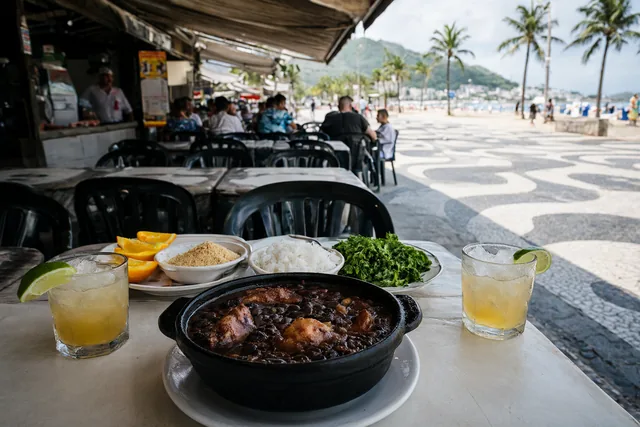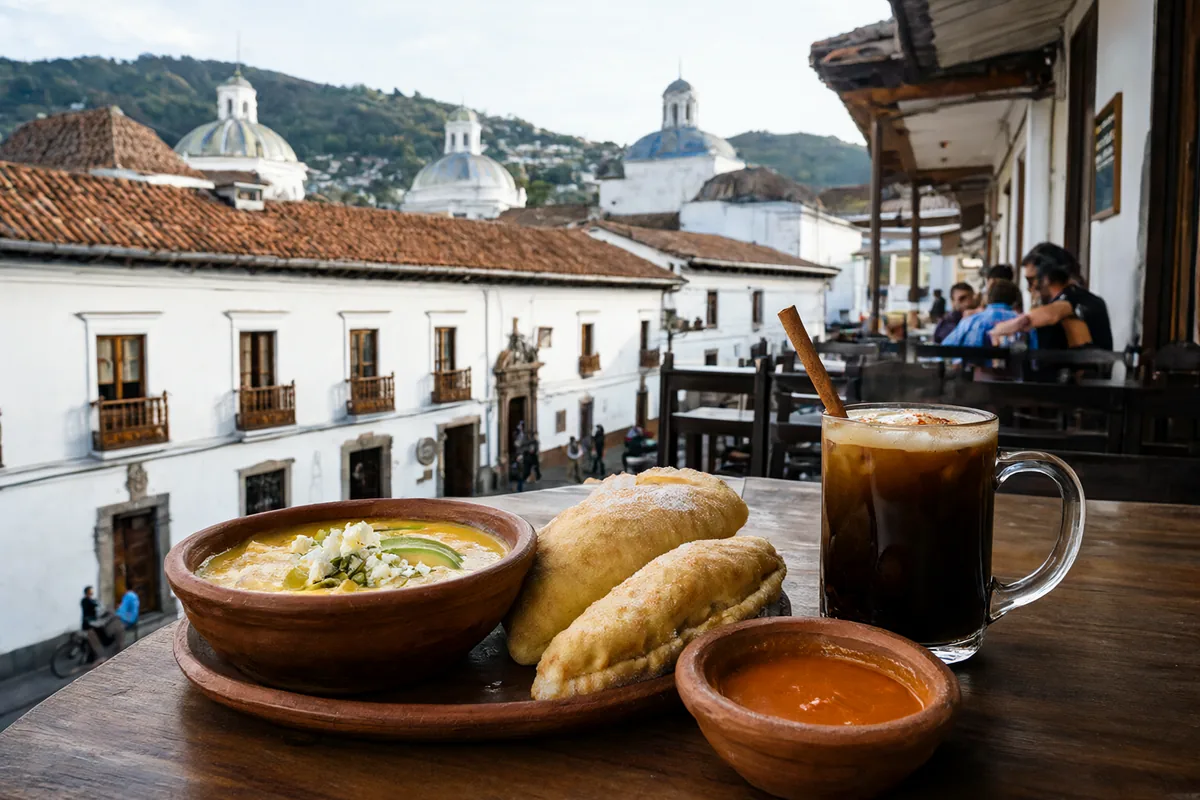
Ecuador packs the Andes, the Pacific coast, the Amazon and the Galápagos Islands into a country smaller than many visitors expect, and each region eats differently. This Ecuador food guide covers the dishes to know, how to read an Ecuadorian menu and order the cheap set lunch, how tax, service and tipping work, and then where to eat in Quito, Guayaquil, Cuenca, Otavalo, Baños, the Manabí coast and the Galápagos Islands. Highland cooking is built on potatoes, corn, pork and soups; the coast lives on plantains, seafood, coconut and peanuts. Wherever you are, there will be a bowl of fresh chilli sauce on the table.
What to eat in Ecuador: 12 dishes to know
These are the dishes you will see most often, with the region they belong to. Ecuadorians often say the coast (la costa) and the highlands (la sierra) are two different cuisines, and they are right.
- Encebollado (Guayaquil and the coast): a fish soup of albacore tuna, cassava and pickled red onion, topped with banana chips and eaten for breakfast. Famous as a hangover cure.
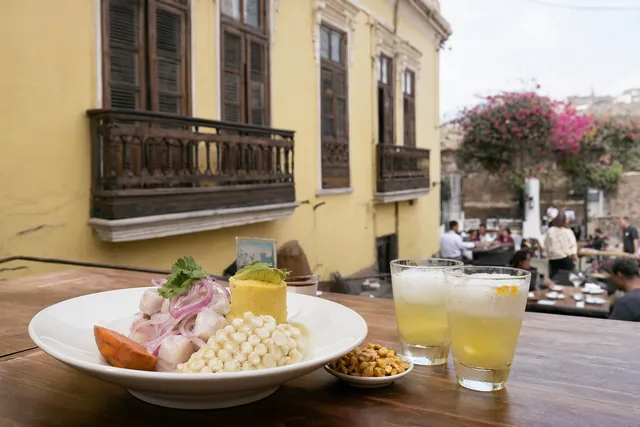
- Ceviche de camarón (the coast): Ecuadorian ceviche is soupy, with shrimp in lime, orange and tomato juice, onion and coriander, served with popcorn or plantain chips on the side.
- Locro de papa (Quito and the highlands): a thick potato soup with cheese, served with slices of avocado.
- Hornado (the highlands): whole roast pork, served with llapingachos (potato and cheese patties), mote (boiled hominy) and a sharp onion and tomato salad. Market stalls display the whole pig.
- Fritada (the highlands): chunks of pork simmered in water and then fried in their own fat, with mote, ripe plantain and corn.
- Bolón de verde (the coast): a ball of mashed green plantain with cheese or pork crackling, eaten for breakfast with eggs and coffee.
- Encocado (Esmeraldas and the north coast): fish or shrimp in a coconut sauce with coriander, from the Afro-Ecuadorian cooking of the north.
- Seco de chivo / seco de pollo (everywhere): a stew of goat or chicken cooked with beer or fruit juice, served with yellow rice and fried ripe plantain.
- Guatita (the coast): tripe and potatoes in a peanut sauce, a popular lunch dish.
- Cuy (the highlands): roast guinea pig, a festive Andean dish, especially around Cuenca and Baños.
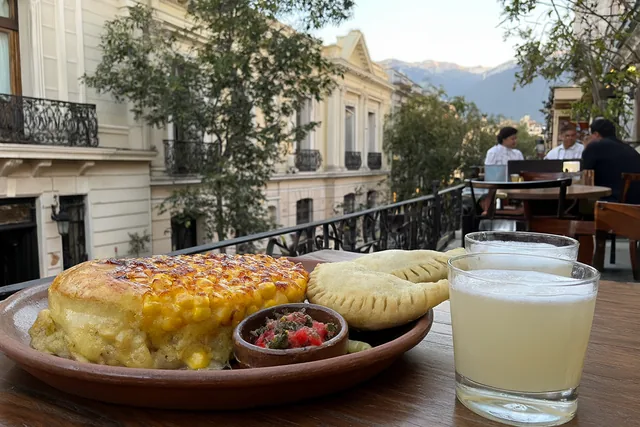
- Empanadas de viento (Quito): large, puffy fried empanadas filled with cheese and dusted with sugar.
- Canelazo and colada morada (the highlands): canelazo is a hot drink of fruit juice, cinnamon and sugar cane spirit; colada morada is a thick, spiced purple corn and fruit drink served with bread figures (guaguas de pan) around the Day of the Dead on 2 November.
How to read a Spanish menu in Ecuador
Ecuadorian menus are in Spanish, with some Kichwa words for Andean ingredients. At lunchtime, most local restaurants serve the almuerzo, a set lunch that often is not written down at all, so ask what it is. Here are the words you will see most often.
| Spanish | Meaning |
|---|---|
| Almuerzo / almuerzo del día | Set lunch: soup, a main (segundo), a juice and sometimes dessert |
| Sopa / segundo | Soup / main course |
| Jugo (natural) | Fresh fruit juice |
| Ají | Chilli sauce, on every table, often made with tree tomato |
| Mote | Boiled hominy (large white corn kernels) |
| Maduro / verde | Ripe sweet plantain / green starchy plantain |
| Patacones / chifles | Fried flattened green plantain / thin plantain chips |
| Menestra | A thick stew of beans or lentils, served with rice and meat |
| Chancho / pollo / res | Pork / chicken / beef |
| Camarón / corvina / pescado | Shrimp / sea bass / fish |
| Apanado / frito / asado / al vapor | Breaded / fried / grilled / steamed |
| Canguil | Popcorn, served with ceviche and soups |
| Precios no incluyen IVA | Prices do not include VAT |
| Servicio (10%) | Service charge |
In some Ecuadorian restaurants, especially smarter ones, the prices on the menu do not include IVA and the 10 percent service charge, so the bill comes to noticeably more than the menu suggests. swap.menu flags "+IVA" and service lines when it reads the menu, so you know the real price before you order.
Tax, service and paying the bill
Ecuador's tax is IVA, a value added tax. In cheap local restaurants and set lunch places, the price you see is usually the price you pay. In more formal restaurants, the bill often adds IVA and a servicio of 10 percent on top of the menu prices, and the menu should say so. Where service is included, no further tip is needed, though a little extra for good service is appreciated. Where it is not, leave about 10 percent in sit-down restaurants, and small change in cafés. Our guide to tax and service charges on menus explains how these lines work around the world.
Ecuador uses the US dollar as its currency, with US notes and a mix of US and Ecuadorian coins. Large notes are a problem: many shops, taxis and restaurants refuse 50 and 100 dollar bills, so carry fives, tens and twenties. Cards are accepted in hotels and better restaurants in Quito, Guayaquil and Cuenca, but markets, street food and small towns are cash only. If you use a foreign card, our guide to paying in local currency explains how to avoid conversion fees.
Lunch is the main meal, from about 12:30 to 2:30pm, and the almuerzo is the best value of the day. Dinner is usually 7 to 9pm, earlier than in Argentina or Chile. On the coast, breakfast is a serious meal of bolón, encebollado or fried fish.
Where to eat in Ecuador, city by city
A typical trip combines Quito and the highlands with the coast or the Galápagos. Jump to a destination:
Where to eat in Quito
Quito, at about 2,850 metres, has one of the best-preserved colonial centres in Latin America, and eating there is part of the experience. In the Centro Histórico, the restored lane of La Ronda comes alive in the evening with stalls and small restaurants selling canelazo, empanadas de viento and quesadillas, which in Quito are sweet cheese pastries. The old town also has shops selling helados de paila, fruit sorbet stirred in a copper pan set over ice. The Mercado Central is known for its fried corvina served with ceviche and potatoes, and for locro de papa.
For dinner, La Floresta is Quito's bohemian neighbourhood of cafés, small restaurants and a well-known independent cinema, while La Mariscal, around Plaza Foch, is the nightlife district. Rooftop restaurants in the historic centre look over the church domes, and they are best at sunset. The Mercado Santa Clara is good for exotic fruit; look for naranjilla, tomate de árbol (tree tomato), granadilla and guanábana, all of which also appear as juices on Quito menus.
Where to eat in Guayaquil
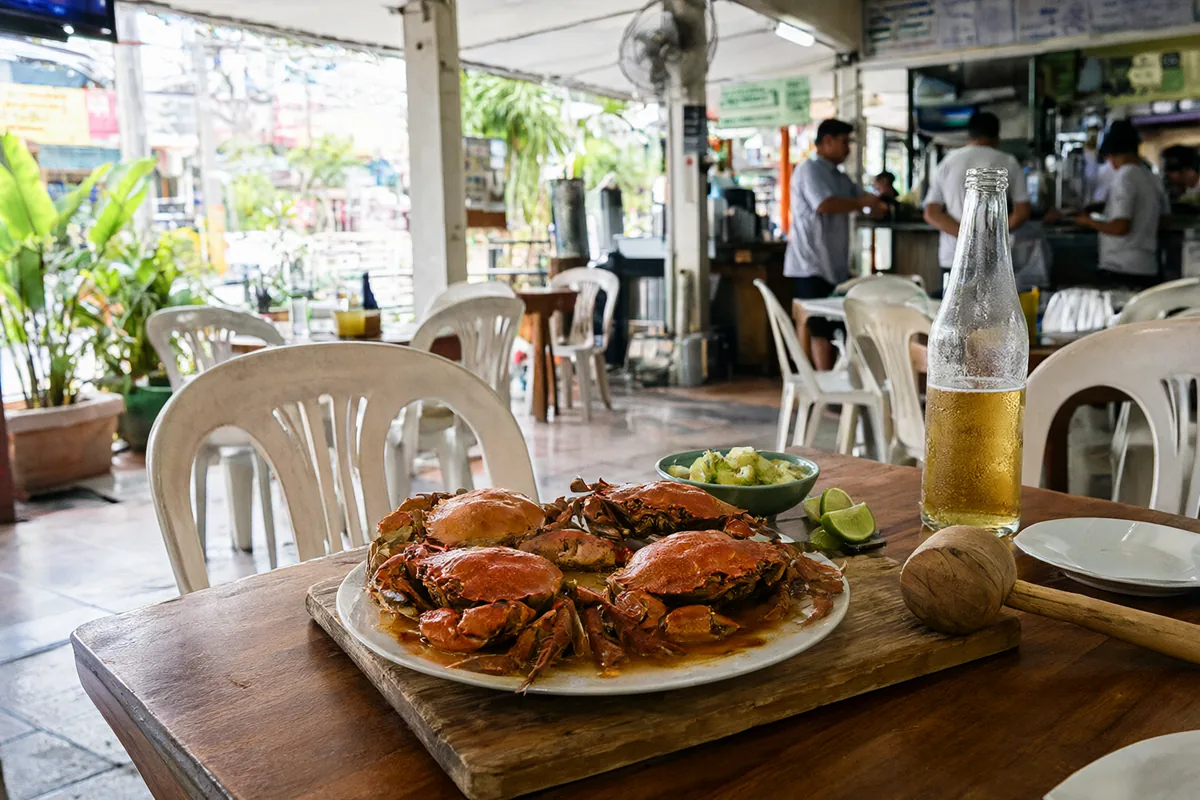
Guayaquil, Ecuador's largest city and main port, is the capital of coastal cooking. Start the day as Guayaquileños do, with a bowl of encebollado from a busy neighbourhood stall, or a bolón and black coffee. The city's great passion is crab: cangrejo criollo, boiled in a seasoned broth and served whole with a wooden mallet and a board, at crab houses where locals spend long afternoons with cold beer. Guayaquil is also the best place in Ecuador for ceviche, seco de chivo and guatita.
The Malecón 2000, the riverside promenade, has food courts and snack stalls, and the colourful hillside neighbourhood of Las Peñas at its northern end has bars and small restaurants up its numbered steps. For a sit-down dinner, locals head to Urdesa, where the main avenue is lined with restaurants. Guayaquil is hot and humid all year, so fresh juices, coconut water and granizados (shaved ice drinks) are everywhere.
Where to eat in Cuenca
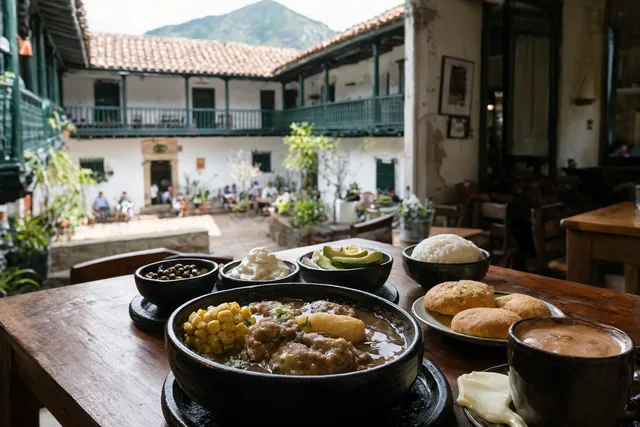
Cuenca, a colonial city of cobbled streets, blue domes and rivers in the southern Andes, has a slower pace and some of the best traditional food in the country. The Mercado 10 de Agosto has a floor of hornado stalls, juice counters and cheap almuerzos, and it is the best place for an authentic lunch. Try mote pillo, hominy scrambled with eggs, onion and herbs, a Cuenca speciality, and cuy, roasted on spits in the villages around the city.
The streets of the historic centre, especially Calle Larga above the Tomebamba river, have cafés, restaurants and bars, and Cuenca has a large international community, so you will find everything from Italian to vegan cafés. Cuenca is also the place to see Panama hats being woven, and many visitors combine a market lunch with a visit to a hat workshop.
Where to eat in Otavalo
Otavalo, two hours north of Quito, is famous for its Saturday market, one of the largest in South America, run largely by the Kichwa Otavalo people. Around the Plaza de los Ponchos and in the town's food market, stalls serve hornado, fritada, potato soups and tortillas de tiesto, corn or wheat flatbreads cooked on a clay griddle. Go early on Saturday, when the animal and produce markets are busiest.
On the road from Quito, stop in Cayambe for its bizcochos, crumbly biscuits eaten with a soft cheese called queso de hoja, which is wrapped in a leaf. The lakes and villages around Otavalo have family-run restaurants serving trout, and some indigenous communities offer home-cooked meals as part of homestays. Otavalo is an easy day trip from Quito, but staying overnight lets you see the market set up at dawn.
Where to eat in Baños
Baños sits beneath the Tungurahua volcano, on the road down to the Amazon, and is known for hot springs, waterfalls and adventure sports. Its own sweet is melcocha, a sugar cane taffy that vendors pull and stretch on wooden pegs in shop doorways, and you will see it all over town. Fresh jugo de caña (sugar cane juice) is sold from stalls, and the market serves cheap almuerzos.
Baños is popular with backpackers, so alongside Ecuadorian food you will find pizza, cafés and international restaurants. For local cooking, look for cuy and roast meats, and drive to the nearby city of Ambato, the home of llapingachos, which are served with chorizo, fried egg and peanut sauce. After a day of rafting or cycling the waterfall route from Baños, a hot locro de papa is exactly right.
Where to eat on the Manabí coast
The province of Manabí, on the central Pacific coast, is considered by many Ecuadorians to have the best cooking in the country, built on plantains, peanuts, corn and seafood. Try viche, a thick fish and shellfish soup with green plantain, corn and ground peanuts, tonga, rice and chicken in peanut sauce wrapped in a plantain leaf, and corviche, fried plantain dough stuffed with fish. Manabí cheese and bolones are also famous.
Manta is a working tuna port with beach restaurants, and Puerto López is the base for whale watching from about June to September and for trips to Isla de la Plata. In both, simple restaurants on the beachfront serve ceviche, grilled fish and encocado. Along the Manabí coast, the freshest fish is at lunchtime, and many small places close early in the evening.
Where to eat in the Galápagos Islands
Many visitors to the Galápagos Islands eat all their meals on a cruise boat, but those who stay on land will find a small, relaxed food scene. In Puerto Ayora on Santa Cruz, Calle Charles Binford fills in the evening with open-air seafood kiosks where you choose your fish or lobster and it is grilled to order, and locals and visitors share plastic tables in the street. Look for brujo (scorpionfish), wahoo, tuna and, in season, Galápagos lobster.
The highlands of Santa Cruz grow coffee and raise cattle, so local coffee and beef appear on menus. Puerto Baquerizo Moreno on San Cristóbal has seafront restaurants with sea lions sleeping on the benches outside. Everything that is not grown or caught locally is shipped from the mainland, so prices in the Galápagos Islands are higher than in Quito or Guayaquil.
Vegetarian, vegan and allergy tips
Vegetarians can eat reasonably well in Ecuador, especially in the highlands, where potato soups, llapingachos, humitas, quimbolitos (sweet steamed cakes), corn and fresh cheese are common, and Quito, Cuenca and Baños have vegetarian restaurants. The set lunch is harder, as soups are usually made with meat or chicken stock, and beans may be cooked with pork. The word for vegetarian is vegetariano (or vegetariana), and vegan is vegano. Ask "¿tiene carne?" (does it have meat?) and "¿el caldo es de carne?" (is the broth meat-based?).
Peanuts are a major hidden allergen in Ecuador: they appear in guatita, viche, tonga, llapingachos sauce and many other coastal and highland dishes. Shellfish is everywhere on the coast. Our guide to eating abroad with food allergies explains how to explain an allergy clearly when you do not speak the language.
Useful Spanish phrases for ordering
Buenos días / Buenas tardes "Good morning / Good afternoon", the polite way to greet staff
¿Qué tiene el almuerzo de hoy? "What is in today's set lunch?"
¿Qué me recomienda? "What do you recommend?"
Quisiera esto, por favor "I would like this, please" (pointing)
Sin maní, por favor "No peanuts, please"
Soy alérgico / alérgica a... "I am allergic to..." (alérgico for a man, alérgica for a woman)
La cuenta, por favor "The bill, please"
Muy rico, gracias "Very good, thank you"
How swap.menu helps you eat in Ecuador
Ecuadorian menus are full of words that even Spanish speakers from other countries do not know, and handwritten boards outside lunch places rarely explain anything. Photograph the menu with swap.menu and every dish appears in your language with the Spanish name beside it and a short explanation, so you know that guatita is tripe in peanut sauce, that mote is hominy and that chugchucaras is a big plate of fried pork with all the trimmings. Prices are already in US dollars, so we convert them to your home currency if it is different, and we flag menus where IVA and service are added on top.
Tap the dishes you want, add a note such as "no peanuts" or "not spicy, please", typed or spoken, and swap.menu translates your order into Spanish. Show the waiter your phone, or let them scan the QR code and read your order on their own screen. You can try it right now on a sample menu with the free demo, or see travel pass prices.
Off to Ecuador? Your first 3 menu scans are free, and a travel pass starts from $4.99 with nothing that renews.
Start free with 3 scansEcuador food FAQ
Do you tip in restaurants in Ecuador?
Many formal restaurants add a 10 percent service charge, and then no extra tip is needed. Where service is not included, leave about 10 percent in sit-down restaurants. Small change is enough at cafés and set lunch places.
What food is Ecuador famous for?
Ecuador is known for ceviche de camarón, encebollado, locro de papa, hornado, llapingachos and bolón de verde, as well as cuy in the highlands. It is also famous for its bananas, its fine cacao and chocolate, and its huge range of tropical fruit juices.
Is Ecuador expensive to eat out?
Ecuador is one of the cheaper countries in South America for food. The set lunch called the almuerzo is very good value, and markets and street food cost little. Smart restaurants in Quito and Guayaquil cost more, and the Galápagos Islands are expensive.
Is tap water safe to drink in Ecuador?
Most visitors should not drink tap water in Ecuador. Use bottled or filtered water, which is cheap and easy to find, and be cautious with ice and raw salads from street stalls.
What currency is used in Ecuador?
Ecuador uses the US dollar. Carry small notes, as 50 and 100 dollar bills are often refused, and keep coins for markets and buses. Cards are accepted in hotels and better restaurants in the cities.
How can I read an Ecuadorian menu if I do not speak Spanish?
Learn a few words such as almuerzo, segundo, mote and maduro, or photograph the menu with swap.menu. It translates every dish into your language, explains what it is, shows prices in your currency and translates your order back into Spanish for the waiter.
Travelling further in South America? Read our food guides for neighbouring countries:
Or browse every travel food guide.