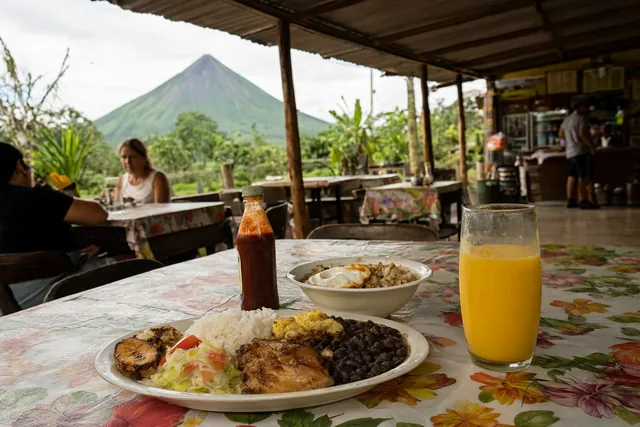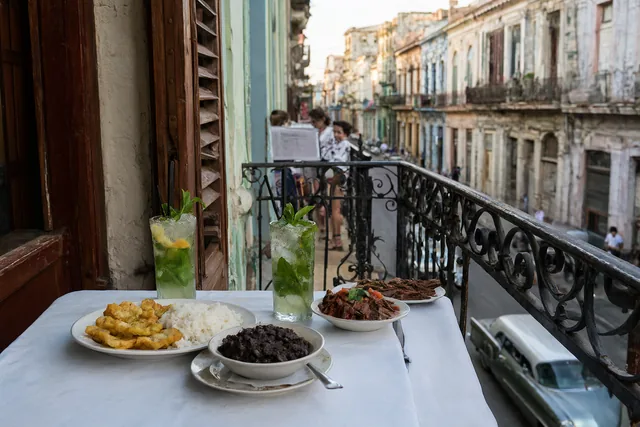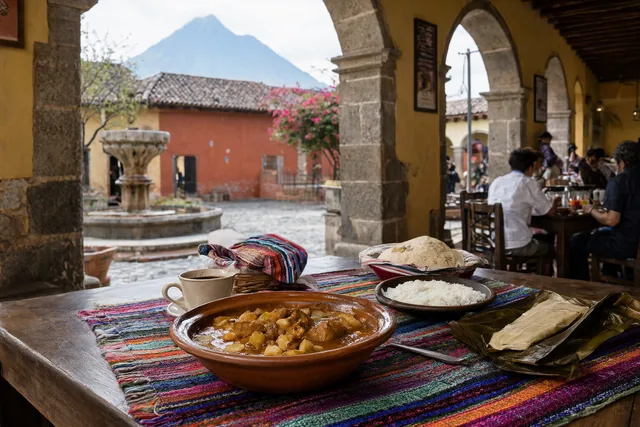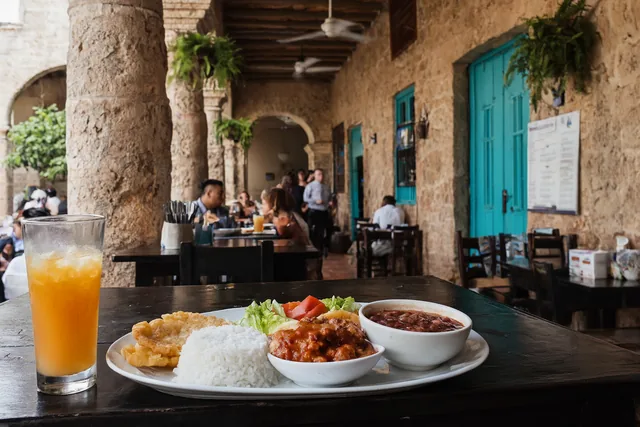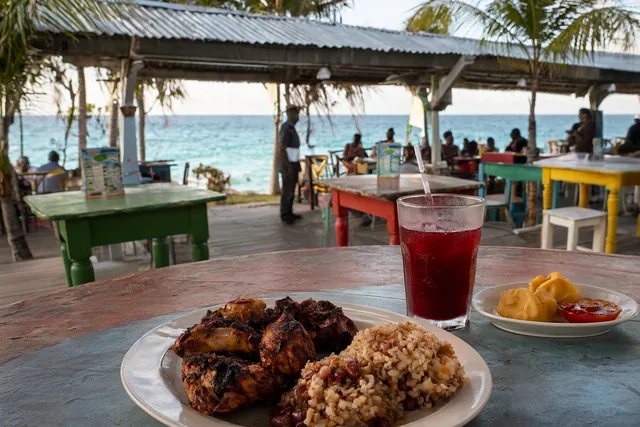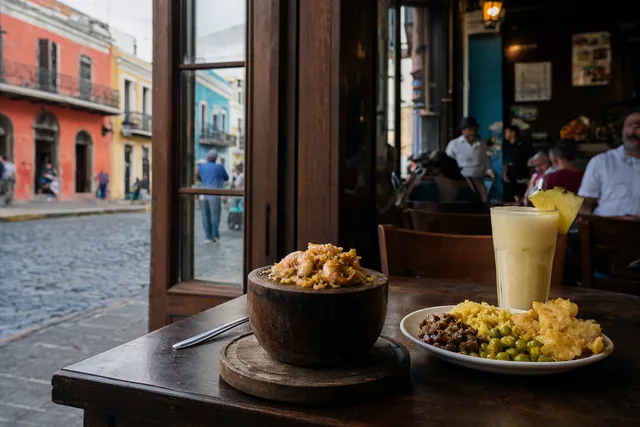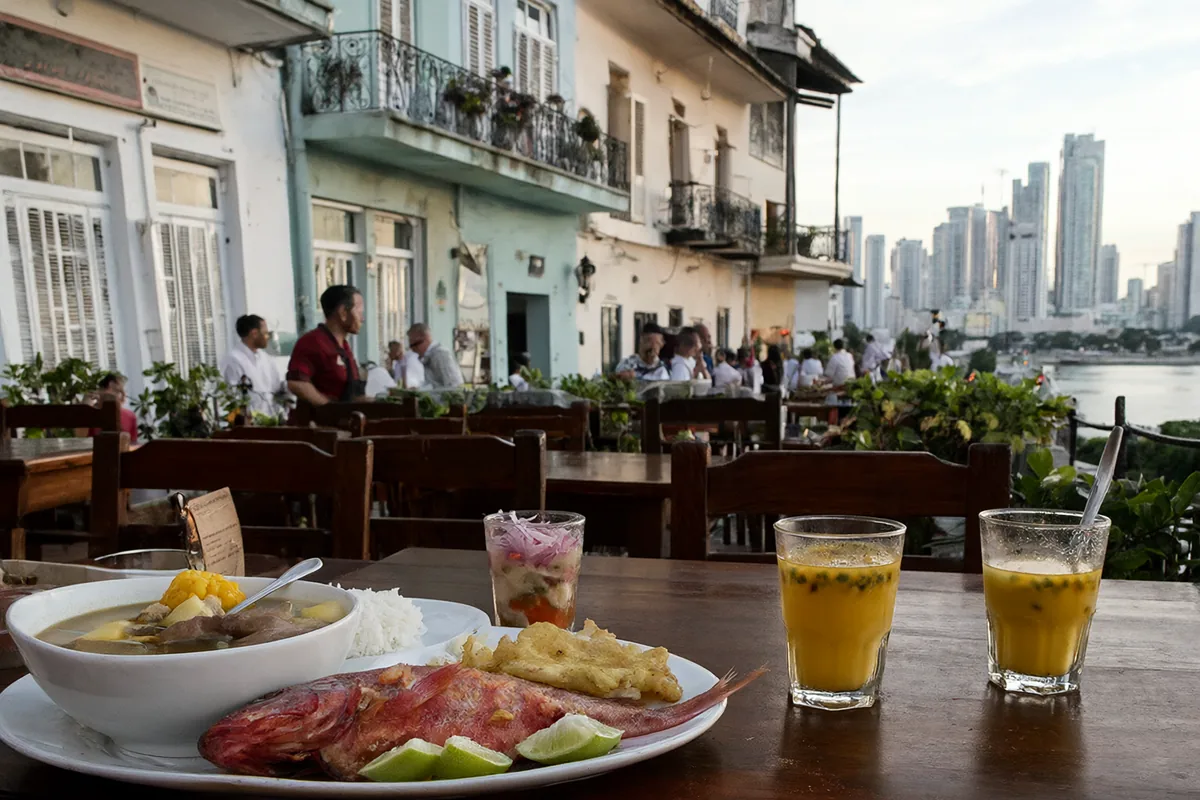
Panama sits between two oceans and two continents, and its food takes from all sides: Spanish and Indigenous cooking, Afro-Caribbean coconut dishes, a large Chinese community and fresh seafood from both the Pacific and the Caribbean. This Panama food guide covers the dishes to order, how to read a Spanish menu, how tipping and the ITBMS tax work, then goes through where to eat in Panama City, Boquete, Bocas del Toro, the Azuero Peninsula, the San Blas Islands and Portobelo. Start with a bowl of sancocho and a cup of ceviche from the fish market, finish with some of the most prized coffee in the world, and you will have tasted the country.
What to eat in Panama: 12 dishes to know
These are the dishes that make up everyday eating in Panama, with the region they come from where it matters.
- Sancocho (everywhere, especially Azuero): the national dish, a chicken soup with ñame (a starchy yam), corn and plenty of culantro, a broad-leafed herb, served with white rice on the side.
- Arroz con pollo (everywhere): yellow rice cooked with chicken, vegetables and olives, at every family celebration.
- Ropa vieja (everywhere): shredded beef in a tomato and pepper sauce, served with rice and plantains.
- Ceviche de corvina (Panama City and the coasts): sea bass cured in lime with onion, culantro and chilli, sold in small plastic cups at the fish market.
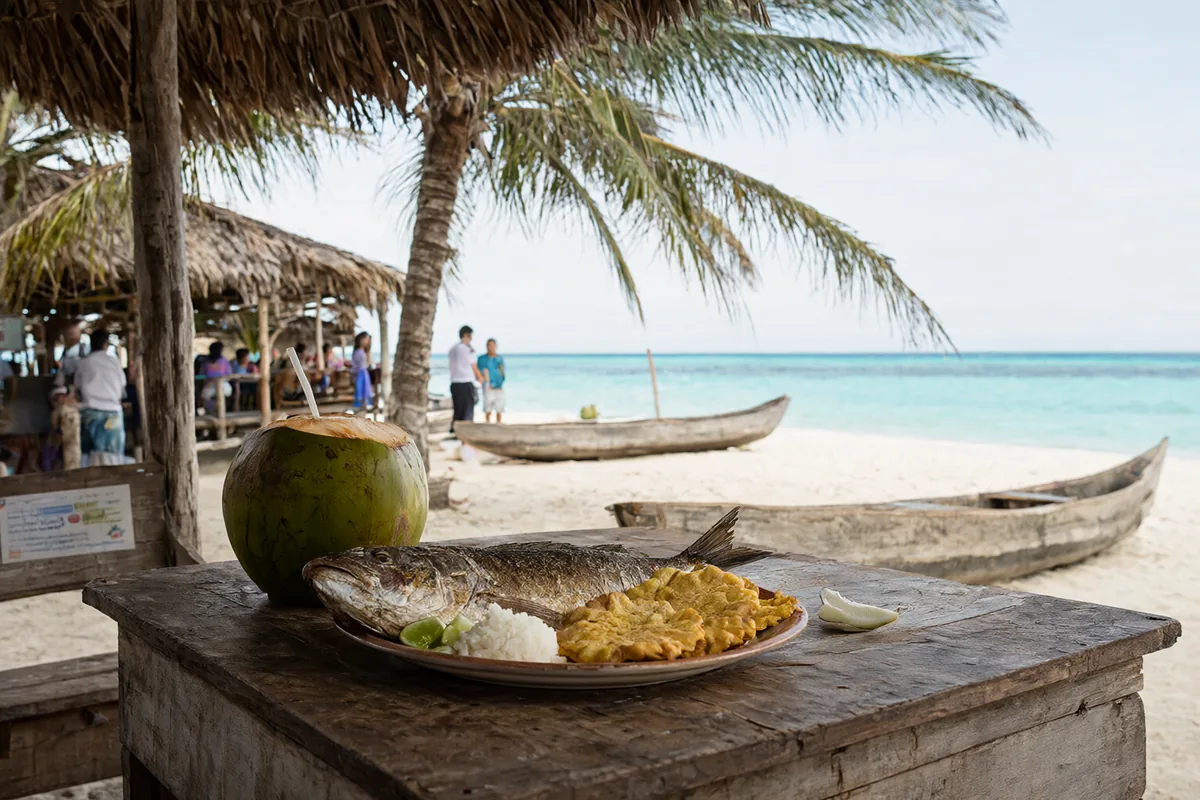
- Pescado frito con patacones (the coasts): a whole fried snapper or sea bass with twice-fried green plantains and coconut rice.
- Carimañolas (everywhere): torpedo-shaped yuca fritters filled with spiced minced meat, a breakfast and snack favourite.
- Hojaldras and tortillas (everywhere): the Panamanian breakfast of fried dough or thick fried corn tortillas, eaten with eggs, cheese and bistec encebollado (steak with onions).
- Tamales (around Christmas): corn dough filled with chicken, olives, raisins and capers, wrapped in plantain leaves.
- Arroz con guandú y coco (everywhere, especially at Christmas): rice cooked with pigeon peas and coconut milk.
- Rondón (Bocas del Toro and the Caribbean coast): a coconut stew of fish or seafood with yuca, plantain and root vegetables, also called "rundown".
- Raspao (everywhere): shaved ice with fruit syrup and condensed milk, sold from carts in the heat of the day.
- Geisha coffee (Boquete): a floral coffee variety grown in the Chiriquí highlands, which regularly sells for record prices at auction.
How to read a Spanish menu in Panama
Restaurants in Panama City and the tourist areas often have English menus, but fondas (simple local restaurants) and market stalls write their menus in Spanish, usually on a board. These are the words you will see most often.
| Spanish | Meaning |
|---|---|
| Fonda | A simple local restaurant serving set lunches |
| Plato del día / almuerzo | Dish of the day / set lunch |
| Corvina / pargo | Sea bass / snapper |
| Langostinos / camarones | Large prawns / shrimp |
| Pulpo / langosta | Octopus / lobster |
| Patacones | Twice-fried green plantain rounds |
| Tajadas / maduros | Fried sweet ripe plantain slices |
| Arroz con coco / con guandú | Coconut rice / rice with pigeon peas |
| Culantro | A broad-leafed herb with a strong coriander taste |
| Encebollado | Cooked with lots of onion |
| Al ajillo / a la plancha | In garlic / griddled |
| Chicha | A fresh fruit drink (not always the fermented corn drink of other countries) |
| ITBMS | Panama's sales tax, often added to the bill |
In Panama the bill often shows the 7 percent ITBMS tax as a separate line, and some restaurants add a 10 percent tip as well. swap.menu flags tax and service lines when it reads the menu, and although Panama uses US dollars, it converts every price to your home currency if you are coming from somewhere else.
Tipping, tax and paying the bill
Panama's sales tax is the ITBMS, which is 7 percent on most goods and restaurant meals and higher on alcohol. Many restaurants show prices before tax and add it on the bill, so expect the total to be a little higher than the menu. Tipping of about 10 percent is customary at sit-down restaurants. Some places, especially in Panama City, add it automatically as "propina" or "servicio", so check the bill before tipping again. Fondas and street stalls do not expect a tip. Our guide to tax and service charges on menus explains how these lines work around the world.
Panama uses the US dollar ($, USD) for all paper money. The official currency, the balboa, is fixed at one to one with the dollar and exists only as coins, which circulate alongside US coins. Cards are accepted in most restaurants in Panama City and Boquete, but you will need cash in fondas, markets, taxis, Bocas del Toro and especially the San Blas Islands, where there are no ATMs. Carry small notes, as $50 and $100 notes are often refused. If a card machine offers to charge you in your home currency, decline: our guide to paying in local currency explains why.
Panamanians eat lunch from about noon to 2pm, often the main meal for workers, and dinner from 7pm to 9pm. In Panama City restaurants and bars stay open late, especially at weekends, while in smaller towns kitchens close earlier.
Where to eat in Panama, place by place
Panama's food changes from the capital to the cool highlands, the Caribbean islands and the ranching country of Azuero. Jump to a destination:
Where to eat in Panama City
Panama City is a city of skyscrapers on the Pacific, and it has the country's widest range of food. The place to start is the Mercado de Mariscos, the fish market on the waterfront next to the Cinta Costera, where stalls sell ceviche in small cups, from classic corvina to octopus and shrimp, and the upstairs restaurant and simple places outside serve fried fish, seafood rice and soups. Go at lunchtime, when it is busiest. For local food, look for fondas serving sancocho, ropa vieja and rice with beans to office workers.
Casco Viejo (also called Casco Antiguo), the restored colonial old town, is where to eat in Panama City for atmosphere: plazas, cafés and restaurants in old buildings, and rooftop bars with views of the skyline across the bay. El Cangrejo, around Vía Argentina, has a mix of Middle Eastern, Peruvian, Colombian and Chinese restaurants reflecting the city's communities, while San Francisco and Obarrio have newer restaurants. The Amador Causeway has seafood restaurants with views of ships waiting to enter the Panama Canal.
Where to eat in Boquete
Boquete is a cool mountain town in the western province of Chiriquí, surrounded by cloud forest, flower farms and coffee plantations on the slopes of Volcán Barú. It is the home of Panama's famous Geisha coffee, and many farms around Boquete run tours explaining how coffee is grown, processed and roasted, ending with a tasting. Even if you are not a coffee lover, the cafés in town are worth a visit.
Boquete's climate suits fresh produce: look for strawberries sold with cream at roadside stands, local trout, fresh vegetables and orange juice. The town has a large community of foreign residents, so restaurants range from simple fondas serving sancocho and rice plates to international bistros and bakeries. Evenings in Boquete are cool and often misty, and the town is quiet by 9pm. If you are there in January, the annual Flower and Coffee Fair fills the town with food stalls.
Where to eat in Bocas del Toro
Bocas del Toro is an archipelago on the Caribbean coast near Costa Rica, with a laid-back Afro-Caribbean culture and food to match. The main town, Bocas Town on Isla Colón, has plenty of restaurants built on stilts over the water, many serving the day's catch. Order rondón, the coconut seafood stew, coconut rice with fried fish or Caribbean chicken, and patí, a spicy meat pastry sold at bakeries and from street vendors.
Bocas also has many international restaurants, from Thai to Italian, catering to visitors. Water taxis take you to restaurants on other islands, including places on Isla Carenero and Bastimentos, where the community of Old Bank keeps the island's Afro-Caribbean traditions alive. Cacao farms on the mainland and islands offer chocolate tours. Bocas del Toro is mostly cash-based and tap water is not safe to drink, so carry dollars and bottled water.
Where to eat on the Azuero Peninsula
The Azuero Peninsula, south-west of Panama City, is the heartland of Panamanian folklore, with cattle ranches, colonial towns and the country's biggest carnival in Las Tablas. It is the best place to eat traditional Panamanian food. Order sancocho, said to be at its best in the Azuero towns, tamales and bollos (corn dough boiled in husks), fresh white cheese and chorizo tableño, a smoked pork sausage from Las Tablas.
The town of Chitré is the main hub, with a busy market and simple restaurants, and the nearby town of Pesé is the home of Panama's seco, a clear sugarcane spirit often mixed with milk or juice. On the coast, Pedasí is a quiet fishing town with good seafood and access to beaches and surf. Many towns on the Azuero Peninsula hold festivals through the year, each with food stalls selling regional sweets and fried snacks.
Where to eat in the San Blas Islands
The San Blas Islands, more than 300 small coral islands off the Caribbean coast, are part of Guna Yala, an autonomous region governed by the Indigenous Guna people. There are no restaurants in the usual sense: most visitors stay in simple island cabins or on boats, and meals are included. Expect fresh fish, often grilled whole or fried, coconut rice, fried plantains and, when available, lobster, crab or octopus bought straight from Guna fishermen in their dugout canoes.
Food on the San Blas Islands is simple and depends on the catch and the weather. Bring snacks, drinking water and any special dietary food you need, and tell your host in advance if you are vegetarian or have allergies. Everything is paid in cash, including small fees for visiting each island, so bring enough dollars from Panama City. Coconuts are an important part of the Guna economy, so do not take them from the islands without asking.
Where to eat in Portobelo
Portobelo, on the Caribbean coast north-east of Panama City, is a small town with UNESCO-listed Spanish colonial forts and a strong Afro-Panamanian culture, known as Congo, with its own music, dance and festivals. Food in Portobelo is Caribbean: fried fish with coconut rice and patacones, octopus in coconut sauce, conch and lobster in season.
Simple restaurants along the bay serve whatever has come in that day, and the town is a popular day trip from Panama City, combined with the beaches of Isla Grande and the coast nearby. In October, the festival of the Black Christ brings pilgrims from all over Panama, with food stalls lining the streets. Portobelo is small, so plan to eat lunch there rather than wait for dinner, when many kitchens close early.
Vegetarian, vegan and allergy tips
Vegetarians can eat reasonably well in Panama City, Boquete and Bocas del Toro, which have vegetarian cafés and international restaurants. In fondas, rice, beans, lentils, plantains, salad and yuca make a meal, but many dishes are built on meat. Watch for hidden animal products: rice and beans are sometimes cooked with pork or chicken stock, soups almost always have meat, and carimañolas are filled with minced beef. The words to use are vegetariano and vegano, and it helps to ask "¿Tiene carne o caldo?" (Does it have meat or stock?).
Seafood and shellfish are everywhere on the coasts, often in rice dishes and soups, and coconut is common in Caribbean cooking. Corn tortillas and plantains are naturally gluten-free, but hojaldras are made with wheat flour. Our guide to eating abroad with food allergies explains how to describe an allergy clearly when you do not speak the language.
Useful Spanish phrases for ordering in Panama
Buenas / Buenos días "Hello" / "Good morning", the usual greeting as you arrive
¿Qué xopá? "What's up?", Panamanian slang, a friendly greeting (xopá is "pasó" said backwards)
¿Me regala un ceviche de corvina? "Could I have a sea bass ceviche?", the polite way to order
¿Qué hay de almuerzo hoy? "What is there for lunch today?"
Una fría, por favor "A cold one, please", the local way to ask for a beer
Soy alérgico / alérgica a... "I am allergic to..." (alérgico for a man, alérgica for a woman)
La cuenta, por favor "The bill, please"
¡Qué rico, gracias! "Delicious, thank you!"
How swap.menu helps you eat in Panama
In the fondas and markets of Panama, the menu is often a handwritten board in Spanish, full of words like ñame, guandú and culantro that even Spanish speakers from other countries may not know. Photograph it with swap.menu and every dish appears in your language with the Spanish name beside it and a short explanation, so you know that carimañolas are yuca fritters and that tajadas are sweet fried plantains. Prices are in US dollars, and we convert them to your home currency and flag the ITBMS tax and any tip line on the menu.
Tap the dishes you want, add a note such as "no shellfish" or "no meat, please", typed or spoken, and swap.menu translates your order into Spanish. Show the waiter your phone, or let them scan the QR code and read your order on their own screen. You can try it right now on a sample menu with the free demo, or see travel pass prices.
Off to Panama? Your first 3 menu scans are free, and a travel pass starts from $4.99 with nothing that renews.
Start free with 3 scansPanama food FAQ
Do you tip in restaurants in Panama?
Yes, about 10 percent at sit-down restaurants. Some restaurants in Panama City add the tip to the bill automatically, so check before adding more. Fondas and street stalls do not expect a tip.
What currency is used in Panama?
Panama uses US dollar notes. The Panamanian balboa is fixed at one to one with the dollar and exists only as coins, which are used alongside US coins.
What is the national dish of Panama?
Sancocho, a chicken soup with ñame, corn and culantro, is the national dish. Ceviche, arroz con pollo and fried fish with patacones are also everyday favourites.
Is tap water safe to drink in Panama?
Tap water is generally safe to drink in Panama City and most mainland towns, including Boquete. In Bocas del Toro, the San Blas Islands and other remote areas, drink bottled or filtered water.
Is Panama expensive to eat out?
Panama City has restaurants at every price, from cheap fondas and the fish market to expensive dining rooms. Eating at fondas and markets is the best way to save, while tourist areas like Casco Viejo and Bocas del Toro cost more.
How can I read a Panamanian menu if I do not speak Spanish?
Learn a few key words such as corvina (sea bass), patacones and plato del día, or photograph the menu with swap.menu. It translates every dish into your language, explains it, converts prices into your home currency and translates your order into Spanish.
Travelling further in Central America? Read our food guides for nearby countries:
Or browse every travel food guide.