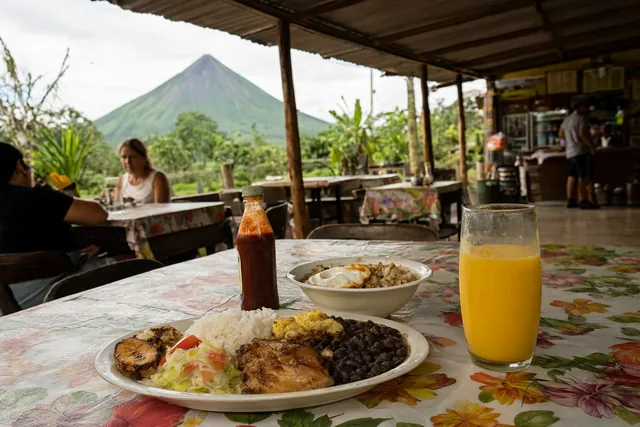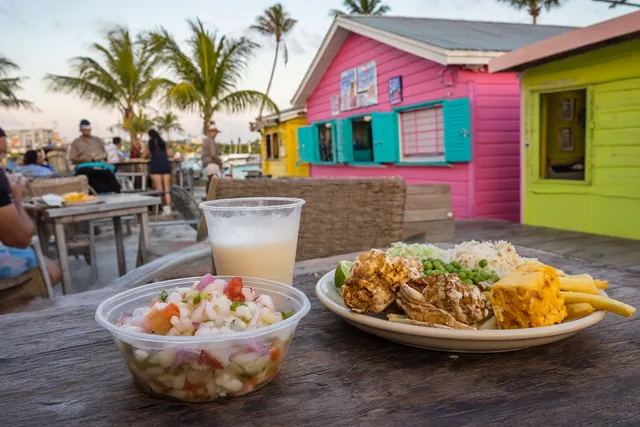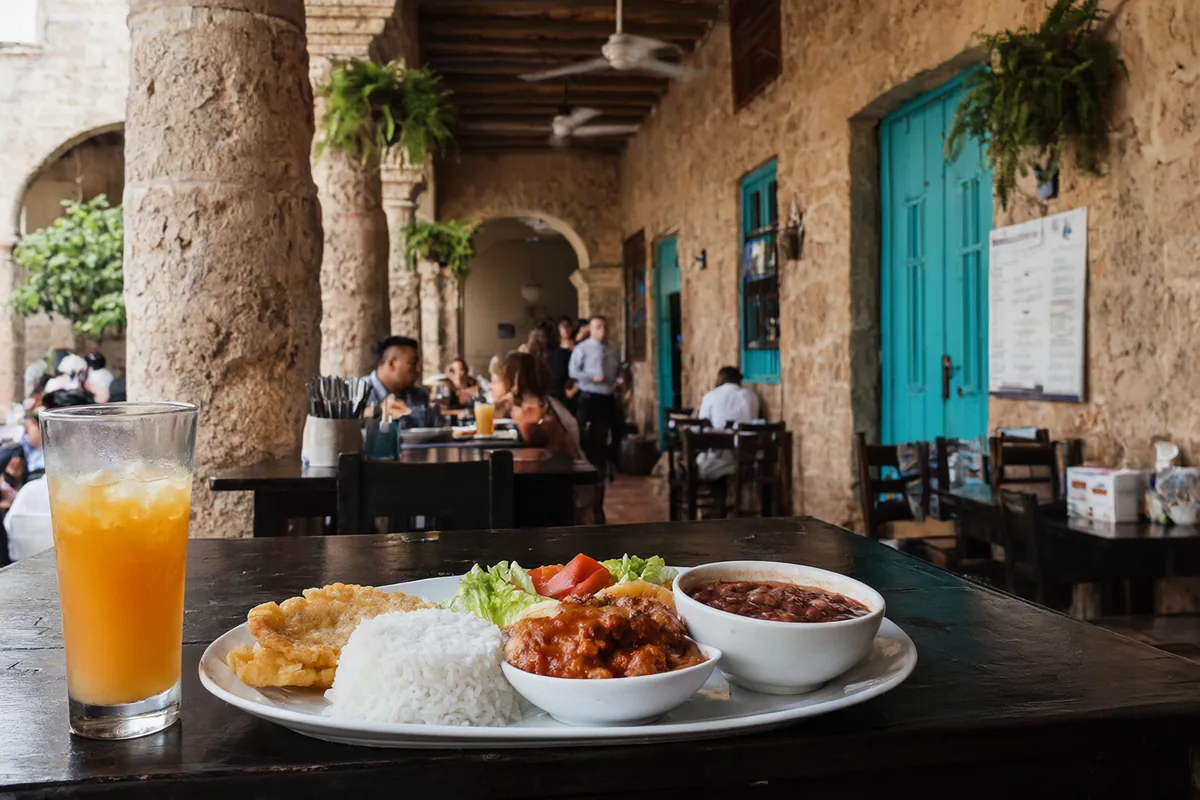
Most visitors to the Dominican Republic never leave their resort, and they miss some of the most generous home cooking in the Caribbean. Dominican food is built on rice, beans, plantains and slow-stewed meat, with Spanish, Taíno and West African roots and a little Middle Eastern influence. This Dominican Republic food guide covers the dishes to order, the menu words worth knowing, how the 18 percent tax and 10 percent service charge work, then goes through where to eat in Santo Domingo, Punta Cana, Santiago, Puerto Plata, Samaná and Jarabacoa. Eat a plate of la bandera at lunchtime and mangú for breakfast, and you will eat like a Dominican.
What to eat in the Dominican Republic: 12 dishes to know
These are the dishes Dominicans eat every week, plus a few regional and seasonal specialities worth looking for.
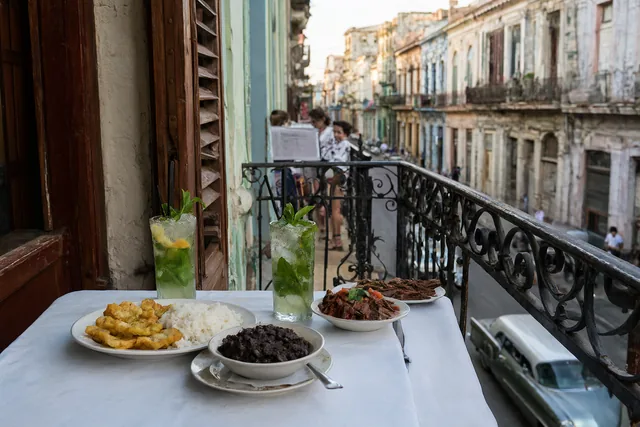
- La bandera (everywhere): "the flag", the national lunch of white rice, stewed red beans (habichuelas) and stewed meat, usually chicken or beef, with a simple salad.
- Mangú con los tres golpes (everywhere): mashed green plantains topped with pickled red onion, served with "the three hits": fried salami, fried cheese and fried eggs. The classic breakfast.
- Sancocho (everywhere): a thick stew of several meats with plantain, yuca, yam and corn, served with rice and avocado. It is a Sunday and party dish.
- Locrio (everywhere): rice cooked with meat or seafood and tomato, the Dominican cousin of paella.
- Chicharrón (everywhere, especially Villa Mella): crisp fried pork belly, often sold by weight from roadside stands.
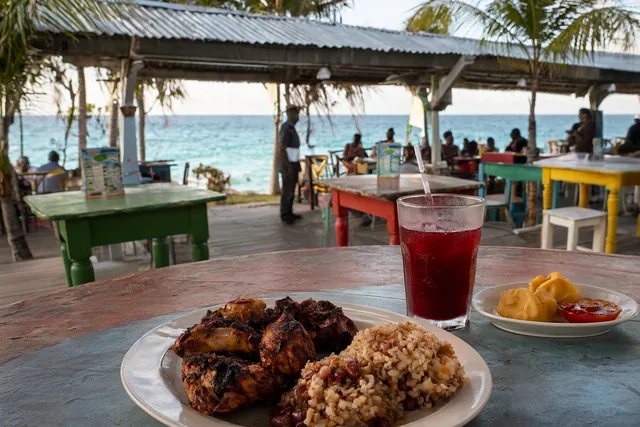
- Pica pollo (everywhere): Dominican fried chicken, heavily seasoned and served with tostones or fried green plantains.
- Tostones (everywhere): green plantains fried, flattened and fried again, also called fritos verdes.
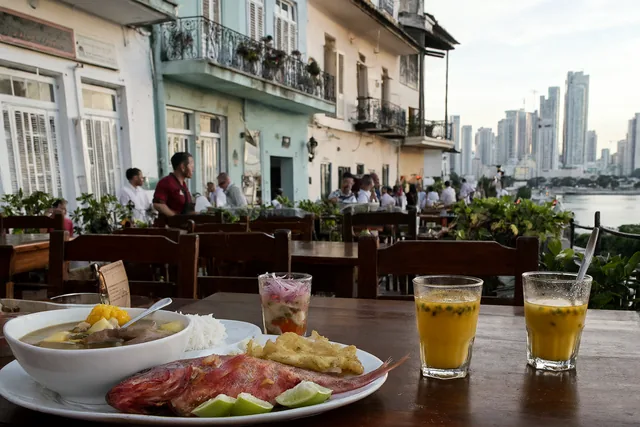
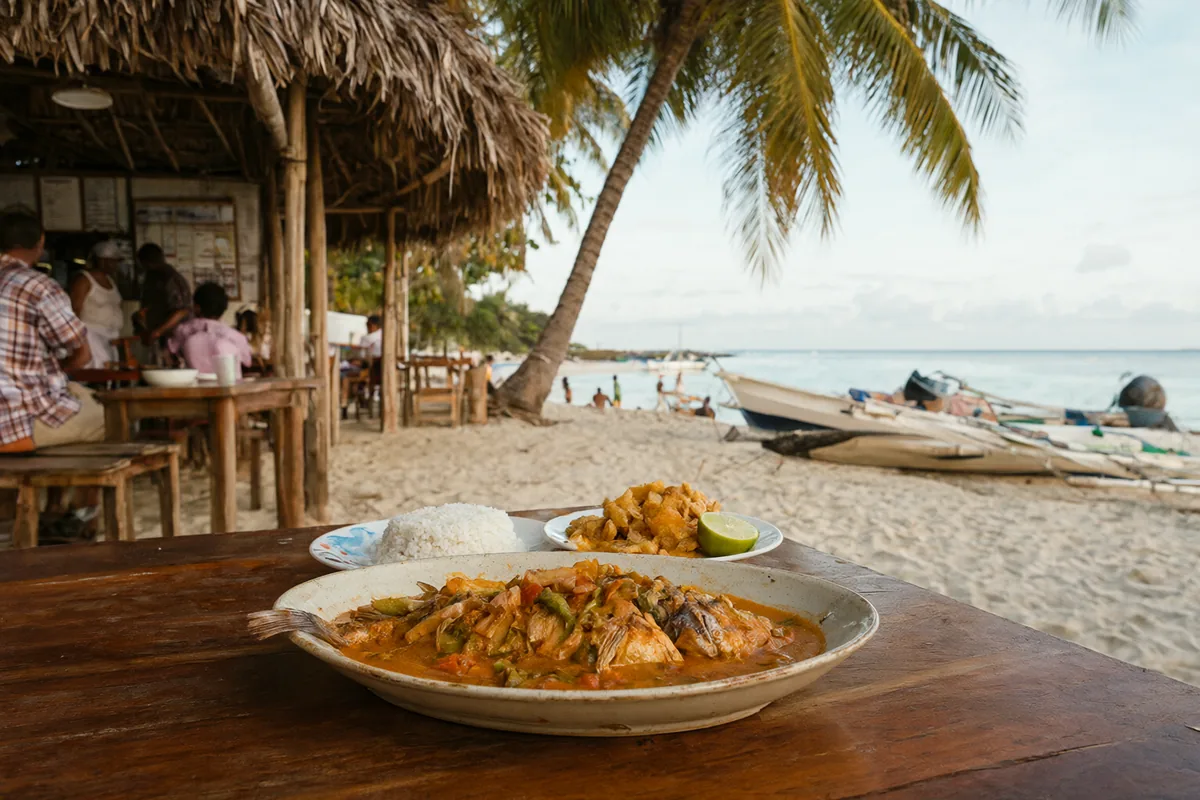
- Pescado con coco (Samaná): fish stewed in a sauce of coconut milk, tomato, peppers and herbs.
- Chivo guisado (the northwest): goat stewed with tomato, herbs and rum or wine.
- Chimi (everywhere): the Dominican burger, a seasoned patty in a soft bun with cabbage, onion and pink sauce, sold from street trucks at night.
- Habichuelas con dulce (Lent and Easter): a sweet, creamy dessert of red beans cooked with coconut milk, sugar, cinnamon and sweet potato.
- Morir soñando and mamajuana (everywhere): "to die dreaming", a drink of orange juice and milk, and mamajuana, rum and red wine infused with bark and herbs.
How to read a Dominican menu
Resort restaurants have menus in English and Spanish, but local comedores (simple restaurants), roadside stands and food trucks use Spanish, often with Dominican words that Spanish speakers from elsewhere will not know. These are the words worth learning.
| Spanish | Meaning |
|---|---|
| Comedor | A simple local restaurant serving set lunches |
| Plato del día | Dish of the day, usually a version of la bandera |
| Habichuelas | Beans, usually red, stewed with squash and herbs |
| Moro | Rice cooked together with beans or pigeon peas (moro de guandules) |
| Concón | The crisp rice from the bottom of the pot, a prized extra |
| Víveres | Boiled plantains, yuca, yam and other root vegetables |
| Guineítos | Boiled green bananas |
| Fritos verdes / fritos maduros | Fried green plantains (tostones) / fried sweet ripe plantains |
| Guisado / guisada | Stewed in a tomato and herb sauce |
| Longaniza | A thin, garlicky fried pork sausage |
| Res / cerdo / pollo / chivo | Beef / pork / chicken / goat |
| Mariscos / lambí | Seafood / conch |
| Jugo natural | Fresh fruit juice, such as chinola (passion fruit) |
| ITBIS / 10% ley | Sales tax / the legal 10 percent service charge |
In the Dominican Republic, many menus show prices before the 18 percent ITBIS and 10 percent service charge, so the bill can be 28 percent higher than the menu. swap.menu flags these lines when it reads the menu and converts every peso price to your home currency, so you know the real cost before you order.
Tipping, tax and paying the bill
Restaurants in the Dominican Republic add two lines to the bill: ITBIS, the 18 percent sales tax, and a 10 percent service charge required by law, often written as "10% ley". Some menus include both in the listed price, but many do not, and add them at the end. The service charge is shared among staff, so many Dominicans and visitors leave a little extra in cash, around 5 to 10 percent, for the person who served them. Our guide to tax and service charges on menus explains how these lines work around the world.
The currency is the Dominican peso (RD$, DOP). In Punta Cana and other resort areas, prices are often quoted in US dollars, and dollars are widely accepted, but you usually get a better deal paying in pesos. Cards are accepted in most restaurants in Santo Domingo, Santiago and the resorts, but colmados (corner shops), roadside stands, food trucks and small comedores need cash. If a card machine offers to charge you in your home currency, choose pesos: our guide to paying in local currency explains why.
Lunch, la comida, is the main meal of the day, eaten from about noon to 2pm, and comedores often sell out of the day's dishes by mid-afternoon. Dinner is lighter and later, from about 7pm to 10pm, and at weekends Dominicans eat and dance late into the night. Breakfast is usually mangú, eggs and coffee.
Where to eat in the Dominican Republic, town by town
The country's food changes from the capital to the fertile Cibao valley, the mountains and the coconut coasts. Jump to a destination:
Where to eat in Santo Domingo
Santo Domingo, the capital, is the oldest European city in the Americas, and its Zona Colonial is a UNESCO-listed grid of stone streets, plazas and restored colonial buildings. This is where most visitors eat in Santo Domingo: restaurants around the Plaza de España look out over the Alcázar de Colón, and Calle El Conde, the pedestrian street, has cafés and simple places serving la bandera and fresh juices. The streets off Calle Las Damas and around Parque Colón have restaurants in old courtyards.
For more local food in Santo Domingo, look for comedores serving the plato del día at lunchtime, and take a taxi to Villa Mella, on the northern edge of the city, known for its chicharrón stands. The modern districts of Piantini and Naco have the city's upmarket restaurants. In the evening, walk along the Malecón seafront, and stop at a colmado, the corner shops that double as bars, with plastic chairs, cold beer and loud music. On Sundays, many families eat sancocho.
Where to eat in Punta Cana
Punta Cana, on the eastern tip of the island, is the country's resort capital, with a long string of all-inclusive hotels along Bávaro Beach and the coast to the north and south. Most visitors eat in their resort, but it is worth getting out at least once to eat Dominican food in Punta Cana. The fishing village of El Cortecito on Bávaro Beach has small restaurants serving fresh fish, lobster and locrio de mariscos.
At Macao Beach, north of the resorts, simple beach shacks fry whole fish and serve it with tostones, rice and salad. In the town centres of Bávaro and Verón, where resort workers live, comedores serve la bandera, pica pollo and chicharrón at a fraction of the price of tourist restaurants. Prices in Punta Cana are often in dollars, so check the currency before ordering, and look for the ITBIS and service lines on the bill.
Where to eat in Santiago
Santiago de los Caballeros, the country's second city, is the capital of the Cibao valley, the fertile heartland where much of the country's food and tobacco is grown. It is a working city with few tourists, and the food in Santiago is very Dominican. Look for chimi trucks and stands that set up at night, selling burgers, sandwiches and yaniqueques (crisp fried dough), and comedores serving la bandera, mangú and stewed goat.
The area around the Monumento a los Héroes de la Restauración, the hilltop monument in the centre, is the place for an evening drink and snacks, with views over Santiago. The city is famous for its cigars, and several factories and tobacco farms in the Cibao welcome visitors. Try queso frito (fried cheese) and longaniza, which are particularly good in the Cibao, where much of the country's pork and dairy comes from.
Where to eat in Puerto Plata
Puerto Plata, on the north coast, has a Victorian old town of wooden houses, a long Malecón seafront and a cable car up a mountain overlooking the bay. Food in Puerto Plata is about seafood: grilled fish, prawns, octopus and conch (lambí), often cooked a la criolla in a tomato sauce. Simple restaurants and stands along the Malecón sell fried fish and tostones, especially busy on weekend evenings.
Along the coast, the beach towns of Sosúa and Cabarete have many restaurants with tables on the sand, a mix of Dominican seafood and international food for the kitesurfers and expatriates who live there. Cabarete's beach comes alive at sunset, when restaurants put out candles and tables by the water. For local food near Puerto Plata, ask for the plato del día at comedores in town.
Where to eat on the Samaná Peninsula
The Samaná Peninsula, in the north-east, is covered in coconut palms, and its signature dish is pescado con coco, fish stewed in coconut milk with tomato, peppers and herbs, served with coconut rice and tostones. Prawns, crab and lobster are also cooked in coconut sauce here. Samaná has a distinctive history: descendants of African American immigrants who settled here in the 1820s still live in the area.
The beach town of Las Terrenas has a strong French and Italian community, with bakeries, cafés and beachfront restaurants alongside Dominican fish shacks. Las Galeras, at the end of the peninsula, is quieter, with simple restaurants on the beach. From January to March, humpback whales gather in Samaná Bay, and the town of Santa Bárbara de Samaná fills with visitors; eat pescado con coco on the Malecón after a whale-watching trip.
Where to eat in Jarabacoa
Jarabacoa, in the mountains of the Cordillera Central, is known as the "city of eternal spring" for its cool climate, rivers and pine forests, a world away from the beaches. It is a popular weekend escape for Dominicans, and the food in Jarabacoa is hearty mountain cooking: sancocho, chivo guisado, roast chicken and pork, with locally grown vegetables. Coffee is grown on the slopes around the town, and several farms run tours.
Restaurants on the hillsides around Jarabacoa serve Dominican food with views over the valley, and the town centre has simple comedores and bakeries. The nearby valley of Constanza, even higher, grows much of the country's vegetables, strawberries and flowers, and roadside stands sell fresh strawberries, jams and preserves. Evenings in the mountains are cool, so a bowl of soup is welcome after a day of rafting or hiking.
Vegetarian, vegan and allergy tips
Dominican food is meat-heavy, but vegetarians can usually eat rice, beans, plantains, root vegetables, salad, eggs and fried cheese. Watch for hidden meat: beans are often cooked with pork or a stock cube, rice dishes like moro may contain bacon or ham, and soups are almost always made with meat. Ask for food sin carne (without meat) and check how the beans are cooked. The word for vegetarian is vegetariano, and resorts and restaurants in Santo Domingo and Las Terrenas are used to vegetarian and vegan requests.
Seafood and shellfish are common on the coasts, often in rice dishes and stews, and coconut is used heavily in Samaná. Many fried foods are cooked in the same oil, so tell staff if you have a serious allergy. Our guide to eating abroad with food allergies explains how to describe an allergy clearly when you do not speak the language.
Useful Spanish phrases for ordering in the Dominican Republic
Buenas "Hello", the all-purpose greeting at any time of day
¿Qué lo que? "What's up?", informal Dominican slang
¿Qué hay de comida hoy? "What is there for lunch today?"
Dame un chin de concón "Give me a little bit of the crispy rice", un chin means "a little"
Una fría, vestida de novia "A cold one, dressed as a bride", a beer so cold the bottle is frosted white
Soy alérgico / alérgica a... "I am allergic to..." (alérgico for a man, alérgica for a woman)
La cuenta, por favor "The bill, please"
Estaba buenísimo, gracias "It was delicious, thank you"
How swap.menu helps you eat in the Dominican Republic
Outside the resorts, Dominican menus are in Spanish and full of local words: víveres, moro, concón, guineítos and los tres golpes are not in most phrasebooks. Photograph the menu with swap.menu and every dish appears in your language with the Spanish name beside it and a short explanation, so you know what you are ordering at a comedor or a roadside stand. Every price is converted from pesos or dollars to your home currency, and we flag the ITBIS and 10 percent service lines, so the total holds no surprises.
Tap the dishes you want, add a note such as "no pork" or "no shellfish, please", typed or spoken, and swap.menu translates your order into Spanish. Show the waiter your phone, or let them scan the QR code and read your order on their own screen. You can try it right now on a sample menu with the free demo, or see travel pass prices.
Off to the Dominican Republic? Your first 3 menu scans are free, and a travel pass starts from $4.99 with nothing that renews.
Start free with 3 scansDominican Republic food FAQ
Do you tip in restaurants in the Dominican Republic?
Restaurants add a 10 percent service charge by law, but it is shared among staff, so many people leave an extra 5 to 10 percent in cash for their server. Comedores and street stands do not expect a tip.
Why is my restaurant bill higher than the menu prices?
Many menus in the Dominican Republic show prices before the 18 percent ITBIS sales tax and the 10 percent service charge, which together add 28 percent to the bill. Some menus include them, so check the small print.
What is the national dish of the Dominican Republic?
La bandera, a plate of white rice, stewed red beans and stewed meat with salad, is the national dish and the standard lunch. Mangú, mashed green plantains, is the national breakfast, and sancocho is the great celebration stew.
Is tap water safe to drink in the Dominican Republic?
No. Drink bottled or purified water in the Dominican Republic. Resorts and restaurants use purified water for ice and drinks, and Dominicans buy large jugs of purified water for home.
Is it worth leaving the resort to eat in Punta Cana?
Yes. The beach shacks at Macao and the fishing village of El Cortecito serve fresh fish and Dominican food, and comedores in Bávaro and Verón are much cheaper than resort restaurants.
How can I read a Dominican menu if I do not speak Spanish?
Learn a few key words such as la bandera, habichuelas (beans) and víveres (root vegetables), or photograph the menu with swap.menu. It translates every dish into your language, explains it, converts prices to your home currency and translates your order into Spanish.
Travelling further in the Caribbean? Read our food guides for nearby islands and countries:
Or browse every travel food guide.