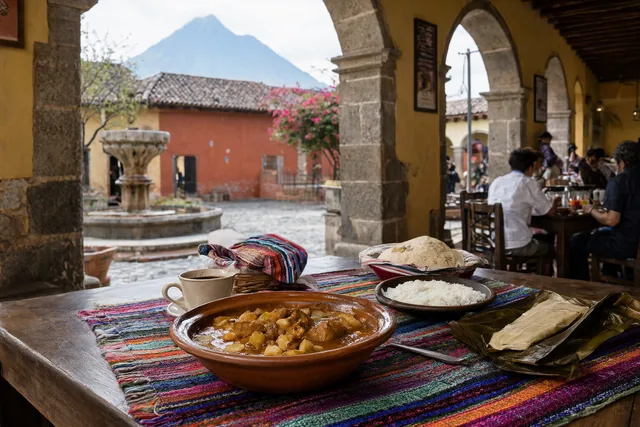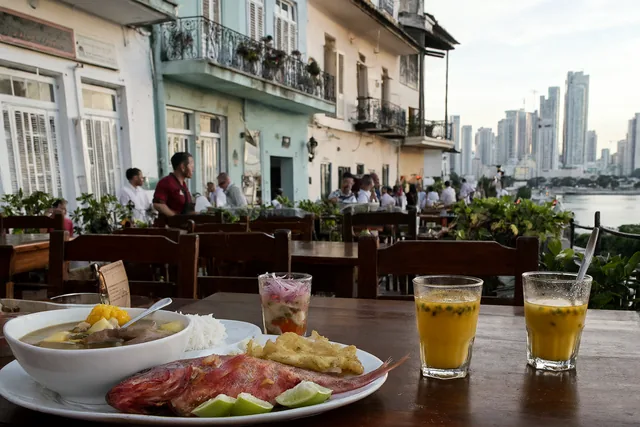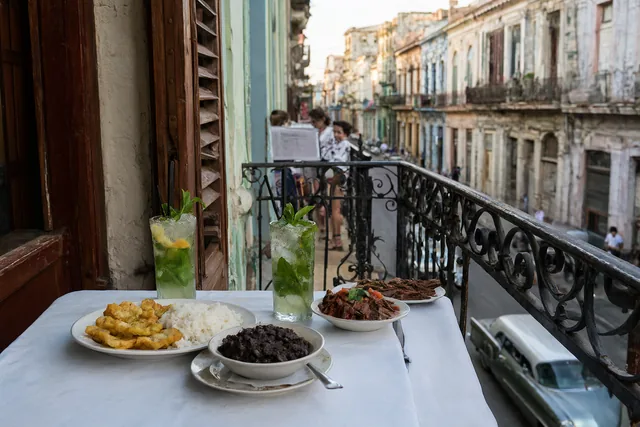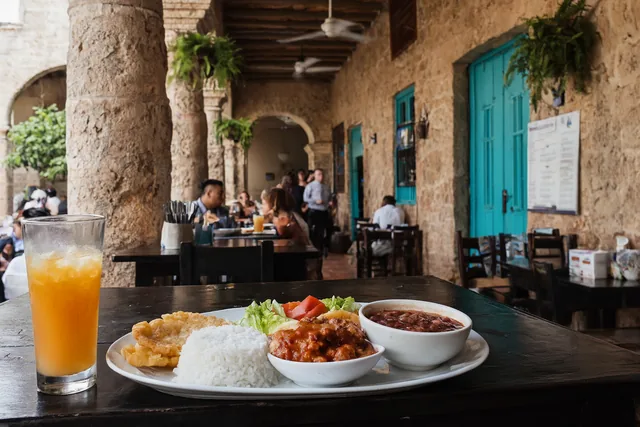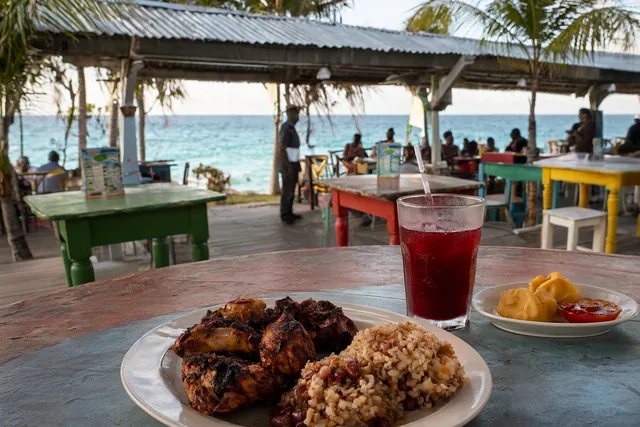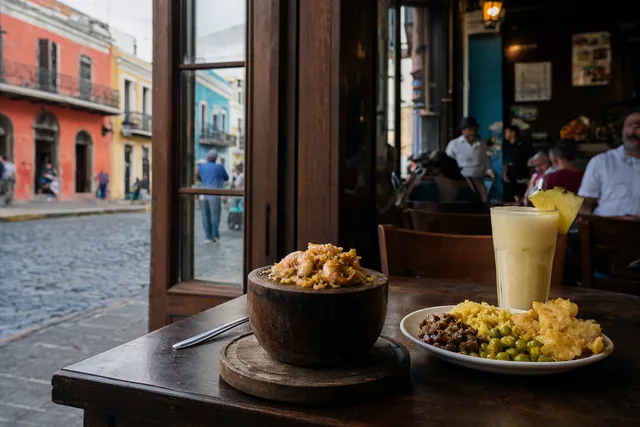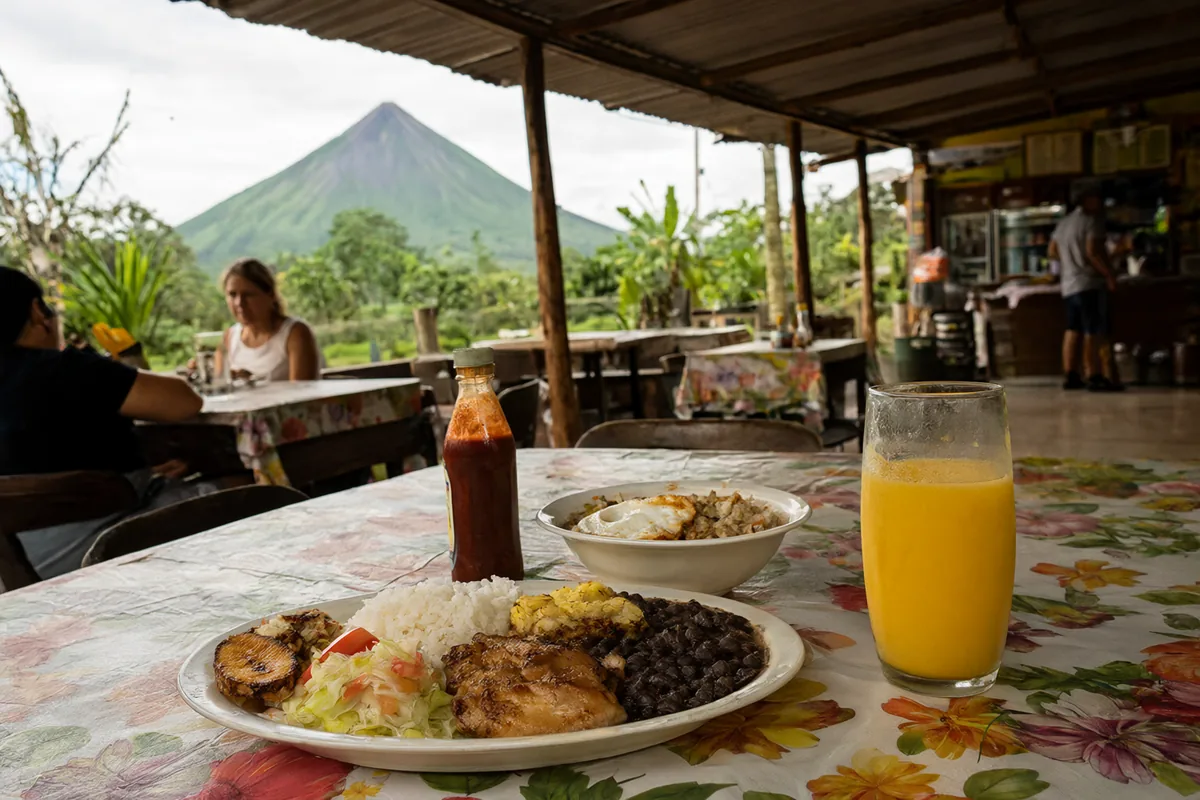
Costa Rican food is simple, fresh and generous: rice and black beans, ripe plantains, tropical fruit, excellent coffee and fish straight off the boat. It is rarely spicy, and the best meals are often the cheapest, served at small family diners called sodas. This Costa Rica food guide covers the dishes to order, how to read a menu, how the 13 percent tax and 10 percent service charge work, then goes town by town through where to eat in San José, La Fortuna, Monteverde, Manuel Antonio, Tamarindo and Puerto Viejo. On the Caribbean coast the food changes completely, with coconut, thyme and Scotch bonnet chillies, so it is worth seeing both sides of the country.
What to eat in Costa Rica: 12 dishes to know
These are the dishes you will see on almost every Costa Rican menu, plus the regional ones worth seeking out.
- Gallo pinto (everywhere): rice and black beans fried together with onion, sweet pepper and coriander, the national breakfast, served with eggs, plantains, fresh cheese and natilla (sour cream).
- Casado (everywhere): the standard lunch plate, with rice, beans, salad, fried plantain, a picadillo (chopped vegetable hash) and your choice of chicken, beef, pork or fish.
- Olla de carne (everywhere): a beef and vegetable soup with cassava, chayote, corn, plantain and taro, a Sunday family dish.
- Arroz con pollo (everywhere): yellow rice with shredded chicken and vegetables, a party and birthday favourite.
- Chifrijo (bars, especially San José): a bowl of rice, beans and chicharrones (fried pork) topped with tomato salsa and served with tortilla chips.
- Ceviche (the coasts): white fish cured in lime with onion, coriander and sweet pepper, served with crackers or plantain chips.
- Patacones (everywhere): green plantains fried, flattened and fried again, served with bean dip or guacamole.
- Sopa negra (everywhere): black bean soup with a boiled egg dropped in.
- Tamales (around Christmas): corn dough with pork, rice and vegetables, wrapped in banana leaves and sold in pairs called a piña.
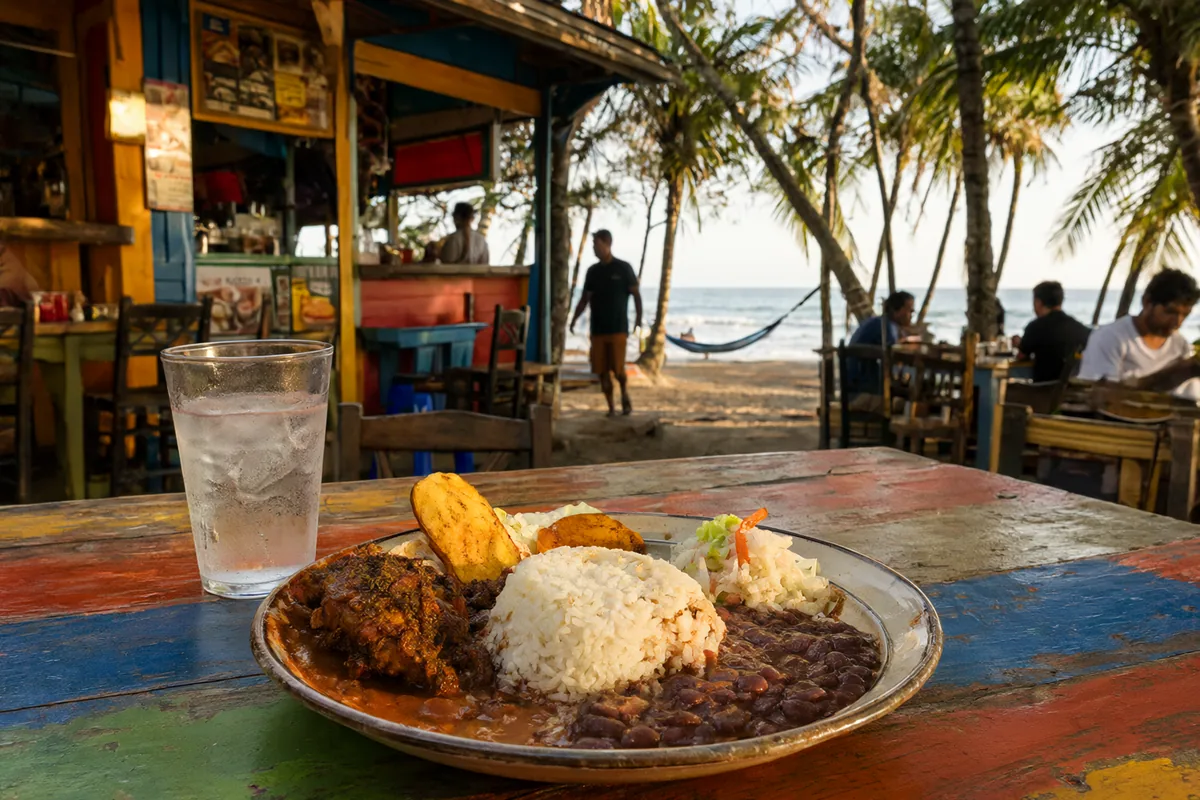
- Rice and beans with Caribbean chicken (Limón and the Caribbean coast): rice and red beans cooked in coconut milk with thyme, served with chicken stewed in a spicy brown sauce.
- Chorreadas (Guanacaste and the countryside): sweet corn pancakes served with natilla for breakfast or with coffee.
- Batidos and coffee (everywhere): fresh fruit shakes made with water or milk, and some of the best coffee in the world, traditionally brewed through a cloth filter on a wooden stand called a chorreador.
How to read a menu in Costa Rica
Restaurants in tourist towns usually have menus in Spanish and English, but sodas often write the day's dishes on a board in Spanish only. These are the words you will see most often.
| Spanish | Meaning |
|---|---|
| Soda | A small, inexpensive family diner, not a soft drink |
| Casado | The set lunch plate of rice, beans, salad, plantain and a main |
| Pinto | Short for gallo pinto, rice and beans |
| Bocas | Small bar snacks served with drinks, sometimes free with a round |
| Picadillo | A side of finely chopped vegetables, such as potato, green papaya or chayote, cooked with meat or on their own |
| Natilla | Costa Rican sour cream |
| Pescado entero / filete | Whole fried fish / fish fillet |
| Al ajillo / a la plancha | In garlic butter / griddled |
| Batido en agua / en leche | Fruit shake made with water / with milk |
| Refresco natural | Fresh fruit drink |
| Salsa Lizano | The tangy brown vegetable sauce found on every table |
| I.V.I. | Impuestos incluidos: taxes included in the price |
| Servicio 10% | The legal 10 percent service charge |
Many Costa Rican menus show prices before the 13 percent tax and 10 percent service charge, so the bill is about 23 percent higher than the menu. swap.menu flags these lines when it reads the menu and converts every colón price to your home currency, so you can tell whether a casado is really cheap before you order.
Tipping, tax and paying the bill
Costa Rican restaurants charge two extras by law: a 13 percent IVA (sales tax) and a 10 percent service charge (servicio), which goes to staff. Some menus include both in the listed price and say so, often with "i.v.i." or "impuestos incluidos", but many show the price before these charges and note it at the bottom. If you see "precios no incluyen impuestos" or "+23%", add about a quarter to the menu price. Our guide to tax and service charges on menus explains how these lines work around the world.
Because service is already on the bill, an extra tip is not expected at restaurants. Leaving a little more in cash for excellent service is appreciated, and tour guides and drivers are usually tipped separately. Small sodas sometimes do not charge service, so check the bill; if it is not there, leaving around 10 percent is kind.
The currency is the colón (₡, CRC). US dollars are widely accepted in tourist areas, and many tour and hotel prices are quoted in dollars, but change is often given in colones and the rate may not favour you. Cards are accepted almost everywhere except the smallest sodas, market stalls and roadside fruit stands, which prefer cash. If a card machine offers to charge you in your home currency, choose colones: our guide to paying in local currency explains why.
Costa Ricans eat early. Breakfast is from 6am, lunch, the main meal, is from about 11:30am to 1:30pm, and dinner is from 6pm to 8pm. In smaller towns, many sodas close by 8pm or 9pm, and the casado is usually a lunchtime dish.
Where to eat in Costa Rica, town by town
Costa Rica is small, but its food changes between the Central Valley, the Pacific beaches and the Caribbean coast. Jump to a town:
Where to eat in San José
Many visitors pass straight through San José, but the capital is the best place in the country to eat like a local. Start at the Mercado Central, open since 1880, a maze of narrow aisles where tiny sodas serve casados, olla de carne and rice dishes at shared counters, along with stalls selling coffee, spices and fresh juices. The nearby Mercado Borbón is where San José buys its fruit and vegetables, and the weekend ferias del agricultor (farmers' markets) in different neighbourhoods are good for fresh fruit and snacks.
For dinner in San José, head to Barrio Escalante, east of the centre, where a stretch of Calle 33 has become the city's restaurant street, with craft beer bars, cafés and modern Costa Rican cooking. Barrio Amón has cafés in old mansions, and the western suburbs of Escazú and Santa Ana are home to upmarket restaurants. Order chifrijo and a cold beer at a traditional bar, where bocas are served with drinks. Take a taxi or ride-hailing car in San José at night.
Where to eat in La Fortuna
La Fortuna sits at the foot of the cone-shaped Arenal Volcano and is one of the busiest tourist towns in Costa Rica, built around hot springs, waterfalls and hanging bridges. The town centre has plenty of restaurants aimed at visitors, but the best value in La Fortuna is at the sodas on the streets around the central park and church, where a casado with grilled chicken or fresh tilapia from local fish farms comes with a fruit drink.
The farms around La Fortuna offer coffee, chocolate and sugarcane tours, many ending with a traditional lunch cooked on a wood-fired stove. Order gallo pinto with eggs and natilla before a morning hike, and look for chicharrones and patacones at the roadside restaurants on the way to the lake. Many restaurants with volcano views line the road west of town towards Lake Arenal; go before sunset, when the cone is most likely to be clear of cloud.
Where to eat in Monteverde
Monteverde is a cool, misty cloud forest town high in the Tilarán mountains, and its food reflects its farming history. Quaker settlers from the United States arrived in the 1950s and started dairy farming, and Monteverde is still known for its cheese and ice cream. Coffee is grown on the lower slopes, and several farms run tours explaining how beans are picked, dried and roasted, with chocolate tours nearby.
The town of Santa Elena is where most of Monteverde's restaurants and sodas are, from simple casados to cafés with homemade cakes and pizza. Evenings in Monteverde are chilly by Costa Rican standards, so a bowl of sopa negra or olla de carne is welcome after a night walk in the forest. The road up to Monteverde is slow, and many restaurants close early, so plan to eat dinner by 8pm.
Where to eat in Manuel Antonio
Manuel Antonio, on the central Pacific coast, combines a national park full of monkeys and sloths with beaches and some of the country's best seafood. The road that climbs between the town of Quepos and the park is lined with restaurants on the hillside, many with ocean views that make them popular at sunset. Order ceviche, whole fried snapper (pargo entero), camarones al ajillo (garlic prawns) and arroz con mariscos, Costa Rica's seafood rice.
Quepos is a sportfishing port, and some restaurants near the marina will cook the fish you catch on a charter. For better value than the hillside restaurants, eat at the sodas and seafood restaurants in central Quepos, where Manuel Antonio's workers eat. The national park is closed on Tuesdays and restricts the food you can bring in, so plan lunch for after your visit.
Where to eat in Tamarindo
Tamarindo is a surf town on the Guanacaste coast, with a very international food scene: fish tacos, poke bowls, Italian and Argentine restaurants and beach bars. The local food to look for is Guanacaste's corn cooking, from the ranching and farming traditions of the province: chorreadas (sweet corn pancakes), rosquillas and tanelas (baked corn and cheese snacks), arroz de maíz (a stew of chicken and hominy corn) and sopa de albóndigas (meatball soup).
For a fresh catch in Tamarindo, look for ceviche and whole fried fish at the simple places along the beach, and watch the sunset from the sand. To find traditional Guanacaste food, head inland to Santa Cruz, known as the province's folklore capital, or Liberia, the provincial capital, where sodas serve corn dishes and coffee. Guanacaste is the driest, hottest part of Costa Rica, so a cold batido or coconut water from a fresh green coconut, called agua de pipa, is part of the day.
Where to eat in Puerto Viejo
Puerto Viejo de Talamanca, on the southern Caribbean coast, has a different food culture from the rest of Costa Rica, shaped by the Afro-Caribbean community whose families came from Jamaica in the late 1800s. The dish to order in Puerto Viejo is rice and beans cooked in coconut milk with thyme and Scotch bonnet chilli, served with Caribbean chicken, stewed in a spicy brown sauce, or fried fish. On weekends, look for rondón (pronounced "rundown"), a coconut stew of fish, seafood and root vegetables.
Also try patí, a spicy pastry filled with minced meat, pan bon, a dark sweet bread with cheese and candied fruit, and agua de sapo, a drink of ginger, lime and raw cane sugar. Puerto Viejo is a relaxed beach town with a mix of Caribbean, Italian and vegan restaurants. Nearby, Bribri Indigenous communities and small farms offer chocolate tours that show how cacao is grown, fermented and ground. The town of Cahuita to the north is also good for Caribbean cooking.
Vegetarian, vegan and allergy tips
Costa Rica is one of the easier countries in Central America for vegetarians. A casado vegetariano with rice, beans, salad, plantain, picadillo and egg or cheese is on most soda menus, and tourist towns such as Puerto Viejo, Santa Teresa and Monteverde have many vegan cafés. Watch for hidden meat, though: some cooks fry gallo pinto in lard or add meat stock, picadillos are often cooked with minced beef, and many soups use chicken or beef stock. The words to use are vegetariano and vegano.
Costa Rican food is generally low in nuts, but coconut is everywhere on the Caribbean coast, and seafood is common in rice dishes and soups. Gluten-free eating is fairly easy because rice, beans, corn and plantain are staples. Our guide to eating abroad with food allergies explains how to describe an allergy clearly when you do not speak the language.
Useful Spanish phrases for ordering in Costa Rica
Buenas / Pura vida "Hello" (short for buenas tardes or buenos días) / Costa Rica's all-purpose greeting, thanks and "all good"
¿Me regala un casado de pollo? "Could I have a chicken casado?" The usual polite way to order
¿Qué trae el casado hoy? "What comes with the casado today?"
Un batido de mango en agua, por favor "A mango shake made with water, please"
Soy vegetariano / vegetariana "I am vegetarian" (vegetariano for a man, vegetariana for a woman)
Soy alérgico / alérgica a... "I am allergic to..."
La cuenta, por favor "The bill, please"
¡Qué rico, muchas gracias! "Delicious, thank you very much!"
How swap.menu helps you eat in Costa Rica
The best sodas in Costa Rica write their menus on a whiteboard, in Spanish, and change them daily. Photograph the menu with swap.menu and every dish appears in your language with the Spanish name beside it and a short explanation, so you know that picadillo de arracache is a hash of a local root vegetable, that natilla is sour cream and not custard, and that bocas are bar snacks. Every price is converted from colones to your home currency, and we flag the 13 percent tax and 10 percent service lines so the total holds no surprises.
Tap the dishes you want, add a note such as "no meat" or "no lard, please", typed or spoken, and swap.menu translates your order into Spanish. Show the cook your phone, or let them scan the QR code and read your order on their own screen. You can try it right now on a sample menu with the free demo, or see travel pass prices.
Off to Costa Rica? Your first 3 menu scans are free, and a travel pass starts from $4.99 with nothing that renews.
Start free with 3 scansCosta Rica food FAQ
Do you tip in restaurants in Costa Rica?
An extra tip is not expected, because restaurants add a 10 percent service charge by law. Leaving a little extra in cash for excellent service is appreciated. If a small soda has not added service, around 10 percent is a kind gesture.
Why is my Costa Rica restaurant bill higher than the menu?
Many menus show prices before the 13 percent sales tax and the 10 percent service charge, which together add about 23 percent. Menus marked i.v.i. already include taxes.
What is the national dish of Costa Rica?
Gallo pinto, rice and black beans fried together, is the national dish and is usually eaten for breakfast. The casado, a lunch plate of rice, beans, salad, plantain and meat or fish, is the everyday meal.
Is tap water safe to drink in Costa Rica?
In most of Costa Rica, including San José, La Fortuna and Monteverde, tap water is treated and safe to drink. In some remote areas and beach towns, locals and visitors prefer bottled or filtered water, so ask at your hotel.
Is Costa Rica expensive to eat out?
Costa Rica is more expensive than its neighbours, especially in tourist towns. Eating at sodas, where a casado costs much less than a restaurant main course, is the best way to keep costs down.
How can I read a Costa Rican menu if I do not speak Spanish?
Learn a few key words such as casado, gallo pinto and soda, or photograph the menu with swap.menu. It translates every dish into your language, explains it, converts prices from colones to your currency and translates your order into Spanish.
Travelling further in Central America? Read our food guides for nearby countries:
Or browse every travel food guide.