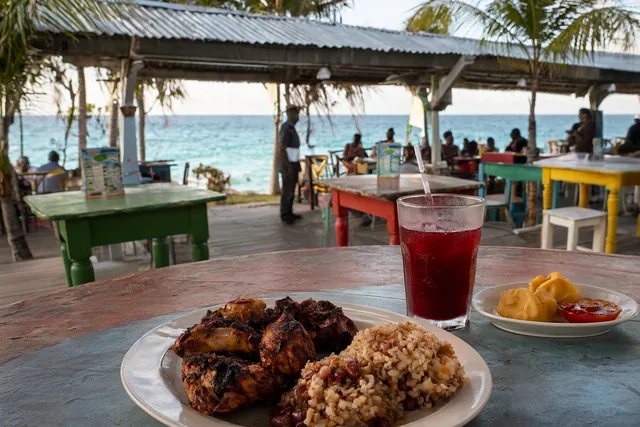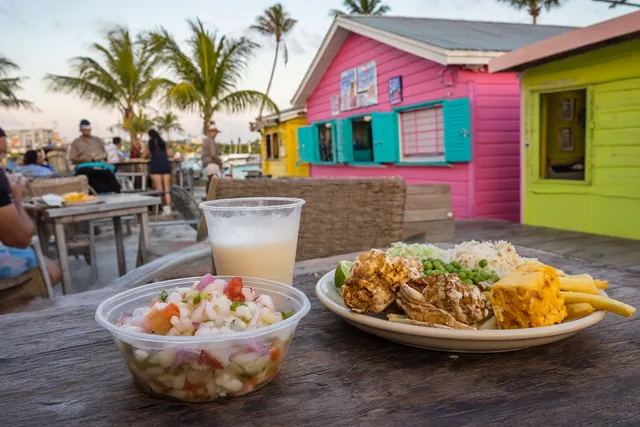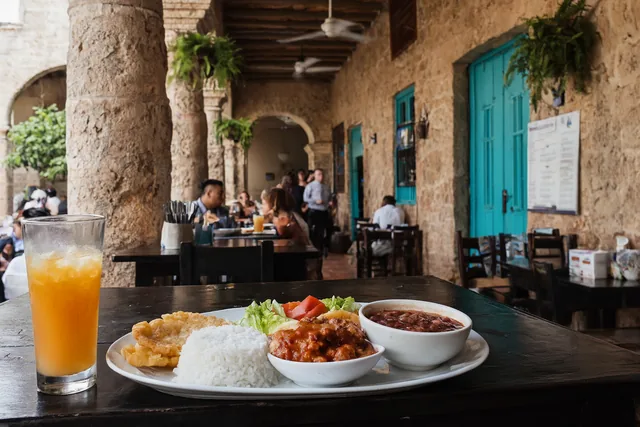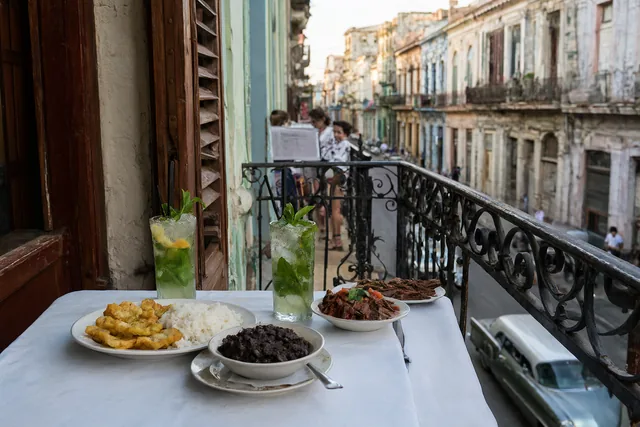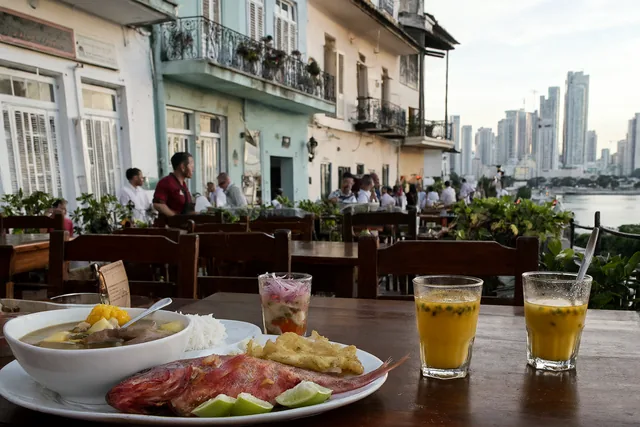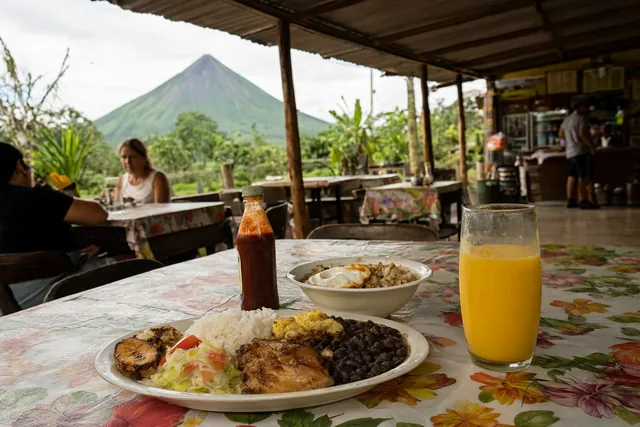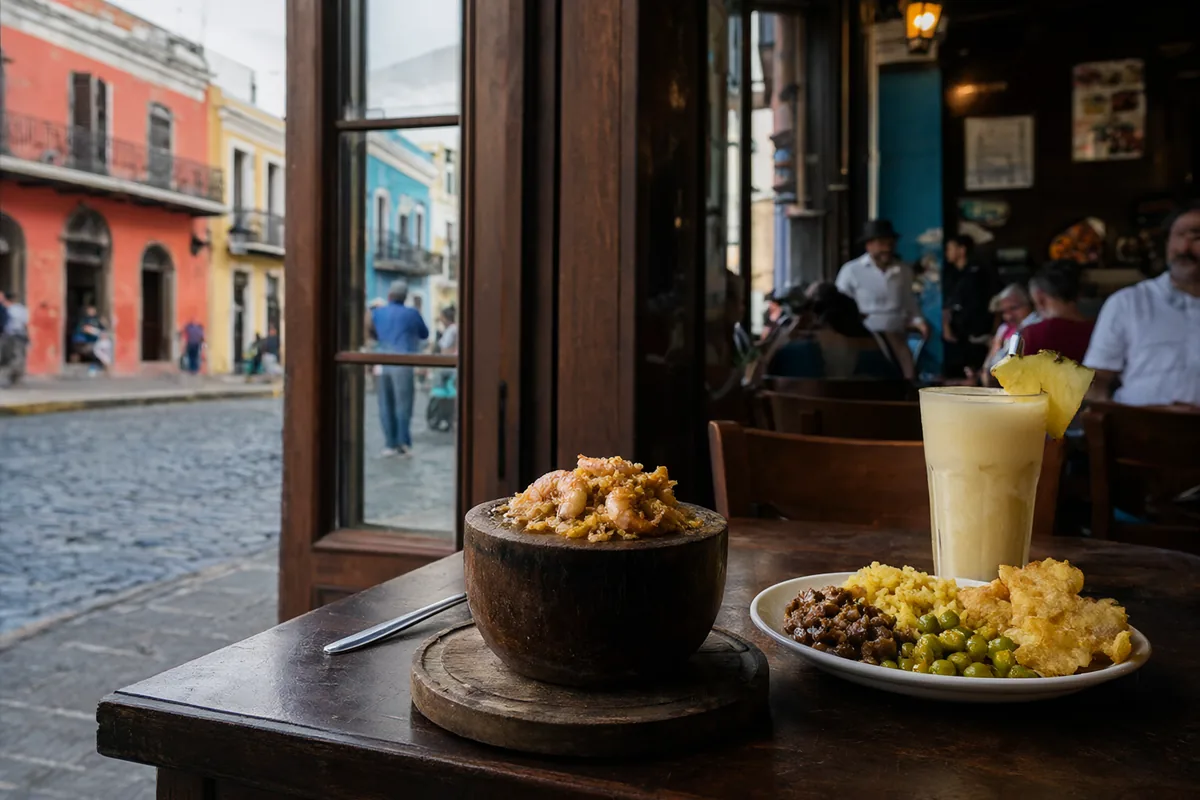
Puerto Rican food, called cocina criolla, blends Taíno, Spanish and West African cooking with a little American influence, and it is rich, garlicky and comforting rather than spicy. This Puerto Rico food guide covers the dishes to order, the Spanish menu words worth knowing, how tipping and the IVU sales tax work, then goes through where to eat in San Juan, Piñones, Luquillo, Guavate, Ponce, Rincón and Vieques. Puerto Rico is a US territory, so paying feels familiar to American visitors, but the menus, the music and the roadside food stands are pure Caribbean. Eat mofongo, roast pork and fritters from a beach kiosk, and you will understand why Puerto Ricans are so proud of their food.
What to eat in Puerto Rico: 12 dishes to know
These are the dishes that define Puerto Rican cooking, with the place or season they belong to where it matters.
- Mofongo (everywhere): fried green plantains mashed with garlic, olive oil and pork crackling in a wooden pilón (mortar), served as a dome with broth or relleno (stuffed) with shrimp, chicken or steak.
- Arroz con gandules (everywhere): rice cooked with pigeon peas, sofrito, olives and pork, often called the national dish.
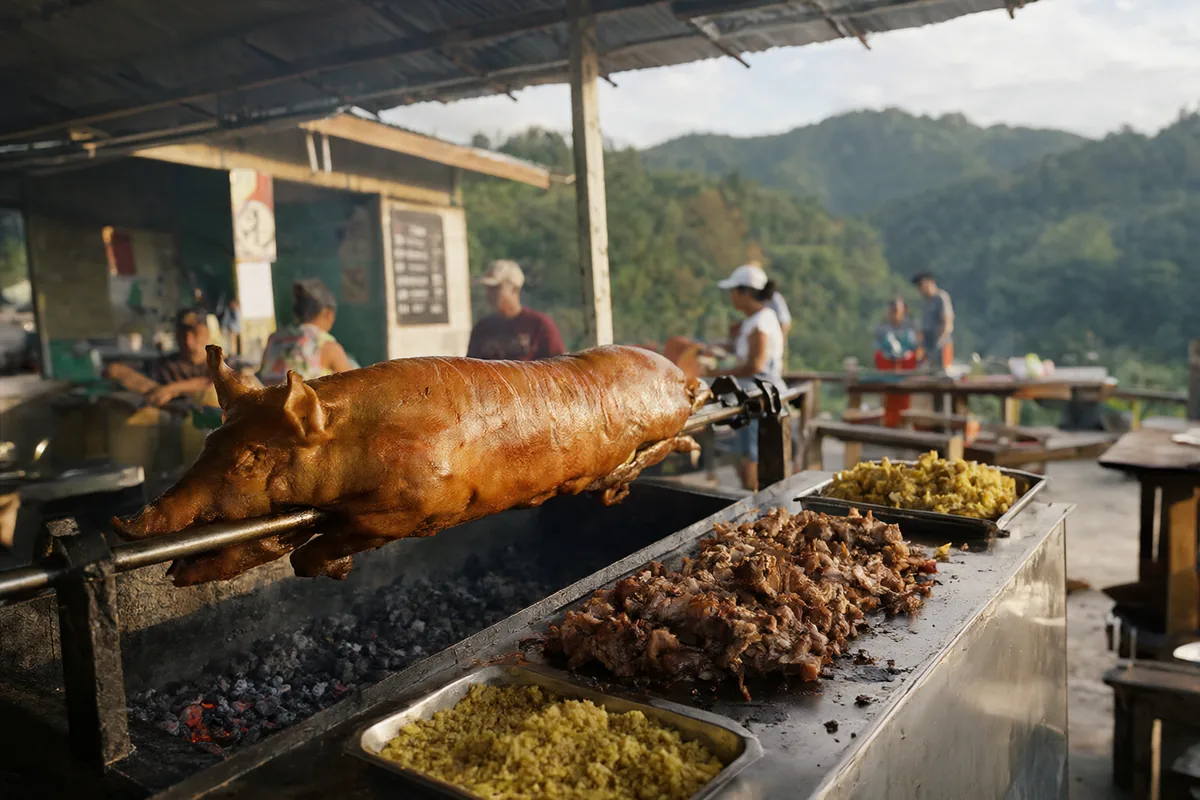
- Lechón asado (Guavate and everywhere): whole pig roasted slowly over charcoal until the skin is crisp, served chopped with rice and root vegetables.
- Pasteles (around Christmas): a paste of green banana and root vegetables filled with pork, wrapped in banana leaf and boiled.
- Alcapurrias (Piñones and beach kiosks): fritters of green banana and taro dough filled with ground beef or crab.
- Bacalaítos (beach kiosks): large, thin, crisp salt cod fritters.
- Tostones and amarillos (everywhere): twice-fried green plantains, and soft, sweet fried ripe plantains.
- Pastelón (everywhere): a "lasagne" of sweet ripe plantain layered with seasoned ground beef and cheese.
- Asopao (everywhere): a thick, soupy rice stew with chicken or seafood, comfort food on a rainy day.
- Chillo frito (the coasts): a whole fried red snapper, served with tostones and garlic sauce.
- Tembleque and quesitos (everywhere): a wobbly coconut pudding dusted with cinnamon, and flaky pastries filled with sweetened cream cheese.
- Piña colada and coquito (San Juan and Christmas): the piña colada is said to have been created in San Juan, and coquito is a coconut and rum eggnog made at Christmas.
How to read a Spanish menu in Puerto Rico
Spanish and English are both official languages in Puerto Rico. Restaurants in Old San Juan and the tourist areas usually have bilingual menus, but roadside kiosks, lechoneras and small family restaurants (fondas) often write their menus in Spanish only, with Puerto Rican words that differ from other Spanish-speaking countries.
| Spanish | Meaning |
|---|---|
| Mofongo relleno | Mofongo stuffed with seafood or meat |
| Tostones / amarillos | Twice-fried green plantains / fried sweet ripe plantains |
| Arroz con gandules | Rice with pigeon peas |
| Habichuelas | Beans, usually stewed pink or red beans |
| Lechón / chicharrón | Roast pork / crisp fried pork skin or chicken pieces (chicharrón de pollo) |
| Frituras | Fried snacks: alcapurrias, bacalaítos, pastelillos (turnovers) |
| Bacalao | Salt cod |
| Chillo / carrucho / jueyes | Red snapper / conch / land crab |
| Pana / guineítos | Breadfruit / boiled green bananas |
| A la criolla / al ajillo | In a tomato and sofrito sauce / in garlic sauce |
| Sofrito | The green base of onion, peppers, garlic and herbs behind most dishes |
| Jugo de china | Orange juice (china means orange in Puerto Rico) |
| Pique | Hot sauce, usually chillies pickled in vinegar |
| IVU | Sales tax, added to the bill |
Menu prices in Puerto Rico are shown before sales tax, and some restaurants add a service charge as well, so the bill can be well above the menu price. swap.menu flags tax and service lines when it reads the menu and converts every US dollar price to your home currency, so you know what you are spending before you order.
Tipping, sales tax and paying the bill
Tipping in Puerto Rico follows the American model: leave 15 to 20 percent at sit-down restaurants, and a dollar or two per drink at bars. Some restaurants, especially in Old San Juan, Condado and Isla Verde, add a service charge or "gratuity" to the bill, often for groups but sometimes for everyone; if you see it, you do not need to tip again. At kiosks, lechoneras and counter-service places a tip is not expected, though leaving the change is appreciated.
Menu prices are shown before Puerto Rico's sales tax, the IVU (impuesto sobre ventas y uso), which is added when you pay and can be up to 11.5 percent. Our guide to tax and service charges on menus explains how these lines work around the world.
Puerto Rico uses the US dollar ($, USD). Cards and tap-to-pay are accepted almost everywhere in San Juan, but roadside kiosks, small lechoneras and beach vendors may be cash only, so carry small notes. If a card machine offers to charge you in your home currency, decline and pay in dollars: our guide to paying in local currency explains why.
Puerto Ricans eat lunch from about noon to 2pm and dinner later than in the mainland United States, from about 7pm to 10pm, and later at weekends. Sunday is the day for long family lunches, and many families drive into the mountains for roast pork.
Where to eat in Puerto Rico, place by place
Puerto Rico is small enough to drive around, and each part of the island has its own food stops. Jump to a destination:
Where to eat in San Juan
San Juan is where most visitors start, and it has the best range of food on the island. Old San Juan (Viejo San Juan), the walled colonial city of blue cobblestones and pastel houses, is full of restaurants serving mofongo, arroz con gandules and seafood, from simple fondas to elegant dining rooms in old courtyards. The streets around Calle Fortaleza and Calle San Sebastián are good for dinner and drinks, and the cafés are perfect for a mallorca, a sweet bread dusted with icing sugar, for breakfast.
The neighbourhood of Santurce is where San Juan's food scene is most interesting. La Placita de Santurce is a produce market by day that turns into a street party with bars and restaurants on Thursday to Saturday nights, and the streets around it and along Calle Loíza have many of the city's best restaurants. Condado and Isla Verde, the beach hotel strips, have upmarket restaurants with ocean views, at prices to match. San Juan locals often eat at the casual places in Río Piedras, near the university, for good-value Puerto Rican cooking.
Where to eat in Piñones
Piñones, just east of San Juan's airport in the town of Loíza, is a stretch of beach, mangroves and palm trees lined with wooden kiosks frying Puerto Rico's favourite snacks. This is the place to try alcapurrias filled with beef or land crab, bacalaítos, pastelillos (turnovers) of crab or conch, and pinchos, grilled skewers of chicken or pork, washed down with cold coconut water drunk straight from the shell.
Loíza is the heart of Afro-Puerto Rican culture and the home of bomba, the island's African-rooted music and dance, and some kiosks in Piñones have live music on weekends. Many people rent bicycles to ride the coastal path through the mangroves between kiosks. Piñones is busiest on weekend afternoons, when San Juan families drive out; most kiosks are cash only.
Where to eat in Luquillo
Luquillo, about 45 minutes east of San Juan, has one of the island's most popular beaches and, just off the main road, the Luquillo kioskos: a long row of numbered food kiosks serving everything from fritters and seafood to mofongo, Mexican food and cocktails. It is the classic lunch stop after a hike in the El Yunque rainforest nearby.
At the Luquillo kiosks, order empanadillas of crab or conch, fresh fish, mofongo relleno with seafood and a piña colada. Each kiosk has its own speciality, so walk the row before choosing. In the evenings and at weekends, some kiosks have live music and dancing. The beach itself has calm water, shaded picnic areas and vendors selling coconut water and fruit, making a day in Luquillo an easy trip from San Juan.
Where to eat in Guavate
Guavate, in the mountains of Cayey about 45 minutes south of San Juan, is Puerto Rico's pork pilgrimage. Along the winding road known as La Ruta del Lechón (the pork highway), open-air restaurants called lechoneras roast whole pigs on spits over charcoal, and on weekends the road fills with families who come to eat, drink and dance to live salsa and merengue.
At a lechonera in Guavate you order at the counter by weight: lechón chopped with its crackling skin, morcilla (blood sausage), arroz con gandules, guineítos and yuca, piled onto a plate. Look at which pig has the crispest skin before you choose. Sundays are the busiest, with traffic jams on the mountain road, so go early or on a Saturday for a calmer visit. Bring cash, as some lechoneras do not take cards.
Where to eat in Ponce
Ponce, on the south coast, is Puerto Rico's second city, known as La Perla del Sur (the Pearl of the South), with a handsome centre of neoclassical buildings around the Plaza Las Delicias and its famous red and black striped fire station. Ponce is quieter and more local than San Juan, and its restaurants serve traditional Puerto Rican cooking at lower prices. An ice cream in the shade of the plaza is a Ponce ritual.
On the waterfront, the La Guancha boardwalk has kiosks selling fried fish, fritters, seafood and cold drinks, busiest on weekend evenings when families walk by the water. Look for chillo frito and arroz con jueyes (rice with land crab) in Ponce's seafood restaurants. The south coast is drier and hotter than the north, so start early and save the boardwalk for sunset.
Where to eat in Rincón
Rincón, on the west coast, is Puerto Rico's surf town, with famous winter waves, sunsets over the sea and a relaxed community of surfers and expatriates. The food in Rincón is casual: fish tacos, poke bowls and burgers at beachside bars and food trucks, alongside Puerto Rican seafood restaurants serving chillo, mofongo relleno and empanadillas.
From January to March, humpback whales pass close to shore, and you can sometimes see them from the park around the lighthouse. The fishing village of Puerto Real and the town of Joyuda to the south, in Cabo Rojo, have a strip of seafood restaurants by the water known for fresh fish and seafood. Sunset drinks on the beach are a Rincón tradition, so plan dinner for afterwards.
Where to eat in Vieques
Vieques, an island off the east coast reached by ferry or small plane, has wild horses, empty beaches and one of the brightest bioluminescent bays in the world. Most of the restaurants on Vieques are in two places: the small town of Esperanza on the south coast, where a Malecón seafront is lined with casual restaurants and bars serving seafood, burgers and cocktails, and Isabel Segunda, the main town on the north coast, with simple local places.
Order fresh fish, conch salad (ensalada de carrucho) and pinchos from roadside stands, and look for food trucks at the beaches. Vieques is small and supplies come by ferry, so menus are short and some restaurants close for days at a time or in the quiet season. Book dinner around your bioluminescent bay tour, which runs after dark and is best on moonless nights.
Vegetarian, vegan and allergy tips
Puerto Rican food is heavy on pork, but vegetarians can find plenty in San Juan, where many restaurants have vegetarian and vegan dishes. Elsewhere, watch for hidden meat: arroz con gandules is usually cooked with pork, beans may contain ham, sofrito-based sauces sometimes use pork fat, and traditional mofongo is mashed with pork crackling (ask for it sin chicharrón). The words to use are vegetariano and vegano.
Seafood and shellfish are common in fritters, rice dishes and stuffed mofongo, and many kiosk fritters are cooked in shared oil. Coconut is used in desserts and drinks. Allergy awareness is similar to the mainland United States. Our guide to eating abroad with food allergies explains how to describe an allergy clearly.
Useful Spanish phrases for ordering in Puerto Rico
Buenas "Hello", a friendly greeting at any time of day
¿Qué es lo que hay? "What's up?", a casual Puerto Rican greeting
¿Qué me recomienda? "What do you recommend?"
Un mofongo relleno de camarones, por favor "A shrimp-stuffed mofongo, please"
Un jugo de china "An orange juice", using the Puerto Rican word for orange
Soy alérgico / alérgica a... "I am allergic to..." (alérgico for a man, alérgica for a woman)
La cuenta, por favor "The bill, please"
¡Wepa! An all-purpose cheer of joy, heard when the food arrives or the music starts
How swap.menu helps you eat in Puerto Rico
In the kiosks and lechoneras outside San Juan, menus are often in Spanish only, written on a board and full of Puerto Rican words: jueyes, carrucho, pana, amarillos and china mean something different here, or nothing at all, to Spanish speakers from elsewhere. Photograph the menu with swap.menu and every dish appears in your language with the Spanish name beside it and a short explanation, so you know that an alcapurria de jueyes is a land crab fritter before you bite into it.
Every price is converted from US dollars to your home currency, and we flag the IVU tax and any service charge. Tap the dishes you want, add a note such as "no pork" or "no shellfish, please", typed or spoken, and swap.menu translates your order into Spanish. Show the cook your phone, or let them scan the QR code and read your order on their own screen. You can try it right now on a sample menu with the free demo, or see travel pass prices.
Off to Puerto Rico? Your first 3 menu scans are free, and a travel pass starts from $4.99 with nothing that renews.
Start free with 3 scansPuerto Rico food FAQ
Do you tip in restaurants in Puerto Rico?
Yes. Tip 15 to 20 percent at sit-down restaurants, as in the mainland United States. Some restaurants in tourist areas add a service charge, so check the bill before tipping again. Kiosks and counter-service places do not expect a tip.
What food is Puerto Rico famous for?
Mofongo, arroz con gandules, roast pork (lechón), fritters such as alcapurrias and bacalaítos, and the piña colada are the best known. Pasteles and coquito are Christmas classics.
What currency is used in Puerto Rico?
Puerto Rico uses the US dollar. Menu prices are shown before the IVU sales tax, which is added when you pay.
Is tap water safe to drink in Puerto Rico?
Tap water in San Juan and the main towns is treated and generally safe to drink. After storms or power cuts, follow local advice, and many residents use filtered or bottled water out of preference.
Where is the best place to eat lechón in Puerto Rico?
Guavate, in the mountains of Cayey, is the most famous place for lechón, with a road lined with lechoneras roasting whole pigs. Weekends are the liveliest, with music and dancing.
How can I read a menu in Puerto Rico if I do not speak Spanish?
Many San Juan restaurants have bilingual menus, but kiosks and lechoneras often do not. Photograph the menu with swap.menu, which translates every dish into your language, explains it, converts prices to your home currency and translates your order into Spanish.
Travelling further in the Caribbean? Read our food guides for nearby islands and countries:
- Dominican Republic food guide
- Cuba food guide
- Jamaica food guide
- Bahamas food guide
- United States food guide
Or browse every travel food guide.