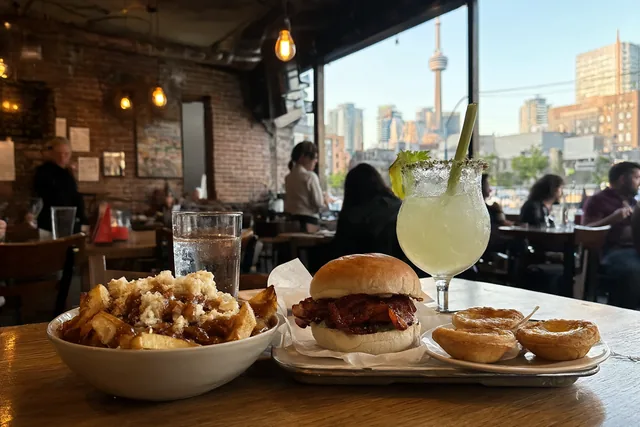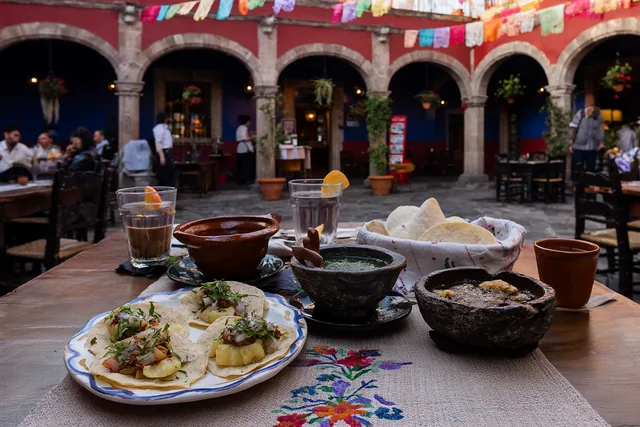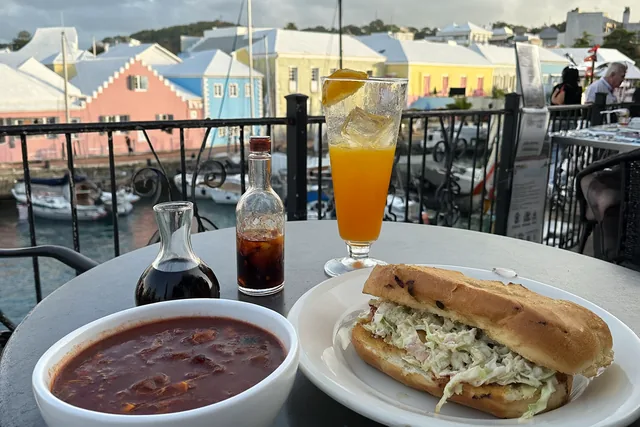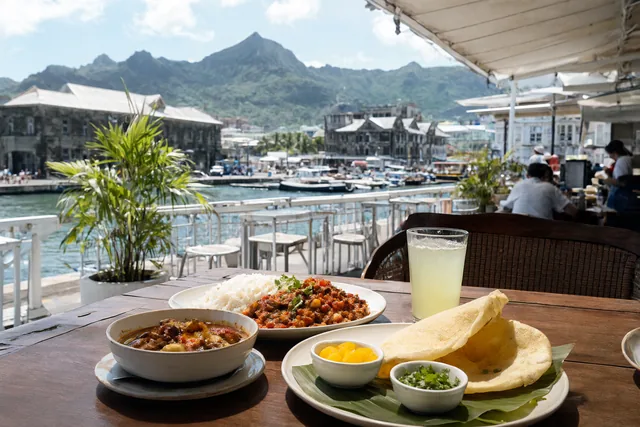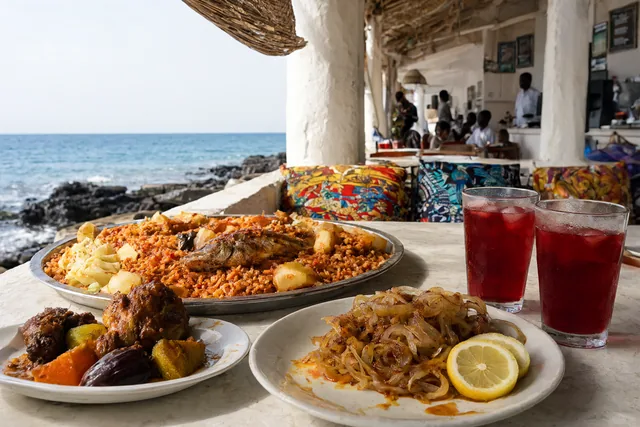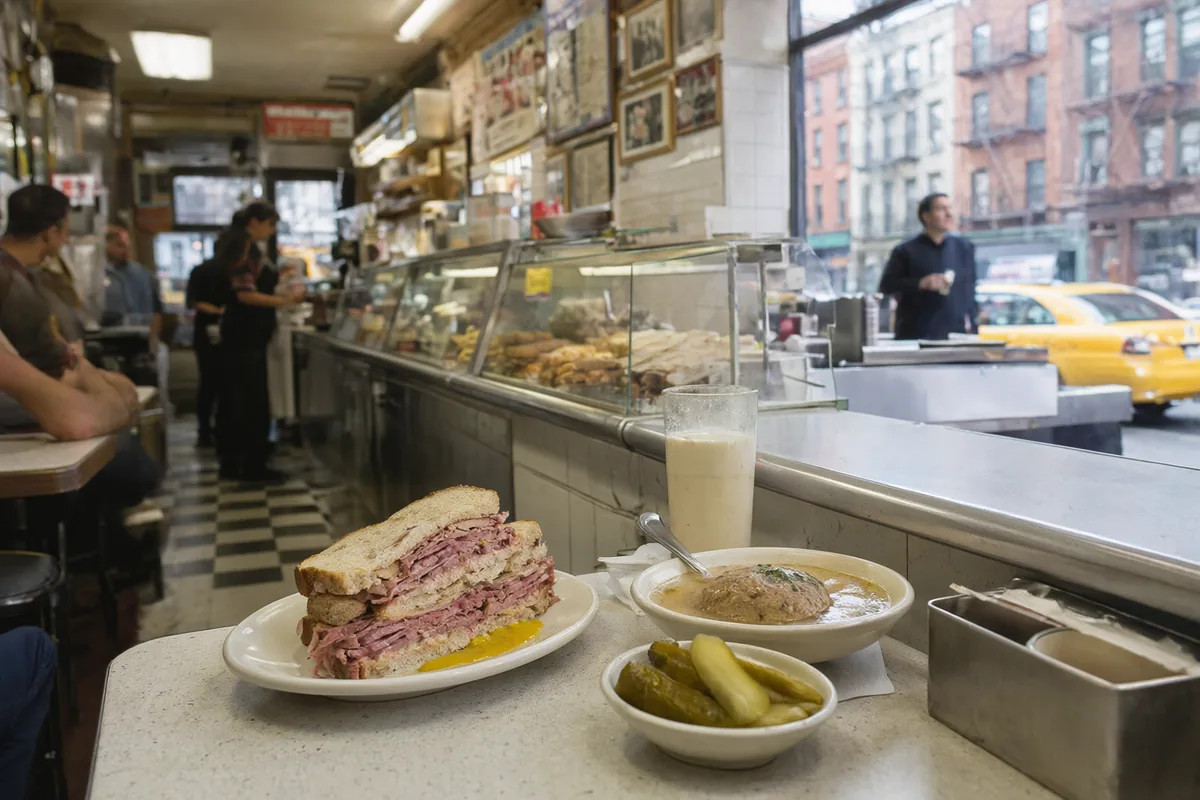
The United States is too big to have one cuisine, and that is the point. This United States food guide covers the dishes worth ordering, the menu words that trip up visitors, and, in plain numbers, how American tipping and sales tax work, because the price on the menu is almost never the price you pay. Then it goes city by city through where to eat in New York City, Los Angeles, Chicago, New Orleans, San Francisco, Austin, Miami and Nashville. Barbecue in Texas, gumbo in Louisiana, pizza by the slice in New York and tacos in Los Angeles all taste better where they come from, so eat regionally and you will eat well.
What to eat in the United States: 12 dishes to know
American food is regional and shaped by the people who arrived over four centuries. These are the dishes that define it, with the city or region they belong to.
- Barbecue (Texas, the Carolinas, Kansas City, Memphis): meat smoked low and slow over wood. Central Texas means beef brisket sold by the pound, the Carolinas mean pulled pork with a vinegar or mustard sauce, Kansas City is known for burnt ends and sweet sauce, and Memphis for ribs with a dry spice rub.
- The hamburger (everywhere): a ground beef patty in a soft bun, from fast-food stands to thick pub burgers. You will be asked how you want it cooked at sit-down places.
- New York-style pizza (New York City): a wide, thin slice you fold in half to eat on the move, sold by the slice from counters across the five boroughs.
- Deep-dish pizza (Chicago): a tall crust baked in a pan, filled with cheese and toppings with the tomato sauce on top. It takes around 45 minutes to bake.
- Bagel with lox and cream cheese (New York City): a boiled and baked bread ring, split and spread with cream cheese and topped with cured salmon, red onion and capers.
- Pastrami on rye (New York City): spiced, smoked and steamed beef brisket sliced thick and piled into rye bread with mustard, a Jewish deli classic.
- Gumbo (New Orleans and Louisiana): a thick stew built on a dark roux, with seafood or chicken and andouille sausage, served over rice.
- Fried chicken (the South): buttermilk-brined and crisp, often with biscuits. Nashville's hot chicken is coated in a cayenne paste and served on white bread with pickles.
- Lobster roll and clam chowder (New England): lobster meat in a buttered hot dog bun, either cold with mayonnaise or warm with butter, and a creamy soup of clams and potato.
- Tacos and burritos (California, Texas and the Southwest): Mexican food is part of everyday American eating. San Francisco's Mission burrito is huge and foil-wrapped, with rice and beans inside.
- Philly cheesesteak (Philadelphia): thinly sliced griddled beef with melted cheese and onions in a long roll.
- Pie (everywhere): apple pie is the national symbol, pecan pie is Southern and key lime pie, tart and creamy, comes from the Florida Keys.
How to read a menu in the United States
American menus are in English, but the words do not always mean what an Australian or British visitor expects, and the price is almost never the final price. These are the terms that cause the most confusion.
| US menu term | What it means |
|---|---|
| Appetizers (apps) / starters | Starters, often large enough to share |
| Entrées | Main courses, not starters as in Australia or France |
| Sides | Side dishes ordered separately: fries, slaw, greens, mac and cheese |
| Market price / MP | The price changes daily, common for lobster, crab and oysters. Ask before ordering |
| Rare / medium rare / medium / medium well / well done | How your steak or burger is cooked, from red in the middle to cooked through |
| Over easy / sunny side up / scrambled | Fried egg flipped briefly / fried egg not flipped / scrambled |
| Biscuit | A soft, savoury scone, not a sweet biscuit. "Biscuits and gravy" comes with a peppery white sausage gravy |
| Grits | Southern ground corn porridge, served savoury with butter or cheese |
| Fries / chips | Hot chips / crisps from a packet |
| Sub, hoagie, hero, grinder | A long filled roll; the name depends on the region |
| Shrimp / cilantro / eggplant / zucchini / arugula | Prawns / coriander / aubergine / courgette / rocket |
| Add avocado +$3 | An add-on or "upcharge" on top of the listed price |
| Free refills | Soft drinks, iced tea and filter coffee topped up at no extra cost |
| Check | The bill |
Menu prices in the United States are shown before sales tax, and the tip is extra on top. A $20 dish usually ends up costing you around $25 once both are added. swap.menu converts every price to your home currency and flags lines like "plus tax", "market price" or an automatic gratuity printed on the menu, so you know what you are really spending before you order.
Tipping, sales tax and paying the bill
This is the part of eating in the United States that confuses visitors most, so here it is in order. First, menu prices do not include tax. Sales tax is added when you pay, at the register or on the check. The rate is set by each state, county and city, so it changes as you travel: about 8.875 percent in New York City, roughly 10 percent in parts of Chicago and Los Angeles, and nothing at all in most of Oregon and Delaware. Some cities add an extra tax on restaurant meals. Our guide to tax and service charges on menus explains how these lines appear around the world.
Second, tipping is expected at every sit-down restaurant. The normal tip is 15 to 20 percent of the bill before tax, and 20 percent is now standard in big cities for good service. This is not optional politeness: in most states servers can legally be paid a lower base wage than other workers, and tips make up most of their income. A worked example: a $40 dinner in New York City adds about $3.55 in tax, then a 20 percent tip of $8 on the pre-tax amount, for a total of about $51.55. A quick New York trick is to double the tax on the check, which comes to just under 18 percent.
When you pay by card, the server takes your card and brings back a slip with a blank line for the tip. Write the tip and the new total, then sign. Many places now hand you a tablet with buttons for 18, 20 or 22 percent; there is always a "custom tip" option, and it is worth checking whether the percentages are worked out on the amount before or after tax. At bars, tip about $1 to $2 per drink or 15 to 20 percent of the tab. At coffee shops and counter-service places a tablet will often prompt you for a tip as well. That one is genuinely optional: leaving nothing, a dollar or about 10 percent are all normal.
Third, watch for charges that are already on the bill. Groups of six or more usually get an automatic gratuity of 18 to 20 percent. In Miami Beach many restaurants add a service charge to every bill, and some restaurants in San Francisco and Los Angeles add a percentage surcharge to cover staff healthcare or wages. These must be disclosed on the menu or the bill. If you see "gratuity" or "service charge" on the check, you do not need to tip again, though you can ask whether the charge goes to the staff.
Prices are in US dollars ($, USD). Cards and tap-to-pay are accepted almost everywhere, but some food trucks, old-school pizzerias and small delis are cash only, and a few businesses add a card surcharge of about 3 percent. If a card terminal offers to charge you in your home currency, decline and pay in dollars: our guide to paying in local currency explains why. Americans eat early by European standards: breakfast from 7am, weekend brunch from 10am to 2pm, a quick lunch around noon, and dinner from 6pm to 8pm. Outside the big cities, many kitchens close by 9pm or 10pm.
Where to eat in the United States, city by city
Each American city has its own signature dishes, neighbourhoods and arguments about who does them best. Jump to a city:
Where to eat in New York City
New York City is the best place in the country to eat cheaply and well on foot. Start with the classics: a slice of plain cheese pizza from a counter, a bagel with cream cheese for breakfast, a pastrami sandwich at a Jewish deli on the Lower East Side, and a halal cart platter of chicken and rice with white sauce on a Midtown corner. Chinatown in Manhattan is good for dumplings and roast duck, but many New Yorkers head to Flushing in Queens for the city's best Chinese food, regional styles from Sichuan to Fujian included.
Queens is where New York City food gets really interesting: Jackson Heights has Indian, Nepali, Tibetan, Colombian and Mexican food within a few blocks, and Astoria is the place for Greek tavernas. Arthur Avenue in the Bronx is the old-school Italian strip, with delis, bakeries and fresh pasta shops. Indoor food halls like Chelsea Market are handy in bad weather, and Smorgasburg runs as a big outdoor food market in Brooklyn on weekends from spring to autumn. Restaurants in New York City are small and busy, so book ahead for dinner or eat early at the bar.
Where to eat in Los Angeles
Los Angeles is a city of neighbourhoods and strip malls, and some of its best food is in the least glamorous places. Tacos are the city's everyday food: al pastor carved off a spit, carne asada and Baja-style fish tacos, from trucks and stands that set up across East Los Angeles and Boyle Heights in the evening. Koreatown has one of the biggest Korean food scenes outside Korea, with tabletop barbecue open late; our guide to reading a Korean menu helps here. Thai Town in East Hollywood and the San Gabriel Valley, for dim sum, hand-pulled noodles and regional Chinese cooking, are worth the drive.
Downtown's Grand Central Market, open since 1917, is a good one-stop introduction, and the Original Farmers Market on Fairfax has been feeding Los Angeles since the 1930s. Little Tokyo and Sawtelle are the places for ramen and Japanese food. Los Angeles is a driving city: plan your meals by area so you are not spending an hour in traffic between lunch and dinner, and check the bill for a percentage surcharge, which some restaurants add.
Where to eat in Chicago
Chicago takes its food personally. Deep-dish pizza is the famous one, but many locals actually eat tavern-style pizza, a thin, crisp crust cut into small squares. The Chicago-style hot dog is an all-beef frankfurter on a poppy-seed bun with yellow mustard, chopped onion, bright green relish, tomato, a pickle spear, sport peppers and celery salt. Ketchup is frowned upon. The Italian beef sandwich, thin-sliced roast beef soaked in its juices and topped with sweet peppers or spicy giardiniera, is the other essential. Order it "dipped" for the full, messy version.
The West Loop, along Randolph Street and Fulton Market, is where the city's restaurant openings cluster. Pilsen and Little Village are the heart of Mexican Chicago, with taquerias, bakeries and carnitas by the pound. Chinatown, Devon Avenue for Indian and Pakistani food, and Andersonville for Swedish bakeries round things out. Chicago has one of the higher restaurant tax rates in the country, so expect a bigger jump between the menu price and the check than in many other cities.
Where to eat in New Orleans
New Orleans has the most distinctive food of any American city, built on French, Spanish, West African and Caribbean cooking. Creole food is the city's own, with tomatoes and butter; Cajun food comes from rural Louisiana and is spicier and more rustic. Order gumbo, jambalaya, shrimp étouffée, red beans and rice (traditionally a Monday dish), and a po'boy, a sandwich of fried shrimp, oysters or roast beef in light, crackly French bread. Ask for it "dressed" and it comes with lettuce, tomato, pickles and mayonnaise. The muffuletta, a round sandwich of Italian cold cuts and olive salad, is another local classic.
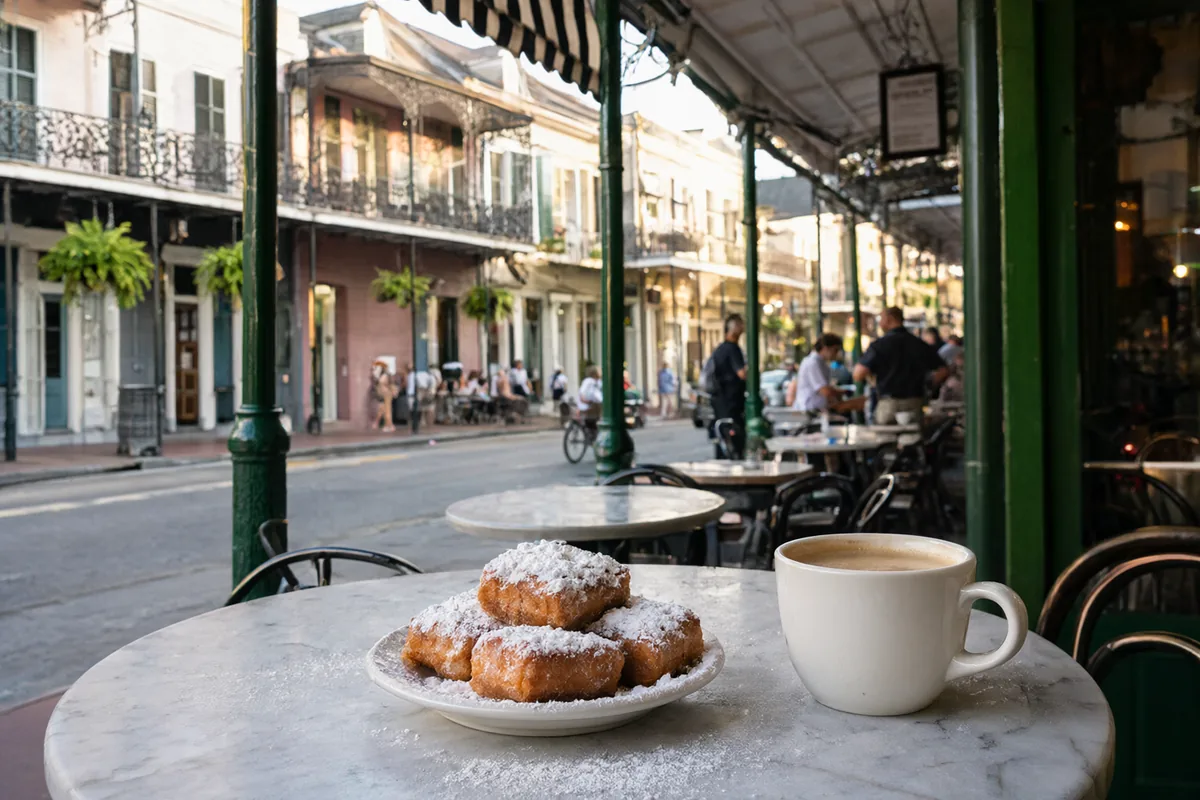
Breakfast in New Orleans is beignets, square fried doughnuts buried in powdered sugar, with café au lait made from chicory coffee. The French Quarter has the grand old Creole dining rooms and the French Market, Frenchmen Street in the Marigny is better for live music with dinner, and Magazine Street and the Bywater are where locals eat. In spring, roughly March to May, crawfish season brings boiled crawfish by the pound, eaten with corn and potatoes at long tables. You can walk the streets with a drink in a plastic "go cup", which surprises most visitors.
Where to eat in San Francisco
San Francisco cooks around California produce and the Pacific. The signature foods are sourdough bread, Dungeness crab (the season usually opens in winter), cioppino, a tomato seafood stew created by Italian fishermen, and oysters from the bays to the north. The Ferry Building Marketplace on the waterfront is the place to graze, especially on Saturday mornings when the farmers market fills the plaza outside.
The Mission District is home to the Mission burrito and dozens of taquerias along Mission and 24th Streets. Chinatown, the oldest in North America, is good for dim sum and bakeries, though many locals go to Clement Street in the Richmond District. North Beach is the old Italian neighbourhood, full of cafés and focaccia bakeries, and Japantown has ramen and sushi. San Francisco is one of the most expensive cities in the country to eat out, and some restaurants add a surcharge for staff healthcare that appears as a separate line on the check. It must be shown on the menu, so read the small print before ordering.
Where to eat in Austin
Austin is the capital of Central Texas barbecue. Brisket, pork ribs and sausage are ordered by weight at a counter, sliced in front of you and served on butcher paper with white bread, pickles and onions. The best places have long queues and close when they sell out, often by early afternoon, so go early on a weekday. The small town of Lockhart, about 50 kilometres south, is the state's official barbecue capital and is an easy half-day trip for its old smokehouses.
The other things to eat in Austin are breakfast tacos, flour tortillas filled with egg, potato, bacon or chorizo, and Tex-Mex: cheese enchiladas with chilli gravy, fajitas and bowls of queso, warm melted cheese dip. A lot of Austin food comes from food trucks parked in trailer lots, many with picnic tables and bars nearby. East Austin has the most interesting restaurants, South Congress is busy and walkable, and Rainey Street is for drinks in old bungalows. Summer in Austin is very hot, so eat barbecue in the morning and save the patio for after sunset.
Where to eat in Miami
Miami eats like a Caribbean and Latin American capital. Little Havana, around Calle Ocho (SW 8th Street), is the heart of Cuban Miami: order a Cuban sandwich of ham, roast pork, Swiss cheese, pickles and mustard pressed on Cuban bread, croquetas, guava pastries called pastelitos, and a tiny, sweet cafecito from a walk-up coffee window known as a ventanita. Peruvian ceviche, Venezuelan arepas, Colombian bakeries and Haitian food in Little Haiti are all part of everyday eating here.
From mid-October to mid-May it is stone crab season, when the chilled claws are served cracked with mustard sauce, and key lime pie is on almost every dessert menu. Wynwood and the Design District have newer restaurants, and Coral Gables is quieter and more local. On Miami Beach, read every bill carefully: many restaurants automatically add a service charge, often around 18 percent, and some diners tip twice without noticing. The charge should be printed on the menu and the check.
Where to eat in Nashville
Nashville's signature dish is hot chicken: fried chicken brushed with a fiery cayenne paste, served on a slice of white bread with pickles. Heat levels run from mild to dangerous, and "medium" in Nashville is hotter than most visitors expect. The other local institution is the meat-and-three, a cafeteria-style lunch where you pick one meat (fried chicken, meatloaf, country ham) and three sides (mac and cheese, collard greens, fried okra, mashed potatoes), usually with cornbread and sweet iced tea. Banana pudding is the classic dessert.
Lower Broadway is lined with honky-tonk bars with live country music from late morning onwards, but most of the good Nashville food is elsewhere. East Nashville has relaxed neighbourhood restaurants and coffee shops, Germantown and The Gulch have newer dining rooms, and 12 South is good for brunch. Head out along Nolensville Pike for Mexican, Kurdish, Somali and Vietnamese cooking from the city's immigrant communities. Biscuits for breakfast are a must in Nashville, and Southern barbecue and pulled pork are easy to find.
Vegetarian, vegan and allergy tips
Big American cities are some of the easiest places in the world to eat vegetarian, vegan or gluten-free. Menus commonly mark dishes with V (vegetarian), VG or VE (vegan) and GF (gluten-free), and "plant-based" options are everywhere. Outside the cities, and especially in the South, it gets harder: collard greens and green beans are often cooked with ham or bacon, baked beans can contain pork, rice and soups are often made with chicken stock, and refried beans and tortillas may use lard. Caesar salad dressing and Worcestershire sauce contain anchovy. Ask whether something is "made with meat stock" rather than just "is this vegetarian".
Food allergies are taken seriously in the United States. Most servers will ask about allergies or tell the kitchen if you mention one, and many menus carry an allergen warning. Peanut oil is used for frying at some fast-food and Southern restaurants, and nuts appear in pesto, many desserts and some barbecue rubs. Our guide to eating abroad with food allergies has practical advice on explaining an allergy clearly.
American ordering terms and food slang
You will hear these at counters, diners and restaurants across the United States. Knowing them makes ordering much faster.
For here or to go? Eating in or taking away. "To go" is the American word for takeaway
Can I get the dressing on the side? The normal way to ask for a change. Americans customise orders freely
How would you like that cooked? Asked for steaks and burgers. Answer "medium rare", "medium" and so on
Dressed In New Orleans, a po'boy with lettuce, tomato, pickles and mayonnaise
Sweet tea or unsweet? In the South, iced tea comes very sweet unless you ask for "unsweet"
We're out of that / it's 86'd Kitchen slang for sold out
Can we split the check? Asking to pay separately, which is normal in the United States
Can we get the check, please? "The bill, please". Servers often bring it without being asked
How swap.menu helps you eat in the United States
American menus are in English, but they are written for Americans. If you read the menu in another language first, swap.menu shows every dish in your own language, in 29 languages, with a short explanation, so a visitor from Japan, Brazil or Germany knows that biscuits and gravy is a savoury scone with sausage sauce, that grits is corn porridge and that burnt ends are barbecued brisket tips. English speakers get the same explanations for the regional terms that a phrasebook will not cover, from a "dressed" po'boy to a "meat-and-three".
Every price is converted from US dollars to your home currency, and we flag "market price" items, "plus tax" notes and automatic gratuities so the tax and tip do not catch you out. Menus you scan are saved, so you can compare places later or go back to the taqueria you liked. If you want to change an order, add a note such as "no peanuts" or "gluten-free, please", typed or spoken, and show the server your phone. Try it now on a sample menu with the free demo, or see travel pass prices.
Off to the United States? Your first 3 menu scans are free, and a travel pass starts from $4.99 with nothing that renews.
Start free with 3 scansUnited States food FAQ
How much should you tip in restaurants in the United States?
Tip 15 to 20 percent of the pre-tax bill at sit-down restaurants, and 20 percent is standard in big cities for good service. At bars, $1 to $2 per drink is normal. If the bill already includes a gratuity or service charge, you do not need to tip again.
Are menu prices in the US shown with tax included?
No. Menu prices in the United States are shown before sales tax, which is added when you pay. The rate depends on the state and city, and is about 8.875 percent in New York City. Tax and tip together usually add 25 to 30 percent to the menu price.
What food is the United States famous for?
Barbecue, hamburgers, New York pizza, Chicago deep-dish, fried chicken, New Orleans gumbo, New England lobster rolls and apple pie are the best known. American food is very regional, so the best dish depends on where you are.
Which US city is best for food?
New York City has the greatest range, New Orleans has the most distinctive local cooking, Los Angeles is best for Mexican and Asian food, and Austin is the place for Texas barbecue. Each city in this guide has its own section on where to eat.
What time do Americans eat dinner?
Most Americans eat dinner between 6pm and 8pm, earlier than in much of Europe. In big cities restaurants stay busy until 10pm or later, but in smaller towns many kitchens close by 9pm.
Can swap.menu help with American menus if English is not my first language?
Yes. swap.menu translates an American menu into 29 languages, explains regional dishes and terms such as grits or burnt ends, and converts US dollar prices into your home currency. It also flags notes about tax and automatic gratuities.
Travelling further in North America and the Caribbean? Read our food guides for nearby countries:
- Canada food guide
- Mexico food guide
- Puerto Rico food guide
- Bahamas food guide
- Cuba food guide
- Jamaica food guide
Or browse every travel food guide.