Canadian food is better and more varied than its reputation, shaped by French and British settlers, Indigenous traditions and one of the most diverse immigrant populations in the world. This Canada food guide covers the dishes to order, the French menu terms you need in Quebec, how tipping and the different provincial sales taxes work, then goes city by city through where to eat in Toronto, Montreal, Quebec City, Vancouver, Calgary, Ottawa and Halifax. Eat poutine and smoked meat in Quebec, seafood on both coasts and the food of the world in Toronto, and you will understand why Canadians are quietly proud of what they eat.
What to eat in Canada: 12 dishes to know
These are the dishes Canada is known for, with the province or city they come from. Several are seasonal, so it is worth knowing when to look for them.
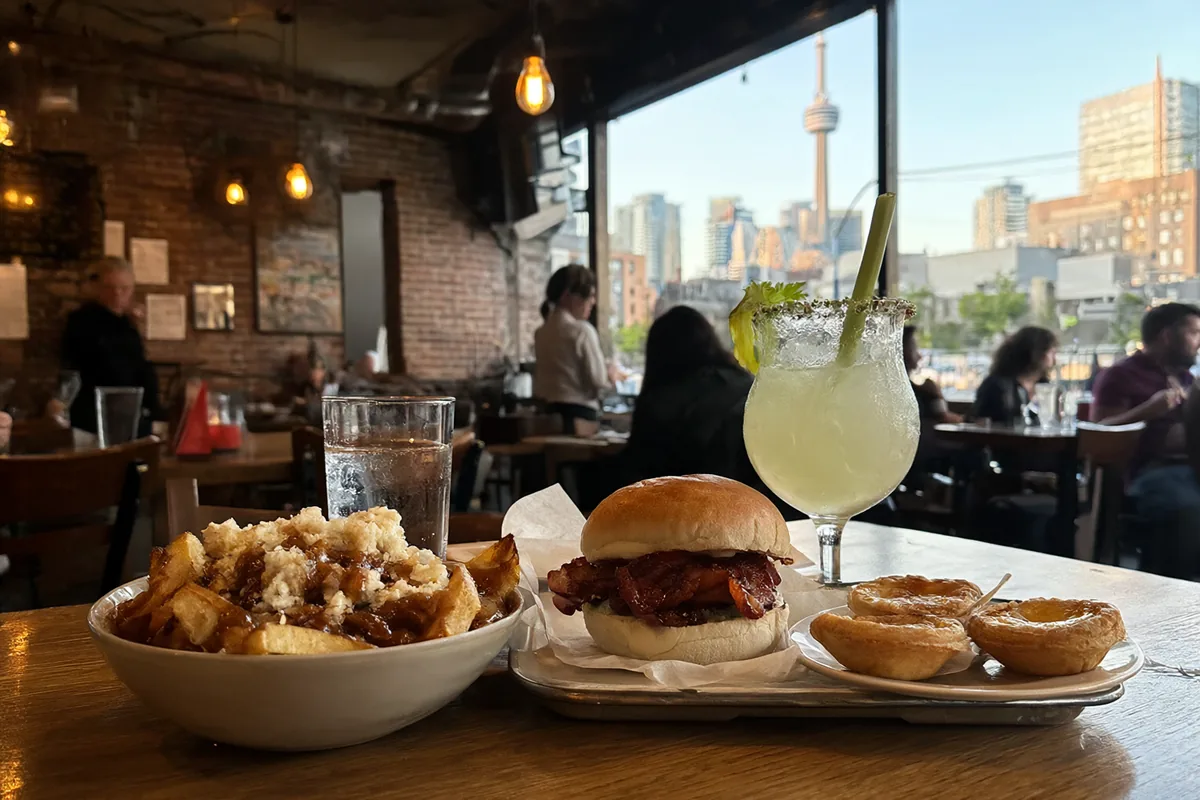
- Poutine (Quebec): hot chips topped with fresh cheese curds that squeak when you bite them, covered in hot gravy. It is sold everywhere from late-night counters to smart bistros.
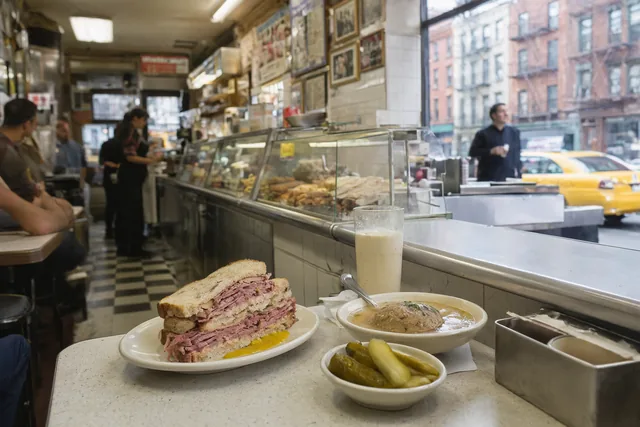
- Montreal smoked meat (Montreal): beef brisket cured with spices, smoked and steamed, then hand-sliced and piled onto rye bread with yellow mustard. Order it "medium" for a balance of lean and fat.
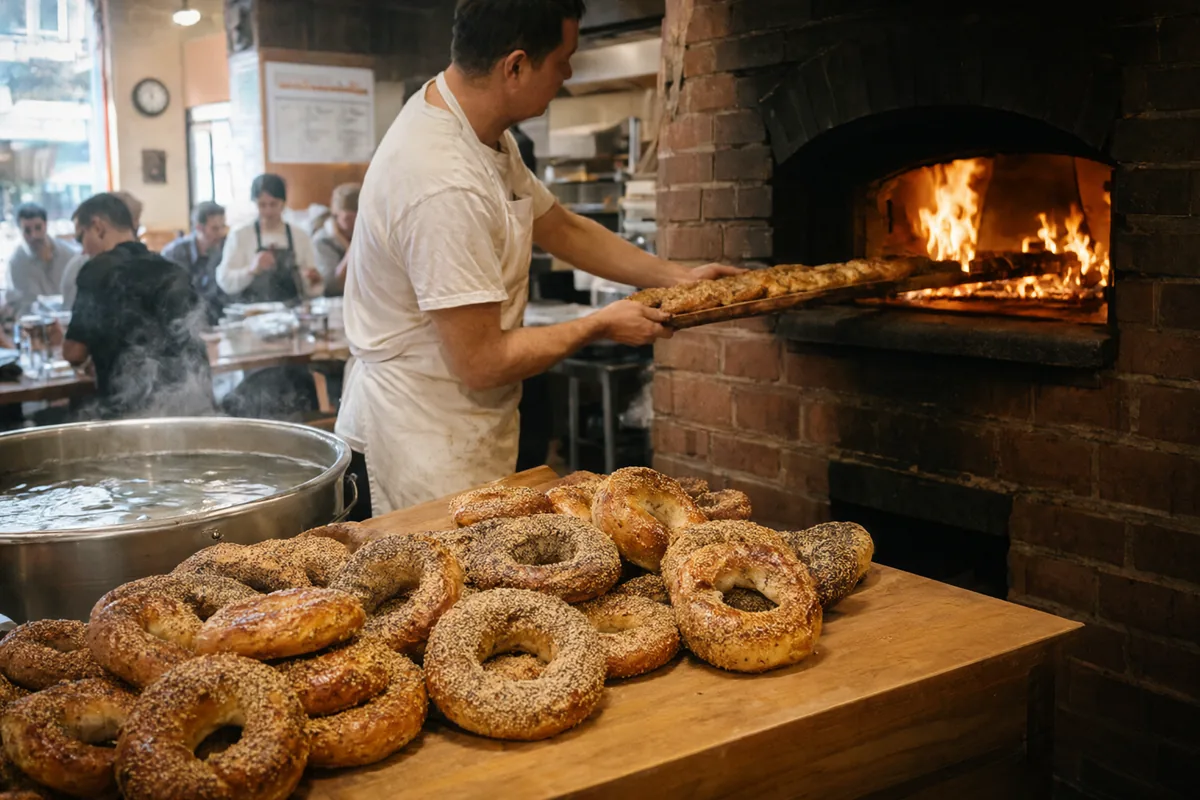
- Montreal bagels (Montreal): smaller, denser and sweeter than New York bagels, boiled in honey water and baked in a wood-fired oven. Sesame and poppy seed are the classics.
- Tourtière (Quebec): a spiced meat pie of pork, sometimes with beef or game, traditionally eaten at Christmas and New Year.
- Maple syrup and maple taffy (Quebec and Ontario): Canada produces most of the world's maple syrup. In spring, hot syrup is poured on snow and rolled onto a stick as tire d'érable.
- Butter tarts (Ontario): small pastry shells filled with a runny butter, sugar and egg filling, sometimes with raisins or pecans.
- Peameal bacon sandwich (Toronto): back bacon rolled in cornmeal, grilled and served in a soft bun, a Toronto breakfast classic.
- Nanaimo bars (British Columbia): a no-bake slice with a chocolate and coconut crumb base, custard butter icing and a chocolate top.
- Pacific salmon and spot prawns (British Columbia): wild sockeye and chinook salmon, often smoked or "candied", and sweet spot prawns in a short season in late spring.
- Atlantic lobster (the Maritimes): boiled whole, in lobster rolls or in seafood chowder, along with mussels from Prince Edward Island and scallops from Nova Scotia.
- Halifax donair (Halifax): spiced beef shaved from a spit into a pita with tomato and onion, topped with a sweet, garlicky condensed milk sauce.
- Bannock (across Canada): a simple Indigenous bread, baked or fried, served plain, with jam or as a base for savoury toppings at Indigenous restaurants and markets.
How to read a menu in Canada, and in Quebec French
Outside Quebec, Canadian menus are in English and close to American ones: an "entrée" is usually a main course, sides are ordered separately and prices are shown before tax. In Quebec, French is the official language and many menus are in French only, especially outside central Montreal. Quebec French also uses some words differently from France, which can confuse even French speakers. These are the terms worth knowing.
| Quebec French | Meaning |
|---|---|
| Entrées | Starters (unlike in English Canada, where it means mains) |
| Plats principaux | Main courses |
| Table d'hôte | A set meal, usually soup or starter, main, dessert and coffee, for one price |
| Déjeuner / dîner / souper | Breakfast / lunch / dinner in Quebec (in France, déjeuner is lunch) |
| Apportez votre vin (AVV) | Bring your own wine, common in Montreal |
| Fromage en grains | Fresh cheese curds, as used in poutine |
| Viande fumée | Smoked meat |
| Fèves au lard / cretons | Baked beans with pork / a spiced pork spread, both breakfast classics |
| Pouding chômeur | A cake baked in maple or brown sugar syrup |
| Bleuets / canneberges | Blueberries / cranberries |
| Breuvage | Drink (a Quebec word; "boisson" is also used) |
| Taxes en sus | Taxes extra, not included in the price |
| TPS / TVQ | GST and QST, the two sales taxes on a Quebec bill |
| Pourboire | Tip |
A Quebec bill shows the TPS and TVQ as separate lines, and the card machine then asks you for a pourboire. swap.menu reads French menus, explains dishes like pouding chômeur and cretons, and converts every Canadian dollar price to your home currency, so you know what you are ordering and roughly what it will cost before the bill arrives.
Tipping, provincial taxes and paying the bill
Tipping in Canada works much like in the United States. At sit-down restaurants the normal tip is 15 to 20 percent, with 18 percent a common middle figure, and servers depend on it. At bars, tip a dollar or two per drink or about 15 percent. At counter-service cafés the card machine often prompts for a tip too; that one is optional. Canadian card machines often work out their suggested percentages on the total including tax, so if you prefer to tip on the pre-tax amount, choose "custom" and enter your own figure. Groups of six or more may have a gratuity added automatically, so check the bill before tipping again.
Menu prices in Canada are shown before sales tax, and the tax depends on the province. The federal GST is 5 percent everywhere. Alberta adds nothing else, so Calgary and Edmonton have the lowest tax on a meal. Ontario combines federal and provincial tax into a single 13 percent HST, and the Atlantic provinces, including Nova Scotia, charge HST of 14 to 15 percent. Quebec adds its own QST of 9.975 percent to the GST, just under 15 percent in total. British Columbia adds a 7 percent PST on restaurant meals, and more on alcohol. Our guide to tax and service charges on menus explains how these lines appear on bills around the world.
Prices are in Canadian dollars ($, CAD, sometimes written C$). The one-dollar coin is the "loonie" and the two-dollar coin the "toonie". Canada has no one-cent coin, so cash totals are rounded to the nearest five cents. Cards and tap-to-pay are accepted almost everywhere, and the server brings a portable card machine to your table, so your card never leaves your sight. If the machine offers to charge you in your home currency, choose Canadian dollars instead: our guide to paying in local currency explains why. Canadians usually eat lunch from noon to 1:30pm and dinner from 6pm to 8pm. Montreal eats a little later.
Where to eat in Canada, city by city
Canada is a huge country, and each region has its own ingredients and traditions. Jump to a city:
Where to eat in Toronto
Toronto is one of the most multicultural cities on earth, and the best way to eat in Toronto is to pick a neighbourhood and eat what its community cooks. St Lawrence Market, one of the city's oldest institutions, is the place for a peameal bacon sandwich, along with cheesemongers, butchers and bakeries. Kensington Market next to Chinatown on Spadina Avenue is a maze of small food shops, empanada counters and cafés. Greektown on the Danforth, Little Italy on College Street, Little Portugal, Koreatown on Bloor Street and Little India on Gerrard Street East each have their own strip of restaurants.
Toronto's Caribbean community gives the city some of its most loved food: Jamaican beef patties, jerk chicken and Trinidadian roti wraps filled with curried goat or chicken. For dim sum and Hong Kong-style cafés, many locals head to the suburbs of Scarborough, Markham and Richmond Hill. Ontario's 13 percent HST is added to every bill in Toronto, and restaurants in the busy downtown areas fill up quickly, so book for dinner at the weekend.
Where to eat in Montreal
Montreal is Canada's great food city, French in spirit and North American in appetite. Start with the three local institutions: smoked meat on rye from a deli on Boulevard Saint-Laurent, known as "the Main", wood-fired bagels from the bakeries on and around Fairmount and St-Viateur streets in Mile End, open around the clock, and poutine after a night out. Montreal also has a thriving bistro culture, and many smaller restaurants are apportez votre vin, meaning you bring your own bottle from a wine shop or dépanneur (corner shop). The streets of the Plateau Mont-Royal are full of them.
Montreal's markets are among the best in North America. Jean-Talon Market in Little Italy is open all year and overflows with Quebec produce, cheese, maple products and ready-to-eat food, and Atwater Market by the Lachine Canal has excellent butchers and bakeries. In March and April, take a trip to a cabane à sucre (sugar shack) outside the city for a hearty maple-themed feast of pea soup, ham, beans, omelettes and maple taffy on snow. Most Montreal staff switch easily between French and English; start with "Bonjour" and they will follow your lead.
Where to eat in Quebec City
Quebec City is the most French city in North America, and its food leans on hearty Quebec traditions: tourtière, pea soup, meat pies, fèves au lard and pouding chômeur, eaten in stone-walled dining rooms inside the walls of Old Quebec (Vieux-Québec). The streets around Petit-Champlain and Place Royale below the old town are beautiful but busy with visitors; for better value, walk along Rue Saint-Jean outside the walls or down to the Saint-Roch neighbourhood, where younger chefs and microbreweries have set up.
The Grand Marché de Québec is the city's year-round market for local cheese, charcuterie, maple and ice cider (cidre de glace), a sweet cider made from frozen apples. Île d'Orléans, a short drive across the river, is covered in farms, orchards and vineyards, famous for strawberries in early summer and blackcurrant liqueurs. In winter, during the Quebec City Winter Carnival, look for caribou, a warming mix of red wine and spirits. Menus in Quebec City are more often in French only than in Montreal, so the Quebec French table above is handy here.
Where to eat in Vancouver
Vancouver sits between the Pacific and the mountains, and its food reflects both, along with strong Chinese, Japanese and Korean influences. Sushi is everyday food in Vancouver, often cheaper and better than in other Canadian cities, and wild salmon and Dungeness crab are on many menus. In May and June, look for local spot prawns, sold fresh off the boats at the docks by Granville Island and briefly on every seafood menu.
Granville Island Public Market is the city's best-known food hall, good for smoked salmon, fresh pasta, pastries and produce. Richmond, a short train ride south, has some of the best Chinese food outside Asia: dim sum, Cantonese seafood and noodle shops, plus a summer night market. Chinatown and Gastown mix old institutions with newer bars, Main Street and Commercial Drive are relaxed neighbourhood strips, and Kitsilano is the place for brunch near the beach. In British Columbia the 5 percent GST and 7 percent PST appear as two separate lines on a Vancouver bill.
Where to eat in Calgary
Calgary is cattle country, and Alberta beef is the pride of the city's restaurants, from steakhouses to burger counters. Calgary also has a claim to two Canadian classics: ginger beef, crispy strips of beef in a sweet, sticky ginger sauce created in a Calgary Chinese restaurant, and the Caesar, Canada's national cocktail of vodka, clam and tomato juice, Worcestershire sauce and spices in a celery-salt-rimmed glass, which was first mixed here in 1969.
The streets to eat on in Calgary are 17th Avenue SW, Inglewood, the city's oldest neighbourhood, and Kensington just across the Bow River. The Calgary Farmers' Market is good for local produce and bison. If you are in Calgary in July for the Calgary Stampede, free pancake breakfasts pop up all over the city. Alberta has no provincial sales tax, so only the 5 percent GST is added to a meal, making Calgary one of the cheaper Canadian cities to eat out in.
Where to eat in Ottawa
Ottawa, the national capital, sits on the border between Ontario and Quebec, and its food mixes English and French Canada. The ByWard Market, one of Canada's oldest public markets, is the centre of eating out in Ottawa, with produce stalls, cheese shops, pubs and restaurants packed into a few blocks. This is the place to try the city's famous fried dough pastries, stretched flat, fried and topped with cinnamon sugar or other toppings.
Ottawa has a large Lebanese community, and shawarma is the city's unofficial late-night food, with garlic sauce, pickled turnips and fries in the wrap. Little Italy along Preston Street, Chinatown on Somerset Street and the Wellington West and Glebe neighbourhoods are good for dinner. In winter, when the Rideau Canal freezes into a skating rink, stands sell hot chocolate and snacks along the ice. Cross the river to Gatineau and you are in Quebec, with French menus and Quebec taxes.
Where to eat in Halifax
Halifax is the seafood capital of Atlantic Canada. Order lobster boiled or in a lobster roll, Nova Scotia scallops, seafood chowder made with haddock, scallops and clams, and haddock fish and chips. Mussels from Prince Edward Island and oysters from across the Maritimes are on almost every menu. The local late-night food is the donair, so loved that Halifax made it the city's official food.
The Halifax Waterfront boardwalk has seafood shacks, ice cream and local breweries, and the Halifax Seaport Farmers' Market, part of a market tradition dating back to 1750, is busiest on Saturday mornings. Spring Garden Road and the streets of the North End, around Agricola and Gottingen Streets, are where locals eat in Halifax. Wild blueberries from Nova Scotia appear in pies, grunts (a stewed berry pudding with dumplings) and pancakes in late summer. The Nova Scotia HST is added to every bill.
Vegetarian, vegan and allergy tips
Canadian cities are easy places to eat vegetarian or vegan, and menus often mark dishes with V, VG and GF. In Quebec, the word to look for is végétarien or végétalien (vegan); végane is also used. Watch for hidden meat in traditional Quebec dishes: fèves au lard are baked with pork, pea soup is usually made with ham, and the gravy on poutine is typically made with meat stock, though vegetarian gravy is increasingly common. Ask for sauce végé. Many soups and chowders use chicken or fish stock.
Allergies are well understood, and Canadian food labelling is strict about common allergens. Nuts appear in butter tarts (with pecans), Nanaimo bars and many baked goods, and shellfish is everywhere on the coasts. In Quebec, "Je suis allergique à..." followed by the ingredient is clear. Our guide to eating abroad with food allergies explains how to communicate an allergy clearly.
Useful French phrases for ordering in Quebec
Outside Quebec you will order in English, and the one bit of Canadian slang worth knowing is a "double-double", a coffee with two creams and two sugars. In Quebec, a few French phrases go a long way.
Bonjour / Bonsoir "Hello / Good evening". In Montreal you will often hear "Bonjour-Hi", inviting you to choose French or English
Une table pour deux, s'il vous plaît "A table for two, please"
Qu'est-ce que vous me recommandez? "What do you recommend?"
Je vais prendre ça "I'll have this" (pointing)
Je suis allergique à... "I am allergic to..."
C'est végétarien? "Is it vegetarian?"
L'addition, s'il vous plaît "The bill, please". You will also hear "la facture" in Quebec
C'était délicieux, merci "It was delicious, thank you"
How swap.menu helps you eat in Canada
In Quebec, many of the best bistros, sugar shacks and market counters write their menus in French only, often on a chalkboard. Photograph the menu with swap.menu and every dish appears in your language with the French name beside it and a short explanation, so you know that cretons is a pork spread and that the table d'hôte includes soup, main, dessert and coffee. Outside Quebec, menus are in English, but visitors who read another language can see every dish in their own, in 29 languages, with Canadian terms like peameal bacon, butter tarts and donair explained.
Every price is converted from Canadian dollars to your home currency, and we flag "taxes en sus" or "plus tax" notes and any automatic gratuity, so the bill holds no surprises. Your scanned menus are saved for later. In Quebec, tap the dishes you want, add a note such as "no nuts" or "vegetarian gravy, please", typed or spoken, and swap.menu translates your order into French to show the server. Try it now on a sample menu with the free demo, or see travel pass prices.
Off to Canada? Your first 3 menu scans are free, and a travel pass starts from $4.99 with nothing that renews.
Start free with 3 scansCanada food FAQ
Do you tip in restaurants in Canada?
Yes. Tipping 15 to 20 percent is expected at sit-down restaurants in Canada, and 18 percent is a common middle figure. Card machines suggest percentages, often calculated on the total including tax, and you can enter a custom amount instead.
Is tax included in menu prices in Canada?
No. Canadian menu prices are shown before sales tax, which is added to the bill. The total tax ranges from 5 percent in Alberta to around 15 percent in Quebec and the Atlantic provinces, with 13 percent in Ontario.
What food is Canada famous for?
Poutine, maple syrup, Montreal smoked meat and bagels, butter tarts, Nanaimo bars, Pacific salmon and Atlantic lobster are the best known. Canada's big cities are also known for the food of their immigrant communities.
Which Canadian city is best for food?
Montreal is usually considered Canada's best food city for its bistros, bagels, smoked meat and markets. Toronto has the greatest range of international food, Vancouver is best for seafood and Asian food, and Halifax for lobster. Each city in this guide has its own section.
Is tap water safe to drink in Canada?
Yes. Tap water is safe to drink in Canadian cities and towns, and restaurants will bring a jug of tap water for free if you ask.
How can I read a French menu in Quebec if I do not speak French?
Learn a few key words such as entrée (starter), plat principal (main course) and table d'hôte (set meal), or photograph the menu with swap.menu. It translates every dish into your language, explains it, converts prices into your home currency and translates your order into French for the server.
Travelling further in North America? Read our food guides for nearby countries:
Or browse every travel food guide.