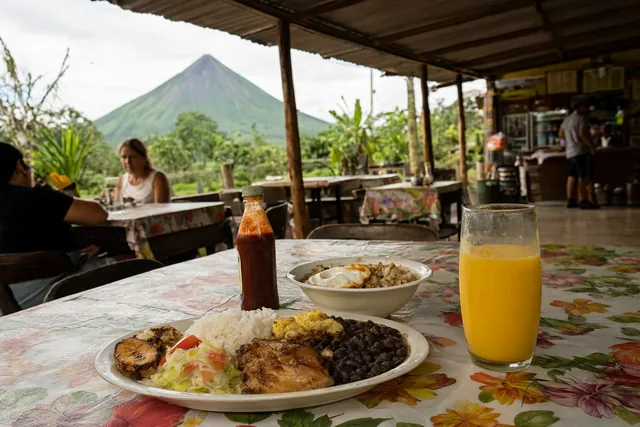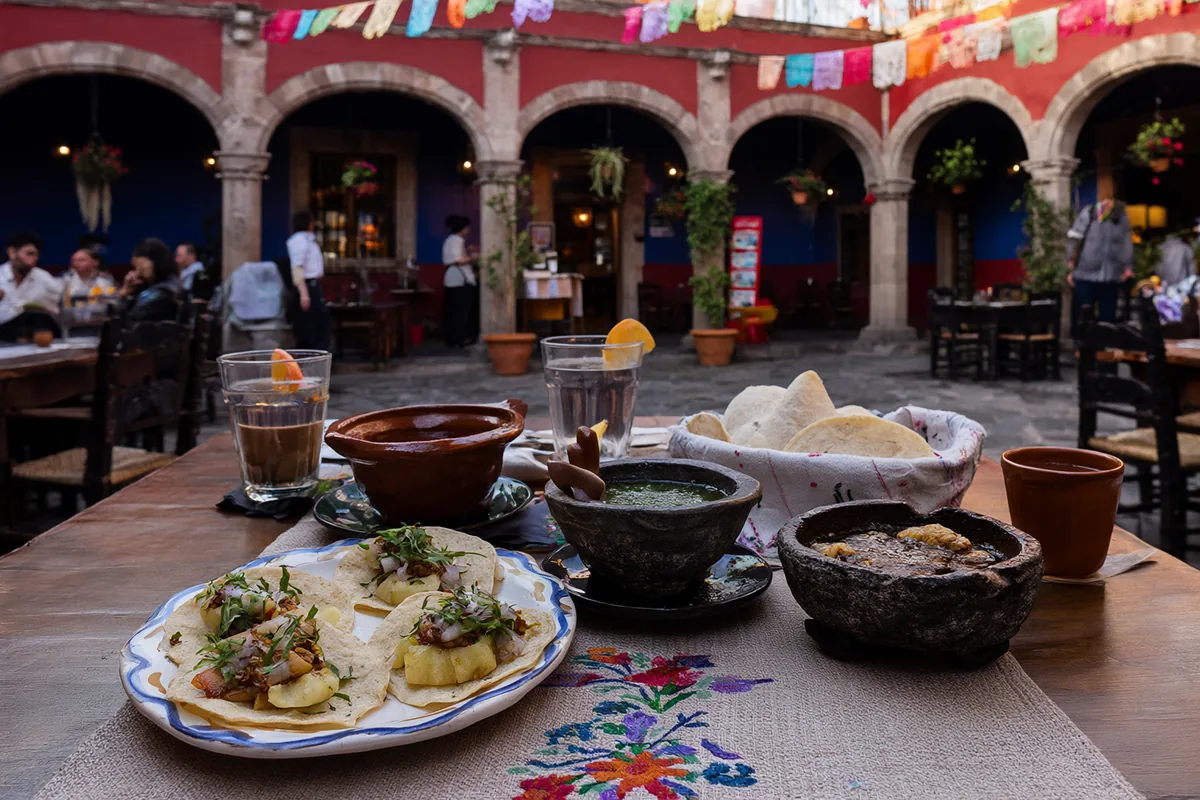
Mexican cooking is listed by UNESCO as part of the world's intangible cultural heritage, and once you have eaten a fresh corn tortilla off a street griddle in Mexico City you will understand why. This Mexico food guide covers what to eat, how a Mexican menu works and the Spanish words that matter, how tipping and paying work, then goes city by city through where to eat in Mexico City, Oaxaca, Puebla, Guadalajara, Mérida, Tijuana, Monterrey and Cancún. Mexican food is fiercely regional: mole belongs to Oaxaca and Puebla, birria to Jalisco, cochinita pibil to the Yucatán and cabrito to the north. Eat the local dish and you will eat very well, often for very little.
What to eat in Mexico: 12 dishes to know
These are the dishes worth seeking out, with the city or region they belong to. Many of the best are sold from street stands and markets rather than restaurants.
- Tacos al pastor (Mexico City): pork marinated in chilli and achiote, stacked on a vertical spit like shawarma, shaved onto small corn tortillas and topped with pineapple, onion and coriander.
- Mole (Oaxaca and Puebla): rich sauces built on dried chillies, spices, seeds and sometimes chocolate. Mole poblano from Puebla is dark and sweet; Oaxaca is known for its seven moles, from black mole negro to yellow amarillo.
- Chiles en nogada (Puebla): a poblano chilli stuffed with meat and fruit, covered in a creamy walnut sauce and pomegranate seeds. It is a seasonal dish of August and September.
- Cochinita pibil (Yucatán): pork marinated in sour orange and achiote, slow-cooked in banana leaves and served with pickled red onion.
- Birria (Jalisco): goat or beef stewed in a chilli broth, eaten as a stew or in tacos dipped in the broth.
- Torta ahogada (Guadalajara): a crusty pork sandwich "drowned" in tomato sauce and hot chilli sauce.
- Tlayuda (Oaxaca): a large, thin, crisp tortilla spread with pork lard and beans, topped with Oaxacan string cheese and grilled meat.
- Pozole (across Mexico): a hearty soup of hominy corn with pork or chicken, served red, green or white with radish, lettuce, oregano and lime.
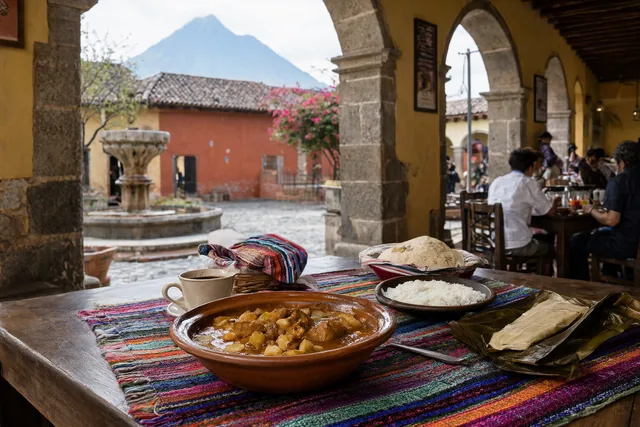
- Tamales (everywhere): corn dough steamed in a corn husk or banana leaf with a filling of meat, chilli or cheese, often eaten for breakfast with atole, a warm corn drink.
- Chilaquiles (everywhere): fried tortilla pieces simmered in red or green salsa, topped with cream, cheese and egg or chicken, the classic breakfast.
- Fish tacos (Baja California): battered fish in a corn tortilla with cabbage, cream and salsa, from the coast around Ensenada and Tijuana.
- Mezcal and tequila (Oaxaca and Jalisco): spirits distilled from agave. Mezcal, mostly from Oaxaca, is often smoky and sipped slowly with orange slices and chilli salt.
How to read a Mexican menu
Mexican menus are in Spanish, and outside tourist areas there is rarely an English version. At a street stand or fonda the "menu" may be a list painted on the wall. Here are the words you will see most often.
| Spanish | Meaning |
|---|---|
| Antojitos | "Little cravings": tacos, quesadillas, sopes, tostadas and other corn-based snacks |
| Platos fuertes | Main courses |
| Comida corrida / menú del día | The set lunch: soup, rice or pasta, a main, a drink and sometimes dessert, at a fixed price |
| Sopas / caldos | Soups / broths |
| Postres | Desserts |
| Bebidas / aguas frescas | Drinks / fresh fruit drinks such as horchata (rice), jamaica (hibiscus) and tamarindo |
| Res / cerdo / pollo / chivo | Beef / pork / chicken / goat |
| Carnitas / suadero / barbacoa | Slow-cooked pork / thin beef cut fried in its fat / slow-cooked lamb or beef |
| Gringa | A flour tortilla with al pastor pork and melted cheese |
| Quesadilla | Folded filled tortilla. In Mexico City it may not include cheese unless you ask "con queso" |
| Con todo | "With everything", usually onion and coriander |
| Picante / enchilado | Spicy / coated in chilli |
| A la plancha / frito / asado | Griddled / fried / grilled or roasted |
| Precio en M.N. | Price in moneda nacional, Mexican pesos, not US dollars |
The peso uses the same $ symbol as the US dollar, and in Cancún and other resort areas some menus quote prices in dollars. Look for "M.N." or "MXN" for pesos and "USD" for dollars. swap.menu shows you which currency a menu uses and converts every price to your home currency, so a $250 plate of tacos does not cause a moment of panic.
Tipping, tax and paying the bill
Mexico's sales tax, IVA, is included in menu prices, so the number on the menu is what the food costs. Tipping (propina) is customary at sit-down restaurants: 10 percent is normal and 15 percent is common in Mexico City and tourist areas for good service. By law the tip is voluntary, and a restaurant should not add it to your bill without your agreement. Some places in tourist areas print "propina incluida" or "servicio" on the bill, so check before tipping twice. Our guide to tax and service charges on menus explains how these lines work around the world.
At street stands and market stalls tipping is not expected, though leaving small coins is appreciated. When you pay by card at a restaurant, the waiter brings the card machine to the table and asks how much tip to add, or you can leave the tip in cash. Bars often expect a tip of 10 to 15 percent, and at a cantina you may be served free snacks (botanas) as long as you keep ordering drinks.
The currency is the Mexican peso ($, MXN). Cards are widely accepted in restaurants in cities, but street food, markets, small fondas and taxis need cash, and small notes and coins are always useful. Withdraw pesos from bank ATMs rather than standalone machines. If a card machine offers to charge you in your home currency, choose pesos: our guide to paying in local currency explains why. The bill will not arrive until you ask for it; say "la cuenta, por favor".
Mexican meal times surprise many visitors. Breakfast (desayuno) runs from 8am to 11am, the main meal of the day (la comida) is eaten from about 2pm to 5pm, and dinner (la cena) is lighter and later, from 8pm to 10pm. Many of the best taco stands open only in the evening, while some markets and breakfast spots close by mid-afternoon.
Where to eat in Mexico, city by city
Every region of Mexico has its own chillies, its own corn and its own signature dishes. Jump to a city:
Where to eat in Mexico City
Mexico City is one of the great food cities of the world, and much of its best food is sold on the street. Tacos are the backbone: al pastor from the spit at night, suadero and tripa from bubbling griddles, and tacos de canasta, steamed "basket tacos" sold from bicycles in the morning. Look for tlacoyos, oval blue corn cakes filled with beans and topped with cactus, and the torta de tamal, a tamale in a bread roll, Mexico City's breakfast on the run. In Mexico City a quesadilla does not automatically come with cheese, so say "con queso" if you want it.
The markets are essential. Mercado de Coyoacán is famous for its tostadas, Mercado de San Juan sells unusual ingredients from exotic meats to insects, Mercado de la Merced is one of the largest markets in Latin America, and Mercado de Medellín in Roma sells produce from across the region. Roma and Condesa are the leafy neighbourhoods for restaurants, cafés and mezcal bars, Polanco has the high-end dining rooms, and the Centro Histórico keeps old cantinas and pulquerías serving pulque, fermented agave sap. Mexico City sits at about 2,240 metres, so go easy on the mezcal on your first night.
Where to eat in Oaxaca
Oaxaca is the city many Mexicans name as the country's food capital. This is the home of the seven moles, of tlayudas, of quesillo (the stringy cheese the rest of the world calls Oaxaca cheese), of chocolate ground with cinnamon and drunk hot with sweet bread, and of most of the world's mezcal. Brave eaters try chapulines, toasted grasshoppers with chilli and lime, sold by the scoop in the markets.
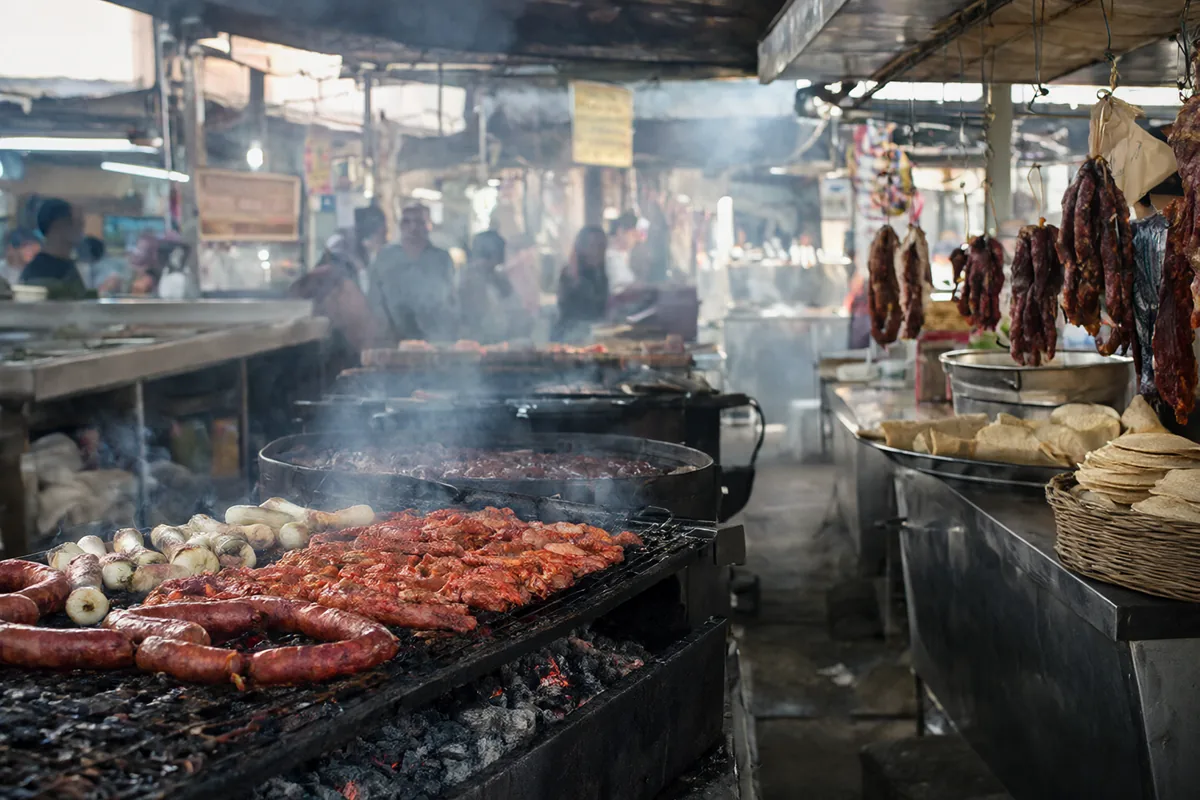
Mercado 20 de Noviembre is where to eat in Oaxaca at its most memorable: in its smoky grill aisle you choose thin strips of beef, chorizo and pork from the butchers, they are grilled over charcoal in front of you, and you eat them with tortillas, salsas and grilled spring onions. Next door, Mercado Benito Juárez sells chocolate, mole pastes and cheese. In the evening, tlayuda stands fire up their charcoal grills across the city. A day trip to the Tlacolula Sunday market or a mezcal distillery in the surrounding valleys is a good way to see where Oaxaca's ingredients come from.
Where to eat in Puebla
Puebla, two hours east of Mexico City, claims both mole poblano and chiles en nogada, and its colonial centre is one of the best places in Mexico to eat traditional food. Order mole poblano with turkey or chicken at a family restaurant, and in August and September look for chiles en nogada on every menu. The street classic in Puebla is the cemita, a sandwich on a sesame-seed bun filled with breaded meat, avocado, stringy cheese, chipotle and pápalo, a strong-tasting herb. Chalupas poblanas, small fried tortillas with red or green salsa and shredded meat, are sold in the evenings around the old town.
Puebla also has a long sweet-making tradition. Calle de los Dulces (Calle 6 Oriente) is lined with shops selling camotes (sweet potato candies), tortitas de Santa Clara and candied fruit, many of them recipes from the city's convents. The Barrio del Artista and the streets around the Zócalo are good for cafés, and the neighbouring town of Cholula, with its pyramid, has lively bars and street food.
Where to eat in Guadalajara
Guadalajara is the capital of Jalisco, the home of tequila and mariachi, and its food is just as distinctive. The dish to order in Guadalajara is the torta ahogada, best eaten in the morning from a street stand, with your choice of how much of the fiery chilli sauce goes on top. Birria is the other essential, served as a goat or beef stew with tortillas, onion and lime. Carne en su jugo, beef cooked in its own juices with beans and bacon, and pozole rojo are local favourites. To drink, try tejuino, a fermented corn drink served with lime and salt, and for dessert jericalla, a baked custard.
Mercado San Juan de Dios (also called Mercado Libertad) is one of the largest indoor markets in Mexico, with a whole floor of food stalls. Tlaquepaque and Tonalá are good for a leisurely lunch with mariachi music on weekends, and Avenida Chapultepec is lined with bars and restaurants at night. The town of Tequila, about an hour away, makes a classic day trip to the agave fields and distilleries.
Where to eat in Mérida
Mérida is the capital of the Yucatán, and Yucatecan food is unlike anything else in Mexico, shaped by Maya traditions and Caribbean trade. Cochinita pibil is the headline, eaten in tacos or tortas for breakfast until it sells out. Also order sopa de lima (chicken and lime soup with crisp tortilla strips), panuchos and salbutes (fried tortillas with turkey, avocado and pickled onion), poc chuc (grilled citrus-marinated pork), relleno negro (turkey in a black charred chilli sauce) and papadzules (tortillas rolled around egg in pumpkin seed sauce). Habanero chilli salsa is on every table: use it carefully.
The Mercado Lucas de Gálvez is the big central market in Mérida, best visited in the morning, and the smaller Santiago market is good for an early dinner. On Sunday the main square and surrounding streets close to traffic for Mérida en Domingo, with food stalls and music. In the evening, look for marquesitas, crisp rolled crêpes filled with Edam cheese and caramel or chocolate. Mérida is very hot, so eat the big meal at lunchtime as the locals do.
Where to eat in Tijuana
Tijuana has reinvented itself as one of Mexico's most exciting places to eat. It is the birthplace of the Caesar salad, created in a Tijuana restaurant in the 1920s, and of the cooking style known as Baja Med, which mixes Mexican ingredients with Mediterranean and Asian techniques. The street food is the main reason to come: tacos de adobada (the local name for spit-roasted pork), birria de res, and fish and shrimp tacos with cabbage and cream.
Avenida Revolución is the traditional tourist strip, but the better food in Tijuana is in neighbourhoods like Zona Río and around the Mercado Hidalgo, where locals buy chillies, spices and sweets. The wine valley of Valle de Guadalupe and the port of Ensenada, about 90 minutes south, are worth a trip for vineyard lunches, oysters, seafood tostadas and the original fish tacos. Prices in Tijuana are often shown in both pesos and dollars, so check which is which.
Where to eat in Monterrey
Monterrey, Mexico's industrial capital in the north, is a meat city. The famous dish is cabrito, young goat roasted slowly over charcoal, and the weekend ritual is the carne asada, a family barbecue of grilled beef with flour tortillas, grilled onions, guacamole and beer. Northern Mexico eats flour tortillas rather than corn, and Monterrey's are thin and soft. For breakfast, order machacado con huevo, dried shredded beef scrambled with egg, tomato and chilli.
The Barrio Antiguo, the old quarter in central Monterrey, has traditional restaurants and bars, while San Pedro Garza García is where you will find upmarket steakhouses and newer dining rooms. Look for glorias, soft goat's milk caramel sweets with pecans from the nearby town of Linares. Portions in Monterrey are generous, and prices are higher than in southern Mexico.
Where to eat in Cancún
Most visitors to Cancún eat in the Hotel Zone, where restaurants are international, priced for tourists and often quote in US dollars. To eat what the people of Cancún eat, take a bus or taxi downtown to El Centro. Parque de las Palapas fills with food stalls in the evening, selling marquesitas, esquites (corn in a cup with mayonnaise, cheese and chilli) and panuchos, and the local markets, Mercado 28 and Mercado 23, have simple places serving seafood and Yucatecan dishes.
Along the coast, order ceviche, aguachile (raw shrimp in lime and chilli), and tikin xic, a whole fish marinated in achiote and grilled in banana leaves, a speciality of the Yucatán Peninsula. In Playa del Carmen, walk a few streets back from Quinta Avenida for better value. Wherever you eat around Cancún, check whether prices are in pesos or dollars and whether a service charge has been added before you tip.
Vegetarian, vegan and allergy tips
Mexico is easier for vegetarians than its taco stands suggest: beans, cheese, mushrooms, squash blossoms (flor de calabaza), huitlacoche (corn fungus), cactus (nopales) and potato all appear in quesadillas, tamales and tlacoyos. Watch for hidden animal fat, though. Refried beans, tamales and tortillas are often made with pork lard (manteca), rice is commonly cooked in chicken stock, and many salsas and soups use stock as a base. The words to use are vegetariano and vegano, and it helps to ask "¿Tiene manteca o caldo de pollo?" (Does it have lard or chicken stock?).
Corn tortillas are naturally gluten-free, but flour tortillas, breaded meats and many sauces are not. Peanuts and sesame appear in moles, and nuts in chiles en nogada and many sweets. Our guide to eating abroad with food allergies explains how to describe an allergy clearly when you do not speak the language.
Useful Spanish phrases for ordering in Mexico
Buenos días / Buenas tardes "Good morning / Good afternoon", the polite greeting as you sit down
Una mesa para dos, por favor "A table for two, please"
¿Qué me recomienda? "What do you recommend?"
Me da dos de pastor, con todo "Give me two al pastor tacos, with everything", the way to order at a taco stand
Sin chile, por favor / ¿Pica mucho? "No chilli, please / Is it very spicy?"
Soy alérgico / alérgica a... "I am allergic to..." (alérgico for a man, alérgica for a woman)
La cuenta, por favor "The bill, please"
Muy rico, gracias "Very tasty, thank you"
How swap.menu helps you eat in Mexico
Outside the resorts, Mexican menus are in Spanish only, and many are handwritten or painted on a wall. Photograph the menu with swap.menu and every dish appears in your language with the Spanish name beside it and a short explanation, so you know that suadero is a thin cut of beef, that tripa is tripe, and that huitlacoche is a corn fungus prized as a delicacy. Every price is converted from pesos to your home currency, and we flag any service charge so you know whether to add a propina.
Tap the dishes you want, add a note such as "no chilli" or "no lard, I'm vegetarian", typed or spoken, and swap.menu translates your order into Spanish. Show the waiter your phone, or let them scan the QR code and read your order on their own screen. You can try it right now on a sample menu with the free demo, or see travel pass prices.
Off to Mexico? Your first 3 menu scans are free, and a travel pass starts from $4.99 with nothing that renews.
Start free with 3 scansMexico food FAQ
Do you tip in restaurants in Mexico?
Yes. A tip of 10 percent is normal at sit-down restaurants in Mexico, and 15 percent is common in Mexico City and tourist areas for good service. Tips are voluntary by law, so check whether a service charge has already been added. Street stands do not expect a tip.
Is tax included in menu prices in Mexico?
Yes. Mexico's sales tax, IVA, is included in menu prices, so the price you see is the price of the food. The tip is the only extra.
What food is Mexico most famous for?
Tacos, mole, tamales, pozole, chiles en nogada, cochinita pibil and birria are among the best known dishes, along with tequila and mezcal. Mexican food is very regional, so the best dish to order depends on where you are.
Is tap water safe to drink in Mexico?
No. Drink bottled or filtered water in Mexico. Restaurants and most street stands use purified water and ice (hielo purificado), and fresh fruit drinks from busy, popular stands are generally fine.
What time do people eat in Mexico?
The main meal, la comida, is eaten from about 2pm to 5pm. Dinner is lighter and later, around 8pm to 10pm, and breakfast is usually between 8am and 11am. Many taco stands open only in the evening.
How can I read a Mexican menu if I do not speak Spanish?
Learn a few key words such as antojitos (snacks), platos fuertes (mains) and the names of the main meats, or photograph the menu with swap.menu. It translates every dish into your language, explains it, converts prices from pesos to your currency and translates your order into Spanish for the waiter.
Travelling further in the Americas? Read our food guides for nearby countries:
- United States food guide
- Guatemala food guide
- Cuba food guide
- Costa Rica food guide
- Canada food guide
- Colombia food guide
Or browse every travel food guide.