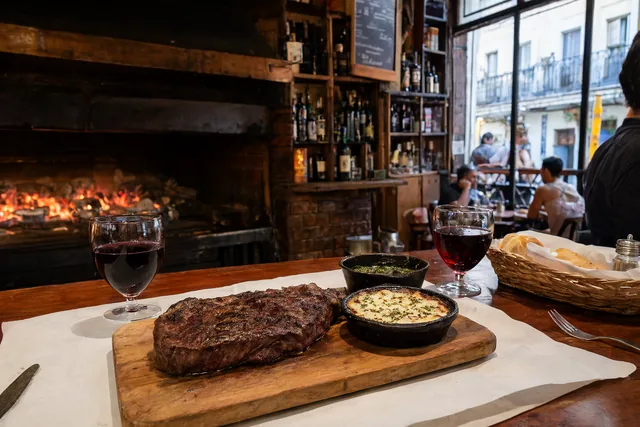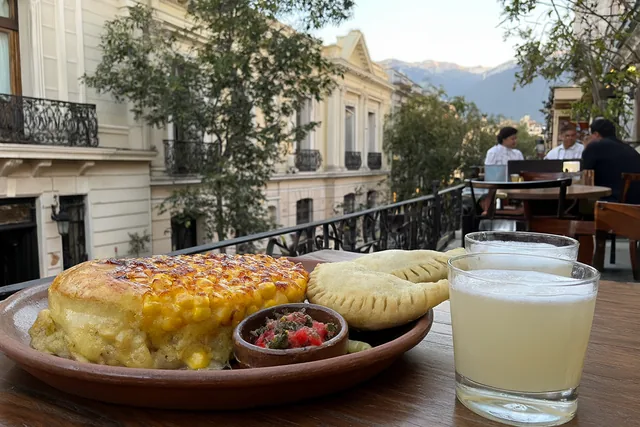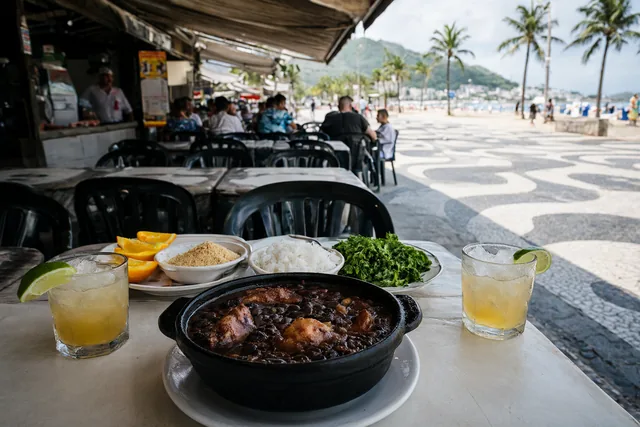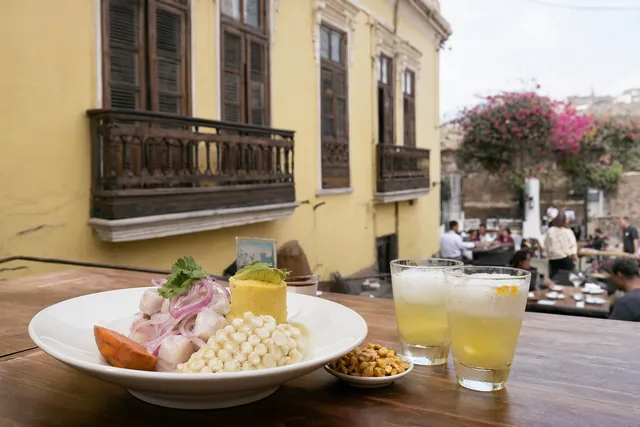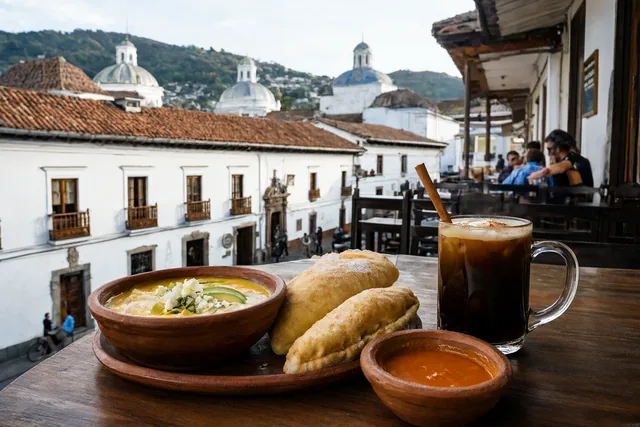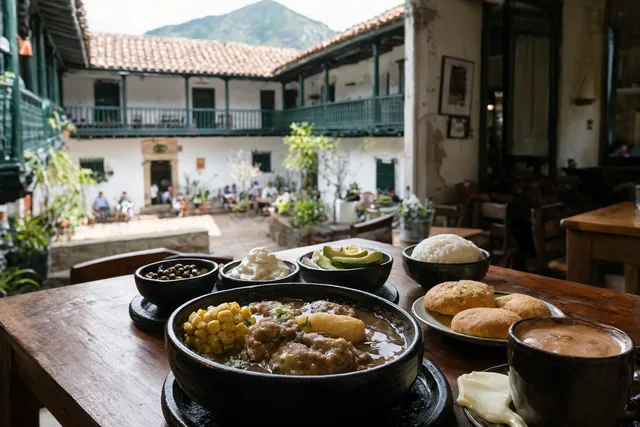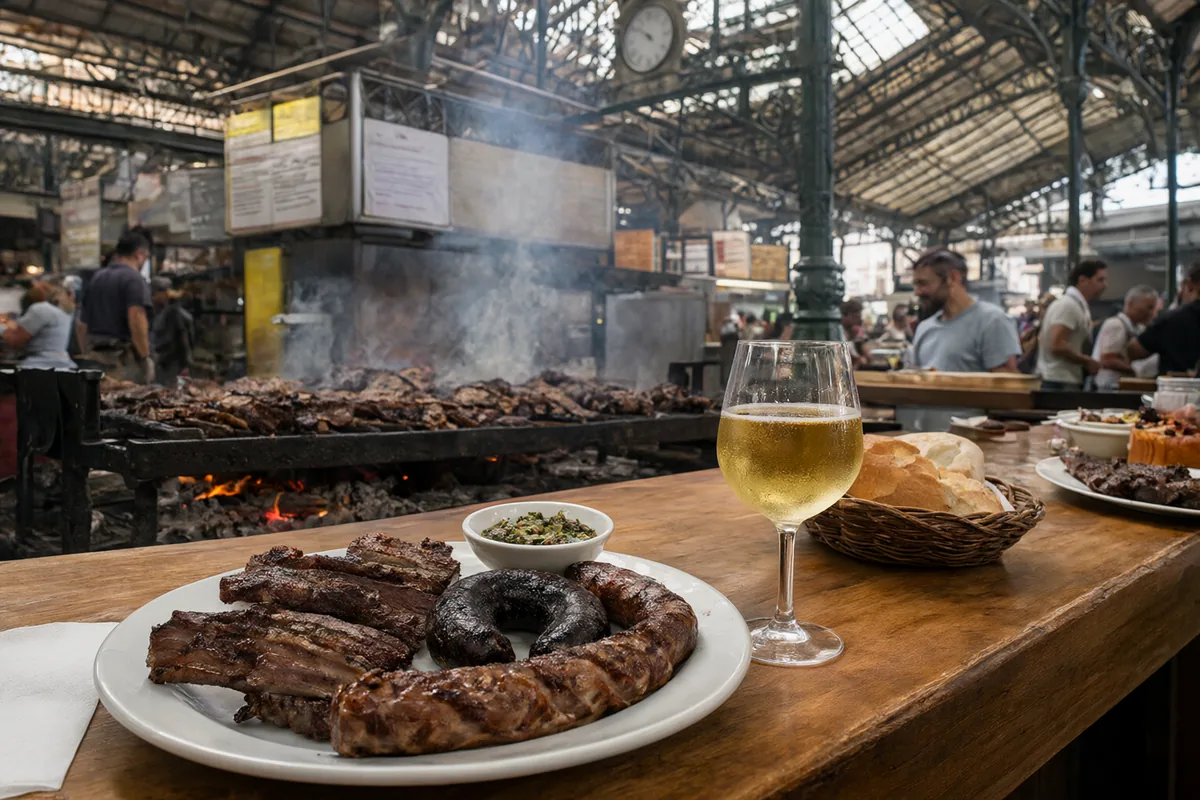
Uruguay is a small country with very big appetites: it has more cattle than people, and the Sunday asado is close to a national religion. This Uruguay food guide covers the dishes to know, from the chivito steak sandwich to sweet blood sausage, how to read a Uruguayan menu, what the "cubierto" and the tip should be, and then where to eat in Montevideo, Colonia del Sacramento, Punta del Este, José Ignacio, the Rocha coast and the wine country of Canelones. Uruguayan food shares a lot with Argentina, but locals will tell you, firmly, that their beef, their wood-fired grills and their mate are better.
What to eat in Uruguay: 12 dishes to know
These are the dishes you will see on almost every Uruguayan menu, plus a few regional specialities worth seeking out.
- Asado (everywhere): beef and sausages cooked slowly over wood embers rather than charcoal. The classic cut is asado de tira, short ribs cut across the bone, with vacío (flank) and entraña (skirt).
- Chivito (everywhere, said to come from Punta del Este): the national sandwich. A thin beef steak in a soft bun with ham, mozzarella, bacon, a fried egg, lettuce, tomato and mayonnaise, served with chips. A chivito al plato comes without the bread and with even more on the side.
- Morcilla dulce (everywhere): sweet blood sausage flavoured with orange peel and nuts or raisins, grilled on the asado. Much better than it sounds.
- Choripán (everywhere): grilled chorizo in bread, often with chimichurri, sold at markets, football grounds and roadside grills.
- Pamplona (everywhere): chicken or pork rolled around ham, cheese and peppers, then grilled. A good choice if you want a break from red meat.
- Milanesa (everywhere): a breaded beef or chicken cutlet, served plain, "napolitana" with ham, cheese and tomato, or in a sandwich.
- Pizza and fainá (Montevideo): Uruguayan pizza is thick and often sold by the slice. Put a slice of fainá, a thin chickpea flatbread, on top and it becomes pizza a caballo.
- Torta frita (everywhere): a simple disc of fried dough, traditionally eaten on rainy days with mate.
- Pascualina (everywhere): a savoury pie of chard or spinach with whole eggs baked inside, sold by the slice in bakeries.
- Buñuelos de algas (Rocha): crisp fritters made with seaweed, the snack of the eastern beach towns.
- Chajá (from Paysandú): a dessert of sponge cake, meringue, cream and peaches. Uruguay also eats dulce de leche on almost everything, and alfajores in every shop.
- Tannat, medio y medio and mate (everywhere): Tannat is Uruguay's signature red grape, medio y medio is half sparkling and half white wine, and mate is the bitter herbal tea that Uruguayans carry everywhere in a gourd with a thermos under the arm.
How to read a Spanish menu in Uruguay
Uruguayan menus are in Spanish, and parrillas list cuts and grilled offal that do not translate neatly. Side dishes are usually ordered separately, so a steak arrives on its own. Here are the words you will see most often.
| Spanish | Meaning |
|---|---|
| Parrilla / parrillada | The grill, a steakhouse / a mixed grill for sharing |
| Asado de tira / vacío / entraña | Short ribs / flank / skirt steak |
| Lomo / colita de cuadril / pulpón | Tenderloin / rump tail / lean boneless cut |
| Achuras | Grilled offal: mollejas (sweetbreads), chinchulines (intestines), riñones (kidneys) |
| Jugoso / a punto / bien cocido | Rare to medium-rare / medium / well done |
| Guarnición | Side dish, ordered separately |
| Chivito al pan / al plato | Steak sandwich / the same, served on a plate without the bun |
| Minutas | Quick dishes: milanesas, omelettes, chips |
| Menú del día / menú ejecutivo | Set lunch |
| Pescado del día / mariscos | Fish of the day / seafood |
| A la plancha / a la parrilla / frito | Griddled / grilled / fried |
| Para compartir | For sharing |
| Cubierto | Per-person cover charge for bread and the table setting |
| Postre | Dessert |
A parrillada "para dos" in Uruguay is usually generous enough for three, and a chivito al plato is a full meal on its own. swap.menu explains each cut and side when it reads the menu, and points out the cubierto, so you can order the right amount and know what the bill will look like.
Cubierto, tipping and paying the bill
Many Uruguayan restaurants add a cubierto, a per-person cover charge for bread, butter or a small dip and the table setting. It should be shown on the menu, and it is not a tip. Service is not usually included, and a tip of about 10 percent is customary in sit-down restaurants. At cafés and counters, rounding up is fine. Our guide to tax and service charges on menus explains how these lines work around the world.
Prices are in Uruguayan pesos, written with a $ sign, and menu prices include IVA, the value added tax. In recent years Uruguay has run schemes that refund some or all of the IVA on restaurant bills paid with a foreign card, sometimes only during the summer season. When a scheme is running it appears as a discount on the receipt, so it is worth paying by card and asking. Some places in Punta del Este and José Ignacio quote prices in US dollars as well. Cards are accepted almost everywhere, and if a machine offers to charge you in your home currency, choose pesos: our guide to paying in local currency explains why.
Uruguay is one of the more expensive countries in South America to eat out in, and the beach resorts are pricier still in January. Meal times are late: lunch is from about 1 to 3pm, and dinner starts around 9pm, later in summer and on weekends.
Where to eat in Uruguay, place by place
Most visitors split their time between Montevideo, a day or two in Colonia and the Atlantic coast. Jump to a place:
Where to eat in Montevideo
The first stop in Montevideo is the Mercado del Puerto in the Ciudad Vieja, a 19th-century iron market hall near the port that is now packed with parrillas. You sit at a counter facing a huge wood-fired grill and point at what you want: asado de tira, morcilla dulce, chorizo, provolone and peppers. Order a glass of medio y medio, which is associated with the market. Lunch is the time to go, especially at weekends, as the market is quieter in the evening.
Beyond the market, Montevideo's neighbourhoods along the Rambla, the long seafront promenade, are where locals eat. Pocitos and Punta Carretas have parrillas, pizzerias and cafés, Cordón and Parque Rodó are younger and cheaper, and the Ciudad Vieja has old bars and lunch spots for office workers. On Sunday mornings the Feria de Tristán Narvaja in Cordón is a huge street market of produce, antiques and food stalls. Montevideo's bakeries are excellent for a cheap breakfast of medialunas, slices of pascualina and bizcochos, small sweet and savoury pastries.
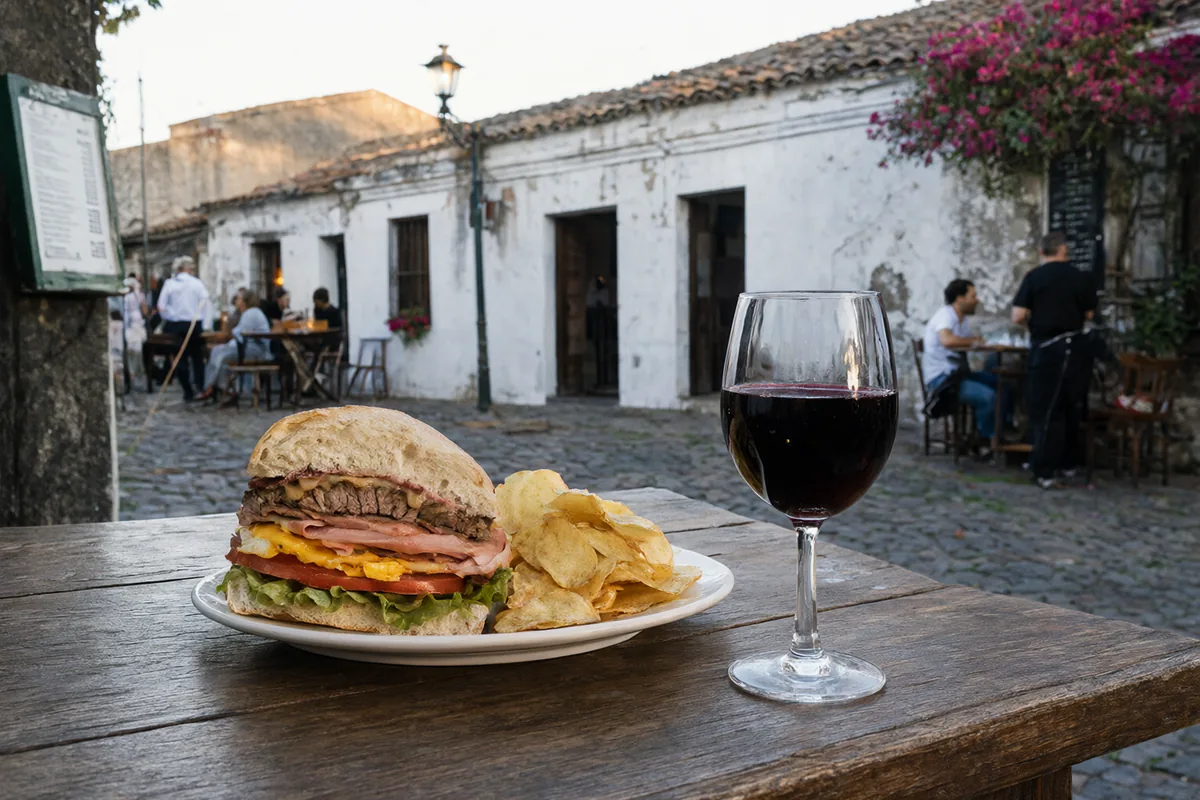
Where to eat in Colonia del Sacramento
Colonia del Sacramento, founded by the Portuguese in the 17th century, is a small town of cobbled lanes and stone houses on the Río de la Plata, an hour by ferry from Buenos Aires. Most of its restaurants are in the Barrio Histórico, the UNESCO-listed old quarter, with tables on the street, in walled gardens or facing the river. The menus lean on the classics: parrilla, chivitos, homemade pasta and river fish, plus cheese and charcuterie boards.
The essential Colonia experience is dinner or a drink at sunset, when the sun drops into the river to the west. Prices in the old town are aimed at day-trippers, so walk a few blocks into the newer part of town for cheaper parrillas and pizza. Colonia del Sacramento is also a good base for the wineries around Carmelo, further along the river, where many vineyards serve lunch.
Where to eat in Punta del Este
Punta del Este is South America's best-known summer resort, packed in January and early February and very quiet in winter, when many restaurants close. The peninsula has seafood restaurants, parrillas and pizzerias along the streets off Avenida Gorlero, and the fishing port has stalls selling the morning catch, where sea lions wait for scraps. Look for grilled corvina and brótola, mussels and fried calamari.
Punta del Este is said to be the birthplace of the chivito, and it is still the place to eat one, but in high season you will also find expensive beach clubs and international restaurants. La Barra, across the bridge to the east, is livelier and younger, with bars and restaurants that stay open late. For a sunset, locals head to Punta Ballena to the west. Book dinner ahead in January, and expect resort prices in Punta del Este.
Where to eat in José Ignacio
José Ignacio was a small fishing village with a lighthouse and has become one of the most fashionable summer spots on the coast. It is known for wood-fired cooking: whole fish, vegetables and meat cooked slowly over open fires and embers, often served at long tables on the sand or in gardens behind the dunes. Fresh fish from the local boats is the thing to order.
The season in José Ignacio is short, roughly late December to February, and restaurants are expensive and book out early in January. Outside the season many places close, but the village is calm and beautiful. Inland, the hills around Pueblo Garzón produce olive oil and wine, and wine tastings there make a good afternoon trip from José Ignacio.
Where to eat on the Rocha coast
The Rocha coast, east of José Ignacio towards the Brazilian border, is Uruguay's wilder shoreline of fishing villages, dunes and surf beaches. Food is simple and seafood-based: fried fish, fish empanadas, grilled corvina, fish stews and the local buñuelos de algas, seaweed fritters sold at beach stalls and in village restaurants. La Paloma is the main town, with the most choice.
Cabo Polonio is a village with no road access, reached by four-wheel-drive truck across the dunes, and its few restaurants serve fish and buñuelos by candlelight in the off-season. Punta del Diablo, near the Santa Teresa national park, has a row of fish shacks and empanada stands by the fishing beach. Many places along the Rocha coast only open in summer, and some only take cash, so carry some pesos.
Where to eat in Canelones
Canelones, the department that wraps around Montevideo, is where most of Uruguay's wine is made. Many of its wineries were founded by Italian, Basque and Swiss immigrant families and are still run by their descendants, and they are less than an hour's drive from the capital. The grape is Tannat, a deep, tannic red that suits the local beef, along with Albariño, Sauvignon Blanc and sparkling wines.
A typical winery visit in Canelones includes a tasting and a long lunch, often an asado cooked by the family, or a picada of cheese and cold meats. Book ahead, as many are small and open by appointment. The towns of Canelones also have roadside stalls selling fruit, honey and homemade jams, and its farms supply many of Montevideo's markets.
Vegetarian, vegan and allergy tips
Uruguay is meat-heavy, but vegetarians can eat well. Pizza and fainá, pasta, pascualina, tartas, empanadas of cheese, corn or spinach, provoleta and grilled vegetables from the parrilla are widely available, and Montevideo has a growing number of vegetarian and vegan cafés. Watch for hidden animal products: many pastries and tortas fritas are made with beef fat or lard, and grilled vegetables may share the grill with the meat. The word for vegetarian is vegetariano (or vegetariana), and vegan is vegano.
Gluten-free food is often labelled "sin TACC", the same system as in Argentina, and coeliac disease is reasonably well understood. Nuts appear in morcilla dulce and some desserts, and eggs are everywhere, from pascualina to mayonnaise on the chivito. Our guide to eating abroad with food allergies explains how to explain an allergy clearly when you do not speak the language.
Useful Spanish phrases for ordering
Buenas noches "Good evening", the polite way to greet staff
Una mesa para dos, por favor "A table for two, please"
¿Qué me recomienda? "What do you recommend?"
Quisiera un chivito al plato "I would like a chivito on a plate"
La carne jugosa, por favor "The meat rare to medium-rare, please"
Soy alérgico / alérgica a... "I am allergic to..." (alérgico for a man, alérgica for a woman)
La cuenta, por favor "The bill, please"
Estaba buenísimo, gracias "It was delicious, thank you"
How swap.menu helps you eat in Uruguay
Outside the beach resorts, few menus in Uruguay have an English version, and a parrilla menu can be a long list of cuts and offal. Photograph it with swap.menu and every dish appears in your language with the Spanish name beside it and a short explanation, so you know that morcilla dulce is a sweet blood sausage, that mollejas are sweetbreads and that chinchulines are grilled intestines. Every price is converted from Uruguayan pesos to your home currency, and we point out the cubierto and the sides you have to order separately.
Tap the dishes you want, add a note such as "rare, please" or "no ham", typed or spoken, and swap.menu translates your order into Spanish. Show the waiter your phone, or let them scan the QR code and read your order on their own screen. You can try it right now on a sample menu with the free demo, or see travel pass prices.
Off to Uruguay? Your first 3 menu scans are free, and a travel pass starts from $4.99 with nothing that renews.
Start free with 3 scansUruguay food FAQ
Do you tip in restaurants in Uruguay?
Yes. Service is not usually included, and about 10 percent is customary in sit-down restaurants. The cubierto on the bill is a cover charge for bread and the table setting, not a tip.
What food is Uruguay famous for?
Uruguay is famous for its wood-fired asado and grass-fed beef, the chivito steak sandwich, morcilla dulce, pizza with fainá and dulce de leche. Tannat red wine and mate tea are the national drinks.
Is Uruguay expensive to eat out?
Uruguay is one of the more expensive countries in South America, and Punta del Este and José Ignacio are especially pricey in January. Set lunches, chivitos, pizza and bakery food are the best value, and in some seasons tax is refunded on restaurant bills paid with a foreign card.
Is tap water safe to drink in Uruguay?
Tap water in Montevideo and the main towns is treated and generally considered safe to drink. Bottled water is widely available if you prefer it, and it is the easier choice in remote beach villages.
What time do Uruguayans eat dinner?
Dinner usually starts around 9pm and often later, especially in summer and at weekends. Lunch is typically between 1 and 3pm, and Sunday lunch is the traditional time for a family asado.
How can I read a Uruguayan menu if I do not speak Spanish?
Learn the main beef cuts, the cooking words jugoso, a punto and bien cocido, and the word guarnición for sides, or photograph the menu with swap.menu. It translates every dish into your language, explains what it is, converts prices from pesos to your currency and translates your order back into Spanish for the waiter.
Travelling further in South America? Read our food guides for neighbouring countries:
Or browse every travel food guide.