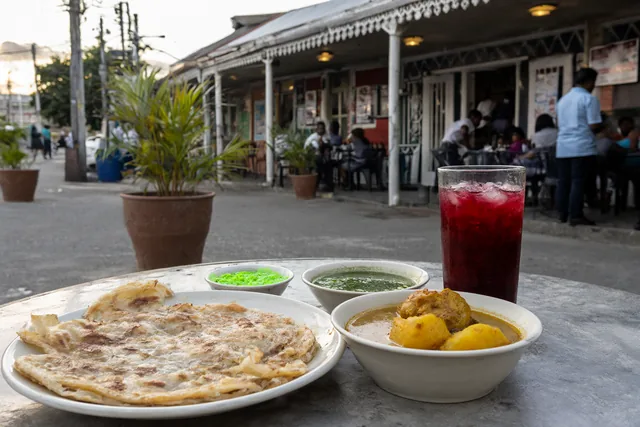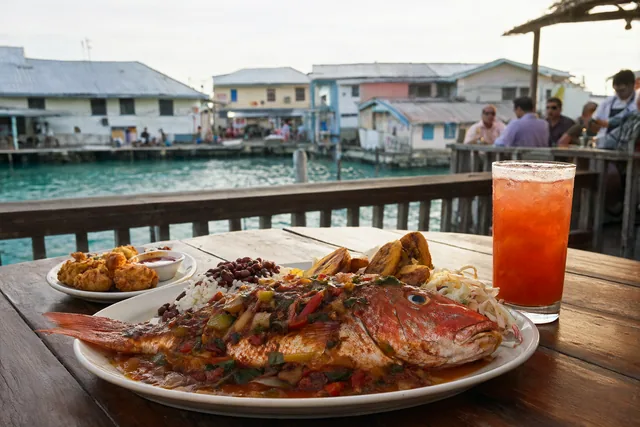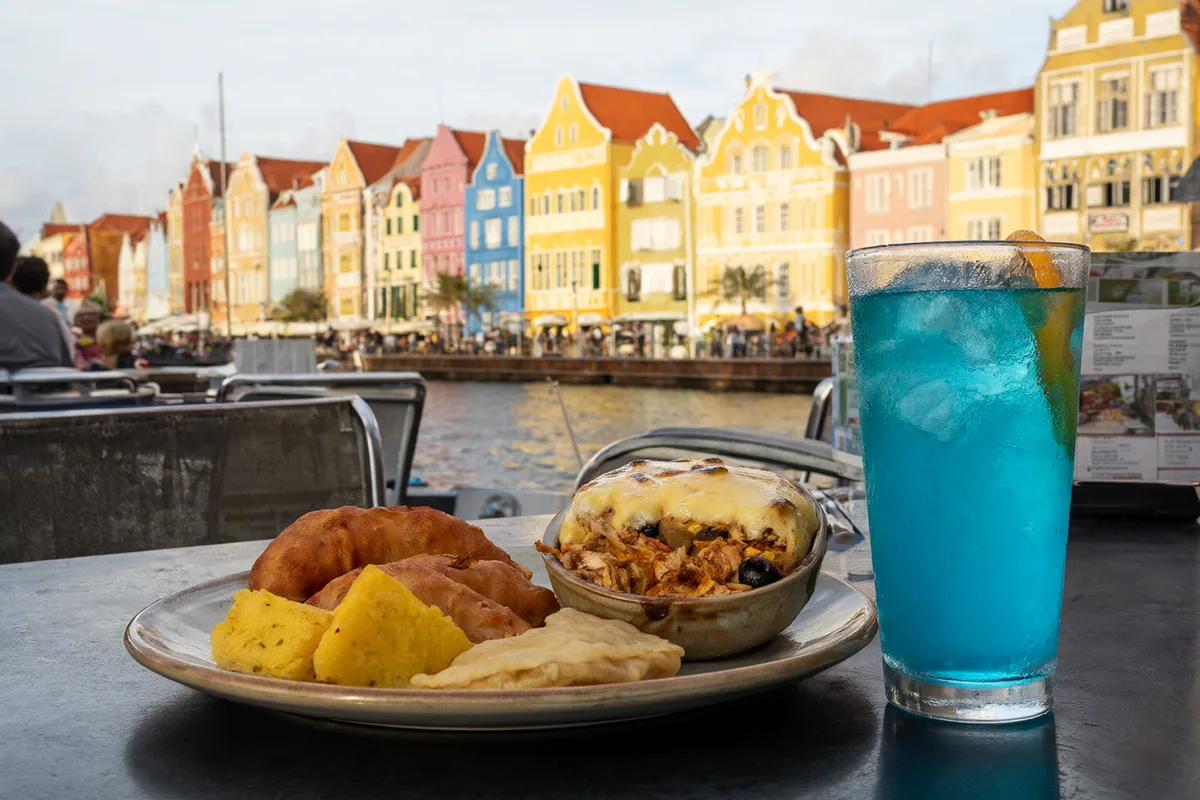
Curaçao's food is the most varied of the ABC islands: Creole cooking called kuminda krioyo, shaped by African, Dutch, Sephardic Jewish, Spanish, Venezuelan and Indonesian influences, served from market counters, snack bars and late-night food trucks as well as restaurants. This Curaçao food guide covers the dishes to order, how to read a menu in Papiamentu or Dutch, service charges and the new Caribbean guilder, then goes area by area through where to eat in Willemstad's Punda, Otrobanda, Pietermaai and Scharloo, the beach clubs of Jan Thiel and Mambo Beach, and Westpunt and the Banda Abou countryside. Try the local dishes that scare visitors off, such as giambo or sòpi di yuana: they are what Curaçaoans grew up on.
What to eat in Curaçao: 12 dishes to know
Curaçaoan home cooking is slow and hearty, built on stews, soups and cornmeal, with fried snacks and sweets for every occasion. These are the dishes worth seeking out.
- Keshi yená: "stuffed cheese". A hollowed Edam or Gouda, or slices of it lining a dish, filled with spiced chicken, olives, capers, raisins and tomato, then baked until the cheese melts. It began as a way to use cheese rinds left over by Dutch colonists.
- Stobá: slow-cooked stews, the backbone of local lunches. Kabritu stobá (goat stew) is the classic, with karni stobá (beef), galiña stobá (chicken) and stobá di papaya (green papaya stew with meat) also common.
- Funchi: cornmeal cooked into a firm polenta, served in slices or fried, beside stews and fish. Tutu is a richer version mashed with black-eyed peas, butter and sugar.
- Giambo: a thick okra soup with fish, salted meat, shrimp and herbs. It has a slippery texture that locals love and visitors either love or do not.
- Sòpi di yuana: iguana soup, a traditional dish still found in local restaurants, especially in the countryside. The meat is mild, like chicken.
- Sòpi di kadushi: soup made from the kadushi cactus, green and silky, with salted meat or fish.
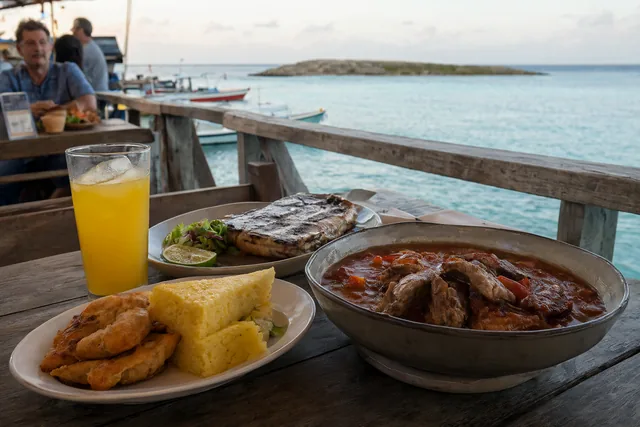
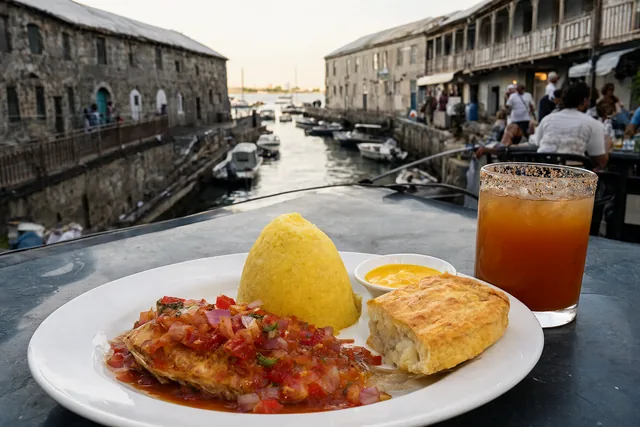
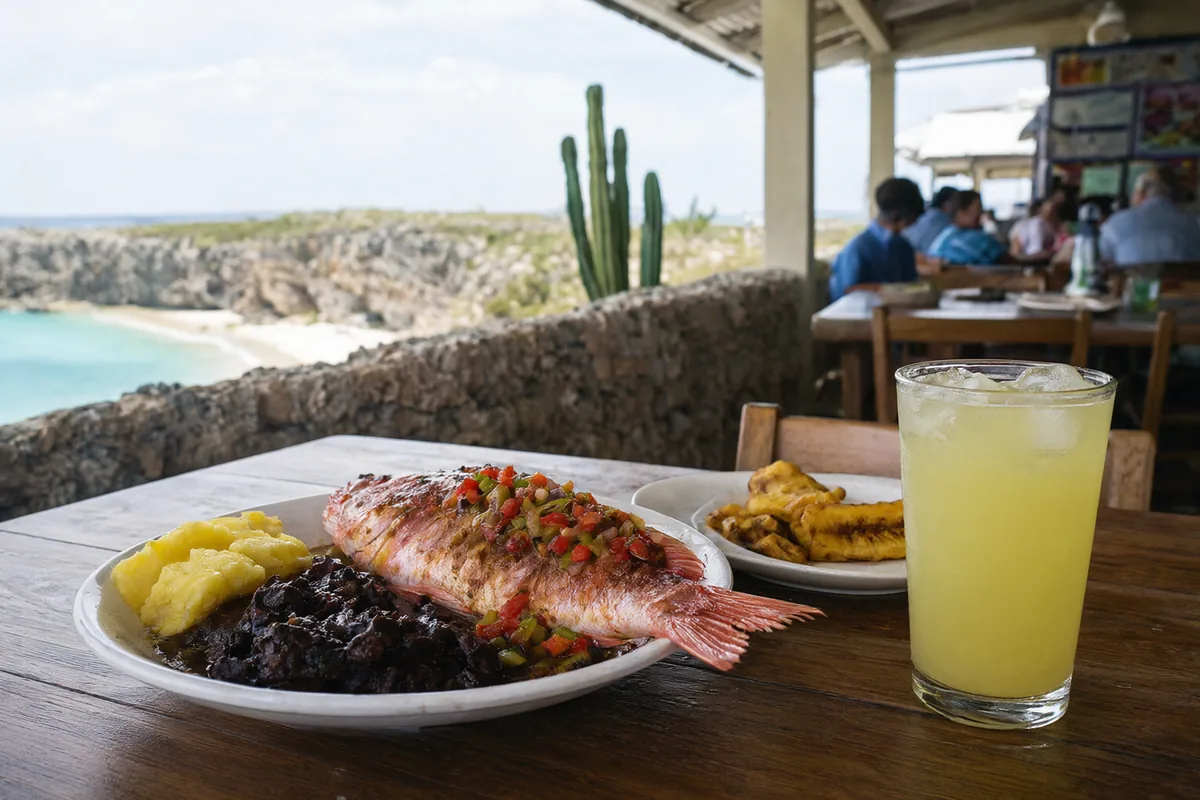
- Piská hasá: fried whole fish, usually red snapper, with funchi, fried plantain and a Creole sauce of onion, tomato and sweet pepper. The best is at seaside places in the country.
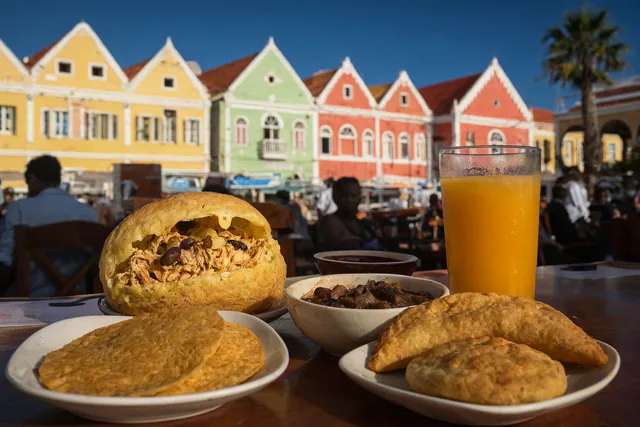
- Pastechi: fried pastry turnovers filled with cheese, spiced beef, chicken or tuna, eaten for breakfast and as a snack all day.
- Arepa di pampuna and kala: small sweet pumpkin pancakes, and crisp black-eyed pea fritters.
- Indonesian and Dutch dishes: saté with peanut sauce, bami (fried noodles), nasi (fried rice), and Dutch kroketten and bitterballen at snack bars.
- Sweets: bolo pretu (a dark rum and fruit cake for weddings and holidays), sunchi (pastel meringues), kokada (coconut candy), ko'i lechi (milk fudge) and panseiku (peanut brittle).
- Curaçao liqueur and batidos: the island's famous orange liqueur, often coloured blue, is made with the dried peel of the bitter laraha orange that grows on Curaçao. Batidos are fruit milkshakes, sold at snack bars across the island.
How to read a menu in Papiamentu and Dutch
Curaçao's official languages are Papiamentu, Dutch and English, and Spanish is widely spoken too. Tourist restaurants print menus in English, but local restaurants, snack bars and specials boards often list dishes in Papiamentu, and labels in shops are in Dutch. Curaçao and Bonaire spell Papiamentu with a k and accents (kuminda, piská), while Aruba uses a c (cuminda, pisca).
| Papiamentu | Dutch | Meaning |
|---|---|---|
| Kuminda krioyo | Lokale keuken | Local Creole food |
| Karni | Vlees | Meat (often beef) |
| Galiña | Kip | Chicken |
| Kabritu | Geit | Goat |
| Piská | Vis | Fish |
| Kamaron | Garnalen | Prawns |
| Yuana | Leguaan | Iguana |
| Sòpi | Soep | Soup |
| Stobá | Stoofpot | Stew |
| Hasá | Gebakken | Fried or baked |
| Keshi | Kaas | Cheese |
| Aros ku bonchi | Rijst met bonen | Rice with beans |
| Batido | Milkshake | Fruit milkshake |
| Kuenta | Rekening | The bill |
A Curaçao specials board might read "kabritu stobá, giambo, piská hasá" with no translation at all. swap.menu turns each one into your language with a short explanation, converts prices from guilders or US dollars to your home currency, and flags any service charge printed on the menu.
Service charges, tipping and paying the bill
Many restaurants in Curaçao add a service charge, often 10 to 15 percent, to the bill, and it should be printed on the menu. If it has been added, you do not need to tip more, though leaving a little extra in cash for your server is appreciated. If not, leave around 10 to 15 percent. Turnover tax (OB) is usually included in menu prices. Our guide to tax and service charges on menus explains how these lines work.
The currency is the Caribbean guilder (Cg, XCG), which replaced the Netherlands Antillean guilder in 2025 and is shared with Sint Maarten. US dollars are widely accepted, especially in tourist areas, and many menus show both, but change usually comes in guilders. Cards are accepted in most restaurants, hotels and supermarkets, while snack bars, market counters and food trucks may be cash only. If a card machine offers to charge you in your home currency, decline: our guide to paying in local currency explains why.
Lunch is the main meal for many Curaçaoans, from about noon to 2pm, and local restaurants often serve their stobá and soups only at lunchtime. Dinner runs from about 6:30pm to 10pm. Snack bars stay open late, and food trucks serve into the small hours, especially at weekends.
Where to eat in Curaçao, area by area
Most of Curaçao's restaurants are in and around Willemstad, the capital, whose colourful harbour districts are a UNESCO World Heritage Site. The beach clubs are east of the city, and the countryside and quieter beaches are to the west. Jump to an area:
Where to eat in Punda
Punda is the old heart of Willemstad, on the eastern side of the harbour channel, and its row of colourful gabled merchant houses along the Handelskade is the most photographed view in Curaçao. The waterfront terraces along the Handelskade serve local and international dishes, drinks and snacks with views of the Queen Emma pontoon bridge and Otrobanda across the water. Prices are aimed at visitors, but it is a fine place for a drink and a plate of keshi yená.
For the most local lunch in Punda, look for the old market hall known as Plasa Bieu (or Marshe Bieu), where for decades cooks have served stobá, fried fish, funchi, soups and rice and beans at long shared tables; check whether it is open when you visit, as it has gone through periods of renovation. Nearby, the round Marshe Nobo sells fruit, vegetables and spices, and along the Sha Caprileskade waterfront, boats from Venezuela have long sold fruit, vegetables and fish in the so-called floating market, which comes and goes with the state of the border. Punda's side streets also have bakeries and snack bars for pastechi and batidos.
Where to eat in Otrobanda
Otrobanda, "the other side", lies across the Queen Emma Bridge from Punda. It is more residential and more local, with narrow lanes, small squares, churches and the restored 19th-century houses of the Kura Hulanda area. Otrobanda's snack bars and small Creole restaurants are some of the best value in Willemstad, serving stobá, fried chicken, pastechi and soups to people who live and work in the neighbourhood.
On the waterfront, the old Rif Fort has been turned into a complex of restaurants and bars with terraces looking back across the water at Punda, and it is one of the best places in Otrobanda to watch the sunset and the bridge swing open for ships. In the evening and late at night, look for truki pan, food trucks parked around Willemstad selling sandwiches, burgers, satay, fries and local plates, a Curaçao institution after a night out.
Where to eat in Pietermaai and Scharloo
Pietermaai, just east of Punda along the coast, is a district of grand 18th and 19th-century merchant mansions, many of them restored as boutique hotels, restaurants, cafés and bars. It is the centre of Willemstad's evening life, with a mix of modern Caribbean cooking, seafood, tapas, Dutch and international food, and cocktail bars that stay busy late, especially at weekends. Many of the restaurants are in courtyards and on terraces facing the sea.
Scharloo, across a small bridge to the north of Punda, is another historic district of large colonial mansions, with colourful street art and a growing number of cafés, lunch spots and galleries. Both Pietermaai and Scharloo are easy to walk from Punda, and the area is the best part of Willemstad for a dinner out. Book ahead at the most popular places in Pietermaai on Friday and Saturday nights.
Where to eat at Jan Thiel and Mambo Beach
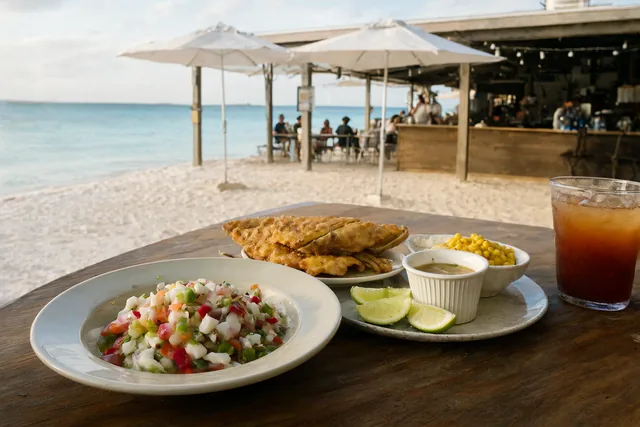
East of Willemstad, the coast is lined with resort areas and beach clubs. Mambo Beach, next to the sea aquarium, is a busy beach with clubs, bars, restaurants, a shopping boulevard and nightlife. Jan Thiel, a little further east, is a beach and residential area popular with Dutch visitors, with beach clubs serving lunch on loungers, sushi, grills, pizza and Mediterranean food, and a lively bar scene at sunset and on weekend afternoons.
The food at Mambo Beach and Jan Thiel is mostly international, and you pay for the setting, but it is a convenient place to eat if you are staying on this side of the island. For more local seafood nearby, the bay of Caracasbaai and the inland lagoon of Spanish Water have waterside restaurants and fishermen's places serving fried fish and lobster, popular with Curaçaoans at weekends.
Where to eat in Westpunt and Banda Abou
Banda Abou is the rural western end of Curaçao, a landscape of cactus, old plantation houses (landhuizen) and small coves with some of the island's best beaches, including Grote Knip, Playa Lagun and Playa Piskado. Westpunt, the village at the tip, has a handful of local restaurants and terraces with sea views serving traditional Curaçaoan food: kabritu stobá, piská hasá with funchi, and, at some places, sòpi di yuana. This is the part of Curaçao where you are most likely to eat these dishes as they are cooked at home.
At Playa Piskado, the fishermen still clean their catch on the beach, and turtles come in to feed. Many beaches in Banda Abou have a small snack bar selling pastechi, fried fish, burgers and cold drinks. Westpunt is about an hour's drive from Willemstad, and restaurants here close earlier than in the city, so plan lunch rather than dinner, and bring some cash for snack bars and beach entrance fees.
Vegetarian, vegan and allergy tips
Willemstad's restaurants, especially in Pietermaai, increasingly offer vegetarian and vegan dishes, and many beach clubs and international places label them. Local Creole food is harder: stobá, giambo, kadushi soup and keshi yená are made with meat, fish or salted meat, and rice and beans may contain pork or stock. Cheese pastechi, funchi, tutu, kala, arepa di pampuna, fried plantain and Indonesian vegetable dishes are good options. "I am vegetarian" is mi ta vegetariano in Papiamentu and ik ben vegetariër in Dutch.
Peanuts appear in saté sauce, panseiku and some Indonesian dishes, and shellfish goes into giambo and seafood soups. Funchi is made from cornmeal, which suits a gluten-free diet, but pastechi and kroketten are not. Our guide to eating abroad with food allergies explains how to communicate an allergy clearly in another language.
Useful Papiamentu phrases for ordering
Bon dia / Bon tardi / Bon nochi "Good morning / Good afternoon / Good evening"
Kon ta bai? "How are you?", the usual greeting. The reply is "Mi ta bon, danki"
Mi ke esaki, por fabor "I would like this, please" (pointing)
Kuantu e ta kosta? "How much does it cost?"
Mi no ta kome karni "I do not eat meat"
E kuenta, por fabor "The bill, please"
Masha danki "Thank you very much"
Dushi! "Delicious!" The most used word on the island, also meaning "sweet" or "darling"
How swap.menu helps you eat in Curaçao
Curaçao's best local food is listed in Papiamentu on boards and printed sheets, with dishes such as giambo, tutu, sòpi di kadushi and stobá di papaya that you will not find in any guidebook glossary. Photograph the menu with swap.menu and every dish appears in your language with the Papiamentu name beside it and a short explanation. Prices are converted from Caribbean guilders or US dollars to your home currency, and we point out any service charge.
Tap the dishes you want, add a note such as "no peanuts" or "not spicy, please", typed or spoken, and swap.menu translates your order into Papiamentu, Dutch or Spanish. Show the cook your phone, or let them scan the QR code. Try it now on a sample menu with the free demo, or see travel pass prices.
Off to Curaçao? Your first 3 menu scans are free, and a travel pass starts from $4.99 with nothing that renews.
Start free with 3 scansCuraçao food FAQ
Do you tip in restaurants in Curaçao?
Many restaurants add a service charge of 10 to 15 percent. If it is on the bill, an extra tip is optional; if not, leave around 10 to 15 percent. Snack bars and food trucks do not expect tips.
What food is Curaçao famous for?
Curaçao is known for keshi yená (stuffed cheese), kabritu stobá (goat stew) with funchi, giambo (okra soup), pastechi and fried fish. It is also the home of the orange liqueur that carries the island's name.
What currency is used in Curaçao?
Curaçao uses the Caribbean guilder, introduced in 2025 to replace the Netherlands Antillean guilder. US dollars are widely accepted, and many menus show prices in both.
Is Curaçao expensive to eat out?
Waterfront restaurants, Pietermaai and the beach clubs are fairly expensive. Snack bars, food trucks and local Creole restaurants in Otrobanda and the countryside are much cheaper.
Is tap water safe to drink in Curaçao?
Yes. Curaçao's tap water is desalinated seawater and is safe to drink. There is no need to buy bottled water.
How can I read a menu in Papiamentu?
Learn a few words such as piská, karni, stobá and sòpi, or photograph the menu with swap.menu. It translates every dish into your language, explains local dishes, converts prices and translates your order into Papiamentu.
Travelling further in the Caribbean? Read our food guides for nearby islands and countries:
- Aruba food guide
- Bonaire food guide
- Venezuela food guide
- Saint Martin food guide
- Netherlands food guide
Or browse every travel food guide.