Turks and Caicos is famous for beaches, and its food follows the sea: conch above all, then spiny lobster, snapper, grouper and wahoo, eaten with peas and grits, johnnycake and plenty of lime and hot pepper. This Turks and Caicos food guide covers the local dishes to order, the menu terms visitors trip over, how tax, service charges and tipping add up, then goes island by island through where to eat on Grace Bay, at the Bight, in Blue Hills and Five Cays on Providenciales, on Grand Turk, North and Middle Caicos, and South Caicos and Salt Cay. Order conch at least three ways before you leave: it is the islands' signature, and fresh conch salad made in front of you is something you cannot get at home.
What to eat in Turks and Caicos: 11 dishes to know
Traditional Turks and Caicos cooking is close to Bahamian food, built on seafood, corn and pigeon peas, with Scotch bonnet chilli and sour lime for flavour. These are the dishes worth seeking out.
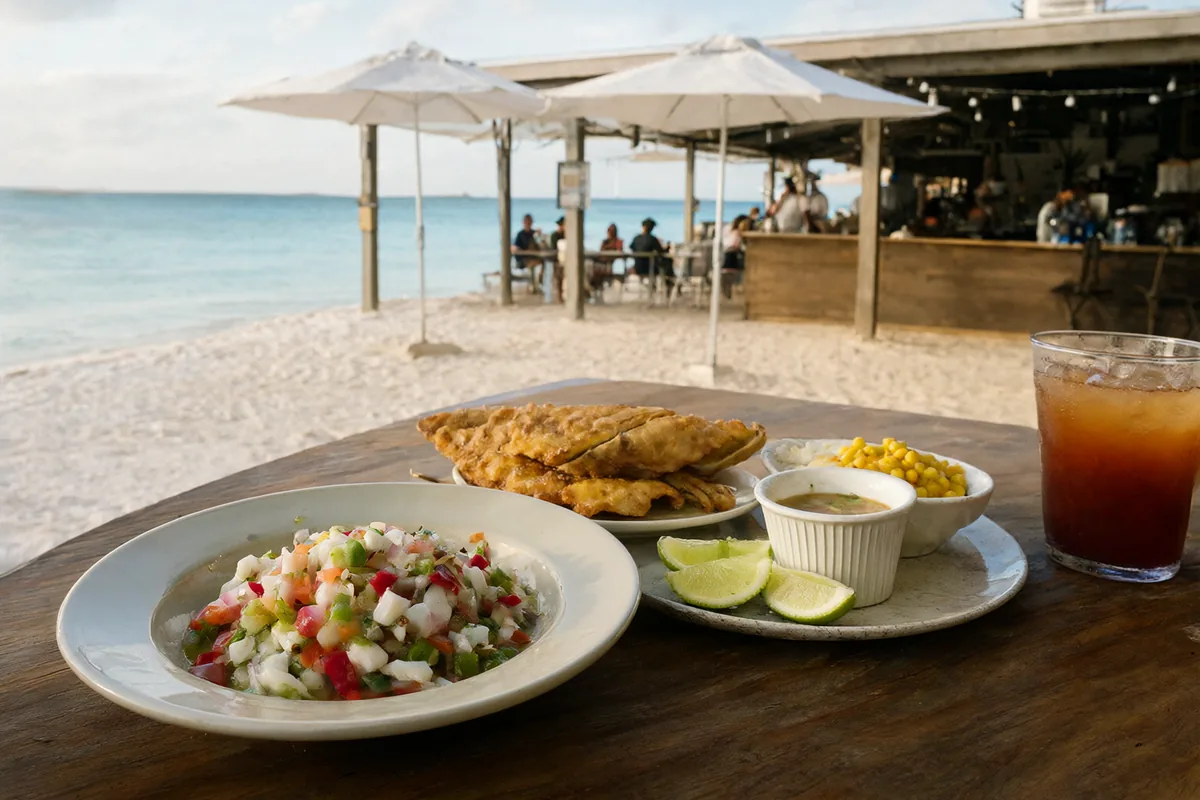
- Conch salad: raw conch diced with onion, sweet pepper, tomato and hot pepper, "cooked" in fresh lime and orange juice. Many conch shacks crack the shell and make it to order.
- Cracked conch: conch tenderised by pounding, battered and fried, served with fries or peas and rice and a dipping sauce. The most popular way visitors eat conch.
- Conch fritters, chowder and stew: chopped conch in a spiced batter, fried in balls; conch in a tomato-based soup with potato; and conch stewed in a thick brown gravy.
- Peas and grits (peas 'n' grits): hominy grits cooked with pigeon peas, onion, tomato and sometimes salt pork. Often named, with conch, as the national dish, and served beside fish or chicken.
- Boiled fish and grits: a traditional breakfast of fish poached in a broth of lime, onion, pepper and butter, served with plain grits or johnnycake.
- Spiny lobster: grilled with garlic butter, curried or added to salads and fritters. The local season runs from August to the end of March, when it is caught fresh around the islands.
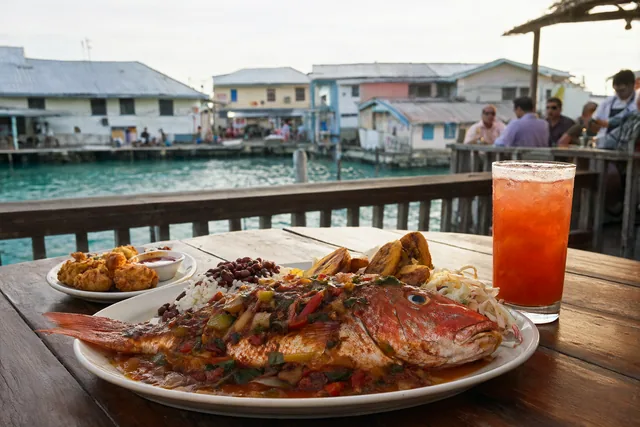
- Fish Creole-style: snapper, grouper or wahoo cooked in a tomato, onion and pepper sauce, or simply grilled or fried whole with lime.
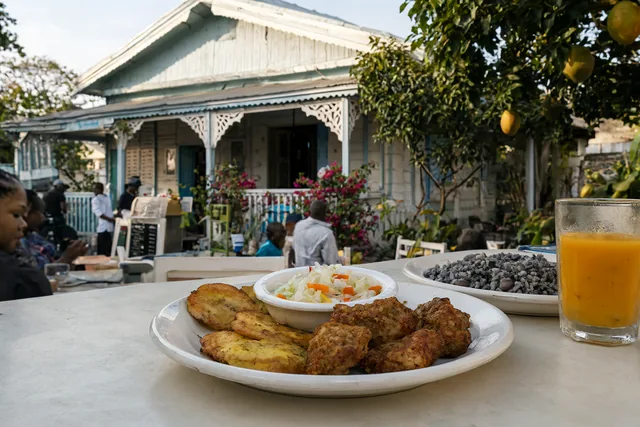
- Johnnycake: a dense, slightly sweet bread, baked in a pan and cut into squares, served at breakfast and with fish.
- Peas and rice: rice cooked with pigeon peas, tomato, thyme and salt pork, the standard side at local restaurants.
- Macaroni and cheese: baked firm and cut into squares, a side dish at every local lunch counter and fish fry.
- Sweets and drinks: coconut tart, sweet potato bread and rum punch. Local hot sauces made with Scotch bonnet and lime turn up on every table.
How to read a menu in Turks and Caicos
English is the official language and all menus are in English. Local islanders, known as Belongers, speak with their own lilt and vocabulary, and many restaurant workers come from Haiti, the Dominican Republic, Jamaica and the Philippines. These are the menu terms that need explaining.
| Local term | What it means |
|---|---|
| Conch | Large sea snail, pronounced "konk" |
| Cracked conch | Pounded, battered and fried conch |
| Conch salad | Raw diced conch "cooked" in lime juice with onion and pepper |
| Peas 'n' grits | Hominy grits cooked with pigeon peas |
| Peas 'n' rice | Rice cooked with pigeon peas |
| Boil fish / stew fish | Fish poached in lime broth / fish in brown gravy |
| Johnnycake | Dense pan-baked bread |
| Grits | Ground hominy corn, cooked to a porridge |
| Souse | A clear lime and pepper broth with chicken or pork |
| Hot pepper | Scotch bonnet chilli, very hot |
| Catch of the day | Today's local fish, often snapper, grouper or wahoo |
| Market price (MP) | Price varies daily, ask before ordering lobster |
| Government tax | The 12 percent tax added to restaurant bills |
| Service charge / gratuity | Tip already added to the bill |
In Turks and Caicos, a menu price is usually before tax and before service, and the two together can add a fifth or more to the bill. swap.menu reads the small print at the bottom of the menu, converts prices from US dollars to your home currency, and shows the tax and service lines so you can see the real cost before ordering.
Tax, service charges and tipping
Restaurant bills in Turks and Caicos carry a government tax of 12 percent, and most sit-down restaurants also add a service charge, typically 10 to 15 percent. Menu prices usually exclude both. If a service charge has been added, you do not need to tip more, though many visitors add a little for very good service. If there is no service charge, leave 15 to 20 percent. Our guide to tax and service charges on menus explains how these extra lines work.
The currency of Turks and Caicos is the US dollar. Cards are accepted at almost all restaurants and shops on Providenciales, while smaller places on Grand Turk and the out islands, the fish fry and roadside stalls may be cash only. Visitors from countries outside the US will be charged in US dollars on their cards; if a terminal offers to convert it into your home currency, decline and pay in dollars: our guide to paying in local currency explains why.
Turks and Caicos is one of the most expensive destinations in the Caribbean to eat in, because almost everything except seafood is imported. Local restaurants, the weekly fish fry and lunch at conch shacks are much cheaper than resort dining. Lunch is from about noon to 3pm and dinner from 6pm to 10pm; booking is advisable for popular dinner restaurants in high season, from December to April.
Where to eat in Turks and Caicos, island by island
Most visitors stay on Providenciales, known as Provo, where almost all the restaurants are. Grand Turk is the historic capital and a cruise port, and the out islands are quiet places with a few local kitchens. Jump to an area:
- Grace Bay
- The Bight
- Blue Hills and Five Cays
- Grand Turk
- North and Middle Caicos
- South Caicos and Salt Cay
Where to eat on Grace Bay
Grace Bay, the long white beach on Provo's north shore, is the heart of tourism in Turks and Caicos and where you will find the most restaurants. Grace Bay's resorts each have their own dining rooms, and along Grace Bay Road and in the small shopping plazas behind the beach there are restaurants serving seafood, steak, sushi, Italian and modern Caribbean food. Many have tables on the sand, and lobster, grouper and conch appear on almost every menu.
Grace Bay prices are high even by Caribbean standards, so look for lunch menus, happy hours and the cafés and delis in the plazas for cheaper meals. For a more local taste near Grace Bay, ask your hotel for the nearest place serving peas and grits, cracked conch and fried fish, and walk or cycle to the quieter western end of the beach for sunset drinks. Grace Bay is busy from December to April, when dinner reservations are worth making a few days ahead.
Where to eat at the Bight and Turtle Cove
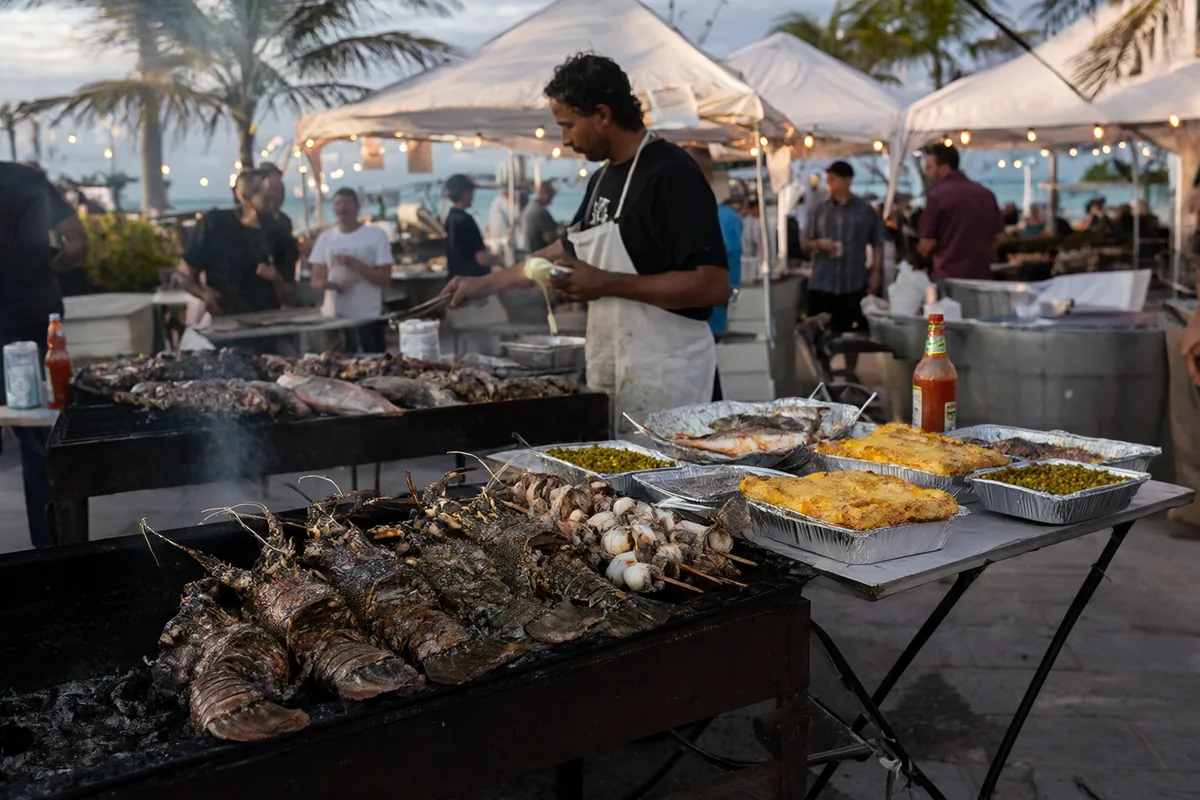
The Bight, at the western end of Grace Bay, is a more local neighbourhood with a beach park, and every Thursday evening it hosts the islands' weekly fish fry. Local vendors set up stalls and grills around Bight Park, cooking lobster, conch, fish, jerk chicken, ribs, peas and rice and macaroni and cheese, with local bands and dancers. It is one of the cheapest and most enjoyable meals on Provo, and residents come as well as visitors. Arrive early for the shortest queues, and bring cash.
The rest of the week, the Bight area has several casual conch shacks and beach bars serving cracked conch, conch salad and fish tacos. A short drive west, Turtle Cove is a small marina with waterfront restaurants and bars facing the boats, popular for sundowners, fish and seafood pasta. Both the Bight and Turtle Cove are more relaxed than the resort restaurants of central Grace Bay.
Where to eat in Blue Hills and Five Cays
Blue Hills is the oldest settlement on Providenciales, a long seafront road on the north-west coast lined with houses, churches and small wooden shacks painted in bright colours. Blue Hills is the place for conch: seafront restaurants and shacks here serve conch salad made to order, cracked conch, conch fritters, fried fish, peas and rice and cold drinks, with tables on the sand. The Conch Festival, held in Blue Hills in November, has conch cooking competitions and local music.
Five Cays, on the south side of Provo, is a working fishing community where many local families live. Its small restaurants and takeaways serve local plates at lower prices than the tourist strip: stew fish, peas and grits, chicken, oxtail and johnnycake, and on weekends you may find boil fish for breakfast. Few tourists come here, and that is the reason to go. Both Blue Hills and Five Cays are a short taxi ride from Grace Bay.
Where to eat on Grand Turk
Grand Turk is the capital island, with the old town of Cockburn Town and its Front Street of 19th-century houses built in the Bermudian style, many now guesthouses, bars and small restaurants. The pace is much slower than Provo. Front Street and Duke Street have places serving fresh fish, conch and lobster, often with tables looking straight onto the water, and small local kitchens in town serve peas and rice, stew fish and fried chicken at lunchtime.
The south end of Grand Turk has a large cruise ship terminal with bars and restaurants aimed at cruise passengers. On cruise days the beach near the terminal is busy, but Cockburn Town stays quieter. If you are staying on Grand Turk, plan dinner in advance, as several places open only on certain evenings, and bring some cash for the smaller restaurants.
Where to eat on North and Middle Caicos
North Caicos and Middle Caicos, linked by a causeway and reached by ferry from Provo, are the greenest and quietest of the inhabited islands. North Caicos is known as the islands' garden, where families grow papaya, limes, sapodilla, peppers and other fruit and vegetables, and you may find them sold by the road. Food here is home-style: a few small restaurants and local cooks serve fish, conch, chicken, peas and rice and johnnycake, often by arrangement.
Middle Caicos is famous for its caves and the dramatic coastline at Mudjin Harbour, and has only a handful of places to eat. If you take a day trip to North and Middle Caicos, plan lunch before you set off, either booking a table or arranging food through your tour or hire car company, and carry snacks and water. Opening hours are irregular and many places close on Sundays.
Where to eat on South Caicos and Salt Cay
South Caicos is the fishing centre of the country. Much of the lobster and conch eaten on Provo is landed at its harbour, and its small town, Cockburn Harbour, has local restaurants serving very fresh fish, conch and lobster in season. South Caicos also celebrates its fishing heritage with an annual regatta and festival in the spring, with boat races and food stalls.
Salt Cay is tiny, with a few dozen residents, old salt ponds and donkeys wandering the lanes. It is a peaceful day trip from Grand Turk, especially in the winter whale season, and food is limited to a couple of small restaurants and guesthouses serving fish, conch and simple local plates. On both islands, check what will be open before you go and bring cash.
Vegetarian, vegan and allergy tips
On Provo, most restaurants have vegetarian dishes and many label vegan and gluten-free choices, and supermarkets stock plant-based foods. Traditional local food is harder: peas and rice and peas and grits are often cooked with salt pork, soups and gravies use meat or fish stock, and macaroni and cheese contains egg and dairy. Ask for peas and rice without meat, fried plantain, salads and vegetable sides. Vegetarian is simply vegetarian, but the many kitchen staff from Haiti and the Dominican Republic will also understand végétarien or vegetariano.
Shellfish is everywhere: conch and lobster go into fritters, salads, soups and pasta, and fried food may share oil with seafood. Hot pepper sauces are very hot, so taste carefully. Our guide to eating abroad with food allergies explains how to explain an allergy clearly to kitchen staff.
Turks and Caicos food terms and ordering phrases
Everyone speaks English. These phrases and terms help you order local food and avoid surprises on the bill.
Is the tax and service included? Ask before tipping: menu prices usually exclude both
Can you make the conch salad fresh? Many shacks crack the conch to order
Peas 'n' grits on the side, please The local side dish with fish or chicken
How much for the lobster? Lobster is often market price and sold by size
Not too much hot pepper Less Scotch bonnet chilli
What's the catch today? Ask for the local fish rather than imported
Fish fry The Thursday night food market at the Bight on Provo
How swap.menu helps you eat in Turks and Caicos
Turks and Caicos menus are in English, but dishes like peas 'n' grits, cracked conch, souse and boil fish are unfamiliar to most visitors, and the tax and service lines at the bottom of the menu make prices hard to judge. Photograph the menu with swap.menu and every dish is explained, prices are converted from US dollars to your home currency, and the 12 percent tax and any service charge are shown, so you know the real cost of that lobster dinner.
Visitors from Canada, Germany, Brazil, Italy or anywhere else can read the whole menu in their own language, in 29 languages, with the English name kept beside each dish. Menus you scan are saved, so you can compare Grace Bay restaurants before you book. Try it now on a sample menu with the free demo, or see travel pass prices.
Off to Turks and Caicos? Your first 3 menu scans are free, and a travel pass starts from $4.99 with nothing that renews.
Start free with 3 scansTurks and Caicos food FAQ
Do you tip in restaurants in Turks and Caicos?
Most restaurants add a service charge of 10 to 15 percent, so check the bill first. If none has been added, leave 15 to 20 percent. A 12 percent government tax is also added to restaurant bills.
What food is Turks and Caicos famous for?
Conch is the signature food, eaten as conch salad, cracked conch, fritters and chowder. Spiny lobster, peas and grits, johnnycake and fresh snapper and grouper are also typical.
Is Turks and Caicos expensive to eat out?
Yes, it is one of the most expensive places to eat in the Caribbean, as most food is imported and tax and service add to every bill. The Thursday fish fry, conch shacks and local restaurants in Blue Hills and Five Cays are the best value.
What currency is used in Turks and Caicos?
The US dollar is the official currency. Cards are widely accepted on Providenciales, but carry cash for the fish fry, small local restaurants and the out islands.
Is tap water safe to drink in Turks and Caicos?
Piped water on Providenciales is treated, but most visitors drink bottled or filtered water, and many resorts provide it. On the smaller islands, some homes and guesthouses use cistern water, so drink bottled.
How can I understand menus and prices in Turks and Caicos?
Learn the conch dishes and terms like peas and grits, and remember that tax and service are usually added on top of menu prices. Or photograph the menu with swap.menu, which explains every dish, converts prices and shows the extra charges.
Travelling further in the Caribbean? Read our food guides for nearby islands:
- Bahamas food guide
- Dominican Republic food guide
- Haiti food guide
- Cayman Islands food guide
- Bermuda food guide
- Jamaica food guide
Or browse every travel food guide.