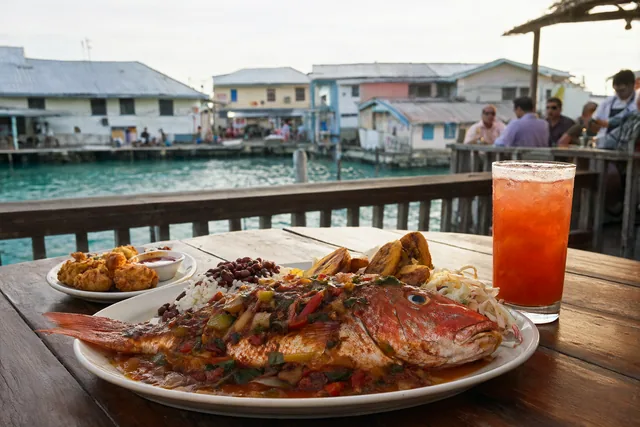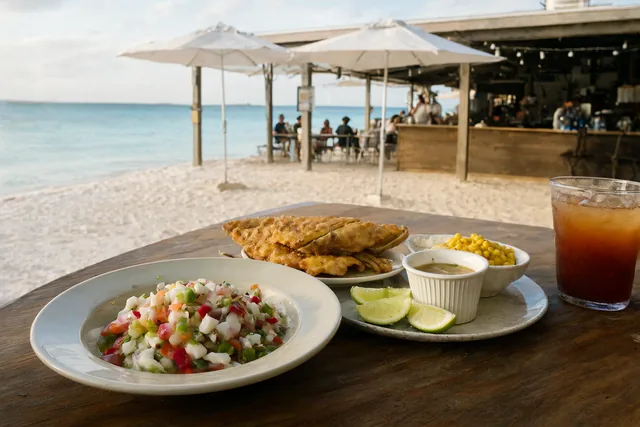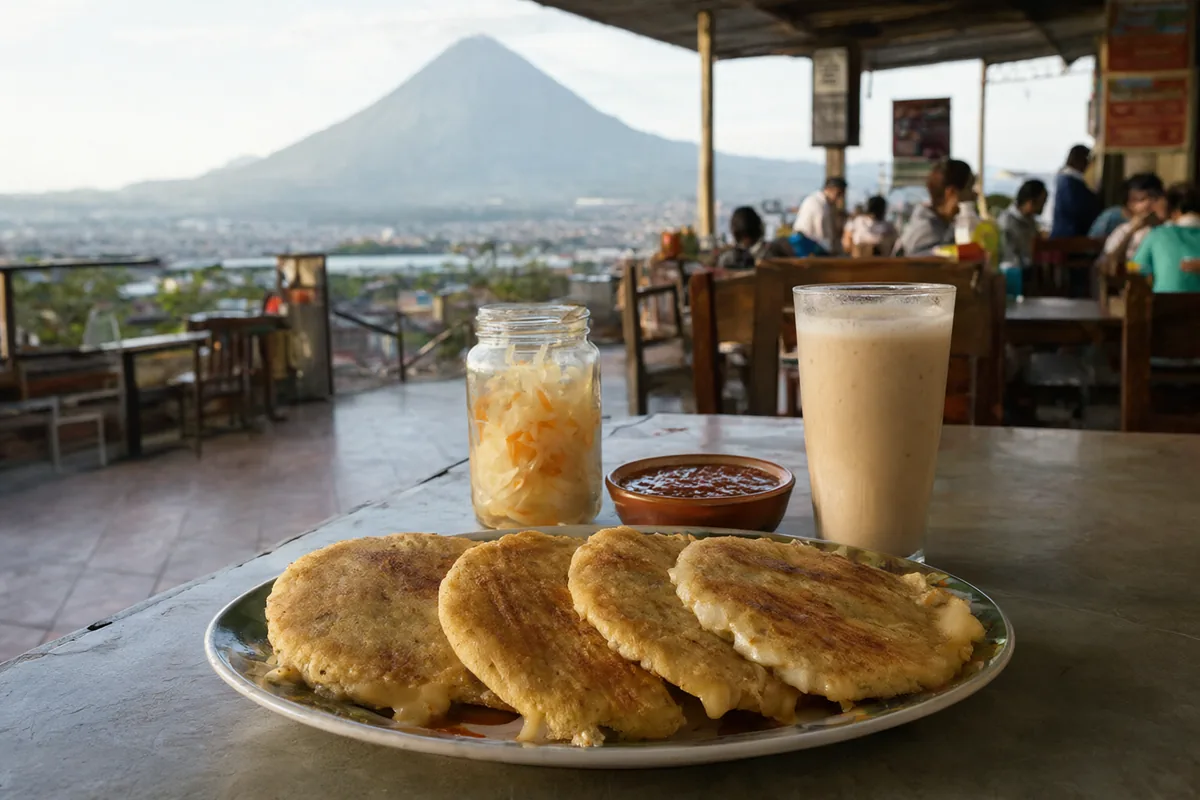
El Salvador is the smallest country in Central America and one of the easiest to eat your way across: you can have breakfast in the capital, lunch at a coffee town in the mountains and dinner on the Pacific coast in the same day. This El Salvador food guide covers the dishes to order, how to read a Salvadoran menu in Spanish, the 10 percent propina on your bill and paying in US dollars, then goes town by town through where to eat in San Salvador, Santa Tecla, Santa Ana, Juayúa, Suchitoto and La Libertad. Everything starts with the pupusa, the stuffed corn cake that is the national dish and the thing every Salvadoran abroad misses most.
What to eat in El Salvador: 12 dishes to know
Salvadoran food is corn-based, hearty and not especially spicy, with heat added at the table through pickles and salsas. These are the dishes worth seeking out.
- Pupusas (everywhere): thick corn tortillas stuffed before they go on the griddle, then cooked until the cheese inside melts. The classic fillings are revuelta (ground pork crackling, beans and cheese), frijol con queso (beans and cheese) and queso con loroco (cheese with the buds of a local edible flower). They come with curtido, a lightly fermented cabbage slaw, and a thin tomato salsa, and you eat them with your hands.
- Pupusas de arroz (Olocuilta): pupusas made with rice flour instead of corn, lighter and crisper, the speciality of the town of Olocuilta near the airport.
- Panes con pollo: a bread roll filled with chicken stewed in a spiced tomato sauce, with watercress, cucumber and radish. At Christmas the same thing is made with turkey and called pan con chumpe.
- Sopa de gallina india: soup made with a free-range hen, simmered with vegetables and served with rice, tortillas and the hen itself on the side. A weekend favourite.
- Mariscada (coast): a creamy seafood soup of fish, shrimp, crab and clams, rich with cream and spices.
- Yuca frita con chicharrón: fried or boiled cassava with crisp pork, curtido and tomato salsa, often with pepesca, tiny fried fish.
- Pastelitos: small fried corn turnovers filled with minced meat and vegetables, coloured orange with annatto.
- Tamales: wrapped in banana leaf, with chicken (tamales de gallina) or pork, or made with fresh corn (tamales de elote), beans (tamales pisques) or the leafy herb chipilín.
- Empanadas de plátano: mashed ripe plantain shaped around a filling of milk custard or sweet beans, fried and dusted with sugar.
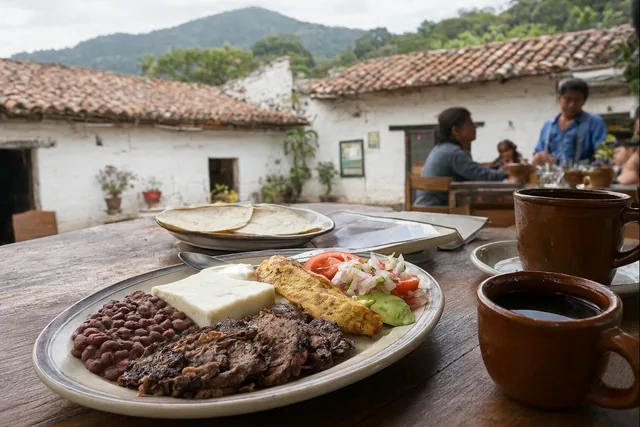
- Desayuno típico: the Salvadoran breakfast of eggs, refried beans, fried plantain, fresh cheese, cream and tortillas, sometimes with casamiento, rice and beans fried together.
- Quesadilla salvadoreña: not a tortilla with cheese, but a sweet, dense pound cake made with cheese and topped with sesame seeds, eaten with coffee.
- Atol de elote, horchata and coffee: atol is a warm, thick sweet corn drink; Salvadoran horchata is made from ground morro seeds, rice and spices; and the coffee is excellent. The Pacamara coffee variety was developed in El Salvador.
How to read a Spanish menu in El Salvador
Spanish is the language of El Salvador, and outside a few hotels and surf towns menus are in Spanish only. Pupuserías often have no menu at all, just a board listing fillings and a price for each pupusa. These are the words that come up most.
| Spanish | Meaning |
|---|---|
| Pupusa de / revuelta | Pupusa filled with... / pork crackling, beans and cheese mixed |
| Masa de maíz / de arroz | Corn dough / rice flour dough |
| Curtido | Pickled cabbage, carrot and onion slaw with oregano |
| Loroco | Edible flower bud with a green, slightly floral taste |
| Chicharrón | Pork crackling or ground fried pork |
| Casamiento | Rice and beans fried together ("marriage") |
| Crema / queso fresco / quesillo | Soured cream / fresh cheese / soft stringy cheese |
| Gallina india | Free-range hen, tougher and more flavourful than chicken |
| Mariscos / pescado / camarones | Seafood / fish / prawns |
| Frito / asado / a la plancha | Fried / grilled / cooked on a griddle |
| Refresco / ensalada | Fresh fruit drink / fruit punch with chopped fruit (a drink, not a salad) |
| Plato del día / almuerzo | Dish of the day / set lunch |
| Propina (10%) | Tip, often added to the bill |
Order an "ensalada" with your lunch and you may get a glass instead of a salad: in El Salvador it is also a fruit punch full of chopped apple, pineapple and other fruit. swap.menu explains local menu words like this when it translates a Salvadoran menu, so the order arrives as you expect.
Propina, tipping and paying the bill
Many sit-down restaurants in El Salvador add a propina, a tip of 10 percent, to the bill. By law it is voluntary, and you can ask for it to be removed, but most people simply pay it and do not tip on top. Where it has not been added, leave about 10 percent at a sit-down restaurant. At pupuserías, markets and street stalls, tipping is not expected. Prices usually include the 13 percent IVA (value added tax). Our guide to tax and service charges on menus explains how these lines work around the world.
The currency of El Salvador is the US dollar, which makes budgeting simple for many visitors. Bitcoin was made legal tender in 2021, but a 2025 change in the law made accepting it voluntary, and you will not need it. Cards are widely accepted in restaurants, cafés, supermarkets and hotels in San Salvador and the main towns, while pupuserías, markets, buses and small comedores are usually cash only. Carry small notes and coins, because a pupusa costs very little and stalls cannot always break a twenty. If a foreign card machine offers to charge you in your home currency, choose dollars: our guide to paying in local currency explains why.
Salvadorans eat breakfast early, from about 6am to 9am, and lunch from noon to 2pm. Pupusas are traditionally an evening meal, and many pupuserías open from late afternoon until about 9pm. Dinner in restaurants runs from about 7pm to 10pm.
Where to eat in El Salvador, town by town
El Salvador is compact, and the main towns are rarely more than two hours apart. The capital and its neighbour Santa Tecla have the most restaurants, the western mountains have coffee and weekend food fairs, and the Pacific coast is for seafood. Jump to a town:
Where to eat in San Salvador
San Salvador is where most visitors arrive and where you will find the widest range of food in El Salvador, from street pupusas to modern Salvadoran cooking. The restored Centro Histórico, around the cathedral, the National Palace, Plaza Libertad and Plaza Barrios, has become a good place to walk and eat, with cafés, bakeries and stalls selling panes con pollo, fruit with lime and salt, and minutas (shaved ice with syrup). The Mercado Central nearby has comedores serving cheap set lunches of soup, rice, meat and tortillas.
The modern restaurant districts of San Salvador are in the west of the city: Colonia Escalón, the Zona Rosa in San Benito, and the streets around the big shopping centres, with grills, seafood restaurants, cafés and international food. For pupusas with a view, go up to Los Planes de Renderos, the hill on the southern edge of San Salvador, where a long row of pupuserías looks out over the city. On the way to or from the airport, stop in Olocuilta for rice-flour pupusas.
Where to eat in Santa Tecla
Santa Tecla sits right next to San Salvador and has become one of the most enjoyable places in the metropolitan area to eat out. Its focus is the Paseo El Carmen, a pedestrian street of old houses that comes alive on Friday and Saturday evenings and Sunday afternoons, with food stalls, pupuserías, cafés, bars and live music. It is where families from all over the capital come to stroll and snack, and a good place to try several Salvadoran dishes in one evening.
Along Paseo El Carmen and the streets around it, look for pupusas from the griddle, yuca frita, elotes locos (grilled corn on the cob with mayonnaise, ketchup, mustard and grated cheese), pastelitos and empanadas de plátano. Santa Tecla is also close to the coffee farms on the slopes of the San Salvador volcano, and several cafés in Santa Tecla roast local beans. During the week the street is much quieter, so plan your visit for a weekend.
Where to eat in Santa Ana
Santa Ana, the country's second city, is a relaxed colonial town in the west with a white Gothic Revival cathedral, a grand theatre and a busy central square. It is the base for hiking the Santa Ana volcano and visiting the Maya sites of Tazumal and Joya de Cerén, and its food is everyday Salvadoran: pupuserías, bakeries selling sweet bread and quesadilla, panes con pollo stalls and comedores around the markets near the centre. Santa Ana is a good place to try atol de elote and tamales in the evening.
The best known food trip from Santa Ana is to Lake Coatepeque, a deep blue crater lake about half an hour away, where restaurants and wooden decks along the shore serve fried fish, seafood soups and cold drinks with views across the water. Coffee farms on the hills around Santa Ana also offer tours. Santa Ana's centre is easy to walk by day, but take a taxi in the evening.
Where to eat in Juayúa and the Ruta de las Flores
Juayúa is a small mountain town on the Ruta de las Flores, a scenic road through coffee country in western El Salvador, and it is famous for its weekend food festival (feria gastronómica). Every Saturday and Sunday the main square of Juayúa fills with stalls grilling beef, pork, chicken and sausages, alongside soups, tamales, pupusas, desserts and fresh fruit drinks. Families come from San Salvador for lunch, so it is busy, cheerful and very good value. Arrive by midday for the best choice.
The other towns on the route each have their own draw. Concepción de Ataco is known for its painted murals, coffee shops and craft stores, Apaneca for its cool climate and coffee farms, and Nahuizalco for its evening market and wooden furniture makers. This is the best part of El Salvador for coffee: many farms near Juayúa and Ataco run tours and tastings, and the town cafés serve it brewed from beans grown a few kilometres away.
Where to eat in Suchitoto
Suchitoto is a colonial town of cobbled streets and white churches above Lake Suchitlán, north of the capital, and one of the most attractive places in El Salvador to spend a quiet night. Suchitoto is known for its indigo dyeing workshops, galleries and cultural festivals, and its food is traditional and homely: sopa de gallina india, tamales, pupusas, and fish from the lake. At weekends, stalls around the main square sell snacks, sweets and local drinks.
Restaurants in Suchitoto are mostly small and family-run, set in old houses with courtyards, and several have terraces looking out over the lake. Down at the water's edge, simple places fry tilapia and other lake fish. Suchitoto is much quieter during the week, when some restaurants keep shorter hours, so come at a weekend if you want more choice.
Where to eat in La Libertad
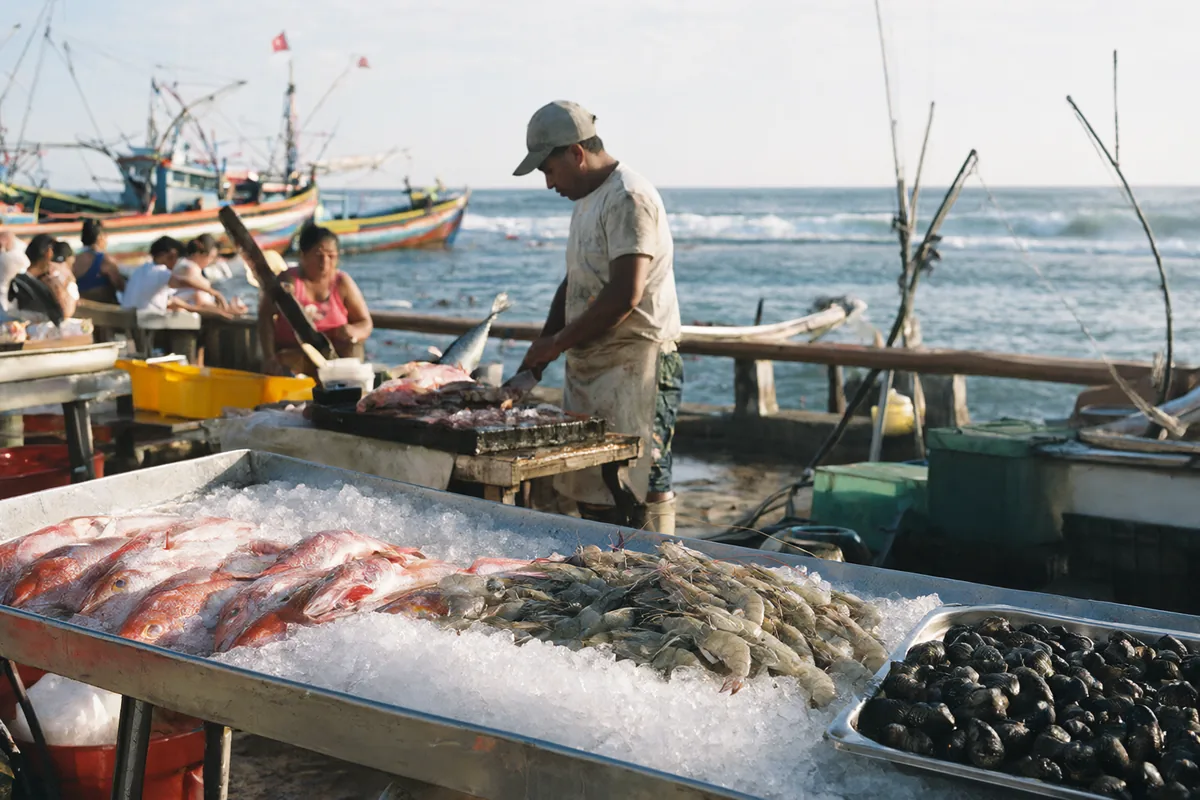
La Libertad is the main port and beach town on the coast closest to San Salvador, and the centre of El Salvador's surf scene. At the heart of the old port is the pier, where fishing boats are winched up and the catch is sold straight from the stalls: snapper, prawns, shark, squid and clams. Along the redeveloped seafront, the malecón, restaurants cook it into mariscada, fried whole fish, ceviche and cóctel de conchas, a cocktail of raw black clams in lime and tomato that is a coastal favourite.
West of La Libertad, the surf towns of El Tunco, El Sunzal and El Zonte have a different style of food: beach cafés, smoothie bars, pizza and burgers alongside pupusas and grilled fish. El Tunco has the most nightlife, El Zonte is quieter. Seafood is freshest in the morning, so eat it at lunch, and avoid raw shellfish if the restaurant looks unrefrigerated.
Vegetarian, vegan and allergy tips
El Salvador is easier for vegetarians than its meat-heavy reputation suggests. Pupusas de frijol con queso, queso con loroco and ayote (squash) are meat-free, and so are empanadas de plátano, tamales de elote and most of the desayuno típico. Watch out for beans fried in lard, soups and rice made with chicken stock, and the word revuelta, which always includes pork. Vegans will find it harder because cheese and cream are everywhere, but bean pupusas without cheese are sometimes possible if you ask. The word is vegetariano (or vegetariana), and vegan is vegano.
Corn is the base of most food, which helps people avoiding gluten, but pupusas may be cooked on griddles shared with flour products, and bread rolls appear with many dishes. Seafood allergies need care on the coast, where shellfish goes into soups and sauces. Our guide to eating abroad with food allergies explains how to communicate an allergy clearly in a language you do not speak.
Useful Spanish phrases for ordering in El Salvador
Buenos días / Buenas noches "Good morning / Good evening", always greet first
Una mesa para dos, por favor "A table for two, please"
Dos revueltas y una de queso con loroco "Two revueltas and one cheese with loroco": how pupusas are ordered
¿Qué me recomienda? "What do you recommend?"
Sin carne, por favor "Without meat, please"
Soy alérgico / alérgica a... "I am allergic to..." (alérgico for a man, alérgica for a woman)
La cuenta, por favor "The bill, please"
¡Qué rico, muchas gracias! "Delicious, thank you very much!"
How swap.menu helps you eat in El Salvador
Salvadoran menus are short but full of words that are not in a standard Spanish phrasebook: loroco, curtido, revuelta, casamiento, chumpe, and a "quesadilla" that turns out to be cake. Photograph the menu with swap.menu and every dish appears in your language with the Spanish name beside it and a short explanation. Prices are shown in US dollars and converted to your home currency, and we point out the propina line so you know whether to tip.
Tap the dishes you want, add a note such as "no pork" or "no cheese, please", typed or spoken, and swap.menu translates your order into Spanish. Show the cook your phone, or let them scan the QR code and read your order on their own screen. Try it now on a sample menu with the free demo, or see travel pass prices.
Off to El Salvador? Your first 3 menu scans are free, and a travel pass starts from $4.99 with nothing that renews.
Start free with 3 scansEl Salvador food FAQ
Do you tip in restaurants in El Salvador?
Many sit-down restaurants add a 10 percent propina to the bill, which is voluntary but normally paid. If it has not been added, leaving about 10 percent is customary. Tipping is not expected at pupuserías or street stalls.
What food is El Salvador famous for?
El Salvador is famous for pupusas, thick corn tortillas stuffed with cheese, beans, pork or loroco and served with curtido. Panes con pollo, tamales, sopa de gallina india and Salvadoran coffee are also well known.
What currency is used in El Salvador?
El Salvador uses the US dollar. Bitcoin was adopted in 2021, but since 2025 businesses do not have to accept it, so visitors only need dollars. Bring small notes for pupuserías and markets.
Is El Salvador expensive to eat out?
No. Pupusas, market lunches and street food are very cheap, and even sit-down restaurants are reasonably priced by international standards. Upmarket restaurants in San Salvador and the beach resorts cost more.
Is tap water safe to drink in El Salvador?
No. Drink bottled or purified water, which is cheap and sold everywhere. Most restaurants use purified water and ice, but ask if you are unsure.
How can I read a Salvadoran menu if I do not speak Spanish?
Learn the pupusa fillings and a few words like curtido, revuelta and propina, or photograph the menu with swap.menu. It translates every dish into your language, explains local terms, converts prices to your currency and translates your order back into Spanish.
Travelling further in Central America? Read our food guides for neighbouring countries:
- Guatemala food guide
- Honduras food guide
- Nicaragua food guide
- Costa Rica food guide
- Mexico food guide
Or browse every travel food guide.