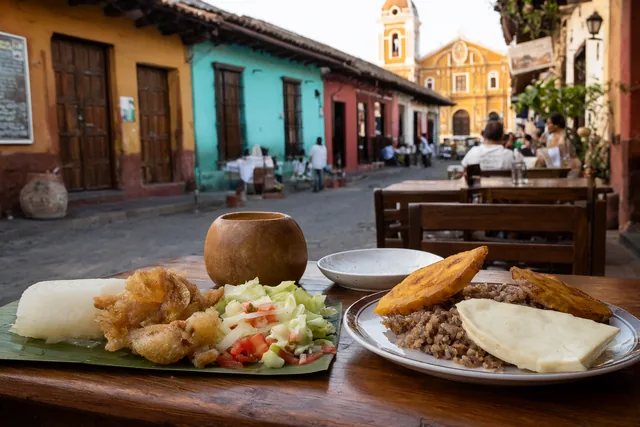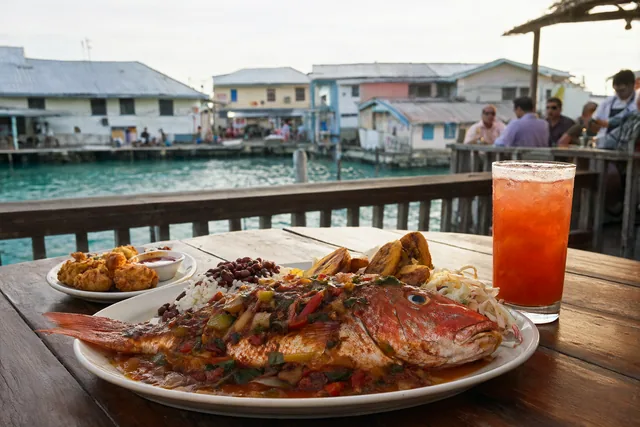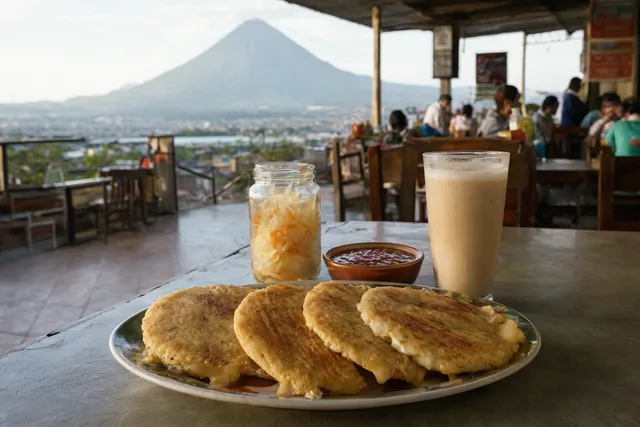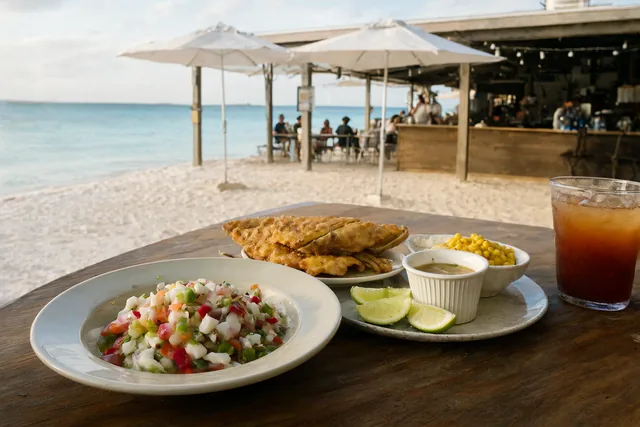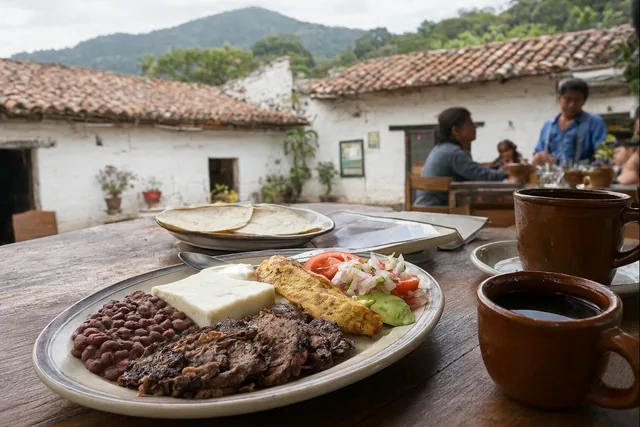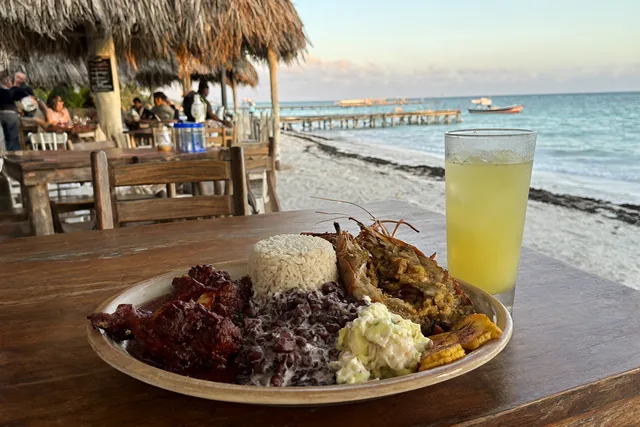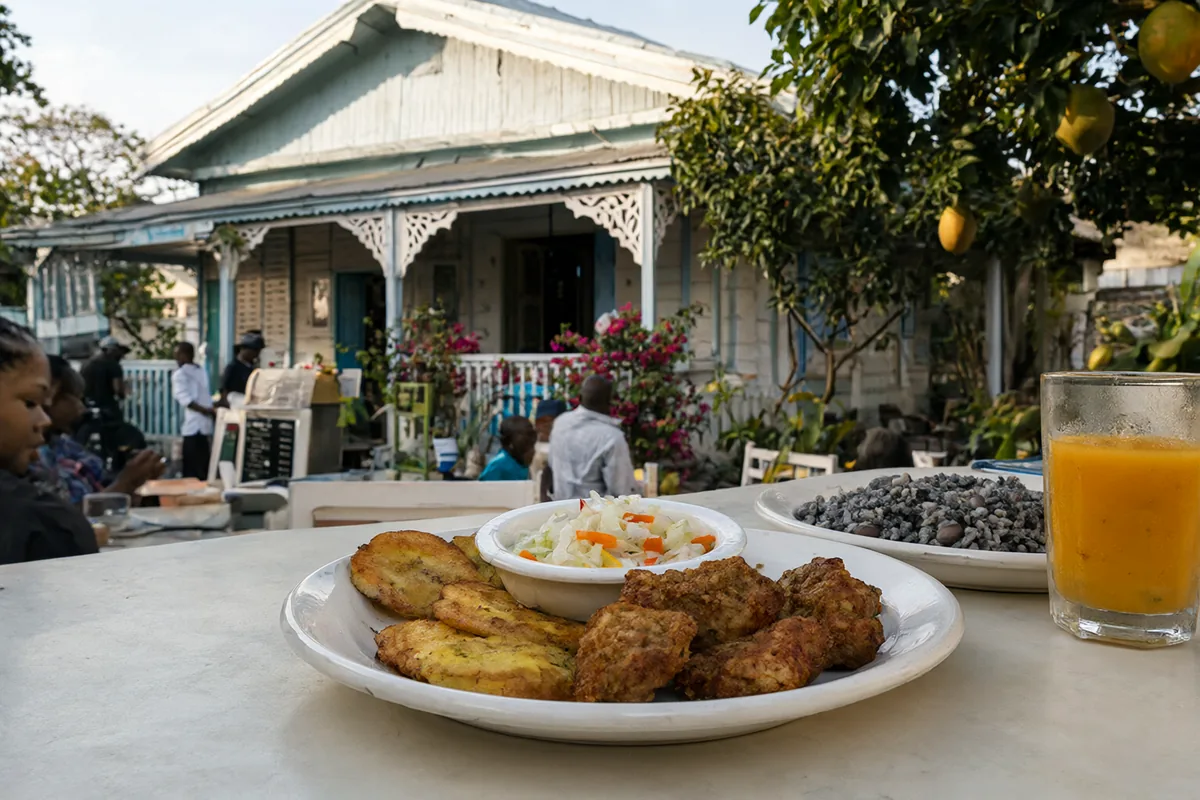
Haitian food is some of the most flavourful in the Caribbean: marinated, fried and stewed, built on a green seasoning paste called epis, sour orange, Scotch bonnet chillies and a fiery pickle called pikliz, with roots in West Africa, France and the Taíno people who lived on the island first. This Haiti food guide covers the dishes to order, how to read a menu written in Haitian Creole or French, tipping and paying in gourdes, then goes city by city through where to eat in Port-au-Prince, Pétion-Ville, Cap-Haïtien, Jacmel, Les Cayes and Jérémie. If you eat one thing, make it griot: crisp fried pork with plantain and pikliz, the dish every Haitian abroad talks about.
What to eat in Haiti: 12 dishes to know
Haitian meals usually centre on rice, beans and a meat or fish in sauce, with fried plantain and pikliz on the side. These are the dishes worth seeking out, with the region they are most linked to.
- Griot (everywhere): chunks of pork shoulder marinated in sour orange and epis, simmered until tender, then fried until crisp. It is the centrepiece of parties and weekend meals.
- Pikliz (on every table): finely shredded cabbage, carrot and onion pickled in vinegar with Scotch bonnet chillies (piman bouk). It is very hot and goes with almost everything fried.
- Bannann peze: slices of green plantain fried, flattened and fried again until crisp outside and soft inside, the standard side for griot and fried fish.
- Diri ak djon djon (the north): rice cooked in the inky water of soaked dried djon djon mushrooms, which turns it grey-black and gives it a deep, earthy flavour. Often served with shrimp or lima beans for special occasions.
- Diri ak pwa and sòs pwa: rice cooked together with red kidney beans or black beans (diri kole), or white rice with sòs pwa, a smooth bean sauce poured over the top. One of these comes with nearly every lunch.
- Soup joumou: a hearty soup of pumpkin with beef, vegetables and pasta. It is eaten on 1 January to mark Haiti's independence in 1804, when formerly enslaved Haitians claimed a dish they had been denied, and is recognised by UNESCO as part of the world's cultural heritage. Many families also make it on Sundays.
- Tasso: goat (tasso kabrit) or beef marinated, cooked and fried, served like griot with plantain and pikliz.
- Legim: a thick stew of mashed vegetables such as aubergine, cabbage, chayote, carrot, spinach and watercress, often cooked with beef or crab and eaten with white rice.
- Lambi (coast): conch, stewed in a tomato and pepper sauce (lambi an sòs) or grilled. One of the most prized seafood dishes in Haiti.
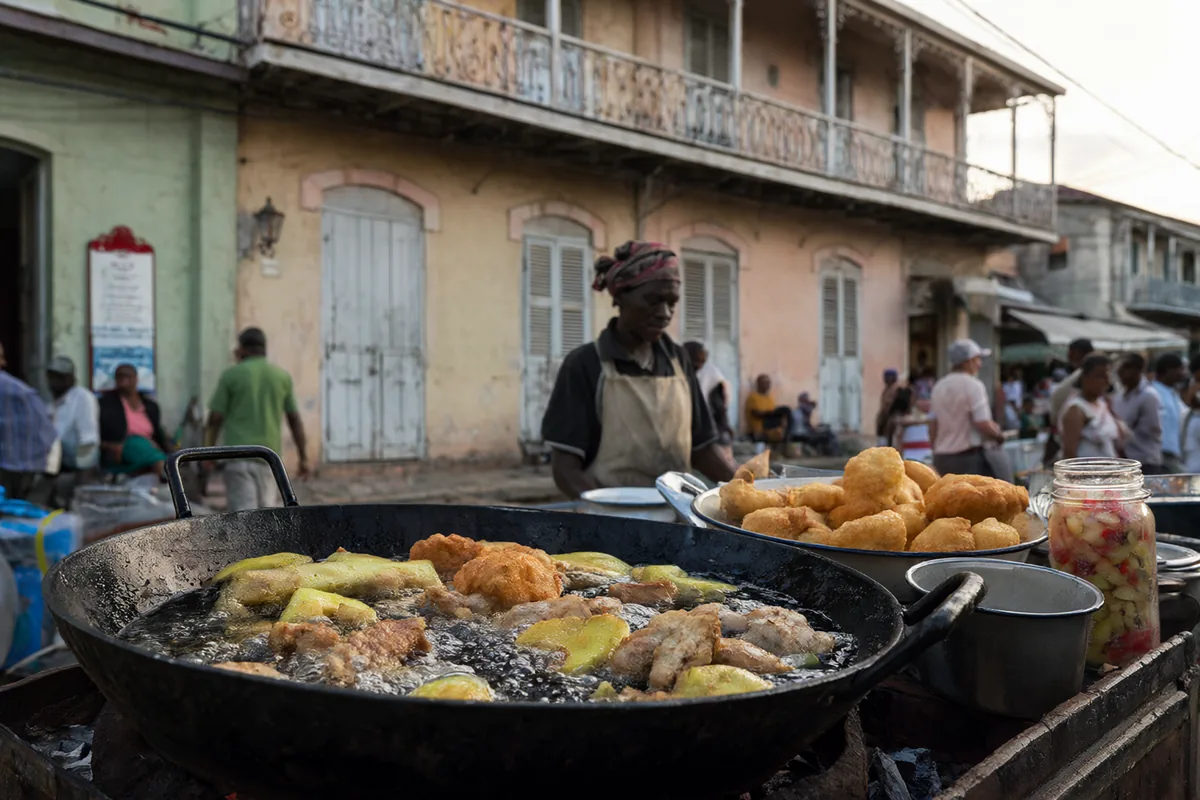
- Fritay (street food, everywhere): the fried food sold from roadside stalls in the evening, including akra (grated malanga fritters), marinad (light, savoury dough fritters), fried plantain, griot, sweet potato and fried fish.
- Pate kode and pâté: fried turnovers filled with seasoned herring, chicken or beef, and flaky baked patties sold from bakeries and street vendors at breakfast.
- Sweets and drinks: pen patat (spiced sweet potato pudding), tablèt (peanut or coconut brittle), dous makòs (a layered milk fudge from Petit-Goâve), fresh juices such as passion fruit, soursop and lime, strong Haitian coffee, and rum. Kremas, a sweet, creamy coconut and rum drink, is made at Christmas and New Year.
How to read a menu in Haitian Creole and French
Haiti has two official languages. Almost everyone speaks Haitian Creole (Kreyòl), and French is used in formal settings and by many educated Haitians. Upmarket restaurants often write menus in French, while local restaurants, street stalls and market cooks use Creole, or simply call out what they have. This table gives both.
| Creole | French | Meaning |
|---|---|---|
| Manje | Repas / plat | Food / meal / dish |
| Diri | Riz | Rice |
| Pwa / sòs pwa | Haricots / sauce pois | Beans / smooth bean sauce for rice |
| Poul | Poulet | Chicken |
| Kabrit | Cabri | Goat |
| Kochon | Porc | Pork |
| Bèf | Bœuf | Beef |
| Pwason | Poisson | Fish |
| Lambi / kribich | Lambi / écrevisses | Conch / freshwater prawns |
| Bannann | Banane plantain | Plantain |
| Fri | Frit | Fried |
| Boukannen / griye | Grillé | Grilled over an open fire / grilled |
| An sòs | En sauce | Stewed in a tomato, onion and pepper sauce |
| Ji | Jus | Fresh fruit juice |
A Haitian price written in "dollars" may not mean US dollars. Many Haitians count in dola ayisyen, Haitian dollars, an informal unit worth five gourdes that has never been printed as a note. swap.menu converts menu prices from gourdes to your home currency, so ask which dollar is meant and you will know exactly what a plate costs.
Tipping, tax and paying the bill
Check your government's current travel advice before planning a trip. Restaurants in Haiti that are registered for tax add a 10 percent sales tax called TCA (taxe sur le chiffre d'affaires), and some upmarket restaurants and hotels also add a service charge. Read the bottom of the bill before tipping. Our guide to tax and service charges on menus explains how these lines work around the world.
Tipping is appreciated and increasingly expected in sit-down restaurants and hotels. Leave around 10 percent if no service charge has been added. At street stalls and small local restaurants, tipping is not expected, but rounding up is welcome. Drivers, guides and hotel staff are usually tipped in cash.
The currency is the gourde (HTG, written G or Gdes). US dollars are widely used in hotels, upmarket restaurants and for larger purchases, and many hotel and restaurant prices are quoted in them. Haiti is a cash economy: foreign cards may not work at many places, cash machines are limited and not always reliable, and only hotels and some upmarket restaurants in Pétion-Ville and Cap-Haïtien take cards. Carry small US notes and gourdes. If a card machine offers to charge you in your home currency, decline: our guide to paying in local currency explains why.
Breakfast is early and often light: coffee, bread with peanut butter, a pâté or spaghetti cooked with hot dogs and peppers, a popular Haitian breakfast. Lunch is the main meal, from about noon to 2pm, and many local restaurants cook only for lunch. Dinner is lighter, and fritay stalls do most of their trade in the early evening.
Where to eat in Haiti, city by city
Haiti's regions each have their own specialities: djon djon rice in the north, seafood along the southern coast, and the breadfruit dishes of the far south-west. Jump to a city:
Where to eat in Port-au-Prince
Port-au-Prince, the capital, is where Haitian home cooking is at its most varied. Most Port-au-Prince food is eaten at small family restaurants and roadside cooks known as chen janbe, literally "the dog jumps over", where women cook large pots of rice, beans, stewed chicken, goat, fish and legim each morning and sell plates at lunchtime until they run out. Griot, tasso and fritay are everywhere in the evening. The historic Marché en Fer (Iron Market), rebuilt after the 2010 earthquake, is the city's best-known market, selling produce, spices and crafts.
Port-au-Prince is also home to the city's famous gingerbread houses, ornate wooden mansions with fretwork balconies in neighbourhoods such as Pacot and Bois Verna, a few of which have housed restaurants and guesthouses. Conditions in parts of Port-au-Prince change quickly, so move around with a trusted local contact or driver, eat where your hotel or host recommends, and expect most visitors to base themselves in Pétion-Ville.
Where to eat in Pétion-Ville
Pétion-Ville, in the hills above Port-au-Prince, is the city's commercial and restaurant district and where most visitors stay. The streets around Place Saint-Pierre and the main square have the country's widest choice of restaurants, from Haitian kitchens serving griot, lambi and djon djon rice to French, Lebanese and international places, as well as bakeries, cafés and bars. Many hotel restaurants in Pétion-Ville have terraces with views down over the bay.
Higher up the mountain road, Kenscoff is much cooler and is where many of the city's vegetables are grown. Its roadside market sells carrots, cabbages, leeks, strawberries and flowers, and Pétion-Ville families drive up at weekends for lunch. In Pétion-Ville itself, menus are often in French, and prices in sit-down restaurants are frequently quoted in US dollars, so check the currency before you order.
Where to eat in Cap-Haïtien
Cap-Haïtien, Haiti's second city, sits on the north coast, with a grid of colonial streets, a waterfront boulevard and a slower pace than the capital. This is the home of diri ak djon djon: the mushrooms grow in the north, and Cap-Haïtien cooks make the black rice for weddings, holidays and Sunday lunch. The local restaurants in the old town and along the waterfront serve it with fried fish, lambi, griot and stewed chicken, and fritay stalls set up on street corners in the evening.
Cap-Haïtien is the base for visiting the Citadelle Laferrière and the ruins of the Sans-Souci palace at Milot, and for the beaches west of town such as Cormier, where beachfront hotels and simple restaurants serve grilled fish, lobster and conch. In Cap-Haïtien, look out for kremas and homemade peanut brittle sold by street vendors, and for strong local coffee in the morning.
Where to eat in Jacmel
Jacmel, on the south coast, is Haiti's arts town, known for its painted papier-mâché masks, its pre-Lenten carnival, and old merchant houses and warehouses with cast-iron balconies from the 19th-century coffee trade. Jacmel's food is coastal and relaxed: fried fish, lambi, lobster and prawns at small restaurants and hotels near the beach, and fritay stalls on the streets of the old town in the evening, selling akra, plantain, griot and fried sweet potato.
The market in the centre of Jacmel, under an old iron hall, is busy in the mornings, with fruit, vegetables, spices and cooked food. During carnival season, street food is everywhere, and families make large batches of fritay and drinks for the parades. Outside town, the waterfalls of Bassin Bleu are a popular trip, and the beaches east of Jacmel have simple seafood restaurants on the sand.
Where to eat in Les Cayes
Les Cayes is the main port of southern Haiti and the gateway to Île-à-Vache, a quiet island offshore, and the beaches of Port-Salut to the west. Seafood is the reason to eat here. Restaurants and beach shacks around Les Cayes and Port-Salut serve grilled lobster, conch in sauce, whole fried snapper and freshwater prawns (kribich), usually with bannann peze, rice and beans, and pikliz.
In Les Cayes itself, the market and the streets near the port have lunch counters cooking rice, beans, stewed meats and fish at local prices, and fritay stalls in the evening. Many guesthouses on Île-à-Vache and in Port-Salut cook meals for guests from whatever the fishermen bring in, so ask in the morning what will be available for dinner and agree the price for lobster, which is often sold by size or weight.
Where to eat in Jérémie
Jérémie, at the far western end of the southern peninsula, is remote, green and known as the "city of poets" for the writers it has produced. It is also the home of two of Haiti's most distinctive foods. Tonmtonm is breadfruit boiled and pounded in a wooden mortar until smooth and stretchy, eaten by dipping it into kalalou, a sauce of okra with meat, crab or fish. Konparèt is a dense, spiced bread made with coconut and ginger, sold as a snack and carried home by visitors as a souvenir.
Jérémie has few restaurants, and most food is cooked at home, at guesthouses or at small lunch counters around the centre and the market. The coast nearby, including the beaches at Anse d'Azur, has fresh fish and seafood. Getting to Jérémie takes time, and supplies can be limited, so plan meals with your guesthouse and carry cash.
Vegetarian, vegan and allergy tips
Haiti is a meat-loving country, but vegetarians can manage. Rice with bean sauce, diri ak djon djon (if made without shrimp or meat stock), bannann peze, akra, marinad, fried sweet potato, avocado, salads and fresh fruit are good options. Ask about legim, which is often cooked with beef or crab, and soups, which almost always contain meat. Rice and beans are sometimes cooked with pork fat or a stock cube. In Creole, "I am vegetarian" is mwen se vejetaryen; in French it is je suis végétarien.
Peanuts are used in sweets, peanut butter and some sauces, and shellfish such as conch, crab and prawns appears in rice dishes and stews. Fritay is fried in shared oil. Pikliz is extremely hot, which matters if you are sensitive to chilli. Our guide to eating abroad with food allergies explains how to make an allergy clear in a language you do not speak.
Useful Haitian Creole phrases for ordering
Bonjou / Bonswa "Good morning / Good afternoon or evening". Use bonswa from about midday. Always greet before you order
Mwen ta renmen... "I would like..."
Ki sa ou genyen jodi a? "What do you have today?", useful at lunch counters with no menu
Konbyen li koute? "How much does it cost?" Ask whether the answer is in gourdes, Haitian dollars or US dollars
San piman, souple "Without chilli, please"
Mwen pa manje vyann "I do not eat meat"
Kont lan, souple "The bill, please" (in French: l'addition, s'il vous plaît)
Mèsi anpil, li te bon anpil "Thank you very much, it was very good"
How swap.menu helps you eat in Haiti
Haitian menus switch between French and Creole, sometimes on the same page, and dishes like tonmtonm ak kalalou, diri djon djon, pate kode or lambi an sòs mean nothing to most visitors. Photograph the menu with swap.menu and every dish appears in your language with the original name beside it and a short explanation. Prices are converted from gourdes or US dollars to your home currency, and we point out the TCA and any service charge on the bill.
Tap the dishes you want, add a note such as "not spicy" or "no pork, please", typed or spoken, and swap.menu translates your order into French or Creole. Show the waiter your phone, or let them scan the QR code and read your order on their own screen. Try it now on a sample menu with the free demo, or see travel pass prices.
Off to Haiti? Your first 3 menu scans are free, and a travel pass starts from $4.99 with nothing that renews.
Start free with 3 scansHaiti food FAQ
What is the national dish of Haiti?
Griot, fried marinated pork served with bannann peze and pikliz, is usually called the national dish. Soup joumou, the pumpkin soup eaten on Independence Day, is the dish with the deepest national meaning.
Do you tip in restaurants in Haiti?
Tipping around 10 percent is appreciated in sit-down restaurants if no service charge has been added. Street stalls and small local restaurants do not expect a tip, though rounding up is welcome.
What language are menus in Haiti?
Upmarket restaurants often write menus in French, while local restaurants and street cooks use Haitian Creole. English is spoken in some hotels but is not widely understood.
Can I use cards in Haiti?
Only in some hotels and upmarket restaurants. Haiti is mostly a cash economy, foreign cards may not work and cash machines are limited, so carry gourdes and small US notes.
Is tap water safe to drink in Haiti?
No. Drink only bottled or treated water, and avoid ice unless you know it was made from treated water. Bottled water and sealed drinks are sold widely.
How can I read a Haitian menu if I do not speak Creole or French?
Learn a few words such as diri, pwa, poul and kabrit, or photograph the menu with swap.menu. It translates every dish into your language, explains Haitian dishes, converts prices from gourdes and translates your order into French or Creole.
Travelling further in the Caribbean? Read our food guides for nearby islands:
- Dominican Republic food guide
- Cuba food guide
- Jamaica food guide
- Martinique food guide
- Guadeloupe food guide
- Turks and Caicos food guide
Or browse every travel food guide.