The Cayman Islands have more restaurants per head than almost anywhere in the Caribbean, and the international dining on Grand Cayman draws food lovers from around the world. Underneath it is a small, distinctive island cuisine of fish cooked "Cayman-style", coconut rundowns, conch, turtle stew and heavy cake. This Cayman Islands food guide covers the Caymanian dishes to order, the menu terms that confuse visitors, how gratuities and the Cayman dollar work, then goes district by district through where to eat in George Town, Seven Mile Beach, West Bay, the eastern districts of Bodden Town and East End, and the Sister Islands of Cayman Brac and Little Cayman. Eat at least one plate of Caymanian food from a local kitchen: it tells you more about the islands than any resort menu.
What to eat in the Cayman Islands: 11 dishes to know
Traditional Caymanian food grew out of seafaring and scarcity: fish, turtle and conch from the sea, and cassava, breadfruit, yam, coconut and plantain from small family plots. Jamaican, Central American and North American influences are strong. These are the dishes worth seeking out.
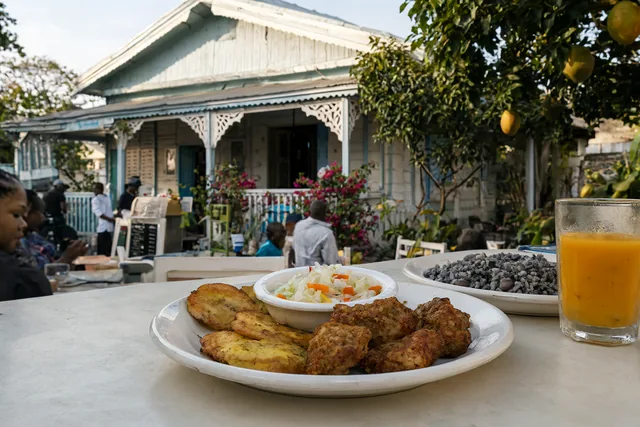
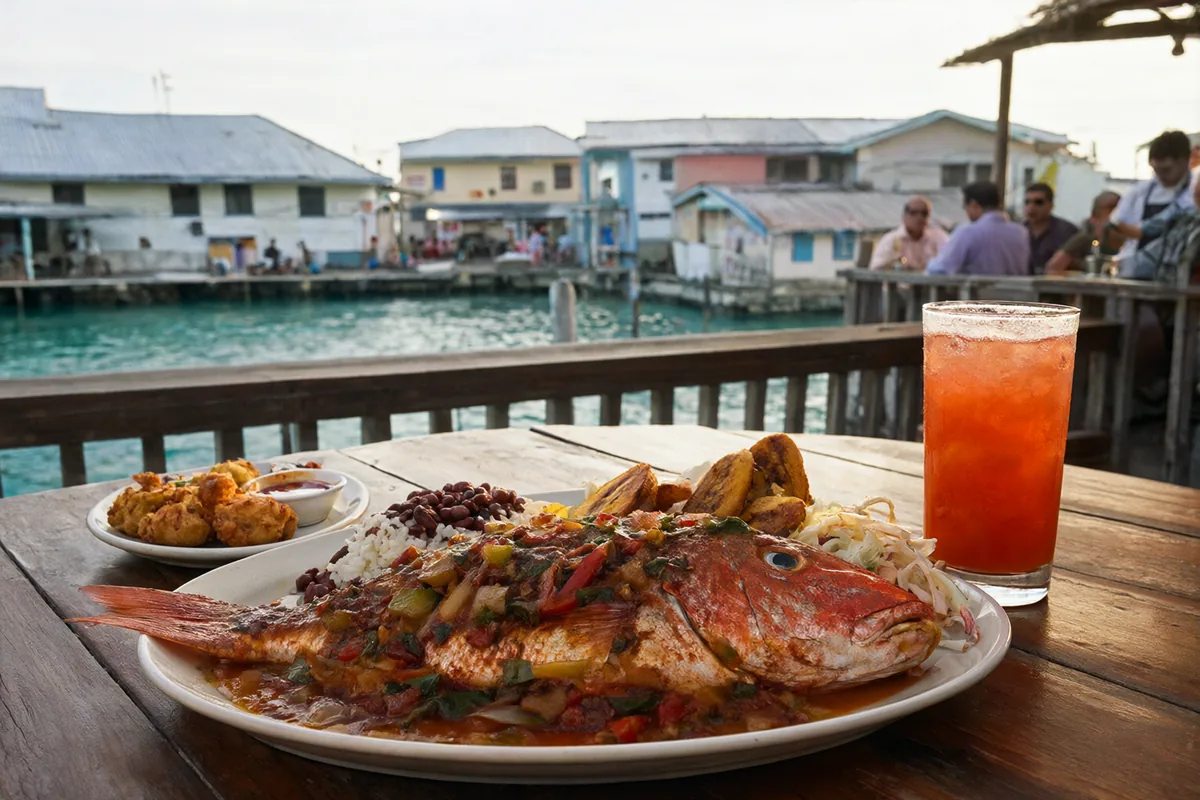
- Cayman-style fish: snapper, wahoo or mahi-mahi cooked in a sauce of tomato, onion, sweet pepper, thyme and Scotch bonnet chilli, usually served with rice and beans, fried plantain and coleslaw. Ask for it on any local menu.
- Fish rundown: fish stewed slowly in coconut milk with breadfruit, cassava, yam, plantain and flour dumplings until the sauce "runs down" and thickens.
- Turtle stew: the most traditional Caymanian dish, made with green turtle meat raised at the islands' turtle farm in West Bay and stewed in a rich, dark gravy. It is legal and served in local restaurants and at festivals; some visitors choose not to eat it for conservation reasons.
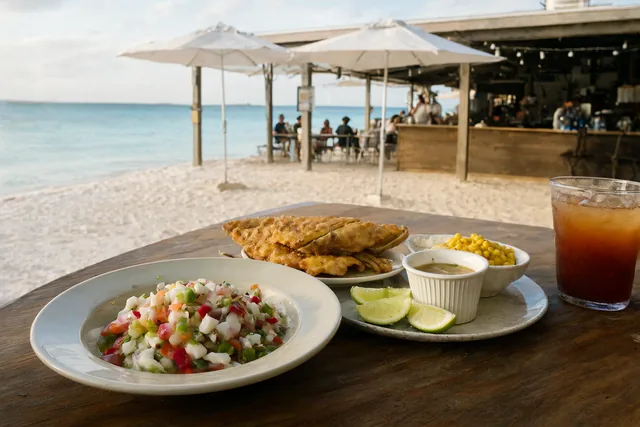
- Conch: stewed in a tomato and coconut sauce, battered as conch fritters, or chopped raw with lime, onion and pepper in a conch salad. It is pronounced "konk".
- Cayman-style beef: beef slow-cooked with onions, peppers and spices until very tender, a Christmas and celebration dish.
- Heavy cake: a dense, sticky cake of grated cassava with coconut milk, brown sugar and spices, also made with yam or pumpkin. It is the classic Caymanian sweet.
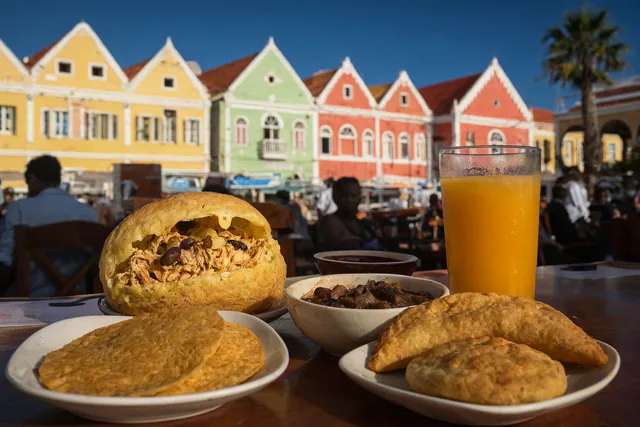
- Fritters and johnnycakes: fried dough, sometimes slightly sweet, served at breakfast or beside fish.
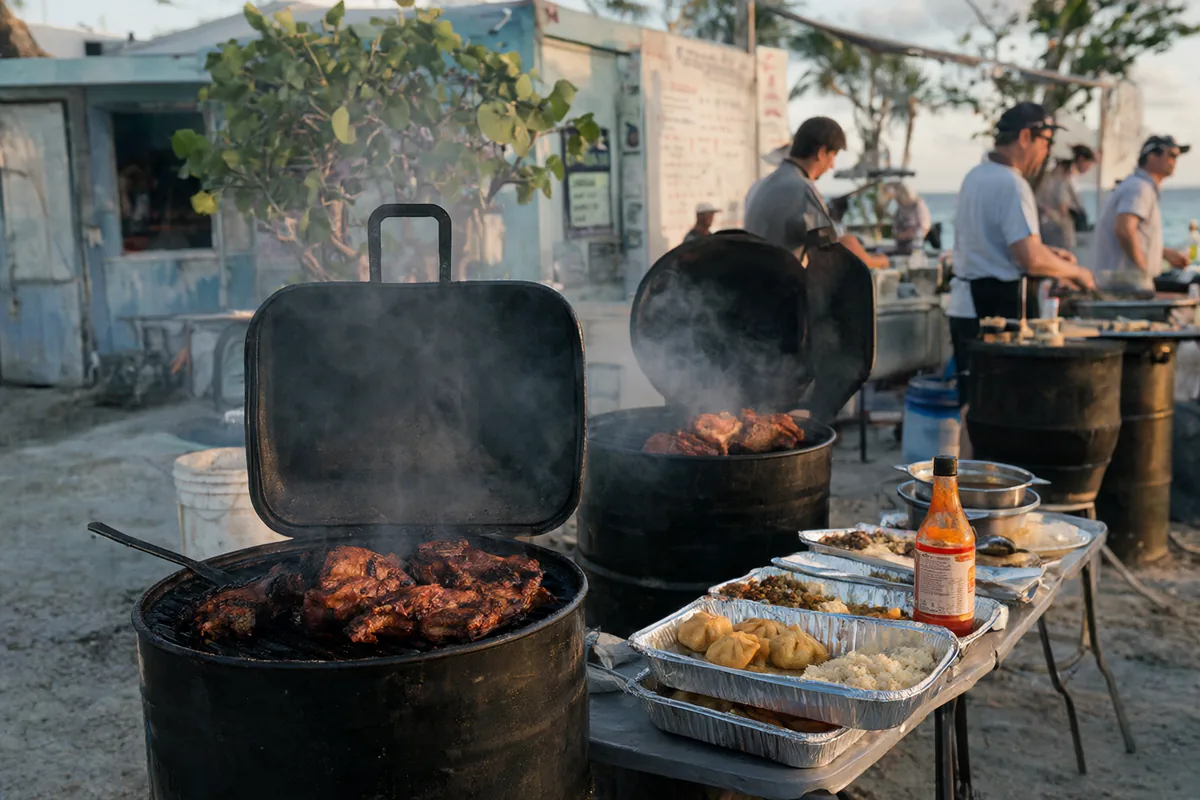
- Jerk chicken and pork: grilled over oil-drum barbecues at roadside stands, especially on Friday and Saturday evenings, a reminder of the islands' close ties with Jamaica.
- Lionfish: an invasive fish that damages the reef, so Caymanians encourage eating it. It is mild and white, served fried, grilled or as ceviche.
- Fish tea and mannish water: light, peppery soups made from fish heads or goat, sold at local cookshops and stands.
- Rum cake and rum punch: rum cake is the islands' best-known food souvenir, and rum punch is on every beach bar menu. The mudslide cocktail is said to have been invented at Rum Point on Grand Cayman.
How to read a menu in the Cayman Islands
Menus are in English, and Grand Cayman's restaurants serve almost every cuisine you can think of. Local dishes, though, come with their own vocabulary, and a few ordinary words do not mean what you expect. These are the terms you will see.
| Caymanian term | What it means |
|---|---|
| Cayman-style | Cooked in a tomato, onion, sweet pepper and Scotch bonnet sauce |
| Rundown | Stewed in coconut milk with breadfruit, cassava and dumplings |
| Heavy cake | Dense cassava, coconut and brown sugar cake |
| Dumplin / fritter | Flour dumpling, boiled or fried / fried dough bread |
| Breadfruit | Starchy tree fruit, roasted, boiled or fried like potato |
| Conch | Large sea snail, pronounced "konk" |
| Dolphin | Mahi-mahi, a fish, not the mammal |
| Wahoo | A fast, firm-fleshed fish, often grilled or Cayman-style |
| Catch of the day | Whatever the local boats brought in, priced daily |
| Fish tea | A thin, peppery fish broth |
| Jerk | Rubbed with allspice and Scotch bonnet and grilled |
| Market price (MP) | Price changes daily, ask before ordering |
| Gratuity included | A service charge has already been added |
| CI$ / US$ | Cayman Islands dollars or US dollars |
Many Cayman menus are priced in CI dollars and many bills add a gratuity before you see the total. Check both before you tip or sign. swap.menu converts every price on the menu from CI or US dollars to your home currency and points out where a gratuity will be added, so you do not pay the tip twice.
Gratuities, prices and paying the bill
The Cayman Islands have no sales tax, VAT or GST, so there is no tax line on a restaurant bill. Instead, most sit-down restaurants add a gratuity or service charge, commonly 15 percent, and some add it only for larger groups. If it is included, you do not need to tip more, though some people add a little extra for very good service. If it is not, leave 15 to 20 percent. Our guide to tax and service charges on menus explains how these lines work around the world.
The currency is the Cayman Islands dollar (CI$, KYD), which is fixed to the US dollar. US dollars are accepted everywhere, but change is usually given in CI dollars, and some menus are priced in one currency while the card machine charges in the other. Ask which currency a price is in. Cards are accepted almost everywhere, including most local cookshops, but roadside jerk stands and small vendors may prefer cash. If a card terminal offers to charge your card in your home currency, decline: our guide to paying in local currency explains why.
Eating out in the Cayman Islands is expensive, because almost all food is imported. Lunch specials, local cookshops and roadside stands are the best value. Lunch is from about 11:30am to 2:30pm and dinner from 6pm to 10pm. Restaurants are busiest in the winter high season from December to April, when booking ahead for dinner on Seven Mile Beach is wise.
Where to eat in the Cayman Islands, district by district
Almost all the restaurants are on Grand Cayman, along the west coast between George Town and West Bay. The quieter eastern districts and the Sister Islands are where you find more traditional Caymanian cooking. Jump to an area:
Where to eat in George Town
George Town, the capital, is where cruise ship passengers come ashore, and the restaurants along Harbour Drive and the waterfront fill with day visitors at lunchtime. The waterfront places serve seafood, conch fritters, jerk and rum punch with views of the harbour, and some have decks where you can watch the tarpon in the clear water below. For a quieter and cheaper lunch, walk a few streets inland, where office workers eat at local cookshops serving Cayman-style fish, curry goat, stew chicken, oxtail and rice and beans.
George Town also has the islands' strongest concentration of Jamaican, Honduran, Filipino and Indian kitchens, which feed the many people who have come to work in Cayman, and they are some of the best value meals on the island. If you want to try turtle stew or heavy cake, ask at a local George Town restaurant, as they are rarely on tourist menus. On cruise days, eat before the ships arrive or after they leave.
Where to eat on Seven Mile Beach and at Camana Bay
Seven Mile Beach, the long stretch of sand north of George Town, is where most visitors stay and where most of the islands' upmarket restaurants are, inside resorts and along West Bay Road. This is the international side of Cayman: sushi, steakhouses, Italian, Mediterranean and modern Caribbean cooking, with fresh local fish on most menus. Beach bars along Seven Mile Beach serve fish tacos, conch fritters and cocktails with the sunset.
Camana Bay, a planned waterfront town centre between Seven Mile Beach and the North Sound, has a cluster of restaurants, cafés and bakeries around its squares and harbour, and a weekly farmers' and artisans' market where local growers sell fruit, vegetables and homemade sauces and cakes. In January, Grand Cayman hosts the Cayman Cookout, a food festival that brings well-known chefs to the island. Seven Mile Beach prices are high, so look for lunch menus and happy hours.
Where to eat in West Bay
West Bay, the district at the northern end of Seven Mile Beach, is one of the older Caymanian communities, and it feels more local than the resort strip just south of it. It is home to the Cayman Turtle Centre, the village of Hell with its black limestone formations, and several seaside local restaurants serving traditional food: Cayman-style fish, fish rundown, conch stew, turtle stew, fritters and heavy cake.
On Friday and Saturday evenings, look for roadside jerk stands and fish fries in West Bay, where locals cook over oil-drum grills and sell plates with rice and beans and festival dumplings. The waterfront along the north-west point is quieter, with a few bars and casual restaurants facing the sunset. West Bay is a short drive or bus ride from Seven Mile Beach, and a good place to eat with Caymanians rather than visitors.
Where to eat in Bodden Town and East End
The eastern half of Grand Cayman, made up of the districts of Bodden Town, North Side and East End, is quiet, green and much less developed, and it is the best place to find Caymanian home cooking. Bodden Town, the old capital, has small local restaurants and roadside stands serving fish, jerk and conch, and the historic Pedro St James house nearby. East End is a fishing community, with simple seaside restaurants serving the day's catch Cayman-style, fish tea and fried fish with fritters.
On the north coast, Rum Point and the beaches around it are popular for a long beach lunch, with bars serving burgers, fish and frozen cocktails, and the nearby Starfish Point. Restaurants in the eastern districts often close earlier than on Seven Mile Beach, and some open only on certain days, so check before driving out for dinner. The November festival season, with heritage days held in each district, is the best time to taste traditional Caymanian dishes cooked by local families.
Where to eat on Cayman Brac and Little Cayman
Cayman Brac and Little Cayman, the Sister Islands, are a short flight from Grand Cayman and very different in pace. Cayman Brac has a small population, a dramatic limestone bluff and a handful of restaurants, including resort dining rooms, local cafés serving Caymanian dishes and takeaway counters. Fish, conch and lobster are cooked the traditional way here, and Brackers, as the islanders are called, are proud of their heavy cake and home cooking.
Little Cayman has only a few hundred residents and very few places to eat outside its dive resorts, most of which serve all meals as part of a package. If you are staying on either island, check what is open before you arrive, as hours can be short and some places close in the low season. Supplies come in by plane and boat, so menus depend on what has arrived, and bringing a few snacks is sensible.
Vegetarian, vegan and allergy tips
On Grand Cayman, vegetarians and vegans are well catered for, with plant-based dishes on most restaurant menus and labels for vegetarian, vegan and gluten-free choices common in the larger restaurants. Traditional Caymanian food is harder: rundowns, stews and soups are built around fish, turtle, beef or goat, and rice and beans may be cooked with meat stock or pork. Ask for vegetable rundown or steamed vegetables with rice and plantain at local places. Vegetarian is simply vegetarian.
Coconut milk appears in rundowns, rice and beans and heavy cake, and shellfish allergies need care because conch and lobster turn up in fritters, soups and salads. Scotch bonnet chilli is used in many local dishes, so ask for "light on the pepper" if you are sensitive. Our guide to eating abroad with food allergies explains how to communicate an allergy clearly, which helps on Grand Cayman, where many kitchen staff come from overseas.
Caymanian food terms and ordering phrases
Everyone speaks English, and Caymanians have a gentle, distinctive accent. These are the phrases and terms that make ordering easier.
Is that CI or US? Cayman dollars or US dollars: the first question for any price
Is the gratuity included? Ask before tipping. Many bills already add a service charge
Can I have the fish Cayman-style? Cooked in the local tomato, onion and pepper sauce
What's the catch of the day? Usually snapper, wahoo, mahi-mahi or tuna
Light on the pepper, please Less Scotch bonnet chilli
Rice and beans or white rice? The usual choice of side with local plates
Konk How to say conch, as in conch fritters and conch stew
Do you have heavy cake today? It is not always on the menu, so ask at local kitchens
How swap.menu helps you eat in the Cayman Islands
Cayman menus are in English, but terms like rundown, Cayman-style, heavy cake, fish tea and "dolphin" on a seafood list can leave visitors guessing. Photograph the menu with swap.menu and every dish is explained, with prices converted from CI or US dollars to your home currency and any gratuity flagged before the bill arrives. Menus you scan are saved, so you can compare restaurants along Seven Mile Beach before you book.
Visitors from Germany, Italy, Brazil, Japan or anywhere else can read the whole menu in their own language, in 29 languages, with the English name kept beside each dish, and add notes such as "no shellfish" for the kitchen. Try it now on a sample menu with the free demo, or see travel pass prices.
Off to the Cayman Islands? Your first 3 menu scans are free, and a travel pass starts from $4.99 with nothing that renews.
Start free with 3 scansCayman Islands food FAQ
Do you tip in restaurants in the Cayman Islands?
Most restaurants add a gratuity, commonly 15 percent, to the bill, so check before tipping. If no gratuity has been added, leave 15 to 20 percent. There is no sales tax on restaurant bills.
What food are the Cayman Islands famous for?
Cayman-style fish, fish rundown, conch fritters and conch stew, turtle stew, heavy cake and rum cake are the best-known Caymanian foods. Grand Cayman is also known for its wide range of international restaurants.
Is the Cayman Islands expensive to eat out?
Yes, it is one of the most expensive places to eat in the Caribbean because most food is imported. Local cookshops, lunch specials and roadside jerk stands are the cheapest options.
Is tap water safe to drink in the Cayman Islands?
Yes. Tap water on Grand Cayman is produced by desalination and is safe to drink. On the Sister Islands, ask at your accommodation, as some properties use cistern water.
Can I pay in US dollars in the Cayman Islands?
Yes, US dollars are accepted everywhere, though change is usually given in Cayman dollars. Check whether a menu price is in CI or US dollars, as many are in CI dollars.
How can I understand Cayman menus and prices?
Learn a few terms such as rundown, Cayman-style and heavy cake, and always check the currency and whether a gratuity is included. Or photograph the menu with swap.menu, which explains every dish, converts prices to your currency and flags any service charge.
Travelling further in the Caribbean? Read our food guides for nearby islands:
- Jamaica food guide
- Cuba food guide
- Turks and Caicos food guide
- Bahamas food guide
- Honduras food guide
Or browse every travel food guide.