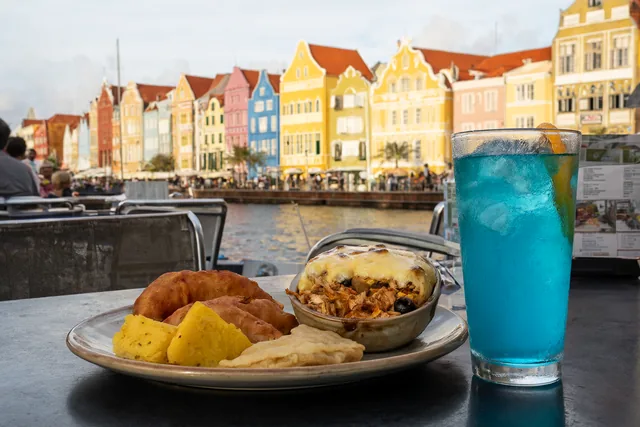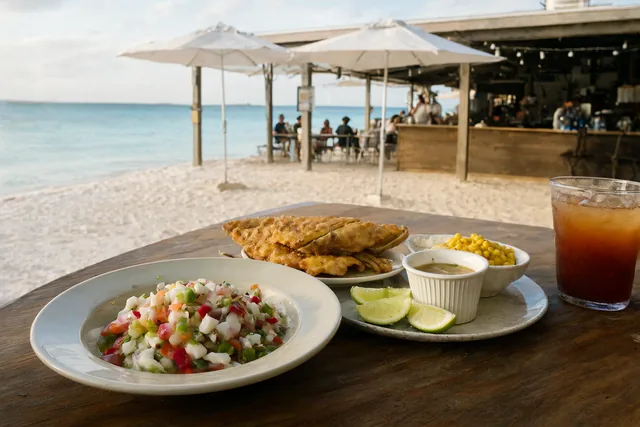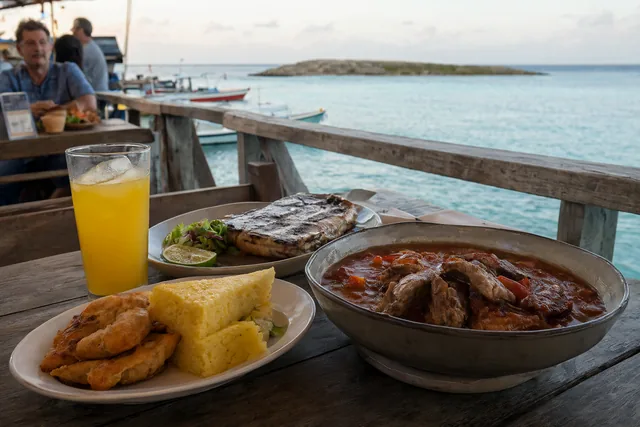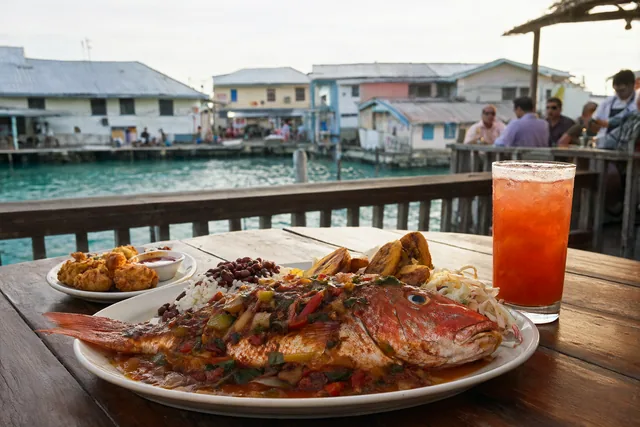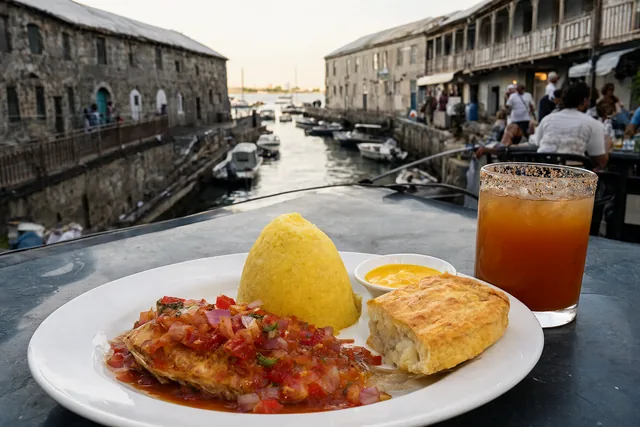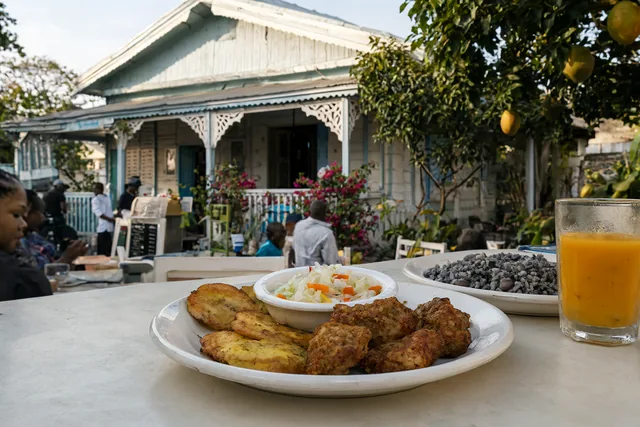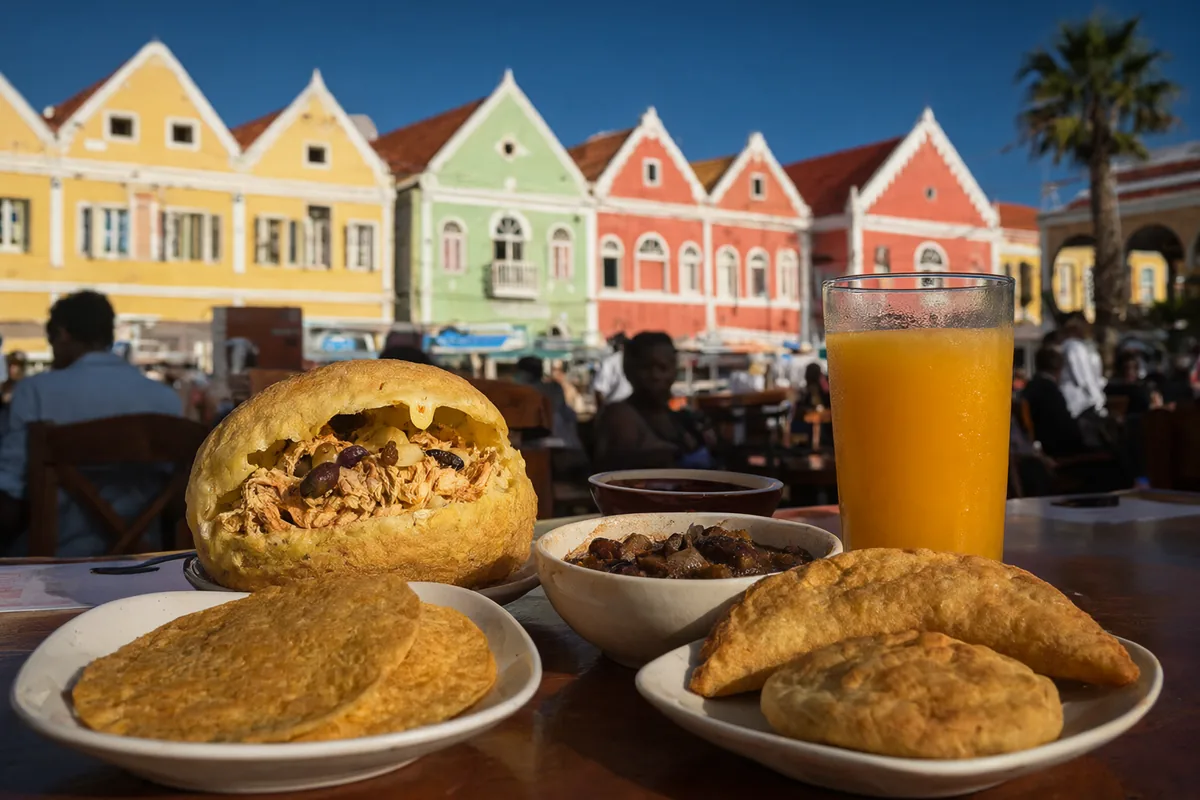
Aruba is best known for its beaches and its long row of resort restaurants, but the island has its own food, called cuminda crioyo: Creole cooking shaped by Arawak, Dutch, Spanish, African, Venezuelan and Indonesian influences. This Aruba food guide covers the Aruban dishes to order, how to read a menu written in Papiamento or Dutch, how service charges and the florin work, then goes area by area through where to eat in Oranjestad, Eagle Beach, Palm Beach and Noord, Savaneta and San Nicolas. Get away from the hotel strip at least once: a plate of fried fish with funchi at a fishermen's dock or a pastechi from a snack bar is as Aruban as it gets.
What to eat in Aruba: 12 dishes to know
Aruban food shares a lot with Curaçao and Bonaire, its neighbours in the so-called ABC islands, but has its own specialities and spellings. These are the dishes worth seeking out.
- Keshi yena: "stuffed cheese", a dish born from using up the rinds of Dutch Edam and Gouda. A hollowed cheese, or slices of cheese lining a dish, is filled with spiced chicken or beef with olives, capers, raisins and tomato, then baked until the cheese melts around it.
- Pastechi: crescent-shaped fried pastries filled with cheese, spiced beef, chicken, tuna or ham and cheese. Arubans eat them for breakfast with a coffee, and snack bars sell them all day.
- Pan bati: a slightly sweet, thick cornmeal and flour pancake, cooked on a griddle and served on the side with soups, stews and fried fish. It is a true Aruban speciality.
- Funchi: cornmeal cooked into a firm, smooth polenta, served in slices beside stews, or fried. It is the starchy side for most Creole plates.
- Stoba di cabrito: goat stewed slowly with tomato, onion, sweet pepper, cumin and spices. Beef stew (stoba di carni) is just as common.
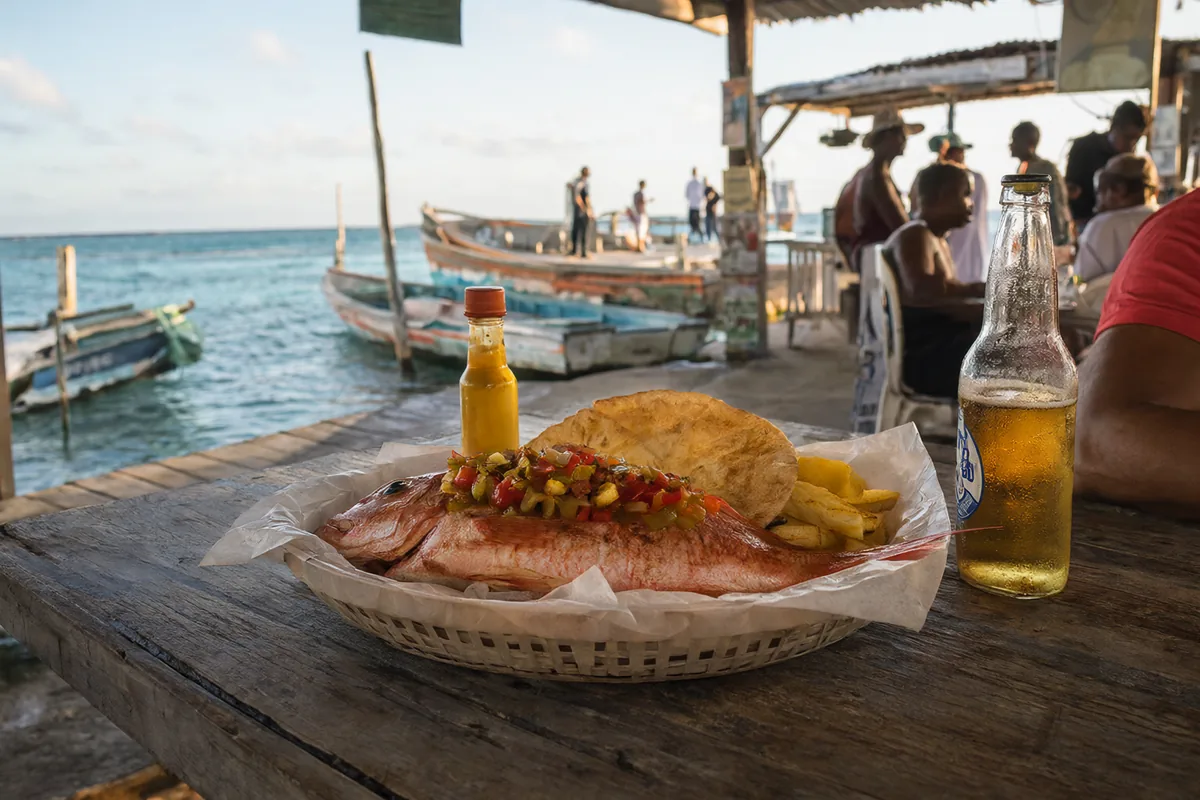
- Pisca hasa ku salsa crioyo: fried whole fish, often red snapper or wahoo, topped with a Creole sauce of tomato, onion and sweet pepper, and served with funchi or pan bati.
- Sopi di pisca and sopi di bonchi: a fish soup with vegetables and a hearty bean soup, often eaten with pan bati.
- Cala and croquettes: cala are deep-fried black-eyed pea fritters, and Dutch-style kroketten and bitterballen are sold at snack bars across the island.
- Saté, bami and nasi: Indonesian dishes brought over through the Dutch connection: chicken satay with peanut sauce, fried noodles and fried rice, found on many local menus.
- Ayaca: a Christmas dish from Venezuela, of corn dough filled with stewed meat, olives and raisins, wrapped in banana leaves and boiled.
- Pica di papaya: Aruba's signature hot sauce of green papaya, onion, vinegar and the very hot local Madame Jeanette pepper. It is on most local tables; use it sparingly.
- Sweets and drinks: bolo preto (a dark fruit and rum cake for weddings and holidays), cocada (coconut candy), quesillo (caramel custard) and, at Christmas, ponche crema, a rum and egg liqueur. The Aruba Ariba is the island's best-known cocktail.
How to read a menu in Papiamento and Dutch
Aruba's official languages are Papiamento and Dutch, but almost everyone also speaks English and Spanish, and tourist restaurants print menus in English. Local snack bars, Creole restaurants and specials boards often use Papiamento, and supermarket and bakery labels are often in Dutch. Aruba spells Papiamento differently from Curaçao and Bonaire (cuminda here, kuminda there), so the same dish may be written two ways.
| Papiamento | Dutch | Meaning |
|---|---|---|
| Cuminda crioyo | Lokale keuken | Local Creole food |
| Desayuno | Ontbijt | Breakfast |
| Carni | Vlees | Meat (often beef) |
| Galiña | Kip | Chicken |
| Cabrito | Geit | Goat |
| Pisca | Vis | Fish |
| Camaron | Garnalen | Prawns |
| Sopi | Soep | Soup |
| Stoba | Stoofpot | Stew |
| Hasa | Gebakken | Fried or baked |
| Keshi | Kaas | Cheese |
| Aros | Rijst | Rice |
| Dushi | Lekker | Delicious, sweet (also "darling") |
| Cuenta | Rekening | The bill |
Many Aruban menus show prices in both florins and US dollars, and some list one currency only. swap.menu reads either, converts every price to your home currency, explains Creole dishes like keshi yena and stoba, and points out any service charge printed at the bottom of the menu.
Service charges, tipping and paying the bill
Many Aruban restaurants add a service charge to the bill, often 10 to 15 percent, and it should be stated on the menu. If a service charge has been added, an extra tip is optional; some people leave a little more for very good service, as the service charge does not always reach the person who served you. If no service charge appears, leave 10 to 15 percent. Aruba's turnover taxes are usually included in menu prices or added as a small line on the bill. Our guide to tax and service charges on menus explains how these lines work.
The currency is the Aruban florin (AWG, written Afl.), but US dollars are accepted everywhere and many tourist menus are priced in them. Change may be given in florins. Cards are accepted at almost all restaurants, hotels and shops, while some snack bars, food trucks and fishermen's places prefer cash. If a card machine offers to charge you in your home currency, decline and pay in the local currency or US dollars: our guide to paying in local currency explains why.
Eating out in Aruba is expensive along the resort strip and much cheaper at local snack bars, food trucks and Creole restaurants inland. Lunch is from about noon to 2pm and dinner from 6pm to 10pm. Many local places are busy at lunchtime and quieter in the evening, while the Palm Beach restaurants fill up at dinner.
Where to eat in Aruba, area by area
Aruba is small, about 30 kilometres long, and easy to explore by car or bus. The hotels and most restaurants are on the west coast, from Oranjestad north to Palm Beach, and the more local food is in the south. Jump to an area:
Where to eat in Oranjestad
Oranjestad, the capital, is a compact harbour town of pastel Dutch colonial buildings, shopping streets and a free tram that runs from the cruise terminal to Main Street. The waterfront along L.G. Smith Boulevard and the marinas has restaurants and bars facing the harbour, popular with cruise passengers at lunchtime. Inland, the small streets around Main Street and the historic Fort Zoutman have cafés, bakeries and lunch counters where office workers eat stoba, fried fish, pastechi and pan bati.
Oranjestad is the best place in Aruba for an affordable local lunch. Look for small Creole restaurants and snack bars a few blocks back from the harbour, where specials boards list the day's soups and stews in Papiamento. In the evening, the restaurants around the marinas and the Renaissance area are lively, and in January and February the streets of Oranjestad fill for Carnival, with food stalls along the parade routes.
Where to eat on Eagle Beach
Eagle Beach, just north of Oranjestad, is one of Aruba's widest beaches, known for its twisted fofoti trees and its low-rise hotels and timeshares. The restaurants on Eagle Beach are mostly attached to the hotels or across the road from the sand, serving seafood, steaks, Caribbean and international dishes, many with tables on the beach for sunset. Fresh local fish, keshi yena and coconut shrimp appear on many menus.
Eagle Beach is quieter than Palm Beach, with fewer restaurants, so it is worth exploring the roads inland, where a few local and international places are cheaper than the beachfront. Several restaurants offer barbecue nights and beach dinners. Book for sunset tables, especially in the winter high season from December to April.
Where to eat in Palm Beach and Noord
Palm Beach is Aruba's busiest strip, lined with high-rise resorts, and the stretch of road behind it has the island's biggest concentration of restaurants: steakhouses, seafood, Italian, Argentine grills, sushi, Indian, Dutch pancake houses and beach bars. Palm Beach restaurants are polished and priced for visitors, and dinner here is as much about the setting as the food. The piers and beach bars along the sand are the place for a sunset cocktail.
Just inland, the district of Noord has a wider range of restaurants, including more local and casual places, food trucks in car parks in the evening, and small shops selling pastechi and snacks. Near the northern tip, the fishermen's huts at Hadicurari mark a beach popular with windsurfers and kite surfers, with casual places for a drink. Palm Beach is at its busiest at dinner, so book ahead or eat early.
Where to eat in Savaneta
Savaneta, on the south coast, was Aruba's first capital and is still a quiet fishing village. It is one of the best places in Aruba to eat fresh fish in a completely local setting. Savaneta's fishermen bring their catch straight to the docks, and simple waterfront places fry it whole, or as fillets, with funchi, pan bati, fries and Creole sauce. You order at a counter, pick your fish and wait for your number to be called, with a cold beer at a picnic table over the water.
Savaneta also has a few small Creole restaurants and seaside places with more formal dining, and a beach area where locals swim at weekends. The fishermen's places in Savaneta are busy on Friday and Saturday evenings and Sunday afternoons, when families come to eat, so expect a queue and bring cash in case the card machine is not working.
Where to eat in San Nicolas
San Nicolas, near the south-eastern end of the island, grew up around the oil refinery and was home to workers from across the English-speaking Caribbean, which is why you will hear English with a Caribbean accent and find dishes like johnny cakes here. Known as "Sunrise City", San Nicolas has reinvented itself with large street art murals, galleries and festivals, and its small restaurants and snack bars serve Creole food, Caribbean plates and fresh fish at local prices.
San Nicolas is also the base for Baby Beach and Rodger's Beach, shallow lagoons at the southern tip with snack stands and beach bars serving fried fish, burgers and cold drinks. The town is quiet most evenings, so plan for lunch or an early dinner. Carnival in San Nicolas is especially lively, with food stalls and street parties during the season.
Vegetarian, vegan and allergy tips
Resort restaurants along Palm Beach and Eagle Beach usually have vegetarian and vegan dishes, often clearly marked, and many cater for gluten-free diets. Local Creole food is harder: stoba, soups and keshi yena are built on meat, chicken or fish, and beans and rice may be cooked with salted meat. Cheese pastechi, funchi, pan bati, cala, fried plantain and Indonesian vegetable dishes are good options. "I am vegetarian" is mi ta vegetariano in Papiamento and ik ben vegetariër in Dutch.
Peanuts appear in saté sauce and some Indonesian dishes, and fried food may share oil with fish and seafood. Pica di papaya is very hot. Keshi yena contains raisins, olives and capers, which some people do not expect. Our guide to eating abroad with food allergies explains how to make an allergy clear in another language.
Useful Papiamento phrases for ordering
Bon dia / Bon tardi / Bon nochi "Good morning / Good afternoon / Good evening"
Bon bini "Welcome", which you will hear everywhere
Mi ke esaki, por fabor "I would like this, please" (pointing)
Cuanto e ta costa? "How much does it cost?"
Mi no ta come carni "I do not eat meat"
E cuenta, por fabor "The bill, please"
Masha danki "Thank you very much"
E cuminda ta dushi! "The food is delicious!"
How swap.menu helps you eat in Aruba
Aruban menus can mix English, Papiamento and Dutch on the same page, with Creole dishes like keshi yena, stoba di cabrito, pan bati and funchi that most visitors have never seen. Photograph the menu with swap.menu and every dish appears in your language with the original name beside it and a short explanation. Prices are converted from florins or US dollars to your home currency, and we flag any service charge so you can tip correctly.
Tap the dishes you want, add a note such as "not spicy" or "no peanuts, please", typed or spoken, and swap.menu translates your order into Papiamento, Dutch or Spanish. Show the person at the counter your phone, or let them scan the QR code. Try it now on a sample menu with the free demo, or see travel pass prices.
Off to Aruba? Your first 3 menu scans are free, and a travel pass starts from $4.99 with nothing that renews.
Start free with 3 scansAruba food FAQ
Do you tip in restaurants in Aruba?
Many restaurants add a service charge of 10 to 15 percent, so check the bill. If it has been added, an extra tip is optional; if not, leave 10 to 15 percent. Snack bars and food trucks do not expect a tip.
What is the national dish of Aruba?
Keshi yena, cheese stuffed with spiced chicken or beef and baked, is often called the national dish. Pan bati, pastechi, goat stew and fried fish with funchi are also typical Aruban food.
Is Aruba expensive to eat out?
Restaurants along Palm Beach and Eagle Beach are expensive, with prices similar to the United States. Local snack bars, food trucks, fishermen's places in Savaneta and Creole restaurants in Oranjestad and San Nicolas are much cheaper.
Is tap water safe to drink in Aruba?
Yes. Aruba's tap water is produced by desalination and is safe and good to drink. There is no need to buy bottled water.
Can I pay in US dollars in Aruba?
Yes, US dollars are accepted everywhere and many menus show prices in dollars. Change may be given in Aruban florins. Cards are widely accepted.
How can I read a menu in Papiamento?
Learn a few words such as pisca, carni, stoba and sopi, or photograph the menu with swap.menu. It translates every dish into your language, explains Aruban dishes, converts prices from florins or dollars and translates your order into Papiamento.
Travelling further in the Caribbean? Read our food guides for nearby islands and countries:
- Curaçao food guide
- Bonaire food guide
- Venezuela food guide
- Colombia food guide
- Netherlands food guide
Or browse every travel food guide.