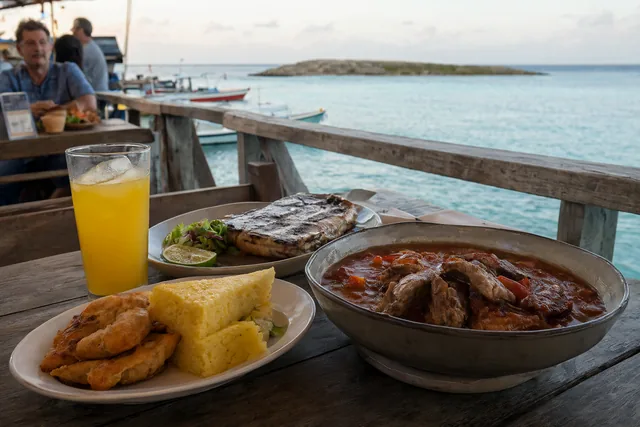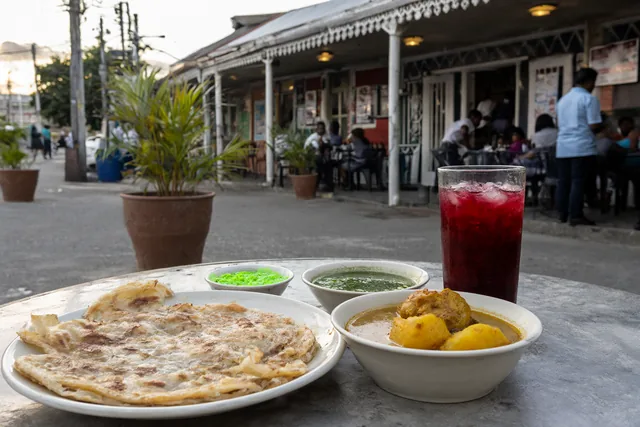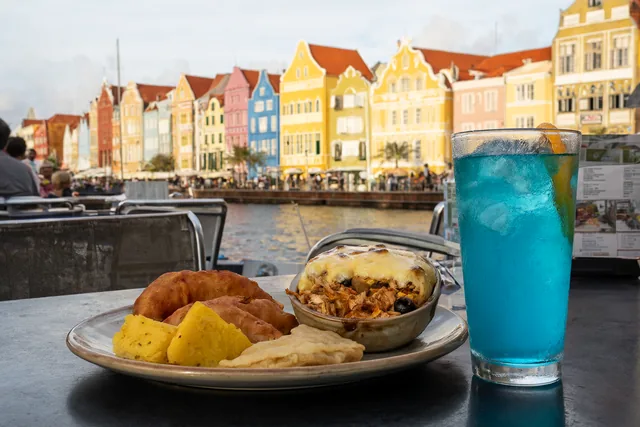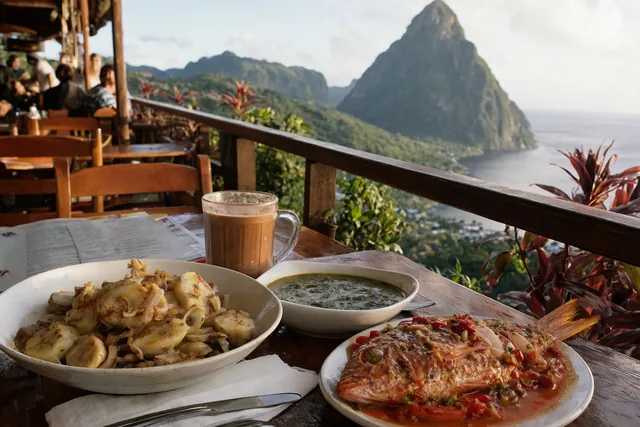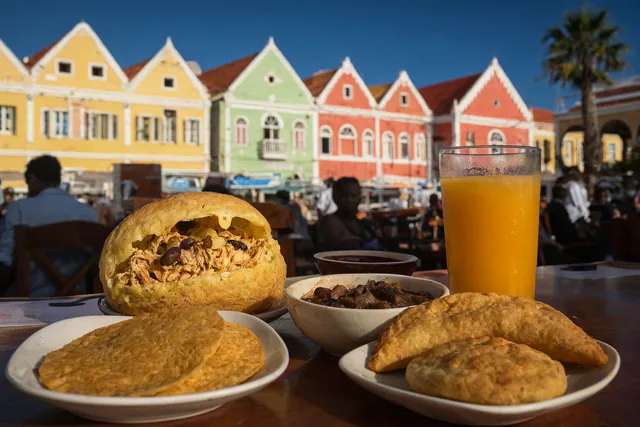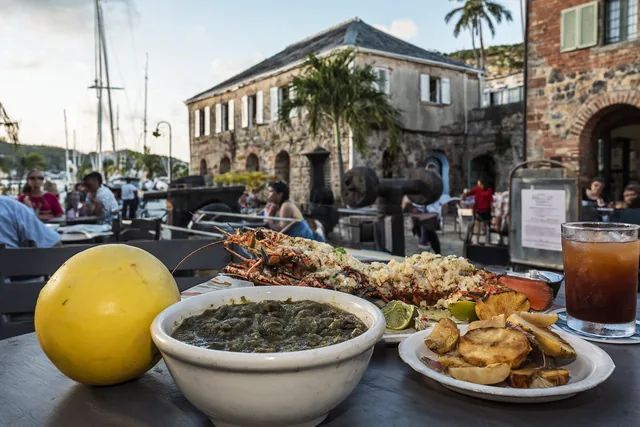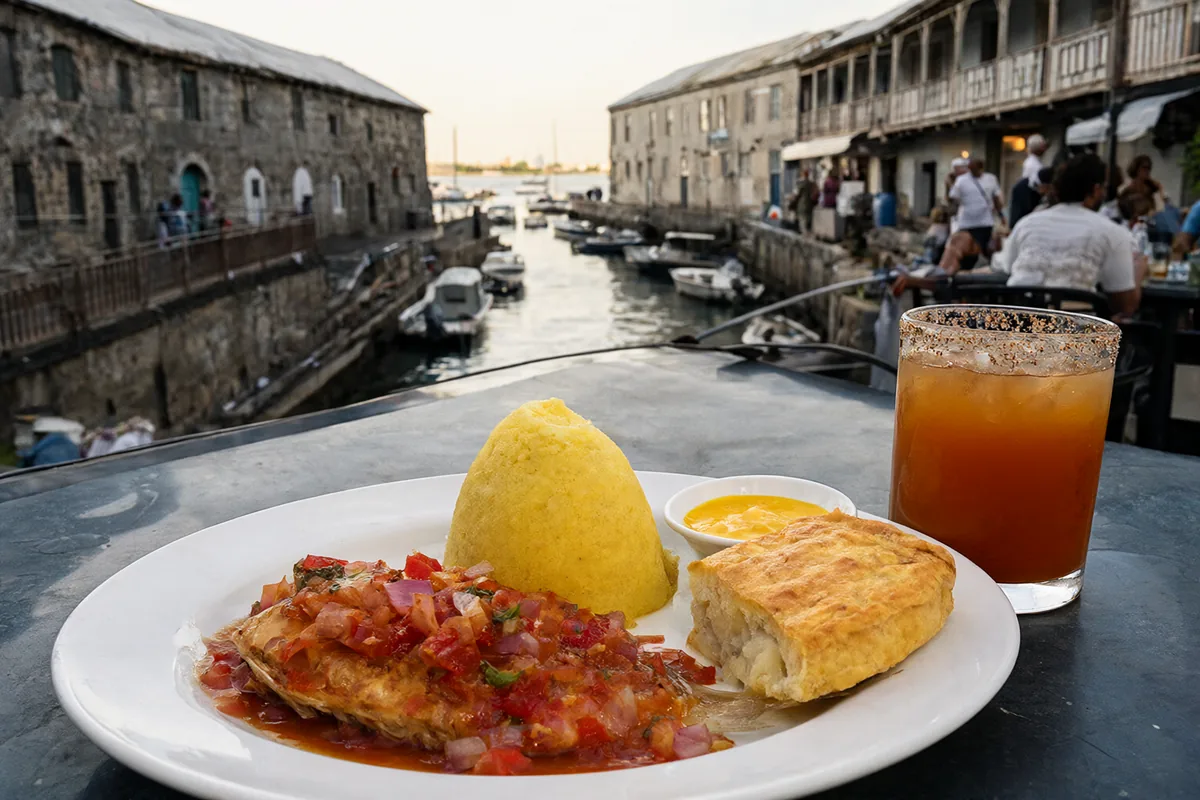
Barbados eats better than its size suggests. Bajan cooking is built on flying fish, cornmeal, breadfruit, salt cod and a fierce yellow pepper sauce, with a strong rum shop culture and a Friday night fish fry that half the island seems to attend. This Barbados food guide covers the Bajan dishes to order, the local menu words that puzzle even English-speaking visitors, how VAT, service charges and tipping work, then goes parish by parish through where to eat in Bridgetown, Oistins, St Lawrence Gap, Holetown, Speightstown and Bathsheba. Leave the resort for at least one fish cutter and one Friday at Oistins and you will understand why Bajans are so proud of their food.
What to eat in Barbados: 12 dishes to know
These are the dishes Bajans eat through the week and the ones that turn up for holidays. Most are easy to find at lunch counters, rum shops and fish fries as well as restaurants.
- Cou-cou and flying fish (everywhere): the national dish. Cou-cou is cornmeal stirred with okra until smooth and firm, served with flying fish steamed in a sauce of tomato, onion, thyme and pepper. Friday is the traditional cou-cou day.
- Flying fish cutter (everywhere): a fried fillet of flying fish in a salt bread roll with lettuce, tomato and a smear of pepper sauce. A "cutter" is any sandwich in salt bread: ham, egg, cheese or fish.
- Fish cakes and bakes (everywhere): spicy salt cod fritters, usually eaten with bakes (small fried dough cakes) or tucked into salt bread as "bread and two".
- Macaroni pie (everywhere): baked macaroni and cheese set firm enough to cut into squares, often seasoned with mustard, onion and pepper. It comes with almost every plate lunch.
- Pudding and souse (everywhere, Saturdays): souse is pickled pork in a sharp brine of lime, cucumber, onion and pepper; pudding is grated sweet potato steamed with seasoning. It is the classic Saturday lunch.
- Grilled fish plate (Oistins and the coasts): mahi-mahi (called dolphin on Bajan menus), marlin, tuna, kingfish or swordfish, grilled or fried, with macaroni pie, rice and peas, coleslaw or breadfruit.
- Pepperpot (Christmas): a dark, slow-cooked stew of beef and pork flavoured with cassareep, a thick cassava syrup, kept going on the stove for days.
- Jug-jug (Christmas): pigeon peas, guinea corn flour and salted meat cooked into a dense, savoury side, often said to be descended from Scottish haggis.
- Conkies (around 30 November): cornmeal, pumpkin, sweet potato, coconut, raisins and spice, wrapped and steamed in banana leaf, made for Independence.
- Breadfruit (everywhere): boiled, roasted, fried into chips or mashed into breadfruit cou-cou, depending on the cook.
- Bajan pepper sauce (on every table): a yellow sauce of Scotch bonnet peppers, mustard and vinegar. Taste a drop before you pour.
- Rum, rum punch and mauby (everywhere): Barbados claims to be the birthplace of rum, and the rum shop is the island's social hub. Mauby is a bittersweet drink made from tree bark, and local lager is drunk ice cold.
How to read a menu in Barbados
Bajan menus are in English, but the island has its own food vocabulary, and lunch counters often post the day's dishes on a whiteboard with no description at all. These are the terms you will meet most often.
| Bajan term | What it means |
|---|---|
| Cutter | A sandwich in a salt bread roll: fish cutter, ham cutter, cheese cutter |
| Salt bread | A dense, round white roll, the base of every cutter |
| Bread and two | A salt bread with two fish cakes inside |
| Bakes | Small fried dough cakes, slightly sweet, eaten with fish cakes or saltfish |
| Dolphin | Mahi-mahi (dorado), a fish, not the mammal |
| Flying fish | Small, mild white fish, the island's emblem, usually boned and fried or steamed |
| Cou-cou | Cornmeal and okra cooked to a firm, smooth mound |
| Macaroni pie | Baked macaroni and cheese, served in slices |
| Rice and peas | Rice cooked with pigeon peas or other beans, sometimes with salt meat |
| Pudding and souse | Steamed sweet potato pudding with pickled pork, a Saturday dish |
| Provisions / ground provisions | Boiled root vegetables: yam, sweet potato, eddoe, cassava |
| Pepper / pepper sauce | Hot chilli, usually Scotch bonnet. "No pepper" means no chilli |
| Bajan seasoning | A wet green paste of herbs, onion, garlic and pepper rubbed into meat and fish |
| Plus VAT and service | Tax and a service charge will be added to the listed price |
Barbados menus use the $ sign for both Barbados and US dollars, and some restaurants print both columns. swap.menu reads the menu, shows which currency each price is in, flags lines such as "plus VAT and 10% service" and converts every figure to your home currency, so a Bds$ fish plate and a US$ cocktail are never confused.
VAT, tipping and paying the bill
Barbados charges VAT at 17.5 percent on restaurant meals. Some menus include it in the price and some add it at the end, so read the small print at the bottom of the page. Many sit-down restaurants, particularly on the west and south coasts, also add a 10 percent service charge. If service is already on the bill, an extra tip is not needed, though leaving a little more for good service is common. If there is no service charge, tip 10 to 15 percent. Rum shops, lunch counters, bakeries and fish fry stalls do not expect a tip. Our guide to tax and service charges on menus explains how these extra lines work around the world.
The currency is the Barbados dollar (Bds$, BBD), which is fixed to the US dollar. US dollars are accepted almost everywhere, but change often comes back in Barbados dollars, and some places use a less generous rate than the official one. Cards are widely accepted at hotels, restaurants and supermarkets, but Oistins stalls, rum shops, vans and small bakeries prefer cash. If a card machine offers to charge you in your home currency rather than in Barbados dollars, decline: our guide to paying in local currency explains why.
Bajans eat lunch between noon and 2pm, and for many it is the main meal of the day, bought from a lunch counter or cooked at home. Dinner at restaurants is usually from 6:30pm to 9:30pm. Sunday lunch is a family tradition, and many hotels and restaurants put on a Bajan buffet with macaroni pie, rice and peas, baked chicken, pork and fish. Friday and Saturday nights belong to the fish fries and rum shops.
The biggest food event of the year is Crop Over, the summer festival that celebrates the end of the sugar cane harvest and builds to Grand Kadooment on the first Monday in August, with food stalls at every fete. The Oistins Fish Festival at Easter and the Holetown Festival in February are also good times for street food.
Where to eat in Barbados, parish by parish
Barbados is small enough to cross in an hour, but each coast has its own character: the capital's markets and lunch counters, the south coast's fish fries and bars, the west coast's beachfront dining and the wild Atlantic east coast. Jump to a town:
Where to eat in Bridgetown
Bridgetown, the capital, is where Bajans work, shop and grab lunch, and it is the best place on the island to eat like a local on a weekday. The streets around Swan Street and the bus terminals are full of lunch counters selling plate food by the box: baked or fried chicken, stewed pork, fish, macaroni pie, rice and peas, and a scoop of coleslaw. Cheapside Market, at the western end of town, is busiest on Saturday mornings, with fruit, vegetables, spices, pepper sauce and stalls selling breakfast and drinks.
By night, Bridgetown's most famous food street is Baxters Road, long known for late-night fried chicken and fish cooked over coals in big iron pots, best after a night out. The Careenage, the old inner harbour lined with stone warehouses, has waterfront restaurants and bars, and the boardwalk is a pleasant place for a sundowner. For a Bridgetown lunch, order cou-cou and flying fish if it is Friday, or a fish cutter and a mauby any day.
Where to eat in Oistins
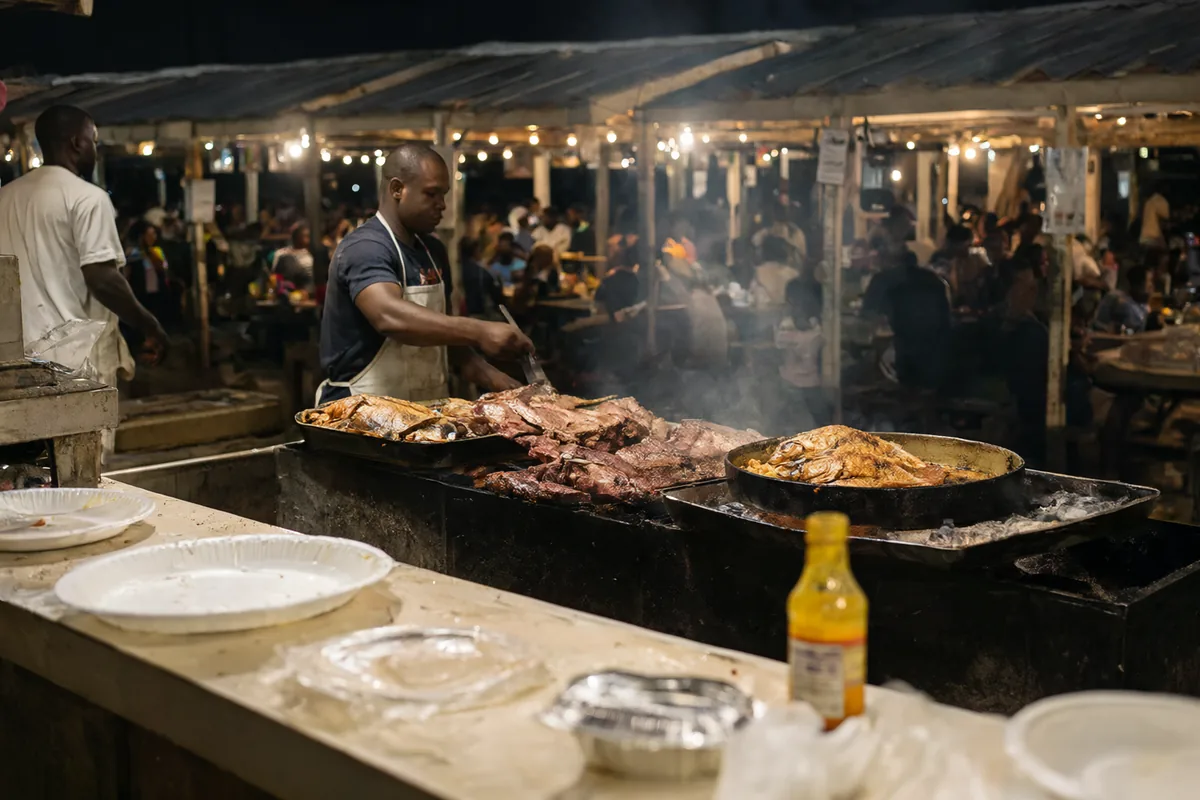
Oistins, a fishing town in the parish of Christ Church on the south coast, is home to the most famous night out in Barbados: the Oistins Friday night fish fry. From early evening, the stalls around the fish market fire up their grills and fryers and sell plates of marlin, mahi-mahi, tuna, swordfish, kingfish, flying fish and lobster in season, with macaroni pie, rice and peas, breadfruit, coleslaw or chips. Locals and visitors eat at long shared tables, rum flows from the bars, and older Bajans dance to classic hits in front of a sound system. Saturday is quieter but still busy.
Queues at the best-known stalls can be long, so arrive by 7pm or be ready to wait. Prices are usually written on boards, and fish is sold by the plate rather than by weight. Bring cash in small notes. During the day Oistins is a working fishing village, and the fish market is the place to watch the catch being cleaned and filleted. Over Easter weekend, the Oistins Fish Festival adds boat races, fish-boning contests and extra food stalls.
Where to eat in St Lawrence Gap
St Lawrence Gap, known to everyone as "the Gap", is a short strip of road between Dover and Worthing on the south coast, packed with restaurants, bars and clubs. It is the busiest place to eat out on the south coast, with everything from beachfront fine dining to pizza, sushi and late-night snack vans. Bajan dishes are on most menus, and grilled catch of the day is the safest choice. The Gap gets lively late on weekends, and street vendors sell grilled chicken, fish cakes and corn to the late crowd.
The wider south coast, from Hastings and Rockley to Worthing, has beach bars, local rum shops and casual seafood places that are often cheaper than the Gap itself. The Richard Haynes Boardwalk, running along the beach from Hastings, is good for an early evening walk before dinner. Check whether St Lawrence Gap menus quote Barbados or US dollars before you order, as both are used on this strip.
Where to eat in Holetown
Holetown, in St James on the west coast, is where the first English settlers landed in 1627, and today it is the centre of the "Platinum Coast", the stretch of calm beaches and luxury villas and hotels that runs north towards Speightstown. Holetown restaurants are the most expensive on the island: candlelit tables on the sand, international menus built around local fish and lobster, and serious wine lists. Booking ahead is wise in the winter season from December to April.
Holetown is not only for big spenders. The streets behind the main road have rum shops, a few casual lunch spots and snack bars, and the beach at Holetown has small bars serving fish cutters and cold beer. The Holetown Festival each February commemorates the first settlement with a week of events and food stalls. For a cheaper west coast dinner, eat early, sit at the bar, or drive a few minutes to the rum shops of nearby villages.
Where to eat in Speightstown
Speightstown, in the parish of St Peter, is the island's second town and was once a busy sugar port trading with Bristol. It feels far more local than Holetown, with old balconied buildings, a fish market on the seafront and small cafés and bakeries along the main street. Speightstown is a good place for a slower lunch: a fish cutter, a slice of coconut sweet bread or a plate of fried flying fish, eaten facing the sea.
North of Speightstown, the beaches at Mullins and around Six Men's Bay have beach bars and a few seafood restaurants, and Six Men's is one of the island's traditional fishing and boatbuilding villages. Inland, St Peter and St Lucy are rum shop country, where a rum shop is often a single room with a counter, a domino table and a pot of something cooking at the weekend. Speightstown is also the last stop for food before the quiet north of the island.
Where to eat in Bathsheba
Bathsheba, on the Atlantic coast in the parish of St Joseph, is the Barbados most visitors never see: rolling surf, huge rocks standing in the shallows, and the famous Soup Bowl surf break. The food scene in Bathsheba is small and honest: a handful of restaurants with sea views, guest houses serving Bajan lunch, and a few snack bars and rum shops. Lunch is the meal to plan here, ideally on the way back from Hunte's Gardens or the Andromeda gardens nearby.
Several places in and around Bathsheba serve a traditional Bajan buffet, especially on Sundays: macaroni pie, rice and peas, breadfruit, pumpkin fritters, fried flying fish and stewed meats. The road north along the coast to Cattlewash has a couple of casual spots for fish cakes and drinks. Swimming here is dangerous in most places, so make a long lunch in Bathsheba the main event, and drive back across the island before dark, as the roads are narrow and winding.
Vegetarian, vegan and allergy tips
Barbados is meat and fish heavy, but vegetarians can eat well with a little care. Macaroni pie, cou-cou, breadfruit, provisions, pumpkin fritters, plantain and vegetable roti are widely available, and the word on menus is simply vegetarian or veg. Rastafarian ital food, natural and usually vegan, is served at a few health food shops and stalls. Watch for hidden meat: rice and peas and soups can be cooked with salt meat or pig tail, stews start with meat stock, and the green Bajan seasoning is sometimes mixed into vegetable dishes cooked alongside meat. Macaroni pie contains egg and cheese.
Fish is everywhere, and shellfish such as lobster and shrimp appear on many menus, so seafood allergies need a clear explanation. Pepper sauce is very hot and often added at the table. Coconut is common in sweets and conkies, and bakes, cutters and fish cakes contain wheat flour, while cou-cou is made from cornmeal. Our guide to eating abroad with food allergies explains how to describe an allergy clearly and safely.
Bajan food slang and ordering terms
Everyone in Barbados speaks English, but at a rum shop or lunch counter you will hear Bajan dialect, which is fast, musical and full of its own words. These are the ones worth knowing.
Wuh gine on? "What's going on?", the everyday Bajan greeting
Good afternoon Always greet before you order. Walking up and asking for food straight away is considered rude
A fish cutter, please A fried fish sandwich in salt bread
Bread and two Salt bread with two fish cakes, a quick breakfast or snack
Lil bit o' pepper / no pepper "A little hot sauce / no hot sauce"
Small or large box? Plate lunches are sold in takeaway boxes by size
Liming Hanging out with friends, often over a drink or at a fish fry
De food sweet! "The food is delicious", the highest praise for a cook
How swap.menu helps you eat in Barbados
Barbados menus are in English, but that does not mean they are easy to read. Terms like cutter, bread and two, pudding and souse, jug-jug and dolphin catch out first-time visitors, and plenty of travellers have sent back a plate expecting something very different. Photograph the menu with swap.menu and every dish is explained in plain words, with the Bajan name kept beside it. Visitors from Germany, Italy, Brazil, Japan or anywhere else can read the whole menu in their own language, in any of 29 languages.
Every price is converted from Barbados or US dollars to your home currency, and we flag VAT and service charge lines so the final bill matches what you expected. Menus you scan are saved, so you can find that fish fry stall or west coast restaurant again later in the trip. Add a note such as "no pepper" or "no shellfish, please", typed or spoken, and show your phone to the cook. Try it now with the free demo, or see travel pass prices.
Off to Barbados? Your first 3 menu scans are free, and a travel pass starts from $4.99 with nothing that renews.
Start free with 3 scansBarbados food FAQ
Do you tip in restaurants in Barbados?
Many restaurants add a 10 percent service charge, and if it is on the bill an extra tip is optional. If there is no service charge, tip 10 to 15 percent at sit-down restaurants. Rum shops, lunch counters and fish fry stalls do not expect a tip.
What is the national dish of Barbados?
Cou-cou and flying fish is the national dish: cornmeal and okra cooked until firm, served with flying fish steamed in a tomato, onion and pepper sauce. It is traditionally eaten on Fridays.
When is the Oistins fish fry?
The Oistins fish fry runs every Friday night, with a smaller crowd on Saturday. Stalls start cooking in the early evening, and the busiest time is from about 8pm, when the music and dancing start.
Is tap water safe to drink in Barbados?
Yes. Barbados tap water comes from underground sources filtered through the island's coral limestone and is treated, and it is considered safe to drink across the island.
Is Barbados expensive to eat out?
Restaurants on the west coast and in tourist areas are expensive, especially once VAT and service are added. Lunch counters, fish fries, bakeries and rum shops are much cheaper and serve the most authentic Bajan food.
Can swap.menu help with Barbados menus?
Yes. swap.menu explains Bajan dishes and terms such as cutter, cou-cou and pudding and souse, translates the menu into 29 languages, converts prices from Barbados or US dollars to your home currency and flags VAT and service charges.
Travelling further in the Caribbean? Read our food guides for nearby islands:
- Saint Lucia food guide
- Saint Vincent and the Grenadines food guide
- Trinidad and Tobago food guide
- Grenada food guide
- Jamaica food guide
Or browse every travel food guide.