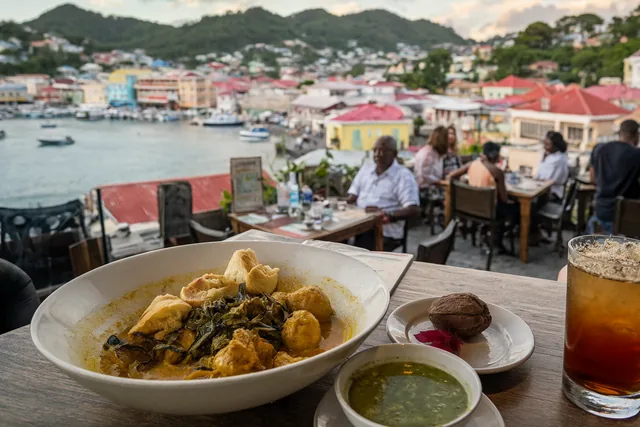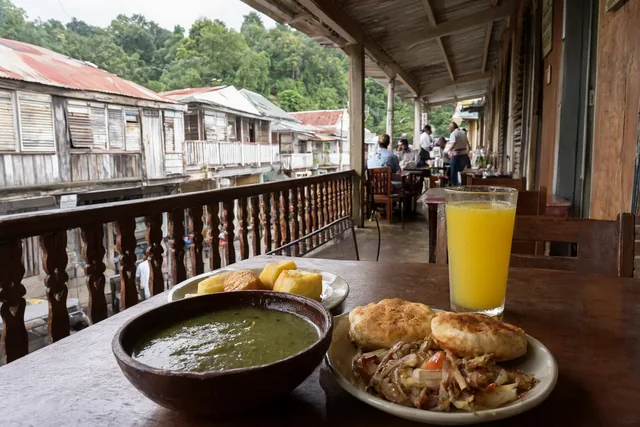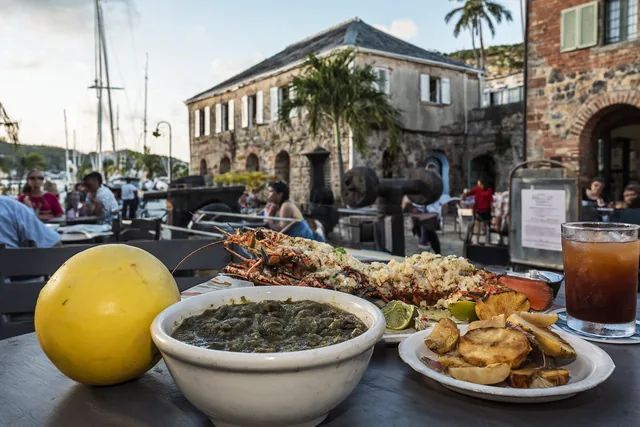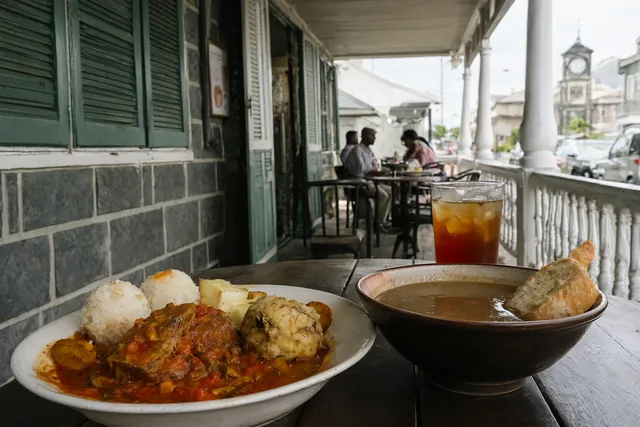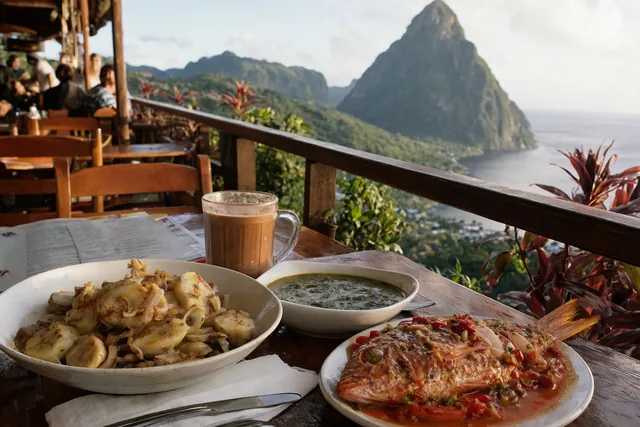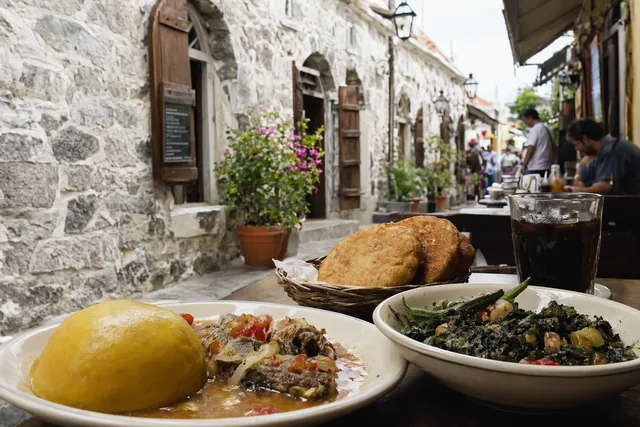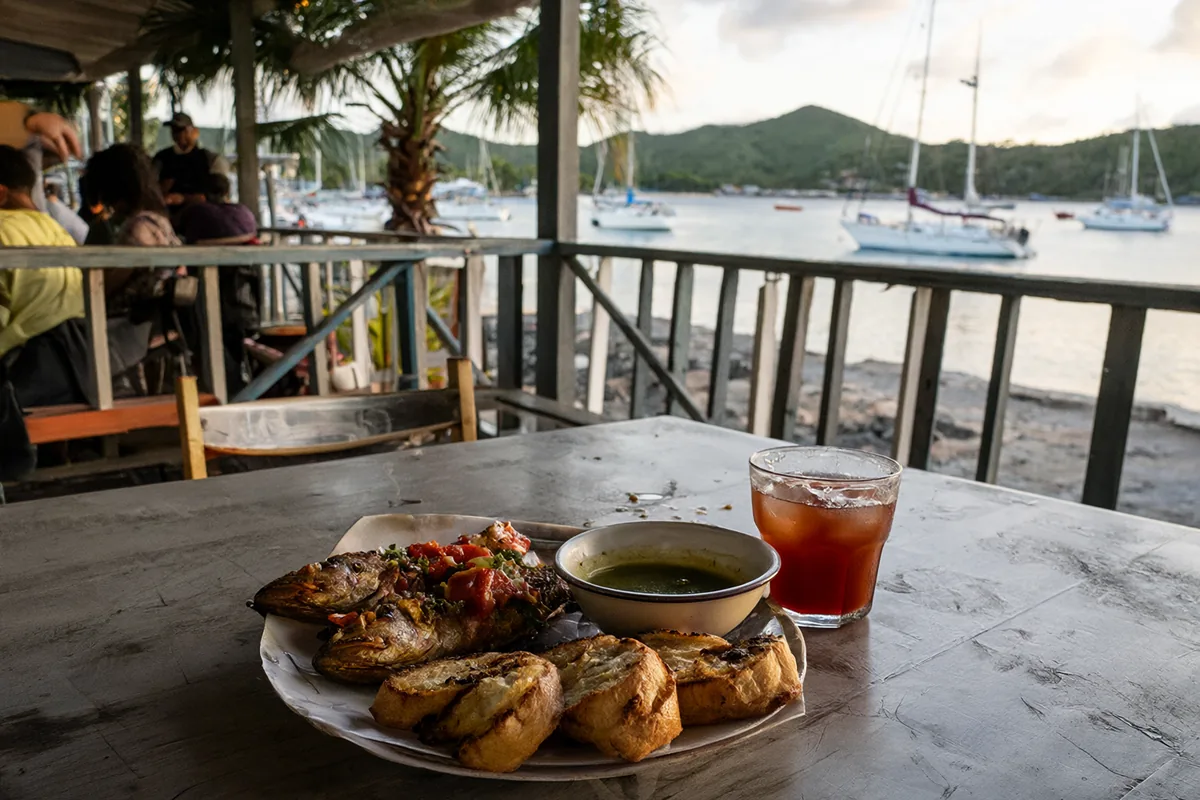
Saint Vincent and the Grenadines is two kinds of country in one: a steep, green volcanic main island where farmers grow breadfruit, dasheen, bananas and arrowroot, and a chain of small, dry Grenadine islands where the food is fish, conch and lobster cooked on the beach. This Saint Vincent and the Grenadines food guide covers the dishes to order, the local menu words, how VAT, service charges and tipping work, then goes island by island through where to eat in Kingstown, Villa on the south coast, Bequia, Union Island and the Tobago Cays, and Mustique and Canouan. Try the national dish of roast breadfruit and fried jackfish on the mainland, then eat lobster grilled on the sand in the Grenadines.
What to eat in Saint Vincent and the Grenadines: 12 dishes to know
Vincentian food is simple, home-style and built on what grows in the volcanic soil and what comes in on the fishing boats. These are the dishes and drinks to know.
- Roasted breadfruit and fried jackfish (everywhere): the national dish. Breadfruit is roasted whole over coals until the skin blackens, then peeled and sliced, and served with small fried jackfish and a sauce of onion, tomato and pepper. Captain Bligh brought breadfruit to the island in 1793.
- Callaloo soup (everywhere): dasheen leaves cooked with okra, coconut milk, herbs and sometimes crab or salt meat.
- Saltfish and bakes (breakfast): salt cod sautéed with onion, tomato and pepper, served with fried bakes or roasted breadfruit.
- Souse and black pudding (Saturdays): pork or chicken feet in a sharp brine of lime, cucumber and pepper, and a spicy blood sausage, the classic weekend snack.
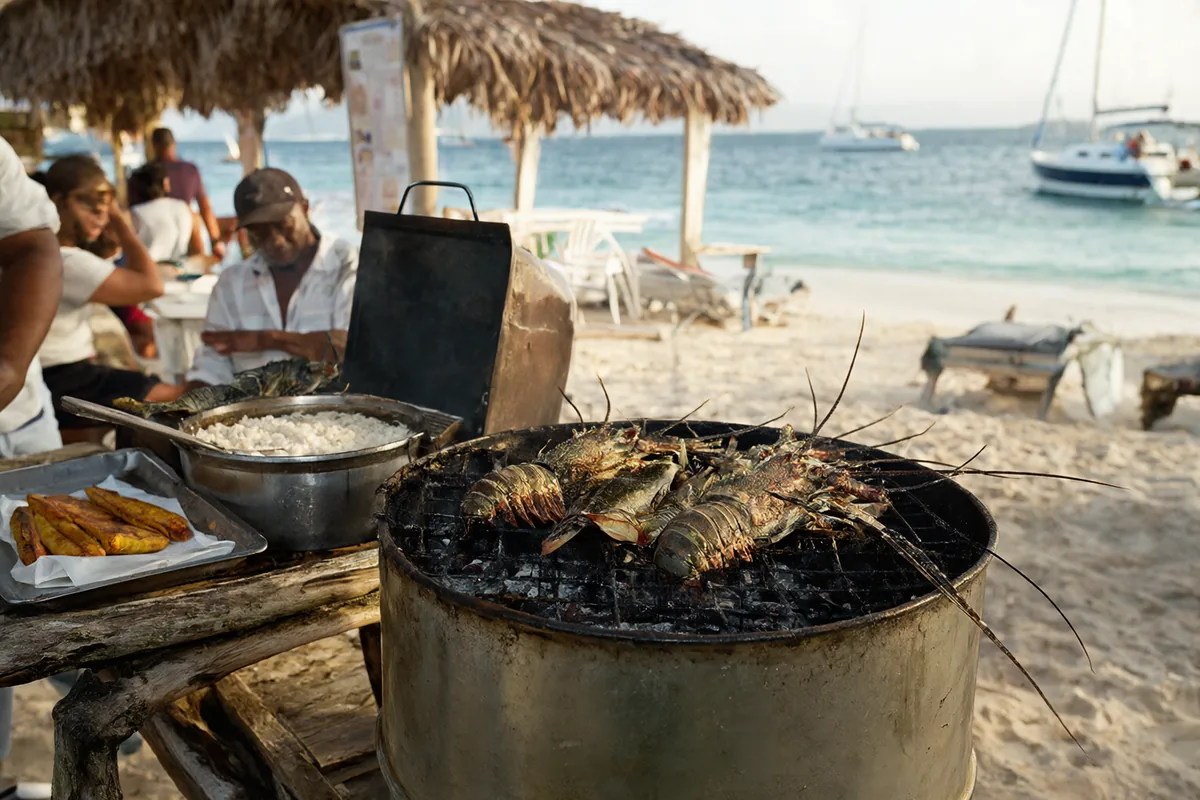
- Lobster (the Grenadines): spiny lobster, grilled with garlic butter or curried, best on Bequia, Union Island and in the Tobago Cays. There is a closed season, so it is not always available.
- Conch (the Grenadines): known as lambie, curried, stewed, in fritters or in a cold souse.
- Grilled fish (everywhere): tuna, mahi-mahi, kingfish, snapper and jacks, grilled or fried, with rice and peas, provisions or plantain.
- Pelau and roti (everywhere): one-pot rice with pigeon peas and chicken, and flatbread wrapped around curry, two staples found at every lunch counter.
- Provisions and dasheen (Saint Vincent): boiled dasheen, eddoe, tannia, sweet potato, yam and green banana, grown on the mainland and shipped around the region.
- Arrowroot (Saint Vincent): the island is one of the world's main producers of this fine starch, used in biscuits, puddings, cakes and to thicken sauces.
- Local fruit and juices (markets): mangoes, soursop, passion fruit, golden apples, sorrel and sea moss, sold fresh or as juice.
- Rum and local lager (everywhere): Saint Vincent makes a very strong overproof white rum, drunk in rum shops, and its own lager, Hairoun, named after the Kalinago name for the island.
How to read a menu in Saint Vincent and the Grenadines
Menus are in English, but Vincentian dishes and ingredients have their own names, and many roadside vendors simply call out what they have. These are the words worth knowing.
| Local term | What it means |
|---|---|
| Roast breadfruit | Breadfruit roasted whole over coals, then sliced |
| Jackfish (jacks) | Small, oily fish, fried whole |
| Lambie | Conch, a large sea snail with firm white meat |
| Saltfish | Salt cod, soaked and sautéed |
| Provisions | Boiled root vegetables and green banana |
| Dasheen / eddoe / tannia | Starchy roots of the taro family, boiled or in soup |
| Callaloo | Dasheen leaves, cooked as greens or soup |
| Souse | Meat in a sharp lime, cucumber and pepper brine |
| Black pudding | Spiced blood sausage with rice |
| Dolphin | Mahi-mahi, a fish, not the mammal |
| Arrowroot | A fine starch from a local root, used in baking and desserts |
| Pepper / pepper sauce | Hot chilli or hot sauce. "No pepper" means no chilli |
| Plus VAT and service | Tax and a service charge will be added to the listed price |
Restaurants on Saint Vincent usually price in EC dollars, while many places on Bequia, Mustique and Canouan quote US dollars, all with the same $ sign. swap.menu reads the menu, tells you which currency is in use, converts every price to your home currency and flags VAT and service lines.
VAT, tipping and paying the bill
Saint Vincent and the Grenadines charges VAT at 16 percent, and many restaurants, especially in the Grenadines, also add a 10 percent service charge. Check the bottom of the menu to see whether prices include them. If service is on the bill, an extra tip is optional. If there is no service charge, tip 10 to 15 percent. Rum shops, roadside vendors, market stalls and the boat vendors in the Tobago Cays do not expect a percentage tip, though rounding up is appreciated. Our guide to tax and service charges on menus explains these lines in more detail.
The currency is the Eastern Caribbean dollar (EC$, XCD), fixed to the US dollar. US dollars are widely accepted in the Grenadines and at hotels, and some island restaurants and boat vendors quote only in US dollars, but change usually comes back in EC dollars. In Kingstown and in villages, pay in EC dollars. Cards work at hotels and larger restaurants, but cash is needed at markets, rum shops and on the smaller islands, where ATMs can be scarce. If a card machine offers to charge you in your home currency, decline: our guide to paying in local currency explains why.
Vincentians eat breakfast early, lunch from noon to 2pm and dinner from 7pm. Saturday is market day in Kingstown and the day for souse and black pudding. In the Grenadines, dinner is often booked ahead, and on the smaller islands kitchens may close early or cook only what has been ordered that afternoon.
The biggest food and party event is Vincy Mas, the carnival held in late June and early July. In December, Nine Mornings fills the streets of Kingstown and other towns with early morning events in the days before Christmas, and Bequia's Easter Regatta and Union Island's Easterval bring food stalls and crowds to the Grenadines.
Where to eat in Saint Vincent and the Grenadines, island by island
Ferries link Kingstown with Bequia in about an hour, and small planes and slower ferries reach the southern Grenadines. Each island has a different kind of food scene, from the capital's markets to beach barbecues on uninhabited cays. Jump to a place:
Where to eat in Kingstown
Kingstown, the capital on Saint Vincent's south coast, is a busy port town of stone arcades and narrow streets, nicknamed the City of Arches. It is the best place in the country to eat like a Vincentian. The Kingstown Market is busiest on Friday and Saturday, with farmers selling breadfruit, dasheen, bananas, plantains, mangoes, herbs and peppers, and the nearby fish market, known locally as Little Tokyo because it was built with Japanese aid, is the place to see the catch landed. Around the market and bus terminal, vendors roast breadfruit over coals and sell it with fried jackfish, and small cookshops serve plate lunches.
Kingstown's snack bars and bakeries sell roti, pelau, fish cakes, coconut turnovers and arrowroot biscuits, and Saturday is the day for souse and black pudding. A short walk from the centre, the Botanic Gardens, among the oldest in the Americas, have a breadfruit tree grown from one brought by Captain Bligh, a good stop for anyone curious about the national dish. Kingstown empties out in the evening, so most visitors eat dinner on the south coast.
Where to eat in Villa
Villa, a few kilometres southeast of Kingstown, and the neighbouring bays of Indian Bay and Calliaqua, make up the main hotel area on Saint Vincent. The waterfront here faces Young Island, a small private island just offshore, and the strip of restaurants, bars and small hotels along Villa Beach is where most visitors eat. Menus mix local dishes such as callaloo soup, fried jackfish, saltfish and grilled catch of the day with international plates, and evenings are relaxed and friendly.
Villa is also close to the marinas at Blue Lagoon and Calliaqua, where yachting crews gather for sundowners, and to the main road where local rum shops and roadside barbecues serve grilled chicken and pork at weekends. For a more local meal, take a minibus into Kingstown at lunchtime. Villa restaurants usually price in EC dollars, and VAT and service may be added.
Where to eat in Bequia
Bequia, the largest of the Grenadines and an hour by ferry from Kingstown, has the best food scene in the islands. Its harbour, Admiralty Bay, is one of the great anchorages of the Caribbean, and the town of Port Elizabeth is lined with restaurants, bars and bakeries. The Belmont Walkway, a waterfront path running south from the ferry dock, has a string of open-air places serving grilled fish, lobster, lambie, roti and rum punch with views of the yachts.
Bequia is also known for its bakeries, which sell fresh bread, coconut turnovers and banana bread to the yachts in the morning, and its boatbuilding and model-making traditions. Over the hill, Lower Bay and Princess Margaret Beach have beach bars for a long lunch, and the east coast has a handful of quieter guest house restaurants. Bequia gets busy at Easter for the regatta and in January for its music festival. Many places price in US dollars, so check the menu.
Where to eat in Union Island
Union Island, at the southern end of the chain, is the gateway to the Tobago Cays, a marine park of uninhabited islets, reefs and turtle-filled shallows. The famous meal here is the Tobago Cays lobster barbecue: local vendors, often the same boatmen who sell fruit and bread to yachts, set up grills on the beach and cook lobster, fish and chicken with rice, salad and plantain, usually arranged earlier in the day. It is simple, expensive by local standards, and one of the best meals in the Caribbean.
On Union Island itself, the small town of Clifton has local restaurants, bars, a fruit and vegetable market by the harbour and a kitesurfing crowd. Union Island and its neighbours, including Mayreau, were badly damaged by Hurricane Beryl in July 2024, and rebuilding has taken time, so check what is open before you plan meals around it. Bring cash in US or EC dollars, and agree the price of any Tobago Cays barbecue before it is cooked.
Where to eat in Mustique and Canouan
Mustique and Canouan are the luxury end of the Grenadines. Mustique is a privately managed island of villas, with a small number of restaurants, a famous waterfront bar at Britannia Bay and a beach café or two, all priced for its wealthy visitors. Day visitors usually arrive by yacht and need to check access rules in advance. Food in Mustique is international and polished, with local fish and lobster on most menus.
Canouan, between Mustique and Union Island, is dominated by a large resort and marina development, with a handful of local restaurants and rum shops in the village of Charlestown serving fish, lambie and plate lunches at local prices. If you are staying at a resort on Canouan, a walk into the village for a rum and a plate of fried fish is a good way to meet Vincentians. Both islands quote mostly in US dollars, and service and VAT are usually added.
Vegetarian, vegan and allergy tips
Saint Vincent's farms make it easier than some islands for vegetarians: roasted breadfruit, provisions, callaloo, plantain, vegetable roti, rice and peas and fresh fruit are everywhere. Ask for vegetarian, and be specific, as some cooks consider saltfish a seasoning. Rastafarian ital food, usually vegan, is sold at a few stalls in Kingstown. Watch for hidden ingredients: callaloo soup may include crab or salt meat, rice and peas and soups can be cooked with pig tail or meat stock, and the sauce served with breadfruit may contain fish.
Seafood is central to the Grenadines, and lobster, lambie and shrimp appear on most menus, so allergies need a clear explanation. Coconut is used in many sauces and sweets. Arrowroot is gluten-free and is used in some local biscuits, though many are mixed with wheat flour. Our guide to eating abroad with food allergies explains how to describe an allergy clearly.
Vincentian food slang and ordering terms
English is the official language, and Vincentians also speak Vincentian Creole, a fast, warm English Creole. These words help when ordering or chatting with vendors.
Good morning / Good afternoon Always greet before you order or ask a question
Wha' happenin'? "How are things?", a friendly everyday greeting
Breadfruit and jacks, please The national dish, from a roadside vendor
Lil pepper / no pepper "A little hot sauce / no hot sauce"
EC or US? Ask which currency a price is in, especially in the Grenadines
Vincy A Vincentian, or anything from Saint Vincent, as in Vincy Mas
Lime Hanging out, usually with food and drink
It sweet! "It's delicious"
How swap.menu helps you eat in Saint Vincent and the Grenadines
Vincentian menus are in English, but words like jacks, lambie, tannia, eddoe and souse leave most visitors guessing. Photograph the menu with swap.menu and every dish is explained in plain language, with the local name kept beside it. Visitors from Italy, France, Germany, Brazil or anywhere else can read the whole menu in their own language, in any of 29 languages, which is useful on islands where many yachting visitors do not speak English as a first language.
Every price is converted from EC or US dollars to your home currency, which matters when the Kingstown market prices in EC dollars and the Bequia waterfront quotes in US dollars. We flag VAT and service charge lines, and menus you scan are saved so you can find that Bequia restaurant again. Add a note such as "no pepper" or "no shellfish, please", typed or spoken, and show your phone to the cook. Try it now with the free demo, or see travel pass prices.
Off to Saint Vincent and the Grenadines? Your first 3 menu scans are free, and a travel pass starts from $4.99 with nothing that renews.
Start free with 3 scansSaint Vincent and the Grenadines food FAQ
Do you tip in restaurants in Saint Vincent and the Grenadines?
Many restaurants add a 10 percent service charge, and if it is on the bill an extra tip is optional. If there is no service charge, tip 10 to 15 percent. Roadside vendors and rum shops do not expect a tip.
What is the national dish of Saint Vincent and the Grenadines?
Roasted breadfruit with fried jackfish is the national dish. The breadfruit is roasted whole over coals, then peeled and sliced, and served with small fried fish and an onion and tomato sauce.
What is the Tobago Cays lobster barbecue?
Local vendors in the Tobago Cays marine park, near Union Island, cook lobster, fish and chicken on beach grills for visiting boats. It is usually arranged in advance, and the price should be agreed before cooking.
Is tap water safe to drink in Saint Vincent and the Grenadines?
On Saint Vincent, tap water comes from mountain sources and is treated, and it is generally considered safe. On the Grenadine islands, water comes from cisterns or desalination, so most visitors drink bottled water there.
Is it expensive to eat out in the Grenadines?
Restaurants on Bequia, Mustique and Canouan are expensive, especially once VAT and service are added. Kingstown and local cookshops on every island are much cheaper.
Can swap.menu help with menus in Saint Vincent and the Grenadines?
Yes. swap.menu explains local dishes such as roast breadfruit and jacks, lambie and souse, translates the menu into 29 languages, converts prices from EC or US dollars to your home currency and flags VAT and service charges.
Travelling further in the Caribbean? Read our food guides for nearby islands:
- Grenada food guide
- Saint Lucia food guide
- Barbados food guide
- Trinidad and Tobago food guide
- Martinique food guide
Or browse every travel food guide.