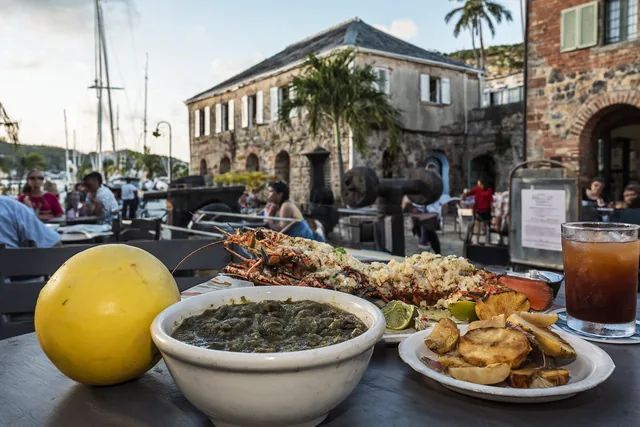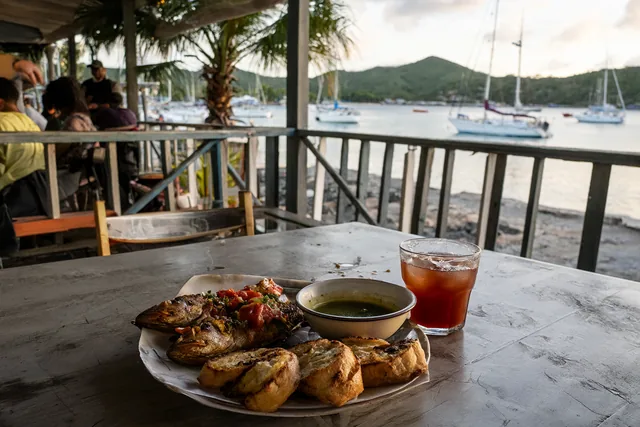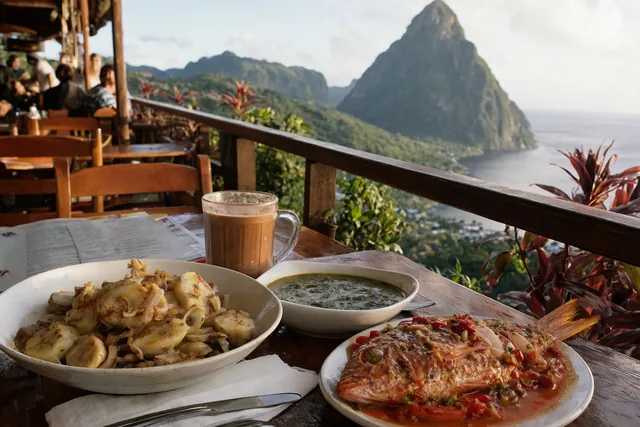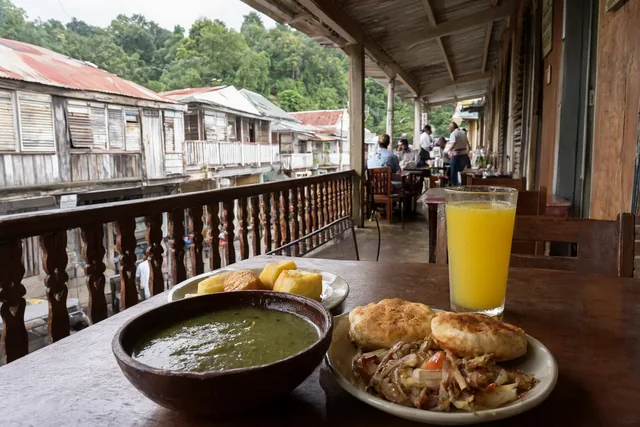
Grenada calls itself the Isle of Spice, and it earns the name: nutmeg, mace, cinnamon, cloves, bay leaf and cocoa grow in its hills, and nutmeg appears on the national flag. This Grenada food guide covers the dishes to order, the local menu words, how VAT, service charges and tipping work, then goes town by town through where to eat in St George's, Grand Anse, Gouyave, Grenville and on the sister island of Carriacou. Eat oil down at least once, grate fresh nutmeg on your rum punch, and plan a Friday night in Gouyave, where the whole town turns into a fish fry.
What to eat in Grenada: 12 dishes to know
Grenadian food is rooted in African, French, British and Indian cooking, made with whatever the land and sea provide. These are the dishes to look for.
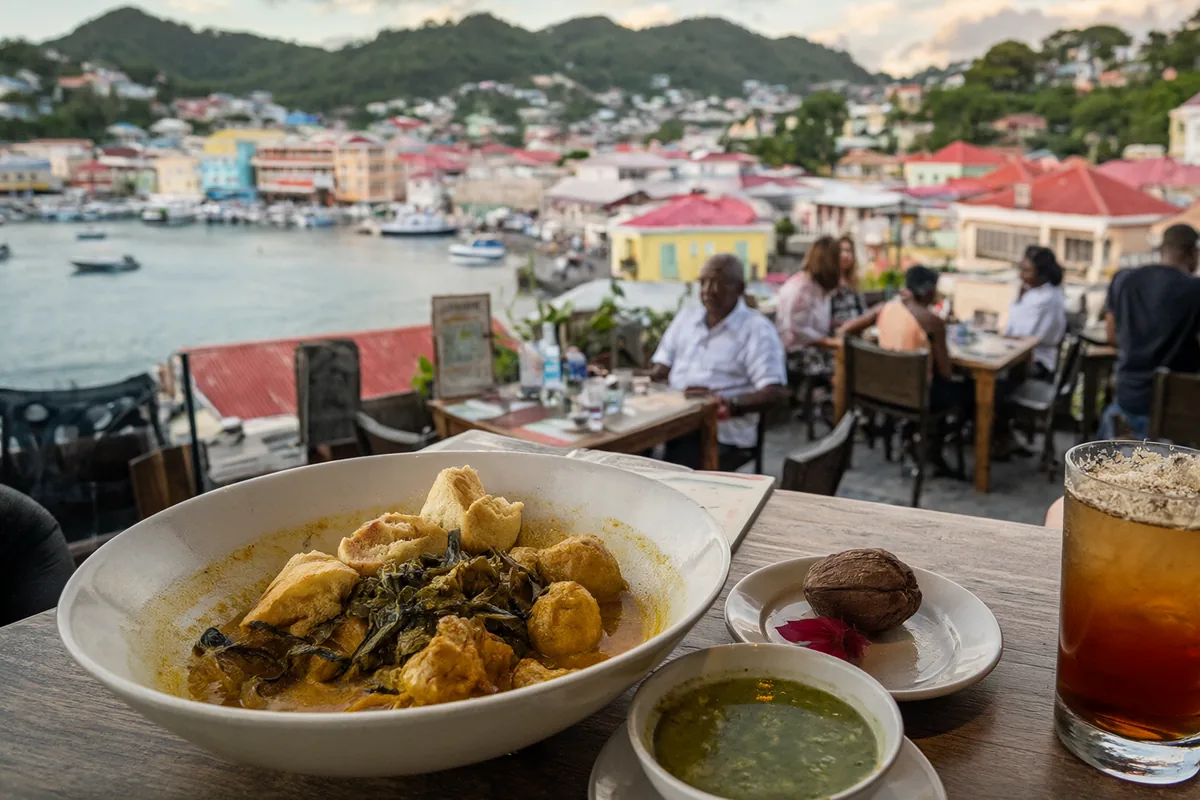
- Oil down (everywhere): the national dish. Breadfruit, salted meat, chicken, dumplings, callaloo leaves and vegetables, layered in a big pot with turmeric and coconut milk and cooked until the milk is absorbed and a little coconut oil is left at the bottom. Often cooked outdoors for a crowd.
- Lambie (the coasts): conch, curried, stewed in a Creole sauce, grilled at fish fries or served cold as lambie souse.
- Callaloo soup (everywhere): dasheen leaves cooked with okra, coconut milk, herbs and sometimes crab or salt meat.
- Fish broth (everywhere): a light, peppery fish soup with provisions and dumplings, sold at roadside stands and said to cure anything.
- Bakes and saltfish (breakfast): fried dough bakes with salt cod sautéed with onion, tomato, peppers and thyme.
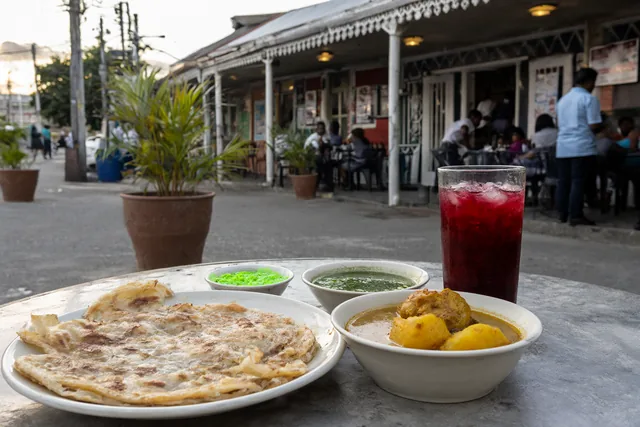
- Roti (everywhere): flatbread wrapped around curried chicken, goat, lambie or potato and channa, a sign of Grenada's Indian heritage.
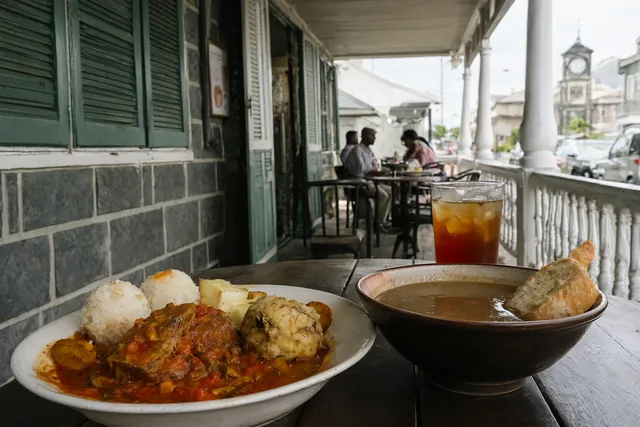
- Grilled fish (the coasts): tuna, mahi-mahi, kingfish, snapper and jacks, often with Creole sauce, rice and peas, provisions and salad.
- Pelau (everywhere): rice, pigeon peas and chicken or beef browned in caramelised sugar and cooked with coconut milk.
- Nutmeg everything (everywhere): nutmeg jam and jelly, nutmeg syrup on pancakes, nutmeg ice cream, and fresh nutmeg grated over drinks and desserts. The red lacy coating on the nut is mace.
- Grenadian chocolate (St Patrick and St George's): Grenada grows fine cocoa, and several small makers turn it into bean-to-bar chocolate on the island. Cocoa tea, made with local cocoa sticks and spice, is a breakfast drink.
- Local fruit and sweets (markets): golden apples, soursop, mangoes, pawpaw and sugar apples, plus tamarind balls, coconut drops, fudge and spice cake.
- Rum and rum punch (everywhere): Grenada has several distilleries, including one in the north that still uses a water wheel and is known for its very strong white rum. Rum punch is always finished with grated nutmeg.
How to read a menu in Grenada
Grenada's menus are in English, but local dishes and ingredients have their own names, and roadside stands often post just a dish and a price. These are the terms you will see most.
| Grenadian term | What it means |
|---|---|
| Oil down | The national one-pot dish of breadfruit, salted meat, dumplings and coconut milk |
| Lambie | Conch, a large sea snail with firm white meat |
| Saffron | Usually fresh turmeric, not true saffron |
| Provisions | Boiled root vegetables and green banana: dasheen, yam, sweet potato, tannia |
| Fig | Green banana, boiled or added to oil down |
| Callaloo | Young dasheen leaves, cooked as greens or soup |
| Souse | Meat or lambie in a sharp lime, cucumber and pepper brine |
| Broth | A light, peppery soup, usually fish |
| Bakes | Fried dough cakes, eaten with saltfish |
| Dolphin | Mahi-mahi, a fish, not the mammal |
| Mace | The red coating of the nutmeg seed, used as a spice |
| Pepper / pepper sauce | Hot chilli or hot sauce. "No pepper" means no chilli |
| Plus VAT and service | Tax and a 10 percent service charge will be added |
Most Grenadian menus price in EC dollars, but some resort restaurants and tours quote US dollars, both with the same $ sign. swap.menu reads the menu, shows which currency is in use, converts every price to your home currency, explains dishes like oil down and lambie souse, and flags VAT and service lines.
VAT, tipping and paying the bill
Grenada charges VAT at 15 percent, and many restaurants also add a 10 percent service charge. Some menus include both, but in Grand Anse and the tourist areas they are usually added at the end, so check the bottom of the menu. If service is on the bill, an extra tip is optional. If there is no service charge, tip 10 to 15 percent for good service. Roadside stands, rum shops and fish fry vendors do not expect a tip. Our guide to tax and service charges on menus explains these lines in more detail.
The currency is the Eastern Caribbean dollar (EC$, XCD), fixed to the US dollar. US dollars are accepted at hotels, many restaurants and for taxis and tours, but change comes back in EC dollars and the rate is not always generous. At markets, rum shops, Fish Friday and in villages, pay in EC dollars and carry small notes. Cards work at hotels, supermarkets and most restaurants in the south. If a card machine offers to charge you in your home currency, decline: our guide to paying in local currency explains why.
Grenadians eat breakfast early, lunch from noon to 2pm and dinner from 7pm. Saturday is market day in St George's and Grenville. Sunday is for family lunch and beach cook-ups, and oil down is often cooked in a big pot over a wood fire at weekends. Many small local places close on Sundays.
The biggest festival is Spicemas, Grenada's carnival, which peaks in August with food and drink stalls everywhere. In May, the Chocolate Festival celebrates Grenadian cocoa with estate tours and tastings, and Carriacou's Maroon and String Band Music Festival in spring is built around food smoked and cooked in the open.
Where to eat in Grenada, town by town
Grenada is small, but the drive from the capital to the north takes an hour on winding roads, and each part of the island has its own food. Carriacou, a short ferry ride north, feels like another country. Jump to a place:
Where to eat in St George's
St George's, the capital, wraps around a deep horseshoe harbour called the Carenage, with red-roofed houses climbing the hills behind. It is one of the prettiest towns in the Caribbean and the best place on the island to eat local food at local prices. Market Square, in the centre of town, is busiest on Saturday mornings, when farmers sell fruit, vegetables and herbs and spice vendors sell nutmeg, mace, cinnamon, cocoa sticks and bay leaves. Small cookshops and stalls around the square and the bus terminal sell plate lunches, roti, fish broth and fresh juice.
Along the Carenage, waterfront restaurants and bars serve grilled fish, lambie and rum punch with views of the boats, and the fish market near the harbour is lively in the morning. St George's gets busy when cruise ships are in, so walk a few streets uphill for quieter places. For a sit-down dinner, many visitors head to Grand Anse, but a sundowner on the Carenage, with the lights coming on around St George's harbour, is one of the island's best evenings.
Where to eat in Grand Anse
Grand Anse, just south of St George's, is Grenada's most famous beach, a three kilometre curve of white sand with hotels, beach bars and restaurants along it. This is where most visitors eat: beachfront places serving grilled fish, lobster in season, lambie, callaloo soup and pasta, and simpler snack bars selling roti and burgers. The Grand Anse Craft and Spice Market at the northern end of the beach sells spices, nutmeg products, hot sauces and cocoa.
Further south, the peninsulas of True Blue and Lance aux Épines have marinas, small hotels and some of the island's best restaurants, often in garden or waterfront settings. Prices in Grand Anse and the south are higher than in St George's, and VAT and service are usually added. On weekend evenings, look out for beach cook-ups and roadside barbecues on the main road behind Grand Anse, which sell grilled chicken and pork for far less.
Where to eat in Gouyave
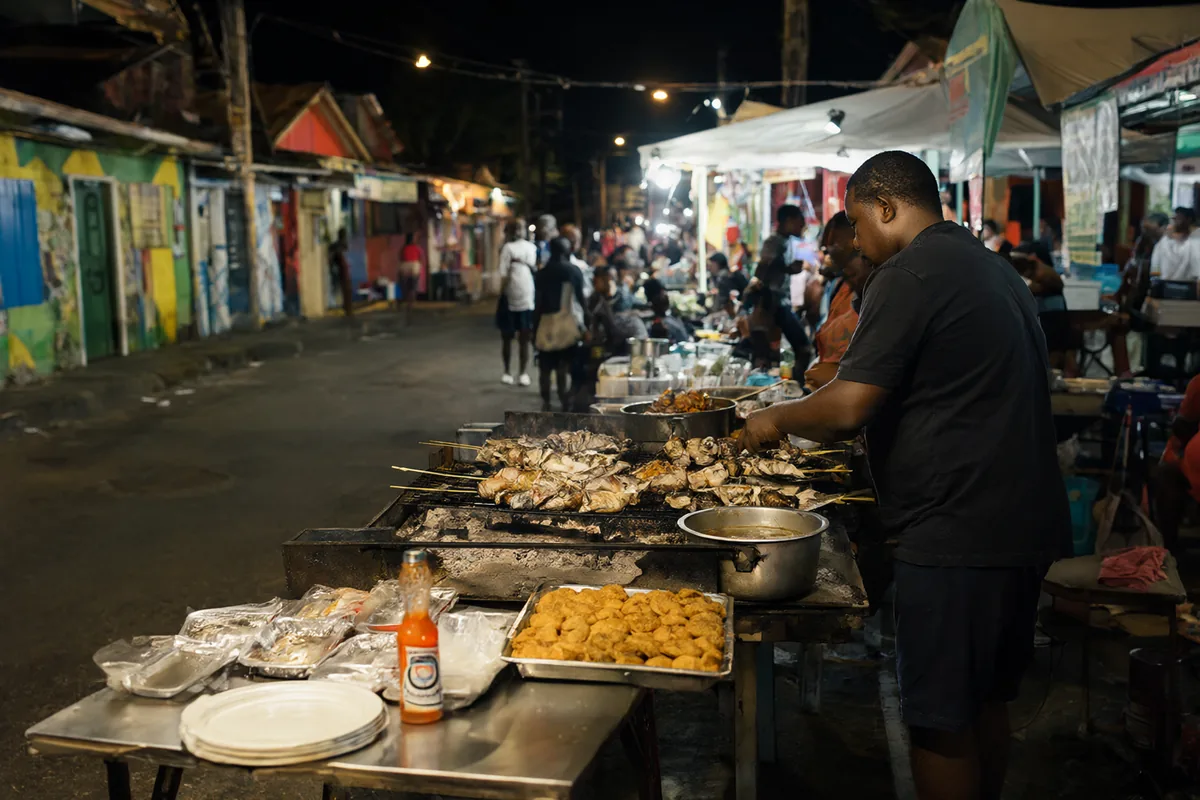
Gouyave, a fishing town on the west coast in the parish of St John, calls itself the fishing capital of Grenada, and every Friday night it holds Fish Friday. From early evening the streets near the sea are closed to traffic and lined with stalls selling seafood in every form: grilled and fried fish, fish cakes, lambie water, lambie kebabs, tuna balls, lobster in season, sushi from local cooks, fish broth and roti, with rum punch and music. It is a local event first, so you eat with Grenadian families rather than tour groups.
Prices at Gouyave Fish Friday are low and almost everything is cash, so bring small EC dollar notes. The drive from St George's takes around 40 minutes, so arrange a taxi there and back. During the day, Gouyave is home to a nutmeg processing station, where you can see nutmeg and mace being sorted and dried by hand, a good stop on a tour of the west coast. North of Gouyave, the road to Sauteurs passes cocoa estates and small rum shops.
Where to eat in Grenville
Grenville, in St Andrew on the east coast, is Grenada's second town and its agricultural centre, and it sees few visitors. That is its appeal. The Grenville market is busiest on Saturdays, with produce from the farms of the east, fish from the coast and stalls selling breakfast, roti and plate lunches. Grenville cookshops serve oil down, stewed chicken, provisions and callaloo at prices far below the south coast.
The countryside around Grenville and the parish of St Patrick to the north is where much of Grenada's cocoa and nutmeg is grown. Several old cocoa estates in the area offer tours that follow the bean from pod to bar, often with a Grenadian lunch, and the rum distillery near River Antoine still crushes cane with a water wheel. On the way back over the mountains, the Grand Etang forest reserve has roadside vendors selling spices and fruit.
Where to eat in Carriacou
Carriacou, the largest of the Grenadine islands that belong to Grenada, is a two hour ferry ride or a short flight north of the main island. It is small, slow and friendly, with a population of a few thousand and a food scene to match. The main town, Hillsborough, has a handful of local restaurants, bakeries and rum shops serving fish, lambie, roti and plate lunches, and Tyrrel Bay, on the west coast, has yachting bars and beach restaurants.
Carriacou is best known for its traditions: boatbuilding in Windward, the Big Drum dance, and the Maroon and String Band Music Festival each spring, where food is smoked and cooked in coal pots and shared. In August, the Carriacou Regatta brings sailors and food stalls. Day trips to Sandy Island and Petite Martinique are popular, and lobster is often grilled on the beach. Carriacou was hit hard by Hurricane Beryl in July 2024, so check what is open before you go. Bring cash, as card payments are limited on Carriacou, and ask your guest house about meals in advance.
Vegetarian, vegan and allergy tips
Grenadian cooking uses a lot of fish and meat, but vegetarians can eat well on provisions, breadfruit, callaloo, plantain, vegetable roti, rice and peas and fresh fruit, and Rastafarian ital food, usually vegan, is served at some stalls. Ask for vegetarian and check how dishes are made. Oil down is almost always cooked with salted meat, callaloo soup may include crab or salt meat, and many soups and stews start with meat stock. A vegetarian oil down can be made, but usually only on request.
Seafood is everywhere, and lambie, lobster and shrimp are standard at Fish Friday, so allergies need a clear explanation. Coconut milk is used in oil down, pelau and many sauces. Nutmeg is a seed, not a tree nut, but people with nut allergies may want to check, and some sweets contain peanuts. Our guide to eating abroad with food allergies explains how to describe an allergy clearly.
Grenadian food slang and ordering terms
English is Grenada's official language, and most Grenadians also speak Grenadian Creole English, with traces of French Creole in older place names and words. These terms are useful when ordering.
Good morning / Good afternoon Always greet before you order or ask a question
Wha' happenin'? "How are things?", a friendly everyday greeting
A bowl of oil down, please Often sold by the bowl or the box at weekends
Lambie water A light conch broth, sold by the cup at Fish Friday
Lil pepper / no pepper "A little hot sauce / no hot sauce"
Put some nutmeg on it Fresh nutmeg is grated over rum punch and many drinks
Lime Hanging out with friends, usually with food and drink
It sweet! "It tastes great", praise for any dish
How swap.menu helps you eat in Grenada
Grenadian menus are in English, but dishes like oil down, lambie souse, fish broth and provisions are a mystery to most visitors, and "saffron" on a Grenadian menu usually means turmeric. Photograph the menu with swap.menu and every dish is explained in plain language, with the Grenadian name kept beside it. Visitors from Germany, France, Italy, Brazil or anywhere else can read the whole menu in their own language, in any of 29 languages.
Every price is converted from EC or US dollars to your home currency, and we flag VAT and service charge lines so the bill holds no surprises. Menus you scan are saved, so you can find that Grand Anse beach bar or St George's cookshop again. Add a note such as "no pepper" or "no shellfish, please", typed or spoken, and show your phone at the counter. Try it now with the free demo, or see travel pass prices.
Off to Grenada? Your first 3 menu scans are free, and a travel pass starts from $4.99 with nothing that renews.
Start free with 3 scansGrenada food FAQ
Do you tip in restaurants in Grenada?
Many restaurants add a 10 percent service charge, and if it is on the bill an extra tip is optional. If there is no service charge, tip 10 to 15 percent. Roadside stands and Fish Friday vendors do not expect a tip.
What is the national dish of Grenada?
Oil down is the national dish: breadfruit, salted meat, chicken, dumplings and callaloo cooked in coconut milk with turmeric until the liquid is absorbed. It is often cooked outdoors in a big pot for a crowd.
When is Fish Friday in Gouyave?
Fish Friday is held every Friday night in Gouyave on the west coast, starting in the early evening. Stalls sell grilled and fried fish, lambie, fish cakes and other seafood, with music in the streets.
Why is Grenada called the Isle of Spice?
Grenada grows nutmeg, mace, cinnamon, cloves, bay leaf and cocoa, and it is one of the world's main producers of nutmeg. The nutmeg even appears on the national flag.
Is tap water safe to drink in Grenada?
Tap water in St George's and the south is treated and generally considered safe, though supply can be interrupted. Many visitors drink bottled or filtered water, especially in rural areas and on Carriacou.
Can swap.menu help with Grenada menus?
Yes. swap.menu explains Grenadian dishes such as oil down, lambie and fish broth, translates the menu into 29 languages, converts prices from EC or US dollars to your home currency and flags VAT and service charges.
Travelling further in the Caribbean? Read our food guides for nearby islands:
- Saint Vincent and the Grenadines food guide
- Trinidad and Tobago food guide
- Barbados food guide
- Saint Lucia food guide
- Dominica food guide
Or browse every travel food guide.