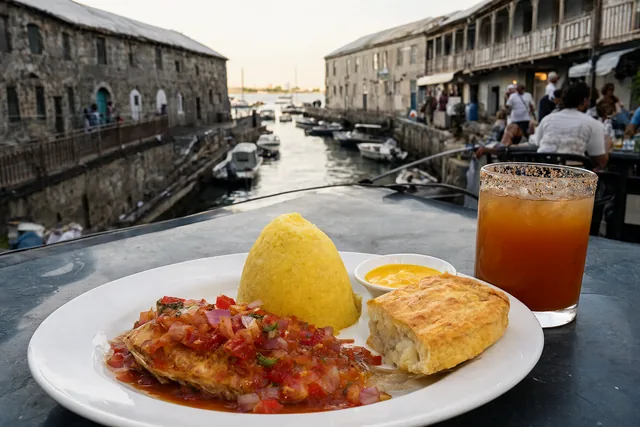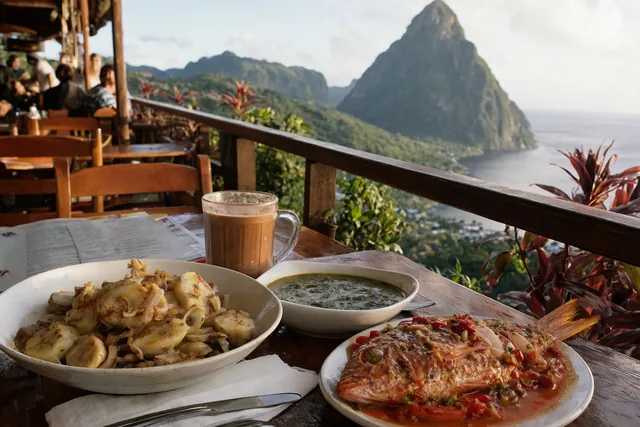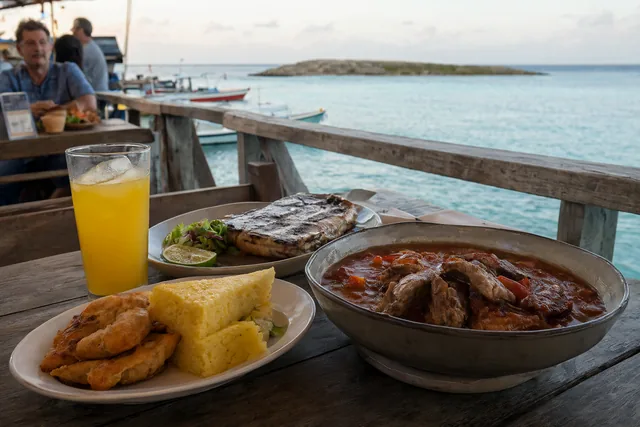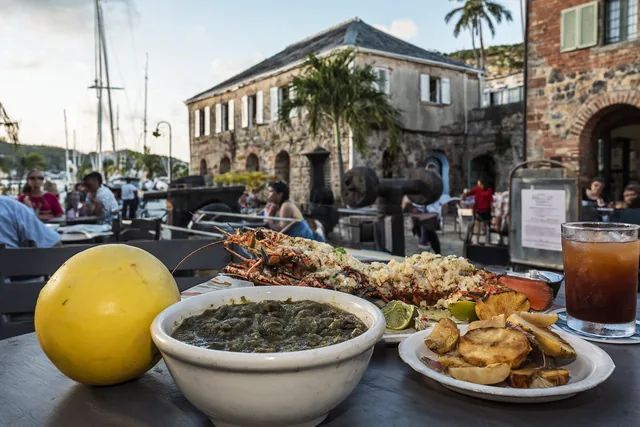
Trinidad and Tobago has the strongest street food culture in the English-speaking Caribbean, shaped by African, Indian, Chinese, Venezuelan, Syrian and European cooks who all settled on the same two islands. This Trinidad and Tobago food guide covers the dishes to order, the Trini menu words that baffle visitors, how VAT, service and tipping work, then goes town by town through where to eat in Port of Spain, Maracas Bay, Chaguanas, San Fernando, and Crown Point and Scarborough on Tobago. Start the day with doubles from a roadside cart, eat bake and shark on the beach at Maracas, and finish with corn soup at midnight, and you will have eaten the way Trinis do.
What to eat in Trinidad and Tobago: 12 dishes to know
Trinidad's food is spicy, generous and mostly eaten on the move. Tobago is calmer and leans more on seafood and Afro-Caribbean home cooking. These are the dishes to know on both islands.
- Doubles (Trinidad, everywhere): two pieces of soft fried bara bread topped with curried channa (chickpeas), then sauces of your choice. The national breakfast, sold from carts from dawn. One portion is still called "a doubles".
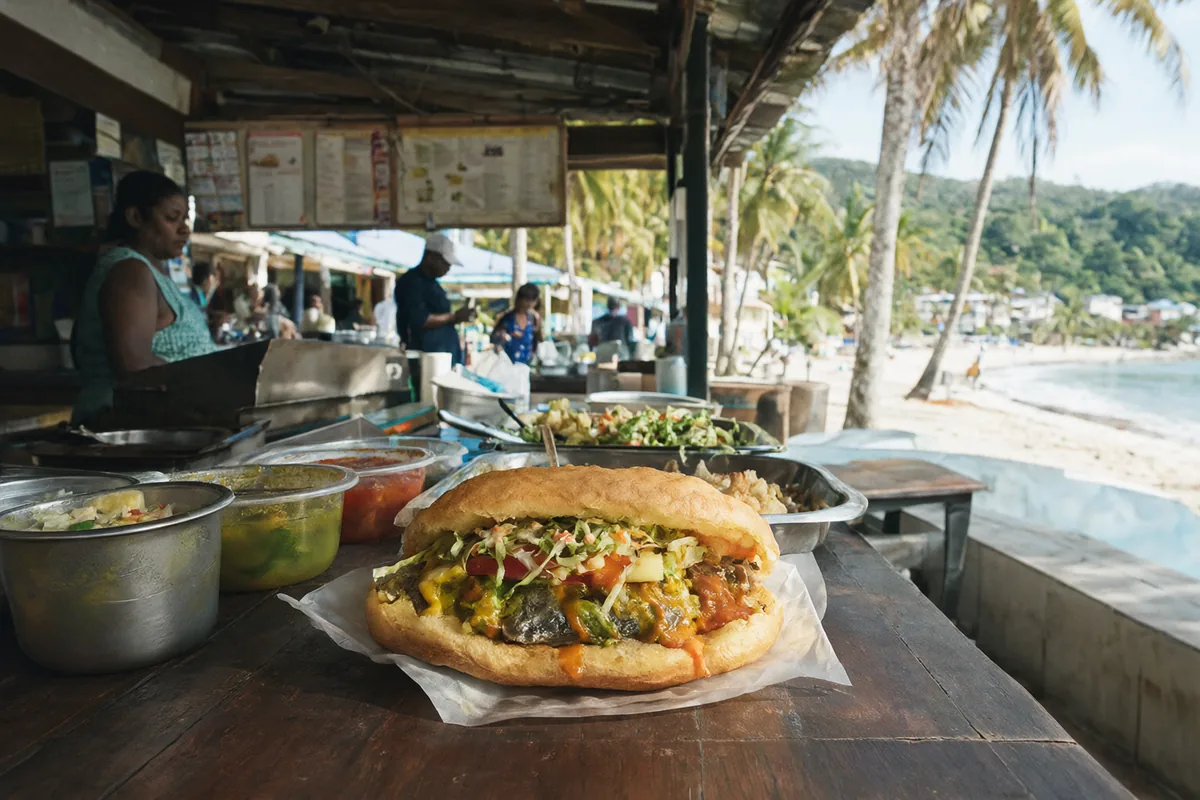
- Bake and shark (Maracas Bay): fried, seasoned shark in a puffy fried bake, finished at a self-service bar of sauces and salads. Many stalls also sell "bake and fish" with other catch.
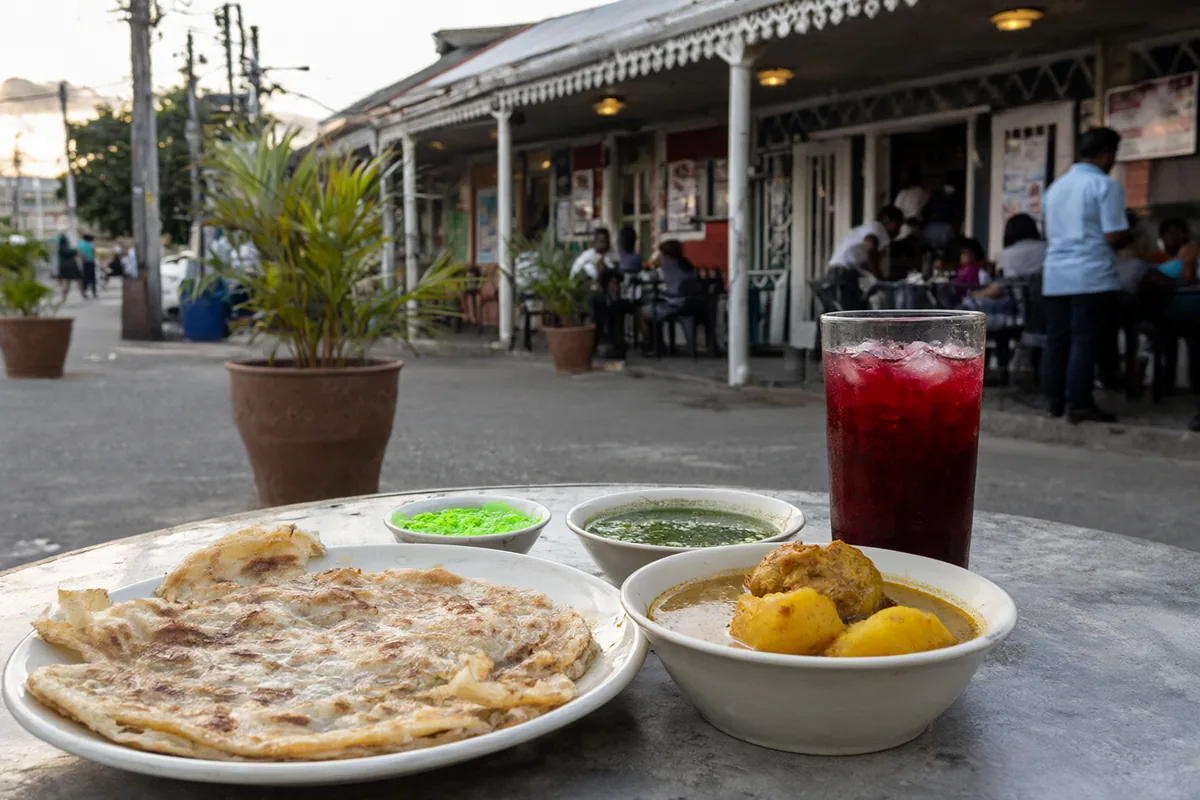
- Roti (everywhere): a flatbread wrapped around curry. Choose dhalpuri, filled with ground split peas, or paratha, torn into flaky pieces and known as buss-up-shut, with curry chicken, goat, duck, shrimp, or channa and potato.
- Pelau (everywhere): a one-pot dish of rice, pigeon peas and chicken or beef browned in caramelised sugar, then cooked with coconut milk. Standard beach and lime food.
- Callaloo (everywhere, Sundays): dasheen leaves, okra, pumpkin and coconut milk swizzled into a thick green soup, often cooked with crab or salt meat. A fixture of Sunday lunch.
- Curry crab and dumpling (Tobago): blue crab in a rich curry sauce with thick, chewy flour dumplings. Messy, delicious and the dish Tobago is proudest of.
- Corn soup (everywhere, late at night): a thick split pea soup with corn on the cob, dumplings and pepper, sold from big pots outside fetes and around the Savannah.
- Pholourie, saheena and aloo pie (everywhere): fried snacks of Indian origin. Pholourie are split pea dough balls with tamarind sauce, saheena are fritters with dasheen leaf, and aloo pie is a fried pastry filled with spiced potato.
- Bake and saltfish or buljol (breakfast): fried or roasted bake with sautéed salt cod, or with buljol, a cold salad of shredded saltfish, tomato, onion and pepper.
- Chow (everywhere): green mango, pineapple or other fruit tossed with lime, garlic, pepper and shadon beni. Sweet, sour and hot at once.
- Pastelles and black cake (Christmas): cornmeal parcels filled with seasoned meat, olives and raisins, steamed in banana leaf, and a dark, rum-soaked fruit cake, served with ponche de crème, a rum eggnog.
- Drinks (everywhere): fresh coconut water from a cart, sorrel, mauby, sea moss, local lager and dark rum. Angostura bitters, made in Trinidad, goes into rum punch.
How to read a menu in Trinidad and Tobago
Menus here are in English, but Trini food words come from Hindi, Bhojpuri, French Creole, Spanish and West African languages, and a roti shop menu can read like a list of riddles. These are the terms you will see most.
| Trini term | What it means |
|---|---|
| Doubles | Two fried bara breads with curried chickpeas and sauces |
| Bara | Soft, yellow fried flatbread made with turmeric and split pea flour |
| Channa | Chickpeas, usually curried |
| Dhalpuri / buss-up-shut | Roti filled with ground split peas / flaky paratha roti torn into pieces |
| Shadon beni | Culantro, a herb like strong coriander, made into a bright green sauce |
| Kuchela | A dark, oily, spicy relish of grated green mango |
| Slight / medium / heavy | How much pepper (hot sauce) you want on doubles |
| Pepper | Hot chilli or hot sauce, often Scotch bonnet. "No pepper" means no chilli |
| Provision | Boiled root vegetables and green fig (green banana): dasheen, cassava, yam, eddoe |
| Stew (stewed chicken) | Meat browned in caramelised sugar, then stewed in gravy |
| Geera | Cumin, as in geera pork or geera chicken, a spicy bar snack |
| Souse | Pig trotters, chicken feet or cow heel in a sharp lime and cucumber brine |
| Bake / fry bake / coconut bake | Breads: fried and puffy, or baked with coconut |
| Plus VAT and service | Tax and a 10 percent service charge will be added |
Prices in Trinidad and Tobago are in TT dollars with a plain $ sign, and a figure that looks high to a US visitor is usually normal. swap.menu reads the menu, converts every price from TT$ to your home currency, explains dishes like kuchela and buss-up-shut, and flags VAT and service lines on the bill.
VAT, tipping and paying the bill
Trinidad and Tobago charges VAT at 12.5 percent. Many sit-down restaurants show prices before tax and add VAT and a 10 percent service charge at the end, so a menu price can grow by more than a fifth. If a service charge is on the bill, an extra tip is not expected, though rounding up for good service is welcome. If there is no service charge, tip 10 to 15 percent. Doubles carts, roti shops, beach stalls and corn soup vendors do not expect a tip. Our guide to tax and service charges on menus explains these lines in more detail.
The currency is the Trinidad and Tobago dollar (TT$, TTD). Unlike some Caribbean islands, US dollars are not widely used for everyday purchases, so change money or use an ATM on arrival. Cards are accepted at hotels, malls, supermarkets and most restaurants, but street food is cash only, and doubles vendors appreciate small notes. If a card machine offers to charge you in your home currency, decline and pay in TT dollars: our guide to paying in local currency explains why.
Trinis eat early and often. Doubles carts are busiest from about 6am to 10am and many sell out by late morning. Lunch runs from noon to 2pm, and dinner from 7pm to 10pm, though street food runs much later, especially on weekends and in the weeks of Carnival, when fetes run all night and food vendors follow the crowds. Sunday lunch at home is a big meal of callaloo, macaroni pie, stewed chicken, rice and peas and salads.
The food calendar is full. Divali brings vegetarian feasts served on leaves, Eid brings sweets, Christmas brings pastelles, black cake, sorrel and parang music, and Tobago has its own Heritage Festival in July and August with traditional dishes cooked in the villages.
Where to eat in Trinidad and Tobago, town by town
Trinidad is big and busy, with a capital full of street food, an Indian-influenced centre and south, and a dramatic north coast. Tobago, 20 minutes away by plane, is quieter, greener and built around beaches and seafood. Jump to a place:
Where to eat in Port of Spain
Port of Spain is the best city in the Caribbean for street food, and the best place to start is the Queen's Park Savannah, the huge park at the top of town. In the evening, vendors line the edge of the Savannah selling fresh coconut water cut open with a cutlass, corn soup, pholourie, grilled corn and Trini oysters served raw with pepper sauce. Downtown, around Independence Square and Frederick Street, doubles carts and roti shops feed office workers at breakfast and lunch.
For a night out, Ariapita Avenue in Woodbrook, known simply as "the Avenue", is Port of Spain's restaurant and bar strip, with everything from Trini Chinese to upscale Caribbean menus and late-night bars. Next door, St James is called the city that never sleeps: the Western Main Road is lined with food stalls and roti shops selling souse, pholourie, corn soup and roti well past midnight. The Central Market on the eastern side of town is the place for produce, fish and early morning breakfast stalls. Port of Spain restaurants book up during Carnival season, so plan ahead.
Where to eat in Maracas Bay
Maracas Bay, a sweeping beach about 40 minutes from Port of Spain over the forested Northern Range, is where Trinis go for bake and shark. A row of food huts at the back of the beach fries seasoned shark and bake to order, then hands it over for you to dress at a self-service bar of shadon beni sauce, garlic sauce, tamarind, pepper, pineapple, coleslaw, cucumber, tomato and lettuce. The result is messy, filling and the defining Trinidad beach lunch. If you would rather not eat shark, most stalls also sell bake and fish with kingfish or other catch, or shrimp.
The drive to Maracas Bay is part of the experience. The lookout on the North Coast Road has stalls selling tamarind balls, chow, sugar cake and other local sweets, and the view down the coast is spectacular. Weekends and public holidays are busy, with long queues at the best-known huts, so a weekday lunch at Maracas is calmer. Further along the coast, Las Cuevas has a quieter beach and simpler food stalls.
Where to eat in Chaguanas
Chaguanas, in the centre of Trinidad, is the island's largest borough and the heart of Indo-Trinidadian culture, and it is the place to eat curry, roti and Indian sweets. The Chaguanas Market and the streets around Main Road are full of roti shops, doubles vendors and small cafés selling aloo pie, saheena and pholourie, and sweet shops selling kurma, barfi, jalebi and gulab jamun, many of them made in the Trini style. Chaguanas is also a good place to try curry duck, a weekend favourite cooked at river limes and family gatherings.
Central Trinidad is where you are most likely to eat on a leaf: at weddings, prayers and Divali, food is served on a sohari leaf with curried channa, pumpkin, mango, dhal and rice. Visitors are not usually invited by chance, but Divali Nagar, the festival grounds near Chaguanas, has food stalls in the run-up to Divali. On the way, Curepe junction, east of Port of Spain, is one of the island's best-known spots for doubles.
Where to eat in San Fernando
San Fernando, Trinidad's second city, sits on the west coast in the south, below the landmark San Fernando Hill. It is a working city with an oil and gas economy, a large market and plenty of roti shops, Chinese restaurants and food courts. San Fernando's food is a mix of Indo-Trinidadian and Afro-Trinidadian home cooking: curry, stewed meats, pelau and provision, and the city's waterfront and the High Street area are where to find them at lunch.
The real reason food lovers head south of San Fernando is Debe, a small town on the road to Penal that is famous across Trinidad for doubles, saheena, baiganee (fried aubergine fritters), kachori and Indian sweets. Roadside stalls along the main road sell them from late afternoon into the night, and Trinis drive from all over the island to eat there. Go hungry, order a little from several stalls, and ask for "slight" pepper if you are not used to the heat.
Where to eat in Crown Point
Crown Point, at the southwestern tip of Tobago, is where the airport and most of the hotels are, and it is the easiest place on the island to eat out. The essential stop is the Store Bay beach facility, where a row of local cooks sells curry crab and dumpling, roti, pelau, fish and macaroni pie from small huts facing the beach. It is Tobago's most famous lunch, and you will see Trinidadians on day trips queuing for it. Pigeon Point, a short drive away, has beach bars and snacks.
In the evening, Crown Point and nearby Bon Accord have seafood restaurants, grills and bars, many with outdoor seating. On Sunday nights, the village of Buccoo holds Sunday School, a street party that starts with a steel band and moves on to a DJ, with vendors selling grilled chicken, fish, corn soup and drinks. Fresh fish is the safest choice on any Crown Point menu: kingfish, mahi-mahi, red snapper and lobster in season.
Where to eat in Scarborough
Scarborough is Tobago's small capital and its port, where the ferry from Port of Spain docks. The Scarborough Market is busiest on Friday and Saturday mornings, with fish, fruit, vegetables, local hot sauces and breakfast stalls selling bake and saltfish, accra and coconut bake. Around the market and the harbour, small cookshops serve plate lunches of stewed chicken, fish, provision, macaroni pie and callaloo at local prices. Scarborough is a good place for a cheap, filling lunch between beaches.
North of Scarborough, the Caribbean coast road runs to villages such as Castara and Charlotteville, where fishing is still the main business and a handful of guest houses and beach bars serve the day's catch. In Castara, you may see fishermen pulling in a seine net from the beach in the morning. In October, Tobago's Blue Food Festival celebrates dasheen, the root vegetable that turns blue when cooked, with dishes made from it. Bring cash, as many small places in Tobago do not take cards.
Vegetarian, vegan and allergy tips
Trinidad is one of the easiest places in the Caribbean for vegetarians, thanks to its large Hindu community. Doubles, aloo pie, pholourie, saheena, channa and aloo roti, pumpkin, bhagi (spinach) and dhal are vegetarian, and many are vegan. Ask for vegetarian or say you "don't eat meat". Watch for hidden ingredients, though: callaloo is often made with crab or salt meat, pelau with chicken or beef, and stews, soups and some rice dishes begin with meat stock. Corn soup sometimes contains pig tail.
Pepper sauce is very hot and appears on almost everything, so say "no pepper" or "slight" clearly. Seafood is common, especially crab and shrimp in Tobago. Split peas and chickpeas are in many snacks, and doubles, roti and bake all contain wheat flour. Peanuts appear in some sweets and in peanut punch. Our guide to eating abroad with food allergies explains how to describe an allergy clearly.
Trini food slang and ordering terms
Trinidadians speak English, but Trini English is fast, rich in slang and has its own rhythm. These are the words and phrases that help at a doubles cart or roti shop.
Morning! / Afternoon! Always greet before you order, it is considered rude not to
Two doubles, slight pepper Order doubles by number and say how much pepper: slight, medium or heavy
Put everything "With all the sauces and toppings", at a doubles cart or the bake and shark bar
Buss-up-shut with goat A paratha roti, torn up, with curry goat
Doh put no pepper "Don't add any hot sauce"
Lime / liming Hanging out, usually with food and drink
It sweet too bad "It is really delicious"
Allyuh "All of you", as in "allyuh want anything to drink?"
How swap.menu helps you eat in Trinidad and Tobago
Trinidad and Tobago menus are in English, but they are full of words that no visitor knows: kuchela, saheena, buss-up-shut, geera, shadon beni, provision. Photograph a roti shop board or a restaurant menu with swap.menu and every dish is explained in plain language, with the Trini name kept beside it, so you know what you are ordering before you reach the counter. Travellers from Venezuela, France, India, China or anywhere else can read the menu in their own language, in any of 29 languages.
Every price is converted from TT dollars to your home currency, and we flag VAT and service charge lines so a menu price that grows at the till does not catch you out. Menus you scan are saved, so you can find that roti shop or Tobago beach hut again. Add a note such as "no pepper" or "no crab, please", typed or spoken, and show your phone at the counter. Try it now with the free demo, or see travel pass prices.
Off to Trinidad and Tobago? Your first 3 menu scans are free, and a travel pass starts from $4.99 with nothing that renews.
Start free with 3 scansTrinidad and Tobago food FAQ
Do you tip in restaurants in Trinidad and Tobago?
Many restaurants add a 10 percent service charge, and if it is on the bill an extra tip is not expected. If there is no service charge, tip 10 to 15 percent. Street food vendors and roti shops do not expect a tip.
What food is Trinidad famous for?
Doubles, roti, bake and shark, pelau, callaloo and corn soup are the dishes Trinidad is best known for, along with Indian-style snacks such as pholourie and aloo pie. Tobago is famous for curry crab and dumpling.
Where can I eat bake and shark in Trinidad?
Maracas Bay on the north coast is the most famous place for bake and shark, with a row of food huts at the back of the beach. Las Cuevas nearby and many food places around Port of Spain also sell it, along with bake and fish.
Is tap water safe to drink in Trinidad and Tobago?
Tap water in towns is treated, but supply can be interrupted and quality varies by area. Many locals and most visitors drink bottled or filtered water, and hotels usually provide it.
What time do people eat doubles?
Doubles are mainly a breakfast food, sold from carts from about 6am, and the best vendors often sell out by mid-morning. Some places, such as Debe in the south, sell them in the afternoon and evening too.
Can swap.menu help with menus in Trinidad and Tobago?
Yes. swap.menu explains Trini dishes and terms such as kuchela, buss-up-shut and provision, translates the menu into 29 languages, converts prices from TT dollars to your home currency and flags VAT and service charges.
Travelling further in the Caribbean? Read our food guides for nearby countries:
- Grenada food guide
- Barbados food guide
- Saint Vincent and the Grenadines food guide
- Guyana food guide
- Venezuela food guide
- Jamaica food guide
Or browse every travel food guide.