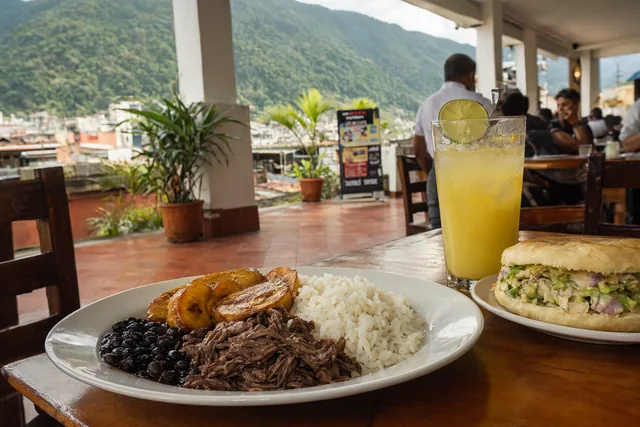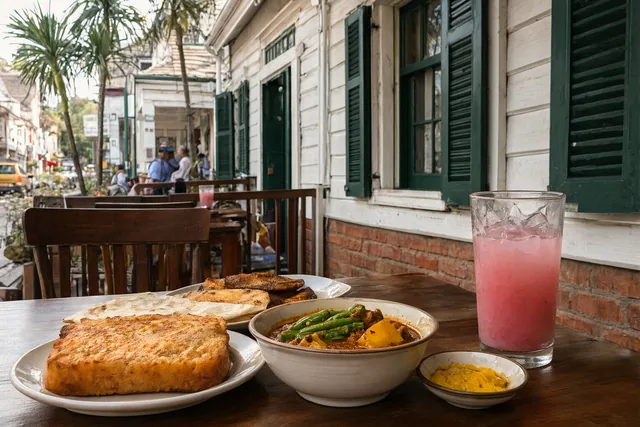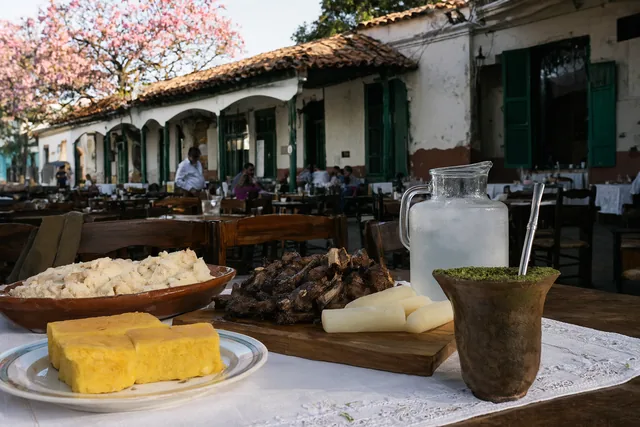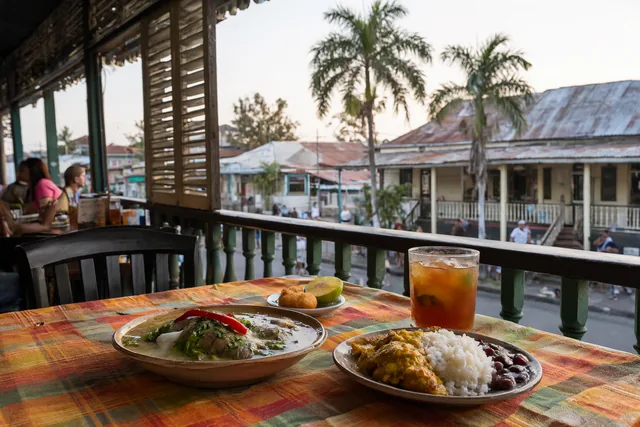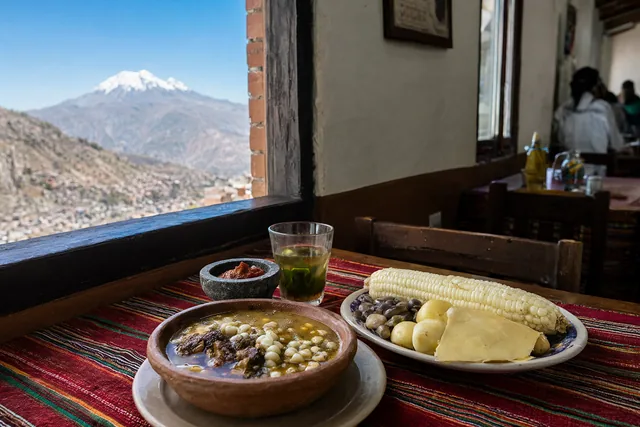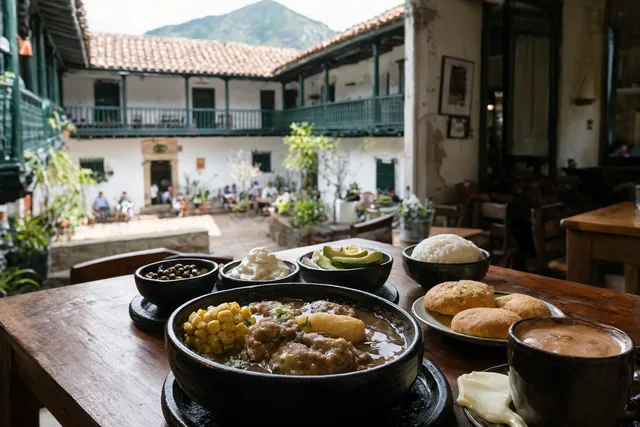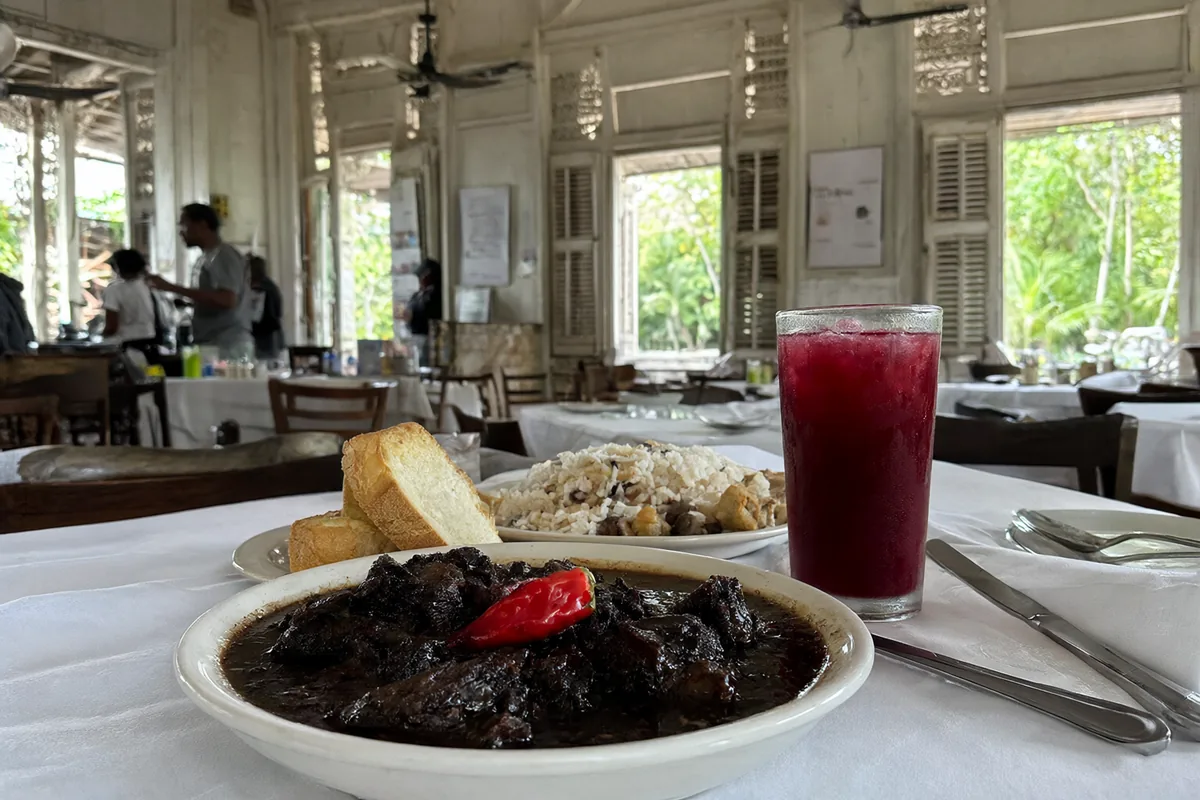
Guyana is the only English-speaking country in South America, and its food feels as much Caribbean as South American. Indigenous, African, Indian, Chinese, Portuguese and British traditions all meet on the plate, so a single lunch counter in Georgetown can sell pepperpot, curry and roti, chow mein and a Portuguese garlic pork sandwich. This Guyana food guide covers the dishes to know, the local food words that will confuse you on a menu, tipping and paying in Guyanese dollars, and where to eat in Georgetown, Berbice, the Essequibo Coast, Bartica and the Rupununi savannah. Guyana is not a big restaurant destination outside the capital, but its home cooking, markets and roti shops are excellent, and Guyanese people are generous about explaining what you are eating.
What to eat in Guyana: 12 dishes to know
These are the dishes Guyanese people eat at home, at celebrations and from the cook shops, with the community or region they come from where it matters.
- Pepperpot (everywhere, Christmas above all): the national dish, a dark, sweet and peppery stew of beef, pork or mutton slow-cooked in cassareep, a thick black sauce made from cassava juice, with cinnamon, clove and hot peppers. It comes from Indigenous cooking and is eaten with thick slices of plait bread, traditionally on Christmas morning.
- Cook-up rice (everywhere): rice cooked in coconut milk with black-eye peas or other peas and a mix of meats (chicken, salt beef, pig tail), often eaten on Saturdays and on New Year's Eve.
- Metemgee (everywhere): a one-pot dish of ground provisions (cassava, eddo, sweet potato, yam), plantain and flour dumplings simmered in coconut milk, served with fried fish or saltfish.
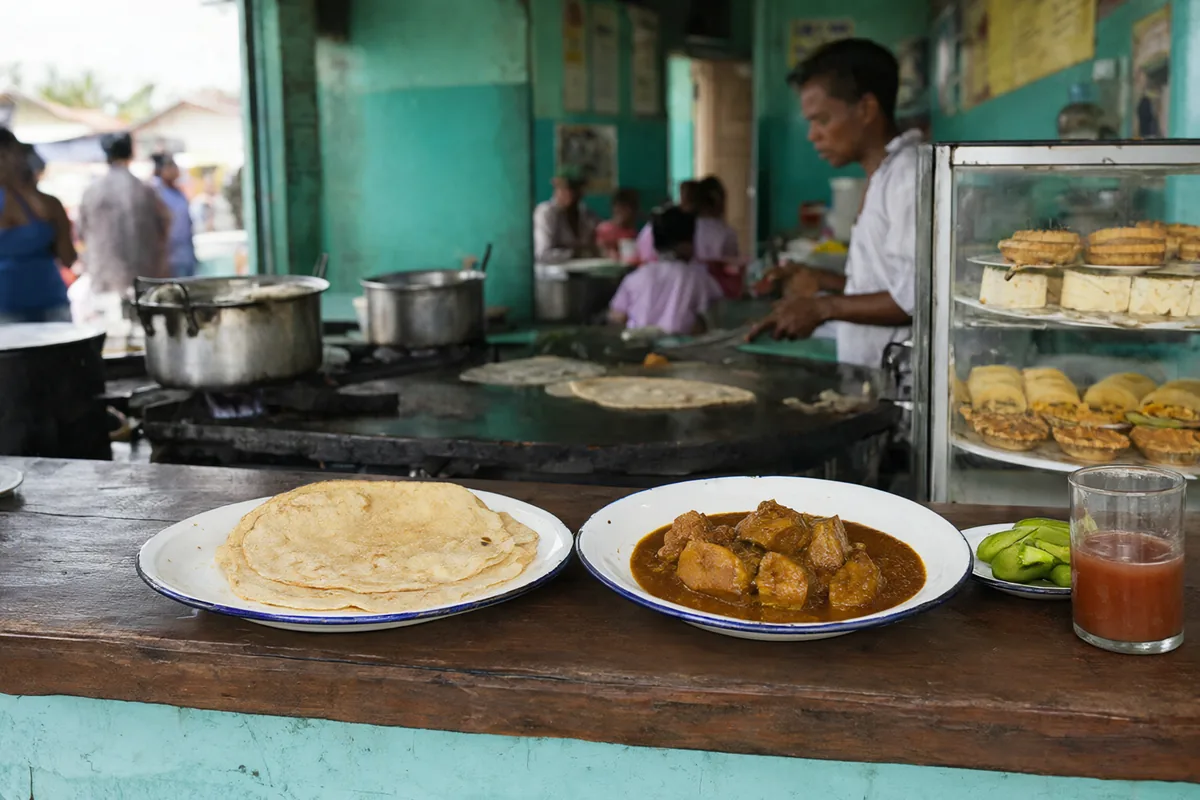
- Curry and roti (everywhere, Berbice above all): Indo-Guyanese curries of chicken, goat, duck, beef or fish, eaten with dhal puri (roti stuffed with ground split peas) or oil roti (soft, flaky paratha). Duck curry is the one Guyanese argue about most.
- Seven curry (Hindu ceremonies and festivals): seven vegetable curries, such as pumpkin, bhaji (greens), eddo and channa, served with rice on a water lily leaf.
- Chow mein and fried rice (everywhere): Guyanese Chinese food is its own cuisine, with chow mein, low mein and fried rice in huge portions, sold from Chinese restaurants in every town.
- Garlic pork (Christmas): a Portuguese-Guyanese dish of pork pickled for days in vinegar, garlic, thyme and hot pepper, then fried, served for Christmas breakfast.
- Bake and saltfish (everywhere, breakfast): fluffy fried dough "bakes" with sautéed salted cod with onion, tomato and pepper.
- Black pudding and souse (everywhere, weekends): rice-filled blood sausage and a sour, peppery pickle of pig trotters or chicken feet with cucumber and lime, sold together as a Saturday snack.
- Cheese rolls, egg balls and pine tarts (bakeries everywhere): cheese rolls are pastry rolls filled with spiced cheese, egg balls are boiled eggs wrapped in seasoned cassava and fried, and pine tarts are triangle pastries filled with pineapple jam.
- Phulourie with sour (everywhere): small fried split-pea fritters served with sour, a thin, tart chutney of green mango or tamarind with pepper.
- Hassar curry (coastal villages): hassar (also spelt hassa) is an armoured freshwater catfish, curried and eaten off the bone. Like labba, a large rodent cooked as game, it has a saying attached: eat it and you will always return to Guyana.
To drink, try mauby, a bittersweet drink made from tree bark, sorrel, a deep red hibiscus drink spiced with ginger and clove at Christmas, homemade ginger beer, swank (lime squash) and coconut water straight from the nut. Demerara rum, aged in the country for centuries, is the national spirit.
How to read a menu in Guyana
Menus in Guyana are in English, but the food words are Guyanese, borrowed from Hindi, Portuguese, Amerindian languages and Creolese, the English-based creole everyone speaks. Small cook shops often have a board with a few dishes, a choice of rice or roti, and the day's specials. These are the words to know.
| Word | Meaning |
|---|---|
| Provisions / ground provisions | Starchy root vegetables: cassava, eddo, dasheen, sweet potato, yam |
| Cassareep | Thick black sauce from cassava juice, the base of pepperpot |
| Dhal puri / oil roti | Split-pea stuffed roti / flaky paratha roti |
| Boulanger | Aubergine (eggplant) |
| Bora | Long green beans, often curried or stir-fried with shrimp |
| Bhaji / callaloo | Cooked leafy greens |
| Katahar | Young jackfruit, curried as a vegetable |
| Channa | Chickpeas, curried or fried as a snack |
| Wiri wiri | A tiny, round, very hot local pepper |
| Sour | Tart mango or tamarind chutney with pepper |
| Bakes | Fried dough breads, eaten at breakfast |
| Cutters | Small bites served with drinks at a bar or party |
| Sweet drink | A soft drink |
"Pepper" on a Guyanese menu usually means hot chilli sauce, and wiri wiri peppers are fierce. swap.menu explains local terms like cassareep, bora and katahar when it reads the menu, so you know what you are ordering and how hot it might be.
Tipping, tax and paying the bill
In sit-down restaurants in Georgetown, around 10 percent is a normal tip for good service. Some restaurants and hotels add a 10 percent service charge to the bill, in which case extra tipping is optional. At cook shops, roti shops, bakeries and market stalls, tipping is not expected. Guyana has a 14 percent VAT, which is included in prices at most simple places and sometimes added as a separate line in restaurants and hotels. Our guide to tax and service charges on menus explains how these lines work around the world.
The currency is the Guyanese dollar, written G$ or GY$ (code GYD). Prices are in the hundreds and thousands of dollars, so look carefully at which dollar a menu means: hotels and some upmarket restaurants also quote US dollars. Cards are accepted in hotels, larger restaurants and supermarkets in Georgetown, but markets, cook shops, minibuses and most places outside the capital want cash. If a card machine offers to charge you in your home currency, choose Guyanese dollars: our guide to paying in local currency explains why.
Guyanese breakfast is early and substantial, often bake and saltfish or roti. Lunch is from about 12pm to 2pm and is the main meal for many working people, and cook shops often run out of the popular dishes by mid-afternoon. Dinner is usually from 6pm to 8pm, though bars and late-night food in Georgetown keep going much later, especially on weekends.
Where to eat in Guyana, region by region
Most of Guyana's people live along the coast, and that is where most of the food is. The interior is rainforest and savannah, where you eat at lodges and in villages. Jump to a place:
Where to eat in Georgetown
Georgetown, the capital at the mouth of the Demerara River, is a city of white wooden colonial buildings, canals and wide avenues, and it has nearly all of Guyana's restaurants. Start at Stabroek Market, the huge market hall with the iron clock tower by the river, where vendors sell fruit, fish, provisions, spices and cassareep, and cook shops nearby serve curry, cook-up and fried fish. Bourda Market, a little east, is quieter and good for fruit and vegetables. Georgetown's bakeries are where to try cheese rolls, pine tarts and egg balls, and Chinese restaurants for chow mein are everywhere.
For eating out in the evening, Sheriff Street is Georgetown's busiest strip of restaurants, bars and late-night food, and Main Street and the streets around Camp Street have more restaurants and hotel dining. On Sunday evenings, Georgetown's families walk along the Seawall on the Atlantic, where vendors sell coconut water, snacks, souse and drinks. Georgetown restaurants range from roti shops to steakhouses and Brazilian grills, and the city has grown fast in recent years, so new places open often. Watch your belongings in crowded markets and take taxis at night.
Where to eat in Berbice
Berbice, the eastern region around the Berbice River and the Corentyne coast up to the Suriname border, is the heartland of Indo-Guyanese culture, and many Guyanese say it is where the best curry and roti are made. The main town is New Amsterdam, on the east bank of the Berbice River, with its market, colonial buildings and roti shops. Along the Corentyne coast, a long line of villages through rice fields and cane fields, you will find roti shops, cook shops serving curry duck and curry goat, and roadside stalls selling phulourie, channa and sweets such as mithai and gulab jamun.
The food in Berbice is at its best during Hindu festivals such as Diwali and Phagwah, when families cook seven curry and sweets in large quantities, and at weddings and religious ceremonies. On weekends, the beaches at the end of the Corentyne coast draw local families with picnics and food stalls. In Berbice, ask for dhal puri and duck curry and you will rarely be disappointed. The ferry to Suriname leaves from Moleson Creek near the end of the coast road.
Where to eat on the Essequibo Coast
The Essequibo Coast lies west of the huge Essequibo River estuary, reached by speedboat from Parika, the busy stelling (ferry landing) on the east bank, where a market and food stalls serve travellers waiting for boats. On the far side, the road runs through rice country past towns such as Anna Regina and on to Charity, the gateway to the Pomeroon River. This is farming country, and the food is home cooking: curry and rice, cook-up, fried fish, and fresh fruit and coconuts from the farms along the rivers.
There are few restaurants on the Essequibo Coast, and most visitors eat in small cook shops, at guesthouses and at the resort on Lake Mainstay, a freshwater lake near Anna Regina popular with Guyanese on holiday weekends. The markets in Anna Regina and Charity are good for local produce and snacks. Bring cash and expect simple, filling meals.
Where to eat in Bartica
Bartica is a small river town where the Essequibo, Mazaruni and Cuyuni rivers meet, and it has long been the gateway to the gold and diamond mining areas of the interior. Its food scene is that of a busy frontier town: cook shops, Chinese restaurants, bars and snack shops along the main streets serve miners, boat crews and travellers. River fish such as lukanani and basha are fried, curried or cooked in soup, and cook-up and curry are on every menu.
Bartica comes alive at Easter for the Bartica Regatta, with boat races, music and food stalls along the waterfront, when the town fills with visitors from Georgetown. The rest of the year, Bartica is a stop on the way to river resorts and waterfalls, and many visitors eat at their lodge. Boats from Parika take about an hour, so you can visit for a day.
Where to eat in the Rupununi
The Rupununi, in the south-west, is a wide savannah of cattle ranches, Indigenous villages and rainforest-edged rivers, home to Makushi and Wapishana communities. Most visitors stay at community-run ecolodges in villages such as Surama, Annai and Rewa, where meals are home-cooked and shared. The food here is Indigenous and ranch cooking: cassava bread, a large, crisp flatbread made from grated bitter cassava, farine, toasted cassava grains sprinkled over food, tuma pot, a pepper stew of fish or meat with cassava juice, fresh river fish and beef from the savannah ranches. You may be offered parakari or kari, fermented cassava drinks.
Lethem, the main town, sits on the border with Brazil, across the Takutu River from Bonfim, and its food has a strong Brazilian accent, with grilled meat, Brazilian snacks and Portuguese widely spoken alongside English. Lethem has small restaurants, cook shops and markets. In the Rupununi, you eat what the lodge or village cooks, so tell your hosts about any dietary needs when you book.
Vegetarian, vegan and allergy tips
Guyana is one of the easier countries in South America for vegetarians, thanks to its large Hindu community. Many Indo-Guyanese dishes are meat-free: dhal, aloo (potato) curry, channa, pumpkin, bhaji, boulanger and katahar curries, served with rice or roti, and seven curry is entirely vegetarian. The word to use is simply "vegetarian", and many people will understand if you say you do not eat meat or fish. Watch for hidden ingredients: cook-up rice and many soups contain salted meat, some bhaji is cooked with saltfish or shrimp, and bakes and pastries may use butter or lard.
Coconut milk is in a great many dishes, including cook-up and metemgee, and wheat flour is in roti, bakes and dumplings, so coeliacs should stick to rice and provisions. Peppers are added freely, so ask for "no pepper" if you do not want heat. Our guide to eating abroad with food allergies explains how to explain an allergy clearly, even when everyone speaks English.
Guyanese food words and ordering terms
Morning / Good afternoon Always greet people before you ask for anything, at a shop counter or a market stall
Lime To hang out with friends, usually with food and drinks: "a Sunday lime on the Seawall"
Lil pepper / No pepper "A little hot sauce" / "No hot sauce", the most useful request in a cook shop
Rice or roti? The question you will be asked with every curry
Cutters Small bites with drinks, from fried fish to chicken foot
Is how much? Creolese for "How much is it?"
Me belly full Creolese for "I am full", often said with a smile after a second helping
How swap.menu helps you eat in Guyana
Guyanese menus are in English, but they are full of words you will not know: cassareep, bora, katahar, metemgee, dhal puri. Photograph the menu or the cook shop board with swap.menu and every dish is explained in plain language, so you know that pepperpot is a sweet, dark meat stew rather than a soup, and that souse is pickled pig trotters. Every price is converted from Guyanese dollars to your home currency, which helps when a lunch costs a few thousand dollars, and we point out VAT and service lines on the bill. You can save the menus of the places you liked and look back at what you ordered.
If English is not your first language, swap.menu translates the menu into your own language, any of 29, so a visitor from Brazil, France or China can understand a Georgetown menu as easily as a local. You can also add notes such as "no pepper" or "no saltfish" to your order. Try it right now on a sample menu with the free demo, or see travel pass prices.
Off to Guyana? Your first 3 menu scans are free, and a travel pass starts from $4.99 with nothing that renews.
Start free with 3 scansGuyana food FAQ
Do you tip in restaurants in Guyana?
Around 10 percent is a normal tip in sit-down restaurants in Guyana. Some restaurants and hotels add a 10 percent service charge, so check the bill before adding more. Tipping is not expected at cook shops, roti shops or market stalls.
What is the national dish of Guyana?
Pepperpot is the national dish of Guyana, a dark stew of beef, pork or mutton slow-cooked in cassareep, a sauce made from cassava, with spices and hot pepper. It is eaten with bread, especially on Christmas morning. Cook-up rice and curry with roti are just as popular day to day.
Is Guyana expensive to eat out?
Eating at cook shops, roti shops, bakeries and markets in Guyana is cheap. Restaurants in Georgetown, especially in hotels and the newer places, are much more expensive, and prices have risen as the economy has grown.
Is tap water safe to drink in Guyana?
Visitors should not drink tap water in Guyana. Bottled water is cheap and sold everywhere, and hotels and lodges usually provide filtered water. Be careful with ice at simple stalls.
What time do people eat in Guyana?
Breakfast is early, lunch is from about 12pm to 2pm and dinner is usually between 6pm and 8pm. Popular dishes at cook shops can sell out by mid-afternoon. Bars and late-night food in Georgetown carry on much later on weekends.
How can swap.menu help if menus in Guyana are in English?
Many Guyanese food words, like cassareep, bora and katahar, are unfamiliar even to English speakers. swap.menu explains every dish, converts Guyanese dollar prices to your home currency, saves menus you liked and shows the menu in your own language if English is not your first language.
Travelling further in the region? Read our food guides for neighbouring countries:
- Suriname food guide
- Venezuela food guide
- Brazil food guide
- French Guiana food guide
- Trinidad and Tobago food guide
- Barbados food guide
Or browse every travel food guide.