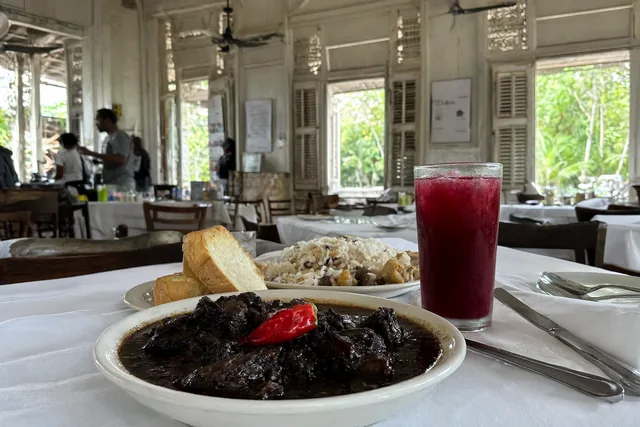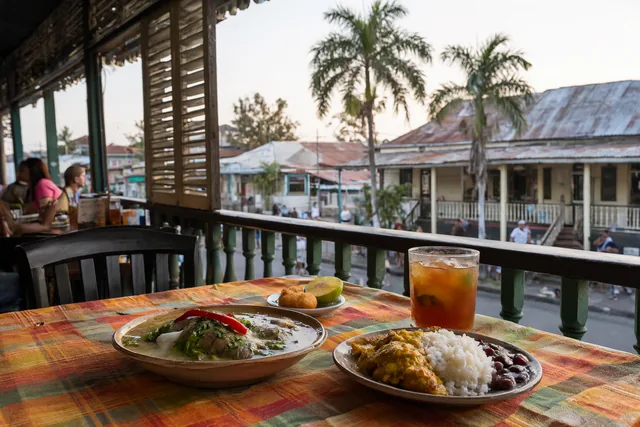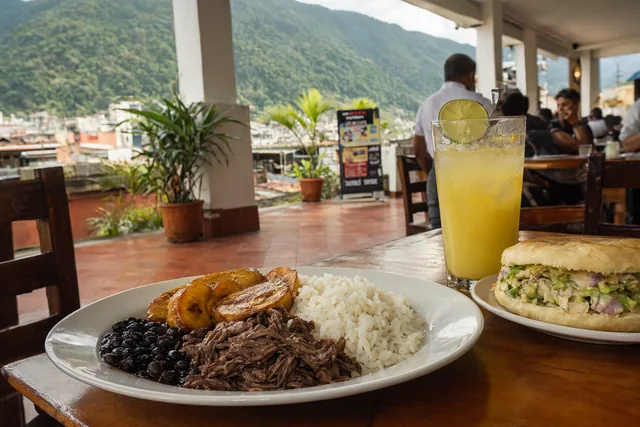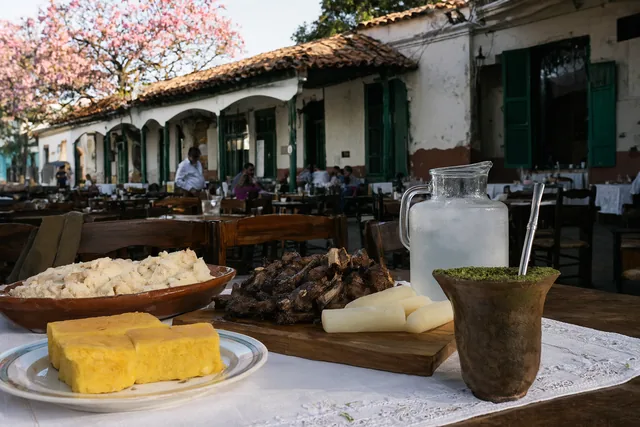
Suriname is a small country with one of the most mixed cuisines on earth. Creole, Hindustani (Indian), Javanese, Chinese, Maroon, Indigenous, Dutch, Jewish and Lebanese communities all cook side by side, and in Paramaribo you can eat Javanese saoto soup for breakfast, a Hindustani roti for lunch, Creole pom in a sandwich and Chinese roast pork for dinner without walking far. This Suriname food guide covers the dishes to know, how to read a menu written in Dutch with Sranan Tongo, Hindi and Javanese words mixed in, tipping and paying in Surinamese dollars, and where to eat in Paramaribo, Commewijne, Wanica (Lelydorp and Domburg), Nieuw Nickerie and along the Upper Suriname River. Many Dutch visitors already know Surinamese food from the roti shops and warungs of Amsterdam and Rotterdam. Here it is cheaper, fresher and hotter.
What to eat in Suriname: 12 dishes to know
These are the dishes you will see on menus and boards across the country, with the community they come from. Most Surinamese eat across all of them.
- Pom (Creole and Jewish): a baked dish of grated pomtajer (a starchy tropical root) layered with chicken, citrus juice and spices, golden on top and soft inside. It is the party dish, and in a soft roll it becomes the famous broodje pom.
- Roti (Hindustani): a thin, soft flatbread (often a split-pea dalpuri) served with masala chicken on the bone, potato, kousenband (yardlong beans) and a boiled egg. You tear the roti and use it to scoop the curry.
- Moksi alesi (Creole): "mixed rice", rice cooked with beans, salted meat (zoutvlees), salted fish or shrimp and coconut milk, a one-pot everyday meal.
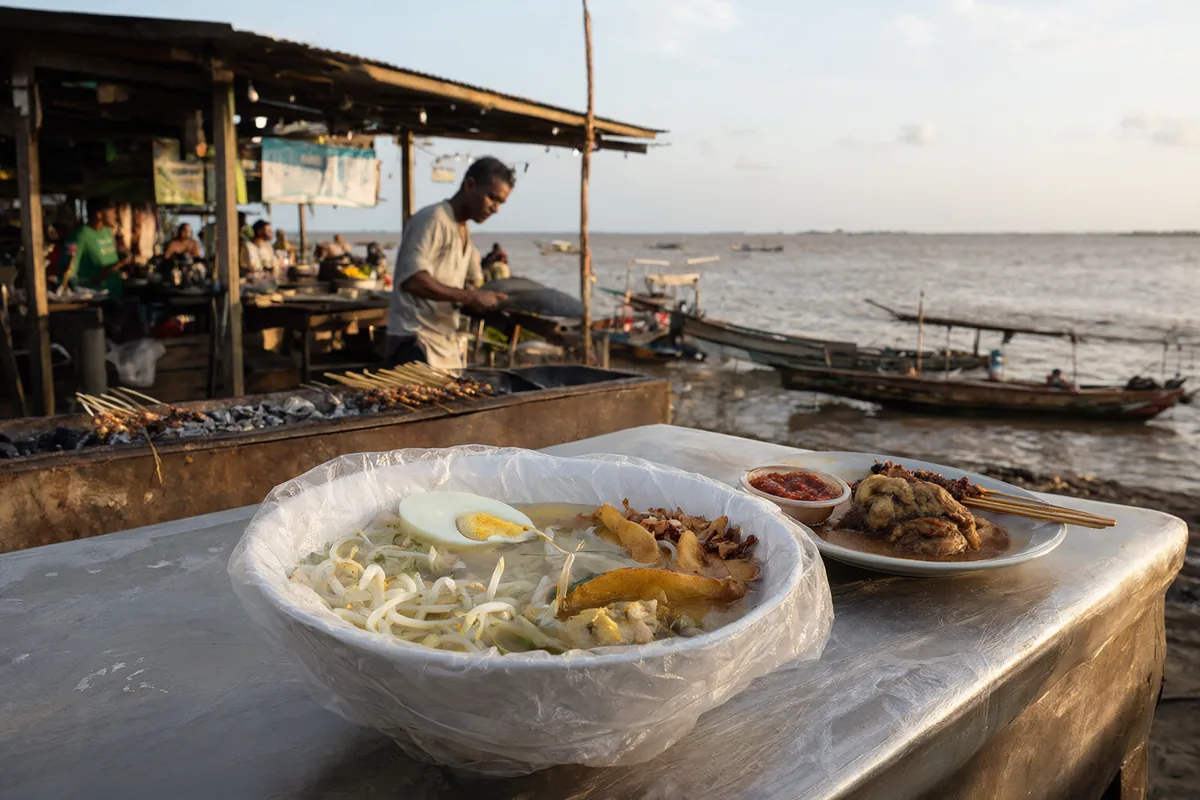
- Saoto soep (Javanese): a clear, fragrant chicken soup with bean sprouts, egg, fried potato sticks and fried onion, served with rice or lontong and a spoonful of hot sambal on the side.
- Bami and nasi (Javanese): fried noodles and fried rice, Surinamese style, with sweet soy, served with satay, fried chicken, egg and sambal. Javanese warungs serve them as a set plate.
- Pindasoep met tom tom (Creole): a rich peanut soup with chicken or salted meat, served with tom tom, dense dumplings of mashed plantain.
- Heri heri (Creole): boiled cassava, sweet potato, plantain and other provisions with salted cod (bakkeljauw) and a boiled egg. Simple, filling and very traditional.
- Bakbana (everywhere): slices of ripe plantain fried in batter and served with peanut sauce, a snack sold in warungs and snack bars.
- Bara and phulauri (Hindustani): bara are savoury fried doughnuts of ground lentils, and phulauri are small split-pea fritters, both served with a sour mango or tamarind chutney.
- Moksi meti (Chinese-Surinamese): a plate of mixed roast meats, such as red roast pork, crispy pork belly and roast chicken, over rice with greens. Chinese restaurants and takeaways are found in every neighbourhood.
- Bruine bonen met rijst (Creole): stewed brown beans with salted meat, pig tail or chicken, served over rice, a weekday home-cooking classic.
- Pastei (Creole): a rich chicken pie with vegetables in a creamy sauce under a pastry lid, made for birthdays and celebrations.
To drink, try dawet, a sweet, pink Javanese drink of coconut milk, lemongrass and pandan with jelly strands, ginger beer, and fresh coconut water. For dessert, look for schaafijs (shaved ice with syrup), bojo, a dense cassava and coconut cake, and fiadu, a Creole yeasted cake with raisins and almonds. On every table there will be sambal, often made with the fiery yellow Madame Jeanette pepper. Suriname also makes its own rum and beer.
How to read a Surinamese menu
Dutch is the official language of Suriname and most menus are written in Dutch, but the dish names come from Sranan Tongo (the Creole language everyone speaks), Sarnami Hindustani, Javanese and Chinese. Many places are counter-service: a roti shop, a warung or a Chinese takeaway with a board of dishes and a choice of portion. These are the words to know.
| Word | Language | Meaning |
|---|---|---|
| Broodje | Dutch | A filled bread roll: broodje pom, broodje bakkeljauw, broodje kerrie kip |
| Bakkeljauw | Dutch (Surinamese) | Salted cod |
| Zoutvlees / sowtu meti | Dutch / Sranan | Salted meat, usually beef |
| Kip / vis / garnalen | Dutch | Chicken / fish / prawns |
| Kousenband | Dutch | Yardlong beans, cooked with roti and nasi |
| Pinda | Dutch and Sranan | Peanut, as in pindasaus (peanut sauce) |
| Moksi | Sranan | Mixed, as in moksi alesi (mixed rice) or moksi meti (mixed meat) |
| Bana / bakbana | Sranan | Plantain / fried battered plantain |
| Masala / kerrie | Sarnami / Dutch | Spice blend / curry |
| Sambal | Javanese | Chilli paste, served on the side |
| Warung | Javanese | A small, family-run Javanese eatery |
| Afhalen / hier eten | Dutch | Takeaway / eat in |
| Pittig / heet | Dutch | Spicy / hot |
"Pittig" in Suriname can be much hotter than the same word in the Netherlands, because Madame Jeanette peppers are among the hottest in the region. swap.menu explains dishes like heri heri, moksi alesi and saoto when it reads the menu, and flags which ones usually come with sambal on the side.
Tipping, tax and paying the bill
At roti shops, warungs, snack bars and Chinese takeaways, you pay at the counter and tipping is not expected. In sit-down restaurants in Paramaribo, leaving around 10 percent for good service is normal, and some restaurants already add a service charge to the bill, in which case extra tipping is optional. Suriname introduced a value added tax (BTW) in 2023, and you may see it as a separate line on restaurant receipts. Our guide to tax and service charges on menus explains how these lines work around the world.
The currency is the Surinamese dollar, written SRD (sometimes "Sr$" on menus). Hotels, tour operators and some restaurants quote prices in US dollars or euros as well, so check which currency each line is in. Cash is king at markets, warungs and in the districts, and US dollars and euros can be changed at banks and official exchange offices (cambio). Cards are accepted in hotels, larger restaurants and supermarkets in Paramaribo, but not everywhere. If a card machine offers to charge you in your home currency, choose Surinamese dollars: our guide to paying in local currency explains why.
Surinamese people eat breakfast early, often bread, saoto or roti. Lunch is from about 12pm to 2pm, and many roti shops and warungs are busiest at lunchtime and may close early. Dinner is from about 6:30pm, and on weekends Paramaribo's eating and drinking goes on late. Sunday is a family day, when many smaller places are closed.
Where to eat in Suriname, district by district
Nearly half of Suriname's people live in and around Paramaribo, and most of the eating is there. Jump to a place:
Where to eat in Paramaribo
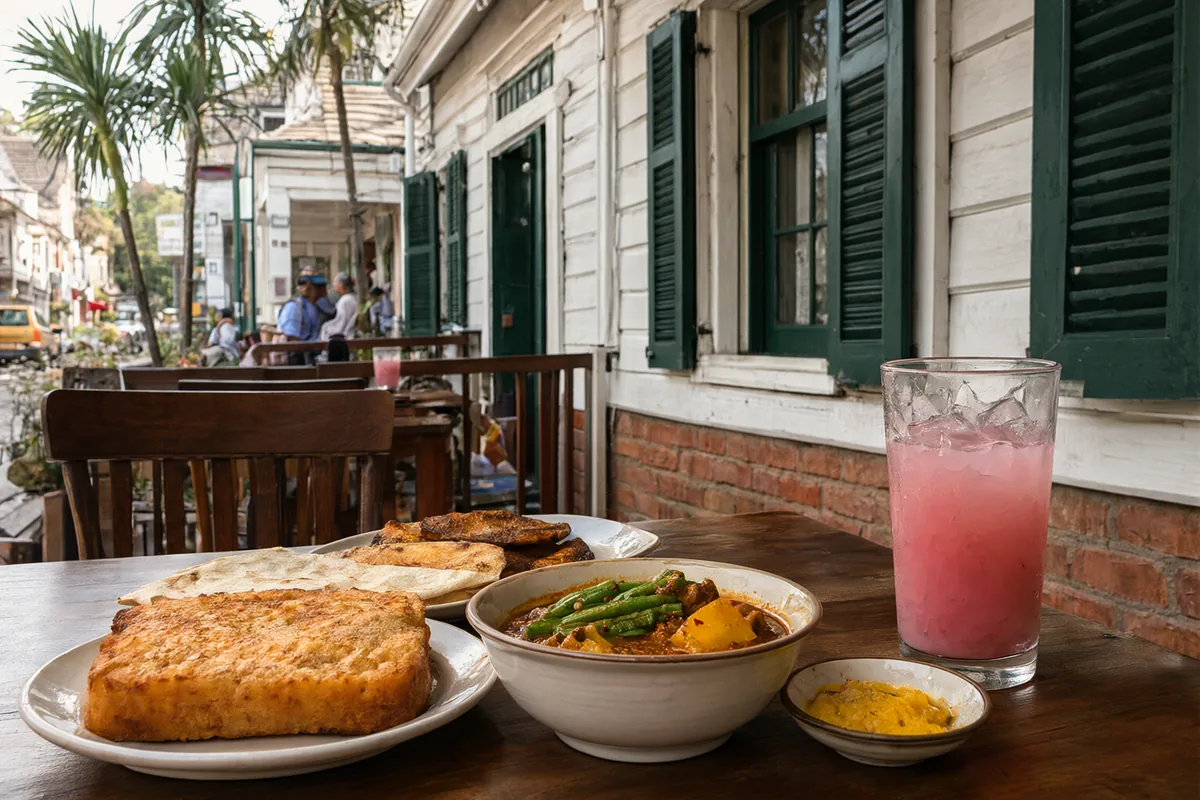
Paramaribo's historic inner city of white wooden houses with green shutters is a UNESCO World Heritage Site, and the city's food is as mixed as its people. Start at the Centrale Markt on the Waterkant, the riverfront, a big covered market selling fish, provisions, peppers and herbs, with food stalls and a section for medicinal and ritual herbs. Along the Waterkant there are also simple food stalls with views over the Suriname River. For lunch, every neighbourhood has roti shops, where roti with chicken is the default order, and Chinese restaurants for moksi meti and bami.
For Javanese food, Paramaribo locals head to the warungs of Blauwgrond, in the north of the city, which are known for bami, nasi, saoto and satay served at simple tables, busy in the evening and on weekends. Broodje pom and broodje bakkeljauw from a sandwich shop make the classic Paramaribo snack. In the evening, the streets around Kleine Waterstraat, close to the Palmentuin and Fort Zeelandia, form the city's main strip of restaurants, bars and terraces. Paramaribo also has Brazilian, Indonesian, Lebanese and Dutch-style restaurants, and seafood places along the river. Lunch is the meal that shows off the city best, so plan to eat at a different kind of place each day.
Where to eat in Commewijne
Commewijne is the district across the Suriname River from Paramaribo, reached by the big bridge or by a short boat crossing, and it is lined with old plantations along the Commewijne River. Many visitors cycle or take a boat tour past former sugar, coffee and cocoa plantations such as Frederiksdorp, Peperpot and Marienburg, and to the open-air museum at the old fort of Nieuw Amsterdam. Some plantations have guesthouses and simple restaurants that serve Surinamese lunches, and river tours often include a meal.
Commewijne has a large Javanese population, descended from contract workers brought to the plantations, and villages such as Tamanredjo have warungs serving bami, nasi, saoto and satay, as well as Javanese sweets and snacks. Boat trips at the mouth of the river to see dolphins usually stop for fish or a drink. In Commewijne, eat at lunchtime, as many places close in the late afternoon.
Where to eat in Wanica
Wanica is the district just south and west of Paramaribo, home to Lelydorp, the town on the road to the international airport, and Domburg, a riverside village on the Suriname River. Both have large Hindustani and Javanese communities, and Wanica is where many people from Paramaribo go to eat at weekends. Lelydorp's main road is lined with roti shops, warungs, snack bars and Chinese restaurants, and it is a good place for a last roti on the way to the airport.
Domburg is the Wanica weekend favourite: the square by the river fills with food stalls in the late afternoon and evening, selling saoto, satay, bami, bakbana, grilled corn and drinks, while families sit by the water. It is one of the easiest places in Suriname to try many dishes in one go. Go on a Friday, Saturday or Sunday for the most stalls.
Where to eat in Nieuw Nickerie
Nieuw Nickerie, in the far west near the border with Guyana, is Suriname's rice capital, surrounded by flat polders of rice fields. The town has a strong Hindustani character, and its food is roti, curries, bara and Hindustani sweets, along with fresh fish and shrimp from the coast. There is a market by the river and a modest collection of restaurants, roti shops and Chinese restaurants in the centre of Nieuw Nickerie.
Visitors come to Nieuw Nickerie on the way to or from Guyana, as the ferry crosses the Corantijn River from South Drain, or to visit the Bigi Pan wetland reserve to see scarlet ibis and other birds, where trips sometimes include a simple meal. It is a quiet town, and evenings are early, so plan for a good lunch.
Where to eat on the Upper Suriname River
South of the Brokopondo reservoir, the Upper Suriname River runs through rainforest past the villages of the Saamaka (Saramaccan) Maroons, descendants of Africans who escaped slavery and built independent communities in the interior. Boats leave from Atjoni at the end of the road, and visitors stay at riverside lodges, most of them run by or with local communities, where meals are included.
The food on the Upper Suriname River is simple and local: rice grown on hillside farms, cassava and cassava bread, peanuts, plantain, fresh river fish and chicken, often cooked with peanut sauce or pepper. There are no restaurants as such, so you eat what the lodge serves, and it is worth telling them about dietary needs when you book. Bring drinking water or check that the lodge provides it.
Vegetarian, vegan and allergy tips
Suriname is one of the easier countries in South America for vegetarians, thanks to its Hindustani and Javanese cooking. Roti with potato, kousenband and pumpkin, dhal, bara, phulauri, bakbana, vegetable bami and nasi, and tofu and tempeh dishes at Javanese warungs are all common. The Dutch word is vegetarisch (veganistisch for vegan). Watch for hidden ingredients: dried shrimp (trassi, shrimp paste) goes into many sambals and Javanese dishes, salted meat or fish is added to rice, bean and vegetable dishes, and many soups use chicken stock.
Peanuts are everywhere in Suriname: pindasaus on bakbana and satay, pindasoep, and peanut in many sambals and snacks. If you have a peanut allergy, say so clearly at every meal. Roti, broodjes, bara and pastei contain wheat, while rice dishes, saoto with rice, heri heri and pom are better choices for coeliacs, though always ask. Our guide to eating abroad with food allergies explains how to explain an allergy clearly when you do not speak the language.
Useful Dutch and Sranan phrases for ordering
Fa waka? "How's it going?" in Sranan Tongo, the friendly greeting everyone uses
Goedemiddag "Good afternoon" in Dutch, polite at a shop counter
Een roti kip, alstublieft "A chicken roti, please"
Niet te pittig, alstublieft "Not too spicy, please"
Ik ben allergisch voor pinda's "I am allergic to peanuts"
Mag ik de rekening? "May I have the bill?"
Grantangi "Thank you" in Sranan Tongo
A switi! "It's delicious!" in Sranan Tongo
How swap.menu helps you eat in Suriname
A Surinamese menu can mix four languages in one line: a Dutch heading, a Sranan dish name, a Hindi spice word and a Javanese side dish. Photograph it with swap.menu and every dish appears in your language with the original name beside it and a short explanation, so you know that heri heri is boiled provisions with salted cod, moksi meti is mixed Chinese roast meats and pom is a baked root and chicken dish rather than an apple. Every price is converted from Surinamese dollars to your home currency, and when a menu lists US dollars or euros instead, you see that clearly too.
Tap the dishes you want, add a note such as "no peanuts" or "not too spicy, please", typed or spoken, and swap.menu translates your order into Dutch. Show the person at the counter your phone, or let them scan the QR code and read your order on their own screen. You can try it right now on a sample menu with the free demo, or see travel pass prices.
Off to Suriname? Your first 3 menu scans are free, and a travel pass starts from $4.99 with nothing that renews.
Start free with 3 scansSuriname food FAQ
Do you tip in restaurants in Suriname?
Around 10 percent is a normal tip in sit-down restaurants in Suriname, unless a service charge is already on the bill. At roti shops, warungs, snack bars and takeaways, you pay at the counter and tipping is not expected.
What food is Suriname famous for?
Suriname is famous for pom, a baked dish of pomtajer root and chicken, often eaten in a sandwich, and for Hindustani roti with masala chicken. Javanese saoto soup, bami and nasi, moksi alesi, pindasoep and Chinese moksi meti are also everyday favourites.
Is Suriname expensive to eat out?
Eating at roti shops, warungs, markets and Chinese takeaways in Suriname is cheap. Sit-down restaurants in Paramaribo, especially those aimed at visitors, cost more and sometimes price in US dollars or euros.
What language are menus in Suriname?
Most menus in Suriname are in Dutch, the official language, but dish names come from Sranan Tongo, Hindustani, Javanese and Chinese. English is understood in many places in Paramaribo, especially in tourism.
Is tap water safe to drink in Suriname?
Tap water in Paramaribo is treated and many residents drink it, but bottled water is cheap and the safer choice for short visits. In the interior and on river trips, drink bottled or filtered water.
How can I read a Surinamese menu if I do not speak Dutch?
Learn a few words like broodje, kip, bakkeljauw and moksi, or photograph the menu with swap.menu. It translates every dish into your language, explains Sranan, Hindustani and Javanese dish names, converts prices from Surinamese dollars to your currency and translates your order into Dutch.
Travelling further in the region? Read our food guides for nearby countries and close culinary cousins:
- Guyana food guide
- French Guiana food guide
- Brazil food guide
- Netherlands food guide
- Indonesia food guide
- Trinidad and Tobago food guide
Or browse every travel food guide.