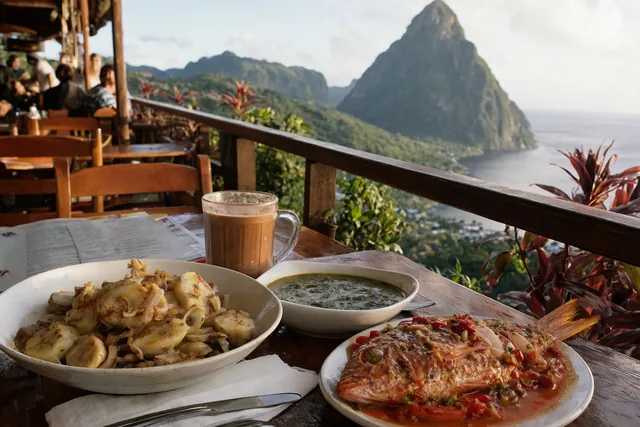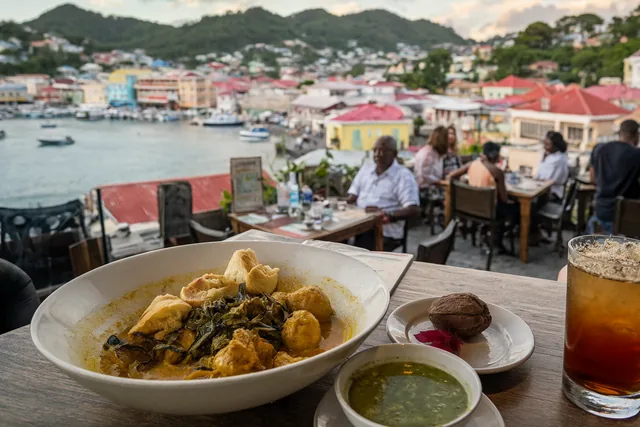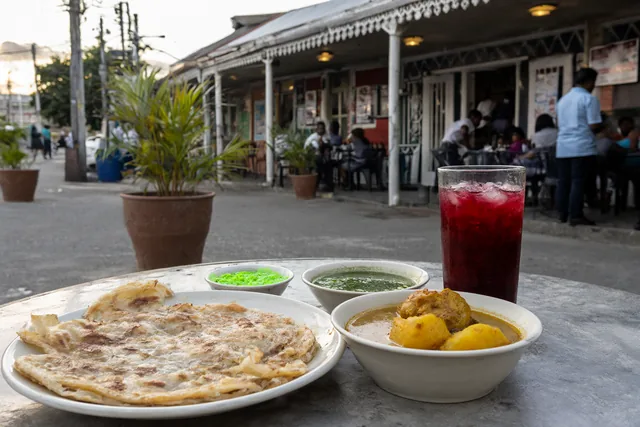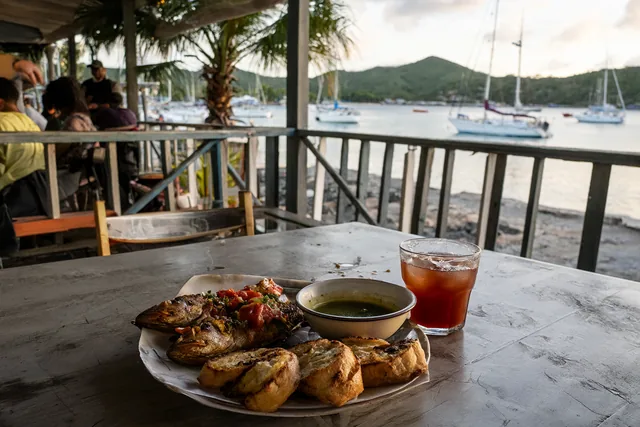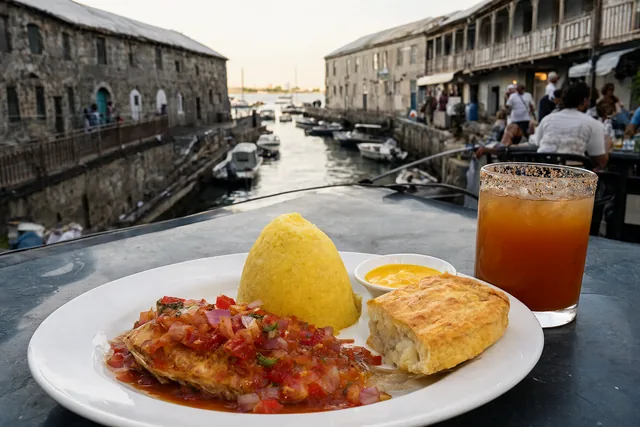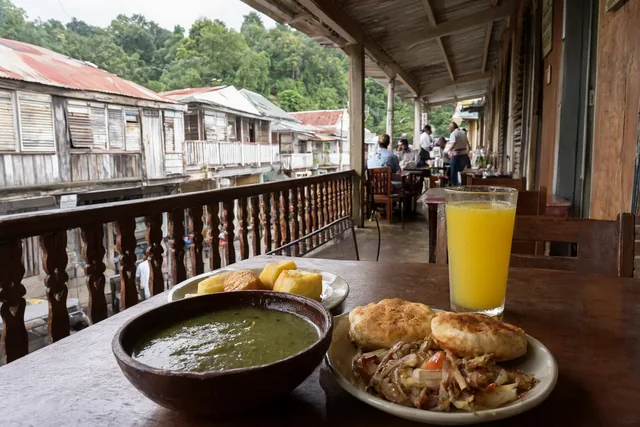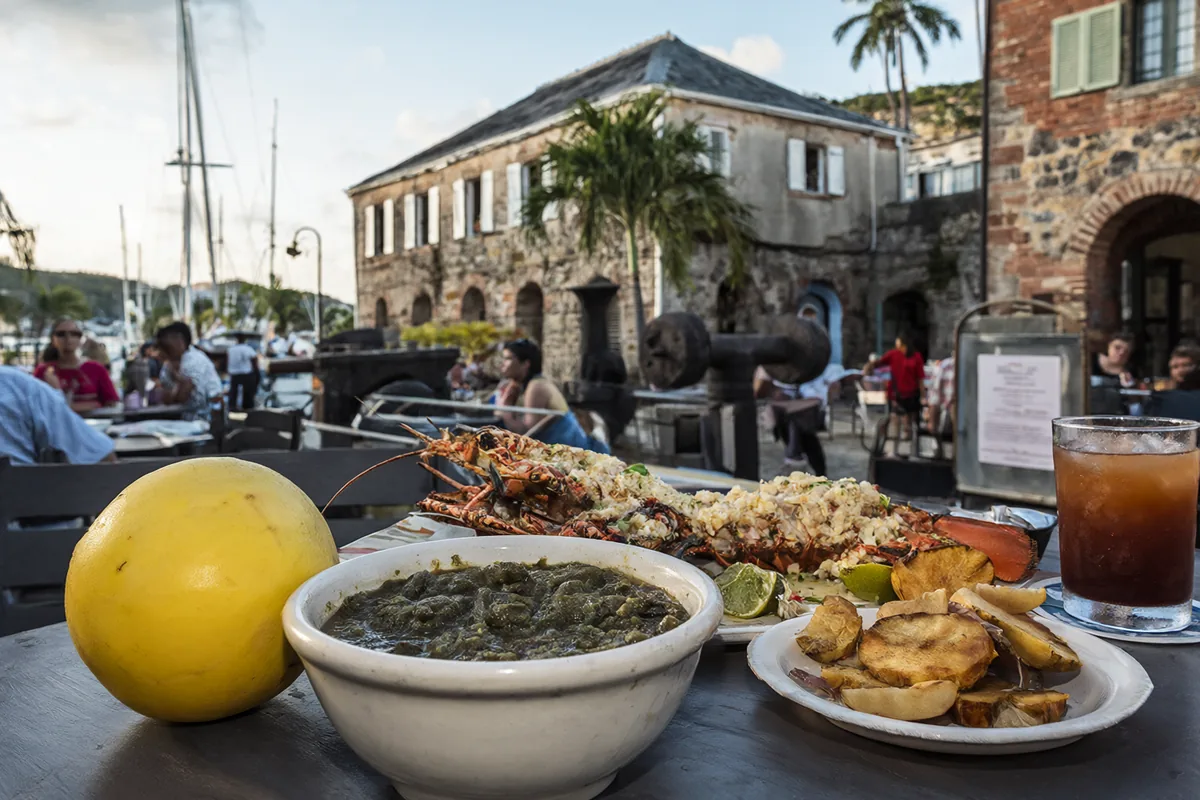
Antigua is famous for its beaches, one for every day of the year as the locals say, but its food deserves as much attention: cornmeal fungie with a thick pepperpot stew, saltfish with sweet potato ducana, spicy goat water and the black pineapple, said by Antiguans to be the sweetest in the world. This Antigua and Barbuda food guide covers the dishes to order, the local menu words, how ABST, service charges and tipping work, then goes place by place through where to eat in St John's, English Harbour, Dickenson Bay, Jolly Harbour and on the sister island of Barbuda. Book a resort if you like, but eat lunch in St John's and spend a Sunday evening at Shirley Heights.
What to eat in Antigua and Barbuda: 12 dishes to know
These are the dishes Antiguans and Barbudans eat at home, at Saturday markets and at roadside stands, and the ones visitors most often ask about.
- Fungie and pepperpot (everywhere): the national dish. Fungie (said "foon-jee") is cornmeal cooked with okra and turned into a smooth, firm ball. Pepperpot is a thick stew of spinach, aubergine, okra, squash, peas and salted or fresh meat.
- Saltfish, ducana and chop-up (everywhere): sautéed salt cod with ducana, a sweet dumpling of grated sweet potato, coconut and spice boiled in a banana leaf, and chop-up, mashed aubergine, okra and greens.
- Goat water (everywhere): a spicy, clove-scented goat stew, thick enough to eat with a spoon and bread. A fixture of weekends, carnivals and cricket matches.
- Antigua black pineapple (Fig Tree Drive and markets): a small, very sweet pineapple grown in the south of the island, eaten fresh, juiced or in desserts.
- Lobster (Barbuda and the coasts): spiny lobster, grilled with garlic butter or curried, at its best on Barbuda. Lobster season is closed for part of the year, so it is not always on the menu.
- Conch (the coasts): stewed, curried, made into fritters or a lime-sharp souse.
- Grilled or fried fish (the coasts): red snapper, mahi-mahi, wahoo, kingfish and grouper, often served whole with rice and peas, salad and plantain.
- Johnny cakes and saltfish (breakfast): fried dough cakes, slightly sweet, eaten with sautéed saltfish, eggs or cheese.
- Seasoned rice and rice and peas (everywhere): rice cooked with vegetables, herbs and sometimes meat, or with pigeon peas or beans.
- Souse (Saturdays): pork or pig trotters in a sharp brine of lime, cucumber, onion and pepper.
- Local sweets (markets and roadside): coconut sugar cake, tamarind stew, coconut tart, bread pudding and fudge, sold by vendors and at bakeries.
- Rum, rum punch and local lager (everywhere): Antigua distils its own rum, and the island's own lager is called Wadadli, the old name for Antigua. Fresh juices of soursop, passion fruit and sorrel are everywhere too.
How to read a menu in Antigua and Barbuda
Menus in Antigua and Barbuda are in English, but local dishes keep their own names, and roadside stands often have a hand-painted board or no menu at all. These are the terms worth knowing.
| Local term | What it means |
|---|---|
| Fungie (fungee) | Cornmeal and okra cooked into a firm, smooth ball |
| Pepperpot | A thick vegetable stew with meat, not as spicy as the name suggests |
| Ducana | Sweet potato and coconut dumpling boiled in a leaf |
| Chop-up | Mashed aubergine, okra and greens, served with saltfish |
| Goat water | Spicy goat stew, not water at all |
| Saltfish | Salt cod, soaked and sautéed with onion, tomato and pepper |
| Johnny cake | A fried dough cake, eaten at breakfast or with fish |
| Provisions | Boiled root vegetables and green banana |
| Dolphin | Mahi-mahi, a fish, not the mammal |
| Wahoo | A firm, white game fish, often grilled |
| Black pineapple | Antigua's own small, very sweet pineapple |
| Pepper / pepper sauce | Hot chilli or hot sauce. "No pepper" means no chilli |
| Plus ABST and service | Sales tax and a service charge will be added |
Restaurants in Antigua may quote EC dollars, US dollars or both, all with the $ sign, and many add ABST and service at the end. swap.menu reads the menu, shows which currency each price is in, flags the tax and service lines and converts everything to your home currency.
ABST, tipping and paying the bill
Antigua and Barbuda's sales tax is the ABST (Antigua and Barbuda Sales Tax), and most restaurants also add a 10 percent service charge. Some menus include both in the price, but many add them at the end, so check the small print. If service is on the bill, an extra tip is optional, though a little more for good service is appreciated. If there is no service charge, tip 10 to 15 percent. Roadside stands, market vendors and small cookshops do not expect a tip. Our guide to tax and service charges on menus explains these lines in more detail.
The currency is the Eastern Caribbean dollar (EC$, XCD), fixed to the US dollar. US dollars are accepted almost everywhere, and many tourist restaurants, bars and tours quote in US dollars, but change usually comes back in EC dollars. In St John's, at markets and in villages, pay in EC dollars and carry small notes. Cards are accepted at hotels, marinas and most sit-down restaurants, but not at roadside stands. If a card machine offers to charge you in your home currency, decline: our guide to paying in local currency explains why.
Antiguans eat breakfast early, often saltfish with johnny cakes or bread, lunch from noon to 2pm, and dinner from 7pm. Saturday is market day in St John's and the traditional day for souse, goat water and pepperpot. On Sundays many local places close, and the evening belongs to the Shirley Heights party above English Harbour.
Antigua Carnival, from late July to the first Tuesday in August, brings food stalls to St John's, and Antigua Sailing Week, in late April or early May, fills English Harbour with sailors and every restaurant table with them.
Where to eat in Antigua and Barbuda, place by place
Most visitors stay in resorts on Antigua's northwest or south coast, but the island is small enough to explore in a day, and its capital, harbours and sister island each have something different to eat. Jump to a place:
Where to eat in St John's
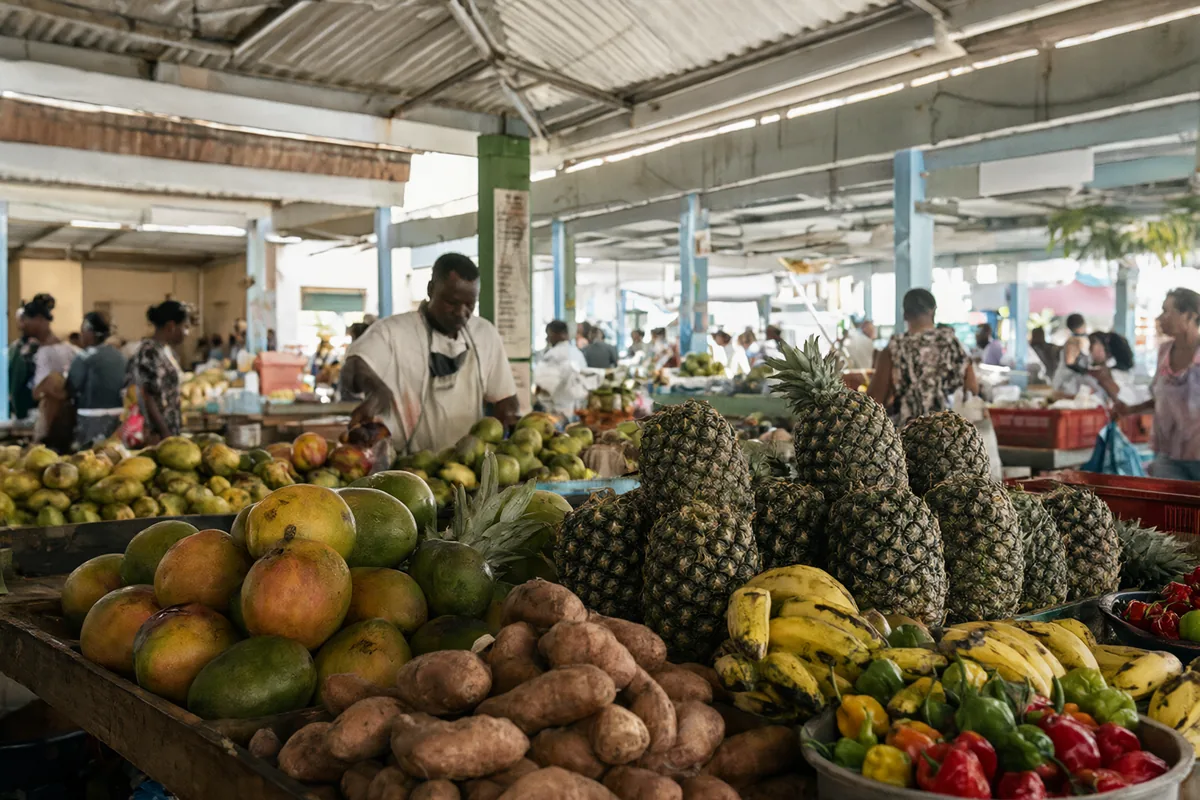
St John's, the capital, is where Antiguans shop, work and eat lunch, and it has the island's best local food. The Public Market at the southern end of Market Street is busiest on Saturday mornings, with farmers selling black pineapples, mangoes, sweet potatoes, peppers and greens, and vendors nearby selling ducana, sugar cake, tamarind balls and fresh juice. The streets around the market and the bus stations have small cookshops serving plate lunches of fungie and pepperpot, saltfish, stewed chicken, goat water and rice and peas, often sold in takeaway boxes.
Near the cruise port, Heritage Quay and Redcliffe Quay are restored waterfront areas with old stone and timber warehouses, now home to cafés, bars and restaurants aimed at visitors. Redcliffe Quay is the more pleasant of the two for a long lunch. St John's gets very busy when several cruise ships are in, so eat early or wander a few streets inland to the places where office workers queue. Many St John's cookshops close by mid-afternoon and on Sundays.
Where to eat in English Harbour
English Harbour, on the south coast, is Antigua's most historic corner and its yachting centre. Nelson's Dockyard, a restored Georgian naval dockyard and a UNESCO World Heritage Site, has restaurants and bars in old stone buildings looking out over moored yachts, and next door Falmouth Harbour has marinas lined with restaurants and cafés serving everything from local seafood to pizza and sushi. English Harbour is where many of Antigua's best independent restaurants are, and prices reflect the superyacht crowd.
The essential English Harbour night out is Shirley Heights Lookout on Sunday evenings, an old military lookout on the hill above the harbour. A steel band plays as the sun sets over English Harbour and Falmouth, then a reggae or soca band takes over, while a big barbecue serves ribs, chicken, burgers and fish with rice, salad and rum punch. It is touristy, but locals come too, and the view is the best on the island. Book a taxi back, as the road down is steep and dark.
Where to eat in Dickenson Bay
Dickenson Bay, on the northwest coast just north of St John's, is one of Antigua's busiest resort beaches, with calm water, water sports and a long row of hotels, beach bars and restaurants along the sand. Dickenson Bay is the easiest place for a casual beach lunch: grilled fish, conch fritters, burgers, salads and cold drinks served at tables under umbrellas, often with prices in US dollars. In the evening, several beachfront places put on grills and live music.
Nearby Runaway Bay and the residential area of Jabberwock to the east have a few more relaxed spots, and the main road back towards St John's has roadside barbecues and bakeries where locals eat. If you are staying in a Dickenson Bay resort, a 10 minute taxi to St John's for a local lunch is the simplest way to eat Antiguan food without the resort mark-up.
Where to eat in Jolly Harbour
Jolly Harbour, on the west coast, is a marina and resort development with a cluster of restaurants, bars and cafés around the waterfront, a supermarket and villa rentals. It is convenient and friendly, with plenty of choice for breakfast, lunch and dinner, though much of the food is international rather than local. The beaches nearby, especially Darkwood Beach and Ffryes Beach to the south, have beach bars serving grilled fish, lobster in season, johnny cakes and rum punch.
From Jolly Harbour, drive inland along Fig Tree Drive, a winding road through the island's rainforest, where roadside stalls sell black pineapples, bananas, mangoes and coconut water. The southwest coast villages, such as Old Road, have small local bars and cookshops. Jolly Harbour is also a good base for sunset sails and day trips by boat around the west coast.
Where to eat in Barbuda
Barbuda, about 40 kilometres north of Antigua, is flat, quiet and ringed with pink-tinged sand beaches, and it has only one village, Codrington. The food scene on Barbuda is small and simple: a handful of guest houses, local restaurants and beach places, many of which cook by arrangement rather than keeping regular hours. What Barbuda does better than anywhere in the region is lobster, caught locally and grilled on the beach or curried, and in season it is one of the best reasons to visit.
Most visitors come on a day trip by ferry or small plane, often with lunch and a visit to the frigatebird colony in Codrington Lagoon included. If you stay overnight, ask your guest house about meals in advance and bring cash, as card payments are limited on Barbuda. The island is still rebuilding after Hurricane Irma in 2017, so check in advance what is open. Barbuda menus, where they exist, are short and change with the catch.
Vegetarian, vegan and allergy tips
Antiguan food leans heavily on fish and meat, but vegetarians can manage with fungie, ducana, chop-up, provisions, plantain, rice and peas and plenty of fresh fruit. Ask for vegetarian and check how dishes are cooked, as pepperpot is usually made with salted meat, rice and peas may contain pig tail or salt beef, and soups and stews often start with meat stock. Chop-up is sometimes cooked with saltfish. Resorts and the restaurants around English Harbour and Jolly Harbour usually have vegetarian and vegan dishes.
Seafood is common, especially lobster, conch and shellfish at beach restaurants, so seafood allergies need a clear explanation. Coconut is in ducana and many sweets, johnny cakes and bread pudding contain wheat, and fungie is made from cornmeal. Pepper sauce is often added at the table and can be very hot. Our guide to eating abroad with food allergies explains how to describe an allergy clearly.
Antiguan food slang and ordering terms
English is the official language, but Antiguans also speak a local Creole, and food stands and markets are where you will hear it. These words and habits help.
Good morning / Good afternoon Always greet before you order. Launching straight into a request is considered rude
Fungie and pepperpot, please The national dish, usually a weekend lunch
Saltfish and ducana The classic combination, usually with chop-up
A cup of goat water Goat stew is often sold by the cup or bowl at events
Lil pepper / no pepper "A little hot sauce / no hot sauce"
Small or large? Plate lunches are sold in takeaway boxes by size
Wadadli The old name for Antigua, used with pride, and the name of the local lager
EC or US? Ask which currency the price is in before you pay
How swap.menu helps you eat in Antigua and Barbuda
Antiguan menus are in English, but dishes like fungie, ducana, chop-up, pepperpot and goat water mean nothing to most visitors, and nobody expects goat water to be a stew. Photograph the menu with swap.menu and every dish is explained in plain words, with the local name kept beside it. Visitors from Italy, Germany, France, Brazil or anywhere else can read the whole menu in their own language, in any of 29 languages.
Every price is converted from EC or US dollars to your home currency, and we flag ABST and service charge lines so the bill holds no surprises. Menus you scan are saved, so you can find that English Harbour restaurant or St John's cookshop again. Add a note such as "no pepper" or "no shellfish, please", typed or spoken, and show your phone to the server. Try it now with the free demo, or see travel pass prices.
Off to Antigua and Barbuda? Your first 3 menu scans are free, and a travel pass starts from $4.99 with nothing that renews.
Start free with 3 scansAntigua and Barbuda food FAQ
Do you tip in restaurants in Antigua?
Most restaurants add a 10 percent service charge, and if it is on the bill an extra tip is optional. If there is no service charge, tip 10 to 15 percent. Roadside stands and market vendors do not expect a tip.
What is the national dish of Antigua and Barbuda?
Fungie and pepperpot is the national dish: a firm ball of cornmeal and okra served with a thick stew of greens, vegetables and meat. Saltfish with ducana and chop-up is just as popular.
What is the Shirley Heights party?
Shirley Heights Lookout, on the hill above English Harbour, holds a party on Sunday evenings with a steel band at sunset, then a live band, and a big barbecue. It is the best-known night out in Antigua.
Is tap water safe to drink in Antigua?
Much of Antigua's water is desalinated and treated, but supply can be patchy and many locals drink bottled or filtered water. Most visitors stick to bottled water, and hotels usually provide it.
Is Antigua expensive to eat out?
Resort and marina restaurants are expensive, especially once ABST and service are added. Cookshops in St John's, roadside stands and beach bars are much cheaper and serve the most local food.
Can swap.menu help with Antigua menus?
Yes. swap.menu explains Antiguan dishes such as fungie, ducana and goat water, translates the menu into 29 languages, converts prices from EC or US dollars to your home currency and flags ABST and service charges.
Travelling further in the Caribbean? Read our food guides for nearby islands:
- Saint Kitts and Nevis food guide
- Anguilla food guide
- Guadeloupe food guide
- Saint Martin food guide
- Dominica food guide
- Barbados food guide
Or browse every travel food guide.