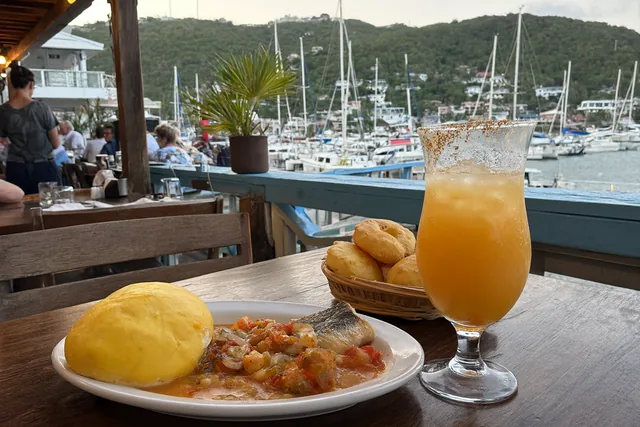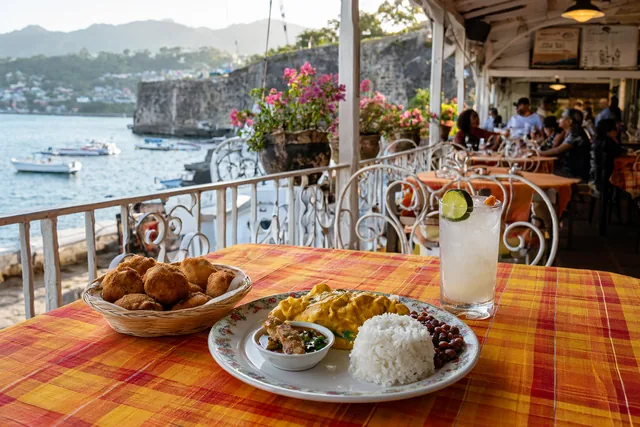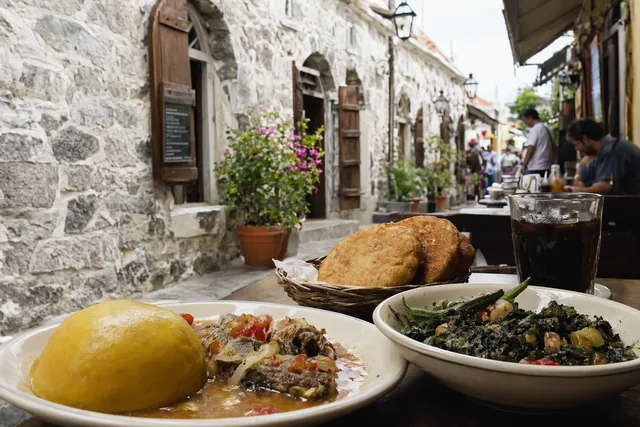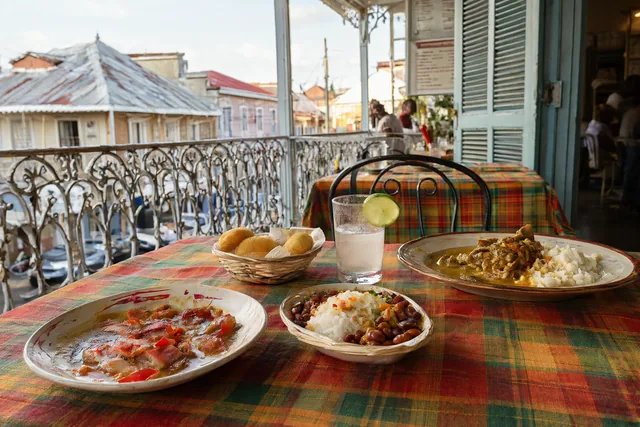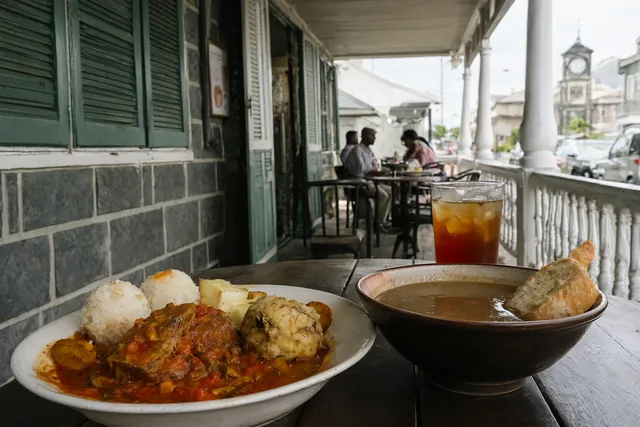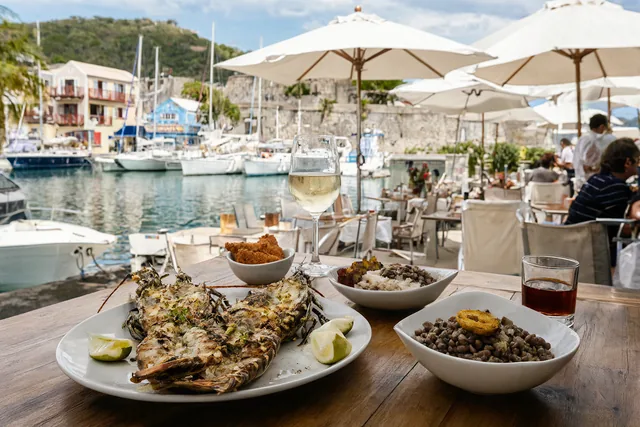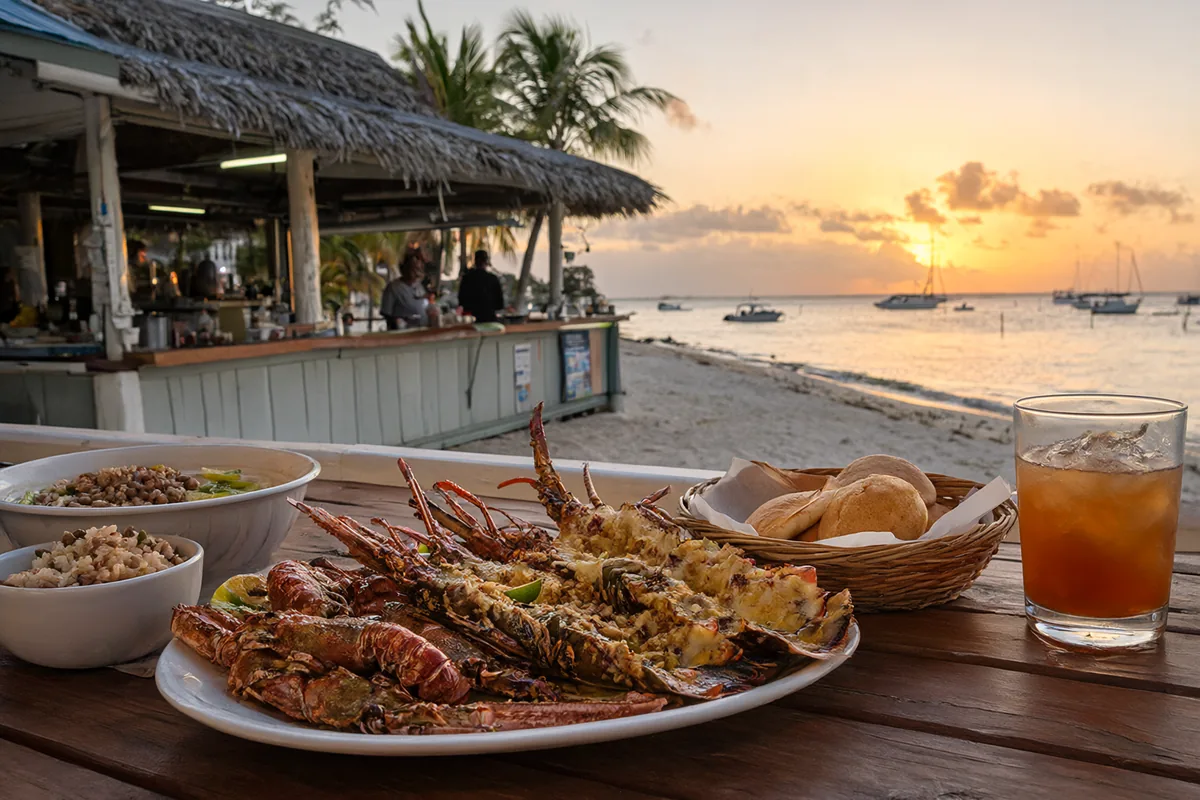
Anguilla is a low, dry coral island with some of the finest beaches in the Caribbean and a remarkable number of restaurants for a place of around 15,000 people. Its own cooking is simple and seafood-led: lobster and the smaller, sweeter local crayfish, pigeon peas and rice, johnny cakes, conch and whelks, with roadside barbecue at the weekends. This Anguilla food guide covers the dishes to order, the local menu words, how GST, service charges and tipping work, then goes beach by beach through where to eat in The Valley, Sandy Ground, Meads Bay and the West End, Shoal Bay East and Island Harbour. Eat at least one barbecue plate from a roadside stand as well as a sunset dinner on the sand.
What to eat in Anguilla: 12 dishes to know
Anguillan cooking grew out of a hard, dry island where fishing mattered more than farming. These are the dishes to know, from home cooking to the plates that made the island's restaurant reputation.
- Pigeon peas and rice (everywhere): the national dish. Rice cooked with pigeon peas, often with salted meat, herbs and coconut, and usually served with fish.
- Crayfish (everywhere): not a freshwater crayfish but a small, spotted local relative of the spiny lobster, with sweet, tender meat. Grilled with garlic butter, it is the island's signature seafood.
- Lobster (everywhere): Caribbean spiny lobster, grilled, steamed or curried. Fishermen keep live lobsters in pens, so it is very fresh. There is a closed season.
- Grilled or boiled fish (everywhere): snapper, grouper, mahi-mahi, wahoo and tuna, grilled, fried, or boiled in a light lime and onion broth.
- Johnny cakes (everywhere): fried dough cakes, eaten at breakfast with saltfish or alongside barbecue and fish.
- Saltfish (breakfast): salt cod sautéed with onion, tomato and peppers, with johnny cakes or bread.
- Conch and whelks (local cooking): conch is stewed, curried or made into fritters; whelks, a small local sea snail, are stewed in butter and garlic.
- Roadside barbecue (The Valley and around the island): ribs, chicken and sometimes lobster grilled over charcoal at weekend stands, with peas and rice, potato salad and coleslaw.
- Goat stew (local cooking): curried or stewed goat, served with rice and peas at family gatherings and festivals.
- Fungi (local cooking): cornmeal and okra cooked into a smooth mound, served with fish, shared with the Virgin Islands.
- Local sweets (bakeries): coconut tarts, sugar cake, bread pudding, sweet potato pudding and rum cake.
- Rum punch and local juices (everywhere): rum punch at every beach bar, plus soursop, passion fruit, guava and mauby, and rum blended on the island.
How to read a menu in Anguilla
Anguilla's menus are in English and usually priced in US dollars, but local seafood and dishes have their own names, and beach bars often write the day's catch on a chalkboard. These are the terms worth knowing.
| Local term | What it means |
|---|---|
| Crayfish | A small, sweet local spiny lobster, not a freshwater crayfish |
| Lobster | Caribbean spiny lobster, with no large claws |
| Pigeon peas and rice | Rice cooked with pigeon peas, the national dish |
| Johnny cake | A fried dough cake |
| Whelks | A small local sea snail, usually stewed |
| Conch | A large sea snail with firm white meat, said "konk" |
| Boiled fish | Fish poached in a light lime and onion broth |
| Fungi | Cornmeal and okra cooked into a firm mound (not mushrooms) |
| Dolphin | Mahi-mahi, a fish, not the mammal |
| Catch of the day | Whatever the boats brought in, ask how it is cooked |
| Market price (MP) | Price varies with the catch, common for lobster and crayfish |
| Hot sauce / pepper | Chilli sauce, often Scotch bonnet. "No pepper" means no chilli |
| Plus GST and service | Tax and a service charge will be added to the listed price |
Anguilla's official currency is the EC dollar, but most restaurants price in US dollars, and lobster and crayfish are often listed at market price. swap.menu reads the menu, shows which currency is in use, converts every price to your home currency, flags market price items and spots the GST and service lines that are added at the end.
GST, tipping and paying the bill
Anguilla charges a Goods and Services Tax (GST) of 13 percent, and most restaurants also add a service charge, usually 10 to 15 percent. Menu prices generally exclude both, so a dinner bill can be a quarter higher than the menu suggests. If service is on the bill, an extra tip is optional, though many visitors add a little for good service. If there is no service charge, tip 15 to 20 percent. Roadside barbecue stands and bakeries do not expect a percentage tip. Our guide to tax and service charges on menus explains how these extra lines work.
The official currency is the Eastern Caribbean dollar (EC$, XCD), fixed to the US dollar, but US dollars are used almost everywhere and most restaurants, hotels and taxis quote in them. Change may come in either currency. Cards are accepted at most restaurants and hotels, but roadside barbecues, small beach bars and local bakeries prefer cash. If a card machine offers to charge you in your home currency, decline: our guide to paying in local currency explains why.
Anguillans eat breakfast early, lunch from noon to 2:30pm and dinner from 7pm. Restaurant dinners are leisurely, and the best-known places book up in the winter high season from mid-December to April, so reserve ahead. Weekend evenings are when the roadside barbecues fire up. Some restaurants close for part of the low season, roughly September and October.
The biggest event of the year is the Anguilla Summer Festival, from late July into August, built around boat racing, the national sport, with food stalls at every race and on the beaches. The Moonsplash music festival in March and Anguilla Day on 30 May also bring crowds and food vendors.
Where to eat in Anguilla, beach by beach
Anguilla is about 26 kilometres long and only a few kilometres wide, so nowhere is more than a short drive away. Most of the restaurants are along the beaches of the west and north coasts, with the capital in the middle and a fishing village in the east. Jump to a place:
Where to eat in The Valley
The Valley, Anguilla's small capital in the centre of the island, is a government and shopping town rather than a tourist one, and that makes it the best place to eat like an Anguillan. Lunch counters and small local restaurants around the main roads serve plates of stewed chicken, fish, goat, pigeon peas and rice, macaroni pie and salad, and bakeries sell johnny cakes, coconut tarts and bread in the morning. Prices in The Valley are a fraction of those at the beach restaurants.
On Friday and Saturday evenings, roadside barbecue stands set up in and around The Valley and along the main roads, grilling ribs, chicken and sometimes lobster over charcoal and selling plates with peas and rice, potato salad and johnny cakes. Follow the smoke and the queues of locals. The Valley is also home to Wallblake House, an eighteenth century plantation house that is one of the oldest buildings on the island and worth a short visit between meals.
Where to eat in Sandy Ground
Sandy Ground, on the northwest coast, is a small village on Road Bay, the island's main harbour for yachts, wedged between the beach and a large salt pond that once supplied salt to the region. It has the liveliest evening scene in Anguilla, with a string of beach bars and restaurants along the sand serving grilled crayfish, lobster, fish, ribs and rum punch, many with live music several nights a week. It is the place for a casual, sociable dinner with your feet in the sand.
From Sandy Ground, small boats run out to Sandy Island, a tiny cay with a beach bar serving grilled lobster and fish, and further out to the Prickly Pear Cays, where day trips usually include a beach barbecue lunch. In the morning, fishing boats come and go from the Sandy Ground jetty. Sandy Ground restaurants range from casual to smart, but almost all have the same view of the sunset over the bay.
Where to eat in Meads Bay and the West End
Meads Bay, on the northwest coast, and the beaches of the West End around it, including Shoal Bay West and Maundays Bay, are where Anguilla's luxury resorts and its most ambitious restaurants are. This is the side of Anguilla that built its name as a dining destination: beachfront terraces and garden restaurants with menus mixing Caribbean seafood with French, Italian and Asian cooking, serious wine lists and prices to match. Expect crayfish, lobster and local fish on almost every menu.
Meads Bay is a long, calm beach, and walking along the sand between restaurants at sunset is part of the evening. Book ahead in high season, and expect GST and service to be added. On the south side of the West End, Rendezvous Bay has a beach bar known for live music and the Moonsplash festival, and views across to St Martin. For lunch, beach bars along these bays serve fish sandwiches, salads and grilled crayfish at lower prices than dinner.
Where to eat in Shoal Bay East
Shoal Bay East, on the northeast coast, is often named among the best beaches in the Caribbean, a long curve of powdery white sand and clear, shallow water with a reef close to shore. Its food scene is beach grills and bars rather than fine dining: wooden shacks and small restaurants along the sand serve grilled fish, chicken, ribs, lobster, crayfish, burgers and rum punch, and rent loungers and umbrellas for the day. It is the place for a long, lazy lunch.
Shoal Bay East is busiest on Sundays, when Anguillan families come to swim and eat, and some bars have live music in the afternoon. Most places open only during daylight hours and close in the late afternoon, so plan to eat lunch rather than dinner here. Bring cash for the smaller grills. A short drive inland, a few local restaurants and bakeries serve plate lunches at much lower prices.
Where to eat in Island Harbour
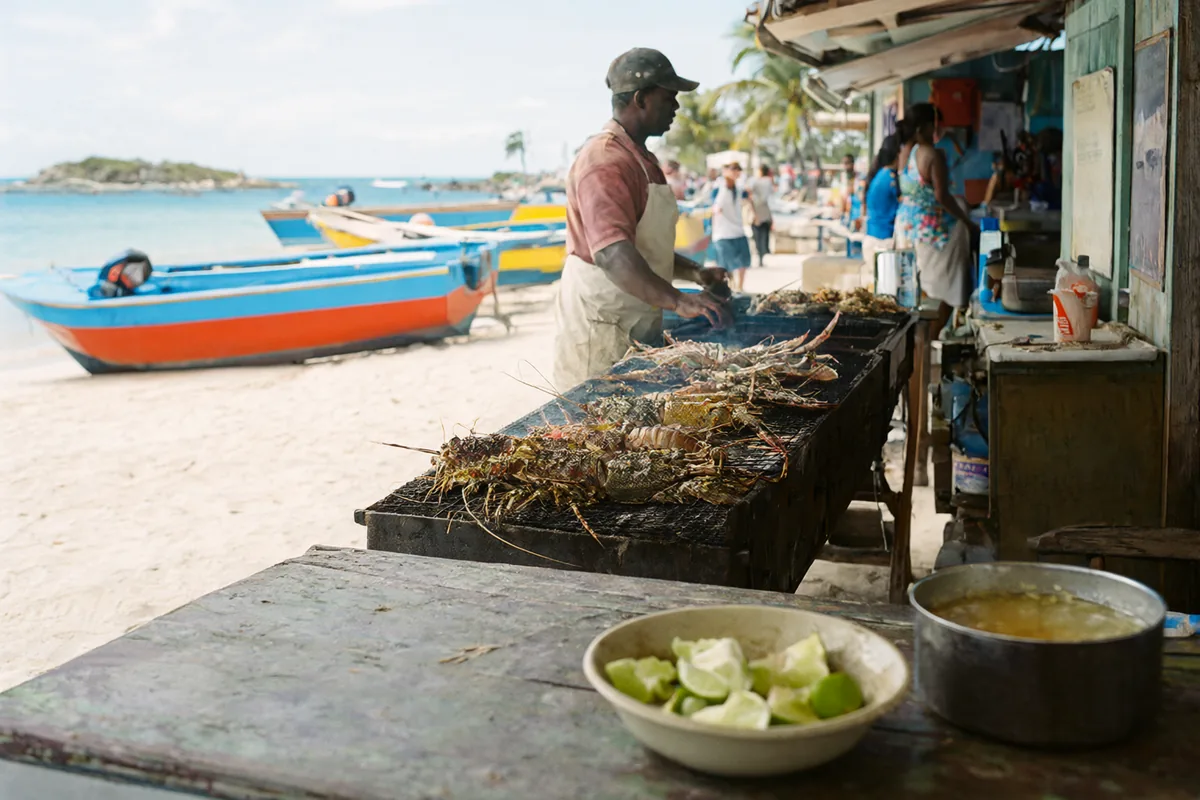
Island Harbour, at the eastern end of Anguilla, is the island's main fishing village, a sheltered bay where brightly painted wooden fishing boats are pulled up on the sand. This is where much of Anguilla's lobster and crayfish is landed and kept alive in pens before it reaches restaurant kitchens. A handful of local restaurants and beach bars in Island Harbour serve the catch simply: grilled lobster and crayfish, fried or boiled fish, johnny cakes and pigeon peas and rice.
Island Harbour is quieter and more local than the west, and it feels like the Anguilla of fishing families rather than resorts. Small boats take diners across to a tiny cay in the bay for lunch, and the beach is a good place to watch the boats come in during the afternoon. Opening hours in Island Harbour are relaxed, so call ahead for dinner. It is one of the best places on the island to try crayfish straight from the sea.
Vegetarian, vegan and allergy tips
Anguilla's resort and fine dining restaurants are used to vegetarian, vegan and gluten-free requests and usually mark them on the menu. Local cooking is more limited: pigeon peas and rice, johnny cakes, fungi, plantain, salads and vegetable sides are the main options. Ask for vegetarian and check how dishes are made, as pigeon peas and rice is often cooked with salted meat, and soups and stews start with meat or fish stock.
Seafood dominates the island's menus, and lobster, crayfish, conch and whelks are everywhere, so shellfish allergies need a clear explanation. Beach grills often cook fish, shellfish and meat on the same grill. Johnny cakes and tarts contain wheat, and coconut is common in sweets and some rice dishes. Our guide to eating abroad with food allergies explains how to describe an allergy clearly.
Anguillan food slang and ordering terms
English is Anguilla's language, and locals also speak Anguillan Creole English. These terms and habits help when ordering.
Good morning / Good afternoon Always greet before you order or ask a question
Wha' happenin'? "How are things?", a friendly greeting
Crayfish or lobster? Two different local shellfish, both usually grilled with garlic butter
What's the price on the crayfish today? Ask before ordering anything at market price
Ribs and chicken with peas and rice A standard roadside barbecue plate
Lil pepper / no pepper "A little hot sauce / no hot sauce"
US or EC? Ask which currency a price is in
Limin' Hanging out, usually with food and drink
How swap.menu helps you eat in Anguilla
Anguilla's menus are in English, but many visitors have never met a crayfish that lives in the sea, do not know what whelks or fungi are, or cannot tell grouper from wahoo. Photograph the menu with swap.menu and every dish is explained in plain language, with the local name kept beside it. Visitors from France, Italy, Germany, Brazil or anywhere else, including the many who arrive by ferry from French Saint Martin, can read the whole menu in their own language, in any of 29 languages.
Every price is converted from US or EC dollars to your home currency, and we flag market price items and the GST and service lines that can add a quarter to the bill. Menus you scan are saved, so you can find that Shoal Bay grill or Sandy Ground beach bar again. Add a note such as "no shellfish" or "no pepper, please", typed or spoken, and show your phone to the server. Try it now with the free demo, or see travel pass prices.
Off to Anguilla? Your first 3 menu scans are free, and a travel pass starts from $4.99 with nothing that renews.
Start free with 3 scansAnguilla food FAQ
Do you tip in restaurants in Anguilla?
Most restaurants add a service charge of 10 to 15 percent, and if it is on the bill an extra tip is optional. If there is no service charge, tip 15 to 20 percent. Roadside barbecue stands do not expect a percentage tip.
What is the national dish of Anguilla?
Pigeon peas and rice, usually served with fish, is the national dish. Grilled lobster and crayfish are the island's most famous seafood.
What is Anguillan crayfish?
Anguillan crayfish is not a freshwater crayfish but a small, spotted relative of the spiny lobster that lives on the reefs. Its meat is sweet and tender, and it is usually grilled with garlic butter.
Is Anguilla expensive to eat out?
Yes, Anguilla is one of the more expensive Caribbean islands for dining, especially once GST and service are added. Roadside barbecues, bakeries and lunch counters in The Valley are much cheaper.
Is tap water safe to drink in Anguilla?
Anguilla's water comes from desalination and rainwater cisterns, and quality varies. Most visitors drink bottled or filtered water, and hotels and villas usually provide it.
Can swap.menu help with Anguilla menus?
Yes. swap.menu explains local dishes and seafood such as crayfish, whelks and fungi, translates the menu into 29 languages, converts US or EC dollar prices to your home currency and flags market price items, GST and service charges.
Travelling further in the Caribbean? Read our food guides for nearby islands:
- Saint Martin food guide
- British Virgin Islands food guide
- Saint Kitts and Nevis food guide
- Antigua and Barbuda food guide
- US Virgin Islands food guide
Or browse every travel food guide.