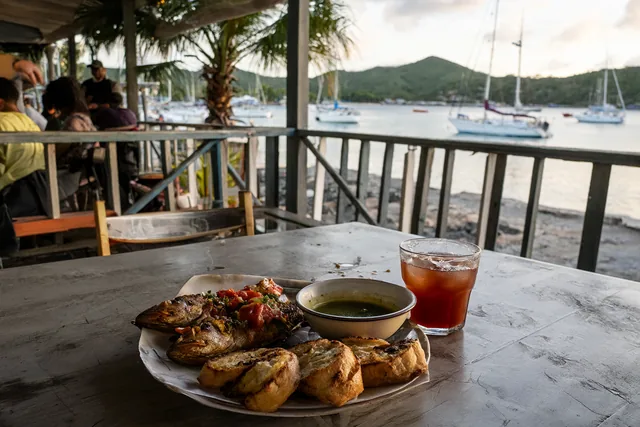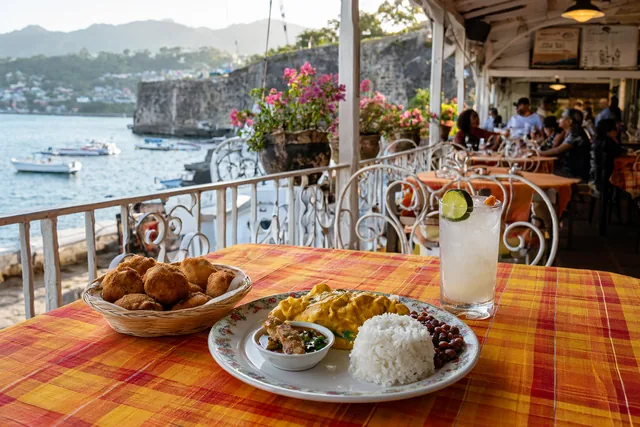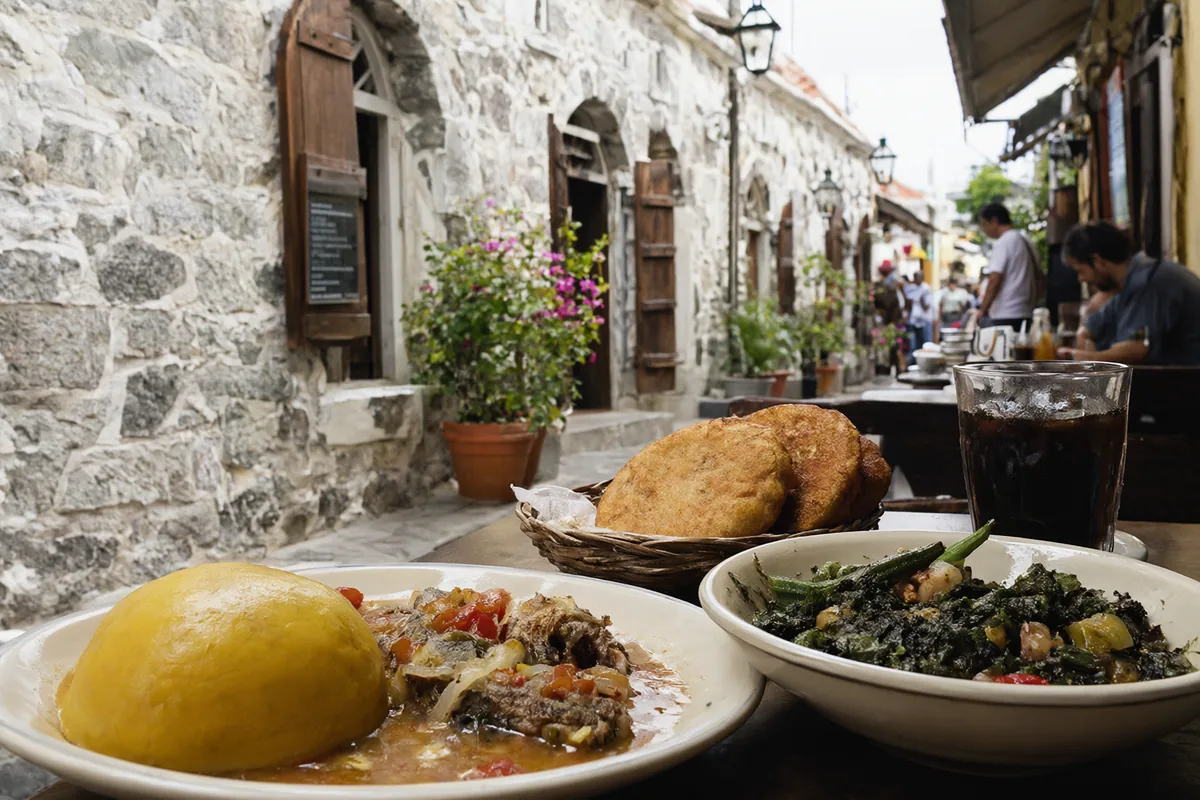
The US Virgin Islands use American dollars and American plugs, but the food is pure West Indian, with a layer of Danish history from the two centuries when these were the Danish West Indies, and a strong Puerto Rican influence on St Croix. This US Virgin Islands food guide covers the dishes to order, from fish and fungi to pates and kallaloo, the local menu words, how tipping and service charges work, then goes island by island through where to eat in Charlotte Amalie and Red Hook on St Thomas, Cruz Bay and Coral Bay on St John, and Christiansted and Frederiksted on St Croix. Step away from the cruise port and the resort menu, and look for a pate stand and a local lunch counter.
What to eat in the US Virgin Islands: 12 dishes to know
Virgin Islands food is Caribbean home cooking with African, Danish, Puerto Rican and American influences. These are the dishes locals eat and the ones visitors should try.
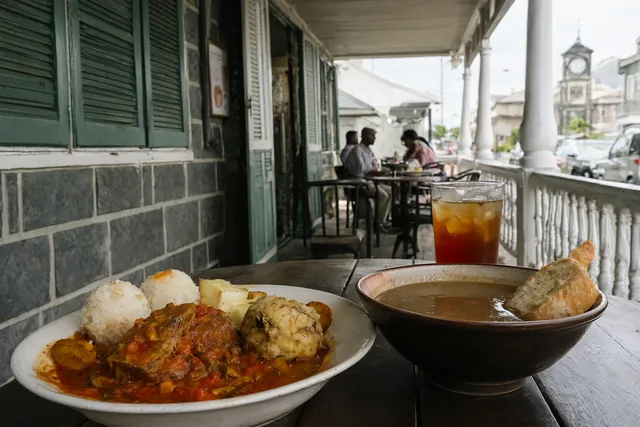
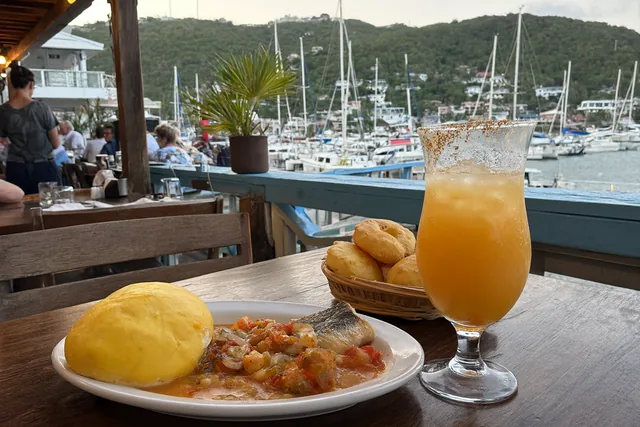
- Fish and fungi (everywhere): the signature local dish. Fungi (said "foon-jee") is cornmeal cooked with okra into a smooth, firm mound, served with fish stewed or boiled in a light sauce of onion, tomato, peppers and lime.
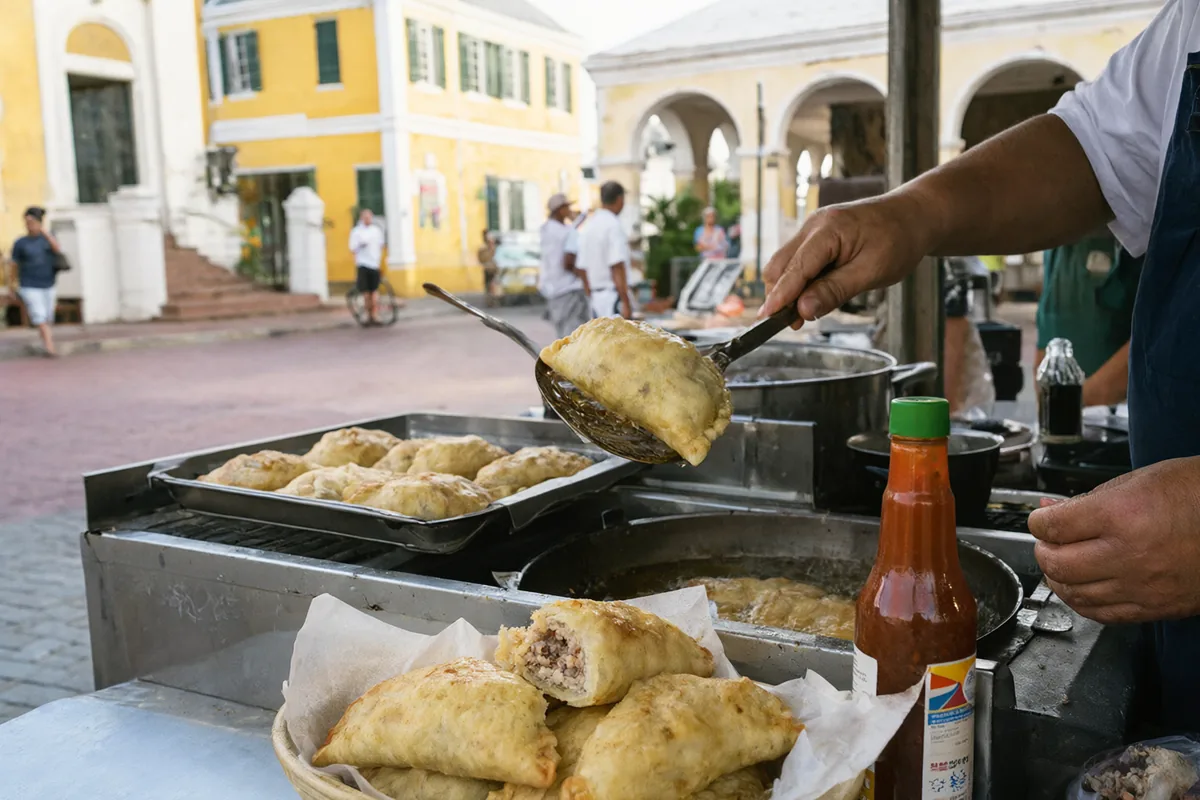
- Pates (everywhere): fried pastry turnovers filled with spiced saltfish, beef, chicken, conch or vegetables, sold from stands, bakeries and lunch counters. Said "pah-tays".
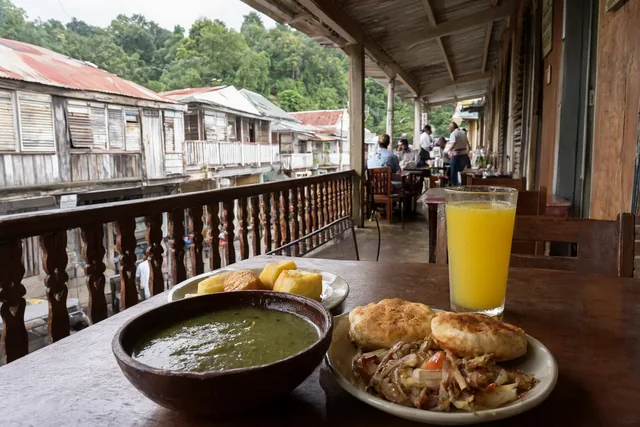
- Kallaloo (everywhere, especially at New Year): a thick stew of local greens, okra, seafood and salted meat. It is traditionally eaten on Old Year's Night for luck in the coming year.
- Johnny cakes (everywhere): fried dough cakes, slightly sweet, eaten for breakfast, with fish or on their own as a snack.
- Saltfish and dumb bread (St Croix): sautéed salt cod with dumb bread, a dense, slightly sweet bread baked in a pan, often with cheese inside. A classic Crucian breakfast.
- Conch in butter sauce (everywhere): tender conch stewed in a buttery, garlicky sauce, served with rice or fungi.
- Goat water and souse (weekends and festivals): a spicy goat stew, and pork in a sharp lime and cucumber brine.
- Roti (everywhere): flatbread wrapped around curried chicken, goat, conch or vegetables, brought by migrants from Trinidad and the Eastern Caribbean.
- Puerto Rican dishes (St Croix): pasteles, arroz con gandules (rice with pigeon peas), roast pork and fried snacks, reflecting the island's large Puerto Rican community.
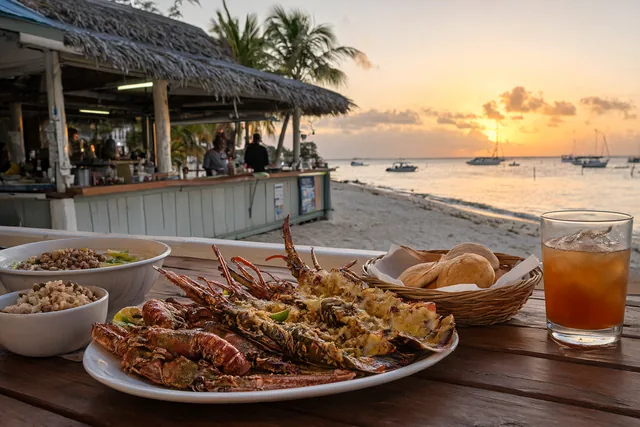
- Grilled fish (everywhere): mahi-mahi, snapper, wahoo, tuna and "old wife" (triggerfish), grilled or fried with rice and peas and plantain.
- Red grout and local sweets (festivals and bakeries): red grout is a guava and tapioca pudding with Danish roots, and bakeries sell guava and coconut tarts, sugar cake and sweet bread.
- Maubi, bush tea and rum (everywhere): maubi is a bittersweet drink brewed from tree bark and spices, bush tea is made from garden herbs, and St Croix has been distilling rum for centuries.
How to read a menu in the US Virgin Islands
Menus are in English and prices are in US dollars, but local dishes have their own names and pronunciations, and lunch counters often post the day's dishes on a whiteboard. These are the words worth knowing.
| Local term | What it means |
|---|---|
| Fungi | Cornmeal and okra cooked into a firm, smooth mound (not mushrooms) |
| Pate | A fried pastry turnover with a savoury filling |
| Kallaloo | A thick stew of greens, okra, seafood and meat |
| Johnny cake | A fried dough cake |
| Dumb bread | A dense pan-baked bread from St Croix, often with cheese |
| Old wife | Triggerfish, a firm white fish |
| Dolphin | Mahi-mahi, a fish, not the mammal |
| Conch | A large sea snail with firm white meat, said "konk" |
| Boiled fish | Fish poached in a light lime and onion broth |
| Maubi | A drink brewed from tree bark, sugar and spices |
| Red grout | Guava and tapioca pudding |
| Provisions | Boiled root vegetables and green banana |
| Hot sauce / pepper | Chilli sauce, often Scotch bonnet. "No pepper" means no chilli |
Prices in the US Virgin Islands are in US dollars, but that is still a foreign currency for most visitors from outside the US. swap.menu reads the menu, converts every price to your home currency, explains dishes like fungi, pates and kallaloo, and flags service charge lines on the bill.
Tipping, service charges and paying the bill
Tipping in the US Virgin Islands follows US habits. At sit-down restaurants, tip 15 to 20 percent of the bill, and a dollar or two per drink at bars. Some restaurants, especially at resorts and for larger groups, add a service charge or gratuity automatically, so check the bill before tipping again. Pate stands, food trucks and lunch counters do not expect a percentage tip, though a tip jar is common. Unlike the US mainland, restaurant bills in the territory do not usually carry a separate sales tax line. Our guide to tax and service charges on menus explains how these extra lines work.
The currency is the US dollar (US$, USD). Cards are accepted at most restaurants, hotels and shops, and contactless payment is common in tourist areas, but pate stands, food trucks, festival vendors and some small local places prefer cash. If you are visiting from outside the US and a card machine offers to charge you in your home currency, decline and pay in US dollars: our guide to paying in local currency explains why.
Virgin Islanders eat breakfast early, lunch from 11:30am to 2pm and dinner from 6:30pm. On cruise ship days, Charlotte Amalie restaurants are busiest at lunchtime and quiet in the evening, while Red Hook, Cruz Bay and Christiansted are livelier at night. Many local lunch counters close by mid-afternoon and on Sundays.
The big food events are the festivals: St Thomas Carnival in April and May, the St John Festival around the Fourth of July, and the Crucian Christmas Festival from December into January, all with food fairs and village stalls. St Croix's Agricultural and Food Fair in February is the best day of the year to try local dishes, fruit and drinks in one place.
Where to eat in the US Virgin Islands, island by island
St Thomas is the busiest island, with the capital and the cruise port. St John, a short ferry ride away, is mostly national park. St Croix, the largest island, lies 65 kilometres to the south and feels quieter and more rural. Jump to a town:
Where to eat in Charlotte Amalie
Charlotte Amalie, the capital on St Thomas, climbs steep hills above one of the busiest cruise harbours in the Caribbean. The old town is a grid of Danish-era stone warehouses and narrow alleys, or passages, running between the main shopping street and the waterfront, and many of them now hold restaurants, cafés and bars. Away from the duty-free shops, Charlotte Amalie has lunch counters and bakeries serving fish and fungi, conch in butter sauce, stewed chicken, johnny cakes and pates. Market Square, the historic market at the western end of town, has produce vendors, especially on Saturday mornings.
West of downtown, Frenchtown is a small fishing community settled by families from St Barthélemy, and it has become one of Charlotte Amalie's best areas for dinner, with a cluster of restaurants and bars around the harbour and fishermen selling their catch in the morning. Charlotte Amalie is crowded at lunch on cruise days and quiet at night, so for dinner either head to Frenchtown or out to Red Hook.
Where to eat in Red Hook
Red Hook, on the East End of St Thomas, is where the ferries leave for St John and the British Virgin Islands, and it is the island's most sociable place to eat and drink. Around the marina and the ferry dock, restaurants, bars and cafés serve everything from breakfast sandwiches and johnny cakes to sushi, burgers and fresh fish. Red Hook draws locals, yachting crews and visitors alike, and many places have outdoor seating facing the water.
Red Hook is busiest on weekend nights and has a reputation as St Thomas's nightlife hub. The surrounding East End has beach bars and resort restaurants, particularly around Sapphire Beach and Secret Harbour. For a local lunch before the ferry, look for a food truck or lunch counter selling pates, roti or a plate of fish and fungi. Prices in Red Hook are a step below the resorts but well above local lunch counters.
Where to eat in Cruz Bay
Cruz Bay, where the ferry from Red Hook docks, is the only real town on St John, an island where most of the land is protected as Virgin Islands National Park. For a small town, Cruz Bay has a lot of places to eat: casual bars, cafés, food trucks and smarter restaurants are packed into a few streets around the ferry dock, the park and the shopping courtyards. Menus mix Caribbean seafood, local dishes such as conch fritters and johnny cakes, and international comfort food.
Prices in Cruz Bay are high, because nearly everything is shipped in, and popular restaurants book up in the winter season. The best value is often at the food trucks and lunch counters near the ferry dock, which sell roti, pates, fish plates and smoothies. In the evening, the bars around the park fill with day-trippers, villa guests and locals. Leave time before the last ferry back to St Thomas, which can fill up after sunset.
Where to eat in Coral Bay
Coral Bay, on the quieter east end of St John, is a small, laid-back community around a wide bay full of moored boats, reached by a winding road over the hills from Cruz Bay. The food scene is small and casual: a few beach bars, a couple of roadside cafés and grills, and food trucks serving burgers, fish tacos, barbecue and local plates, often with live music in the evening. It is a good stop for lunch on a drive around the island.
Coral Bay was badly hit by Hurricanes Irma and Maria in 2017, and while most places have reopened, opening hours here are relaxed and some kitchens close early or for part of the low season. Check before you drive out for dinner. Coral Bay is close to the beaches and snorkelling of the east end, such as Salt Pond Bay, so a picnic from one of the small shops is another good option.
Where to eat in Christiansted
Christiansted, the main town of St Croix, is one of the best-preserved Danish colonial towns in the Caribbean, with yellow and ochre buildings, arcaded pavements and an old fort on the harbour. The Christiansted boardwalk, running along the waterfront, is lined with restaurants and bars, and the streets behind it have cafés, bakeries and lunch counters serving pates, johnny cakes, saltfish and dumb bread, fish and fungi, conch in butter sauce and Puerto Rican plates.
St Croix has a stronger local food culture than St Thomas, and Christiansted is the place to try it. Look for small bakeries selling dumb bread in the morning, and lunch spots selling kallaloo, goat water and maubi. The Christiansted food scene also has some of the territory's most interesting independent restaurants, using local fish and produce from the island's farms. On the road out of town, roadside stands sell coconut water, sugar cane and local fruit.
Where to eat in Frederiksted
Frederiksted, at the western end of St Croix, is a quiet Danish town with a long pier where cruise ships dock and some of the best sunset views in the Virgin Islands. On cruise days the waterfront comes alive, and the rest of the time it is sleepy. The waterfront has a handful of restaurants and bars, and nearby Rainbow Beach and the beaches north of town have beach bars and grills serving fish, burgers and rum drinks.
The countryside around Frederiksted is St Croix's farming heartland, and local farms and roadside stands sell mangoes, papaya, coconuts and vegetables. Frederiksted is also close to the island's rum distilleries, which offer tours. For local food, look for lunch counters and food stands on the roads into town selling roti, pates and plate lunches, and visit in February for the Agricultural and Food Fair, held a short drive inland.
Vegetarian, vegan and allergy tips
The US Virgin Islands are easier for vegetarians than many Caribbean islands, because most restaurants in tourist areas follow US habits and mark vegetarian, vegan and gluten-free dishes. Local options include fungi, johnny cakes, vegetable pates, vegetable roti, plantain, provisions and rice and peas, and there are Rastafarian ital stalls on St Croix and St Thomas. Watch for hidden ingredients: kallaloo is made with seafood and salted meat, rice and peas may include pork, and many stews start with meat stock.
Seafood and shellfish are central to the menu, so allergies need a clear explanation. Restaurants in tourist areas are generally familiar with US-style allergy requests, but small local places may not be. Pates and johnny cakes contain wheat, while fungi is made from cornmeal. Coconut is common in tarts and sweets. Our guide to eating abroad with food allergies explains how to describe an allergy clearly.
Virgin Islands food slang and ordering terms
English is the language of the US Virgin Islands, and locals also speak Virgin Islands Creole English. On St Croix you will hear Spanish too. These terms help.
Good morning / Good afternoon Always greet before you order. Skipping it is considered rude here
Two saltfish pates, please Pates are ordered by filling: saltfish, beef, chicken, conch or veggie
Fish and fungi The local plate, said "fish and foon-jee"
Lil pepper / no pepper "A little hot sauce / no hot sauce"
Thomian / St Johnian / Crucian A person from St Thomas, St John or St Croix
Limin' Hanging out, usually with food and drink
Food truck / lunch counter Where locals buy quick, cheap plates
Old Year's Night New Year's Eve, the night for kallaloo
How swap.menu helps you eat in the US Virgin Islands
Menus in the US Virgin Islands are in English, but local dishes still confuse visitors: fungi is not mushrooms, old wife is a fish, dumb bread is a bread, and maubi is a drink made from bark. Photograph the menu with swap.menu and every dish is explained in plain language, with the local name kept beside it. Visitors from Puerto Rico, Latin America, Europe or anywhere else can read the whole menu in their own language, in any of 29 languages, from Spanish to Danish.
Every price is converted from US dollars to your home currency, which matters for visitors from Canada, Europe, Australia and beyond, and we flag service charge and gratuity lines so you do not tip twice. Menus you scan are saved, so you can find that Christiansted lunch spot or Cruz Bay food truck again. Add a note such as "no pepper" or "no shellfish, please", typed or spoken, and show your phone at the counter. Try it now with the free demo, or see travel pass prices.
Off to the US Virgin Islands? Your first 3 menu scans are free, and a travel pass starts from $4.99 with nothing that renews.
Start free with 3 scansUS Virgin Islands food FAQ
Do you tip in restaurants in the US Virgin Islands?
Yes, tipping follows US habits: 15 to 20 percent at sit-down restaurants and a dollar or two per drink at bars. Check the bill first, as some restaurants add a service charge or gratuity automatically.
What food are the US Virgin Islands known for?
Fish and fungi, pates, kallaloo, johnny cakes, conch in butter sauce and, on St Croix, saltfish with dumb bread are the best-known local dishes. Maubi and bush tea are traditional drinks.
Which island in the US Virgin Islands is best for food?
St Croix has the strongest local food culture, with Danish, West Indian and Puerto Rican influences. St Thomas has the most restaurants, and Cruz Bay on St John has a small but lively dining scene.
Is tap water safe to drink in the US Virgin Islands?
Many buildings collect rainwater in cisterns, and quality varies, so most visitors drink bottled or filtered water. Hotels and villas usually advise on whether their water is safe to drink.
Is it expensive to eat out in the US Virgin Islands?
Yes, restaurant prices are high, especially on St John, because most food is imported. Food trucks, pate stands and local lunch counters are much cheaper.
Can swap.menu help with US Virgin Islands menus?
Yes. swap.menu explains local dishes such as fungi, pates, kallaloo and dumb bread, translates the menu into 29 languages, converts US dollar prices to your home currency and flags service charges.
Travelling further in the Caribbean? Read our food guides for nearby islands:
- British Virgin Islands food guide
- Puerto Rico food guide
- Anguilla food guide
- Saint Martin food guide
- Saint Kitts and Nevis food guide
Or browse every travel food guide.