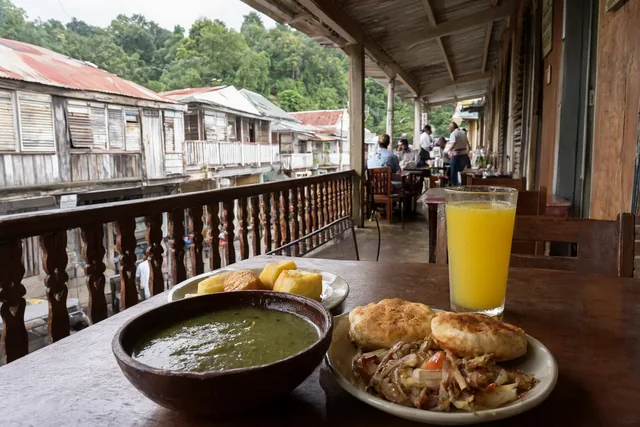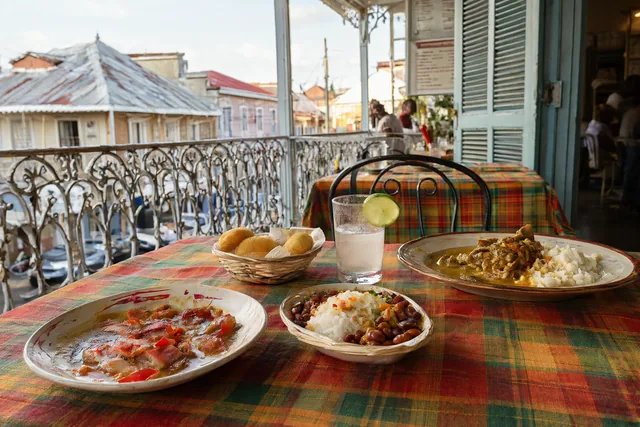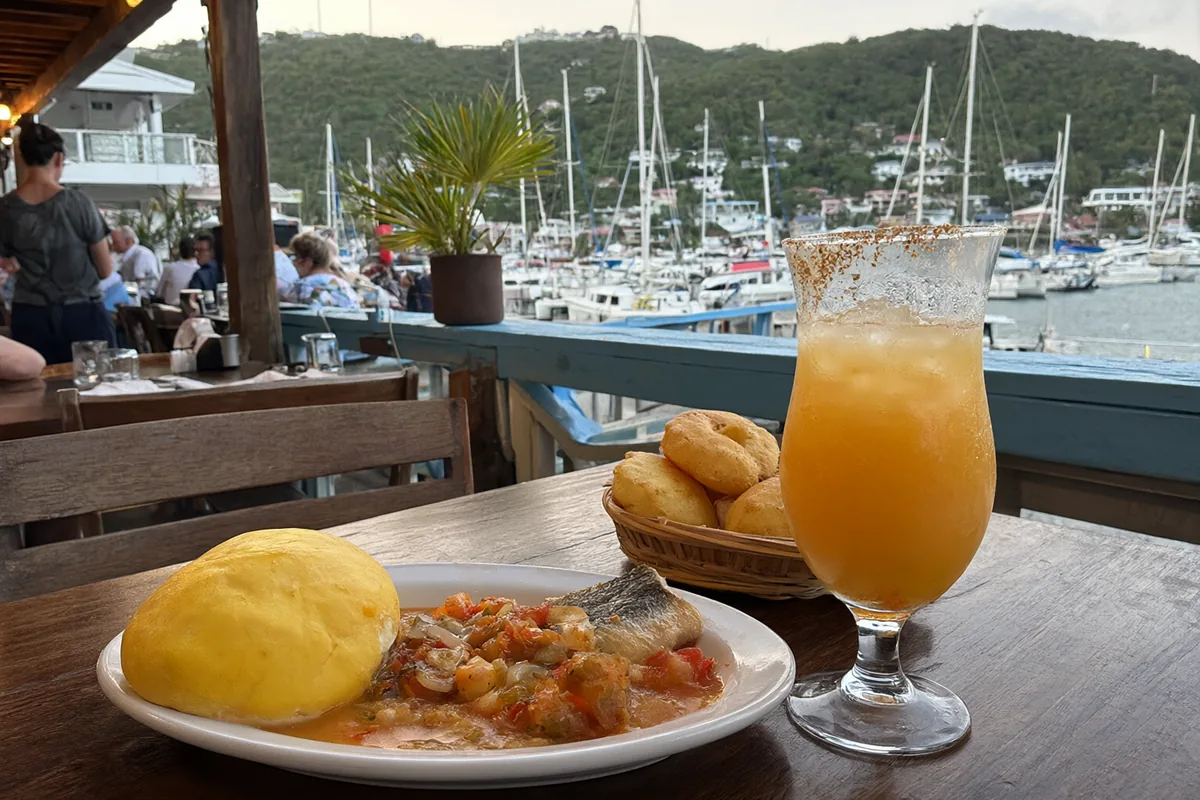
The British Virgin Islands are one of the world's great sailing grounds, more than 50 islands and cays scattered across calm, sheltered water, and much of the eating happens at beach bars that you reach by boat. Behind the yacht crowd there is a proud local food culture of fish and fungi, johnny cakes, pates and conch. This British Virgin Islands food guide covers the dishes to order, the local menu words, how tipping and service charges work, then goes island by island through where to eat in Road Town and Cane Garden Bay on Tortola, on Virgin Gorda, Jost Van Dyke and Anegada. Eat at least one lobster grilled on the beach at Anegada, and drink at least one Painkiller where it was invented.
What to eat in the British Virgin Islands: 12 dishes to know
Virgin Islands food is West Indian home cooking built on fish, cornmeal and root vegetables, shared with the neighbouring US Virgin Islands. These are the dishes and drinks to know.
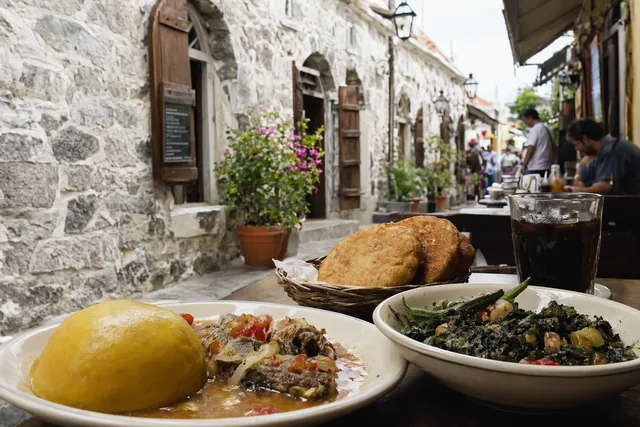
- Fish and fungi (everywhere): the national dish. Fungi (said "foon-jee") is cornmeal cooked with okra into a smooth, firm mound, served with fish stewed or boiled in a light sauce of onion, tomato, peppers and lime.
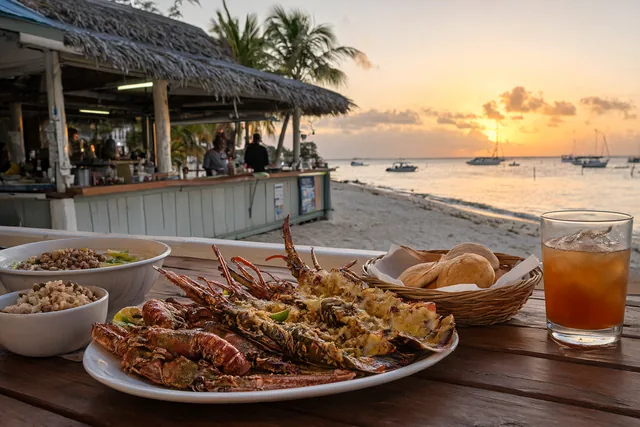
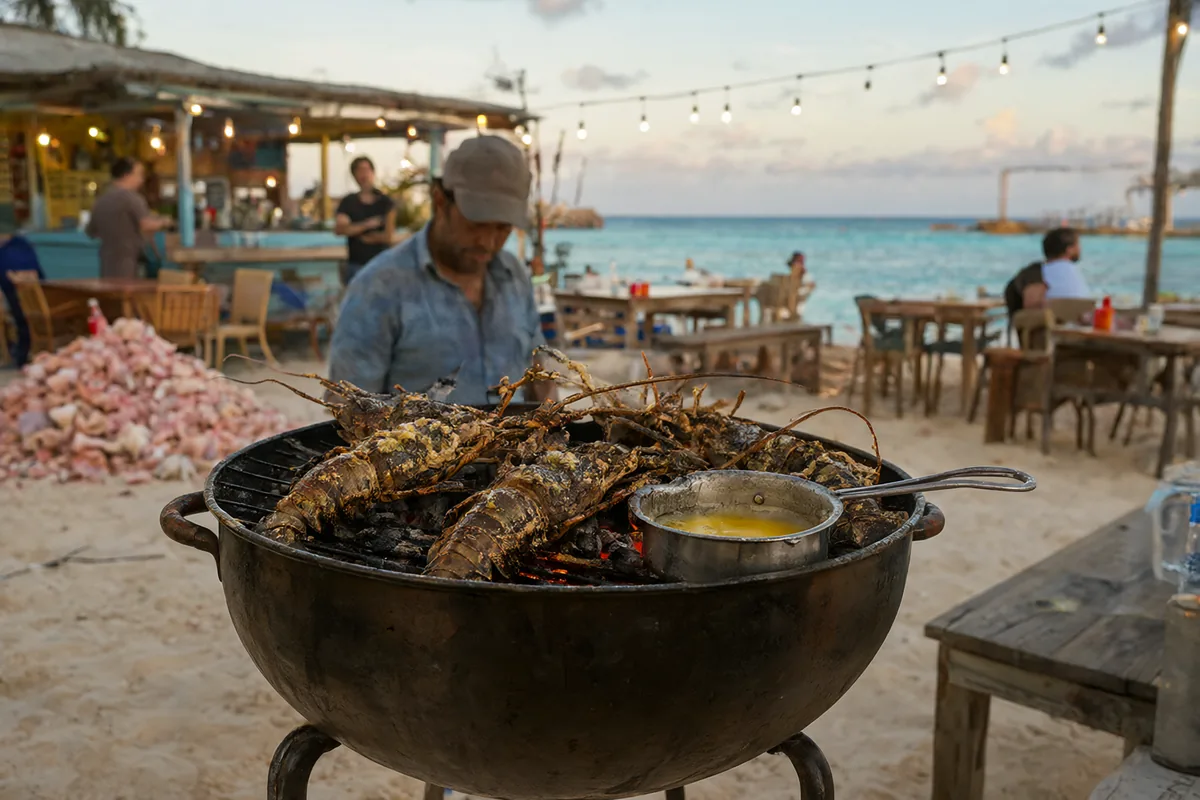
- Anegada lobster (Anegada): Caribbean spiny lobster caught off the reefs of Anegada and grilled on the beach in halved oil drums. There is a closed season, so it is not available year-round.
- Johnny cakes (everywhere): fried dough cakes, slightly sweet, eaten at breakfast, with saltfish, or as a snack.
- Pates (everywhere): fried pastry turnovers filled with spiced saltfish, beef, chicken, conch or vegetables. Said "pah-tays".
- Conch (everywhere): stewed, curried, made into fritters or served in a cold, lime-sharp salad.
- Whelks (local cooking): a small local sea snail, stewed in butter and garlic or curried, eaten more by locals than visitors.
- Saltfish (breakfast): salt cod sautéed with onion, tomato and peppers, eaten with johnny cakes or bread.
- Roti (everywhere): flatbread wrapped around curried chicken, goat, conch or vegetables, a favourite lunch.
- Goat stew and souse (weekends and festivals): spicy curried or stewed goat, and pork in a sharp lime and cucumber brine.
- Grilled fish (everywhere): mahi-mahi, snapper, wahoo, tuna and grouper, grilled or blackened, with rice and peas and salad.
- Local sweets (bakeries): coconut and guava tarts, sugar cake, bread pudding and sweet bread.
- The Painkiller and local rum (everywhere): the Painkiller, rum shaken with pineapple and orange juice and coconut cream, topped with grated nutmeg, is said to have been created at White Bay on Jost Van Dyke. An old family distillery at Cane Garden Bay still makes rum the traditional way.
How to read a menu in the British Virgin Islands
Menus in the BVI are in English and prices are in US dollars, but local dishes keep their own names, and beach bar menus are often on a chalkboard. These are the words worth knowing.
| Local term | What it means |
|---|---|
| Fungi | Cornmeal and okra cooked into a firm, smooth mound (not mushrooms) |
| Pate | A fried pastry turnover with a savoury filling |
| Johnny cake | A fried dough cake |
| Conch | A large sea snail with firm white meat, said "konk" |
| Whelk | A small local sea snail, usually stewed |
| Boiled fish | Fish poached in a light lime and onion broth |
| Saltfish | Salt cod, soaked and sautéed |
| Dolphin | Mahi-mahi, a fish, not the mammal |
| Market price (MP) | Price changes with the catch: ask before ordering, common for lobster |
| Painkiller | Rum, pineapple, orange and coconut cream with nutmeg |
| Provisions | Boiled root vegetables and green banana |
| Hot sauce / pepper | Chilli sauce, often Scotch bonnet. "No pepper" means no chilli |
| Service charge / gratuity included | A tip has already been added to the bill |
Lobster in the BVI is often listed at "market price", priced by weight or by size on the day, and it can be the most expensive thing on the menu. Ask the price before it goes on the grill. swap.menu flags market price items, converts every US dollar price to your home currency and spots service charge lines so you do not tip twice.
Tipping, service charges and paying the bill
The British Virgin Islands do not add VAT or sales tax to restaurant bills, but many restaurants and beach bars add a service charge, commonly 10 to 15 percent, and some add it only for larger groups. Check the bill: if service is included, an extra tip is optional. If there is no service charge, tip 15 to 20 percent at sit-down restaurants, in line with the US habits most visitors bring. Food stands and lunch counters do not expect a percentage tip, though a tip jar is common. Our guide to tax and service charges on menus explains how these extra lines work.
The currency is the US dollar (US$, USD), even though the BVI is a British Overseas Territory. Cards are accepted at most restaurants, bars and hotels on Tortola and Virgin Gorda, but small beach bars, food stands and some places on Jost Van Dyke and Anegada prefer cash, and ATMs on the smaller islands are few. If you are visiting from outside the US and a card machine offers to charge you in your home currency, decline and pay in US dollars: our guide to paying in local currency explains why.
Islanders eat breakfast early, lunch from noon to 2pm and dinner from 6:30pm. Sailing visitors often eat early too, because many beach bar kitchens close soon after dark, and on the outer islands dinner, especially lobster, usually has to be booked by radio or phone in the afternoon so the cook knows how much to prepare.
The BVI Emancipation Festival, from late July into early August, brings food stalls and village fairs to Road Town. In November, Anegada holds its Lobster Festival, and Jost Van Dyke's Great Harbour is famous for one of the Caribbean's biggest New Year's Eve parties.
Where to eat in the British Virgin Islands, island by island
Tortola is the main island, with the capital and most of the population. Ferries and charter boats connect it with Virgin Gorda, Jost Van Dyke and Anegada, each with a very different food scene. Jump to a place:
Where to eat in Road Town
Road Town, the capital on Tortola's south coast, wraps around a busy harbour full of charter yachts and is where most visitors start their trip. It is also the best place in the BVI to eat local food at local prices. Along Main Street and the streets behind the waterfront, lunch counters, roti shops and bakeries serve fish and fungi, conch, stewed chicken, goat, saltfish and johnny cakes, and pates are sold from small stands. The marinas around the harbour have restaurants and bars for sundowners, and Road Town is the place to stock up before a charter.
Beyond Road Town, Tortola's East End and Trellis Bay on Beef Island, next to the airport, have casual cafés and bars, and Trellis Bay is known for its full moon party, with flaming sculptures lit in the water. At the other end of the island, West End and Soper's Hole have a marina with restaurants and the ferry to St Thomas. Road Town gets busy when cruise ships are in, so lunch early or a few streets back from the waterfront.
Where to eat in Cane Garden Bay
Cane Garden Bay, on Tortola's north shore, is the island's most famous beach, a curve of sand backed by steep green hills, reached by a winding road over the ridge from Road Town. The beach is lined with bars and restaurants serving grilled fish, conch fritters, lobster in season, burgers and Painkillers, many with live music, especially at weekends. It is the easiest place on Tortola for a long beach lunch, and yachts anchor in the bay in the evening.
At the western end of the bay, an old family rum distillery has been making rum from sugar cane juice in a stone building for generations, and visitors can stop in to taste it. Cane Garden Bay was badly damaged by Hurricane Irma in 2017, and the beachfront has been largely rebuilt. Nearby Brewers Bay and Apple Bay have smaller beach bars, and Apple Bay is a surf spot in winter. On cruise ship days, Cane Garden Bay fills with tour groups by late morning.
Where to eat on Virgin Gorda
Virgin Gorda, the third largest island, is famous for The Baths, a beach of giant granite boulders and pools at its southern tip. The main settlement, Spanish Town, has a yacht harbour with restaurants, a supermarket and a few local spots for roti, pates, johnny cakes and fish plates. Near The Baths, simple bars and cafés at the top of the trail serve lunch and cold drinks.
At the northern end of Virgin Gorda, the sheltered North Sound is ringed with resorts, marinas and waterfront restaurants, some reachable only by boat, and is a favourite overnight stop for charter yachts. Virgin Gorda restaurants range from casual beach bars to resort dining, with prices to match, and lobster is often on the menu in season. On the road between Spanish Town and North Sound, roadside stands and a few local restaurants serve West Indian plates at much lower prices.
Where to eat on Jost Van Dyke
Jost Van Dyke, a small hilly island west of Tortola, has a few hundred residents and a reputation out of all proportion to its size. White Bay, a strip of white sand with a reef-protected anchorage, has beach bars where you swim ashore and pay with wet dollars, and it is where the Painkiller is said to have been invented. Great Harbour, the main settlement, has a sandy main street lined with bars and restaurants serving grilled fish, ribs, chicken, lobster and conch.
The food on Jost Van Dyke is simple and hearty, and the atmosphere is the main event. Little Harbour, on the east side, is known for lobster dinners, which should be booked in advance. Great Harbour is the site of one of the Caribbean's biggest New Year's Eve parties, when hundreds of boats crowd the bay. Reach the island by ferry from Tortola or by charter boat, and bring cash, as some bars do not take cards.
Where to eat on Anegada
Anegada is unlike any other island in the BVI: a flat coral atoll ringed by Horseshoe Reef, with salt ponds where flamingos feed and empty white beaches. It is famous for one meal, the Anegada lobster, caught on the reef and grilled on the beach in halved oil drums over charcoal, then served with garlic butter, rice, corn, salad and plantain. Beach restaurants at Setting Point, Loblolly Bay and Cow Wreck Beach serve it, and most need you to order by mid-afternoon so the lobster can be prepared.
Lobster is sold by weight or by size, often at market price, so ask the price when you book. Anegada also has conch, with huge mounds of old conch shells along the shore, and simple lunch places serving fish, conch fritters and johnny cakes. The island holds a Lobster Festival each November, when restaurants compete with their best lobster dishes. Anegada is reached by ferry from Tortola on certain days, by small plane or by charter boat, and cash is useful.
Vegetarian, vegan and allergy tips
Most BVI restaurants serving visitors offer vegetarian dishes and follow US-style menus, so vegetarians manage easily on Tortola and Virgin Gorda. Local options include fungi, johnny cakes, vegetable pates, vegetable roti, plantain, provisions and rice and peas. On the outer islands, menus are short and built around seafood, so tell the cook in advance. Watch for hidden ingredients: rice and peas may be cooked with salted meat, soups and stews start with meat or fish stock, and fungi is sometimes made with butter.
Seafood is central to BVI menus, especially lobster, conch and whelks, so shellfish allergies need a clear explanation, and beach bar grills may cook fish and shellfish on the same surface. Johnny cakes and pates contain wheat, while fungi is made from cornmeal. Coconut cream is in the Painkiller and many sweets. Our guide to eating abroad with food allergies explains how to describe an allergy clearly.
BVI food slang and ordering terms
English is the language of the British Virgin Islands, and locals also speak Virgin Islands Creole English. These terms and habits help.
Good morning / Good afternoon Always greet before you order. Skipping the greeting is considered rude
Fish and fungi, please The national dish, said "fish and foon-jee"
Two saltfish pates Pates are ordered by filling: saltfish, beef, chicken, conch or veggie
What's the market price on the lobster? Always ask before ordering lobster
Lil pepper / no pepper "A little hot sauce / no hot sauce"
Can we book dinner for tonight? Essential on Anegada and Jost Van Dyke, usually by mid-afternoon
Limin' Hanging out, usually with food and drink
Belonger A person with BVI status, born or with roots in the islands
How swap.menu helps you eat in the British Virgin Islands
BVI menus are in English, but visitors still get caught out: fungi is not mushrooms, whelks are not the cold-water whelks of Europe, and "MP" next to the lobster can mean a very large number. Photograph the menu with swap.menu and every dish is explained in plain language, with the local name kept beside it. Charter crews from France, Germany, Italy, Scandinavia and South America can read the whole menu in their own language, in any of 29 languages.
Every price is converted from US dollars to your home currency, which helps visitors from the UK, Europe, Canada and Australia keep track of a holiday spent in a foreign currency. We flag market price items and service charge lines, and menus you scan are saved, so you can find that Anegada beach restaurant or Cane Garden Bay bar again. Add a note such as "no shellfish, please", typed or spoken, and show your phone to the server. Try it now with the free demo, or see travel pass prices.
Off to the British Virgin Islands? Your first 3 menu scans are free, and a travel pass starts from $4.99 with nothing that renews.
Start free with 3 scansBritish Virgin Islands food FAQ
Do you tip in restaurants in the British Virgin Islands?
Many restaurants add a service charge of 10 to 15 percent, and if it is on the bill an extra tip is optional. If there is no service charge, tip 15 to 20 percent at sit-down restaurants.
What currency is used in the British Virgin Islands?
The US dollar is the official currency, even though the BVI is a British Overseas Territory. Pounds sterling are not used, and cash is useful on the smaller islands.
What food are the British Virgin Islands known for?
Fish and fungi is the national dish, and Anegada lobster grilled on the beach is the most famous meal. Johnny cakes, pates, conch and the Painkiller cocktail are other BVI favourites.
Do I need to book lobster on Anegada?
Yes, most Anegada restaurants ask you to order lobster by mid-afternoon so it can be prepared for dinner. Lobster is often sold at market price, so ask the price when you book.
Is tap water safe to drink in the British Virgin Islands?
Water in the BVI comes from desalination plants and rainwater cisterns, and quality varies between buildings. Most visitors drink bottled or filtered water, and charter yachts usually carry their own.
Can swap.menu help with BVI menus?
Yes. swap.menu explains local dishes such as fungi, pates and whelks, translates the menu into 29 languages, converts US dollar prices to your home currency and flags market price items and service charges.
Travelling further in the Caribbean? Read our food guides for nearby islands:
- US Virgin Islands food guide
- Anguilla food guide
- Puerto Rico food guide
- Saint Martin food guide
- Antigua and Barbuda food guide
Or browse every travel food guide.