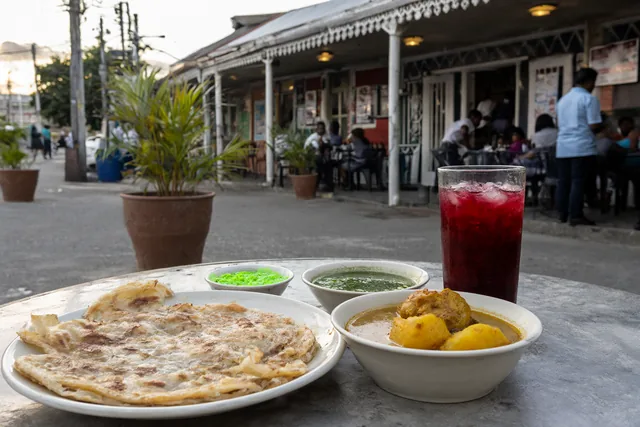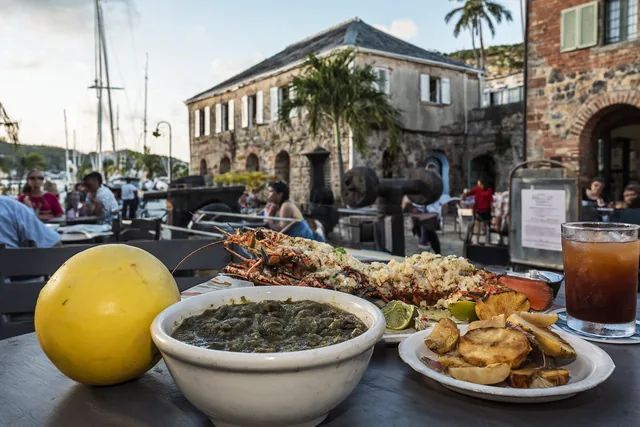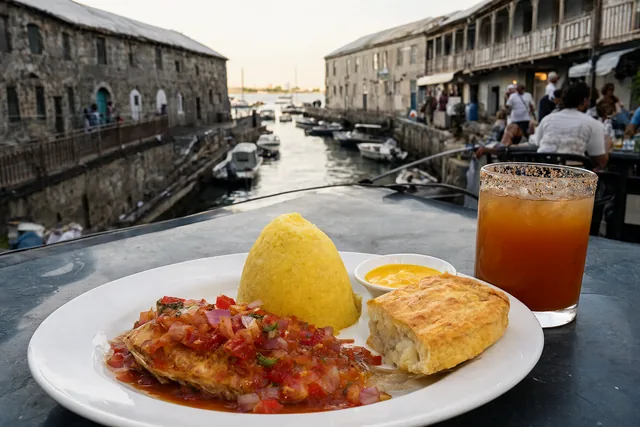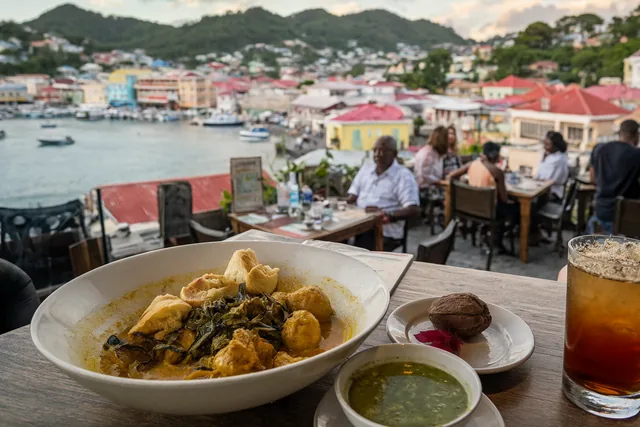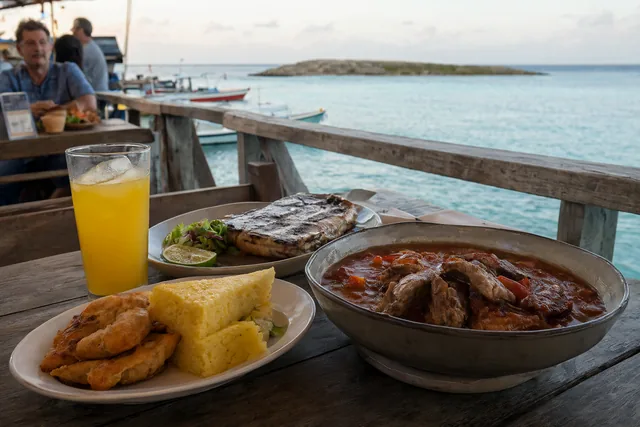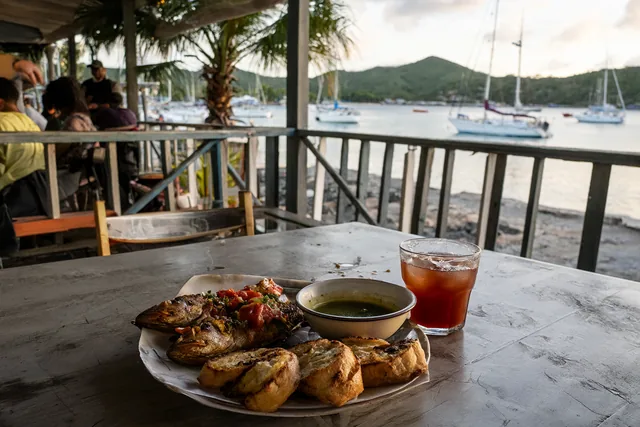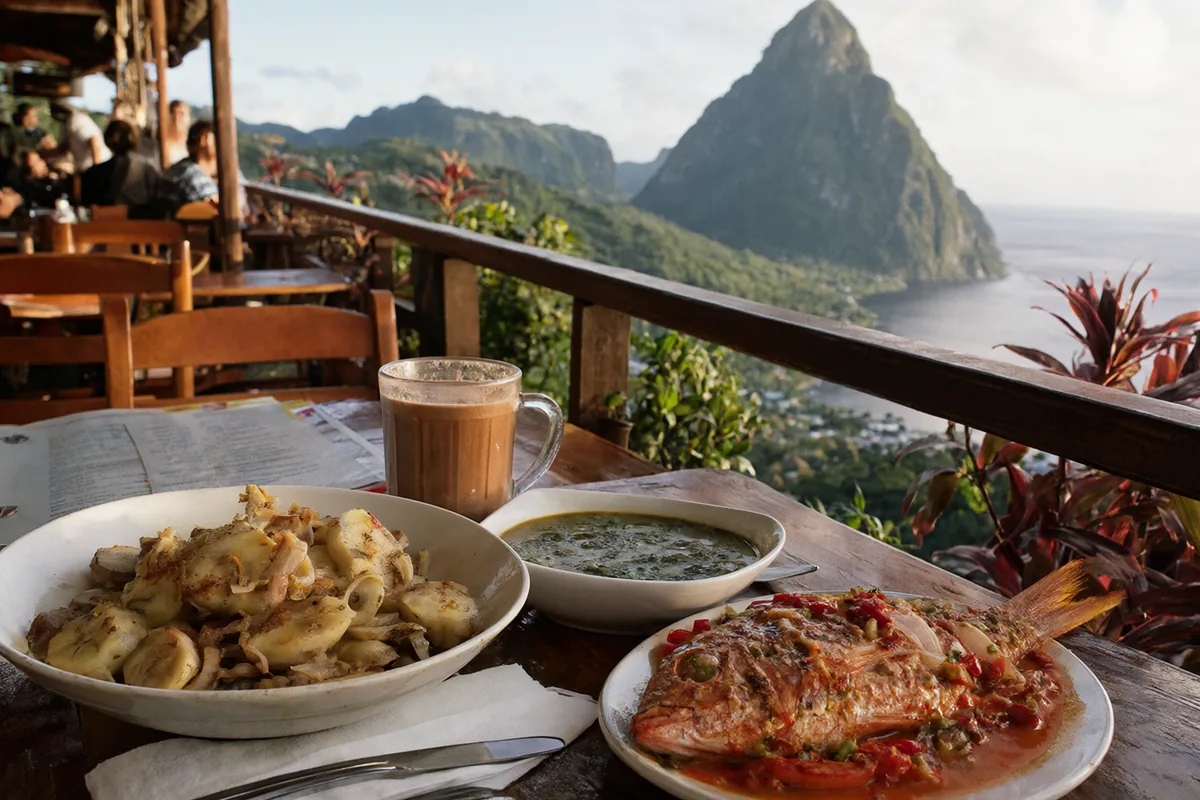
Saint Lucia's food is Creole cooking with a French accent: the island changed hands between Britain and France many times, and while English is the official language, most Saint Lucians also speak Kwéyòl, a French-based Creole that names half the dishes on a local menu. This Saint Lucia food guide covers the dishes to order, the Kwéyòl and local menu words worth knowing, how tipping, VAT and EC dollars work, then goes town by town through where to eat in Castries, Rodney Bay, Gros Islet, Anse La Raye, Soufrière and Vieux Fort. Get out to a Friday night street party at least once: grilled fish and lambi on a paper plate with music in the road is Saint Lucia at its best.
What to eat in Saint Lucia: 12 dishes to know
These are the dishes Saint Lucians cook at home and sell at markets, roadside stands and fish fries, plus the drinks to go with them.
- Green fig and saltfish (everywhere): the national dish. "Fig" means green banana, boiled and served with salt cod sautéed with onion, peppers, garlic and herbs. Often eaten for breakfast or lunch.
- Bouyon (everywhere): a thick, hearty soup of red beans, ground provisions, dumplings and meat such as pig tail, beef or chicken, cooked in one pot. Saint Lucians say it fixes anything.
- Accra (everywhere): fried saltfish fritters seasoned with herbs and pepper. In season, look for titiri accra, made with tiny river-mouth fish.
- Lambi (the coasts): conch, stewed in a Creole sauce, curried, or grilled at the Friday night fish fries.
- Callaloo soup (everywhere): dasheen leaves cooked with okra, coconut milk and seasoning, sometimes with crab or salt meat.
- Grilled or Creole fish (the coasts): mahi-mahi, tuna, kingfish, red snapper or flying fish, grilled or cooked in a sauce of tomato, onion, peppers and thyme.
- Pouile dudon (home cooking): chicken stewed in a sweet, dark sauce of caramelised sugar, onion and herbs.
- Bakes and cassava bread (everywhere): bakes are fried dough cakes eaten with saltfish; cassava bread, sold at roadside bakeries on the west coast, comes plain or flavoured with coconut, raisin or cherry.
- Breadfruit and provisions (everywhere): roasted or boiled breadfruit, dasheen, yam, plantain and sweet potato, the starches that come with almost every local plate.
- Banana in every form (everywhere): Saint Lucia grows bananas everywhere, and they appear green in savoury dishes, ripe in desserts, and as banana ketchup and banana bread.
- Cocoa tea (breakfast): grated local cocoa sticks boiled with milk, cinnamon, nutmeg and bay leaf, a rich, lightly spiced breakfast drink.
- Rum, rum punch and local lager (everywhere): Saint Lucia distils its own rums, rum punch is the default welcome drink, and the island's own Piton lager is drunk ice cold with everything.
How to read a menu in Saint Lucia
Menus in Saint Lucia are in English, but local dishes often keep their Kwéyòl names, and street food is sold from hand-written boards or simply called out. These are the words you will meet most.
| Local term | What it means |
|---|---|
| Green fig | Green (unripe) banana, boiled as a starch, not the fruit called fig elsewhere |
| Saltfish | Salt cod, soaked and sautéed or shredded |
| Bouyon | A one-pot soup of beans, provisions, dumplings and meat |
| Lambi | Conch, a large sea snail with firm white meat |
| Accra / titiri accra | Saltfish fritters / fritters made with tiny seasonal fish |
| Kalalou (callaloo) | Dasheen leaf soup or greens |
| Provisions | Boiled root vegetables: dasheen, yam, sweet potato, eddoe |
| Creole sauce / Creole style | Cooked in a sauce of tomato, onion, peppers, garlic and thyme |
| Dolphin | Mahi-mahi, a fish, not the mammal |
| Bakes | Small fried dough cakes |
| Cocoa tea | Spiced hot chocolate made from local cocoa |
| Pepper / pepper sauce | Hot chilli or hot sauce. "No pepper" means no chilli |
| Plus VAT and 10% service | Tax and a service charge will be added to the listed price |
Many Saint Lucia restaurants price in EC dollars, resorts and tours often quote US dollars, and both use the $ sign. swap.menu reads the menu, tells you which currency is in use, converts every price to your home currency and explains Kwéyòl dish names such as bouyon and lambi.
Tipping, VAT and paying the bill
Saint Lucia charges VAT on restaurant meals, and many restaurants add a 10 percent service charge. Menus usually say at the bottom whether prices include VAT and service, and resort and tourist restaurants often add both to the bill. If service is already included, an extra tip is optional, though it is appreciated for good service. If there is no service charge, tip 10 to 15 percent. At the Friday night street parties, roadside stands and market cookshops, tipping is not expected. Our guide to tax and service charges on menus explains these lines.
The currency is the Eastern Caribbean dollar (EC$, XCD), shared with several neighbouring islands and fixed to the US dollar. US dollars are widely accepted in Rodney Bay, Soufrière and at resorts, but change usually comes back in EC dollars and the rate offered is not always the best. At markets, street parties and in villages, pay in EC dollars and carry small notes. Cards are accepted at hotels, larger restaurants and supermarkets. If a card machine offers to charge you in your home currency, decline: our guide to paying in local currency explains why.
Saint Lucians eat breakfast early, often bakes and saltfish with cocoa tea, lunch from noon to 2pm, and dinner from about 7pm. Friday is the big night out, when Gros Islet and Anse La Raye hold their street parties. Sunday is family lunch day, and many small restaurants close on Sundays.
October is Creole Heritage Month, ending with Jounen Kwéyòl (Creole Day) on the last Sunday of October, when communities around the island cook traditional food, dress in national wear and play Creole music. It is one of the best days of the year to eat Saint Lucian food. The summer Carnival, in July, also brings food stalls to Castries.
Where to eat in Saint Lucia, town by town
Saint Lucia is about 40 kilometres long, but the winding roads make it feel bigger. The north is busy and built up, the west coast has fishing villages and the Pitons, and the south is quieter. Jump to a town:
Where to eat in Castries
Castries, the capital, is a working port city, and the place to eat in Castries is the Castries Market, the orange-roofed market hall on Jeremie Street dating from the 1890s. Behind the craft and spice stalls is a row of small cookshops, often called the food court, where local cooks serve plates of bouyon, green fig and saltfish, stewed chicken, fish, macaroni pie, rice and peas and provisions at local prices. Saturday morning is the busiest and best time, when farmers bring produce from across the island.
Around Derek Walcott Square and the surrounding streets, bakeries sell bakes, coconut turnovers and salt bread, and snack bars do accra and fish cakes. Castries gets crowded when cruise ships are in, so eat early or late on those days. In the evenings, many visitors head north to Rodney Bay, but the hillside of Morne Fortune above Castries has restaurants with views over the harbour.
Where to eat in Rodney Bay
Rodney Bay, on the northwest coast, is Saint Lucia's main tourist hub, with a large marina, Reduit Beach and most of the island's independent restaurants. Rodney Bay Village, the strip of road behind the beach, is lined with restaurants and bars serving everything from Creole seafood and steak to Indian, Italian and sushi, and the marina has waterfront places for breakfast and sundowners. This is where to come for choice, and where prices are highest outside the resorts.
Rodney Bay menus are aimed at visitors, so local dishes may be listed in English with a Kwéyòl name in brackets: look for lambi, accra, callaloo soup and Creole-style fish. Many places price in EC dollars, but some quote US dollars, and VAT and service are usually added. Rodney Bay is also an easy walk or short taxi ride from Gros Islet, so many visitors eat a light dinner here on Friday and then head to the street party.
Where to eat in Gros Islet
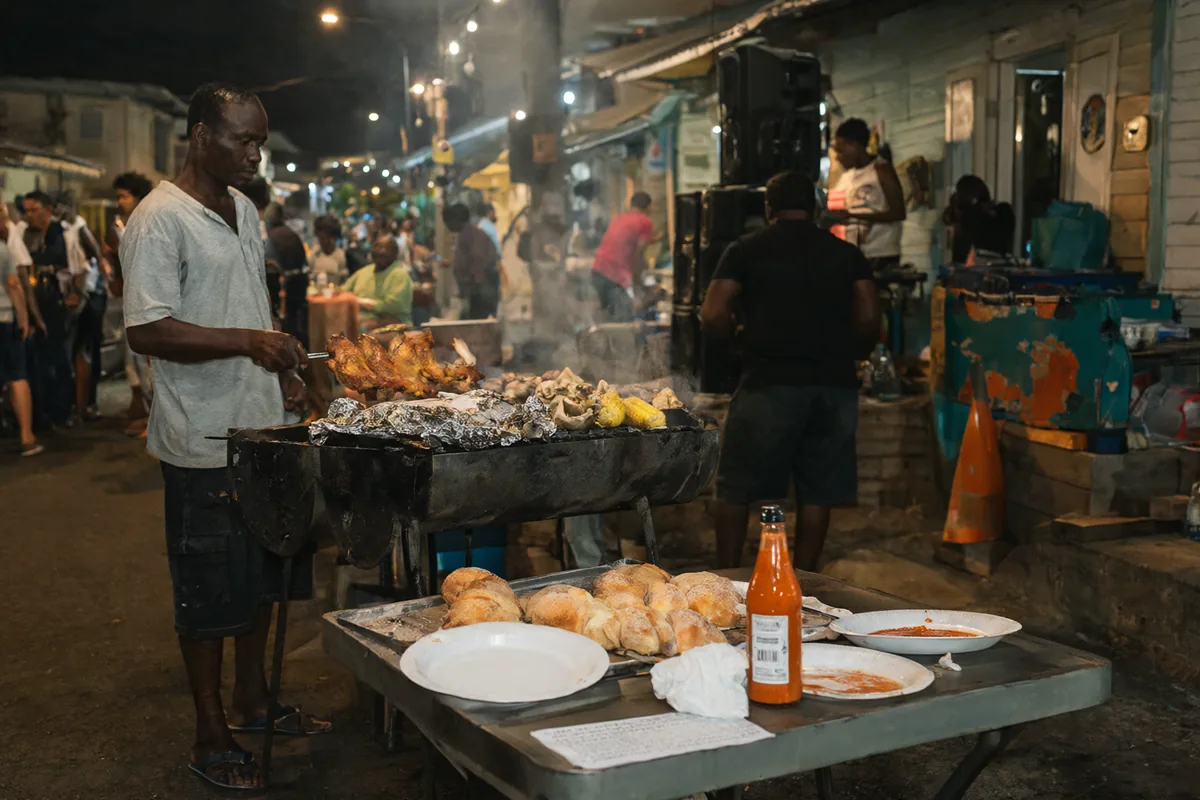
Gros Islet is a fishing village at the northern end of Rodney Bay, and on Friday nights it hosts the most famous party on the island: the Gros Islet Friday night street party, often called the jump-up. From early evening the streets are closed, sound systems go up and vendors set up grills in the road. Grilled chicken, pork, fish, lambi, lobster in season and corn are sold by the plate with bread or salad, alongside rum punch, local lager and fresh juices. The party runs late and gets busiest after 10pm.
For food, arrive early, when the grills are freshly loaded and the queues are short. Prices are low and cash only, so bring small EC dollar notes. During the week, Gros Islet is quiet, with a handful of local bars and small restaurants serving fish and Creole plates. The beach at the end of the village faces Pigeon Island, a national park with old military ruins, which makes a good morning walk after the night before.
Where to eat in Anse La Raye
Anse La Raye is a small fishing village on the west coast, between Marigot Bay and Soufrière, with brightly painted wooden boats pulled up on the beach. It is known for Anse La Raye Seafood Friday, a weekly fish fry on Friday nights where village cooks set up stalls along the seafront selling grilled and fried fish, lambi, lobster, crab backs, accra and bakes. It is smaller, calmer and more local than Gros Islet, and it is the better choice if you care more about the food than the dancing.
Nearby Marigot Bay, a deep, sheltered bay a few minutes north, has restaurants and bars around the marina, reached by a small ferry across the water. Along the coast road south of Anse La Raye, roadside bakeries sell warm cassava bread, flavoured with coconut, raisins, cherry or saltfish, which makes a good snack on the drive to Soufrière. Many Saint Lucians also rate the fish fry at Dennery, on the east coast, held on weekend nights.
Where to eat in Soufrière
Soufrière, the old French capital on the southwest coast, sits beneath the twin peaks of the Pitons, and it is where Saint Lucia's most famous views and many of its best resorts are. The resorts and hillside restaurants around Soufrière offer dining with views of the Pitons that are worth the price at least once, especially at sunset. In the town itself, small local restaurants and snack bars around the waterfront and the square serve Creole fish, lambi, bouyon and plate lunches for much less.
Soufrière is also cocoa country. Several old estates in the hills around the town grow cocoa and offer tours where you can see the beans being fermented and dried, try fresh cocoa fruit and make your own chocolate. Many also serve lunch made with local produce. Expect a cup of cocoa tea at breakfast in Soufrière. Fresh fruit stalls on the road into town sell mangoes, golden apples, passion fruit and coconut water.
Where to eat in Vieux Fort
Vieux Fort, at the southern tip of Saint Lucia, is home to Hewanorra International Airport and is the island's second town. Few visitors stop, but Vieux Fort is honest and local, with a fish market, a weekend market, roadside barbecues and small restaurants serving plate lunches and fresh fish. It is a good place for a last local meal before a flight, rather than eating at the airport.
Just outside Vieux Fort, Anse de Sables (Sandy Beach) faces the Atlantic, with a kitesurfing scene and a couple of beach bars serving grilled fish and drinks. On the drive up the east coast, the villages of Micoud and Dennery have roadside stalls and small cookshops, and the coast road is lined with fruit vendors. Vieux Fort is also the starting point for boat trips to the Maria Islands nature reserve offshore.
Vegetarian, vegan and allergy tips
Saint Lucian cooking leans on fish and meat, but there is plenty for vegetarians in the provisions, breadfruit, plantain, callaloo, vegetable roti and fresh fruit. Ask for vegetarian or say you "don't eat meat or fish", and confirm, as some cooks consider saltfish a seasoning rather than meat. Rastafarian ital food, which is mostly vegan, is sold at a few health food stalls. Watch for hidden ingredients: bouyon and callaloo are often made with salt meat or crab, rice and peas can be cooked with pig tail, and many stews start with chicken or beef stock.
Seafood is everywhere, and shellfish such as lambi, lobster and crab are standard at fish fries, so allergies need a clear explanation. Coconut appears in sweets, breads and some sauces. Bakes, accra and salt bread contain wheat flour, while cassava bread is made from cassava, though some versions are mixed with flour. Our guide to eating abroad with food allergies explains how to describe an allergy clearly.
Kwéyòl words and local ordering terms
English is used for all business in Saint Lucia, but Kwéyòl is the language of the home, the market and the street party, and a few words go a long way.
Bonjou / Bonswè "Good morning / Good evening". Always greet before you order
Sa ka fèt? "How's it going?" or "What's happening?", the everyday greeting
Mwen byen "I'm fine", the answer to a greeting
Mèsi / Mèsi anpil "Thank you / Thank you very much"
A plate of fish with bread, please How most street party plates are ordered
Lil pepper / no pepper "A little hot sauce / no hot sauce"
EC or US? Ask which currency a price is in before you pay
Jump-up A street party with music, dancing and food
How swap.menu helps you eat in Saint Lucia
Saint Lucia's menus are in English, but they are full of Kwéyòl dish names and local terms: bouyon, lambi, titiri accra, green fig, pouile dudon. Photograph the menu with swap.menu and every dish is explained in plain language, so you know that green fig is banana, not fruit, before it arrives. Visitors from France, Germany, Italy, Brazil or anywhere else can read the whole menu in their own language, in any of 29 languages, with the local name kept beside each dish.
Every price is converted from EC or US dollars to your home currency, and we flag VAT and service charge lines so the final bill is no surprise. Menus you scan are saved, so you can find that Soufrière restaurant or Rodney Bay bar again later. Add a note such as "no pepper" or "no shellfish, please", typed or spoken, and show your phone to the server. Try it now with the free demo, or see travel pass prices.
Off to Saint Lucia? Your first 3 menu scans are free, and a travel pass starts from $4.99 with nothing that renews.
Start free with 3 scansSaint Lucia food FAQ
Do you tip in restaurants in Saint Lucia?
Many restaurants add a 10 percent service charge, and if it is on the bill an extra tip is optional. If there is no service charge, tip 10 to 15 percent. Street party vendors and market cookshops do not expect a tip.
What is the national dish of Saint Lucia?
Green fig and saltfish is the national dish: boiled green banana served with salt cod sautéed with onion, peppers and herbs. Bouyon, accra and callaloo soup are other everyday favourites.
When is the Gros Islet street party?
The Gros Islet street party is held every Friday night, starting in the early evening and running late. Arrive early for the food, as the grills are at their best before the crowds build after 10pm.
Is tap water safe to drink in Saint Lucia?
Tap water in the main towns and resorts is treated and generally considered safe, though supply can be interrupted after heavy rain. Many visitors drink bottled or filtered water to be safe, and resorts usually provide it.
Should I pay in EC dollars or US dollars in Saint Lucia?
US dollars are accepted in tourist areas, but paying in EC dollars usually works out cheaper, and change is normally given in EC dollars. At markets, street parties and in villages, EC dollars are the norm.
Can swap.menu help with Saint Lucia menus?
Yes. swap.menu explains Saint Lucian dishes and Kwéyòl terms such as bouyon, lambi and green fig, translates the menu into 29 languages, converts prices from EC or US dollars to your home currency and flags VAT and service charges.
Travelling further in the Caribbean? Read our food guides for nearby islands:
- Martinique food guide
- Dominica food guide
- Saint Vincent and the Grenadines food guide
- Barbados food guide
- Grenada food guide
Or browse every travel food guide.