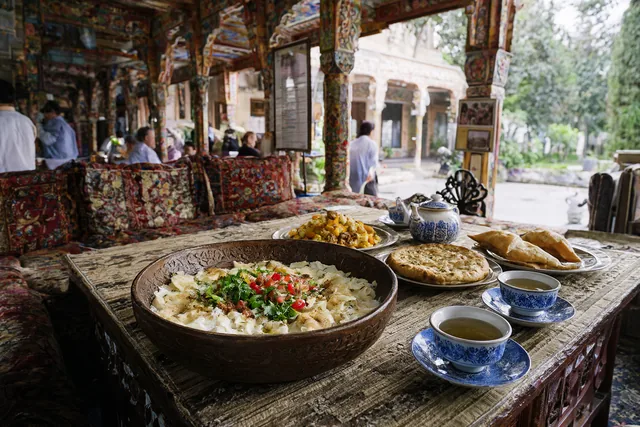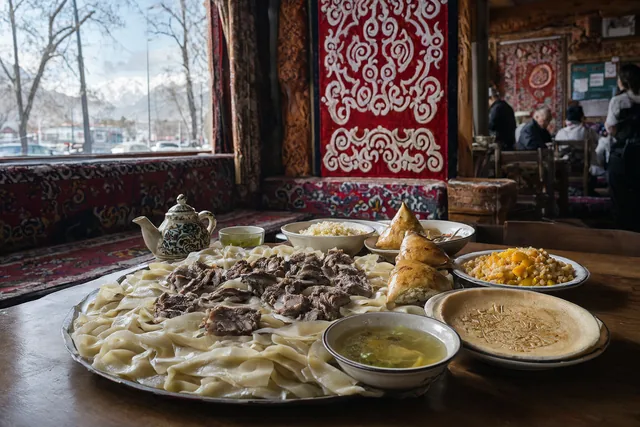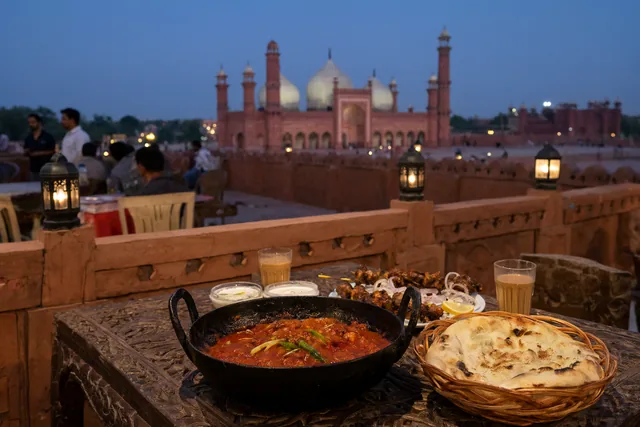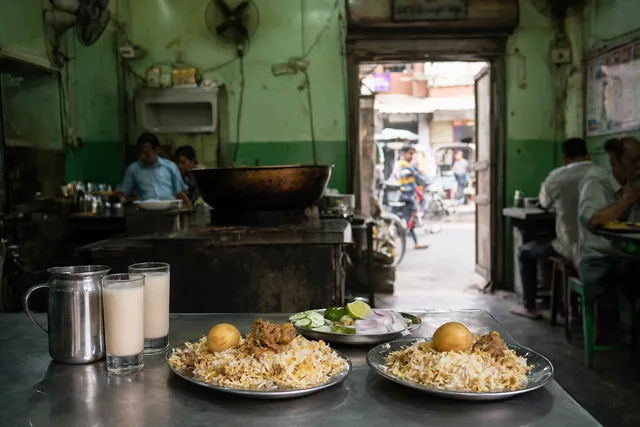
Turkmenistan is one of the least visited countries in the world, a land of desert, ancient Silk Road cities and the white marble capital of Ashgabat, and its food comes from a long tradition of herding and oasis farming: mutton, bread from clay ovens, rice, pumpkins, melons and green tea. This Turkmenistan food guide covers the dishes to know, the Turkmen and Russian words you will see on menus, how tipping and paying in manat work, and where to eat in Ashgabat, Mary, Turkmenbashi, Dashoguz and at the Darvaza gas crater. Most visitors travel on an organised tour, which often includes meals, but there is plenty to try in the bazaars and restaurants along the way.
What to eat in Turkmenistan: 11 dishes to know
These are the dishes worth seeking out. Turkmen food is closely related to that of Uzbekistan and Kazakhstan, but several dishes, such as dograma and ishlekli, are distinctly Turkmen. Bread (çörek) is treated with great respect and is on every table.
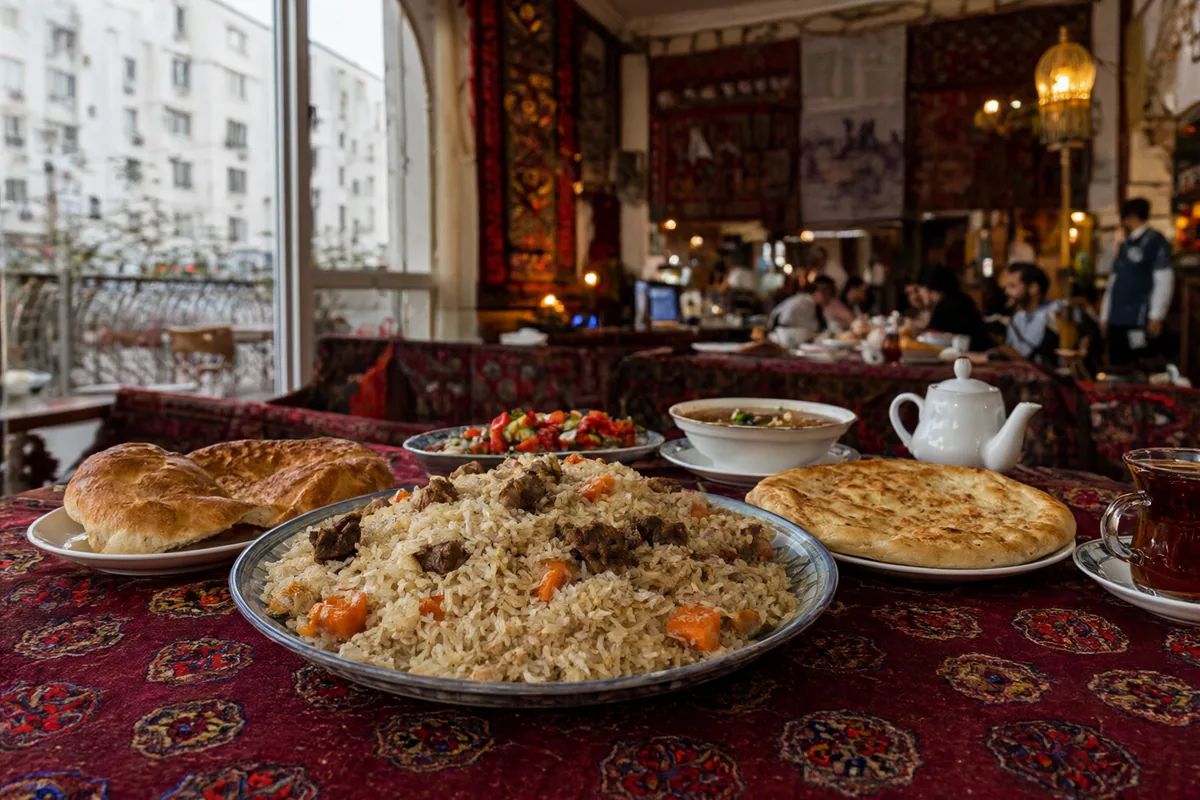
- Palow (everywhere): the Turkmen plov, rice cooked in a large iron kazan with mutton, carrots and onion, the centrepiece of weddings, holidays and family meals.
- Dograma (everywhere, especially at celebrations): bread torn into small pieces by hand and mixed with boiled mutton, onion and tomato, then soaked in hot mutton broth. The name comes from the Turkmen word for chopping or tearing.
- Gutap (everywhere): thin half-moon pastries filled with minced meat, pumpkin, spinach and herbs or potato, fried and brushed with butter.
- Ishlekli (the desert): a large round pie of meat and onion wrapped in dough and baked buried in the hot sand under the embers of a fire, the traditional food of desert shepherds.
- Çorba (everywhere): a mutton soup with potatoes, carrots and tomato, served at the start of a meal.
- Manty (everywhere): large steamed dumplings filled with minced mutton and onion, or pumpkin, served with yoghurt or sour cream.
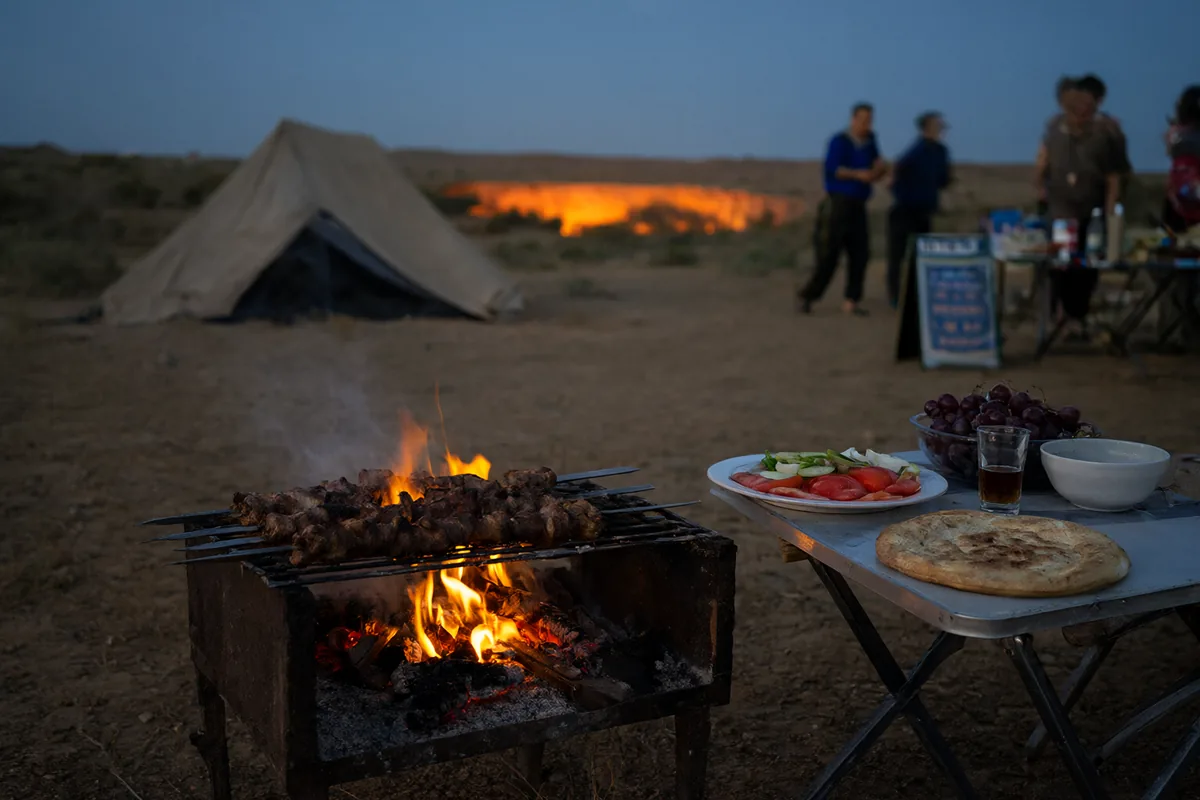
- Shashlyk (everywhere): skewers of mutton, beef or chicken grilled over charcoal, served with raw onion and bread.
- Unaş (everywhere): a noodle soup, often with beans and meat, especially in winter.
- Çörek (everywhere): round flatbread baked against the wall of a clay tamdyr oven, often stamped with patterns.
- Çal and gatyk (everywhere, especially the desert): çal is fermented camel's milk, sour and refreshing, and gatyk is a thick, tangy yoghurt.
- Melons (late summer): Turkmenistan grows hundreds of varieties of melon and celebrates them with a national Melon Day holiday in August.
Russian dishes such as salads, borscht, pelmeni and cutlets are on almost every restaurant menu, a legacy of the Soviet era, and Turkish restaurants are common in Ashgabat. Green tea (gök çaý) is drunk throughout the day, and black tea (gara çaý) is common in the west.
How to read a Turkmen menu
Turkmen is a Turkic language written in the Latin alphabet, with letters such as ç, ň, ş, ý, ž, ä, ö and ü. Russian, written in Cyrillic, is still widely used in Ashgabat and on many restaurant menus, which may be in Russian, Turkmen or both, with English only in a few hotels. These are the words you will see most, in both languages.
| Turkmen | Russian | Meaning |
|---|---|---|
| Nahar | Еда (yeda) | Food, a meal |
| Et | Мясо (myaso) | Meat |
| Goýun eti | Баранина (baranina) | Mutton, lamb |
| Sygyr eti | Говядина (govyadina) | Beef |
| Towuk | Курица (kuritsa) | Chicken |
| Balyk | Рыба (ryba) | Fish |
| Çörek | Хлеб (khleb) | Bread |
| Çorba | Суп / шурпа (sup / shurpa) | Soup |
| Palow | Плов (plov) | Plov, rice with meat |
| Gök önüm | Овощи (ovoshchi) | Vegetables |
| Gök çaý / gara çaý | Зелёный / чёрный чай | Green tea / black tea |
| Suw | Вода (voda) | Water |
| Hasap | Счёт (schyot) | The bill |
Menus in Ashgabat often mix Turkmen and Russian on the same page, with portions listed in grams. Photograph the menu with swap.menu and every dish is translated and explained in your language, whichever language it is written in, with prices converted from manat to your home currency.
Tipping, paying and meal times in Turkmenistan
Tipping is not a strong tradition in Turkmenistan. Some restaurants in Ashgabat add a service charge to the bill, often around 10 percent, and where it is not included, rounding up or leaving a small tip for good service is appreciated. At bazaars and canteens, tipping is not expected. If you travel with a guide and driver, as most visitors do, a tip for them at the end of the trip is customary. Our guide to tax and service charges on menus explains how these lines work.
The currency is the Turkmen manat (TMT). Turkmenistan is a cash economy for visitors: foreign-issued cards rarely work outside a few large hotels, and ATMs generally do not accept them. Bring enough cash for your trip, in clean US dollar notes, and exchange it at banks or official exchange offices, keeping your receipts. Where a card machine does accept your card and offers to charge you in your home currency, choose manat: our guide to paying in local currency explains why.
Lunch is from around 1pm to 3pm and dinner from about 7pm. Restaurants in Ashgabat tend to close earlier than in other Central Asian capitals. Palow is a midday dish at bazaar canteens and often runs out by mid-afternoon. Alcohol, including vodka, beer and local wine and brandy, is available in restaurants and shops. If you are on a tour, check which meals are included, as many tours cover most of them.
Where to eat in Turkmenistan, town by town
Ashgabat has most of the restaurants, the bazaars of the provincial cities have the best home cooking, and the desert has food cooked over open fires. Jump to a place:
Where to eat in Ashgabat
Ashgabat, the capital, is a city of white marble buildings, gold domes, wide empty avenues and fountains, and it has nearly all of the country's restaurants. Turkmen restaurants serve palow, dograma, gutap, manty and shashlyk, often in dining rooms decorated with the deep red Turkmen carpets the country is famous for. Ashgabat also has many Turkish, Russian and international restaurants, cafés and hotel dining rooms, and the menus usually mix Turkmen and Russian dishes.
The most interesting places to eat in Ashgabat are the bazaars. The Russian Bazaar (Gulistan Bazaar) in the centre is the main food market, with fresh çörek, spices, dried fruit, nuts, pickles and Korean-style salads, and canteens serving palow and shashlyk at lunchtime. The Tolkuchka Bazaar, a huge market on the edge of the city, is busiest on weekend mornings and is the place to see carpets, textiles and produce, with food stalls for shoppers. In late summer, the melon stalls in Ashgabat's bazaars are piled high with dozens of varieties.
Where to eat in Mary
Mary, in the southeast, is the main town of a large oasis on the Murghab river, and the base for visiting the ruins of ancient Merv, one of the great cities of the Silk Road. The oasis grows cotton, wheat and some of the country's best melons, and its food is traditional Turkmen home cooking: palow, gutap, dograma and çorba, with fresh çörek from tamdyr ovens. Restaurants in Mary are simple and serve Turkmen and Russian dishes.
The Mary bazaar is a good place to see local produce and try fresh bread, dried fruit and seasonal melons and grapes. Many visitors to Merv eat lunch at a restaurant in Mary or have a picnic arranged by their tour among the ruins. Mary gets very hot in summer, so plan visits to Merv for the morning or late afternoon, and lunch in the shade in between.
Where to eat in Turkmenbashi
Turkmenbashi, on the shore of the Caspian Sea in the far west, is the country's main port and the gateway to the Awaza resort area, a strip of large hotels along the beach. Its food has a Caspian accent: fish such as Caspian kutum and other local species, grilled, fried or smoked, appear on menus, along with the usual Turkmen and Russian dishes. Black tea is more common than green tea in the west of the country.
The town bazaar in Turkmenbashi sells smoked and dried fish, fresh produce and bread, and simple cafés near the waterfront serve fish and shashlyk. At Awaza, the hotels have restaurants serving Turkmen, Russian and international food, busiest in the summer season. Turkmenbashi is also the arrival point for ferries across the Caspian from Azerbaijan.
Where to eat in Dashoguz
Dashoguz, in the far north near the border with Uzbekistan, is the base for visiting the ruins of Konye-Urgench, the old capital of Khorezm, with its tall minaret and mausoleums. The region shares history and food with neighbouring Khorezm in Uzbekistan, and its cooking includes palow, gutap with pumpkin and greens, and dishes made with the region's rice and melons. The local bazaar is the place to try fresh bread and seasonal fruit.
Restaurants in Dashoguz are few and simple, serving Turkmen and Russian dishes, and many visitors eat at their hotel or at meals arranged by their tour. At Konye-Urgench, pilgrims visiting the shrines often bring food to share, and small stalls near the site sell bread and snacks. Dashoguz is also a crossing point to Khiva in Uzbekistan, so many travellers pass through on a Silk Road route.
Where to eat at Darvaza
The Darvaza gas crater, a burning pit in the middle of the Karakum desert sometimes called the "Door to Hell", is the most famous sight in Turkmenistan, and most visitors camp near it overnight. There are no restaurants: dinner is cooked by your tour crew at camp, usually shashlyk grilled over a fire, bread, salads, fruit and tea, often with vodka or beer, eaten under the stars with the glow of the crater nearby.
The Karakum desert is also where you are most likely to try desert dishes such as ishlekli, the meat pie baked in hot sand, and çal, fermented camel's milk, which some tours arrange at a herding settlement. Bring warm clothes, as desert nights can be cold even when the days are hot, and carry water and snacks for the long drive from Ashgabat. Ask your tour company in advance about dietary needs, since supplies for the camp are bought before you set off.
Vegetarian, vegan and allergy tips
Turkmen cooking is built around mutton and mutton fat, and vegetarian dishes are rare on traditional menus. Many soups are made with meat broth, and palow is cooked with meat and fat. Vegetarians can usually find salads, bread, vegetable or pumpkin gutap, pumpkin manty, fried potatoes, eggs, yoghurt, fruit and nuts, and Turkish and international restaurants in Ashgabat have more choice. The phrase in Turkmen is men et iýmeýärin, "I don't eat meat", and in Russian, я не ем мясо (ya ne yem myaso).
Dairy is common, from gatyk and çal to butter on gutap. Wheat is in bread, noodles, dumplings and pastries, and nuts are common in sweets. If you are on a tour, tell your tour company about any allergy or diet when booking, so they can pass it on to restaurants and camp cooks. Our guide to eating abroad with food allergies explains how to explain an allergy clearly.
Useful Turkmen and Russian phrases for ordering
Salam "Hello" (Turkmen; Russian: Здравствуйте, zdravstvuyte)
Это, пожалуйста Eto, pozhaluysta: "This one, please" (Russian, pointing)
Что посоветуете? Chto posovetuyete?: "What do you recommend?" (Russian)
Men et iýmeýärin "I don't eat meat" (Turkmen; Russian: я не ем мясо, ya ne yem myaso)
Näçe? "How much?" (Turkmen; Russian: Сколько стоит?, skolko stoit?)
Счёт, пожалуйста Schyot, pozhaluysta: "The bill, please" (Russian)
Örän tagamly "Very tasty" (Turkmen)
Sag boluň "Thank you" (Turkmen; Russian: спасибо, spasibo)
How swap.menu helps you eat in Turkmenistan
Few menus in Turkmenistan have English, and many switch between Turkmen and Russian on the same page, with names like dograma, ishlekli and fitçi that give no clue to what arrives. Photograph the menu with swap.menu and every dish appears in your language with the original name beside it and a short explanation, so you know that dograma is bread and mutton soaked in broth and that fitçi is a baked meat pie. Every price is converted from manat to your home currency, which helps when you are budgeting from a fixed amount of cash.
Tap the dishes you want, add a note such as "no meat" or "no onion", typed or spoken, and swap.menu translates your order into Russian or Turkmen. Show the waiter your phone, or let them scan the QR code and read your order on their own screen. You can try it right now on a sample menu with the free demo, or see travel pass prices.
Off to Turkmenistan? Your first 3 menu scans are free, and a travel pass starts from $4.99 with nothing that renews.
Start free with 3 scansTurkmenistan food FAQ
Do you tip in restaurants in Turkmenistan?
Tipping is not a strong tradition. Some Ashgabat restaurants add a service charge of around 10 percent, and otherwise rounding up for good service is appreciated. Tipping your guide and driver at the end of a tour is customary.
What food is Turkmenistan famous for?
Palow, the Turkmen plov, is the national dish. Dograma, gutap pastries, ishlekli pie baked in the sand, manty dumplings, shashlyk and Turkmen melons are just as typical.
Can I use a credit card in Turkmenistan?
Rarely. Foreign-issued cards work in only a few large hotels, and ATMs generally do not accept them, so visitors need to bring enough cash, usually US dollars, and exchange it for manat at official offices.
Is Turkmenistan expensive to eat out?
Bazaar canteens and local restaurants are inexpensive, while hotel restaurants in Ashgabat and Awaza cost more. Many visitors travel on tours that include most meals.
Is tap water safe to drink in Turkmenistan?
No, drink bottled or boiled water. Bottled water is sold everywhere, and tea, made with boiled water, is served with every meal.
How can I read a menu in Turkmenistan?
Menus are usually in Turkmen, Russian or both, with little English. Learning a few words like et (meat), palow and çorba helps, or you can photograph the menu with swap.menu, which translates every dish, converts prices from manat and translates your order for the waiter.
Travelling further in Central Asia? Read our food guides for neighbouring countries:
- Uzbekistan food guide
- Kazakhstan food guide
- Iran food guide
- Azerbaijan food guide
- Tajikistan food guide
- Kyrgyzstan food guide
Or browse every travel food guide.