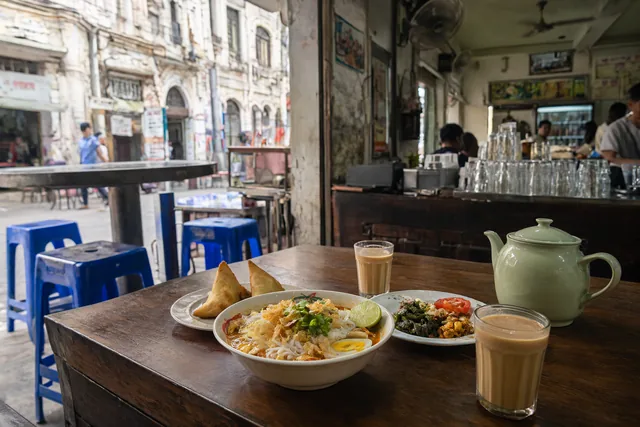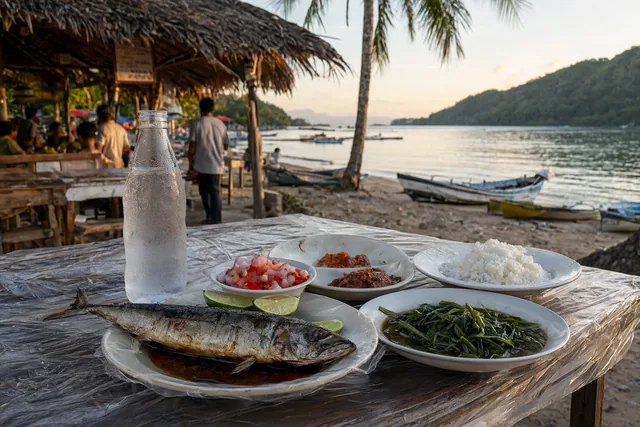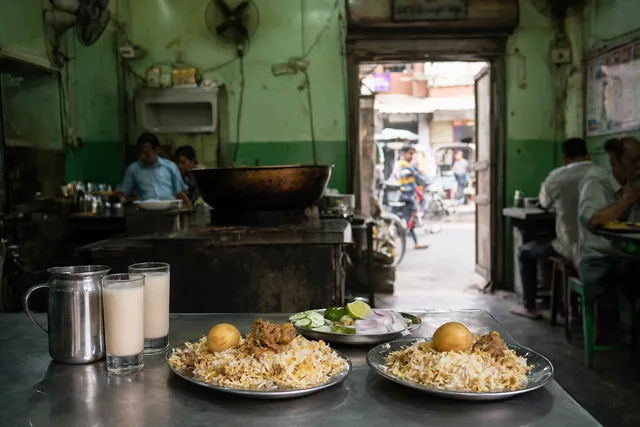
Brunei is a small, quiet sultanate on the north coast of Borneo, and its food is Malay at heart, with Chinese, Indian and Bornean influences, eaten at night markets, roadside stalls and family restaurants. This Brunei food guide covers the dishes to know, the Malay words you will see on menus, how paying and tipping work, and where to eat in Bandar Seri Begawan, Gadong, Kampong Ayer, Tutong and Kuala Belait. Brunei is a dry country with no alcohol on sale, and nearly all food is halal, so evenings out revolve around food, iced drinks and the night market rather than bars. Bruneians eat out often, and prices are moderate by regional standards.
What to eat in Brunei: 12 dishes to know
These are the dishes worth seeking out. Most are shared with neighbouring Malaysia and Indonesia, but a few, like ambuyat and nasi katok, are things Bruneians think of as their own.
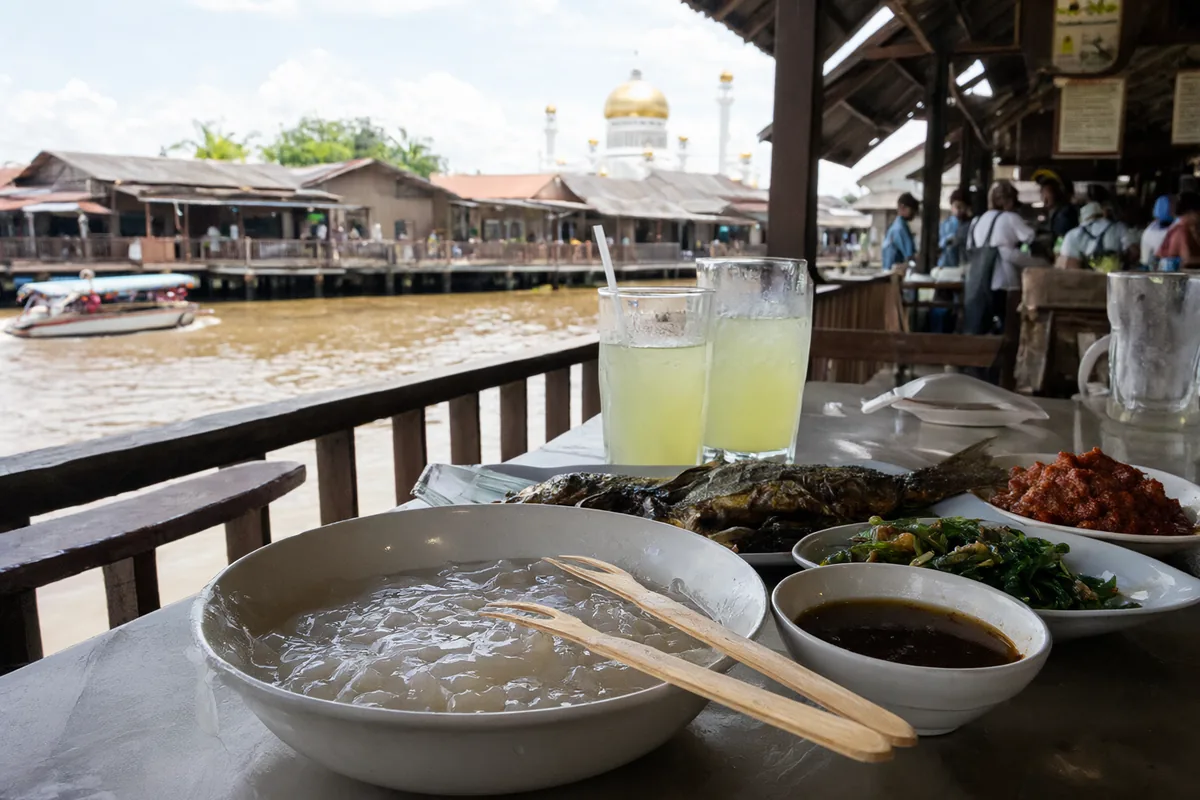
- Ambuyat (Brunei's national dish): a thick, sticky, translucent paste of sago starch, twirled around a two-pronged bamboo fork called a chandas and dipped in a sour sauce called cacah, often made with the local binjai fruit. It comes with grilled fish, beef, vegetables and sambal, and is eaten as a shared meal.
- Nasi katok (everywhere): a simple, cheap set of rice, a piece of fried chicken and a spoon of sambal, wrapped in paper. The name means "knock rice", from people knocking on a seller's door late at night.
- Nasi lemak (everywhere): rice cooked in coconut milk, with sambal, fried anchovies, peanuts, cucumber and egg, often with fried chicken or beef rendang.
- Pulut panggang (everywhere): glutinous rice with a filling of spiced prawn or fish floss, wrapped in banana leaf and grilled over charcoal.
- Kelupis (everywhere): glutinous rice wrapped tightly in leaves and steamed, sometimes cooked with coconut milk, eaten with curry or rendang.
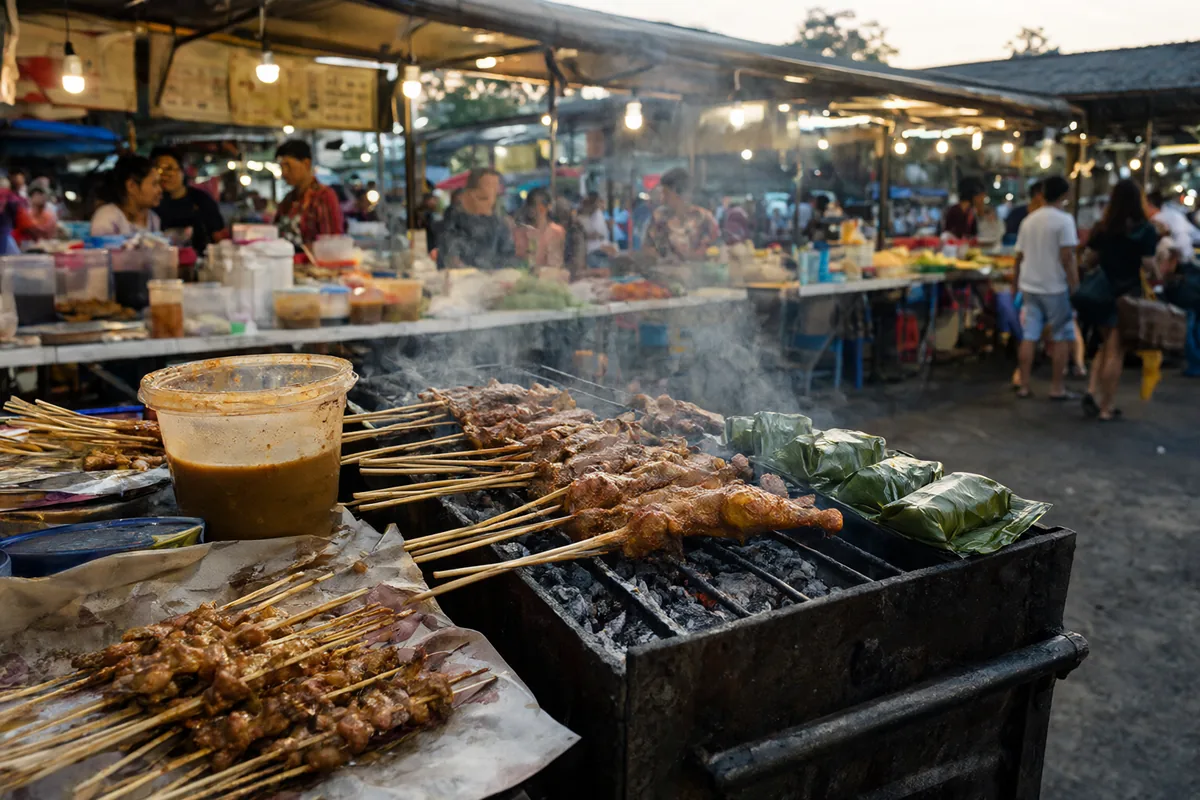
- Satay (night markets): skewers of chicken or beef grilled over charcoal and served with peanut sauce, cucumber, onion and compressed rice cakes.
- Beef rendang (everywhere, especially at festivals): beef slow-cooked in coconut milk and spices until almost dry and very tender.
- Soto (everywhere): a spiced noodle soup with beef or chicken, with fried shallots, lime and sambal on the side.
- Mee goreng and kolo mee (everywhere): spicy fried yellow noodles from Malay and Indian stalls, and springy egg noodles with minced meat and char siu from Chinese coffee shops.
- Roti canai (everywhere): flaky, griddle-fried flatbread with curry dip, the standard breakfast at Indian Muslim restaurants. A plain one is roti kosong.
- Kuih (markets and stalls): bite-sized traditional cakes, many made with rice flour, coconut and palm sugar, sold by the piece. Look for kuih cincin, crisp ring-shaped biscuits.
- Teh tarik (everywhere): sweet milky tea "pulled" between two jugs to make it frothy. Iced drinks are just as popular, from lime juice to rose syrup milk.
Brunei's forests also produce fruit rarely seen outside Borneo, such as tarap, a soft, sweet, spiky fruit related to jackfruit, and many varieties of durian, which you will find at markets in season.
How to read a Malay menu in Brunei
The official language is Malay, and English is widely spoken, especially in the capital, so many menus are in both. Signs may also use Jawi, an Arabic-based script for Malay, but menus are almost always written in the Latin alphabet. Dish names usually combine a base, an ingredient and a cooking method, such as nasi goreng ayam (chicken fried rice). These are the words to know.
| Malay | Meaning |
|---|---|
| Nasi | Rice, and a rice meal |
| Mee / mi | Yellow wheat noodles (mee hoon is rice vermicelli, kway teow is flat rice noodles) |
| Ayam / daging | Chicken / beef |
| Ikan / udang / sotong | Fish / prawn / squid |
| Sayur | Vegetables |
| Goreng | Fried |
| Bakar / panggang | Grilled over charcoal |
| Masak lemak | Cooked in a coconut milk sauce |
| Sambal | Chilli paste or relish, often with shrimp paste |
| Pedas / kurang pedas | Spicy / less spicy |
| Kuah | Sauce or gravy |
| Air | Drink (literally water: air limau is lime juice) |
| Panas / ais | Hot / iced, for drinks |
Night market stalls and family restaurants often have a handwritten board of dishes in Malay, with Brunei words that even Malaysian visitors may not know. Photograph it with swap.menu and every dish is explained in your language, with prices converted from Brunei dollars, so you know whether that cacah is a dip, a sauce or a drink.
Tipping, paying and meal times in Brunei
Tipping is not expected in Brunei. At stalls, coffee shops and ordinary restaurants you pay what is on the menu, and nobody expects more. Hotels and some upmarket restaurants add a service charge, usually 10 percent, and may show prices with "++". Brunei has no sales tax or GST, so there is no separate tax line on most bills. Our guide to tax and service charges on menus explains how these lines work in other countries.
The currency is the Brunei dollar (BND, written B$). It is pegged at par with the Singapore dollar, and Singapore notes are accepted in shops and restaurants in Brunei at the same value. Cards are accepted at malls, hotels and most sit-down restaurants, but markets, night market stalls and small coffee shops want cash. When a card machine offers to charge you in your home currency, choose Brunei dollars: our guide to paying in local currency explains why.
Lunch is from about noon to 2pm and dinner from around 7pm, after the sunset prayer, with night markets and coffee shops busy until late. On Fridays, businesses including restaurants close from around noon to 2pm for Friday prayers. During Ramadan, many restaurants close or serve only takeaway during the day, eating and drinking in public in daylight should be avoided, and the evening Ramadan markets selling food to break the fast are a highlight. Alcohol is not sold anywhere in Brunei. Non-Muslim visitors may bring a small personal allowance into the country, declared at customs, to drink privately.
Where to eat in Brunei, town by town
Brunei is small enough to cross in a couple of hours, and most of the food is in and around the capital. Jump to a place:
Where to eat in Bandar Seri Begawan
Bandar Seri Begawan, the capital, is a calm city of golden-domed mosques and a riverfront looking across to the stilt houses of Kampong Ayer. The city centre is the best place in Brunei to try ambuyat: a few restaurants on the riverfront and in the older streets specialise in it and serve it as a full set, with grilled fish, beef, vegetables and the sour cacah dip, which is a meal for two or more. The open-air Tamu Kianggeh market, along the Kianggeh river in the centre, sells fruit, vegetables, jungle produce, kuih and snacks every morning, and it is the best place to try unfamiliar fruit and buy pulut panggang straight from the grill.
Around the city centre of Bandar Seri Begawan, look for Malay restaurants serving nasi campur (rice with your choice of dishes from a counter), Indian Muslim restaurants for roti canai and curries at breakfast, and Chinese coffee shops for kolo mee and noodles. The riverfront area near the Yayasan shopping complex has food courts and cafés with views of the Omar Ali Saifuddien Mosque. Ask any local where to buy nasi katok: it is sold from small shops and stalls all over the city, day and night, and is one of the cheapest good meals in the country.
Where to eat in Gadong
Gadong, a few kilometres from the old centre, is the commercial heart of greater Bandar Seri Begawan, with malls, restaurants and cafés, and it is home to the country's most famous place to eat: the Gadong night market (pasar malam). Every evening, rows of stalls sell satay by the bundle, grilled chicken wings, fried fish, ayam penyet (smashed fried chicken with sambal), nasi katok, pulut panggang, roti john (an omelette baguette), fresh juices and dozens of kinds of kuih. Most food is sold to take away, so many locals eat in the car or take it home.
The Gadong night market starts in the late afternoon and is busiest after the sunset prayer. Prices are low and stalls are labelled, but many labels are in Malay only. Around Gadong, the main roads are lined with restaurants serving Malay, Chinese, Thai, Indian, Korean and Japanese food, and the coffee shops stay open late. Gadong is where Bruneian families go out on Friday and Saturday nights, so expect crowds and traffic at weekends.
Where to eat in Kampong Ayer
Kampong Ayer, the "water village" across the river from the capital, is a collection of houses, schools and mosques on stilts linked by wooden walkways, and has been lived in for centuries. It is a residential community rather than a dining destination, so keep expectations simple: a few small cafés and stalls on the walkways sell tea, coffee, kuih and simple rice and noodle dishes, and some homestays and cultural tours include a home-cooked Malay meal.
The best way to eat in Kampong Ayer is to take a water taxi across from the riverfront and walk the boardwalks, stopping for tea and a few kuih where you see locals sitting. The Kampong Ayer Cultural and Tourism Gallery explains the history of the village and is near cafés with views back to the city. Many Bruneian dishes, such as ambuyat, are rooted in the life of the water village, and a meal there gives some sense of how people ate before the modern city grew.
Where to eat in Tutong
Tutong, a small district town about 45 minutes west of the capital along the coast road, is quieter and more rural, with beaches, a river and farming villages. Tutong has its own weekly tamu (open-air market), where farmers and villagers sell fruit, vegetables, jungle ferns, freshwater fish, kuih and snacks, and it is a good place to try local produce you will not find in the capital's malls.
Tutong's simple Malay restaurants serve rice with curries and grilled fish, and roadside stalls on the way through the district sell grilled corn, fruit and pulut panggang. On the coast, the long sandy beach at Pantai Seri Kenangan, between the sea and the Tutong river, has food stalls and is a popular weekend picnic spot. Combine Tutong with a drive to Tasek Merimbun, a peaceful lake in the interior, and bring a packed lunch, as food options there are limited.
Where to eat in Kuala Belait
Kuala Belait, near the Sarawak border in the far west, is Brunei's oil town, along with neighbouring Seria, where the country's oil industry began. The oil industry brought workers from around the world, and Kuala Belait has a broader mix of restaurants than you might expect, from Malay and Chinese coffee shops to Indian, Filipino and Western cafés. Chinese noodle shops are especially good here, with kolo mee, wonton noodles and rice dishes for breakfast and lunch.
Kuala Belait has its own market and evening food stalls, and seafood from the coast appears in grilled fish and prawn dishes. Seria has a stretch of beach and the Billionth Barrel Monument, which marks the oil field's output, with simple restaurants nearby. Kuala Belait is also the last stop before Miri in Sarawak, Malaysia, and many people cross the border for a day; if you do, remember that you will be paying in Malaysian ringgit on the other side.
Vegetarian, vegan and allergy tips
Brunei's food is heavily based on meat, fish and seafood, and most savoury dishes include belacan (fermented shrimp paste) in the sambal, anchovies, fish sauce or meat stock. Even vegetable dishes may be cooked with dried shrimp or shrimp paste. The word for vegetarian is vegetarian or sayur-sayuran sahaja ("vegetables only"), and it helps to say "no meat, no fish, no shrimp paste": tiada daging, tiada ikan, tiada belacan. Indian restaurants, with dal, vegetable curries, roti and thosai, are usually the easiest choice, and Chinese vegetarian restaurants serve meat-free dishes.
Peanuts are common, in satay sauce, nasi lemak and many snacks. Coconut milk is in curries, rice and sweets, and wheat noodles, soy sauce and batters are everywhere. Food is halal, so pork is found only in some Chinese restaurants. Our guide to eating abroad with food allergies explains how to explain an allergy clearly.
Useful Malay phrases for ordering
Selamat pagi / Selamat petang "Good morning / Good afternoon"
Yang ini, satu "This one, one please" (pointing)
Apa yang sedap di sini? "What is good here?"
Kurang pedas / tidak pedas "Less spicy / not spicy"
Saya tidak makan daging "I don't eat meat"
Saya alah kepada kacang "I am allergic to peanuts"
Berapa harganya? "How much is it?"
Sedap, terima kasih! "Delicious, thank you!"
How swap.menu helps you eat in Brunei
Many menus in Brunei are in English and Malay, but the dishes themselves can still be a mystery: a night market board listing ambuyat, cacah binjai, kelupis and pulut panggang gives no clue that you are looking at sago paste, a sour fruit dip, leaf-wrapped sticky rice and grilled rice parcels. Photograph it with swap.menu and every dish appears in your language with the Malay name beside it and a short explanation. Every price is converted from Brunei dollars to your home currency.
Tap the dishes you want, add a note such as "no shrimp paste" or "less spicy", typed or spoken, and swap.menu translates your order into Malay. Show the stallholder your phone, or let them scan the QR code and read your order on their own screen. You can try it right now on a sample menu with the free demo, or see travel pass prices.
Off to Brunei? Your first 3 menu scans are free, and a travel pass starts from $4.99 with nothing that renews.
Start free with 3 scansBrunei food FAQ
Do you tip in restaurants in Brunei?
Tipping is not expected in Brunei. Hotels and some upmarket restaurants add a service charge of around 10 percent, and there is no sales tax added to bills.
What food is Brunei famous for?
Ambuyat, the sticky sago starch dish eaten with bamboo forks and a sour dip, is Brunei's national dish. Nasi katok, a cheap set of rice, fried chicken and sambal, is the everyday favourite, along with satay, nasi lemak and kuih.
Can you drink alcohol in Brunei?
Alcohol is not sold in Brunei. Non-Muslim visitors may bring a small personal allowance into the country, which must be declared at customs and drunk in private, not in public.
Is Brunei expensive to eat out?
Local food is reasonably priced. Night market stalls, nasi katok and coffee shop noodles are cheap, while hotel restaurants and international chains in the malls cost more.
Is tap water safe to drink in Brunei?
Tap water in Brunei is treated and generally considered safe, though many residents drink filtered or bottled water. Bottled water is cheap and sold everywhere.
How can I read a menu in Brunei?
Many menus have English, but local dish names are often left in Malay. Learn a few words like nasi, mee, goreng and pedas, or photograph the menu with swap.menu, which explains every dish in your language, converts prices from Brunei dollars and translates your order into Malay.
Travelling further in Southeast Asia? Read our food guides for nearby countries:
- Malaysia food guide
- Singapore food guide
- Indonesia food guide
- Philippines food guide
- Timor-Leste food guide
Or browse every travel food guide.