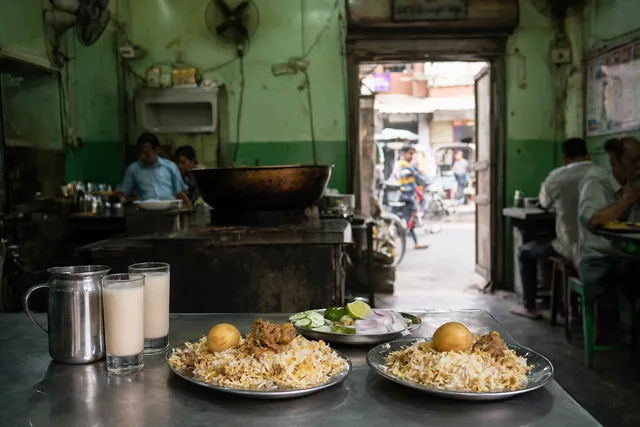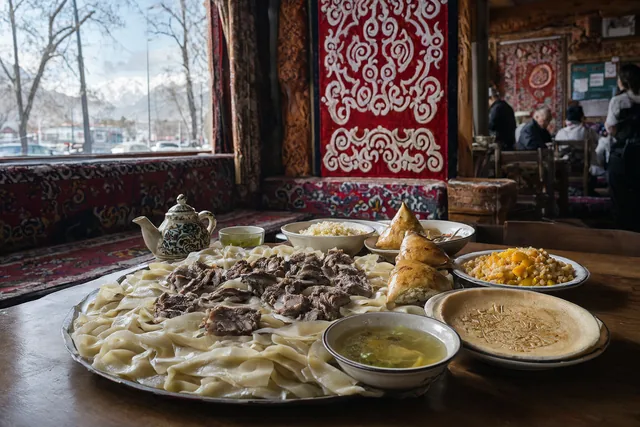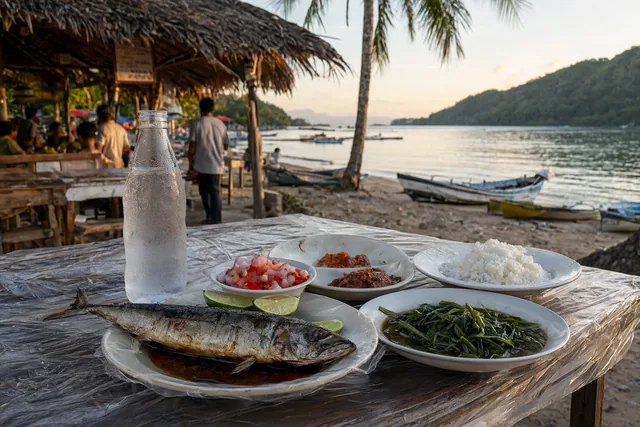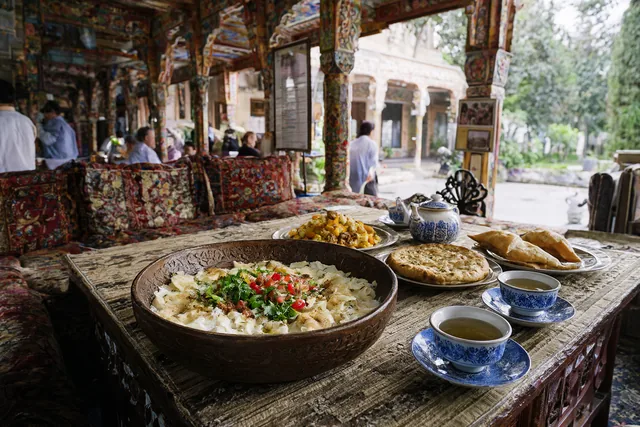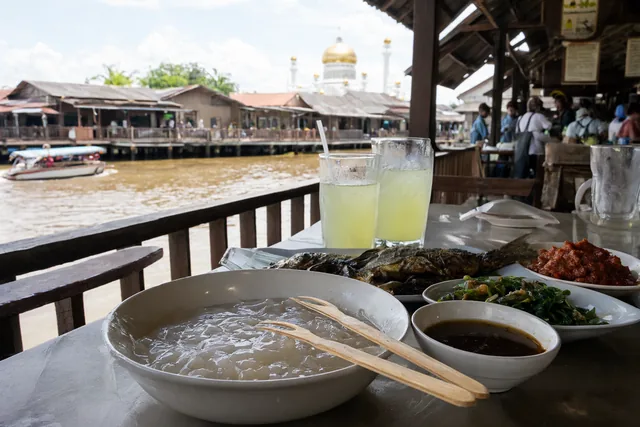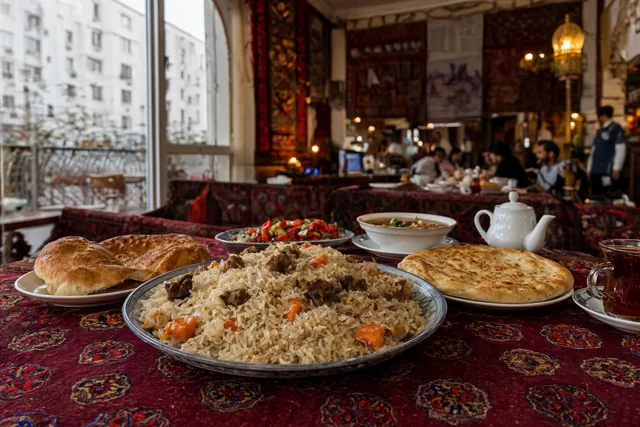
Pakistani food is bold, meaty and generous, cooked over charcoal and in heavy iron woks and eaten with fresh bread straight from the tandoor. This Pakistan food guide covers the dishes to know, how to read an Urdu menu, how tipping and paying in rupees work, and then goes city by city through where to eat in Lahore, Karachi, Islamabad, Peshawar, Hunza and Multan. Each region cooks differently: Punjab is the land of karahi, lassi and food streets, Sindh brings spicy biryani and seafood, the northwest grills mutton and makes kebabs the size of a plate, and the mountain valleys of the north live on apricots, walnuts and bread.
What to eat in Pakistan: 12 dishes to know
These are the dishes worth seeking out, with the city or region they belong to. Meals are shared, bread or rice is eaten with everything, and portions are big.
- Karahi (everywhere, especially Lahore and Peshawar): chicken or mutton cooked fast in a wok-like iron pan with tomato, green chilli, ginger and garlic, served in the pan it was cooked in.
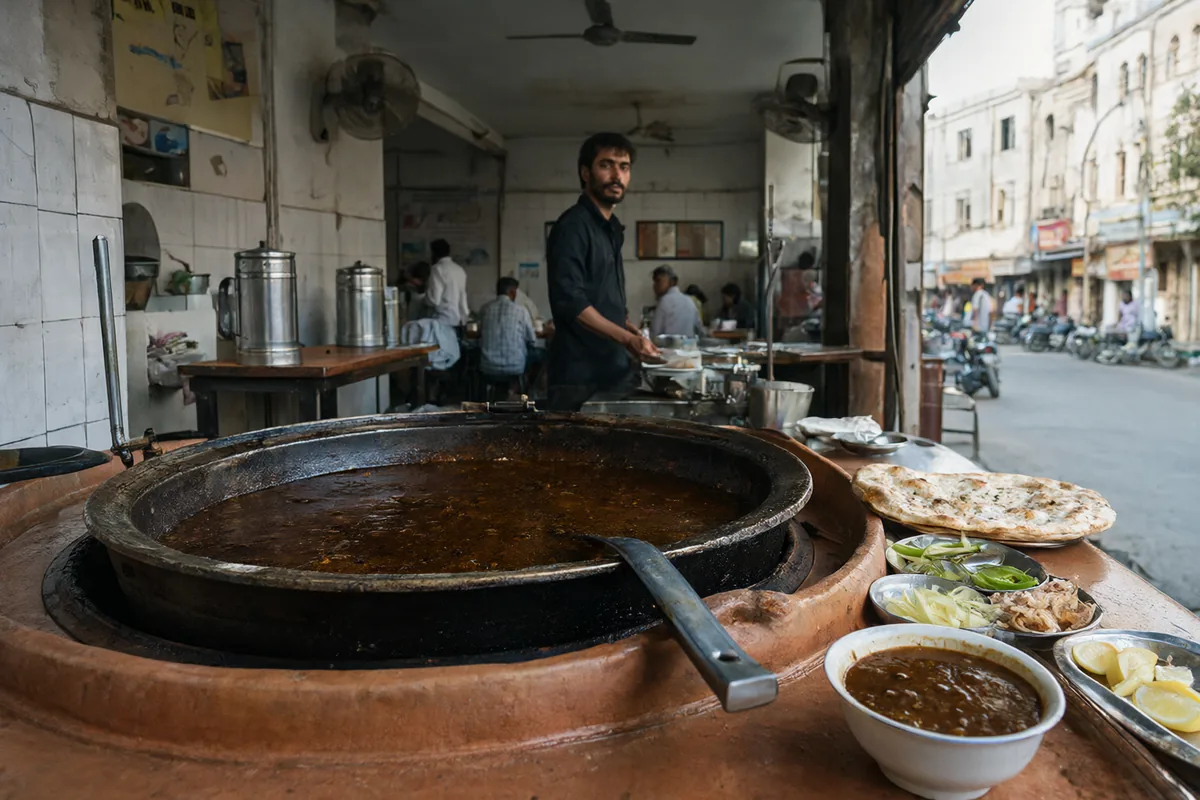
- Nihari (Karachi and Lahore): beef or mutton shank slow-cooked overnight in a spiced, sticky gravy, eaten for breakfast with naan, ginger, chilli and lemon.
- Biryani (Karachi and Sindh): spiced rice layered with meat, and in the Sindhi and Karachi style, with potatoes, plums and plenty of chilli.
- Chapli kebab (Peshawar): a large, flat, spiced minced beef or mutton patty, fried in fat with tomato and pomegranate seeds.
- Seekh kebab and tikka (everywhere): minced meat on skewers and marinated chunks of chicken or lamb, grilled over charcoal.
- Haleem (everywhere): a thick, slow-cooked stew of wheat, lentils and shredded meat, topped with fried onion, ginger and lemon.
- Halwa puri (everywhere, weekend breakfast): fried puffed bread with sweet semolina halwa, spiced chickpeas and potato curry.
- Sajji (Balochistan, now everywhere): whole lamb or chicken, lightly salted and slow-roasted on skewers around an open fire.
- Paya (Lahore and everywhere): trotters slow-cooked into a rich, gelatinous soup, a winter breakfast.
- Daal chawal (everywhere): lentils and rice, the everyday home meal, often with pickle and salad.
- Lassi (Punjab): a chilled yoghurt drink, sweet or salted, served in tall glasses, often topped with cream.
- Chai (everywhere): strong tea boiled with milk and sugar, and in the northwest, kahwa, green tea with cardamom.
For something sweet, look for kheer (rice pudding), gulab jamun (fried milk dumplings in syrup), jalebi (crisp syrup-soaked spirals) and kulfi, a dense frozen milk dessert flavoured with pistachio and cardamom. Pakistan also grows some of the world's best mangoes, in season from around May to August.
How to read an Urdu menu
Urdu is written in a flowing form of the Arabic script, right to left, and is the national language, though Punjabi, Sindhi, Pashto and other languages are spoken at home across the country. Many city restaurants print menus in English, but local places and street stalls often write only in Urdu, or simply shout out what they have. These are the words you will see and hear most often.
| Urdu | Romanised | Meaning |
|---|---|---|
| روٹی / نان | roti / naan | Flatbread / leavened bread from the tandoor |
| چاول | chawal | Rice |
| گوشت | gosht | Meat, usually mutton or beef |
| مرغ / چکن | murgh / chicken | Chicken |
| مٹن / بیف | mutton / beef | Mutton or goat / beef |
| مچھلی | machhli | Fish |
| دال | daal | Lentils |
| سبزی | sabzi | Vegetables, or a vegetable dish |
| کڑاہی | karahi | Cooked in an iron wok, often sold by the half or full kilo |
| تکہ | tikka | Marinated pieces grilled on skewers |
| مرچ | mirch | Chilli |
| چائے | chai | Milky tea |
| میٹھا | meetha | Sweet, dessert |
Karahi and grilled meat are often priced by the half kilo or kilo of meat, not per plate, so the price on the board may feed two or four people. Photograph the menu with swap.menu and it explains each dish, flags prices by weight and converts the rupees to your home currency, so you order the right amount.
Tipping, paying and meal times in Pakistan
Check your government's current travel advice before planning a trip. Tipping is customary in Pakistani restaurants: leaving around 5 to 10 percent in sit-down places is normal, and small tips for waiters at street stalls and dhabas are appreciated. Restaurant bills often include a provincial sales tax, and upmarket restaurants and hotels may add a service charge, so check the bill before tipping. Our guide to tax and service charges on menus explains how these lines work.
The currency is the Pakistani rupee (PKR, written Rs). Pakistan runs on cash, and locals increasingly pay by mobile wallet apps that need a local account. Cards are accepted in hotels, malls and upmarket restaurants in Lahore, Karachi and Islamabad, but rarely elsewhere. ATMs are common in the cities, but carry enough cash before heading to the mountains. When a card machine offers to charge you in your home currency, choose rupees: our guide to paying in local currency explains why.
Pakistanis eat late. Lunch is from about 1pm to 3pm, and dinner rarely starts before 8pm, with food streets busiest from 9pm to midnight. Breakfast is a big deal at weekends, with families queuing for halwa puri and nihari. Many restaurants have a separate family section for women and families. During Ramadan, most restaurants close during daylight hours and come alive after sunset. Alcohol is not served in restaurants.
Where to eat in Pakistan, city by city
Lahore is the food capital, Karachi has the biggest range, and the mountains of the north serve a completely different cuisine. Jump to a city:
Where to eat in Lahore
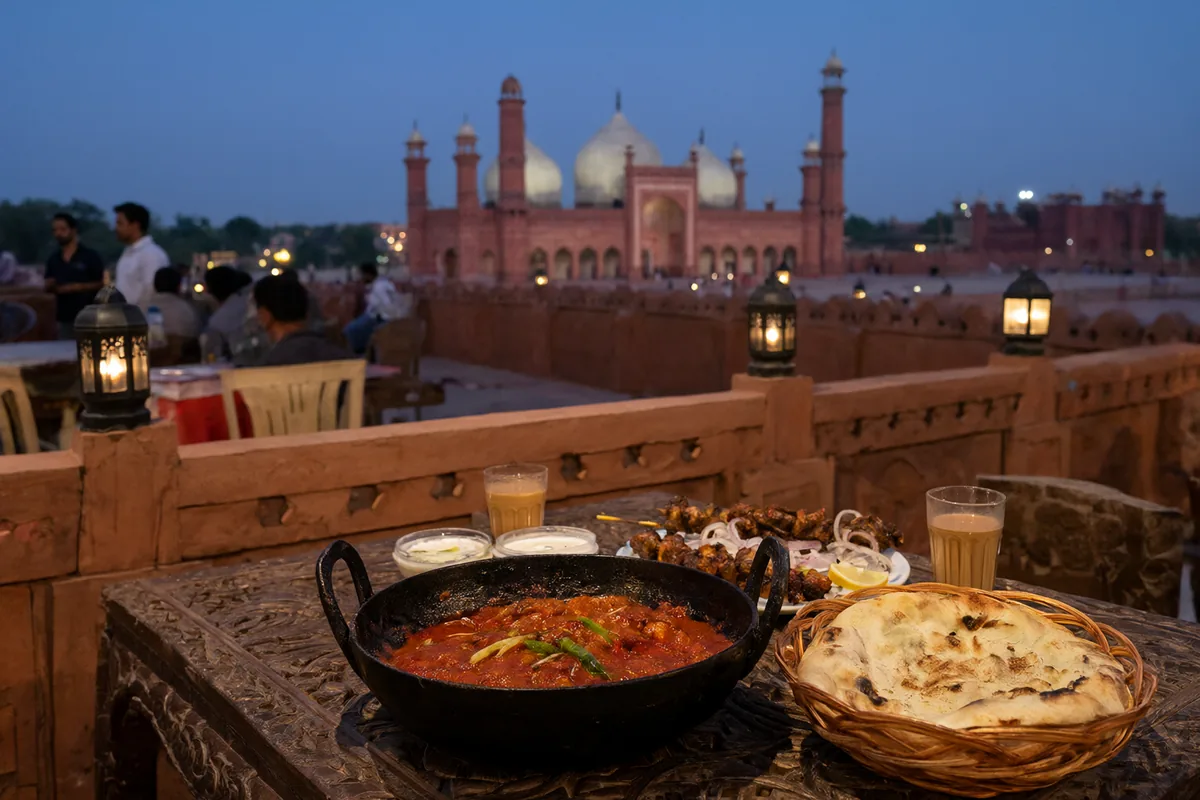
Lahore is Pakistan's cultural capital and, by the reckoning of most Pakistanis, its food capital too. There is a saying that someone who has not seen Lahore has not been born. The best way to eat in Lahore is on its food streets. Fort Road Food Street, in the old city beside the Badshahi Mosque, is lined with restored havelis whose rooftop restaurants serve karahi, tikka and naan with the floodlit mosque and Lahore Fort in front of you. Gawalmandi, one of the original food streets, and the lanes around Lakshmi Chowk are more local and crowded, with charcoal grills, frying pans of karahi and roadside kulfi.
Lahori specialities include chargha (a whole chicken marinated, steamed and then deep-fried), Lahori fried fish in a spiced gram flour batter, eaten mostly in winter, siri paye (head and trotters soup) for breakfast, and thick, creamy lassi. The streets inside the walled city, known as Androon Lahore, have tiny shops selling halwa puri, nihari and sweets, best visited in the morning. For modern Lahore, MM Alam Road in Gulberg is the strip of upmarket restaurants and cafés. Lahore is cold and foggy in winter and very hot in summer, and the food changes with the seasons.
Where to eat in Karachi
Karachi, Pakistan's largest city and main port, is a city of migrants, and its food draws on every part of the country and beyond. The essential Karachi dishes are nihari, biryani in the spicy Karachi style with potatoes and plums, haleem and the bun kebab, a spiced lentil and meat patty in a soft bun with chutney and onions, Karachi's favourite street snack. The historic Burns Road in the old city centre is the classic food street, with nihari, haleem, rabri (thickened sweet milk) and kebabs, and it is busiest at breakfast and late at night.
For seafood, head to the coast: the restaurants at Do Darya in the DHA area sit right on the sea and serve fried fish, prawns and crab, and stalls along the Boat Basin in Clifton serve barbecue, grilled meats and paratha rolls until late. Hussainabad food street is known for its haleem, pakoras and chaat. Karachi also has a long tradition of old Irani cafés, though only a few remain. Karachi is hot and humid most of the year, and the cooler sea breeze makes the evenings the best time to eat out.
Where to eat in Islamabad
Islamabad, the planned capital at the foot of the Margalla Hills, is green, orderly and calmer than any other big Pakistani city, and its restaurants reflect that, with many cafés, family restaurants and international food. The sectors are laid out in a grid, and each has its own market: Jinnah Super in F-7, Kohsar Market in F-6 and Melody Market, with its food street, are where most people eat. Saidpur Village, an old village on the edge of the hills restored into a heritage area, has restaurants with outdoor seating looking up at the forested slopes.
Islamabad's twin city, Rawalpindi, is older, busier and more traditional, and many people from Islamabad go there to eat. The Raja Bazaar and Saddar areas of Rawalpindi are crowded with stalls and small restaurants selling karahi, tikka, chaat, samosas and sweets. Both cities are bases for trips north to the mountains along the Karakoram Highway, and the roadside stops on the way are a good place to try fresh trout from mountain rivers and simple daal and roti.
Where to eat in Peshawar
Peshawar, near the Khyber Pass, is one of the oldest cities in South Asia and the heart of Pashtun food: meat-heavy, simply spiced, and cooked over fire. The city is famous for chapli kebab, fried in large flat pans of fat, and for lamb karahi and tikka cooked with little more than salt, tomato, green chilli and lamb fat. Namak Mandi, the old salt market, is the most famous place to eat it, with restaurants hanging whole lambs at the door and grilling to order.
The Qissa Khwani Bazaar, the "storytellers' market" in the old city, is the place for a cup of kahwa, green tea with cardamom, served in small cups from big brass kettles. Peshawar has a large Afghan community, and Kabuli pulao, rice with lamb, carrots and raisins, is everywhere, along with huge flat naan. Peshawar is conservative, and most diners are men, though restaurants usually have a family section.
Where to eat in Hunza
Hunza, a valley high in the Karakoram mountains in Gilgit-Baltistan, has its own food, shaped by the cold, the altitude and the orchards that grow on its terraced slopes. The valley is famous for apricots, eaten fresh in summer, dried for winter, and pressed for oil used in cooking. Local dishes include chapshoro, a thick bread pie filled with minced meat, onion and chilli, diram fitti, a bread made from sprouted wheat flour served with apricot oil or butter, and buckwheat pancakes and soups.
In Karimabad, the main town, and the villages of Altit and Aliabad, small cafés serve local food, apricot juice, walnut and apricot cake and herbal teas such as tumuro, made from wild mountain thyme. Some cafés in the Hunza valley are run by local women's cooperatives. Hunza is at its best from spring, when the apricot blossom comes out, to autumn, when the poplars turn gold. Many places close in winter, and the road up the Karakoram Highway can be slow, so carry snacks.
Where to eat in Multan
Multan, in southern Punjab, is one of the oldest continuously inhabited cities in South Asia, known as the city of saints for its many Sufi shrines and as the home of sohan halwa, a dense, chewy sweet of milk, sugar, ghee and nuts sold in tins and boxes all over the city. Multan is also mango country, and its orchards supply some of the most prized varieties in Pakistan during the summer season.
The bazaars inside the old city, including the Hussain Agahi Bazaar, are full of sweet shops, tea stalls and small restaurants serving karahi, tikka, saag (slow-cooked mustard greens) with makki ki roti (corn bread) in winter, and Saraiki home cooking. Multan is one of the hottest cities in Pakistan in summer, so plan to eat in the evening, when the bazaars come alive.
Vegetarian, vegan and allergy tips
Pakistani cooking is built around meat, and many people will assume that a meal without meat is a meal without substance. Vegetarians can still eat well with daal, chana (chickpea curry), saag, aloo gobi (potato and cauliflower), bhindi (okra), pakoras, samosas, halwa puri and bread. Watch for vegetable dishes cooked with meat stock or in the same pan as meat, and for ghee in almost everything, which matters for vegans. The phrase to use is main gosht nahin khata (man) or khati (woman), "I don't eat meat", and the word for vegetarian is sabzi khor.
Dairy is everywhere, in ghee, yoghurt, cream and sweets. Nuts, especially almonds, pistachios and cashews, are used in rich curries, biryani and desserts, and peanuts in some snacks. Wheat is the basis of bread, and gluten-free eating means sticking to rice dishes. Our guide to eating abroad with food allergies explains how to explain an allergy clearly.
Useful Urdu phrases for ordering
السلام علیکم Assalam-o-alaikum: "Peace be upon you", the usual greeting
کیا ملے گا؟ Kya milega?: "What do you have?"
یہ دے دیں Yeh de dein: "Please give me this one" (pointing)
مرچ کم رکھیں Mirch kam rakhein: "Please keep the chilli low"
میں گوشت نہیں کھاتا / کھاتی Main gosht nahin khata / khati: "I don't eat meat" (khata for a man, khati for a woman)
کتنے پیسے ہوئے؟ Kitne paise hue?: "How much is it?"
بل لے آئیں Bill le aayen: "Please bring the bill"
بہت مزیدار، شکریہ Bohat mazedaar, shukriya: "Very tasty, thank you"
How swap.menu helps you eat in Pakistan
Pakistani menus can list dozens of dishes with similar names, and the differences matter: handi, karahi and bhuna are three different ways of cooking the same chicken, and siri paye is head and trotters, not a pie. Photograph the menu with swap.menu and every dish appears in your language with the Urdu name beside it and a short explanation. Every price is converted from rupees to your home currency, and we point out dishes priced by the half kilo or kilo so you know how much food is coming.
Tap the dishes you want, add a note such as "less chilli" or "no nuts", typed or spoken, and swap.menu translates your order into Urdu. Show the waiter your phone, or let them scan the QR code and read your order on their own screen. You can try it right now on a sample menu with the free demo, or see travel pass prices.
Off to Pakistan? Your first 3 menu scans are free, and a travel pass starts from $4.99 with nothing that renews.
Start free with 3 scansPakistan food FAQ
Do you tip in restaurants in Pakistan?
Yes, tipping is customary. Around 5 to 10 percent is normal in sit-down restaurants, and a small tip is appreciated at street stalls. Check the bill first for a service charge or sales tax.
What food is Pakistan most famous for?
Karahi, biryani, nihari, haleem, seekh kebabs, chapli kebab and tikka, eaten with fresh naan. Lassi, chai and sweets such as kheer and gulab jamun are just as popular.
Is Pakistani food very spicy?
Much of it is hot by Western standards, especially in Karachi and Sindh, while the food of Peshawar and the northern mountains is milder and more simply seasoned. Ask for less chilli, and most cooks will adjust the dish.
Which city in Pakistan is best for food?
Lahore is widely seen as the food capital, with its food streets and rich Punjabi cooking. Karachi is best for nihari, biryani and seafood, and Peshawar for kebabs and grilled lamb. Each city in this guide has its own section on where to eat.
Is tap water safe to drink in Pakistan?
No, drink bottled or filtered water and check bottles are sealed. Be careful with ice, raw salads and cut fruit from street stalls, and choose busy places where food is cooked fresh.
How can I read an Urdu menu?
Learn a few words like gosht, murgh, daal and karahi, or photograph the menu with swap.menu. It translates every dish into your language, explains what it is, converts prices from rupees and translates your order into Urdu for the waiter.
Travelling further in the region? Read our food guides for nearby countries:
- India food guide
- Iran food guide
- China food guide
- Tajikistan food guide
- Nepal food guide
- Bangladesh food guide
Or browse every travel food guide.