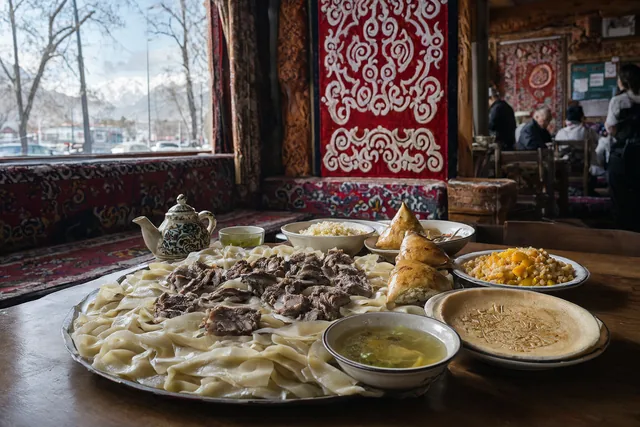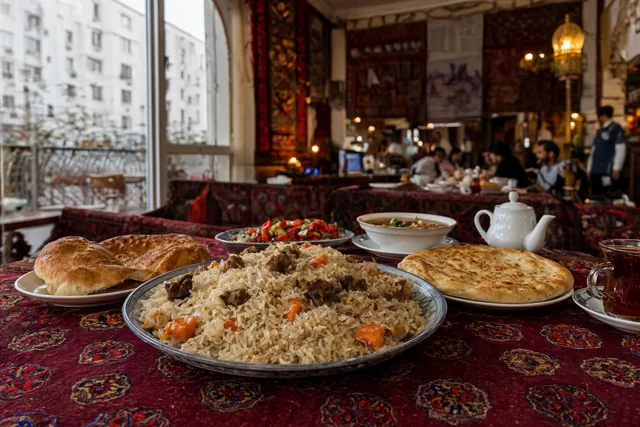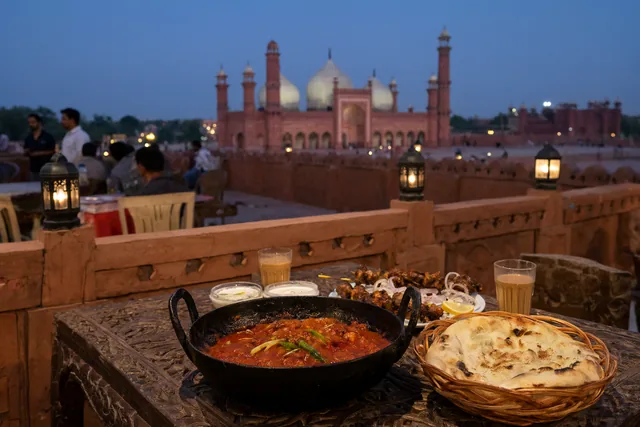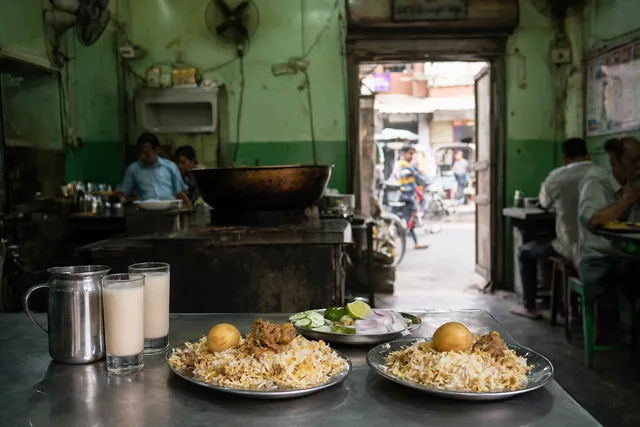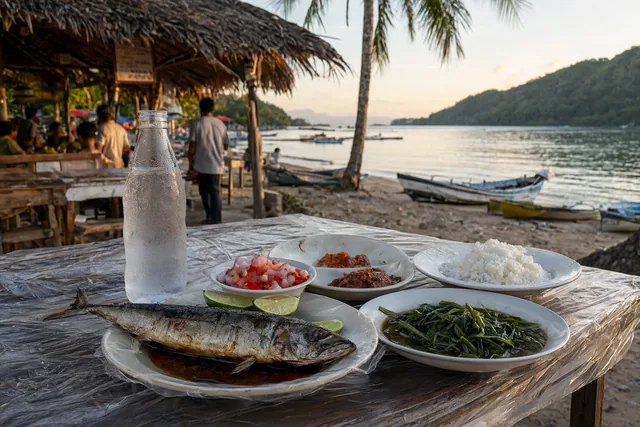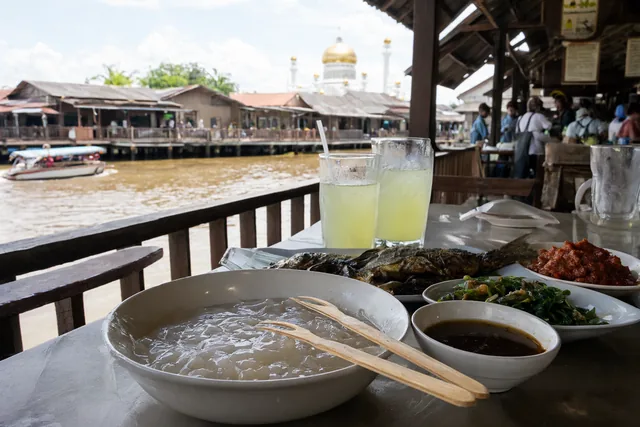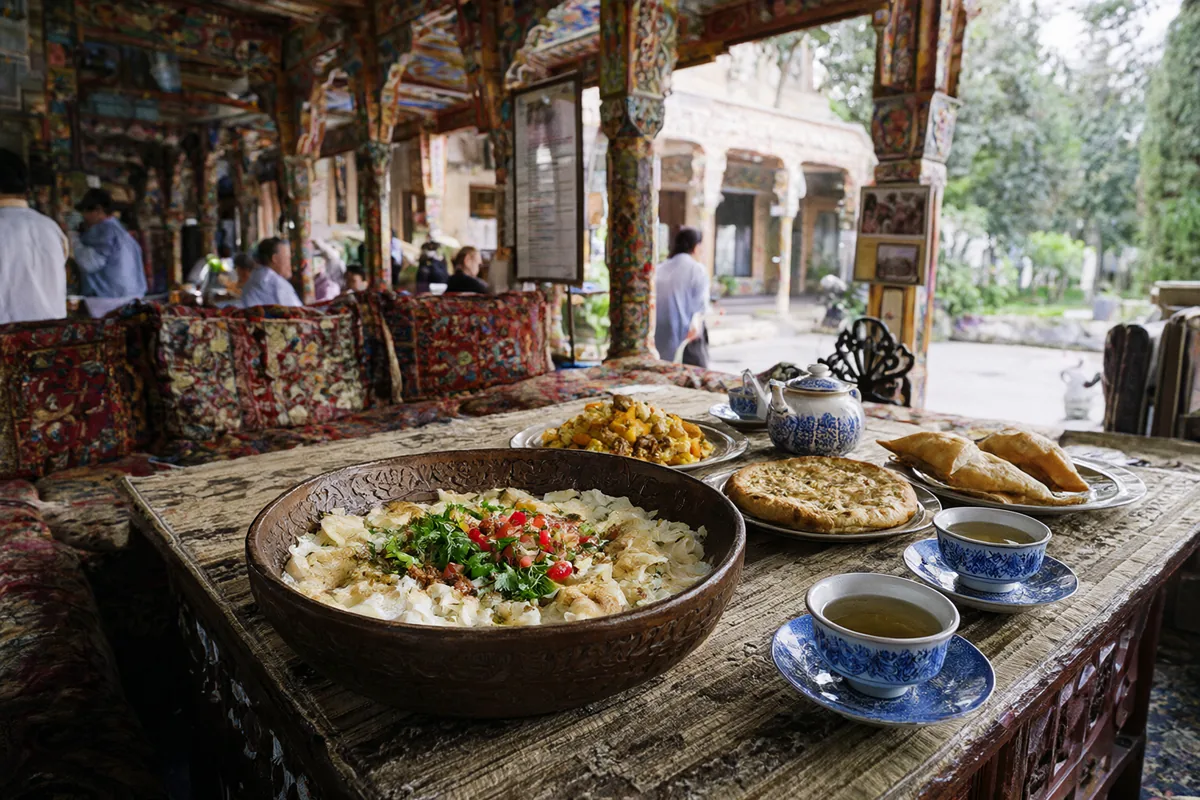
Tajikistan is the most mountainous country in Central Asia, and its food is Persian in roots and Central Asian in practice: bread from clay ovens, plov cooked in giant iron pots, yoghurt in every form, dried fruit and nuts, and green tea poured at every opportunity. This Tajikistan food guide covers the dishes to know, the Tajik and Russian words you will see on menus, how tipping and paying in somoni work, and where to eat in Dushanbe, Khujand, Istaravshan, Panjakent, Khorog and the Fann Mountains. Outside the cities, restaurants are few, and many of the best meals are in homestays, where hospitality is taken very seriously.
What to eat in Tajikistan: 12 dishes to know
These are the dishes worth seeking out, with the region they are most closely tied to. Bread (non) is sacred: it is torn by hand, never cut, never put upside down and never thrown away.
- Qurutob (everywhere, the national dish): pieces of flaky flatbread soaked in a sauce of qurut, dried salty yoghurt balls dissolved in water, topped with fried onion, tomato, cucumber and herbs. Eaten by hand from a shared wooden bowl.
- Oshi palov (everywhere): plov, rice cooked in a kazan with mutton, yellow carrots, onion and cumin, sometimes with chickpeas, raisins or quail eggs. The centrepiece of weddings and celebrations.
- Shurbo (everywhere): a clear mutton soup with potatoes, carrots and chickpeas, often the first course of a meal.
- Sambusa (everywhere): flaky triangular pastries filled with mutton and onion, baked in a tandoor oven.
- Mantu (everywhere): large steamed dumplings filled with minced mutton and onion, or pumpkin, served with yoghurt.
- Laghmon (everywhere): hand-pulled noodles with a stew of meat, peppers and vegetables, in broth or fried.
- Kabob (everywhere): skewers of mutton, beef or minced meat grilled over charcoal and served with raw onion and bread.
- Fatir (everywhere): a rich, layered flatbread made with butter, used in qurutob and eaten with tea and honey.
- Chakka (everywhere): thick, tangy strained yoghurt, served with herbs or as a side to almost anything.
- Nahud (everywhere): chickpeas, cooked in soups or as a side dish, and sold boiled and spiced as a snack in bazaars.
- Shir choy (the Pamirs): tea made with milk, butter and salt, sometimes with bread broken into it, a warming Pamiri breakfast.
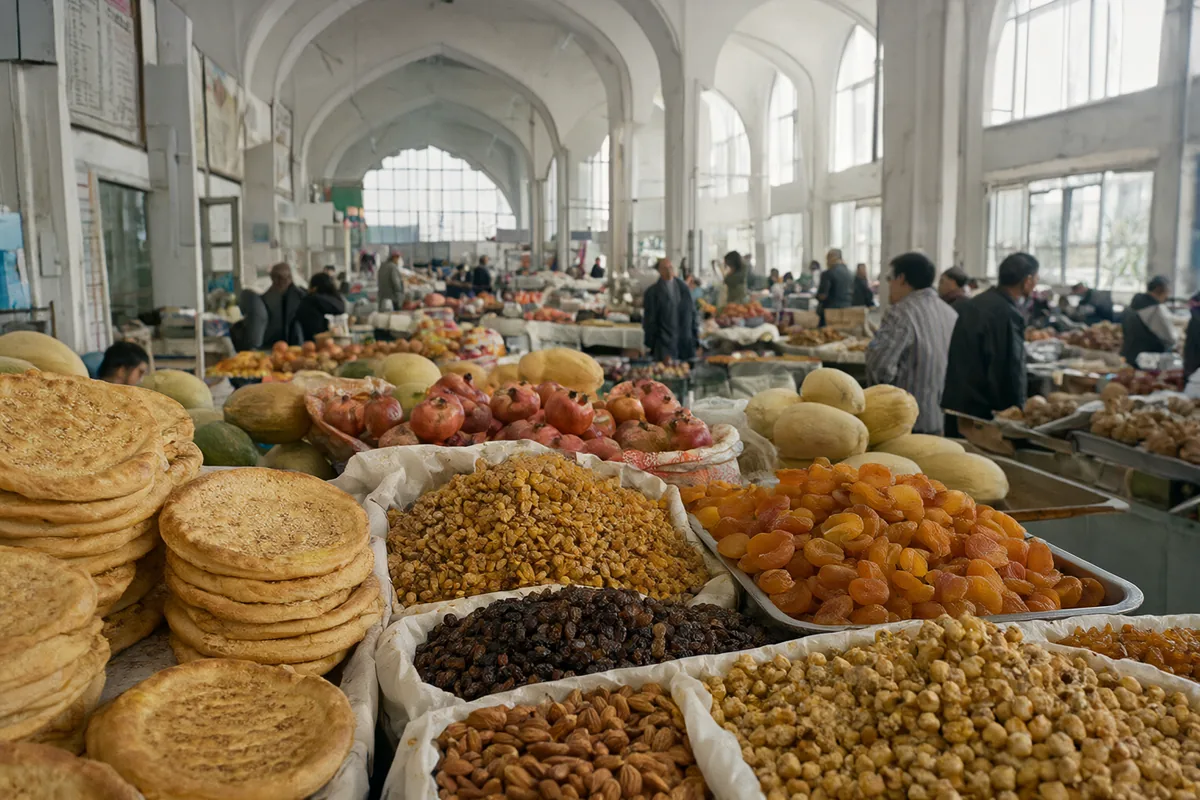
- Dried fruit and nuts (everywhere): apricots, mulberries, raisins, almonds and walnuts piled on every table and sold by the kilo in every bazaar.
A guest at a Tajik home sits down to a dastarkhan, a cloth spread with bread, sweets, nuts, dried fruit, salad and tea before the main dishes arrive, so pace yourself. Green tea (choyi kabud) is the everyday drink, poured into small bowls and often returned to the pot a few times to brew before serving.
How to read a Tajik menu
Tajik is a form of Persian written in the Cyrillic alphabet, with extra letters such as ӣ, ӯ, ҳ, қ, ғ and ҷ. Russian is widely understood, especially in Dushanbe, and many restaurant menus are written in Russian, sometimes with Tajik and English. In the north around Khujand, Uzbek is also spoken. These are the words you will see most, in both languages.
| Tajik | Russian | Meaning |
|---|---|---|
| Хӯрок (khurok) | Еда (yeda) | Food, a dish |
| Гӯшт (gusht) | Мясо (myaso) | Meat |
| Гӯшти гӯсфанд (gushti gusfand) | Баранина (baranina) | Mutton, lamb |
| Гӯшти гов (gushti gov) | Говядина (govyadina) | Beef |
| Мурғ (murgh) | Курица (kuritsa) | Chicken |
| Моҳӣ (mohi) | Рыба (ryba) | Fish |
| Нон (non) | Хлеб (khleb) | Bread |
| Шӯрбо (shurbo) | Суп / шурпа (sup / shurpa) | Soup |
| Оши палав (oshi palav) | Плов (plov) | Plov, rice with meat |
| Сабзавот (sabzavot) | Овощи (ovoshchi) | Vegetables |
| Чойи кабуд (choyi kabud) | Зелёный чай (zelyony chay) | Green tea |
| Ҳисоб (hisob) | Счёт (schyot) | The bill |
Dushanbe menus are often in Russian Cyrillic with portion weights in grams and separate charges for bread, tea and service. Photograph the menu with swap.menu and every dish is translated from Russian or Tajik, explained in your language and converted from somoni to your home currency.
Tipping, paying and meal times in Tajikistan
Many restaurants in Dushanbe and Khujand add a service charge, commonly around 10 to 15 percent, shown on the menu and bill as обслуживание (obsluzhivaniye). When it is included, there is no need to tip further, though rounding up is welcome. In chaikhonas, bazaar stalls and canteens, tipping is not expected. In homestays, meals are usually included in the price. Our guide to tax and service charges on menus explains how these lines work.
The currency is the Tajik somoni (TJS, сомонӣ). Tajikistan is largely a cash economy. A few hotels, supermarkets and restaurants in Dushanbe accept cards, but almost nowhere else does, and ATMs that take foreign cards are found mainly in Dushanbe and Khujand. Many travellers bring US dollars or euros in clean notes and change them at banks or official exchange offices. Where you can pay by card, choose somoni if offered: our guide to paying in local currency explains why.
Lunch is the main meal for many people, from around noon to 2pm, and plov is often a lunchtime dish, sold out by mid-afternoon. Dinner is from about 7pm to 9pm. Tea is served before, during and after meals. Tajikistan is a Muslim-majority country, but alcohol, including vodka and beer, is sold in shops and many restaurants. During Ramadan, many people fast, but restaurants in the cities generally stay open.
Where to eat in Tajikistan, town by town
Dushanbe has the most restaurants, Khujand and the old towns of the north have the best bazaars, and the mountains offer homestay cooking. Jump to a place:
Where to eat in Dushanbe
Dushanbe, the capital, is a leafy city of wide avenues, fountains and new monumental buildings, set in a valley below the mountains. Its traditional chaikhonas (teahouses), some with painted and carved wooden ceilings and columns, are the place to eat qurutob, plov, shurbo and sambusa with pots of green tea, often sitting on raised platforms called tapchan. Dushanbe also has Russian, Turkish, Iranian, Indian, Georgian and European restaurants, and a small café culture along Rudaki Avenue, the main boulevard.
The Mehrgon Market, a large covered market in a modern building, is the best place to see Tajik produce: mountains of dried apricots and raisins, nuts, honey, spices, pickles, fresh bread and seasonal fruit such as melons, pomegranates and grapes. The Shohmansur Bazaar, often called the Green Bazaar, is more traditional and has small canteens serving plov and laghmon at lunchtime. Dushanbe is the place to stock up on cash and snacks before heading into the mountains.
Where to eat in Khujand
Khujand, Tajikistan's second city, sits on the Syr Darya river at the mouth of the Fergana Valley, and it was a major stop on the Silk Road. The city's food is shaped by its fertile valley and its Uzbek neighbours: plov is excellent, bread is baked in many shapes and sizes, and the fruit, especially apricots, grapes and melons, is among the best in the country. Khujand is known for oshi palov cooked in huge pots at lunchtime, and for sambusa and kabob from roadside grills.
The Panjshanbe Bazaar, whose name means "Thursday", is one of the largest covered markets in Central Asia, housed in a grand arched building from the Soviet era next to a mosque and mausoleum. It is the place to eat in Khujand: buy fresh bread, dried fruit, nuts, sweets and pickles, and eat plov or laghmon at the canteens around it. The riverside and the parks along the Syr Darya have cafés and shashlik grills for summer evenings.
Where to eat in Istaravshan
Istaravshan, between Khujand and Dushanbe, is one of the oldest towns in Central Asia, with an old quarter of mud-brick houses, mosques and madrasas, and a tradition of craftsmen, especially knife makers. Its food scene is small and traditional: the central bazaar and the chaikhonas around it serve plov, shurbo, laghmon, sambusa and kabob, and the bazaar sells local bread, dried fruit and the region's grapes and apricots in season.
Istaravshan is usually visited as a stop on the road between Dushanbe and Khujand, and a lunch of plov and tea in a chaikhona near the bazaar is the best way to spend an hour here. Walk the old streets around the Kok Gumbaz madrasa and the bazaar first, and eat at lunchtime when the plov is fresh.
Where to eat in Panjakent
Panjakent, in the far west near the Uzbek border and not far from Samarkand, is built beside the ruins of an ancient Sogdian city, and it is the gateway to the Seven Lakes (Haft Kul) in the Fann Mountains. The town's central bazaar is busy and friendly, with fresh bread, dairy, fruit, vegetables and simple canteens serving plov, shurbo and laghmon. Kabob grills set up around the bazaar and along the main road.
There is not a large restaurant scene in Panjakent, but a few cafés and guesthouses serve Tajik dishes, and homestays in the Seven Lakes valley cook home meals with bread, soup, potatoes, eggs, dairy and tea. Many visitors to Panjakent combine it with Samarkand, across the border in Uzbekistan, and the food on both sides is closely related.
Where to eat in Khorog
Khorog, the main town of the Pamir mountains, sits on the Panj river facing Afghanistan, and it is the main stop on the Pamir Highway. Pamiri food is simple, hearty mountain cooking: shir choy (milk tea with butter and salt) for breakfast, soups, potatoes, bread, rice, dairy and, higher up, yak meat and milk. Pamiri people are known for their hospitality, and meals are often eaten in the main room of a traditional Pamiri house, with its raised platforms and a skylight in the roof.
Khorog has a central bazaar with fresh bread, dried fruit and vegetables, a few cafés and restaurants serving Tajik and Russian dishes, and guesthouses that cook for their guests. Along the Pamir Highway beyond Khorog, food options are basic and homestays are the main source of meals, so stock up on snacks, dried fruit and nuts in Khorog. Bring cash, as cards are rarely accepted in the Pamirs.
Where to eat in the Fann Mountains
The Fann Mountains, north of Dushanbe, are a trekking area of jagged peaks and turquoise lakes, including Iskanderkul, named after Alexander the Great. There are no restaurants beyond a few simple cafés and guesthouses around the lakes; meals are cooked by homestays and guesthouses in the villages and on trekking tours. Expect bread, soups such as shurbo, plov, eggs, potatoes, yoghurt, apricot jam and plenty of green tea.
In summer, shepherds in the Fann Mountains make fresh dairy products, and some sell yoghurt and cheese to trekkers. Fruit trees grow in the lower valleys, and apricots and mulberries are harvested in early summer. Carry snacks, water purification and cash, and let your homestay know in advance about any dietary needs, as supplies are limited.
Vegetarian, vegan and allergy tips
Traditional Tajik cooking is centred on mutton and mutton fat, and many dishes, including soups and plov, are cooked with meat or in meat stock. Vegetarians have more options than in some neighbouring countries, though: qurutob is meat-free, and so are bread, salads, chakka, pumpkin mantu, fried potatoes, eggs, dried fruit and nuts. Ask whether a soup is made with meat broth and whether plov can be made without meat. The phrase in Tajik is man gusht namekhuram, "I don't eat meat", and in Russian, я не ем мясо (ya ne yem myaso).
Dairy is everywhere, in qurut, chakka, butter and milk tea, which makes eating vegan difficult. Nuts, especially walnuts and almonds, are common in sweets and on the dastarkhan, and wheat is in all bread, noodles and pastries. Our guide to eating abroad with food allergies explains how to explain an allergy clearly.
Useful Tajik and Russian phrases for ordering
Ассалому алейкум Assalomu aleykum: "Hello", the polite greeting
Инро диҳед Inro dihed: "Please give me this" (Tajik, pointing)
Что посоветуете? Chto posovetuyete?: "What do you recommend?" (Russian)
Ман гӯшт намехӯрам Man gusht namekhuram: "I don't eat meat" (Tajik)
Ин чанд пул? In chand pul?: "How much is this?" (Tajik)
Счёт, пожалуйста Schyot, pozhaluysta: "The bill, please" (Russian)
Хеле болаззат Khele bolazzat: "Very tasty" (Tajik)
Раҳмат Rahmat: "Thank you" (Tajik)
How swap.menu helps you eat in Tajikistan
Menus in Tajikistan are usually in Russian Cyrillic, with some Tajik, and the names give few clues: курутоб, оши палав and шакароб are not words most visitors can guess. Photograph the menu with swap.menu and every dish appears in your language with the original name beside it and a short explanation, so you know that qurutob is bread in a salty yoghurt sauce and that shakarob is a fresh tomato and onion salad. Every price is converted from somoni to your home currency, and we flag the service charge and dishes priced per 100 grams.
Tap the dishes you want, add a note such as "no meat" or "no nuts", typed or spoken, and swap.menu translates your order into Russian or Tajik. Show the waiter your phone, or let them scan the QR code and read your order on their own screen. You can try it right now on a sample menu with the free demo, or see travel pass prices.
Off to Tajikistan? Your first 3 menu scans are free, and a travel pass starts from $4.99 with nothing that renews.
Start free with 3 scansTajikistan food FAQ
Do you tip in restaurants in Tajikistan?
Many restaurants in Dushanbe and Khujand add a service charge of around 10 to 15 percent, so no extra tip is needed. Where there is no service charge, rounding up or leaving a little is appreciated. Teahouses and bazaar stalls do not expect tips.
What food is Tajikistan famous for?
Qurutob, flatbread soaked in a salty yoghurt sauce with onions and herbs, is the national dish. Plov, shurbo soup, sambusa, mantu dumplings, laghmon noodles and dried fruit and nuts are just as typical.
Is Tajikistan expensive to eat out?
No, eating out is cheap. A meal of plov, bread, salad and tea in a teahouse costs very little, and even the better restaurants in Dushanbe are inexpensive by Western standards.
Can I use a credit card in Tajikistan?
Only in a few hotels, supermarkets and restaurants in Dushanbe. Elsewhere, including the Pamirs and mountain homestays, you need cash in somoni, so plan ahead and carry enough.
Is tap water safe to drink in Tajikistan?
No, drink bottled, boiled or filtered water. In the mountains, purify stream water before drinking it. Green tea, made with boiled water, is served everywhere.
How can I read a menu in Tajikistan?
Menus are usually in Russian, sometimes with Tajik, so learning the Cyrillic alphabet and a few words like мясо (meat) and плов (plov) helps. You can also photograph the menu with swap.menu, which translates every dish, converts prices from somoni and translates your order for the waiter.
Travelling further in Central Asia? Read our food guides for neighbouring countries:
- Uzbekistan food guide
- Kyrgyzstan food guide
- Kazakhstan food guide
- Turkmenistan food guide
- Iran food guide
- Pakistan food guide
Or browse every travel food guide.