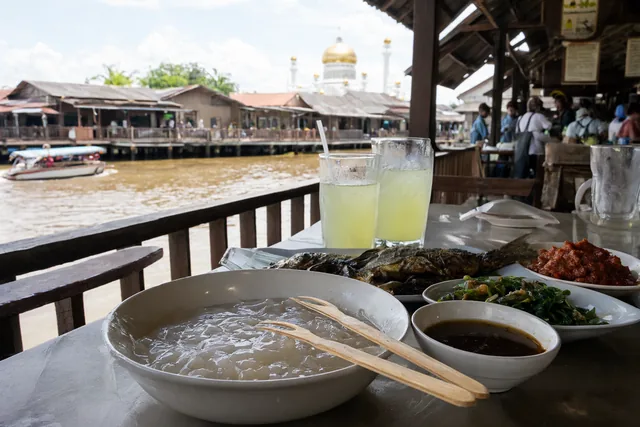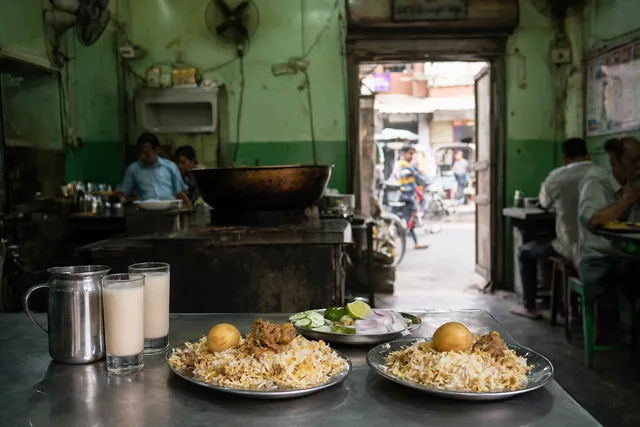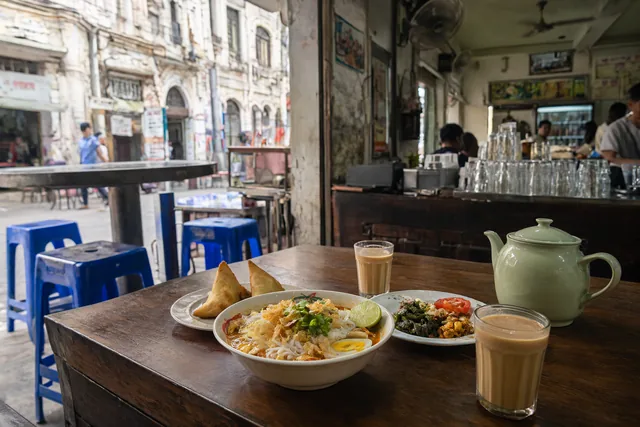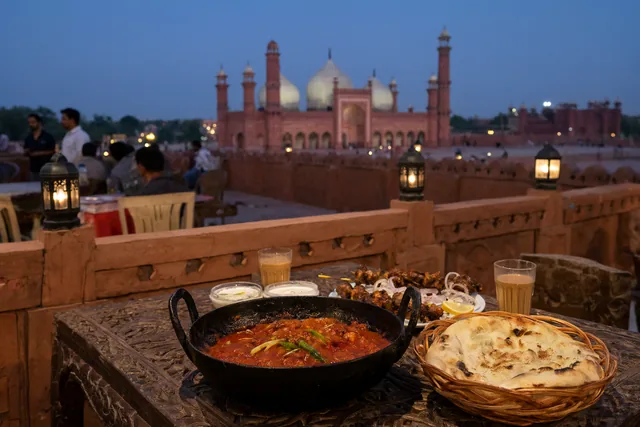
Timor-Leste is one of the youngest countries in the world and one of the least visited in Asia, and its food is honest and simple: grilled fish, rice, corn, beans, fresh vegetables and plenty of chilli, with a layer of Portuguese and Indonesian influence and some of the best coffee in the region. This Timor-Leste food guide covers the dishes to know, the Tetum words you will see and hear, how paying in US dollars works, and where to eat in Dili, Atauro Island, Baucau, Maubisse and Com. Outside Dili, choice is limited and most meals are cooked by guesthouses or at small family restaurants, so the best approach is to eat what is fresh that day.
What to eat in Timor-Leste: 11 dishes to know
Timorese home cooking is built on rice, corn, cassava and vegetables, with fish on the coast and pork, chicken and goat for special occasions. These are the dishes worth looking for.
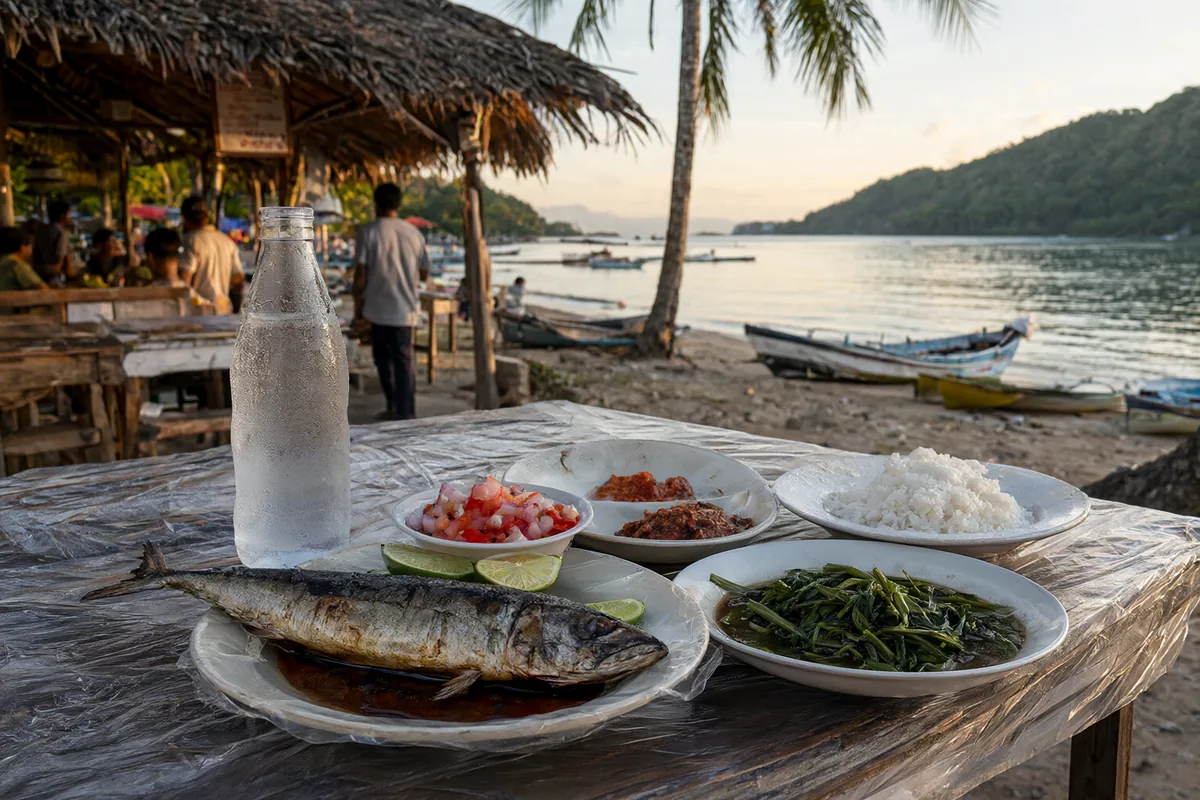
- Ikan sabuko (the coast, especially Dili): Spanish mackerel marinated with garlic, lime and chilli and grilled over charcoal, the classic Timorese fish dish.
- Ikan tunu (everywhere on the coast): any whole fish grilled on the roadside or the beach, sold in the evening and eaten with rice and chilli.
- Batar da'an (everywhere): a thick stew of corn, mung beans and pumpkin, simple, filling and naturally vegetarian. Corn (batar) is as important as rice in many rural areas.
- Budu (everywhere): a fresh relish of tomato, shallot, chilli, lime and herbs, served with grilled fish and meat.
- Ai manas (everywhere): a hot chilli sambal on every table. The name simply means "chilli" in Tetum.
- Tukir (rural areas and festivals): meat such as goat or pork marinated with spices and cooked slowly inside a bamboo tube over the fire.
- Saboko (the coast): small fish such as sardines seasoned with tamarind and spices, wrapped in palm leaves and cooked.
- Feijoada (Dili and Baucau): the Portuguese stew of beans with pork and sausage, one of several dishes left by more than four centuries of Portuguese rule.
- Caril (Dili): a mild chicken curry with coconut milk, another dish with Portuguese and wider Asian roots.
- Nasi campur and bakso (Dili): Indonesian rice with mixed dishes and meatball noodle soup, sold at small warung-style eateries, a legacy of the Indonesian years.
- Kafé Timor (everywhere): Timorese coffee, mostly organic arabica grown in the highlands, served strong and often sweet.
Timor-Leste is also where the Timor Hybrid was found, a natural cross between arabica and robusta coffee that became the parent of many disease-resistant coffee varieties grown around the world. For drinks beyond coffee, look for tua mutin, a mild palm wine, and tua sabu, a strong spirit distilled from it.
How to read a menu in Timor-Leste
Timor-Leste has two official languages, Tetum and Portuguese, and Indonesian and English are also widely used, so a menu in Dili may be in any mix of the four. Tetum is written in the Latin alphabet, with many words borrowed from Portuguese and Malay. Small eateries often have no menu at all, just a display of what is cooked. These are the words you will see and hear most often.
| Tetum | Meaning |
|---|---|
| Hahán | Food, a meal |
| Etu | Cooked rice |
| Batar | Corn |
| Ai-farina | Cassava |
| Na'an | Meat |
| Manu / fahi / karau | Chicken / pork / buffalo or beef |
| Ikan | Fish |
| Modo | Vegetables, or a vegetable dish |
| Tunu | Grilled or roasted |
| Sona | Fried |
| Manas | Hot, spicy |
| Bee | Water |
| Kafé / xá | Coffee / tea |
In Dili you may find a menu in Portuguese, an Indonesian dish name on a warung board and a Tetum word for the side dish, all on the same page. Photograph it with swap.menu and every dish is translated and explained in your language, whichever language it was written in.
Tipping, paying and meal times in Timor-Leste
Tipping is not a traditional custom in Timor-Leste. At markets, roadside fish grills and small local eateries you pay the price asked. In Dili's restaurants and cafés that serve visitors and international workers, leaving a small tip or rounding up for good service is appreciated but not expected. Service charges are rare outside the larger hotels. Our guide to tax and service charges on menus explains what to look out for in other countries.
The currency is the US dollar (USD, $), used alongside locally minted centavo coins, which have the same value as US cents. Timor-Leste is mostly a cash economy: cards are accepted at some hotels, larger supermarkets and a few restaurants in Dili, but almost nowhere else. ATMs are found in Dili and a few larger towns such as Baucau, so carry enough cash, in small notes, before heading into the countryside. Where a card machine offers you a choice of currency, pay in US dollars: our guide to paying in local currency explains why that matters.
Breakfast is early and simple, often bread and coffee. Lunch, the main meal for many families, is from about noon to 2pm, and dinner from around 7pm. The fish grills on Dili's seafront start in the late afternoon and go into the evening. Outside Dili, restaurants are few and close early, so tell your guesthouse in advance if you want dinner.
Where to eat in Timor-Leste, town by town
Most of Timor-Leste's restaurants are in Dili, while elsewhere you will mostly eat at guesthouses, markets and roadside stalls. Jump to a place:
Where to eat in Dili
Dili, the capital, stretches along a bay between green hills and the sea, and it is the only place in Timor-Leste with a real choice of restaurants. The essential Dili food experience is the seafront fish grill: in the late afternoon, vendors set up charcoal grills along the beach road and sell whole grilled fish, often ikan sabuko, with rice wrapped in leaves, budu and chilli, to eat on the spot or take away. The road east towards the Cristo Rei statue, along Areia Branca beach, has simple beach restaurants and cafés where you can eat fish with your feet almost in the sand.
In the city, Dili's mix of influences shows in its food: Portuguese-style cafés and bakeries selling bread rolls, pastries and good coffee, Indonesian warungs serving nasi campur and bakso, Chinese restaurants, and international restaurants catering to the many foreign workers. The Taibessi market is the main produce market, with fruit, vegetables, fish and spices, and it is busiest in the morning. Dili has several coffee roasters and cafés serving Timorese beans, and buying a bag to take home is one of the best souvenirs from the city. Prices in Dili restaurants aimed at foreigners can be close to Australian levels, while local warungs are cheap.
Where to eat on Atauro Island
Atauro Island lies across the strait from Dili, a ferry or fast boat ride away, and is known for some of the most diverse coral reefs in the world. Its food scene is small and honest: eco-lodges and guesthouses, mostly around Beloi and along the east coast, cook meals for their guests, and almost every dinner on Atauro Island is fresh fish caught that day, grilled or cooked in a curry, with rice, vegetables and chilli.
There are a few small local eateries and a market in Beloi selling fish, vegetables, fruit and snacks, but no restaurant strip. Meals are usually included in the price of your accommodation, so ask when booking, and let your hosts know about any dietary needs early, since supplies come by boat. Bring cash, as there are no ATMs on Atauro, and some snacks for walks and boat trips.
Where to eat in Baucau
Baucau, Timor-Leste's second largest town, sits on a plateau above the north coast about three hours east of Dili. Its old town has some of the country's best-preserved Portuguese colonial buildings, including the restored municipal market building, and a freshwater spring that feeds a swimming pool. Eating in Baucau is simple: a historic Portuguese-era guesthouse and a handful of restaurants serve Timorese and Portuguese dishes, and small eateries around the market sell rice, fish, vegetables and Indonesian-style noodles.
Below the town, a road winds down to the beach at Osolata, where there are a few simple places to eat grilled fish by the sea. The countryside around Baucau grows rice, and you will see paddy fields and buffalo on the road. Baucau is a natural overnight stop on the way to the eastern tip, and the cool evenings on the plateau make it a pleasant place for dinner.
Where to eat in Maubisse
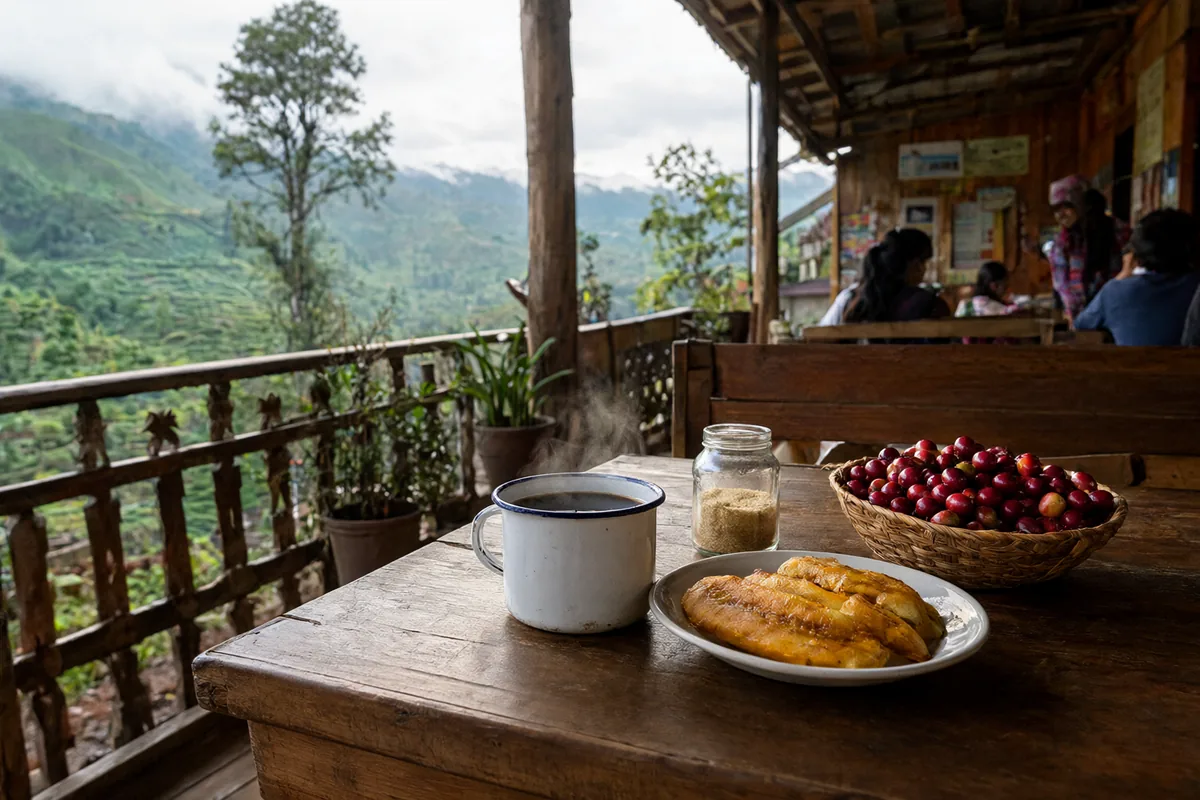
Maubisse is a highland town about two to three hours south of Dili, set among steep green mountains at an altitude where nights are cold. It is the gateway to Mount Ramelau, the country's highest peak, and the centre of a region that grows vegetables and coffee. Food in Maubisse is simple and hearty: the old hilltop pousada and a few guesthouses serve rice, vegetables from local gardens, chicken, eggs and soups, and there is a local market with highland produce such as potatoes, cabbage, carrots and fruit.
This is the place to drink Timorese coffee close to where it grows. The highland districts around Maubisse and neighbouring Ermera produce most of the country's arabica, much of it grown by smallholder families under shade trees, and harvest runs through the dry season, roughly from May to September. Some community groups and guesthouses can arrange visits to coffee farms. Bring warm clothes for the evenings, when a hot bowl of soup and a strong cup of coffee are exactly what you want.
Where to eat in Com
Com is a fishing village near the eastern tip of Timor-Leste, on a calm bay with clear water, and the base for visiting the beaches of the far east, including Jaco Island, a sacred island that can be visited by day on a fishing boat from Valu beach. Food in Com is all about fish and seafood: the guesthouses along the beach cook what the boats bring in, grilled with rice, vegetables, budu and chilli, and you may be offered lobster or octopus depending on the catch.
There are no real restaurants in Com beyond the guesthouses and a few small kiosks, so arrange meals where you stay, and stock up on cash and snacks in Baucau or Lospalos, the nearest larger town. In Lospalos, small eateries serve rice and vegetable dishes, and the region is known for traditional sacred houses with tall roofs. The far east is remote, and a dinner of grilled fish on the beach at Com, after a day in clear water, is a good reason to make the journey.
Vegetarian, vegan and allergy tips
Timorese daily food is heavy on vegetables, corn, beans, rice and cassava, which makes vegetarian eating easier than in many countries, even if meat and fish are the centre of special meals. Batar da'an, vegetable dishes (modo), tempeh and tofu at Indonesian-style warungs, and fresh fruit are good choices. The phrase to use is hau la han na'an, "I don't eat meat", and add ikan if you also avoid fish. Some vegetable dishes are cooked with fish paste or meat stock, and Indonesian dishes may use shrimp paste in sambal.
Peanuts appear in Indonesian sauces such as those for gado-gado and satay. Coconut milk is used in curries and sweets. Medical facilities outside Dili are basic, so if you have a serious allergy, carry your medication and a written card in Tetum or Portuguese. Our guide to eating abroad with food allergies explains how to explain an allergy clearly.
Useful Tetum phrases for ordering
Bondia / Botarde / Bonoite "Good morning / Good afternoon / Good evening", from Portuguese
Hau hakarak ida ne'e "I want this one" (pointing)
Hahán saida mak iha? "What food is there?", useful where there is no menu
Keta tau ai-manas "Don't add chilli"
Hau la han na'an "I don't eat meat"
Folin hira? "How much is it?"
A conta, por favor "The bill, please", in Portuguese, understood in Dili restaurants
Diak loos, obrigadu / obrigada "Very good, thank you" (obrigadu for a man, obrigada for a woman)
How swap.menu helps you eat in Timor-Leste
Menus in Timor-Leste are a puzzle of languages: a Dili café may list prego no pão (a Portuguese steak roll) next to ayam penyet (Indonesian smashed fried chicken) and ikan sabuko, with a Tetum note at the bottom. Photograph it with swap.menu and every dish appears in your language with the original name beside it and a short explanation, whether it was written in Tetum, Portuguese, Indonesian or English. Prices are in US dollars, and swap.menu converts them to your home currency if you are coming from Australia, Europe or elsewhere.
Tap the dishes you want, add a note such as "no chilli" or "no meat, please", typed or spoken, and swap.menu translates your order. Show the staff your phone, or let them scan the QR code and read your order on their own screen. You can try it right now on a sample menu with the free demo, or see travel pass prices.
Off to Timor-Leste? Your first 3 menu scans are free, and a travel pass starts from $4.99 with nothing that renews.
Start free with 3 scansTimor-Leste food FAQ
Do you tip in restaurants in Timor-Leste?
Tipping is not a local custom. In Dili restaurants that serve visitors, rounding up or leaving a small tip for good service is appreciated, but it is never required at markets or local eateries.
What food is Timor-Leste famous for?
Grilled fish such as ikan sabuko, batar da'an (corn, mung beans and pumpkin), budu relish and chilli sambal are the everyday staples. Timor-Leste is best known abroad for its organic highland coffee.
What currency is used in Timor-Leste?
The US dollar is the official currency, used with local centavo coins of the same value as US cents. Most places outside a few Dili hotels and supermarkets accept cash only.
Is Timor-Leste expensive to eat out?
Local food from markets, warungs and seafront fish grills is cheap. Restaurants in Dili aimed at foreign visitors and workers can cost close to what you would pay in Australia.
Is tap water safe to drink in Timor-Leste?
No, drink bottled or boiled and filtered water. Many guesthouses provide filtered water to refill bottles, which saves on plastic.
How can I read a menu in Timor-Leste?
Menus may be in Tetum, Portuguese, Indonesian or English, so learning a few words like etu, ikan and manas helps. You can also photograph the menu with swap.menu, which translates every dish into your language, explains it and helps you order.
Travelling further in the region? Read our food guides for nearby countries:
- Indonesia food guide
- How to order at a Bali warung
- Australia food guide
- Philippines food guide
- Papua New Guinea food guide
- Brunei food guide
Or browse every travel food guide.