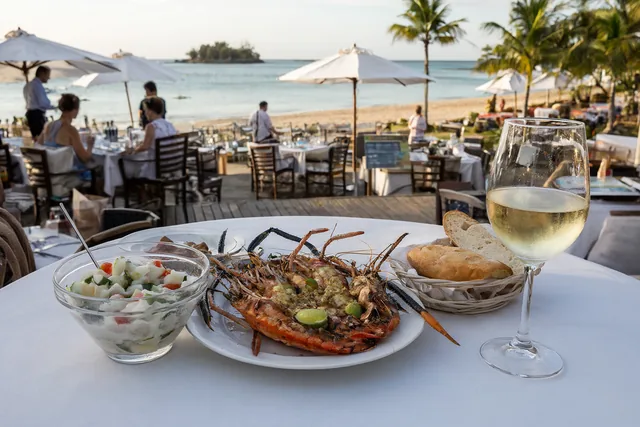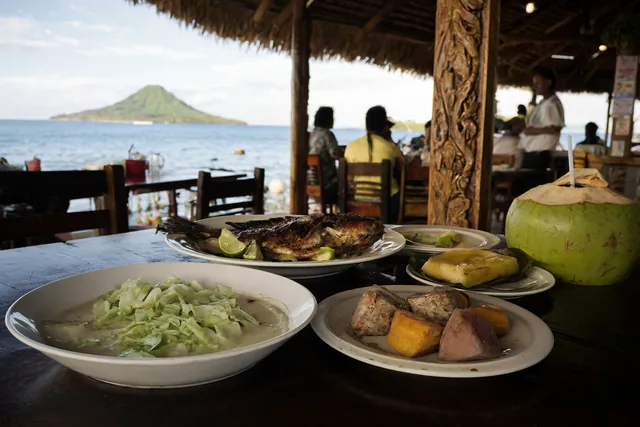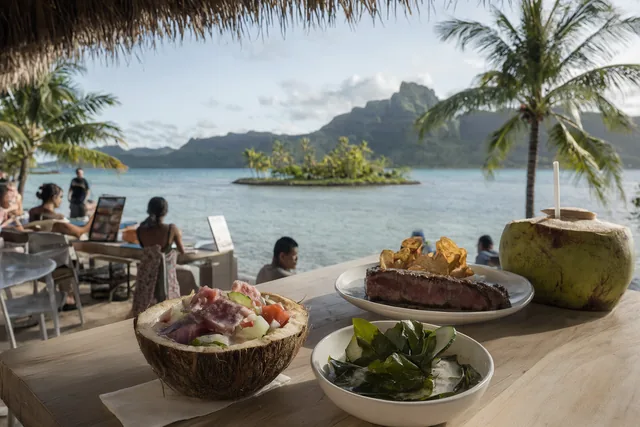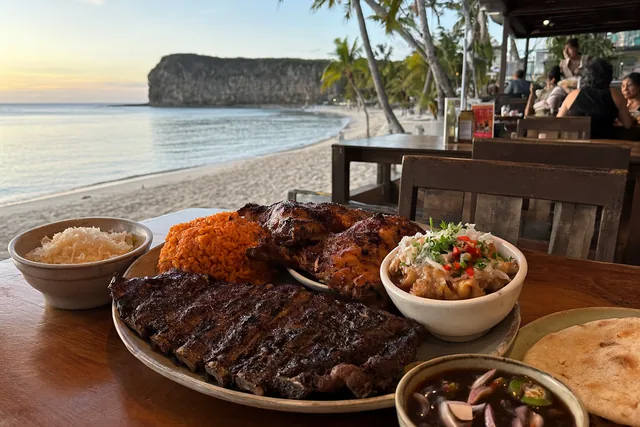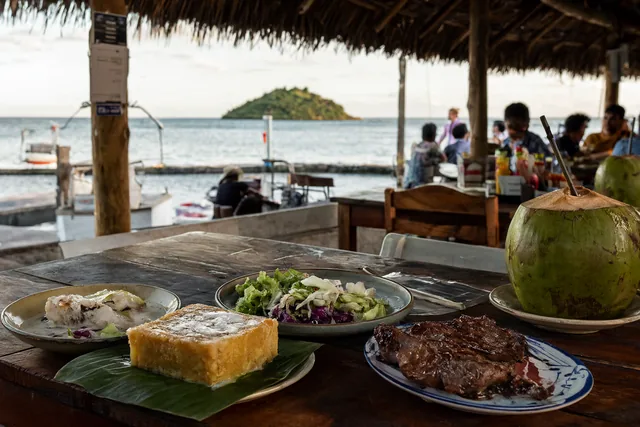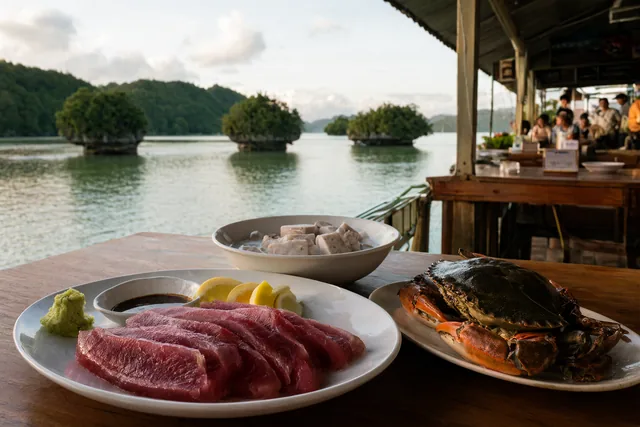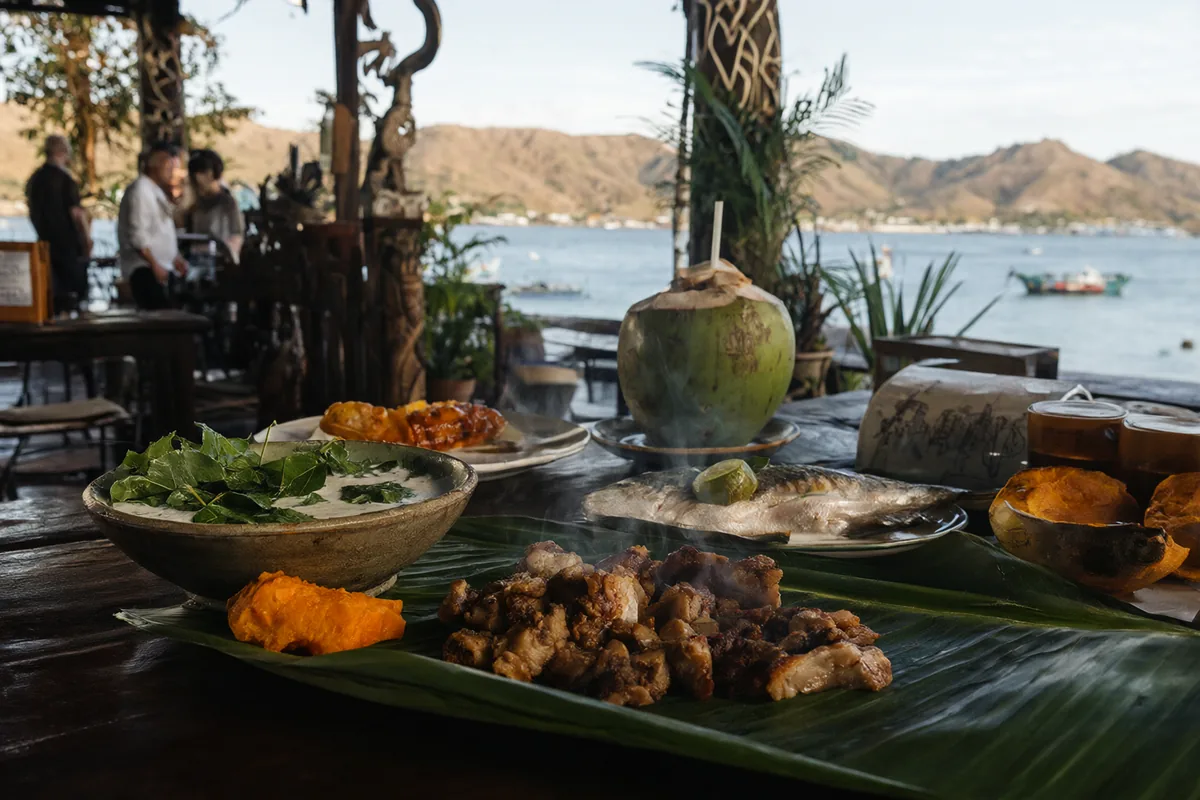
Papua New Guinea has more than 800 languages and almost as many ways of cooking, from sago pounded in the swamps of the Sepik to sweet potato roasted in the cool Highlands and fish in coconut cream on the islands. Most food here is grown, not bought, and the markets, piled with produce carried in from village gardens, are the best place to see what the country eats. This Papua New Guinea food guide covers the dishes to know, the Tok Pisin words you will hear and see on menus, how a mumu earth oven works, tipping and paying in kina, and then where to eat in Port Moresby, Lae, Goroka, Mount Hagen, Madang and Kokopo.
What to eat in Papua New Guinea: 12 dishes to know
These are the dishes and foods you will meet at markets, guesthouses, shows and village feasts. The Tok Pisin name comes first, as that is what most people use.
- Mumu (everywhere, especially the Highlands): the earth oven, and the feast cooked in it. Pork, chicken, sweet potato, taro, banana and greens are layered with hot stones in a pit, covered with banana leaves and earth, and left to steam for hours. Pigs are a sign of wealth in the Highlands, and a big mumu marks weddings, compensation payments and celebrations.
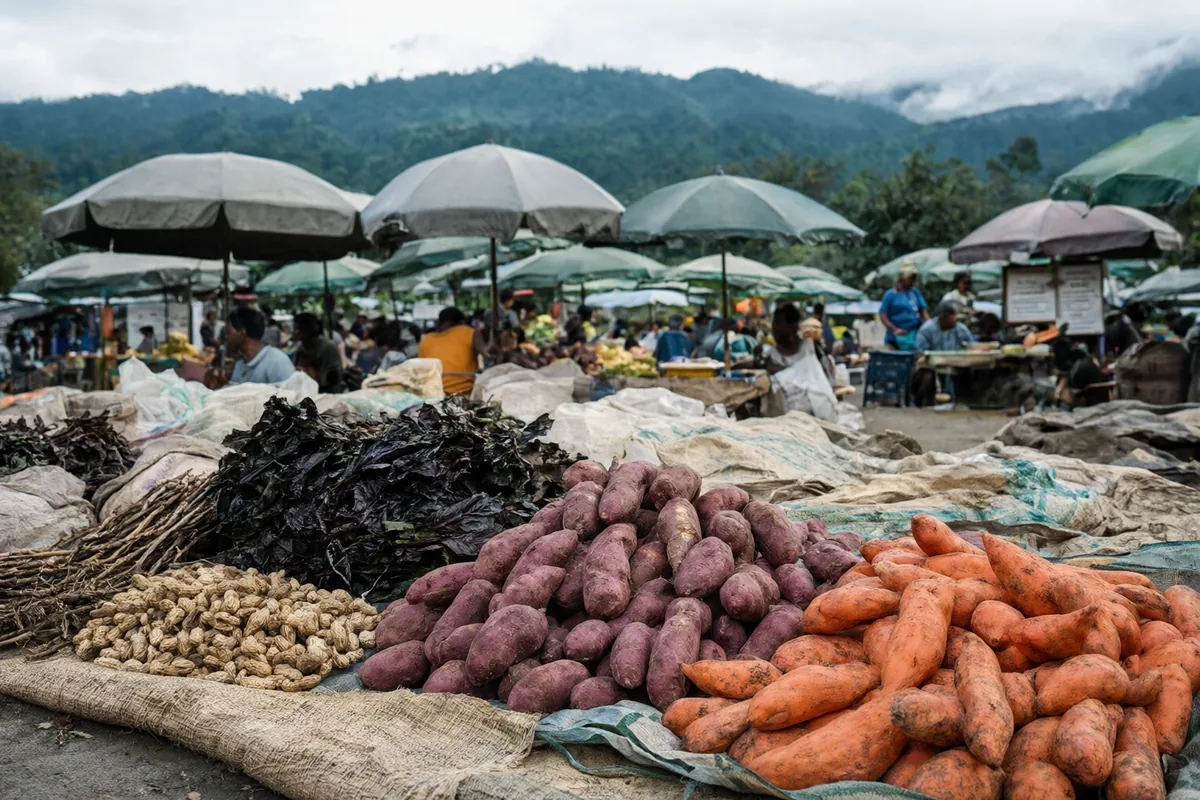
- Kaukau (everywhere, the Highland staple): sweet potato, eaten roasted in the coals, boiled or cooked in the mumu at almost every meal in the Highlands.
- Saksak (Sepik and lowlands): sago, the starch from the trunk of the sago palm, washed out and dried into a white flour. It is cooked into chewy pancakes, jelly-like porridge or dumplings with banana and coconut.
- Aibika (everywhere): a soft, slightly slippery leafy green, often cooked in coconut cream. It is one of the most common vegetables in the country.
- Kumu (everywhere): the Tok Pisin word for cooked greens of all kinds, including tulip (gnetum leaves), pumpkin tips and fern shoots, usually simmered in coconut cream.
- Pitpit (everywhere): the young flower shoot of a wild cane, roasted or cooked in coconut cream, with a texture a little like soft corn.
- Aigir (East New Britain): the Tolai version of the earth oven feast, with chicken, greens, banana and taro wrapped in banana leaves with coconut cream and cooked over hot stones.
- Fish in coconut cream (the coast and islands): reef fish, tuna or mud crab cooked in coconut cream, or grilled whole, at coastal markets and guesthouses.
- Lamb flaps and tinpis (everywhere): fatty imported lamb flaps and tinned fish (tinpis), usually with rice, are everyday protein in towns. You will see them in every kai bar and market.
- Galip nuts (East New Britain and New Ireland): canarium nuts with a rich, buttery flavour, sold shelled at markets and used in snacks and sweets.
- Highlands coffee (Eastern and Western Highlands): PNG grows excellent arabica coffee, much of it by smallholders in the Highlands. Try it in Goroka or Mount Hagen.
- Kulau (the coast): a green drinking coconut, sold at markets and roadsides and the best cold drink on a hot day.
You will also see buai everywhere: betel nut, chewed with a mustard stick (daka) and powdered lime (kambang), which turns the mouth and spit bright red. It is not food, but it is part of daily social life, and many hotels and public places ban chewing and spitting.
How to read a menu in Papua New Guinea
Menus in hotels and restaurants are in English, but at markets, kai bars and guesthouses you will hear and see Tok Pisin, the creole spoken across most of the country (Hiri Motu is also used around Port Moresby). Tok Pisin is easier than it looks: read the words aloud and many sound like English, so pis is fish and kokonas is coconut. These are the words you will see most often.
| Local term | Language | Meaning |
|---|---|---|
| Kaikai | Tok Pisin | Food, or to eat |
| Kai bar | Tok Pisin | A takeaway shop selling fried chicken, rice and stews |
| Mumu | Tok Pisin | Earth oven feast cooked on hot stones |
| Abus | Tok Pisin | Meat or fish served with the starch |
| Kakaruk / pik / bulmakau | Tok Pisin | Chicken / pork / beef |
| Pis / tinpis | Tok Pisin | Fish / tinned fish |
| Kaukau / taro / yam | Tok Pisin | Sweet potato / taro / yam |
| Saksak | Tok Pisin | Sago |
| Kumu / aibika / tulip | Tok Pisin | Cooked greens / slippery cabbage / gnetum leaves |
| Pitpit | Tok Pisin | Wild cane flower shoot |
| Kokonas / kulau | Tok Pisin | Mature coconut / green drinking coconut |
| Banana / mau banana | Tok Pisin | Cooking banana / ripe banana |
| Wara | Tok Pisin | Water |
| Buai | Tok Pisin | Betel nut |
"Abus" on a guesthouse board does not name a dish: it simply means whatever meat or fish comes with your kaukau or rice, so ask what today's abus is. swap.menu explains Tok Pisin food words when it reads a menu or a handwritten board, and converts kina prices to your currency.
Tipping, tax and paying the bill
Check your government's current travel advice before planning a trip. Tipping is not customary in Papua New Guinea and is not expected in restaurants, kai bars or markets. In international hotels some guests leave a small tip for excellent service, but it is never required, and bargaining at markets is not usual either: prices are set, and vendors may be offended by haggling. Our guide to tax and service charges on menus explains how tax and service lines work around the world.
Papua New Guinea charges a goods and services tax (GST) of 10 percent, usually included in menu prices, though some hotels add it to the bill. The currency is the kina (PGK), written K and divided into 100 toea. Cards are accepted at international hotels, larger restaurants and supermarkets in Port Moresby and Lae, and at some hotels in other towns, but markets, kai bars, PMVs (public minibuses), guesthouses and villages need cash. ATMs are in the main towns. Carry small notes, and keep cash out of sight. If a card terminal offers to charge you in your home currency, choose kina: our guide to paying in local currency explains why.
Meal times are early: breakfast from about 6am, lunch around noon, and dinner from about 6pm. Many visitors in Port Moresby and Lae eat at their hotel or at restaurants in secure complexes and travel by arranged transport after dark, and a local guide is the best way to visit the big markets. Sunday is a day of church for most Papua New Guineans, and many shops and markets close or open shorter hours.
The mumu: to make a mumu, stones are heated on a fire until they are very hot, then layered in a pit with banana leaves, sweet potato, taro, greens and meat. Water is sprinkled over the top to make steam, and the pit is sealed with more leaves and earth for several hours. The opening of a big mumu, shared by a whole clan, is a festive moment. If you are invited, eat what you are given and accept seconds, as generosity matters a great deal.
Where to eat in Papua New Guinea, town by town
Papua New Guinea has no road linking the capital with most of the country, so visitors fly between towns. The main destinations are Port Moresby, the coastal towns of Lae and Madang, the Highlands around Goroka and Mount Hagen, and the islands. Jump to a destination:
Where to eat in Port Moresby
Port Moresby, the capital, is where most visitors arrive, and it has the widest choice of restaurants in the country, most of them in hotels, shopping centres and secure complexes around Waigani, the harbour and Ela Beach. Menus mix international dishes with Asian food, and many hotels serve grilled reef fish, mud crab, coconut curries and the occasional mumu buffet. Chinese, Filipino, Japanese and Indian restaurants reflect the city's mixed population.
For local food, the markets are the place to go, ideally with a guide or local friend. Koki market on the waterfront is known for its fish, with the morning's catch, crabs and shellfish, and the large Gordons market sells produce from all over the country, from kaukau and taro to bundles of greens, betel nut and fresh coconuts. In town, kai bars sell fried chicken, rice, stew and lamb flaps cheaply. Port Moresby's hotel restaurants are not cheap, but they are the most practical choice for dinner.
Where to eat in Lae
Lae, on the Huon Gulf, is PNG's second city and main port, and the start of the Highlands Highway, the road that carries goods and people up into the mountains. Produce from the Highlands and the coast meets at the Lae main market, one of the largest in the country, with sweet potato, taro, peanuts, fruit, vegetables, smoked fish and betel nut. It is a good place to see the range of PNG's food in one place.
Restaurants in Lae are mainly in hotels and a few clubs and cafés, serving international dishes, Asian food, steaks and seafood from the gulf. Kai bars around the town centre sell takeaway meals for workers and travellers. The Lae botanic gardens and the war cemetery are the main sights, and many visitors pass through Lae on the way to the Highlands or the Huon coast, so it is useful for a good meal and supplies before a road trip.
Where to eat in Goroka
Goroka, the capital of the Eastern Highlands, sits in a cool, green valley at about 1,600 metres, and its climate grows an extraordinary range of food: sweet potato, taro, corn, peanuts, beans, cabbage, carrots, avocados, passionfruit and some of PNG's best coffee. The Goroka market is lively and colourful, with produce laid out on sacks and mats, and is the best place in town to see Highlands food. Goroka is one of the centres of PNG's coffee industry, and you can try local coffee in town and visit nearby plantations.
Each September, around Independence Day, Goroka hosts the Goroka Show, one of the country's great cultural festivals, with singsing groups from across the Highlands in feathers, paint and shell ornaments. Mumu feasts and food stalls are part of the event, and accommodation books out months ahead. Restaurants in Goroka are mostly in hotels and guesthouses, serving Highlands vegetables, chicken, pork and fish, often with a strong cup of local coffee.
Where to eat in Mount Hagen
Mount Hagen, in the Western Highlands, is the trading centre of the central Highlands, and its large produce market is famous for the scale and variety of its fruit and vegetables. Sweet potato is the staple, and pigs are central to life here, raised by families as wealth and exchanged at ceremonies. A Highlands mumu, with pork and kaukau cooked in the ground, is the classic feast, and lodges in the Mount Hagen area sometimes organise one for guests.
The Mount Hagen Show, held each August, is the other great Highlands festival, with hundreds of performers in traditional dress, and food stalls and mumu feasts around the showground. The surrounding Wahgi Valley is coffee and tea country. Restaurants in Mount Hagen are mainly in hotels and lodges, and most visitors eat where they stay. As elsewhere in the Highlands, it gets cool at night, and a hot meal of kaukau, greens and chicken stew is welcome.
Where to eat in Madang
Madang, on the north coast, is often called the prettiest town in Papua New Guinea, set on a peninsula with harbours, islands and coral reefs. Its food is coastal: fresh reef fish, tuna, mud crab, prawns and lobster, cooked in coconut cream or grilled, with banana, taro and greens. The Madang market sells fish, coconuts, fruit, betel nut and buai sticks, and is busiest in the morning.
Restaurants in Madang are mostly in its waterfront hotels and resorts, which serve seafood and international dishes with views over the harbour, and are popular with divers. Small kai bars in town sell cheap takeaways. Madang is also the gateway to the Ramu and Sepik regions, where sago is the staple, so you may find sago dishes at the market. Evenings are quiet, so plan to eat at your hotel.
Where to eat in Kokopo
Kokopo, on the island of New Britain, became the capital of East New Britain after the 1994 volcanic eruption buried much of nearby Rabaul. It is home to the Tolai people, whose signature dish is aigir, chicken, greens, banana and taro cooked with coconut cream on hot stones. The Kokopo market is one of the best organised in the country, with neat rows of produce, smoked and fresh fish, peanuts, galip nuts, cocoa and coconuts, and stalls selling cooked food.
East New Britain is one of PNG's main cocoa-growing regions, and galip nuts from the area are increasingly sold as snacks. Restaurants in Kokopo are mainly in the waterfront hotels, which serve seafood, curries and local dishes looking across to the volcanoes of Rabaul. Kokopo is calmer than the big mainland towns, and it is a pleasant place to try island food.
Vegetarian, vegan and allergy tips
PNG's village food is mostly plants: sweet potato, taro, sago, bananas, greens, pitpit, peanuts and fruit, so vegetarians eat well at markets and in villages. The catch is that greens are often cooked with tinned fish or meat for flavour, and the mumu shares the stones with pork and chicken. In Tok Pisin, "mi no save kaikai abus" means "I don't eat meat or fish", and "vegetarian" is understood in hotels. Hotel restaurants usually have a vegetarian dish, but choice can be narrow outside Port Moresby.
Coconut cream is used in many dishes, peanuts are common in the Highlands, and galip and other tree nuts appear in East New Britain, which matters for anyone with a nut or coconut allergy. Shellfish and fish are common on the coast. Our guide to eating abroad with food allergies explains how to explain an allergy clearly.
Useful Tok Pisin phrases for ordering
English is used in hotels and business, but Tok Pisin is the language you will hear in markets and on the street, and a few words are always appreciated.
Moning / Apinun "Good morning" / "Good afternoon"
Plis "Please"
Mi laik baim dispela "I would like to buy this" (pointing)
Hamas long dispela? "How much is this?"
Mi no save kaikai abus "I don't eat meat or fish"
Em i swit tru! "It is really tasty!"
Tenkyu tru "Thank you very much"
Lukim yu "See you", a friendly goodbye
How swap.menu helps you eat in Papua New Guinea
A guesthouse board in the Highlands might offer kaukau, kumu, pitpit and abus, and a kai bar menu may list nothing but prices in kina. Photograph the menu with swap.menu and every dish appears in your own language with a short explanation, so you know that kumu is cooked greens and that tinpis is tinned fish. Visitors from China, Japan, Korea or Europe can read any menu in Papua New Guinea in their own language, choosing from 29. Every price is converted from kina to your home currency, and we point out where GST is added at hotels.
Tap the dishes you want, add a note such as "no meat" or "no peanuts", typed or spoken, and swap.menu shows your order clearly for the staff. Your scanned menus are saved, so you can look back at what you ate in Goroka when you are on the coast. You can try it right now on a sample menu with the free demo, or see travel pass prices.
Off to Papua New Guinea? Your first 3 menu scans are free, and a travel pass starts from $4.99 with nothing that renews.
Start free with 3 scansPapua New Guinea food FAQ
Do you tip in Papua New Guinea?
Tipping is not customary in Papua New Guinea and is not expected in restaurants or markets. A small tip for excellent service in an international hotel is appreciated but never required, and haggling at markets is not usual.
What food is Papua New Guinea famous for?
PNG is known for the mumu, a feast of pork, sweet potato and greens cooked in an earth oven, for kaukau (sweet potato) in the Highlands, for sago in the Sepik, and for fish and greens in coconut cream on the coast. It also grows excellent Highlands coffee and cocoa.
Is Papua New Guinea expensive to eat out?
Hotel restaurants in Port Moresby and Lae are expensive, often more than in Australia, as many ingredients are imported. Markets and kai bars are very cheap, and guesthouses in the Highlands and on the coast usually include simple local meals.
Is tap water safe to drink in Papua New Guinea?
No. Drink bottled, boiled or filtered water throughout Papua New Guinea, and use it for brushing your teeth outside the international hotels.
When are the Highlands shows held?
The Mount Hagen Show is held in August and the Goroka Show in September around Independence Day. Both feature traditional performances and food stalls, and accommodation books out well in advance.
How can I understand menus and food words in Papua New Guinea?
Learn a few Tok Pisin words such as kaikai, kaukau, abus and kumu, or photograph the menu with swap.menu. It translates every dish into your language, explains Tok Pisin food words and converts prices from kina to your currency.
Travelling further in the region? Read our food guides for nearby countries:
- Australia food guide
- Solomon Islands food guide
- Vanuatu food guide
- Indonesia food guide
- Fiji food guide
- New Zealand food guide
Or browse every travel food guide.