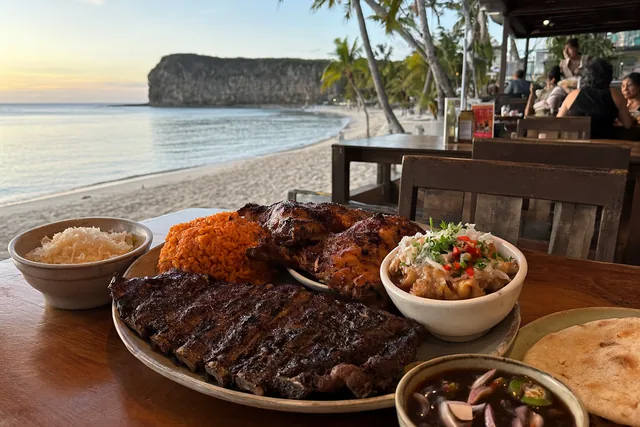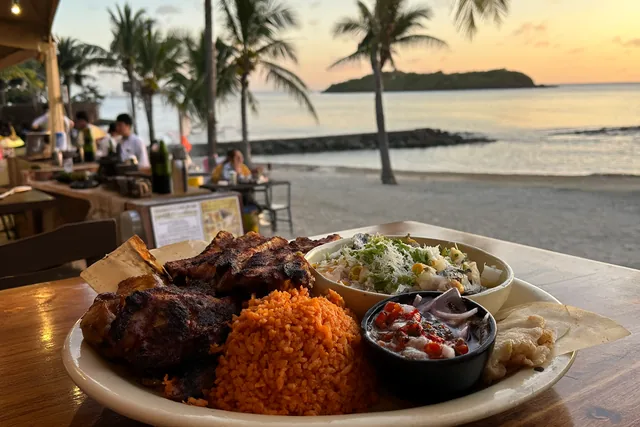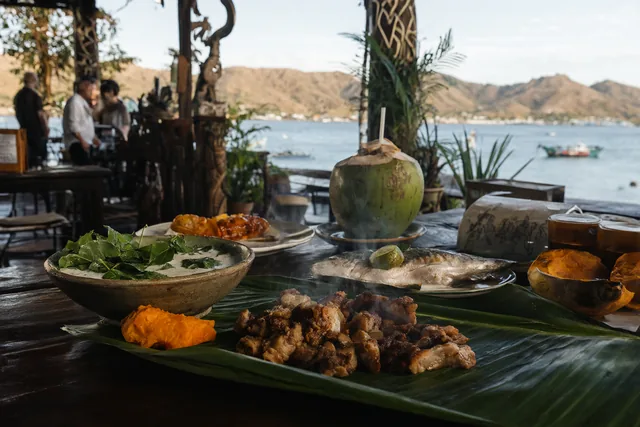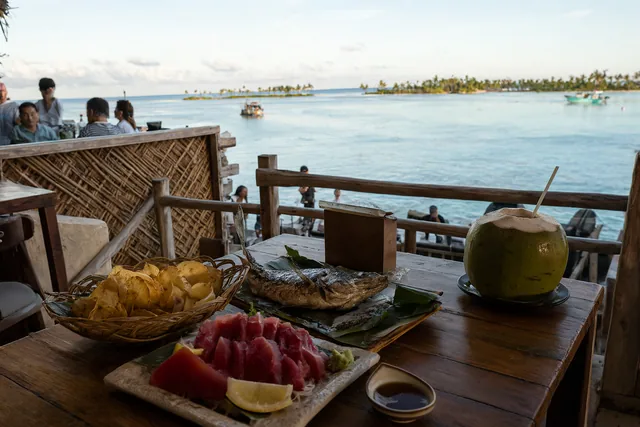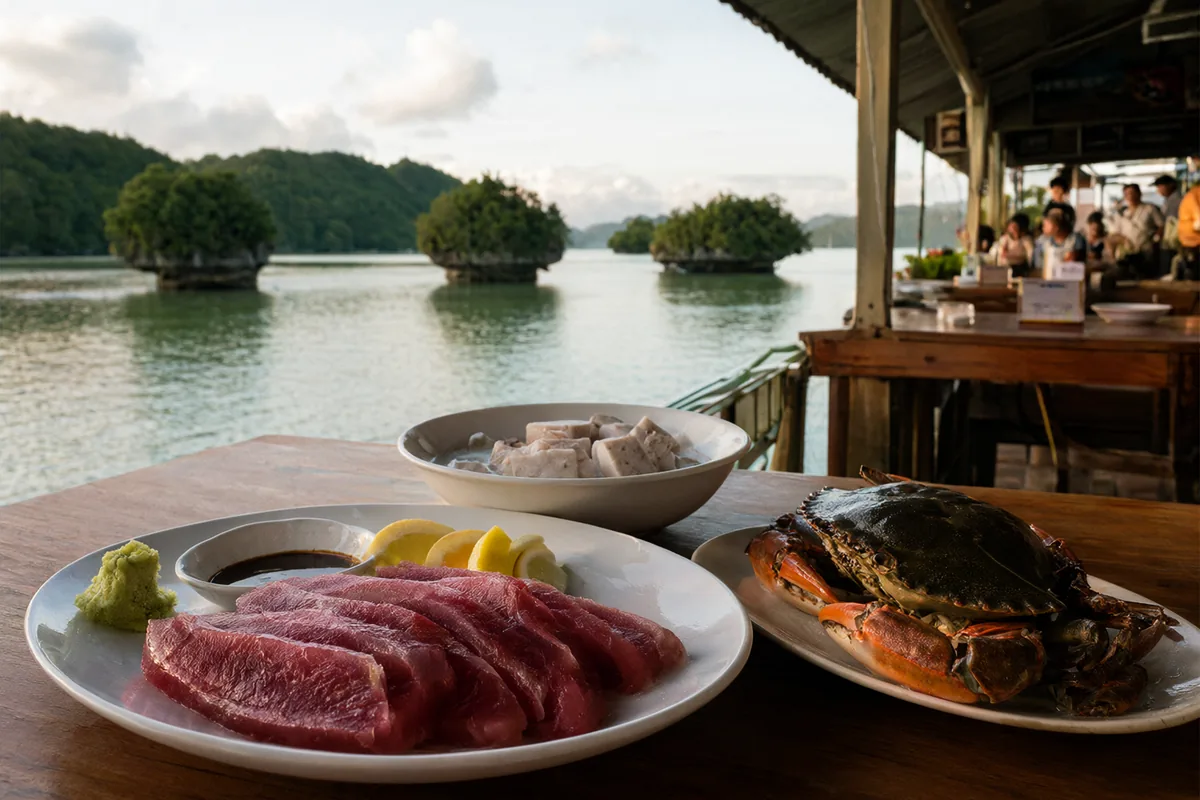
Palau is a small island nation in the western Pacific, famous for its diving, its mushroom-shaped Rock Islands and its jellyfish lake, and most visitors come for the water rather than the food. But Palau eats well, and in an unusual way: its own cooking of taro, fish, crab and coconut sits alongside a strong Japanese influence from the thirty years of Japanese rule before 1945, so sashimi, bento boxes and noodle soups are everyday food. American, Filipino, Korean and Taiwanese cooking add the rest. This Palau food guide covers the dishes to know, the Palauan and Japanese words you will see on menus, tipping and tax, and then where to eat in Koror, on Malakal, on Babeldaob, in the Rock Islands and on Peleliu.
What to eat in Palau: 11 dishes to know
These are the dishes you will find in Koror's restaurants, at local eateries, on boat trips and at family gatherings. The Palauan name is given where it is commonly used.
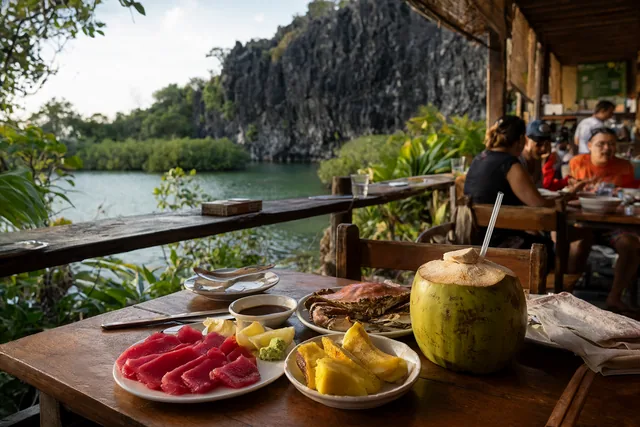
- Tuna sashimi (everywhere): fresh yellowfin tuna, sliced thick and served with soy sauce, wasabi and often lemon or hot pepper. It is the most common dish in Palau and usually excellent value.
- Mangrove crab (everywhere): large mud crabs from Palau's mangroves, called chemang in Palauan, steamed, cooked in coconut milk or stir-fried with garlic, chilli or black pepper. It is a local favourite and one of the best things to order.
- Taro (everywhere): the most important traditional crop, grown by women in flooded taro patches. It is boiled, baked, pounded or cooked in coconut milk, and it carries deep cultural meaning, presented at customs ceremonies and family events.
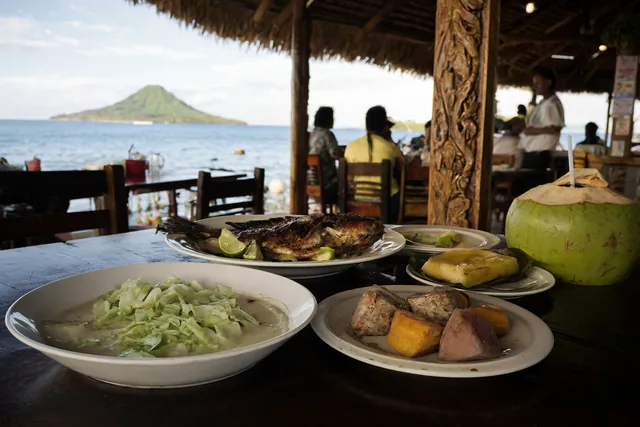
- Fish in coconut milk (local eateries and family meals): reef fish simmered in coconut milk, often with greens, the classic Palauan home dish.
- Grilled reef fish (everywhere): whole rabbitfish, snapper or parrotfish grilled or fried and served with rice and a soy and lemon dipping sauce.
- Fruit bat soup (a few local restaurants): Palau's most talked-about dish, a whole fruit bat cooked in a coconut milk or ginger broth. It is a traditional food rather than an everyday one, and many travellers choose not to try it, but you may see it on a menu.
- Coconut crab (special occasions): the giant land crab, called ketat, cooked in coconut milk or steamed. It is prized, expensive and sometimes restricted, so many restaurants do not serve it.
- Giant clam (Koror restaurants): farmed giant clam, served raw as sashimi or in salads, chewy and sweet.
- Tapioca (everywhere): cassava, boiled, fried or cooked with coconut milk and sugar into a sweet dish, a common starch alongside taro and rice.
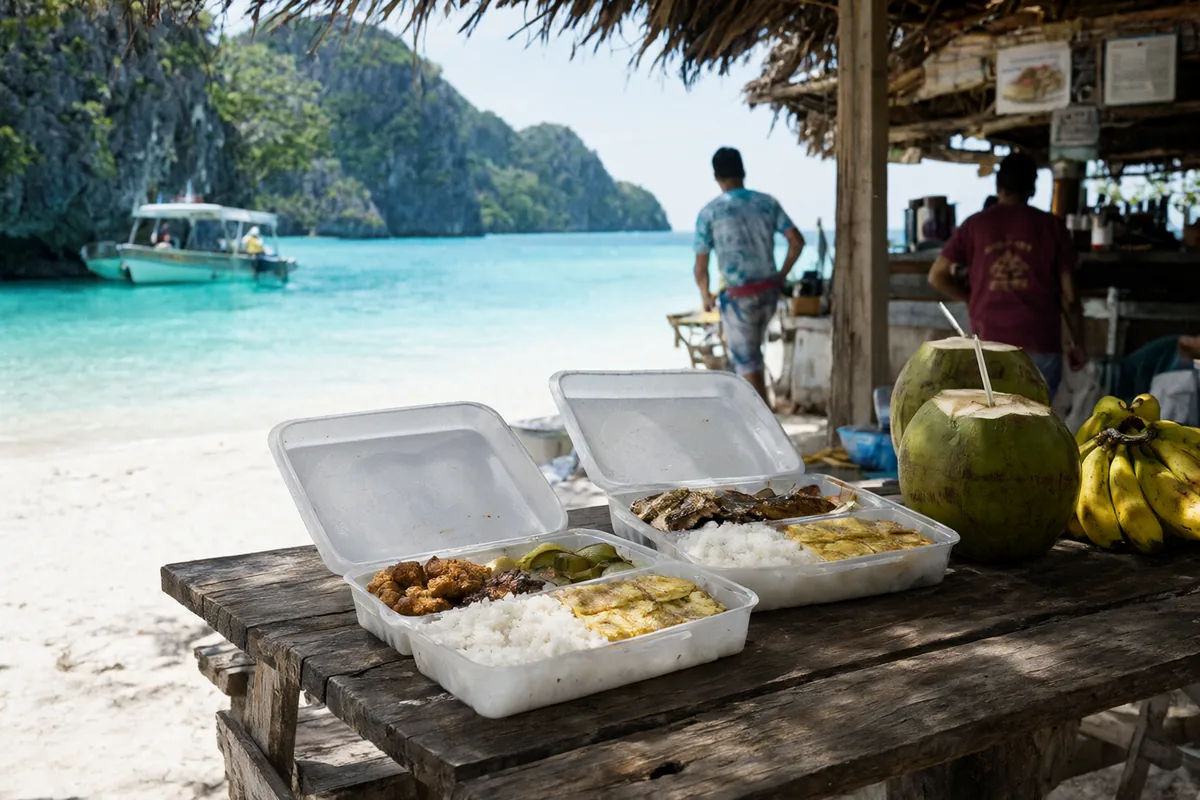
- Bento boxes (everywhere): Japanese-style boxed meals of rice with fried chicken, fish, egg and pickles, sold at stores and supplied for boat trips. Most Rock Islands tours include one for lunch.
- Spam musubi and noodle soups (everywhere): a slice of fried Spam on rice wrapped in seaweed, and bowls of udon, ramen or saimin, everyday snacks and lunches across Palau.
Look out too for betel nut, called buuch, sold at small stores and chewed widely with lime and pepper leaf, and for fresh coconuts, papaya, bananas and soursop from local farms.
How to read a menu in Palau
Menus in Palau are in English, and many in Koror also have Japanese, Chinese or Korean versions for visitors. Palauan names appear for local dishes and seafood, and Japanese words are part of everyday food vocabulary. These are the words you will see most often.
| Local term | Language | Meaning |
|---|---|---|
| Chemang | Palauan | Mangrove crab |
| Ketat | Palauan | Coconut crab |
| Kukau | Palauan | Taro |
| Mesei | Palauan | Taro patch, tended by women |
| Buuch | Palauan | Betel nut |
| Sashimi | Japanese | Sliced raw fish, usually tuna |
| Bento | Japanese | A boxed meal of rice and sides |
| Udon / ramen | Japanese | Thick wheat noodles / thin noodles in broth |
| Spam musubi | Local English and Japanese | Fried Spam on rice wrapped in seaweed |
| Tapioca | Local English | Cassava, not tapioca pearls |
| Fruit bat soup | English | Whole fruit bat in broth, a traditional dish |
| Market price | English | Priced by the catch of the day, usually crab or lobster |
Mangrove crab and lobster are often listed at "market price", which means the cost depends on the size of the crab and the day's supply. Ask the price before you order. swap.menu flags market-price items when it reads the menu, so the bill does not surprise you.
Tipping, tax and paying the bill
Tipping is not a traditional Palauan custom, but American habits have spread through the tourism industry. In restaurants in Koror, a tip of around 10 to 15 percent is common, and some hotel restaurants add a service charge, so check the bill first. Dive guides and boat crews are commonly tipped at the end of a trip. Small local eateries and stores do not expect tips. Our guide to tax and service charges on menus explains how tax and service lines work around the world.
Palau introduced a goods and services tax, known as PGST, in 2023, which may be included in menu prices or added to the bill, so look at the small print. The currency is the US dollar. Cards are accepted at hotels, dive shops and many restaurants in Koror, but small eateries, stores and anywhere outside Koror may want cash. ATMs are in Koror. If you use a card from outside the United States and the terminal offers to charge you in your home currency, choose US dollars: our guide to paying in local currency explains why.
Meal times start early, as dive boats leave in the morning: breakfast from 6am or 7am, lunch on the boat or around noon, and dinner from about 6pm. Many restaurants in Koror close by 9pm or 10pm. Sunday is quieter, as many Palauans go to church, but most restaurants in Koror stay open.
Customs and community: Palauan society is matrilineal, and food is central to its customs. At important events, families exchange food, with taro and other crops from the women's side and fish and other goods from the men's side. Visitors rarely see these ceremonies, but if you are invited to a family gathering, accept the food you are offered and take a plate home if it is pressed on you.
Where to eat in Palau, island by island
Almost all of Palau's restaurants are in Koror, the main town, and most visitors stay there and take boat trips into the Rock Islands. Babeldaob, the largest island, is linked to Koror by a bridge, and Peleliu is a boat ride south. Jump to a destination:
Where to eat in Koror
Koror, on the island of the same name, is Palau's commercial centre and home to most of its people, and nearly all of its restaurants line the main road through town and the streets just off it. The choice is wide for a small place: Japanese restaurants serving sashimi, sushi and set meals, Korean and Taiwanese restaurants, Filipino eateries, American-style diners and bars, and a few places specialising in Palauan food, where you can try mangrove crab, fish in coconut milk, taro and, if you dare, fruit bat soup.
Tuna sashimi is on almost every menu in Koror and is usually fresh and generous. Many restaurants have waterfront terraces looking across to the Rock Islands, and sunset dinners are popular. Small stores around town sell bento boxes, Spam musubi, fried chicken and snacks at lunchtime. The Belau National Museum and the Etpison Museum are worth visiting between meals to learn about Palauan culture and history. Most restaurants in Koror are casual, and dinner reservations are only needed at the more popular places in high season.
Where to eat on Malakal
Malakal, a small island linked to Koror by a causeway, is Palau's working harbour, home to the commercial port, fishing boats and many of the dive shops and boat operators. It has a few restaurants and bars by the water, some attached to dive resorts, serving sashimi, grilled fish, burgers and cold beer to divers coming back from the reefs.
Because many dive trips leave from Malakal, it is a convenient place for an early breakfast or a sunset drink after a day on the water. Food here is simple and fresh, and the fish on the menu often came in on a boat moored nearby. It is a small area, so most visitors eat on Malakal once or twice and spend their other evenings in central Koror, a short taxi ride away.
Where to eat on Babeldaob
Babeldaob, the second largest island in Micronesia after Guam, is green and hilly, with mangroves, rivers, waterfalls and quiet villages. The international airport is in Airai at its southern end, and the country's capital, with its large capitol building, is at Melekeok on the east coast. Restaurants are few and spread out, and many are small family places or stores selling bento boxes, fried chicken and drinks, so plan meals when exploring.
Babeldaob is where you see Palau's farming life: taro patches tended by women, coconut and banana groves, and fish traps in the mangroves. Some village and cultural tours include a meal of taro, fish in coconut milk, tapioca and fruit. The traditional meeting house (bai) in Airai, with its steep painted gable, is one of the oldest in Palau and worth a stop. Bring water and snacks if you are driving the ring road around Babeldaob, and carry cash for small stores.
Where to eat in the Rock Islands
The Rock Islands, a World Heritage area of hundreds of forested limestone islands south of Koror, are the main reason most people come to Palau. There is nowhere to buy food once you are out there, so day trips for diving, snorkelling and kayaking almost always include lunch, usually a bento box of rice, fried chicken or fish, egg and pickles, eaten on a white sand beach under a shelter, with fresh fruit and drinking water.
Some tours to the Rock Islands add a barbecue of fresh fish, or a picnic with sashimi from the morning's catch. Check what lunch includes when you book, and tell your operator about dietary needs ahead, as the bentos are prepared in Koror before the boats leave. Take all rubbish back with you, as the islands are protected and visitors pay a permit fee to enter.
Where to eat on Peleliu
Peleliu, about an hour by boat south of Koror, was the site of one of the fiercest battles of the Pacific War in 1944, and its jungle still holds tanks, guns and memorials. It is also known for world-class wall dives. The island has a small population, a few guesthouses, small stores and one or two simple eateries, and food is home cooking: fish, rice, taro, tapioca and whatever is in season.
Most visitors come to Peleliu on a day trip from Koror, with lunch included, while those who stay overnight eat at their guesthouse. Bring cash, snacks and any special foods, as shops are basic and card payments are rare. The pace on Peleliu is very slow, and an evening meal of fresh fish with your hosts is part of the appeal.
Vegetarian, vegan and allergy tips
Vegetarians can eat reasonably well in Koror, where Japanese, Taiwanese, Korean and Western restaurants have vegetable dishes, tofu and salads. Palauan cooking is harder, as most dishes centre on fish or crab, though taro, tapioca and fruit are naturally meat free. Bento boxes for boat trips usually contain meat or fish, so ask your operator for a vegetarian bento when you book. "Vegetarian" is understood in restaurants. Watch for fish-based dashi stock in Japanese noodle soups and miso.
Seafood and shellfish are everywhere, from sashimi to crab, and soy sauce is used in many dishes, which matters for anyone with a shellfish, soy or gluten allergy. Coconut milk is common in local cooking. Medical facilities outside Koror are very limited, so carry any allergy medication on boat trips. Our guide to eating abroad with food allergies explains how to explain an allergy clearly.
Useful Palauan phrases for ordering
Everyone who works with visitors speaks English, and many speak Japanese, but a few words of Palauan are warmly received.
Alii "Hello", the everyday greeting
Ungil tutau "Good morning"
Ke ua ngerang? "How are you?"
Mesulang "Thank you"
Kmal mesulang "Thank you very much"
Kmal ungil "Very good", a compliment for the food
Vegetarian bento, please Useful when booking a boat trip
How swap.menu helps you eat in Palau
A Koror menu might list chemang, ketat, giant clam and fruit bat soup alongside Japanese set meals, with crab at "market price" and no explanation. Photograph it with swap.menu and every dish appears in your own language with a short explanation, so you know that chemang is mangrove crab and that tapioca here is cassava, not pearls. Visitors from Japan, Taiwan, Korea or Europe can read any menu in Palau in their own language, choosing from 29. Every price is converted from US dollars to your home currency, and we point out market-price items and any tax or service charge added to the bill.
Tap the dishes you want, add a note such as "no shellfish" or "no soy sauce", typed or spoken, and swap.menu shows your order clearly for the staff. Your scanned menus are saved, so you can find that sashimi place in Koror again after a week of diving. You can try it right now on a sample menu with the free demo, or see travel pass prices.
Off to Palau? Your first 3 menu scans are free, and a travel pass starts from $4.99 with nothing that renews.
Start free with 3 scansPalau food FAQ
Do you tip in Palau?
Tipping is not a traditional Palauan custom, but around 10 to 15 percent is common in restaurants in Koror, and dive guides and boat crews are usually tipped. Check the bill first, as some hotel restaurants add a service charge.
What food is Palau famous for?
Palau is known for fresh tuna sashimi, mangrove crab, taro and fish cooked in coconut milk. It is also known, more notoriously, for fruit bat soup, which is a traditional dish but not an everyday one.
Is Palau expensive to eat out?
Restaurants in Koror are priced similarly to the United States, and imported food is expensive. Tuna sashimi, bento boxes and local eateries are good value, and most boat trips include lunch.
Is tap water safe to drink in Palau?
It is best not to drink tap water in Palau. Drink bottled or filtered water, which hotels and dive operators provide.
What do you eat on a Rock Islands tour?
Most Rock Islands day trips include a bento box lunch of rice, fried chicken or fish, egg and pickles, eaten on a beach. Ask your operator ahead for a vegetarian or allergy-friendly option.
How can I understand menus in Palau?
Menus are in English, often with Japanese, Chinese or Korean versions. Photograph the menu with swap.menu and it explains Palauan and Japanese dish names, translates the menu into your own language and converts prices from US dollars to your currency.
Travelling further in the region? Read our food guides for nearby islands and countries:
- Micronesia food guide
- Guam food guide
- Northern Mariana Islands food guide
- Philippines food guide
- Japan food guide
- Taiwan food guide
Or browse every travel food guide.