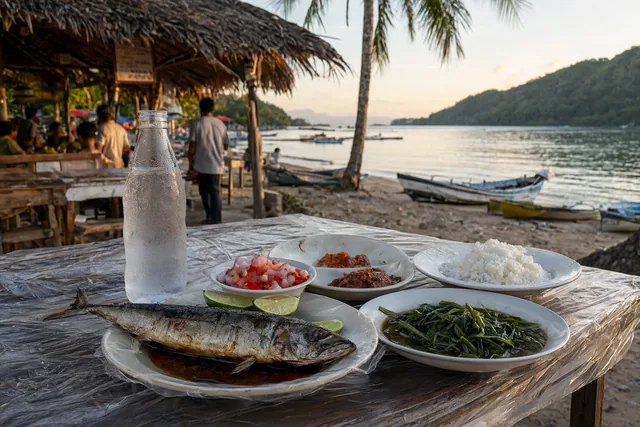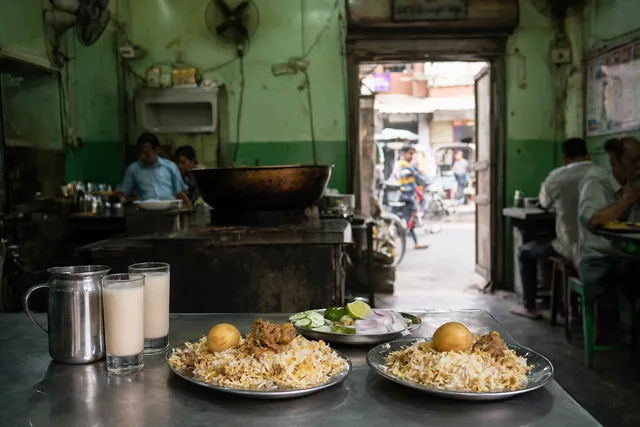
Japan is one of the best countries in the world to eat in at every price level, from a convenience store rice ball to a twelve-course kaiseki dinner. This Japan food guide covers the dishes to know, the menu words that matter most, how tipping and paying in yen work, and then goes city by city through where to eat in Tokyo, Osaka, Kyoto, Sapporo, Fukuoka, Hiroshima, Kanazawa and Okinawa. Japanese restaurants tend to specialise: a ramen shop makes ramen, a tempura counter makes tempura, and a sushi bar may serve nothing else. Pick the kind of place first, then the dish, and you will rarely eat badly.
What to eat in Japan: 12 dishes to know
These are the dishes worth seeking out, with the city or region they are most closely tied to. Every region also has its own version of ramen, its own local sweets and its own sake, so ask what is local wherever you are.
- Sushi (everywhere, best in Tokyo and on the coasts): nigiri is a slice of fish pressed onto seasoned rice, maki are rolls, and kaitenzushi is conveyor-belt sushi, a cheap and easy first meal.
- Ramen (everywhere): wheat noodles in broth. The main styles are shōyu (soy), shio (salt), miso (Sapporo) and tonkotsu (rich pork bone broth, from Fukuoka).
- Tempura (Tokyo and everywhere): seafood and vegetables in a thin, crisp batter, best eaten at a counter where each piece comes straight from the oil.
- Soba and udon (everywhere): thin buckwheat noodles and thick wheat noodles, served hot in broth or cold with a dipping sauce. Soba is strong in Tokyo and the mountains; udon is the comfort food of the west.
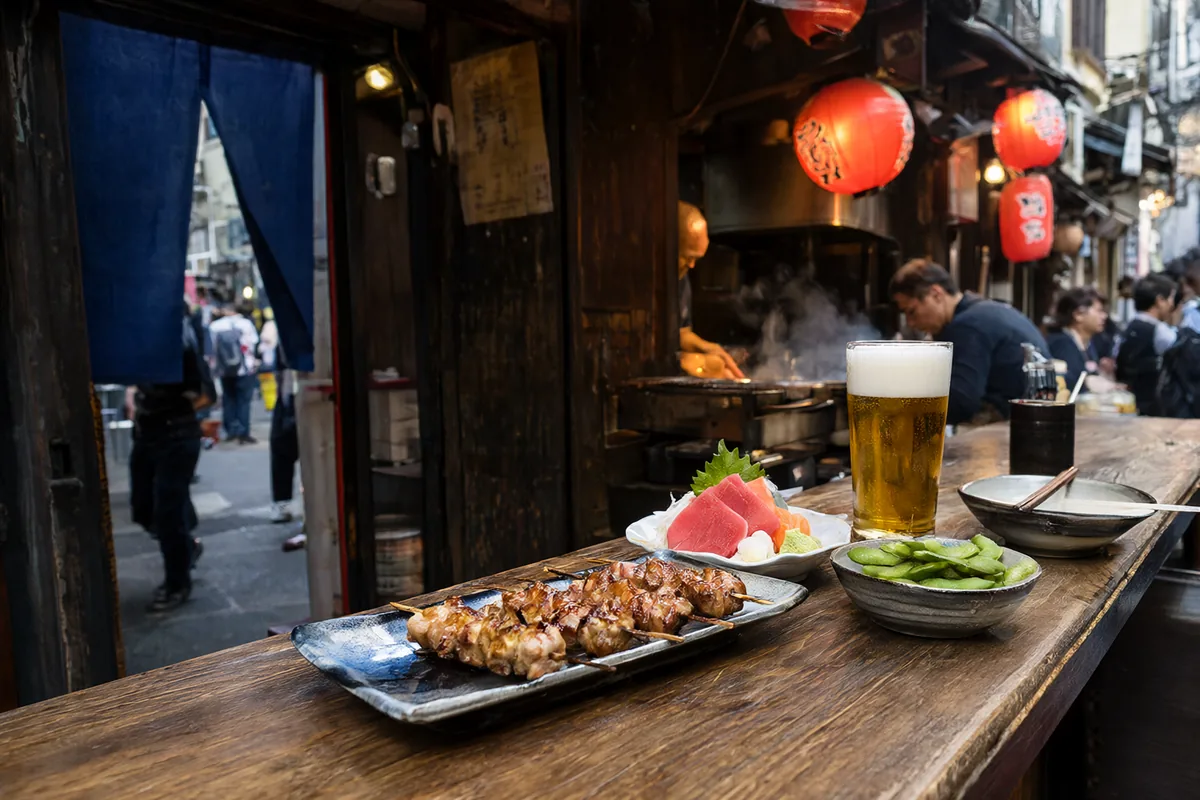
- Yakitori (everywhere): chicken skewers grilled over charcoal, seasoned with salt (shio) or a sweet soy glaze (tare), from thigh and spring onion to skin, heart and cartilage.
- Okonomiyaki (Osaka and Hiroshima): a savoury pancake of cabbage and batter with pork or seafood, cooked on a hot plate and topped with sauce, mayonnaise and bonito flakes.
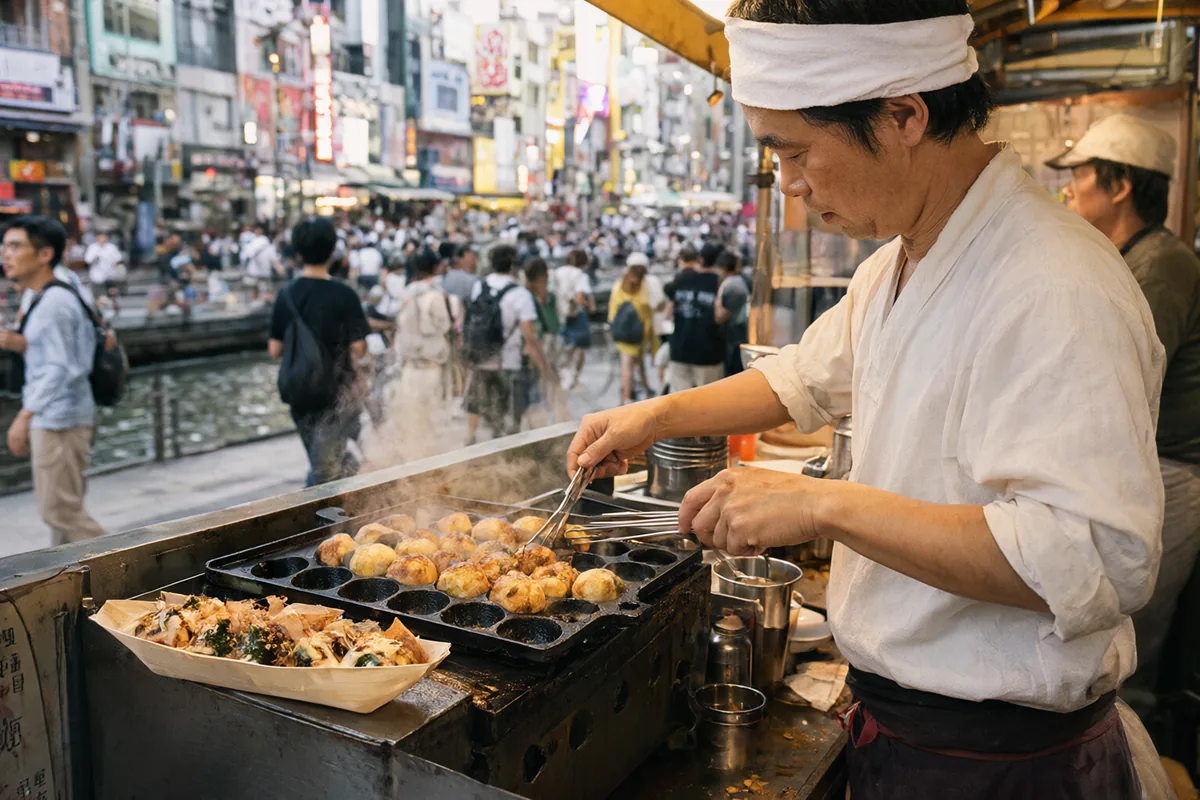
- Takoyaki (Osaka): round balls of batter with a piece of octopus inside, cooked in a moulded iron pan. Let them cool: the centre is molten.
- Tonkatsu (everywhere): a breaded, deep-fried pork cutlet served with shredded cabbage, rice, miso soup and a thick fruity sauce.
- Kaiseki (Kyoto): a seasonal multi-course meal of small, precise dishes, the most formal style of Japanese dining.
- Wagyu (Kobe, Matsusaka and elsewhere): heavily marbled Japanese beef, eaten as steak on a teppan grill, as yakiniku grilled at the table, or as sukiyaki and shabu-shabu hotpots.
- Kare raisu (everywhere): Japanese curry, a mild, thick, slightly sweet sauce over rice, often with a tonkatsu on top. Cheap, filling and found in every train station.
- Matcha and wagashi (Kyoto and Uji): powdered green tea, whisked and served with small seasonal sweets made from bean paste and rice flour.
Also try a convenience store onigiri (rice ball wrapped in seaweed), a genuinely good breakfast, and the department store basement food halls called depachika.
How to read a Japanese menu
Japanese menus mix three scripts: kanji (Chinese characters), hiragana and katakana, the last used for foreign loanwords. Many restaurants in the big cities now have picture menus or English menus, but the best small places often do not. Our dedicated guides go much further: read how to read a Japanese menu for the full kanji list and prices, and how to order food in Japan for ticket machines, set meals and izakaya etiquette. These are the ten words that come up most.
| Japanese | Romanised | Meaning |
|---|---|---|
| 定食 | teishoku | Set meal: a main with rice, miso soup and pickles, usually the best value at lunch |
| 丼 | don, donburi | Rice bowl with a topping (親子丼 oyakodon is chicken and egg; 牛丼 gyūdon is beef) |
| 焼き | yaki | Grilled or pan-fried (焼き鳥 yakitori, grilled chicken) |
| 揚げ | age | Deep-fried (唐揚げ karaage, fried chicken) |
| 刺身 | sashimi | Sliced raw fish, served without rice |
| 鶏 / 豚 / 牛 | tori / buta / gyū | Chicken / pork / beef |
| 大盛り | ōmori | Large portion, sometimes free at noodle and rice shops |
| 税込 / 税抜 | zeikomi / zeinuki | Tax included / before tax |
| 飲み放題 | nomihōdai | All you can drink, for a fixed time and price |
| 時価 | jika | Market price: ask before you order |
Many ramen, curry and gyūdon shops have a ticket machine (shokkenki) by the door: you pay, press a button for your dish and hand the ticket to the cook. The buttons are often in Japanese only. Photograph the machine with swap.menu and it reads the buttons like a menu, so you know which one is the large tonkotsu with egg before you put your money in.
Tipping, paying and meal times in Japan
There is no tipping in Japan. Leaving money on the table usually means a staff member will run after you to return it, and good service is considered part of the price. Upmarket restaurants and hotels add a service charge (sābisu-ryō), typically 10 percent, and some bars charge a seat or table fee. At an izakaya you will often be given a small appetiser you did not order, called otōshi (or tsukidashi in the Kansai region): it is a cover charge of a few hundred yen per person, normal and not a mistake. Our guide to tax and service charges on menus explains how these lines work around the world.
Japan has a consumption tax of 10 percent on eating in, and a lower rate of 8 percent on takeaway food. Menus are required to show the tax-inclusive price, marked 税込, though some also show the pre-tax figure (税抜) in larger type, so check which number you are reading.
The currency is the Japanese yen (JPY, written ¥ or 円). Cards are now accepted in most mid-range restaurants, chains, department stores and convenience stores, and rechargeable transit IC cards work in many shops and some restaurants. Small ramen shops, family-run izakaya, market stalls and many places in the countryside are still cash only, so carry some notes. Convenience store ATMs reliably accept foreign cards. When a card machine offers to charge you in your home currency, choose yen: our guide to paying in local currency explains why. You usually pay at the register (reji) by the door on the way out, not at the table: take the bill slip with you.
Lunch runs from about 11:30am to 2pm, and lunch sets are much cheaper than dinner at the same restaurant. Dinner is from around 6pm to 9pm, and many restaurants close between lunch and dinner. Izakaya and ramen shops stay open later, and in big cities some ramen counters run past midnight. Watch for rasuto ōdā, last orders, often 30 minutes before closing.
Where to eat in Japan, city by city
Japanese cities are proud of their local dishes, and travellers do well to eat them on home ground: miso ramen in Sapporo, tonkotsu in Fukuoka, okonomiyaki in Osaka and Hiroshima, tofu and kaiseki in Kyoto. Jump to a city:
Where to eat in Tokyo
Tokyo has more restaurants than any city could ever get through, and it has long had more Michelin-starred restaurants than anywhere else in the world. But most of the best eating in Tokyo is everyday: a bowl of shōyu ramen, a tonkatsu set at lunch, a plate of soba, or edomae sushi, the Tokyo style of nigiri in which the fish is often cured, marinated or aged. The Tsukiji Outer Market is still full of stalls selling grilled seafood, tamagoyaki (sweet rolled omelette) and sushi breakfasts, even though the wholesale fish market itself moved to Toyosu in 2018, where you can also eat sushi inside the market buildings.
In the evening, Tokyo's small-bar alleys are the most atmospheric places to eat. Omoide Yokocho in Shinjuku is a lane of tiny yakitori counters, Golden Gai nearby is a grid of bars that seat six or eight, and the arches under the train tracks at Yurakucho are lined with izakaya. Ameyoko market in Ueno has cheap seafood bowls and standing bars, and Tsukishima is known for monjayaki, a runny Tokyo cousin of okonomiyaki cooked on the table. Tokyo is easiest at lunch: many expensive restaurants serve a set lunch at a fraction of their dinner price, so book the famous places for midday.
Where to eat in Osaka
Osaka's motto is kuidaore, roughly "eat until you drop", and it is Japan's great street food city. The essentials are takoyaki, okonomiyaki (Osaka style mixes everything into the batter before it goes on the hot plate) and kushikatsu, skewers of meat, seafood and vegetables crumbed and deep-fried. Kushikatsu comes with a shared tub of sauce, and the one rule everyone in Osaka knows is no double dipping: use the cabbage to scoop extra sauce.
Dotonbori, the canal-side strip of neon in Namba, is the place for takoyaki and a first night out, though it is crowded and the prices reflect it. Kuromon Market sells grilled scallops, sea urchin, wagyu skewers and fruit, mostly to visitors. For a more local Osaka, go to Ura-Namba, the back streets behind Namba station packed with small izakaya, to Shinsekai, the old retro district below Tsutenkaku tower where kushikatsu was born, or to Tenjinbashi-suji, one of the longest covered shopping streets in Japan, lined with cheap restaurants and standing bars.
Where to eat in Kyoto
Kyoto was the imperial capital for over a thousand years, and its cooking is refined, seasonal and built on vegetables, tofu and delicate dashi. This is the home of kaiseki, and also of obanzai, the home-style Kyoto dishes of simmered vegetables, beans and greens often served as a set lunch. Kyoto is the best city in Japan for tofu: yudofu (tofu simmered in kelp broth) is a speciality around Nanzen-ji temple and in Arashiyama, and yuba, the skin that forms on heated soy milk, is served fresh, dried or rolled. Buddhist temple cooking, shōjin ryōri, is entirely plant-based and served at several temples in the city.
Nishiki Market, a narrow covered street in the centre known as Kyoto's kitchen, sells pickles, tofu, sweets, skewers and knives, and is best visited in the morning before it fills up. In the evening, Pontocho, a lantern-lit alley along the Kamo river, and the lanes of Gion have restaurants from simple to very formal; in summer, many in Pontocho build raised wooden platforms over the river called kawayuka. Many kaiseki restaurants in Kyoto need booking well ahead, and some private lanes in Gion ask visitors not to take photographs, so look out for the signs.
Where to eat in Sapporo
Sapporo is the capital of Hokkaido, Japan's northern island and its dairy, seafood and potato farm. The city's dish is miso ramen, a rich, warming bowl often topped with sweetcorn and butter, and the Ramen Yokocho alley in the Susukino entertainment district is a row of tiny counters serving it until late. The other Sapporo classic is jingisukan ("Genghis Khan"), lamb and mutton grilled with vegetables on a domed iron pan at the table. Soup curry, a thin, spiced curry broth with large pieces of chicken and vegetables, also comes from Sapporo, and you choose your spice level.
Hokkaido seafood is exceptional, especially crab (king, snow and hairy crab), sea urchin, salmon roe and scallops. Eat a kaisendon, a bowl of rice topped with raw seafood, for breakfast at Nijo Market in the centre or at the Jogai Market next to the city's central wholesale market. In winter Sapporo is snowy and very cold, and the snow festival in February fills the city, so book dinner and accommodation early if you are visiting then.
Where to eat in Fukuoka
Fukuoka, on the northern coast of Kyushu, is the home of Hakata ramen: thin, firm noodles in a creamy white tonkotsu broth made by boiling pork bones for hours. You can choose how firm you want your noodles, and when you finish them, order kaedama, a refill of noodles dropped into your remaining broth for a small extra charge. Other Fukuoka dishes are motsunabe (a hotpot of beef or pork offal with cabbage, garlic and chives), mizutaki (a cloudy chicken hotpot), bite-sized Hakata gyoza and mentaiko, spicy cod roe, sold everywhere as a souvenir and served on rice or pasta.
Fukuoka is the best city in Japan for yatai, open-air food stalls that set up every evening and pack away at night, each seating a handful of people around a counter. The main clusters are along the river at Nakasu, in Tenjin and in Nagahama, and they serve ramen, oden, yakitori, grilled dishes and drinks. Yatai are small, so sit, order a drink and a dish or two, and move on to let others in. For seafood, the Yanagibashi Rengo Market is a covered market sometimes called Hakata's kitchen.
Where to eat in Hiroshima
Hiroshima has its own style of okonomiyaki, and locals will tell you it is the correct one. Instead of mixing everything together as Osaka does, the cook builds it in layers on the hot plate: a thin crepe, a mound of cabbage, bean sprouts and pork, a layer of yakisoba or udon noodles and a fried egg, all pressed together and covered in sauce. Okonomimura, a building near the Hondori shopping street with several floors of okonomiyaki counters, is the easiest place to try it, but every neighbourhood in Hiroshima has its own small okonomiyaki shop.
The Hiroshima region is also Japan's biggest producer of farmed oysters, served grilled, fried as kaki furai, raw or in hotpot, mostly from October to March. On Miyajima island, a short ferry ride away, the main street sells grilled oysters, anago meshi (rice topped with grilled conger eel) and momiji manjū, maple-leaf-shaped cakes with sweet fillings. Hiroshima is an easy day trip from Osaka or Kyoto on the bullet train, but stay a night to eat okonomiyaki in the evening.
Where to eat in Kanazawa
Kanazawa, on the Sea of Japan coast, is a former castle town with well-preserved teahouse districts and some of the best seafood in the country. Omicho Market, in the centre, has been the city's kitchen for around 300 years, and its stalls and small restaurants serve kaisendon rice bowls piled with local fish, sweet prawns and crab. In winter, look for snow crab (the small female crab, called kōbako-gani, is a local favourite) and nodoguro, a rich, fatty fish that is one of the prized catches of the region.
Kanazawa's traditional Kaga cooking includes jibuni, duck coated in flour and simmered with vegetables in a thick broth, and the city has its own style of oden, a simmered stew of fish cakes, radish and egg that locals eat all year. Kanazawa produces nearly all of Japan's gold leaf, and you will see it on ice cream cones and in tea in the Higashi Chaya teahouse district, where a few old teahouses serve matcha and sweets.
Where to eat in Okinawa
Okinawa, the chain of subtropical islands in Japan's far south, was once the independent Ryukyu Kingdom, and its food is different from the rest of Japan. The signature dish is gōyā champurū, a stir-fry of bitter melon with tofu, egg and pork. Okinawa soba is thick wheat noodles in a pork and bonito broth, topped with sōki (braised pork ribs) or slices of pork belly. Rafute is pork belly braised in soy, sugar and the local spirit awamori. Look for umibudō, "sea grapes", a seaweed that pops in your mouth, and purple sweet potato in tarts and ice cream.
In Naha, the capital, the Makishi Public Market off Kokusai-dori is the place to start: buy fish and seafood on the ground floor and have it cooked at a restaurant upstairs for a small fee. Kokusai-dori itself is lined with restaurants and awamori bars, and the side arcades are quieter and cheaper. Okinawa also has a strong American influence from decades of US bases, which gave the islands taco rice, taco mince, cheese and salad on rice, now a beloved Okinawa comfort food.
Vegetarian, vegan and allergy tips
Japan looks easy for vegetarians, with tofu, vegetables and rice everywhere, but it is harder than it seems. Almost all Japanese cooking uses dashi, a stock usually made from katsuobushi (dried bonito fish flakes) and kelp, so miso soup, noodle broths, simmered vegetables, tempura dipping sauce and even many tofu dishes contain fish. Bonito flakes are also sprinkled on okonomiyaki, takoyaki and salads. The word to use is bejitarian (ベジタリアン), and for vegan, vīgan (ヴィーガン), but it helps to say exactly what you do not eat, such as meat, fish and dashi. Kyoto's temple cooking, shōjin ryōri, is fully plant-based, and big cities now have many vegan restaurants.
Wheat is in soy sauce, miso is sometimes made with barley, and soba noodles are often a blend of buckwheat and wheat. Buckwheat is a serious allergen in Japan, and soba restaurants may cook udon in the same water. Packaged food in Japan must label major allergens, but restaurants vary. Our guide to eating abroad with food allergies explains how to explain an allergy clearly when you do not speak the language.
Useful Japanese phrases for ordering
すみません Sumimasen: "Excuse me", the polite way to call a staff member to your table
二人です Futari desu: "Two people", when you are asked how many are in your group
おすすめは何ですか? Osusume wa nan desu ka?: "What do you recommend?"
これをください Kore o kudasai: "This one, please" (pointing)
肉と魚が食べられません Niku to sakana ga taberaremasen: "I cannot eat meat or fish"
○○アレルギーがあります ... arerugī ga arimasu: "I have a ... allergy" (エビ ebi is prawn, そば soba is buckwheat)
お会計お願いします Okaikei onegaishimasu: "The bill, please"
ごちそうさまでした Gochisōsama deshita: "Thank you for the meal", said to the staff as you leave
How swap.menu helps you eat in Japan
The places that serve the best food in Japan are often the ones with no English at all: a handwritten board of today's fish at an izakaya, a wall of vertical strips of paper above a counter, or a ticket machine with forty buttons. Photograph it with swap.menu and every dish appears in your language with the Japanese name beside it and a short explanation, so you know that shirako is cod milt, that basashi is raw horse meat, and that hormone-yaki is grilled offal, not something to do with hormones. Every price is converted from yen to your home currency, and we flag the otōshi, the service charge and any 時価 market-price items.
Tap the dishes you want, add a note such as "no fish stock" or "buckwheat allergy", typed or spoken, and swap.menu translates your order into polite Japanese. Show the staff your phone, or let them scan the QR code and read your order on their own screen. You can try it right now on a sample menu with the free demo, or see travel pass prices.
Off to Japan? Your first 3 menu scans are free, and a travel pass starts from $4.99 with nothing that renews.
Start free with 3 scansJapan food FAQ
Do you tip in restaurants in Japan?
No. Tipping is not part of Japanese culture, and money left on the table is usually returned to you. Some upmarket restaurants and hotels add a service charge of around 10 percent, and izakaya often charge a small otōshi appetiser fee per person.
What food is Japan most famous for?
Sushi, ramen, tempura, soba and udon noodles, yakitori, wagyu beef and kaiseki dining. Regional dishes are just as important: okonomiyaki and takoyaki from Osaka, miso ramen from Sapporo, tonkotsu ramen from Fukuoka and tofu cooking from Kyoto.
Is Japan expensive to eat out?
It does not have to be. A bowl of ramen, a curry or a gyūdon set costs about the same as fast food in Australia or the UK, convenience stores sell good cheap meals, and lunch sets are much cheaper than dinner. High-end sushi and kaiseki can be very expensive.
Which city in Japan is best for food?
Tokyo has the greatest range, Osaka is the best for street food, Kyoto for kaiseki and tofu, Fukuoka for ramen and yatai stalls, and Sapporo and Kanazawa for seafood. Each city in this guide has its own section on where to eat.
Is tap water safe to drink in Japan?
Yes, tap water is safe to drink throughout Japan. Restaurants bring free water or green tea to the table, often self-service from a jug or machine.
How can I read a Japanese menu if I do not speak Japanese?
Learn a few kanji such as 定食 for set meal and 税込 for tax included, look for picture menus and plastic food displays, or photograph the menu with swap.menu. It translates every dish into your language, explains what it is, converts prices from yen and translates your order into Japanese for the staff.
Planning more of your trip? Read our Japan menu guides and food guides for nearby countries:
- How to read a Japanese menu
- How to order food in Japan
- South Korea food guide
- Taiwan food guide
- China food guide
- Hong Kong food guide
Or browse every travel food guide.