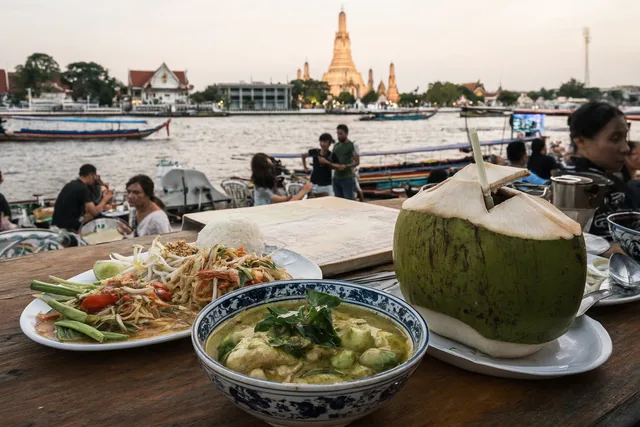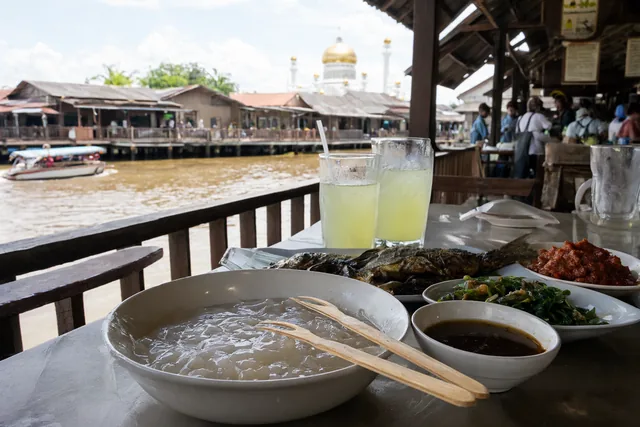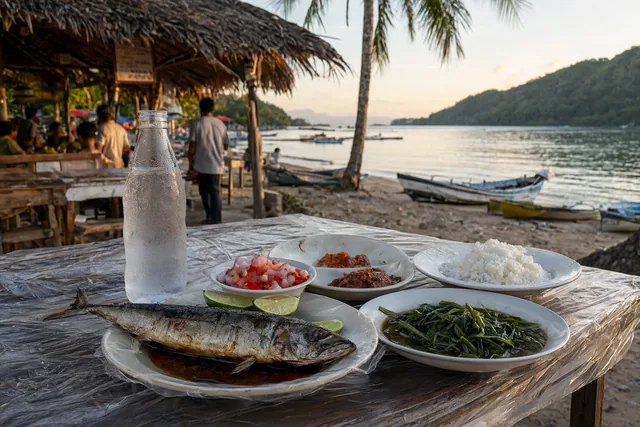
Burmese food sits between India, China and Thailand and tastes like none of them: sour, salty, savoury and rich with oil, built around rice, fermented fish, tea leaves and a table of shared side dishes. This Myanmar food guide covers the dishes to know, how to read a Burmese menu, how tipping and paying in kyat work, and where to eat in Yangon, Mandalay, Bagan, Inle Lake, Mawlamyine and Ngapali. Much of the best eating in Myanmar happens in teashops, at morning noodle stalls and in curry houses where the pots are lined up at the front, so you can point at what you want.
What to eat in Myanmar: 12 dishes to know
These are the dishes worth seeking out, with the region they come from. Myanmar has many ethnic groups, and Shan, Rakhine, Mon and Intha cooking are as important as the Bamar food of the central plains.
- Mohinga (everywhere, the national breakfast): thin rice noodles in a thick fish broth flavoured with lemongrass, ginger and banana stem, topped with crisp fritters, boiled egg, coriander and lime.
- Lahpet thoke (everywhere): tea leaf salad of fermented green tea leaves with fried beans, peanuts, sesame, garlic, tomato, cabbage and sometimes dried shrimp. Sour, crunchy and caffeinated.
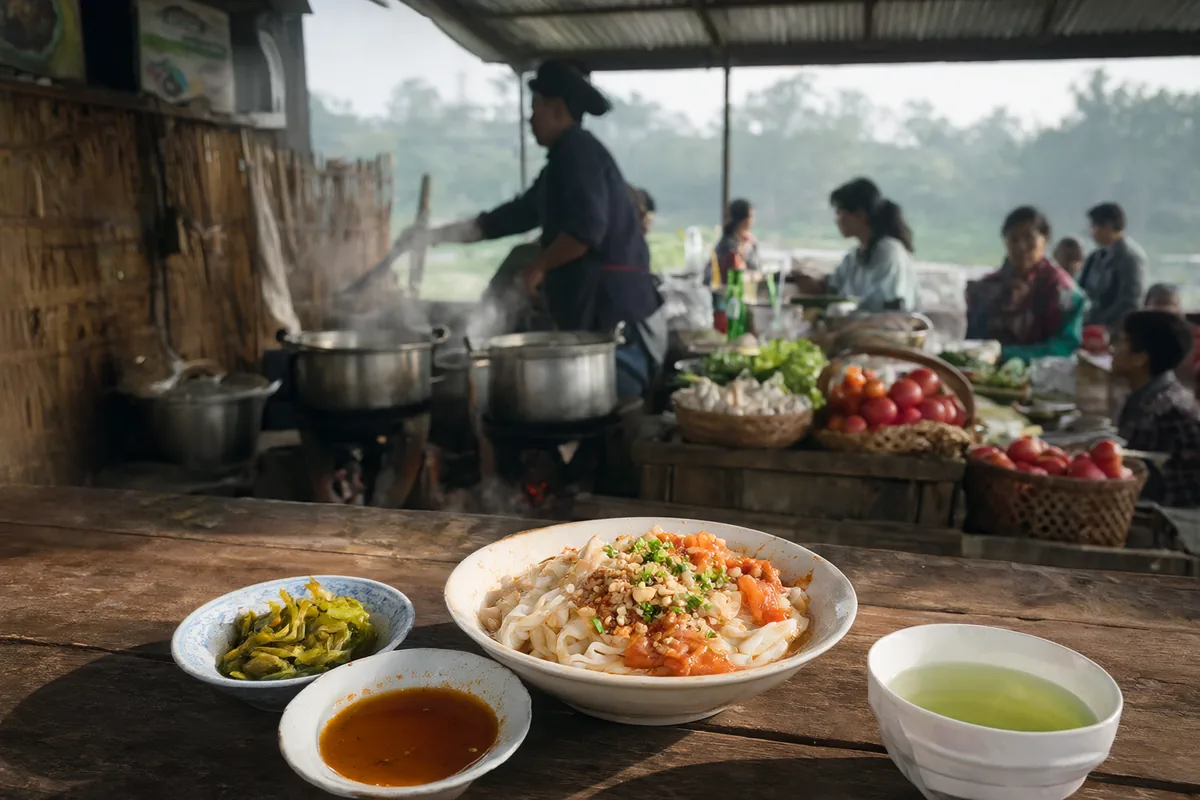
- Shan khauk swe (Shan State, everywhere): Shan noodles, flat or thin rice noodles with chicken or pork in a garlicky tomato sauce, served dry or in broth with pickled greens.
- Ohn no khauk swe (everywhere): wheat noodles in a coconut milk chicken soup, thickened with chickpea flour, with crisp fried noodles, egg, onion and chilli.
- Burmese curry and rice (everywhere): pork, chicken, fish or prawn curries slow-cooked until the oil separates and rises to the top, served with rice, a clear soup, raw and boiled vegetables and a fermented fish dip.
- Nan gyi thoke (Mandalay): a salad of thick round rice noodles with chicken curry, chickpea flour, fried onion and chilli oil.
- Htamin jin (Inle Lake): "sour rice", rice kneaded with tomato, potato or fish and garlic oil, shaped into a ball and wrapped in a leaf. A dish of the Intha people who live on the lake.
- Shan tofu (Shan State): tofu made from chickpea or yellow split peas, served as fried slices, in salads, or warm and porridge-like over noodles as tohu nway.
- Mont di (Rakhine and the coast): rice noodles in a spicy fish broth or as a salad, a hot, sour speciality of the Rakhine people.
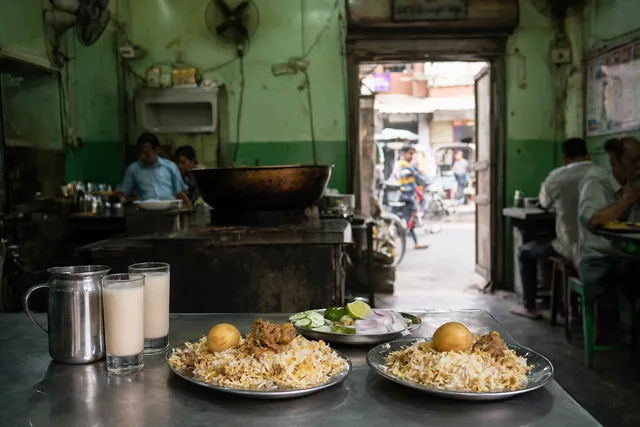
- Danbauk (Yangon and Mandalay): a Burmese biryani of rice cooked with chicken or mutton and spices, served with a sour leaf soup and a fresh salad.
- Mont lin ma yar (everywhere): "husband and wife snacks", pairs of small rice flour pancakes cooked in a dimpled pan, often with quail egg, spring onion or chickpeas, pressed together.
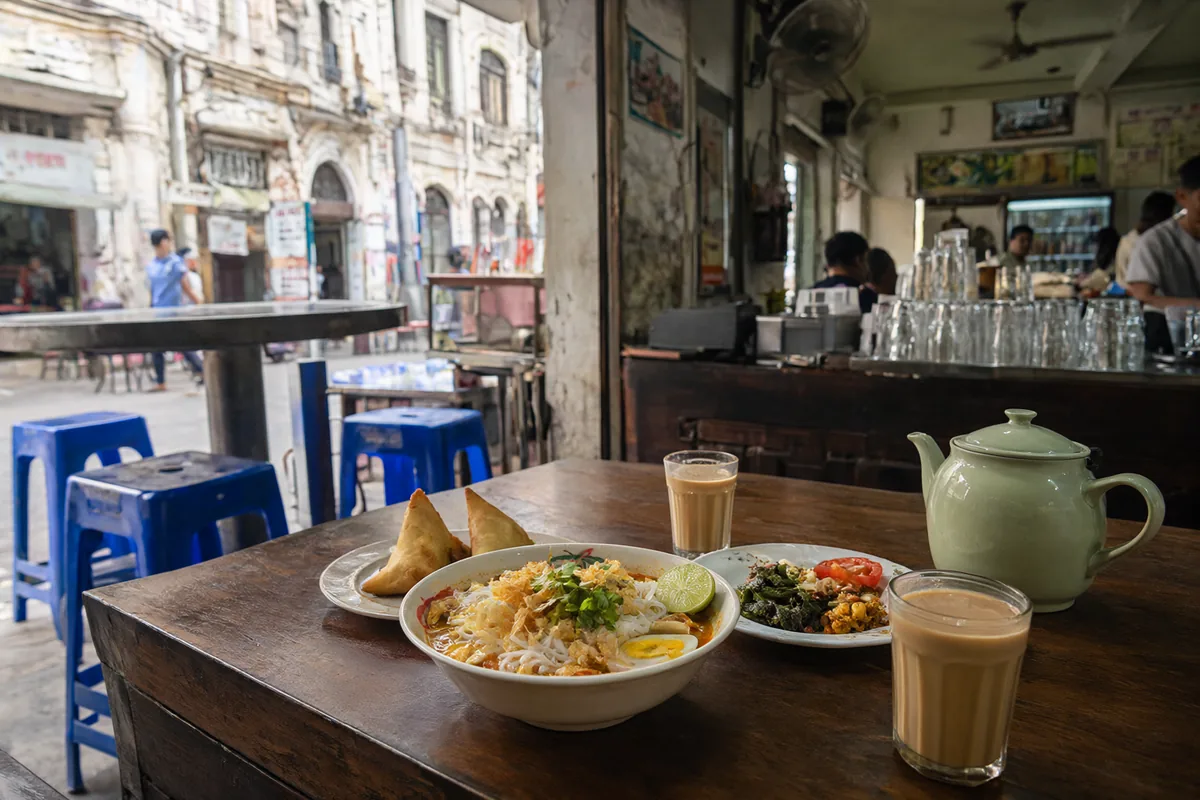
- Laphet yay and palata (everywhere): sweet, strong tea made with condensed and evaporated milk, served at teashops with palata, a flaky flatbread eaten with curry or sugar.
For something sweet, try shwe yin aye, a cooling dessert of coconut milk, sago, jelly and bread, and mont lone yay baw, glutinous rice balls filled with palm sugar, eaten around the April water festival.
How to read a Burmese menu
Burmese uses its own round script, and most menus outside tourist restaurants are written only in Burmese. Romanised spellings vary a lot: thoke may appear as thoat or thouk, and khauk swe as kaukswe. Dish names usually combine an ingredient with a cooking style, such as kyet tha hin (chicken curry) or ngar kyaw (fried fish). These are the words you will see most often.
| Burmese | Romanised | Meaning |
|---|---|---|
| ထမင်း | htamin | Cooked rice, and a rice meal |
| ခေါက်ဆွဲ | khauk swe | Noodles |
| ဟင်း | hin | Curry, or any dish eaten with rice |
| ဟင်းချို | hin cho | Clear soup, served with a rice meal |
| သုပ် | thoke | Salad, mixed by hand with oil, lime and crunchy toppings |
| ကြော် | kyaw | Fried |
| ကြက်သား | kyet tha | Chicken |
| ဝက်သား | wet tha | Pork |
| အမဲသား | a-mè tha | Beef |
| ငါး / ပုစွန် | nga / bazun | Fish / prawn |
| ငါးပိ | ngapi | Fermented fish or shrimp paste, in dips and curries |
| လက်ဖက်ရည် | laphet yay | Sweet milky tea |
| သက်သတ်လွတ် | thet that lut | Vegetarian |
In a Burmese curry house, ordering one curry usually brings a spread of free extras: soup, vegetables, dips and sometimes refills of rice. Teashops may also put plates of snacks on your table and charge only for what you eat. Photograph the menu board with swap.menu and it explains each dish in your language and converts the kyat prices, so you can tell what you ordered from what simply arrived.
Tipping, paying and meal times in Myanmar
Check your government's current travel advice before planning a trip. Tipping is not a strong tradition in Myanmar, and nobody expects a tip at a teashop or noodle stall. In restaurants that cater to visitors, leaving some change or a small tip for good service is appreciated, and hotels and upmarket restaurants may add a service charge and commercial tax to the bill. Our guide to tax and service charges on menus explains how these lines work.
The currency is the kyat (MMK, often written K or Ks). Myanmar is a cash economy for visitors: foreign-issued cards often do not work, ATMs may not accept them, and local mobile payment apps need a Myanmar account. Bring enough cash for your trip, traditionally US dollars in clean, new, unfolded notes, which are much easier to exchange than worn ones. Where cards are accepted, in a few hotels, pay in kyat if offered the choice: our guide to paying in local currency explains why.
Myanmar eats early. Teashops open around dawn and are busiest at breakfast, when mohinga, noodles and fried snacks are served. Curry houses cook in the morning and are at their best at lunch, from around 11am to 1pm, and dinner is from about 6pm to 8pm. Teashops put a pot of free plain green tea on every table, and you can drink as much as you like. Many restaurants close early outside Yangon.
Where to eat in Myanmar, city by city
Each region of Myanmar has its own staple: noodles in the Shan hills, tea and curry in the central plains, seafood on the coast and Indian-influenced breads and biryani in the cities. Jump to a place:
Where to eat in Yangon
Yangon is Myanmar's largest city and the best place to taste the whole country's food. Start the day the Yangon way, at a teashop with a bowl of mohinga, a plate of samosas or palata and a glass of sweet tea, sitting on low plastic stools. Downtown Yangon, laid out on a grid of numbered streets between the Sule Pagoda and the river, has teashops, Indian biryani houses, Chinese noodle shops and curry houses on almost every block, a mix that comes from its history as a colonial port city with large Indian and Chinese communities.
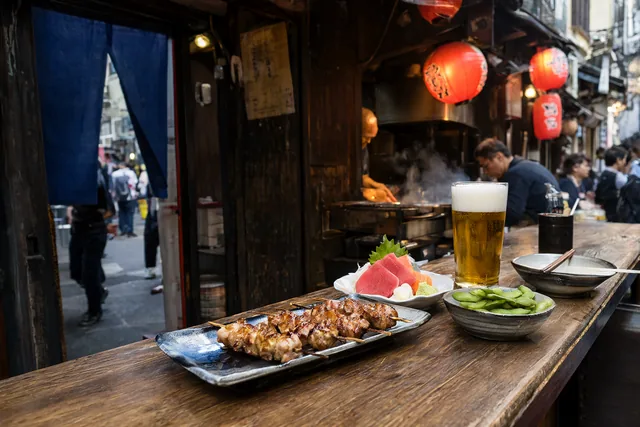
In the evening, 19th Street in Chinatown fills with tables on the pavement and grills of skewered meat, fish and vegetables, which you choose from a display and have barbecued, with cold draught beer. Bogyoke Aung San Market is mainly for crafts and jewellery but has food stalls, while Theingyi Zei is the big, busy wholesale market for spices, dried fish and snacks. Around Kandawgyi Lake and in the leafy northern suburbs there are more upmarket restaurants serving Burmese and Shan food. Yangon street food is cheap, but pick busy stalls where food is cooked fresh in front of you.
Where to eat in Mandalay
Mandalay, the last royal capital, is the centre of Upper Myanmar and its food is heartier, with more noodles and more influence from the Shan hills and from China. The city's signature dish is nan gyi thoke, thick rice noodles tossed with chicken curry and chickpea flour, and Mandalay also has its own style of noodles in light broth, known as Mandalay mee shay. Shan noodles and Shan tofu are everywhere, and Mandalay's Muslim community runs some of the best danbauk biryani houses in the country.
The Zegyo Market, in the centre of Mandalay, is the main market for produce, spices and snacks, and the streets around it are busy with food stalls in the evening. Mandalay's teashops are an institution, open from early morning to late at night, and they are where locals meet, eat and watch football. Mandalay is spread out and hot, so eat a big lunch at a curry house, rest in the afternoon, and head out again for dinner at a night stall or a Shan restaurant.
Where to eat in Bagan
Bagan is a plain scattered with more than two thousand ancient temples, and its food is simple, village-style Burmese cooking. Restaurants in Bagan serve curry and rice spreads with many small side dishes, including a pumpkin curry, bean dishes and tomato salads that suit vegetarians well. The area is dry and grows peanuts, sesame and toddy palms, and you will see palm sugar (jaggery) being made at roadside stalls, along with toddy palm wine and a stronger distilled toddy spirit.
The morning market at Nyaung-U, the main town, is the place to see local produce, tamarind and snacks, and the main road through Nyaung-U has a string of restaurants for travellers. Try the tamarind flakes, sweet and sour tamarind sweets often served free after meals in Bagan, and pieces of palm sugar, which locals eat with green tea to end a meal. Eat lunch in the shade during the hottest part of the day, between temple visits at sunrise and sunset.
Where to eat at Inle Lake
Inle Lake, in the Shan hills, is home to the Intha people, who live in stilt villages and grow vegetables on floating gardens on the lake. Its food is Shan and Intha: Shan noodles for breakfast, Shan tofu fried or warm, htamin jin sour rice, and freshwater fish from the lake, often grilled or cooked with tomato. The lake's floating gardens grow much of the country's tomatoes, and tomato salads and tomato curries appear on every menu at Inle Lake.
Nyaungshwe, the town at the north end of the lake, is where most visitors stay and eat, with a central market and a small night market. Around the lake, a five-day rotating market moves between villages, and Shan, Pa-O and Intha people come to trade produce, snacks and tea. The Shan hills also grow tea and avocados, and wine is made from grapes on the hills near Nyaungshwe. Nights are cool, so a bowl of hot noodle soup makes sense at any time of day.
Where to eat in Mawlamyine
Mawlamyine, a former colonial port on the Thanlwin river mouth in Mon State, has a reputation within Myanmar for good food, and an old Burmese saying matches Mandalay with fine speech, Yangon with boasting and Mawlamyine with eating. Mon cooking is spicier than Bamar food and uses plenty of seafood, fresh herbs and fruit, and Mon curries and Mon-style mohinga are worth seeking out. The region also grows durian, pomelo and other fruit, sold along the roads in season.
In the evening, food stalls set up along the Strand Road riverfront, serving grilled fish, noodles and snacks with views across the water at sunset. The central market in Mawlamyine is good for spices, dried fish and local sweets, and the many Indian and Muslim restaurants in town serve biryani, curries and fresh palata. Mawlamyine sees few foreign visitors, and most menus are in Burmese only.
Where to eat in Ngapali
Ngapali is a long beach on the Rakhine coast, and its food is about fish and seafood straight from the boats of the nearby fishing villages, where you can see fish drying on the sand in the morning. Beach restaurants in Ngapali grill lobster, tiger prawns, squid and whole fish, often with a garlic, lime and chilli sauce, and the prices are low compared with beach resorts elsewhere in Asia.
Rakhine food is known as the spiciest in Myanmar, with lots of fresh chilli, garlic and fish paste. Look for mont di, the Rakhine rice noodle soup in a fiery fish broth, and fish curries with green chilli. Away from the hotels, the small family restaurants along the beach road are the place for simpler, cheaper Rakhine dishes. Ngapali is seasonal: most beach restaurants are open from around October to April and many close during the monsoon.
Vegetarian, vegan and allergy tips
Myanmar is a strongly Buddhist country, and the word thet that lut (သက်သတ်လွတ်), meaning vegetarian, is widely understood. Some people eat vegetarian during Buddhist Lent and on religious days, and vegetarian restaurants are often found near pagodas. But in ordinary food, ngapi (fermented fish or shrimp paste) and fish sauce are basic seasonings, mohinga and many soups are fish-based, and dried shrimp turns up in salads and sauces. Ask for no meat, no fish and no ngapi. Shan tofu dishes, tea leaf salad without shrimp, bean curries and vegetable spreads are good choices.
Peanuts are in tea leaf salad, many other salads and some curries, and peanut oil is common for cooking. Chickpea flour and wheat appear in noodles, fritters and soups. Seafood is widespread on the coast and in fish-based broths. Bring an allergy card in Burmese. Our guide to eating abroad with food allergies explains how to explain an allergy clearly when you do not speak the language.
Useful Burmese phrases for ordering
မင်္ဂလာပါ Mingalaba: "Hello", used at any time of day
ဒါပေးပါ Da pay ba: "Please give me this" (pointing)
အစပ်မထည့်ပါနဲ့ A-sat ma htè ba neh: "Please don't add chilli"
သက်သတ်လွတ်စားပါတယ် Thet that lut sa ba deh: "I eat vegetarian"
ဘယ်လောက်လဲ Be lauk leh?: "How much is it?"
ရှင်းမယ် Shin meh: "I'd like to pay", to ask for the bill
စားလို့ကောင်းတယ် Sa lo kaung deh: "It's delicious"
ကျေးဇူးတင်ပါတယ် Kyay zu tin ba deh: "Thank you"
How swap.menu helps you eat in Myanmar
Most menus in Myanmar are written only in Burmese script, and even in Yangon the board on the wall of a teashop or noodle shop rarely has a word of English. Photograph it with swap.menu and every dish appears in your language with the Burmese name beside it and a short explanation, so you know that lahpet thoke is a fermented tea leaf salad, that a-thoke sone is a mixed salad of noodles and vegetables, and which curries are pork, fish or mutton. Every price is converted from kyat to your home currency, which helps when you are counting a limited supply of cash.
Tap the dishes you want, add a note such as "no ngapi" or "not spicy", typed or spoken, and swap.menu translates your order into Burmese. Show the staff your phone, or let them scan the QR code and read your order on their own screen. You can try it right now on a sample menu with the free demo, or see travel pass prices.
Off to Myanmar? Your first 3 menu scans are free, and a travel pass starts from $4.99 with nothing that renews.
Start free with 3 scansMyanmar food FAQ
Do you tip in restaurants in Myanmar?
Tipping is not traditionally expected in Myanmar, especially at teashops and street stalls. In restaurants that serve visitors, a small tip or leaving your change is appreciated. Some hotels and upmarket restaurants add a service charge and tax.
What food is Myanmar most famous for?
Mohinga, the fish noodle soup eaten for breakfast, and lahpet thoke, the fermented tea leaf salad, are the best-known dishes. Shan noodles, Burmese curries with rice and many side dishes, and sweet milky tea from teashops are just as central.
Is Burmese food spicy?
Most Bamar curries are rich and oily rather than very hot, and chilli is often served on the side. Rakhine and Mon food from the coast is much spicier. If you want mild food, ask for no chilli to be added.
Can I use a credit card in Myanmar?
Rarely. Foreign-issued cards often do not work in shops, restaurants or ATMs, so visitors need to bring enough cash, usually US dollars in clean new notes, and exchange it for kyat. Street food, teashops and markets are cash only.
Is tap water safe to drink in Myanmar?
No, drink bottled or filtered water. The free green tea served in teashops is made with boiled water, and ice in larger city restaurants is usually made from purified water, but skip it if you are unsure.
How can I read a Burmese menu?
Learn a few words like htamin for rice, khauk swe for noodles and thoke for salad, or photograph the menu with swap.menu. It translates every dish into your language, explains what it is, converts prices from kyat and translates your order into Burmese for the staff.
Travelling further in Asia? Read our food guides for neighbouring countries:
Or browse every travel food guide.