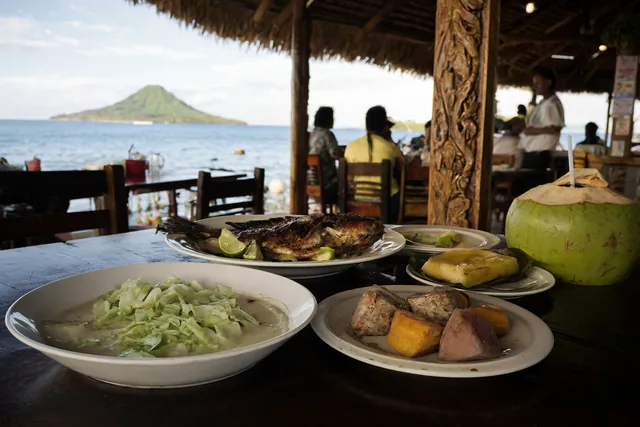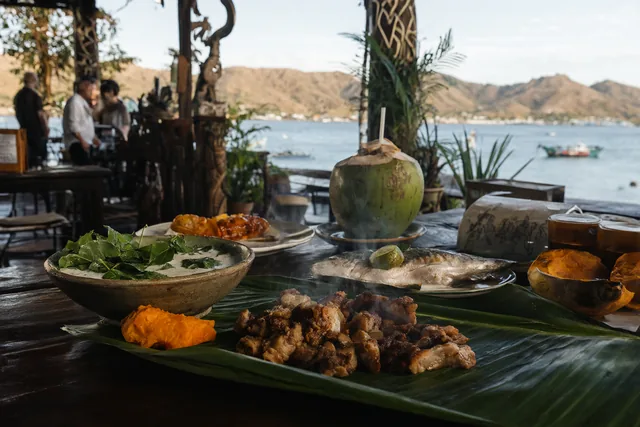
The Northern Mariana Islands are a chain of volcanic and limestone islands north of Guam, a US commonwealth where most visitors stay on Saipan and take short trips to Tinian and Rota. The food is built on the cooking of two indigenous peoples, the Chamorro and the Carolinians, who arrived from the Caroline Islands in the nineteenth century, with layers from Spanish, German, Japanese and American rule and from the Filipino, Korean, Chinese and Japanese communities who live here today. This Northern Mariana Islands food guide covers the dishes to know, the Chamorro and Carolinian words on menus, fiestas and the weekly street market, tipping and paying, and then where to eat in Garapan, Susupe, on Managaha Island, on Tinian and on Rota.
What to eat in the Northern Mariana Islands: 12 dishes to know
These are the dishes you will meet at local restaurants, beach barbecues, fiestas and the street market. The Chamorro name comes first where one is commonly used.
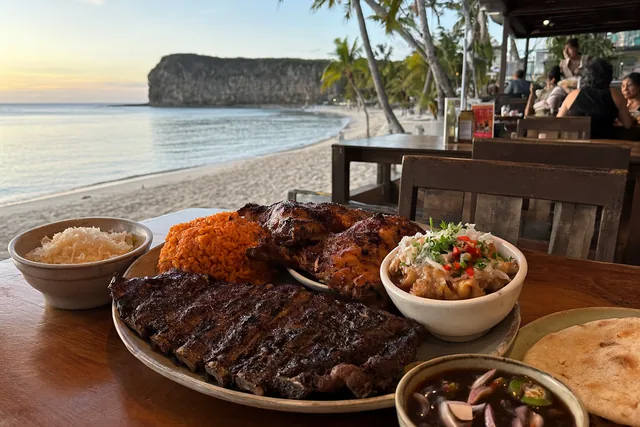
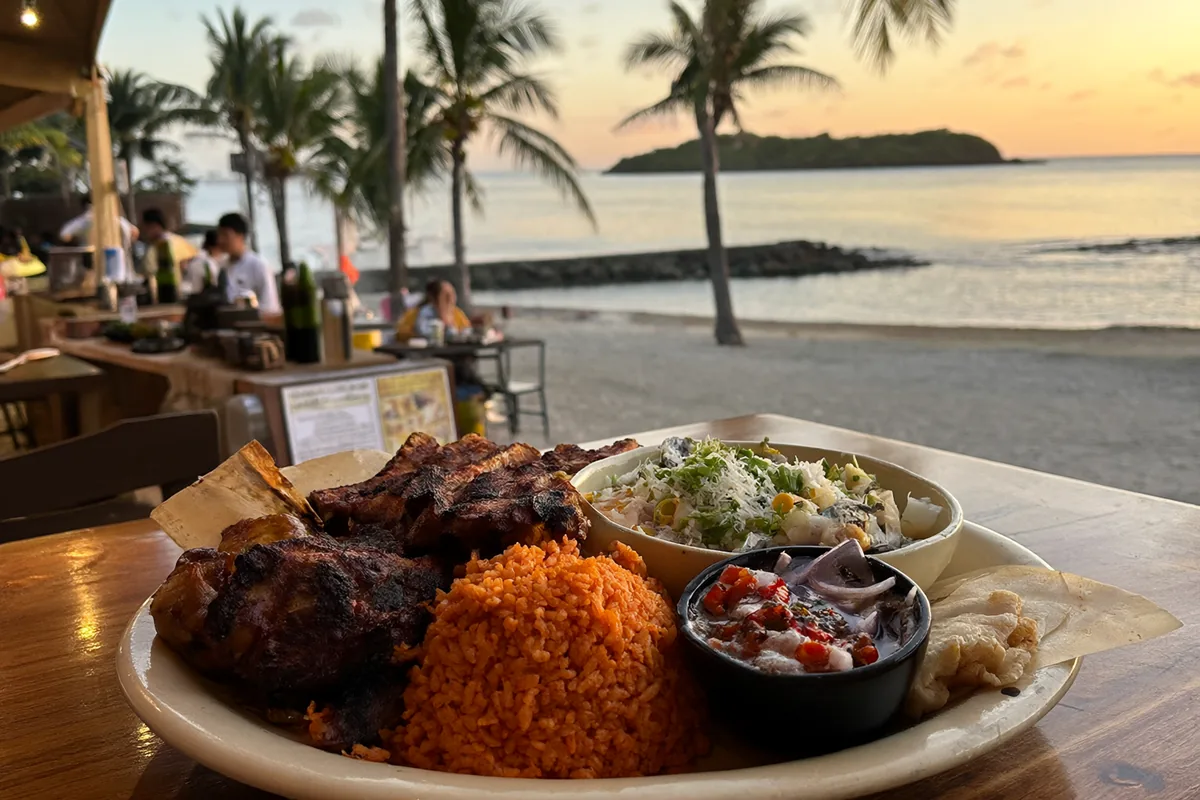
- Barbecue (everywhere): chicken, pork ribs and beef short ribs marinated in soy sauce, vinegar, garlic and onion and grilled over charcoal. Weekend beach barbecues are a way of life on Saipan.
- Red rice (everywhere): rice coloured orange-red with achote (annatto) seeds and cooked with onion and garlic, served with almost every local meal.
- Finadene (everywhere): the dipping sauce of soy sauce, lemon juice or vinegar, onion and hot pepper that goes on rice, meat and fish.
- Kelaguen (everywhere): chicken, fish, shrimp or beef finely chopped and "cooked" with lemon juice, then mixed with salt, hot pepper, green onion and often grated coconut. Fish and shrimp kelaguen are especially popular on the islands.
- Kadun pika (local restaurants and fiestas): chicken stewed in soy sauce, vinegar, garlic and hot pepper, sometimes with coconut milk. Pika means spicy.
- Chicken estufao (local restaurants): chicken braised in soy sauce, vinegar, garlic and bay leaves, similar to Filipino adobo, eaten with red rice.
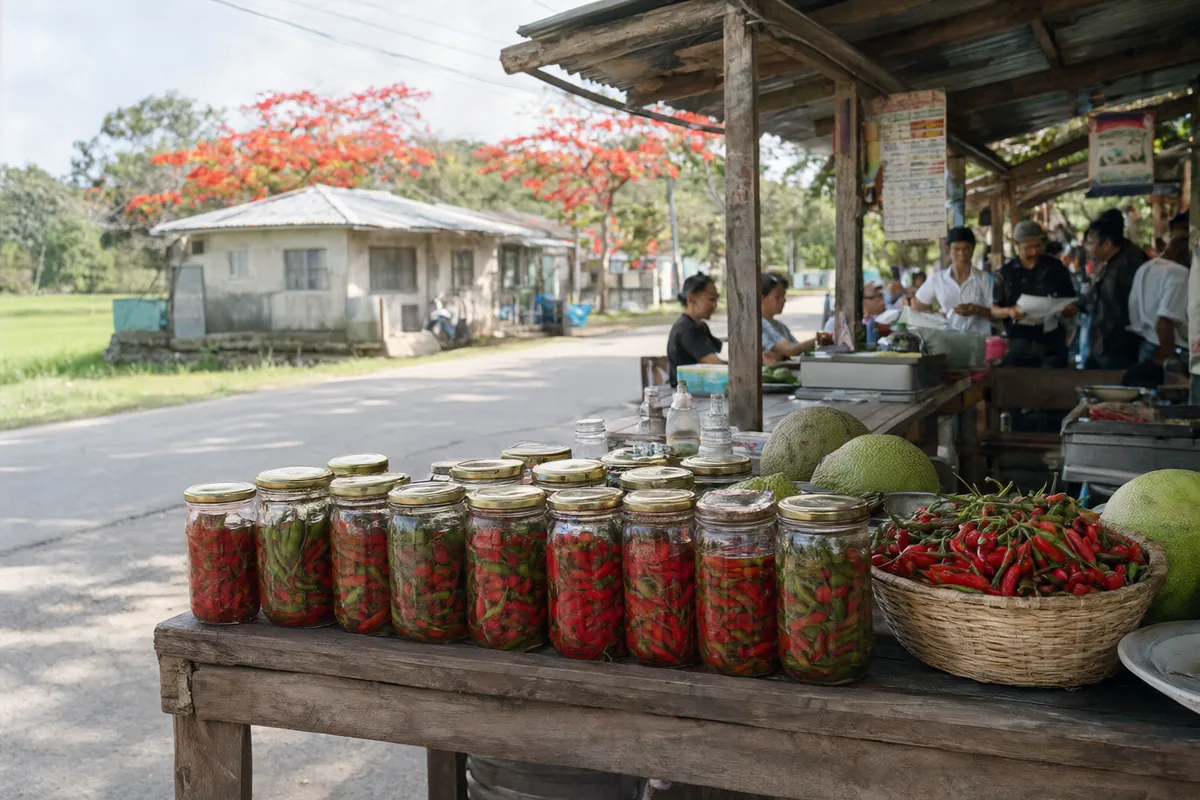
- Tinian hot peppers (Tinian and everywhere): small, fiery local chillies, known as donni' sali in Chamorro, that grow wild on Tinian and are pickled, dried or made into sauces sold across the islands.
- Titiyas (everywhere): flatbread made with flour and coconut milk, or with corn, cooked on a griddle and eaten with kelaguen or barbecue.
- Empanada (fiestas and bakeries): the local empanada is a crisp, bright orange turnover filled with a savoury, creamy rice-flour filling coloured with achote.
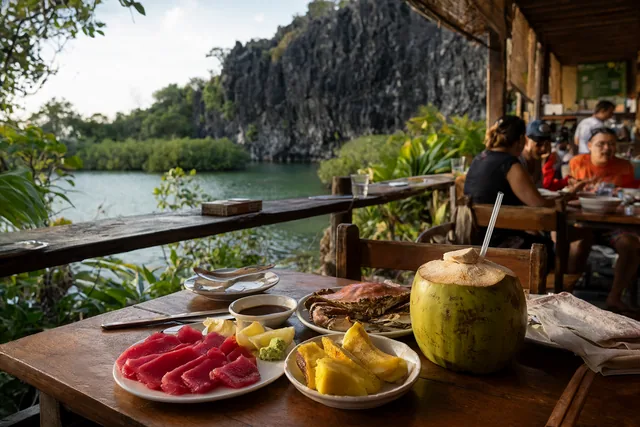
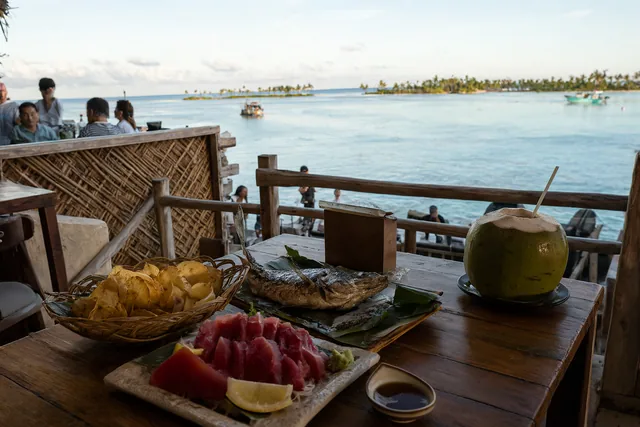
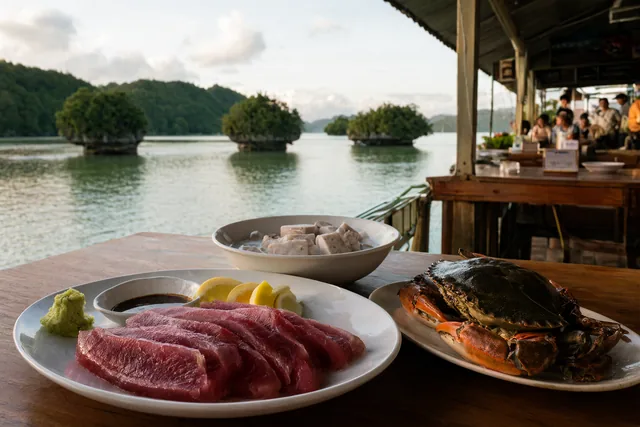
- Fresh fish (everywhere): reef fish, tuna, mahi mahi and wahoo, grilled, fried, made into kelaguen or served as sashimi, with Carolinian families especially known for their fishing and fish dishes.
- Latiya (fiestas and bakeries): sponge cake topped with a thick vanilla custard and dusted with cinnamon, the favourite fiesta dessert.
- Apigigi (fiestas and markets): grated young coconut and tapioca wrapped in leaves and grilled into a chewy, lightly sweet snack.
Filipino lumpia and pancit are on every party table, Korean and Japanese restaurants are everywhere in Garapan, and Spam and eggs with rice is a common breakfast.
How to read a menu in the Northern Mariana Islands
Menus in the Northern Mariana Islands are in English, and many in Garapan also have Japanese, Korean or Chinese versions. Local restaurants and fiesta tables use Chamorro and sometimes Carolinian names for dishes, and spellings vary, so finadene may also appear as finadeni or fina'denne'. These are the words you will see most often.
| Local term | Language | Meaning |
|---|---|---|
| Kelaguen | Chamorro | Chopped meat or seafood dressed with lemon, pepper and coconut |
| Finadene | Chamorro | Soy, lemon or vinegar, onion and hot pepper sauce |
| Hineksa' aga'ga' | Chamorro | Red rice coloured with achote |
| Kadun | Chamorro | Stew or soup |
| Pika | Chamorro | Spicy |
| Estufao | Chamorro | Soy and vinegar braise |
| Mannok / guihan / uhang | Chamorro | Chicken / fish / shrimp |
| Lemmai / niyok | Chamorro | Breadfruit / coconut |
| Donni' sali | Chamorro | Small wild hot pepper |
| Ayuyu | Chamorro | Coconut crab |
| Titiyas | Chamorro | Flatbread |
| Fiesta plate | Local English | Red rice, barbecue, kelaguen and sides on one plate |
| Plate lunch | Local English | A filling set lunch of rice, a main and sides |
Finadene made with Tinian hot peppers can be very hot, and local kelaguen often has fresh chilli mixed through it. Ask for the sauce on the side and taste first. swap.menu explains Chamorro dish names when it reads the menu, and lets you add a note like "not too spicy" to your order.
Tipping, tax and paying the bill
The Northern Mariana Islands follow American tipping customs. In sit-down restaurants, a tip of 15 to 20 percent of the bill is expected, and a dollar or two per drink at a bar. Hotel restaurants and some places that cater to tour groups add a service charge automatically, so check the bill before tipping on top. At counters, food trucks and the street market, tipping is optional. Our guide to tax and service charges on menus explains how service charges work around the world.
Menu prices are usually shown before the tip. The currency is the US dollar. Cards are accepted at hotels, most restaurants and supermarkets on Saipan, but bring cash for the street market, roadside stands, fiestas, small local eateries and most places on Tinian and Rota. ATMs are in Garapan and other parts of Saipan, and only a few on Tinian and Rota. If you use a card from outside the United States and the terminal offers to charge you in your home currency, choose US dollars: our guide to paying in local currency explains why.
Meal times are American: breakfast early, lunch around noon and dinner from about 6pm. Garapan's restaurants and bars stay open later, while village eateries often close in the afternoon. Many families spend weekend afternoons at beach parks along Saipan's west coast, grilling barbecue under the trees.
Fiestas: each village on Saipan, Tinian and Rota celebrates the feast day of its patron saint with a mass, a procession and food, and families host open houses for relatives, friends and often visitors. A fiesta table holds red rice, barbecue, kelaguen, kadun pika, lumpia, pancit, titiyas, empanadas and latiya, and guests are urged to eat and take a plate home. If you are invited, go hungry and accept a second helping.
Where to eat in the Northern Mariana Islands, island by island
Saipan is the main island, with the airport, nearly all hotels and most restaurants. Tinian is a short flight or boat ride to the south, and Rota a short flight beyond. Jump to a destination:
Where to eat in Garapan
Garapan, on Saipan's west coast, is the island's tourist and hotel district, and it has the widest choice of restaurants in the Northern Mariana Islands. Within a few blocks of the beach you will find Japanese restaurants serving sushi, ramen and set meals, Korean barbecue, Chinese restaurants, Filipino eateries, steakhouses, bars and a handful of places serving Chamorro and Carolinian food. Hotels along the beach hold barbecue buffets and cultural dinner shows, an easy way to try red rice, kelaguen and barbecue together.
The Garapan Street Market, held on Thursday evenings, is the highlight of the week for food. Stalls line the street selling barbecue skewers and ribs, red rice, kelaguen, lumpia, empanadas, Korean and Filipino dishes, desserts and fresh coconuts, with music and crafts, and locals come as much as visitors. Bring cash and an appetite. Sunset over the sea and Managaha Island is the time most people book dinner in Garapan, and beachfront tables fill early on weekends and holidays.
Where to eat in Susupe and Chalan Kanoa
South of Garapan along Beach Road, Susupe and neighbouring Chalan Kanoa are local neighbourhoods with government offices, schools, churches and the shops and eateries where Saipan residents eat every day. This is where to find plate lunches of red rice with barbecue or estufao, Filipino bakeries selling pan de sal and ensaymada, Chamorro restaurants with kelaguen and kadun pika, and small Korean and Chinese places. Prices are lower than in Garapan's hotels.
The beach parks along the coast in Susupe and Chalan Kanoa are popular with families at weekends, when the smell of barbecue drifts across the sand. Chalan Kanoa's large Catholic church is at the centre of community life, and fiestas here bring out full tables of local food. If you have a car, a lunch run to Susupe is the best way to see what Saipan eats when it is not catering to visitors.
Where to eat on Managaha Island
Managaha Island, a small, sandy island inside the reef off Garapan, is Saipan's favourite day trip, reached by a short boat ride. It has white beaches, clear shallow water for snorkelling and the remains of Japanese wartime guns among the trees. There is a small snack bar and food concession on the island, and many day tour packages include a lunch of barbecue, rice, salads and fruit eaten at picnic tables under the trees.
Food on Managaha Island is simple and priced for a captive audience, so check what your tour includes before you go, and bring water and sunscreen. Some visitors pack a picnic from a Garapan store. Visitors pay a small fee to land on the island, and the island has no overnight accommodation, so you will be back in Garapan for dinner.
Where to eat on Tinian
Tinian, a short flight or ferry from Saipan, is flat, quiet and rural, best known for the airfields from which the atomic bomb missions of 1945 flew, and for the ancient House of Taga latte stones in the village of San Jose. It is also the home of the Tinian hot pepper, a small, fierce chilli that grows wild across the island. You will find it pickled in jars, dried and made into sauces in local stores, and Tinian has celebrated it with a hot pepper festival.
San Jose, the only village on Tinian, has a handful of small restaurants, stores and takeaways serving barbecue, red rice, kelaguen, fish and Chamorro dishes, and choice is limited, especially in the evening. Most visitors come on a day trip, and some tours include lunch. If you stay overnight, ask your hotel about meals, carry cash, and buy a jar of Tinian peppers to take home, if you can handle the heat.
Where to eat on Rota
Rota, the southernmost of the Northern Mariana Islands and closest to Guam, is the quietest of the three populated islands, with green hills, limestone cliffs and some of the clearest water in the Pacific. The main village, Songsong, sits on a narrow isthmus below the flat-topped mountain known as the Wedding Cake. It has a few small restaurants and stores, and the island's hotels serve fresh fish, barbecue, red rice and Japanese dishes, as many visitors come from Japan.
Rota is a farming and fishing island, and its food is home cooking at its best: fish caught that day, local fruit, breadfruit, taro and kelaguen. The feast of the village's patron saint, San Francisco de Borja, held in October, is Rota's biggest fiesta, when families open their homes and the island fills with visitors from Saipan and Guam. At other times, Rota is very quiet in the evening, so plan dinner with your hotel and carry cash.
Vegetarian, vegan and allergy tips
Local food in the Northern Mariana Islands centres on meat and seafood, so vegetarians need to ask. Red rice, titiyas, breadfruit, latiya and fresh fruit are often meat free, though red rice may be cooked with bacon or stock. Garapan's Japanese, Korean, Chinese and Western restaurants have vegetable dishes, tofu and salads. "Vegetarian" is understood everywhere. Finadene and most marinades are soy based and contain wheat, and kelaguen often contains coconut.
Shellfish appears in kelaguen and many restaurant dishes, coconut is common in local cooking, and soy sauce is in almost every marinade, which matters for anyone with a shellfish, coconut, soy or gluten allergy. Restaurants on Saipan are used to American-style allergy questions; on Tinian and Rota choices are fewer, so ask carefully. Our guide to eating abroad with food allergies explains how to explain an allergy clearly.
Chamorro and Carolinian phrases and local food terms
Everyone speaks English, but greetings in Chamorro and Carolinian are part of island life and always welcome.
Håfa adai "Hello" in Chamorro
Tirow "Hello" in Carolinian
Si Yu'us ma'åse' "Thank you" in Chamorro
Olomwaay "Thank you" in Carolinian
Fiesta plate, please Red rice, barbecue, kelaguen and sides on one plate
Finadene on the side Useful when you are not sure about the hot peppers
Not too pika, please "Not too spicy", understood in any local restaurant
How swap.menu helps you eat in the Northern Mariana Islands
Menus here are in English, but a local restaurant in Susupe or a stall at the Garapan Street Market might list kelaguen, kadun pika, estufao, titiyas and apigigi without explanation. Photograph the menu with swap.menu and every dish is explained in plain language, so you know that kelaguen is chopped chicken or fish dressed in lemon and that an empanada here is filled with rice cream. Visitors from Japan, Korea and China, who make up many of Saipan's visitors, can read any menu in their own language, choosing from 29, and every price is converted from US dollars to your home currency.
Tap the dishes you want, add a note such as "no shellfish" or "sauce on the side", typed or spoken, and swap.menu shows your order clearly for the staff. Your scanned menus are saved, so you can find that plate lunch place in Chalan Kanoa again. You can try it right now on a sample menu with the free demo, or see travel pass prices.
Off to the Northern Mariana Islands? Your first 3 menu scans are free, and a travel pass starts from $4.99 with nothing that renews.
Start free with 3 scansNorthern Mariana Islands food FAQ
Do you tip in Saipan?
Yes. The Northern Mariana Islands follow American customs, so a tip of 15 to 20 percent is expected in sit-down restaurants. Check the bill first, as hotel restaurants and tour group venues often add a service charge.
What food is the Northern Mariana Islands known for?
The islands are known for Chamorro barbecue, red rice, kelaguen, finadene sauce and Tinian hot peppers, along with fresh fish, titiyas, empanadas and latiya. Filipino, Korean and Japanese food are also part of everyday eating on Saipan.
When is the Garapan Street Market?
The Garapan Street Market on Saipan is held on Thursday evenings, with stalls selling barbecue, local dishes, Asian food, desserts and crafts. Bring cash and arrive early in the evening.
Is Saipan expensive to eat out?
Hotel restaurants in Garapan are priced like resort areas in the United States. Local eateries in Susupe and Chalan Kanoa, plate lunches and the street market are much better value.
Is tap water safe to drink on Saipan?
Most residents and visitors do not drink tap water on Saipan, which can be salty. Drink bottled or filtered water, which hotels provide, and do the same on Tinian and Rota.
How can I understand Chamorro dish names on a menu?
Learn a few words such as kelaguen, finadene, kadun and pika, or photograph the menu with swap.menu. It explains every local dish, translates the menu into your own language if English is not your first language, and converts prices to your home currency.
Travelling further in the region? Read our food guides for nearby islands and countries:
- Guam food guide
- Palau food guide
- Micronesia food guide
- Philippines food guide
- Japan food guide
- South Korea food guide
Or browse every travel food guide.