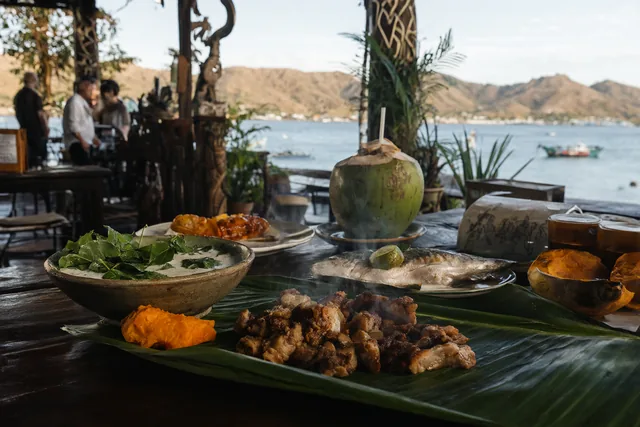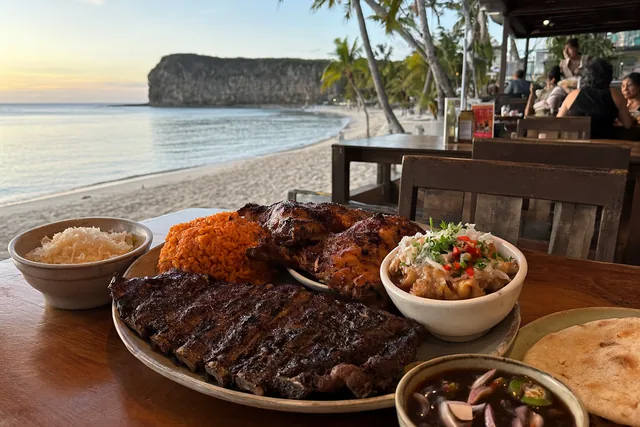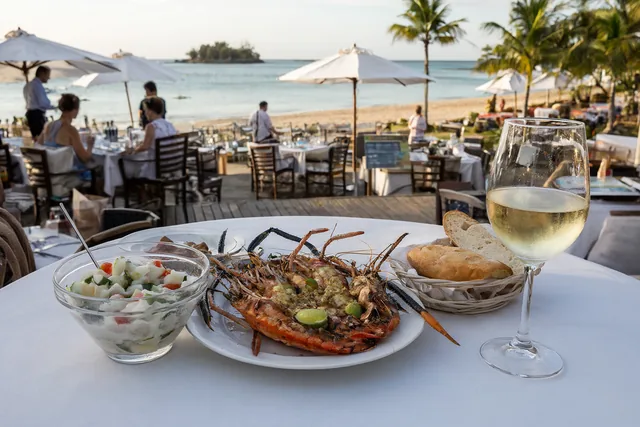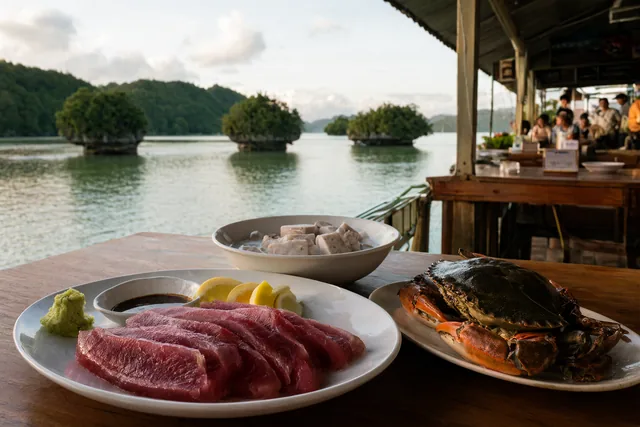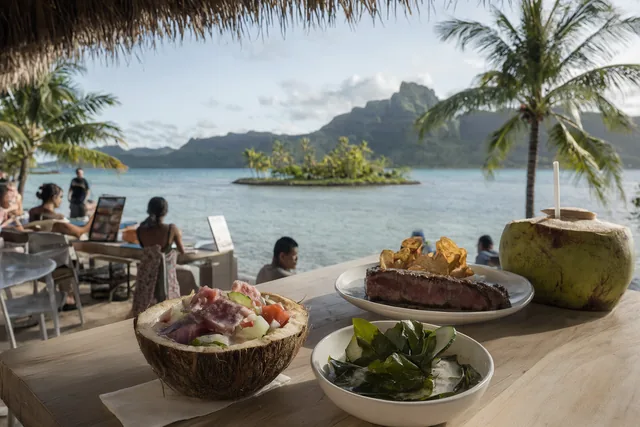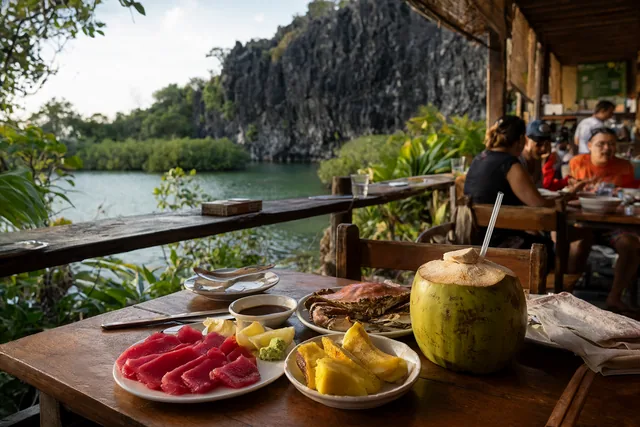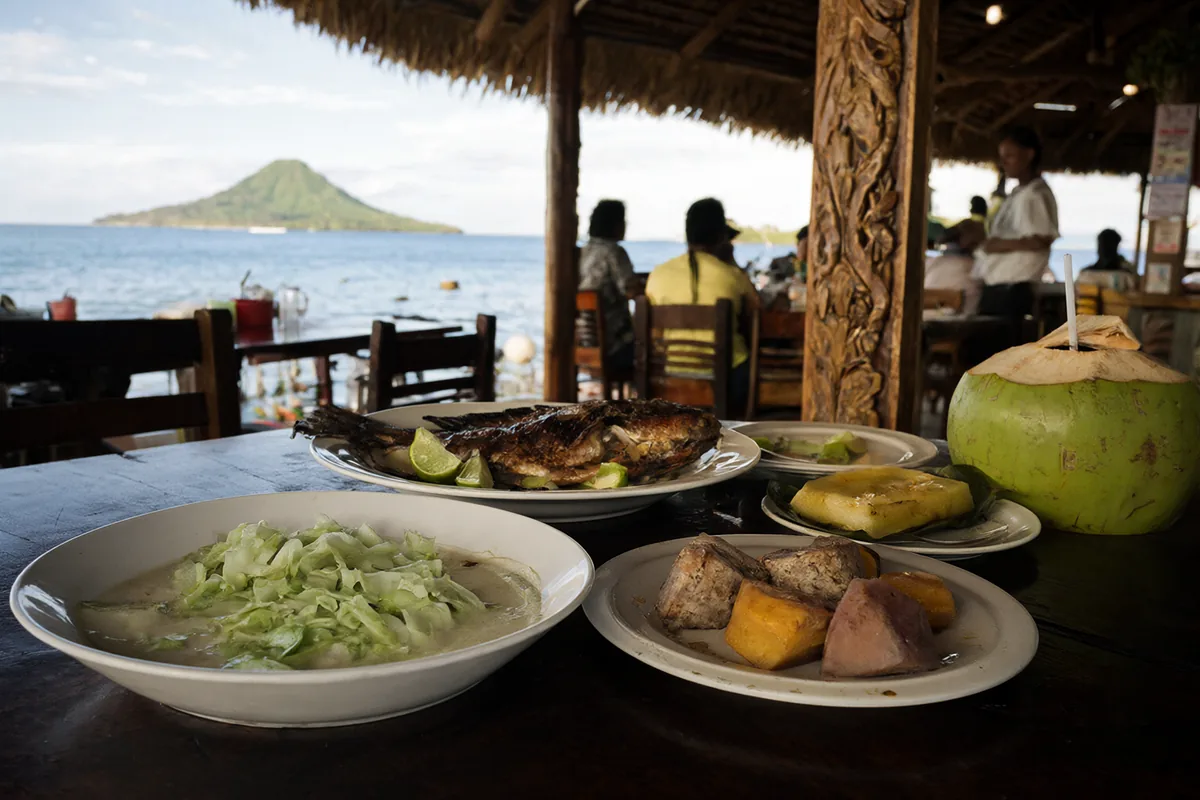
The Solomon Islands are a scattered nation of nearly a thousand islands, most of them covered in rainforest and fringed by reefs, and few visitors arrive expecting restaurants. What they find is honest island food: fish caught that morning, root crops from village gardens, greens and puddings cooked in coconut cream, and the famous ngali nut. This Solomon Islands food guide covers the dishes to know, the Pijin words you will hear at markets and see on menu boards, how a motu stone oven works, tipping and paying, and then where to eat in Honiara, Gizo, Munda, the Marovo Lagoon and Auki. Outside the capital, most meals are eaten at lodges and guesthouses, so this guide says what to expect there, as well as where the markets are.
What to eat in the Solomon Islands: 11 dishes to know
These are the foods you will meet at markets, village feasts, eco-lodges and Honiara restaurants. Most dishes are known by their English or Pijin names.
- Motu (everywhere): food cooked on hot stones under a mound of leaves, the Solomon Islands earth oven. Fish, pork, chicken, cassava, taro, sweet potato and puddings are laid on stones heated in a fire, covered with leaves and left to bake for an hour or more, especially for Sunday and special occasions.
- Cassava and taro puddings (everywhere): grated cassava or taro mixed with coconut cream, wrapped in leaves and baked in the motu until it sets into a dense, chewy slab. Many versions are topped or mixed with crushed ngali nuts.
- Ngali nuts (everywhere, in season): canarium nuts with a rich, buttery taste, eaten raw, roasted, in puddings or sold in small leaf packets at markets. The Solomon Islands are one of the main homes of the ngali nut.
- Slippery cabbage (everywhere): a soft leafy green, also called aibika in the region, cooked in coconut cream and eaten with almost every meal. In Pijin it is often just called kabis.
- Kumara, taro and cassava (everywhere): sweet potato, taro and cassava, boiled, roasted or baked in the motu, the starch at most meals. Swamp taro and yams are grown on some islands too.
- Fish in coconut cream (everywhere): reef fish or tuna simmered in coconut cream, sometimes with greens or chilli, the everyday village dish of the coast.
- Grilled and fried fish (everywhere): whole reef fish or tuna steaks grilled over coals, or fried and served with rice or chips at markets and cafés.
- Smoked fish (markets): fish smoked over a fire to keep it without refrigeration, sold whole or in pieces at markets in Honiara, Auki and the provinces.
- Crayfish and mud crab (the coast and lagoons): spiny lobster, called "crayfish" locally, and mud crabs from the mangroves, served at lodges and Honiara restaurants when in season.
- Rice and noodles (everywhere): imported rice and instant noodles, often with tinned tuna or corned beef, are everyday meals in towns. You will see them in every small store.
- Tropical fruit (everywhere): pawpaw, pineapple, mango, banana, watermelon and fresh coconuts, cheap and plentiful at the markets.
Kava is not a big tradition in the Solomon Islands. The social chew here is betel nut, with a pepper leaf or mustard stick and lime, sold in bunches at every market. It stains the mouth red, and many hotels, offices and public places ban chewing and spitting.
How to read a menu in the Solomon Islands
Hotel and restaurant menus in Honiara are in English, but market boards, lodges and village kitchens use Solomon Islands Pijin, the common language across islands that between them speak more than 60 local languages. Pijin is easier than it looks: read the words aloud and many sound like English, so fis is fish and kokonat is coconut. These are the words you will see and hear most often.
| Local term | Language | Meaning |
|---|---|---|
| Kaikai | Pijin | Food, or to eat |
| Motu | Pijin | Stone oven, and food cooked in it |
| Fis | Pijin | Fish |
| Kokorako | Pijin | Chicken |
| Pig / bulumakau | Pijin | Pork / beef |
| Kumara / taro / kasava | Pijin | Sweet potato / taro / cassava |
| Kabis | Pijin | Leafy greens, usually slippery cabbage |
| Kokonat | Pijin | Coconut, and coconut cream |
| Ngali | Pijin | Canarium nut |
| Puding | Pijin | Baked cassava or taro pudding |
| Crayfish | Local English | Spiny lobster |
| Wata | Pijin | Water |
| Nambawan | Pijin | Excellent, the best |
"Crayfish" on a Solomon Islands menu means spiny lobster from the reef, not a small freshwater crayfish, and "pudding" is usually a savoury cassava or taro bake rather than dessert. swap.menu explains local dish names and Pijin words when it reads a menu or a lodge board.
Tipping, tax and paying the bill
Tipping is not customary in the Solomon Islands, and it is not expected in restaurants, lodges or markets. If you stay for several nights at a village-run eco-lodge and want to say thank you, a contribution to the community or a gift for your hosts is welcome. Market prices are fixed, and haggling is not part of local custom. Our guide to tax and service charges on menus explains how tax and service lines work around the world.
Taxes are usually included in menu prices in local places, while some hotels and resorts add them to the bill, so check the small print. The currency is the Solomon Islands dollar (SBD), written SI$. Cards are accepted at the main hotels, some restaurants and supermarkets in Honiara, but markets, taxis, guesthouses, village lodges and nearly everything outside the capital run on cash. ATMs are in Honiara and in a few provincial towns, and there are none in most villages, so carry enough cash for your whole stay in the provinces, in small notes. If a card terminal offers to charge you in your home currency, choose Solomon Islands dollars: our guide to paying in local currency explains why.
Meal times are early: breakfast from 6am or 7am, lunch around noon, and dinner from about 6pm. Many local eateries close in the late afternoon. Sunday is a day of church for most Solomon Islanders, and in many villages it is strictly observed, with no work, swimming or noise near the church during services. Shops and markets close or open briefly, and Sunday lunch is often cooked in the motu.
The motu: unlike a pit oven, the Solomon Islands motu is usually built on the ground. Stones are heated in a fire until they are very hot, food wrapped in leaves is laid on and between them, and everything is covered with more leaves to hold in the heat. Cassava puddings, fish and pork cooked this way have a smoky, earthy flavour. Lodges in the provinces can often arrange a motu for guests if asked ahead.
Where to eat in the Solomon Islands, island by island
Most visitors fly into Honiara on Guadalcanal, then take a domestic flight or boat to the Western Province for diving and lagoons, or to Malaita. Jump to a destination:
Where to eat in Honiara
Honiara, the capital on the north coast of Guadalcanal, has almost all of the country's restaurants, and it is where you will find the widest choice. The essential stop is the Honiara Central Market on the seafront along Mendana Avenue, the biggest market in the country, where sellers from Guadalcanal and Malaita bring kumara, taro, cassava, slippery cabbage, ngali nuts, fruit, betel nut and fresh and smoked fish. Food stalls sell puddings, fried fish and rice cheaply, and the market is busiest in the morning.
Restaurants in Honiara are mostly in hotels along the waterfront and around Point Cruz, serving grilled fish, crayfish, steaks, curries and Asian dishes with views across the water towards Savo Island. The city has a long-established Chinese community, and Chinese restaurants and takeaways around the Chinatown area near the Mataniko River and across town serve noodles, fried rice and roast meats. Small cafés do coffee and sandwiches for office workers. Honiara is also the base for visits to the Guadalcanal battlefields of the Second World War, and most tours include a lunch stop. For dinner in Honiara, it is easiest to eat at your hotel or take a taxi to a restaurant.
Where to eat in Gizo
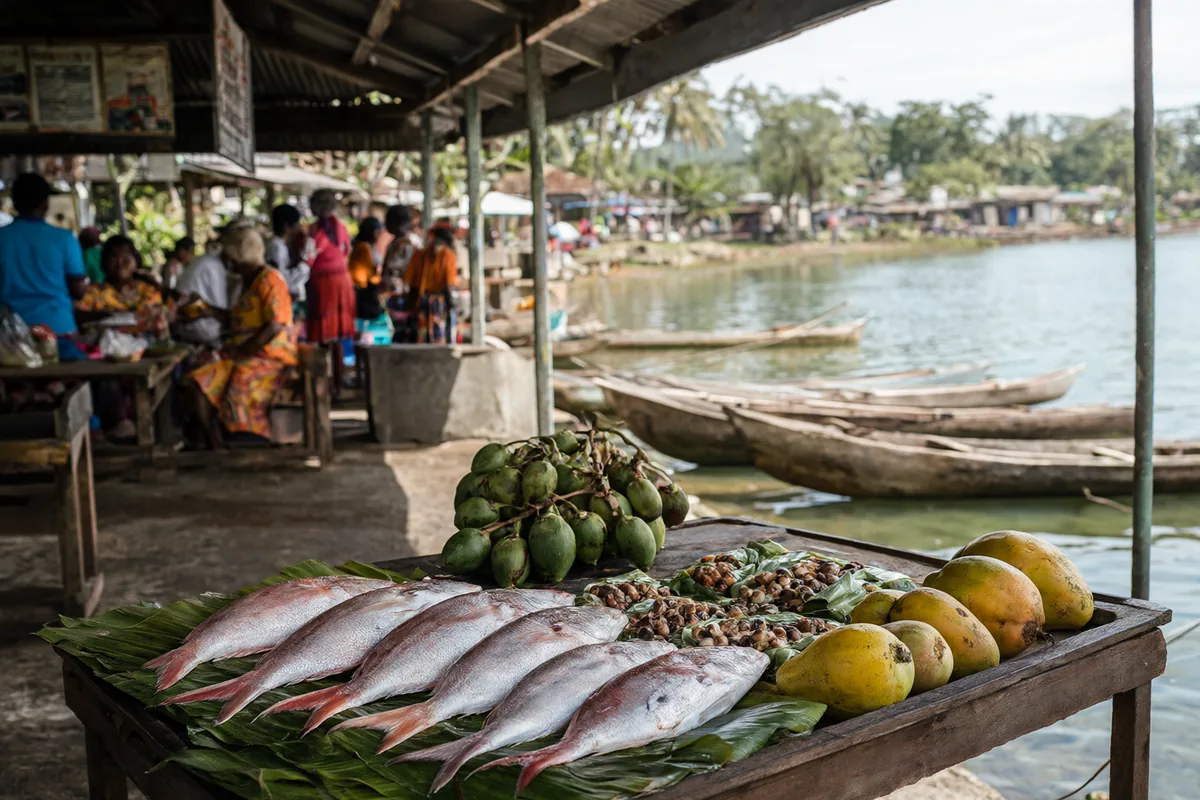
Gizo, the capital of the Western Province, is a small, friendly town on a harbour, and the main base for diving, surfing and island trips in the west. Its waterfront Gizo market is the heart of town, with fish laid out on leaves, crabs, crayfish, fruit, vegetables, ngali nuts and betel nut brought in by canoe from the surrounding islands. Mornings are best, and some days are busier than others depending on boats arriving.
Gizo has a few simple restaurants and cafés serving fish and chips, curries, grilled fish and rice, and the dive resorts and island lodges nearby have their own dining rooms, usually with set menus based on the day's catch. A boat trip to Kennedy Island, where John F. Kennedy swam ashore in 1943, often includes a picnic of fresh fish. Bring cash from Honiara or use Gizo's limited banking, and tell lodges about dietary needs ahead, as supplies come by boat.
Where to eat in Munda
Munda, on New Georgia island beside the Roviana Lagoon, grew up around an airfield built during the Second World War, and it is now a base for divers exploring wrecks, reefs and wartime relics. The town has a small market, a few stores and a handful of guesthouses and lodges, which provide most of the meals. Expect fish caught that day, crayfish in season, root crops, slippery cabbage in coconut cream and fresh fruit.
Food in Munda is simple and local, and there are few places to eat outside your accommodation, so choose a lodge that includes meals. Some lodges will cook a motu on request, and village visits around the Roviana Lagoon can include a meal of puddings and fish. The market is the best place to buy fruit and ngali nuts for boat trips, and it is worth asking what came in that morning.
Where to eat in the Marovo Lagoon
The Marovo Lagoon, on the eastern side of New Georgia, is one of the largest saltwater lagoons in the world, ringed by forested islands and dotted with villages known for wood carving. There are no restaurants: visitors stay at small eco-lodges, most of them owned and run by village families, and all meals are included. Food is whatever the lagoon and gardens provide, from grilled reef fish, crab and crayfish to taro, kumara, cassava puddings, greens in coconut cream and tropical fruit.
Meals in the Marovo Lagoon are cooked over fires or in a motu and eaten with the family or other guests. Bring snacks, any special foods and enough cash from Honiara, as there are no ATMs or shops of any size, and let your lodge know about dietary needs when you book, since everything else arrives by boat. Respect Sunday as a day of rest in the villages, which means quiet, no swimming near the church and modest dress.
Where to eat in Auki
Auki, the main town of Malaita, the most populous island in the country, is a short ferry ride from Honiara. Its busy Auki market sells root crops, greens, fruit, betel nut and fish, including smoked fish from the lagoons, and small cafés and takeaways nearby serve rice, fish, chicken and noodles. Auki is a working town rather than a tourist centre, and its food is everyday local cooking.
Near Auki, the Langa Langa Lagoon is known for its artificial islands built from coral stone and for the making of shell money, still used for bride price and ceremonies on Malaita. Visits to lagoon villages can include a meal of fish and puddings with your hosts. Guesthouses in Auki provide simple meals, and visitors should dress modestly and ask permission before entering villages, as custom is strong on Malaita.
Vegetarian, vegan and allergy tips
The everyday food of the Solomon Islands is mostly plant based: kumara, taro, cassava, slippery cabbage, puddings, ngali nuts and fruit, so vegetarians eat well at markets and lodges. Fish is the main protein, though, and many greens and puddings are cooked alongside fish or meat in the motu, or flavoured with tinned tuna. Say "mi no save kaikai mit, mi no save kaikai fis" ("I don't eat meat, I don't eat fish") or simply "vegetarian", which is understood in hotels and most lodges. Honiara's restaurants have vegetarian options, but choice is narrow elsewhere.
Coconut cream is in many local dishes, and ngali nuts are in puddings and snacks, which matters for anyone with a coconut or tree nut allergy. Shellfish such as crab and crayfish are common at lodges. In remote areas there is no quick access to medical care, so if you have a serious allergy, tell your lodge before you arrive and carry your medication. Our guide to eating abroad with food allergies explains how to explain an allergy clearly.
Useful Pijin phrases for ordering
English is the official language and is spoken in hotels and offices, but Pijin is what you will hear at the market and in villages.
Halo / Gud morning "Hello" / "Good morning"
Plis "Please"
Mi laekem diswan "I would like this one" (pointing)
Hamas nao diswan? "How much is this one?"
Mi no save kaikai mit "I don't eat meat"
Hem nambawan! "It's excellent!", a compliment for the cook
Tanggio tumas "Thank you very much"
Lukim iu "See you", a friendly goodbye
How swap.menu helps you eat in the Solomon Islands
A lodge board in the Western Province might list puding, kabis, crayfish and ngali, and a Honiara café may simply write prices in Solomon Islands dollars beside a few dish names. Photograph the menu with swap.menu and every dish appears in your own language with a short explanation, so you know that kabis is slippery cabbage in coconut cream and that crayfish is lobster. Visitors from Japan, China, Korea or Europe can read any menu in the Solomon Islands in their own language, choosing from 29. Every price is converted from Solomon Islands dollars to your home currency, and we point out any tax added at hotels.
Tap the dishes you want, add a note such as "no fish" or "no nuts", typed or spoken, and swap.menu shows your order clearly for the staff. Your scanned menus are saved, so you can look back at what you ate in Honiara when you are out in Gizo. You can try it right now on a sample menu with the free demo, or see travel pass prices.
Off to the Solomon Islands? Your first 3 menu scans are free, and a travel pass starts from $4.99 with nothing that renews.
Start free with 3 scansSolomon Islands food FAQ
Do you tip in the Solomon Islands?
Tipping is not customary in the Solomon Islands and is not expected in restaurants or lodges. If you stay at a village-run lodge, a contribution to the community or a gift for your hosts is a kind way to say thanks.
What food is the Solomon Islands known for?
The Solomon Islands are known for fresh reef fish and tuna, cassava and taro puddings baked in the motu stone oven, slippery cabbage in coconut cream, and ngali nuts. Root crops such as kumara, taro and cassava are eaten at almost every meal.
Is the Solomon Islands expensive to eat out?
Hotel restaurants in Honiara are fairly expensive, as many ingredients are imported. Markets are very cheap, and eco-lodges in the provinces usually include all meals in the price of a stay.
Is tap water safe to drink in the Solomon Islands?
No. Drink bottled, boiled or filtered water, including in Honiara. Lodges in the provinces usually provide treated rainwater, but ask before drinking it.
What is a motu in the Solomon Islands?
A motu is the traditional stone oven, built by heating stones in a fire and covering food wrapped in leaves with the hot stones and more leaves. Puddings, fish, pork and root crops cooked this way are served at Sunday meals and special occasions.
How can I understand menus and food words in the Solomon Islands?
Learn a few Pijin words such as kaikai, fis, kabis and puding, or photograph the menu with swap.menu. It translates every dish into your language, explains Pijin food words and converts prices from Solomon Islands dollars to your currency.
Travelling further in the Pacific? Read our food guides for nearby countries:
- Papua New Guinea food guide
- Vanuatu food guide
- Fiji food guide
- New Caledonia food guide
- Australia food guide
Or browse every travel food guide.