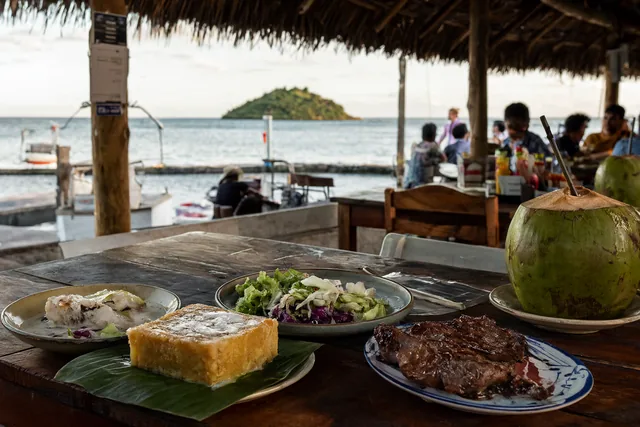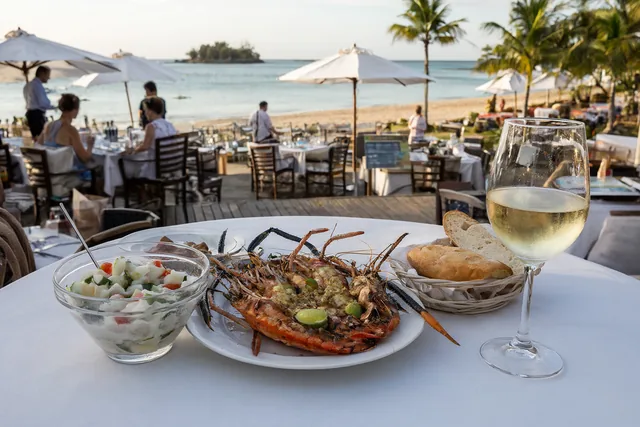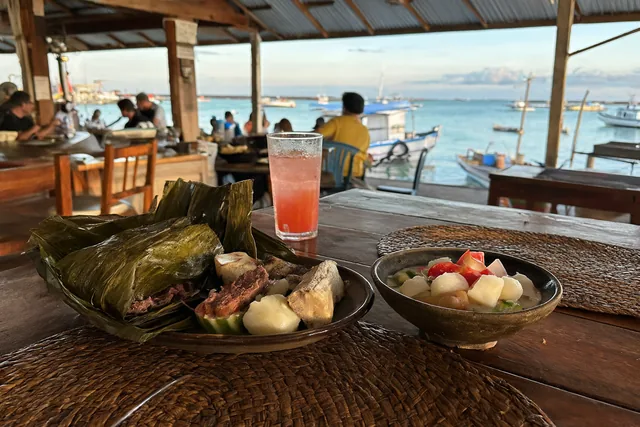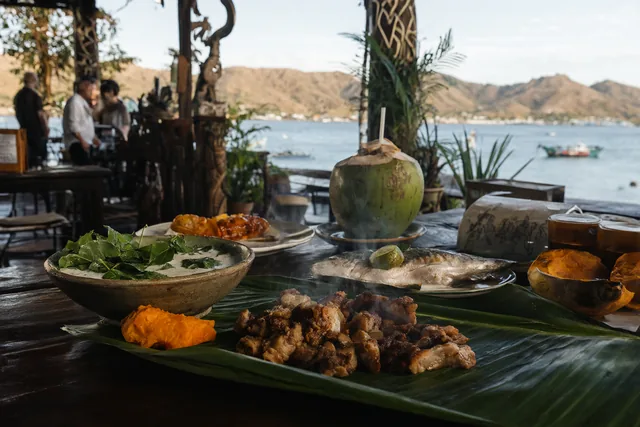
The Cook Islands are fifteen islands spread across a stretch of ocean the size of Western Europe, but most visitors see two of them: Rarotonga, with its jagged green peaks and a ring road you can drive around in under an hour, and Aitutaki, with one of the most beautiful lagoons on earth. The food is Polynesian at heart, with raw fish in coconut cream, taro leaves, root crops and feasts from the umu, and Rarotonga adds a lively café, market and night market scene. This Cook Islands food guide covers the dishes to know, the Cook Islands Māori words you will see on menus, what an umukai and an island night are, tipping and paying, and then where to eat in Avarua, Muri, Arorangi, Aitutaki and Atiu.
What to eat in the Cook Islands: 11 dishes to know
These are the dishes you will find at the markets, island nights, cafés and family feasts. The Cook Islands Māori name comes first where one is used.
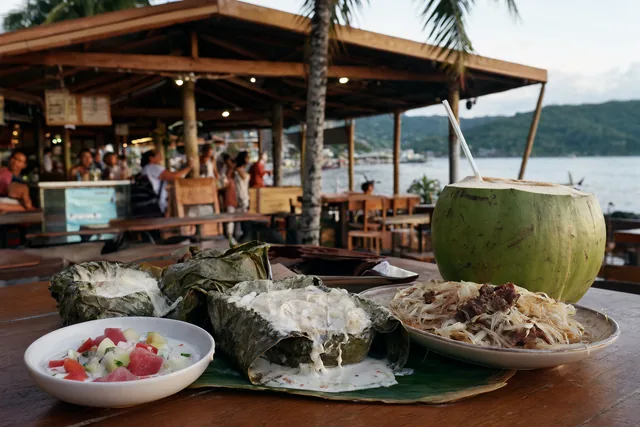
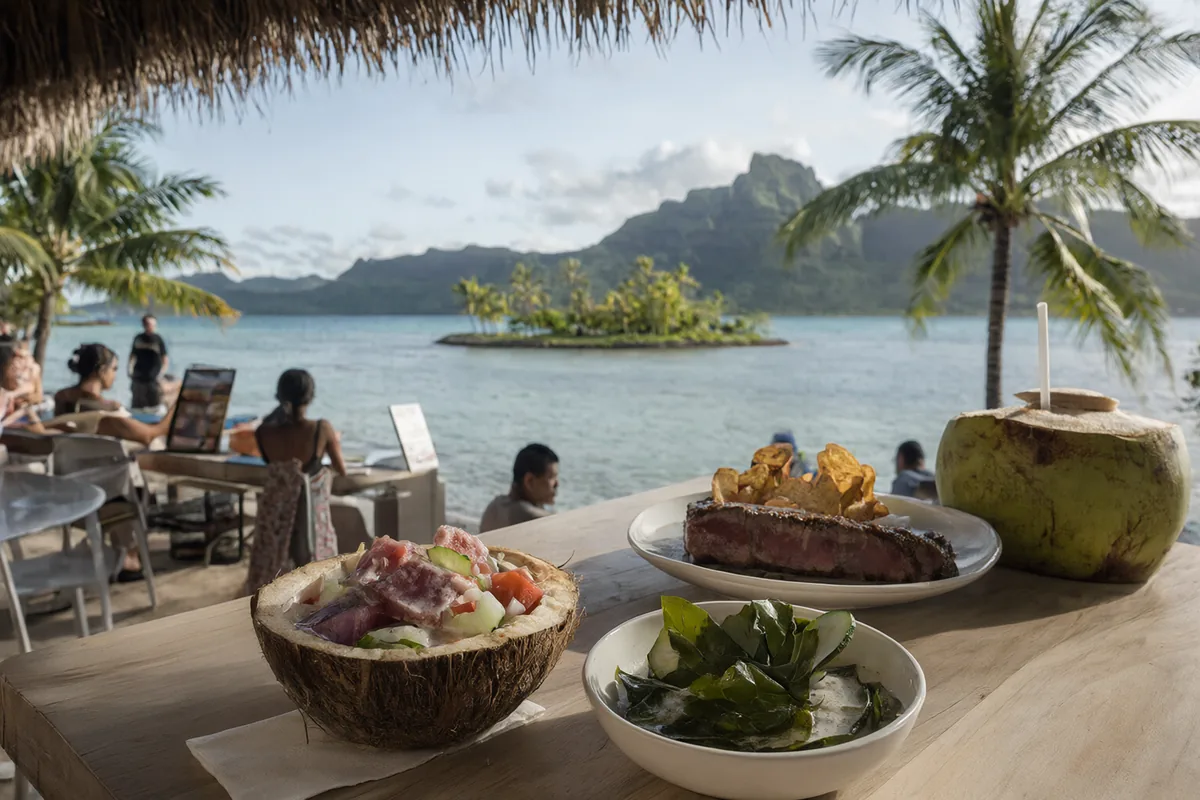
- Ika mata (everywhere): the national dish. Raw fish, usually tuna or wahoo, cured in lime or lemon juice and mixed with coconut cream, cucumber, tomato and onion, often served in a half coconut shell. Every family and café has its own version.
- Rukau (everywhere): young taro leaves cooked slowly with coconut cream and onion until soft and silky. It is served as a side dish at almost every feast.
- Umukai (feasts and Sundays): food cooked in the umu, an earth oven. Pork, chicken, fish, taro, kumara and breadfruit are wrapped in banana leaves and cooked over hot stones in a pit for several hours, giving everything a smoky, tender finish.
- Poke (everywhere): not the Hawaiian raw fish bowl. Cook Islands poke is a sweet pudding of ripe banana, pawpaw or pumpkin mashed with arrowroot starch, baked until set and served with coconut cream poured over the top.
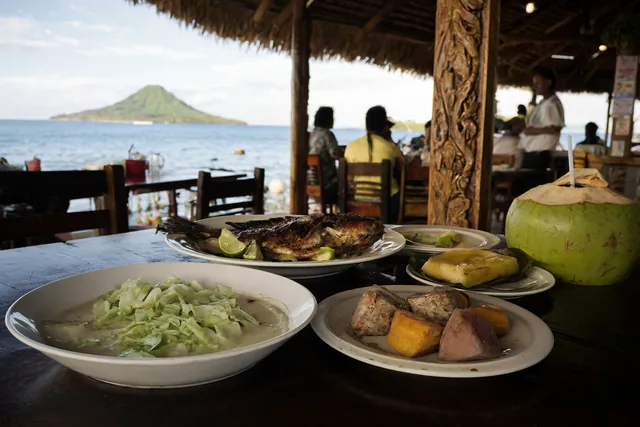
- Taro, kumara and kuru (everywhere): taro, sweet potato and breadfruit, boiled, baked in the umu or fried as chips. Taro grows in wet patches around Rarotonga's ring road.
- Eke (the coast): octopus, tenderised and cooked in coconut cream or curry, or grilled.
- Mainese (feasts and markets): a creamy potato salad, sometimes coloured pink with beetroot, that appears at every family celebration and buffet.
- Mitiore (feasts): grated coconut fermented with onion and other flavourings into a pungent relish, an acquired taste served with fish and root crops.
- Tuna, wahoo and mahi mahi (everywhere): the main game fish, grilled, pan-fried, served as sashimi or in fish sandwiches and burgers at cafés and market stalls.
- Tropical fruit (everywhere): pawpaw, mango, pineapple, starfruit, passionfruit and bananas from the island, often blended into smoothies at the market.
- Nu (everywhere): a green drinking coconut, opened with a machete and served with a straw, the best cold drink on the islands.
How to read a menu in the Cook Islands
Menus in the Cook Islands are in English, and nearly everyone speaks it, but local dishes keep their Cook Islands Māori names, and market boards and island night buffets rarely explain them. In Cook Islands Māori, every vowel is pronounced, a line over a vowel lengthens it, and the apostrophe marks a short glottal stop. These are the words you will see most often.
| Local term | Language | Meaning |
|---|---|---|
| Kai | Cook Islands Māori | Food |
| Umu / umukai | Cook Islands Māori | Earth oven / food cooked in it, or a feast |
| Ika / ika mata | Cook Islands Māori | Fish / raw fish in citrus and coconut cream |
| Rukau | Cook Islands Māori | Taro leaves cooked in coconut cream |
| Poke | Cook Islands Māori | Baked fruit and arrowroot pudding with coconut cream |
| Moa / puaka | Cook Islands Māori | Chicken / pork |
| Eke | Cook Islands Māori | Octopus |
| Kuru / meika | Cook Islands Māori | Breadfruit / banana |
| Taro / kumara / maniota | Cook Islands Māori | Taro / sweet potato / cassava |
| Nu | Cook Islands Māori | Green drinking coconut |
| Mitiore | Cook Islands Māori | Fermented coconut relish |
| Mainese | Local English | Creamy potato salad |
| Island night | Local English | Buffet of local food with a dance show |
| Tumunu | Cook Islands Māori | Bush beer gathering on Atiu, and the hollow stump it is brewed in |
Poke on a Cook Islands menu is a fruit pudding, not the Hawaiian raw fish bowl, so do not be surprised when dessert arrives. swap.menu explains local dish names like poke, rukau and mitiore when it reads the menu, so you know what you are ordering.
Tipping, tax and paying the bill
Tipping is not customary in the Cook Islands, and it is not expected in restaurants, cafés or at the market. Many Cook Islanders consider good hospitality something given freely rather than paid for. If you want to thank staff for excellent service, a small tip will be accepted graciously, but nobody will expect it. Our guide to tax and service charges on menus explains how these lines work around the world.
The Cook Islands charge value added tax (VAT) of 15 percent, and it is included in menu and shop prices. The currency is the New Zealand dollar (NZ$), used alongside Cook Islands notes and coins of the same value, including a famous triangular two dollar coin. Cook Islands currency can only be spent in the Cook Islands, so use it up before you leave or keep a coin as a souvenir. Cards are widely accepted on Rarotonga at restaurants, resorts and supermarkets, but market stalls, the night market, the island buses and small takeaways prefer cash, as do most businesses on Atiu and many on Aitutaki. ATMs are in Avarua, at Muri and at the airport on Rarotonga, and limited elsewhere. When a card machine offers to charge you in your home currency, choose New Zealand dollars: our guide to paying in local currency explains why.
Meal times are relaxed: breakfast and brunch at the cafés, lunch from noon, and dinner from about 6pm, with many restaurants busy early. Sunday is church day, and the singing at a Cook Islands Christian Church service is one of the highlights of a visit. Many shops and cafés close on Sunday, and families gather for an umukai after church. Resorts and some restaurants stay open, so check before you head out.
The umu and island nights: the umu is a pit dug in the ground and lined with stones that are heated on a fire. Food wrapped in banana leaves goes on the stones, more leaves and sacks go over the top, and everything steams and roasts for a few hours. You will taste umukai at family celebrations and at resort island nights, a buffet of local food followed by drumming and dancing. Cook Islands dancing is famous across the Pacific, and island nights are the easiest way to see it and eat local food in one evening.
Where to eat in the Cook Islands, island by island
Almost every visitor flies into Rarotonga, where the two round-island buses run clockwise and anticlockwise, and many add a few days on Aitutaki or a quieter stay on Atiu. Jump to a destination:
Where to eat in Avarua
Avarua, on Rarotonga's north coast, is the capital and the only town in the Cook Islands, with cafés, bakeries, takeaways and harbourside restaurants all within a short walk. The heart of its food life is Punanga Nui Market by the harbour, which has some stalls open through the week and comes fully alive on Saturday morning. Arrive early for ika mata in coconut shells, barbecued fish and meat, poke, rukau, mainese, fresh tropical fruit smoothies, coffee, homemade cakes and drinking coconuts, eaten at tables in the shade while local musicians play.
During the week, Avarua's cafés serve good coffee, fish sandwiches and brunch dishes made with local produce, and the harbourside bars and restaurants are popular at sunset. Takeaways do fish and chips with fresh tuna or wahoo, and the bakeries sell pies and coconut buns. Avatiu harbour, just west of the centre of Avarua, is where the fishing boats come in, and some cafés buy straight from them. Shops in town close early on Saturday and stay closed on Sunday.
Where to eat in Muri
Muri, on the southeast coast of Rarotonga, sits on a wide, shallow lagoon dotted with four small islands called motu, and it is the island's busiest area for visitors. Restaurants and cafés along the beach and the main road serve seafood, ika mata, wood-fired pizza and international dishes, with lagoon views at lunch and sunset. Several resorts in Muri hold weekly island nights.
The Muri Night Market, held on several evenings a week, is one of the best value meals on the island: dozens of stalls cooking curries, barbecued fish, ika mata, rukau, crêpes, noodles, burgers and desserts, eaten at shared tables. Bring cash and arrive early, as popular stalls sell out. During the day, kiosks along Muri beach sell smoothies, coconuts and snacks, and lagoon cruises from Muri often include a barbecue fish lunch on one of the motu.
Where to eat in Arorangi
Arorangi, on Rarotonga's west coast, is the island's sunset side, with resorts, beach restaurants and bars facing the open ocean. It is a quieter, more spread out area than Muri, and many restaurants here are built for watching the sun go down over a cocktail before dinner. Menus focus on fresh fish, ika mata, seafood platters and steaks, and several resorts and cultural centres around Arorangi hold island nights with an umukai buffet and dance show.
Arorangi also has a few small stores, roadside fruit stalls and takeaways along the main road, useful if you are self-catering. The old Arorangi church, one of the earliest on the island, holds Sunday services with powerful hymn singing, and visitors are welcome if they dress modestly. Book ahead for dinner in Arorangi on Friday and Saturday nights in the busy season.
Where to eat on Aitutaki
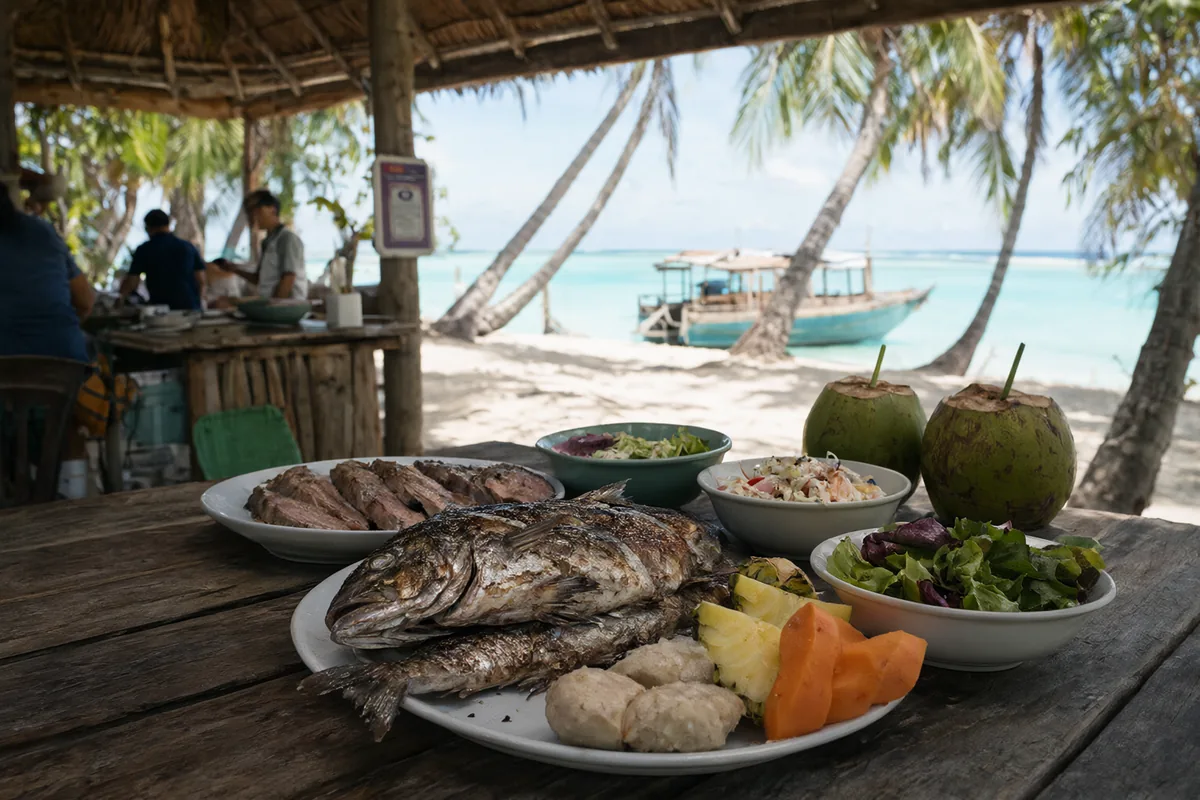
Aitutaki, a short flight north of Rarotonga, is a triangle of hills and coconut palms surrounded by a huge turquoise lagoon. It is much quieter than Rarotonga, with a main village at Arutanga, a handful of shops, cafés and takeaways, and most dining in resorts and guesthouses. The highlight for most visitors is a full-day lagoon cruise, which usually includes a barbecue lunch of grilled fish, salads, taro and fruit served on one of the small islands, often near One Foot Island.
Several resorts on Aitutaki hold island nights with umukai and dancing, and Aitutaki's dancers are among the best in the country. Local fishermen supply tuna, wahoo and reef fish, so seafood is the thing to order. Choices are limited and some places close on Sunday, so book dinners ahead, bring some cash, and if you are self-catering, shop in Arutanga before the stores close on Saturday.
Where to eat on Atiu
Atiu, a raised coral island east of Rarotonga, has a few hundred residents, forest, caves and some of the most traditional village life in the Cook Islands. There are no real restaurants, so visitors eat at their guesthouse or lodge, where hosts cook fish, taro, kumara, rukau and fruit, and arrange umukai for special occasions. Atiu is also known for its locally grown and roasted coffee, which you can try and buy on the island.
The island's best-known custom is the tumunu, a gathering in the bush where locally brewed fruit beer is ladled from a hollowed tree stump into a single coconut shell cup and passed around the circle in turn, with a prayer and announcements at the start. It grew out of the old kava circles after missionaries discouraged kava, and visitors can often join with a host. Drink when the cup comes to you, pass it back, and pay the small contribution asked. On Atiu, bring cash, as card payments are rare.
Vegetarian, vegan and allergy tips
Rarotonga is easy for vegetarians, with cafés, the night market and many restaurants offering meat-free dishes, and vegan options in the larger cafés. Local food is a mixed picture: taro, kumara, breadfruit, rukau, fruit and poke are naturally vegetarian, but rukau is sometimes cooked with corned beef or meat stock, and umukai shares the oven with pork and fish. There is no common Cook Islands Māori word for vegetarian in daily use, so just say "vegetarian" and "no meat, no fish", which everyone understands. On Aitutaki and Atiu, tell your accommodation before you arrive.
Coconut cream is in many local dishes, from ika mata to rukau and poke, which matters for anyone with a coconut allergy. Seafood and shellfish are common at island night buffets, and dishes are not always labelled. Arrowroot is the thickener in poke, so it is usually gluten free, but check what else is added. Our guide to eating abroad with food allergies explains how to explain an allergy clearly.
Useful Cook Islands Māori phrases
Everyone speaks English, but Cook Islanders love to hear visitors use a little of their language.
Kia orana "Hello", literally "may you live long", used all day and everywhere
Pē'ea koe? "How are you?"
Meitaki "Thank you", or "good"
Meitaki ma'ata "Thank you very much"
Ae / Kāre "Yes" / "No"
Kia manuia! "Cheers" or "good luck", said when raising a glass
Aere rā "Goodbye"
How swap.menu helps you eat in the Cook Islands
Menus in the Cook Islands are in English, but they are full of names like rukau, poke, mitiore and mainese that leave many visitors guessing, and island night buffets rarely label anything. Photograph a menu or a market board with swap.menu and every dish is explained in plain language, so you know that poke here is a sweet fruit pudding and that eke is octopus. Visitors from Japan, China, Korea, Germany or France can read any menu in the Cook Islands in their own language, choosing from 29. Every price is converted from New Zealand dollars to your home currency, which helps even Australians keep track of the difference.
Tap the dishes you want, add a note such as "no coconut" or "vegetarian", typed or spoken, and swap.menu shows your order clearly for the staff. Your scanned menus are saved, so you can look back at what you ate at Punanga Nui Market when you are on Aitutaki. You can try it right now on a sample menu with the free demo, or see travel pass prices.
Off to the Cook Islands? Your first 3 menu scans are free, and a travel pass starts from $4.99 with nothing that renews.
Start free with 3 scansCook Islands food FAQ
Do you tip in the Cook Islands?
Tipping is not customary in the Cook Islands and is not expected in restaurants or cafés. A small tip for excellent service is accepted graciously, but hospitality here is seen as something freely given.
What is the national dish of the Cook Islands?
Ika mata, raw fish cured in citrus and mixed with coconut cream, cucumber, tomato and onion, is the national dish. Rukau (taro leaves in coconut cream), poke (a fruit pudding) and food from the umu are also central to Cook Islands cooking.
Is the Cook Islands expensive to eat out?
Restaurant prices on Rarotonga are similar to New Zealand, and higher on Aitutaki, as much of the food is imported. Punanga Nui Market, the Muri Night Market and takeaways are the best value, and fresh local fish is usually good value on any menu.
Is tap water safe to drink in the Cook Islands?
Rarotonga's water supply has been upgraded, but many visitors still drink filtered, boiled or bottled water, and most accommodation provides filtered water. On Aitutaki and the outer islands, drink rainwater only if your accommodation has treated it.
When is the market on in Rarotonga?
Punanga Nui Market in Avarua is at its best on Saturday morning, with food, produce, crafts and music, and is best visited early. The Muri Night Market runs on several evenings a week and is a good place for a cheap dinner.
How can I understand Cook Islands dish names on a menu?
Learn a few words such as ika, rukau, kuru and poke, or photograph the menu with swap.menu. It explains every local dish name, translates the menu into your language if English is not your first language, and converts prices to your home currency.
Travelling further in the Pacific? Read our food guides for nearby islands:
- New Zealand food guide
- French Polynesia food guide
- Samoa food guide
- Tonga food guide
- Fiji food guide
- Australia food guide
Or browse every travel food guide.